Before Dutch naturalist Jan Swammerdam dissected a bee colony’s leader in the late 1670s, European beekeeping believed — with real conviction, not casual assumption — that a hive was ruled by a king. Swammerdam’s dissection, performed under one of the period’s most advanced microscopes, found ovaries. The “king bee” was a queen, and it took an actual anatomical dissection, not another century of careful outside observation, to settle the question for good.
Key Takeaways
- Jan Swammerdam (1637-1680), a Dutch naturalist from Amsterdam, dissected a colony’s leader bee under magnification and found ovaries, definitively identifying it as female at a time when “king bee” was still the default term across European beekeeping writing.
- He wasn’t the first to suggest the leader bee might be female — English beekeeper Charles Butler’s 1609 book “The Feminine Monarchie, or the History of Bees” proposed it decades earlier — but Butler offered no anatomical proof, and the idea remained an unconfirmed minority view until Swammerdam’s dissection.
- Swammerdam’s anatomical work went further than settling the queen’s sex: dissection confirmed the drone was male, and he characterized worker bees as reproductively neither — closer to female than male, in his own description, but functionally sterile.
- His method — actual internal dissection under a microscope, rather than behavioral observation of an intact colony — is a genuinely different approach from the later, more famous bee-science breakthroughs this site covers, and it came earlier than most of them.
- The find sat within Swammerdam’s much broader body of pioneering insect anatomy work, conducted during a career cut short by his death in 1680 at just 43.
Table of Contents
- The “King Bee” Wasn’t a Simple Misunderstanding
- Charles Butler’s Earlier Guess
- What Swammerdam’s Dissection Actually Found
- Sorting Out the Drones and Workers Too
- Who Swammerdam Was
- Why a Dissection, Not Just Observation, Was Needed
- Frequently Asked Questions
The “King Bee” Wasn’t a Simple Misunderstanding
It’s tempting to look back at “king bee” as an obviously silly mistake, but it was a genuinely reasonable conclusion given what was actually observable at the time without dissection. A hive’s central, largest individual, clearly commanding the attention and activity of the rest of the colony, read to most observers as a monarch in the most literal sense available to a pre-microscopy worldview — and in a strongly patriarchal intellectual culture, “monarch” defaulted to “king” without much scrutiny. Aristotle himself, whose surprisingly accurate observations about bees got a great deal right by careful external observation alone, still described the hive’s ruler in ambiguous or male-coded terms rather than confidently identifying it as female — a good illustration of exactly how far outside observation alone could get you, and where it hit a real limit.
Charles Butler’s Earlier Guess
The idea that the “king bee” might actually be female didn’t originate with Swammerdam. English beekeeper Charles Butler proposed exactly that in his 1609 book, “The Feminine Monarchie, or the History of Bees” — a title that announces the argument outright, decades before anyone could prove it. Several other 17th-century writers picked up Butler’s suggestion afterward, but none of them, Butler included, had a way to actually demonstrate it. Without dissection or magnification capable of revealing internal reproductive anatomy, “the leader is female” remained a minority hypothesis resting on inference and behavior rather than confirmed fact — a real, documented instance of a correct idea circulating for decades before anyone had the tool needed to prove it.
What Swammerdam’s Dissection Actually Found
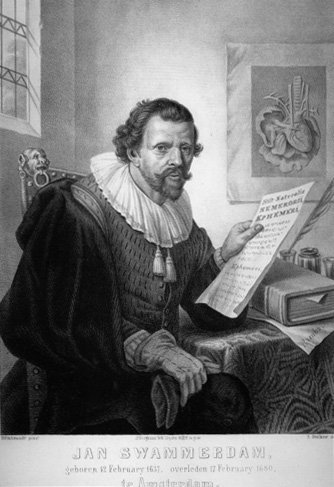
Swammerdam settled the question the only way it could actually be settled at the time: by opening one up. Working in Amsterdam in the late 1670s, he dissected the colony’s leader bee under a microscope and found ovaries — direct, physical, internal evidence of female reproductive anatomy that no amount of external observation could have produced. Having demonstrated it anatomically, Swammerdam pronounced the individual “hitherto looked upon as a king” to in fact be a queen, based, in the framing of his own findings, on certain and irrefutable proof rather than inference. That distinction — moving the question from behavioral inference to demonstrated anatomy — is exactly why this discovery belongs in the history of bee science as a specific, datable event rather than a gradual shift in consensus.
Sorting Out the Drones and Workers Too
Swammerdam’s dissection work on the colony didn’t stop at the queen. The same anatomical method confirmed that drones were male, closing out the colony’s reproductive picture from the other side. Worker bees presented a genuinely harder question, since they don’t reproduce at all under normal circumstances — Swammerdam described them as belonging to “neither sex,” functionally “eunuchs” in his own period-appropriate terminology, while noting that their anatomy leaned closer to female than male. That’s a remarkably accurate characterization for the era: modern biology confirms workers are indeed female, just reproductively suppressed under normal colony conditions — a nuance Swammerdam captured qualitatively, even without the genetic framework to explain why it was true.
Who Swammerdam Was
Jan Swammerdam (1637-1680) was a Dutch naturalist and one of the pioneering figures in the early use of the microscope for anatomical study, working in a period when Amsterdam sat at the center of both optical-instrument innovation and natural philosophy. His broader body of work extended well beyond bees into insect metamorphosis and comparative anatomy more generally, laying groundwork that later entomologists built on directly. He died in 1680 at just 43, cutting short a career that had already reshaped how seriously anatomical dissection — rather than behavioral inference alone — was taken as a tool for settling basic biological questions.
Why a Dissection, Not Just Observation, Was Needed
The gap between Butler’s 1609 guess and Swammerdam’s 1670s proof is the real lesson here: a correct hypothesis, reasonably argued, still sat unconfirmed for roughly seventy years because the tool needed to actually prove it — a microscope capable of revealing internal reproductive anatomy, paired with the willingness to dissect a specimen rather than only observe it alive — didn’t arrive until later. It’s a pattern that shows up again in this site’s coverage of early bee science: Robert Hooke’s magnified study of a bee’s sting, from a decade earlier, revealed a structural detail external examination alone had also missed. Swammerdam’s queen-bee finding is a sharper version of the same story — not just a new detail added to what was already known, but a flat correction of a belief that had gone essentially unquestioned across the entire prior history of Western beekeeping writing.
Frequently Asked Questions
Who proved the “king bee” was actually a queen?
Jan Swammerdam, a Dutch naturalist, proved it in the late 1670s by dissecting the colony’s leader bee under a microscope and finding ovaries — definitive anatomical evidence of female reproductive anatomy.
Was Swammerdam the first person to suggest the leader bee was female?
No. English beekeeper Charles Butler proposed it in his 1609 book “The Feminine Monarchie, or the History of Bees,” but had no way to prove it. The idea remained an unconfirmed minority view for decades until Swammerdam’s dissection.
Did Swammerdam’s work also cover drones and worker bees?
Yes. His dissections confirmed drones were male and described worker bees as reproductively neither sex — closer to female than male anatomically, but functionally sterile, a notably accurate characterization for the period.
How does this compare to Robert Hooke’s bee sting illustration?
Hooke’s magnified study of a bee’s sting, published in 1665, came roughly a decade before Swammerdam’s dissection and used a different method — external magnified observation of an intact structure rather than internal anatomical dissection.
Why did it take so long to prove the leader bee was female?
Because proving it required actual dissection under adequate magnification to observe internal reproductive anatomy — a capability that didn’t exist, or wasn’t applied to the question, until Swammerdam’s work in the 1670s, decades after the idea was first proposed.
Readers interested in the underlying source can consult the Linda Hall Library of Science.