Gregor Mendel, the Augustinian friar whose pea-plant experiments founded modern genetics, was also a serious beekeeper who kept around 50 colonies and tried to apply the same breeding logic to bees — and it failed, for a reason that still shapes queen breeding today: honey bee queens and drones mate in open flight, with multiple partners, and there was no way in the 1860s to control or even reliably trace that pedigree. It’s one of the more genuinely surprising footnotes in bee-science history precisely because it’s a story about the founder of genetics running into the exact same reproductive-control problem beekeepers were still solving a century later.
Key Takeaways
- During his most active beekeeping period, Mendel kept around 50 bee colonies and worked on breeding a strain of bees with improved honey production, alongside his now-famous pea-plant heredity experiments.
- The breeding project failed for a structural reason, not a conceptual one: honey bee queens and drones mate outside, in flight, and a queen mates with multiple drones, making it impossible to control or reliably determine the parentage of resulting worker bees the way Mendel could control pollination in his pea plants.
- Mendel did observe real hybrid vigor in his first-generation hybrid bees — the worker bees were unusually industrious and the queens unusually fecund — but the uncontrollable mating problem meant he couldn’t turn that observation into the kind of systematic, repeatable breeding program his pea work became.
- Mendel reported the hybrid-vigor finding but, by most accounts, wisely chose not to pursue the bee-breeding work further once the pedigree-control problem became clear, rather than continuing to invest in a method that couldn’t produce reliable results.
- The exact problem that stopped Mendel — no control over queen mating — wasn’t solved with any reliability until the development of instrumental insemination in queen bees, decades into the 20th century.
Table of Contents
- The Beekeeping Side of a Famous Scientist
- Why the Same Method That Worked on Peas Failed on Bees
- The Hybrid Vigor He Did Find
- How the Problem Eventually Got Solved
- What This Actually Illustrates
- Frequently Asked Questions
The Beekeeping Side of a Famous Scientist
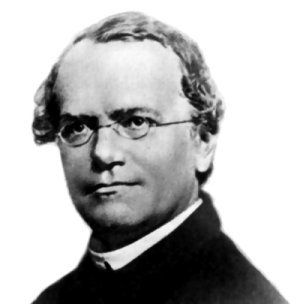
Gregor Mendel’s reputation rests almost entirely on pea plants — the carefully controlled cross-breeding experiments at his monastery in Brno that established the basic laws of inheritance well before anyone understood genes as physical, chromosome-based units. What’s less commonly mentioned is that Mendel was also a genuinely active, serious beekeeper, not a hobbyist tending a hive or two on the side. During his most active period he kept around 50 colonies and, using the same experimental instincts that drove the pea work, set out to breed a strain of bees with improved honey production. It’s a natural extension of the same scientific temperament — Mendel wasn’t just curious about inheritance in the abstract, he wanted to apply it productively, and bees, as a commercially useful organism kept right at his own monastery, were an obvious candidate.
Why the Same Method That Worked on Peas Failed on Bees
Mendel’s pea experiments worked because he could fully control pollination — hand-pollinating specific plants with pollen from a specific other plant, then tracking the exact parentage of every resulting seed across generations. That total control over mating is the entire foundation of classical Mendelian breeding analysis: without knowing exactly which two parents produced which offspring, there’s no way to trace how a trait is actually being inherited.
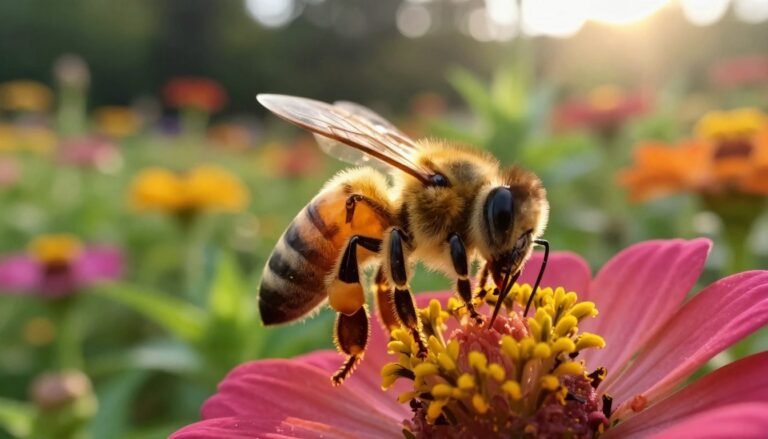
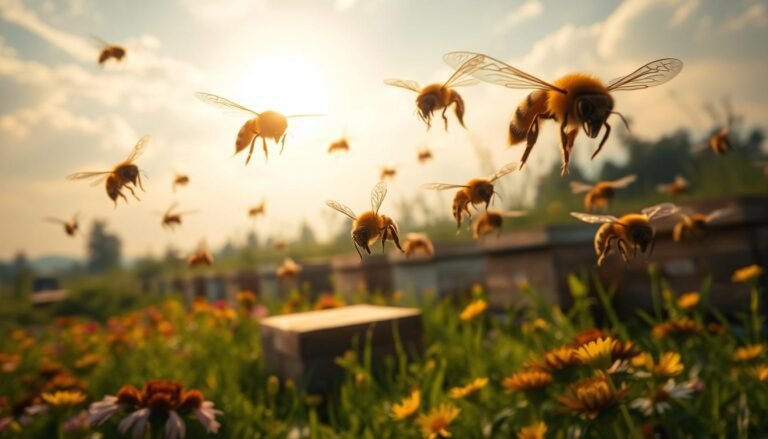
Honey bees make that kind of control essentially impossible using 1860s methods, for reasons rooted directly in their reproductive biology. Queen honey bees mate in open flight, well away from the hive, at what beekeepers call a drone congregation area — and a queen typically mates with multiple drones during her mating flights, not one. Even if Mendel could identify which queen was the mother of a given batch of worker bees, he had no way to know which drone (or drones, since her matings mix within her) had actually fathered them. Many beekeepers before and after Mendel tried and failed to coax queens and drones to mate in a controlled, indoor setting instead — flight appears to be a necessary part of the process — and Mendel was no exception. Without controllable pedigree, the entire analytical framework that made the pea experiments work simply didn’t transfer.
The Hybrid Vigor He Did Find
Mendel’s bee-breeding work wasn’t a complete dead end scientifically, even though it never became a repeatable program. He did report a real, observed result from his first-generation hybrid bees: the worker bees were unusually industrious, and the queens were unusually fecund — a genuine instance of hybrid vigor, the same phenomenon modern breeding programs still deliberately exploit in crosses like the closed-population breeding lines used to maintain specific honey bee genetics today. But an observed effect without a controllable pedigree isn’t a breeding program — Mendel couldn’t say with any confidence which cross had produced the effect, or reliably reproduce it on demand, which meant the finding had to stay an interesting one-off rather than the basis for the kind of systematic strain development his pea work achieved. By most accounts of his work, Mendel recognized the limitation and didn’t continue investing further effort into the bee-breeding project once it became clear the mating-control problem wasn’t going to resolve itself.
How the Problem Eventually Got Solved
The specific obstacle that stopped Mendel — no way to control which drone fertilized a given queen — remained essentially unsolved for the rest of the 19th century and well into the 20th. It wasn’t reliably overcome until the development of instrumental insemination in queen bees, a technique that finally let breeders control mating with the same precision Mendel had over his pea plants, decades after his death in 1884. Modern queen breeders using instrumental insemination, or the closed-population and isolated-mating-yard techniques used for lines like Purdue’s mite-biting bees, are solving precisely the problem that stopped Mendel — they’ve simply had a technology he didn’t.
What This Actually Illustrates
Mendel’s failed bee-breeding project is a genuinely useful historical footnote for a reason beyond trivia value: it’s a clean illustration of why bee genetics remained a much harder, slower-moving field than plant genetics for so long, even after Mendel’s own pea-plant laws became foundational to biology generally. The same founder of genetics who worked out inheritance in peas ran headfirst into the reproductive-control problem that defines the entire discipline of applied bee breeding — a problem this site’s coverage of queen management and instrumental insemination history both deal with directly, as a live, practical constraint rather than a solved historical curiosity.
Frequently Asked Questions
Did Gregor Mendel actually keep bees?
Yes. During his most active beekeeping period he kept around 50 colonies and attempted to breed a strain of bees with improved honey production, alongside his famous pea-plant heredity experiments.
Why did Mendel’s bee-breeding experiment fail?
Because honey bee queens mate in open flight with multiple drones, making it impossible with 1860s methods to control or determine the exact parentage of resulting bees — unlike his pea plants, where he could fully control pollination.
Did Mendel find anything useful from his bee experiments?
He observed genuine hybrid vigor in his first-generation hybrid bees — more industrious workers and more fecund queens — but without a controllable pedigree, he couldn’t turn that observation into a repeatable breeding program.
When was the mating-control problem that stopped Mendel eventually solved?
Not reliably until the development of instrumental insemination in queen bees, decades into the 20th century — well after Mendel’s death in 1884.
Is this the same Gregor Mendel known for pea plant genetics?
Yes, the same Augustinian friar whose controlled pea-plant breeding experiments at his monastery in Brno established the basic laws of inheritance that later became the foundation of modern genetics.
More detail on this is available from a peer-reviewed article hosted by the NIH’s National Library of Medicine.