China has one of the longest continuously documented beekeeping histories in the world, and today it is also the world’s largest honey producer by volume – a genuinely striking combination of ancient tradition and modern industrial scale that few other countries can claim simultaneously. Long before European honeybees ever arrived, Chinese beekeepers were managing colonies of the native Asian honey bee, Apis cerana, in cylindrical hives built from bamboo, clay, and hollowed wood, guided by written agricultural knowledge stretching back well over two thousand years.
This article goes deeper than the brief overview available elsewhere on this site’s general survey of ancient beekeeping practices, focusing specifically on China’s documented historical record, traditional hive technology, the native bee species at the center of it all, and how ancient practice and modern industrial-scale production coexist in China today.
Table of Contents
- The Ancient Textual Record
- Tao Zhu Gong and Early Beekeeping Writing
- Traditional Hive Technology
- Apis cerana: China’s Native Honey Bee
- Honey in Traditional Chinese Medicine
- Modern China: The World’s Largest Honey Producer
- A Dual-Track Modern Industry
- Regional Variation Across China
- China in the Wider World of Beekeeping Traditions
- Ancient vs. Modern Chinese Beekeeping
- Common Misconceptions
- FAQ
The Ancient Textual Record
References to bees and honey appear in Chinese texts dating back more than two thousand years, including early dictionaries and agricultural writings that document bees as a recognized, named part of the natural and economic world rather than an incidental curiosity. It is worth being precise about what this record actually supports: surviving early references are often brief, and reconstructing exactly how organized or widespread formal beekeeping was at any specific early date involves real interpretive uncertainty among historians, so this article treats “very long documented history” as well supported while avoiding overly specific claims about exact practices at exact dates that the fragmentary early record cannot fully confirm.
Tao Zhu Gong and Early Beekeeping Writing
Later Chinese agricultural writing includes material traditionally attributed to Tao Zhu Gong, a legendary figure associated with animal husbandry and economic wisdom, on the practice of bee-keeping – though it is honest to flag directly that this attribution is treated with real skepticism by modern scholars, and the specific authorship and dating of texts carrying this name remain genuinely debated rather than settled fact. This article deliberately avoids presenting a disputed attribution as though it were confirmed, which is a different and more honest approach than simply repeating a popular but uncertain historical claim.
Traditional Hive Technology
Traditional Chinese beekeeping historically used cylindrical hives constructed from bamboo, clay, or hollowed logs, conceptually similar in basic fixed-comb design to other Old World log and cylinder hive traditions, including the woven bamboo and log hives covered in our Ethiopian beekeeping tradition article, even though the two traditions developed entirely independently with different native bee species. In some regions, hives were also built directly into house walls or nearby structures, a genuinely distinct approach from either free-standing log hives or tree cavities, reflecting a closer physical integration between beekeeping and the household than most other traditions covered in this series.
Apis cerana: China’s Native Honey Bee
Traditional Chinese beekeeping centers on Apis cerana, the native Asian honey bee, covered in more biological depth in our comparison of Apis cerana and Apis mellifera. Apis cerana is generally smaller-colony and lower-yielding per hive than the European honeybee, but it carries real practical advantages in its native range, including better cold tolerance in some regions and behavioral traits, such as effective grooming responses to certain parasites, that differ meaningfully from Apis mellifera. This made Apis cerana the natural foundation of Chinese beekeeping for the overwhelming majority of its documented history, long before European stock was ever introduced to the country.
Honey in Traditional Chinese Medicine
Honey holds a documented place in traditional Chinese medicine, used historically in various remedies and formulations. As with traditional medicinal honey use described elsewhere in this series, including Maya Melipona honey, it is important to be precise rather than overstate the point: traditional medicinal use reflects genuine historical practice and cultural significance, but this article is not asserting proven modern clinical efficacy for any specific condition, since that is a meaningfully different and stronger claim than documenting that a traditional use exists.
Modern China: The World’s Largest Honey Producer
China is consistently identified as the world’s largest honey producer by volume today, a scale reflecting both a large number of managed colonies and a beekeeping industry that has grown substantially alongside the country’s broader agricultural modernization, a fact covered in the wider context of our overview of honey production by country. This modern industrial scale is a genuinely different picture from the smaller-scale, traditional Apis cerana beekeeping still practiced in many rural and mountainous regions, illustrating a real, ongoing coexistence between old and new rather than one simply replacing the other nationwide.
A Dual-Track Modern Industry
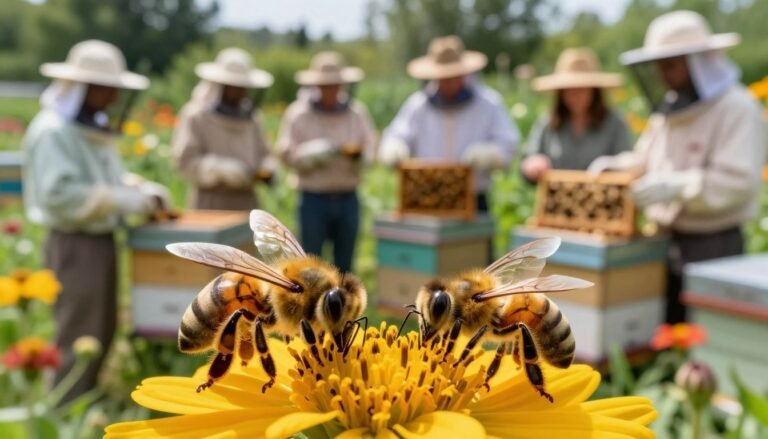
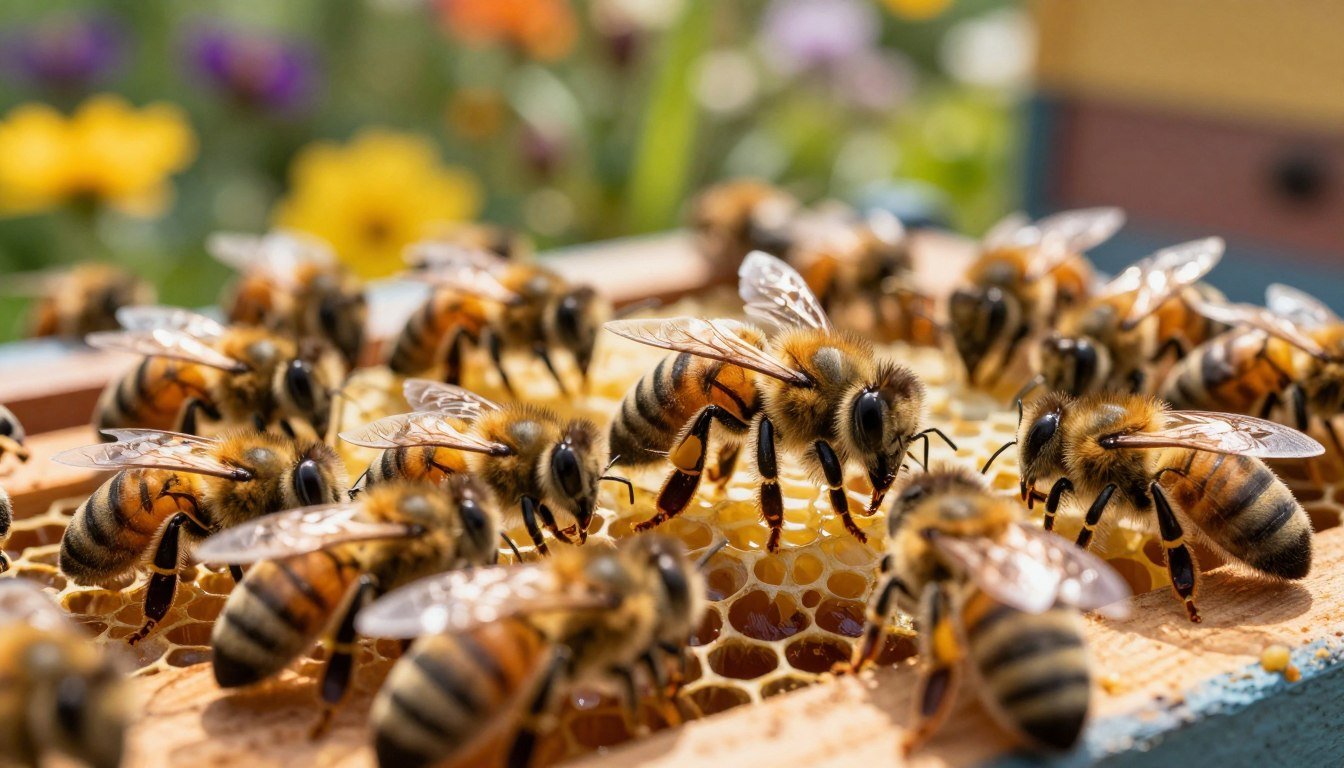
European honeybees, Apis mellifera, were introduced to China in the early 20th century and are now widely used in larger-scale commercial honey production, alongside continued traditional Apis cerana keeping that remains common in mountainous and rural areas less suited to large-scale Apis mellifera operations. This dual-track structure – large-scale Apis mellifera production for volume, smaller-scale traditional Apis cerana keeping preserved regionally – is a genuinely distinctive feature of the modern Chinese beekeeping landscape, different from countries where one bee species and management style dominates almost entirely.
Regional Variation Across China
Beekeeping practice varies meaningfully across China’s genuinely diverse geography, from subtropical southern provinces to colder northern and high-altitude western regions. Southern and southwestern mountainous areas, including parts of Yunnan, have historically supported particularly strong traditional Apis cerana keeping cultures tied to local forest and mountain ecosystems, while flatter, more agriculturally intensive eastern and central regions have seen greater adoption of large-scale Apis mellifera commercial operations. This regional diversity means, much like the pattern already noted in our Ethiopia article, that broad statements about “Chinese beekeeping” inevitably simplify a genuinely varied national picture shaped by climate, terrain, and local economic conditions.
China in the Wider World of Beekeeping Traditions
China’s beekeeping history sits alongside several other ancient, still-documented traditions this site now covers as part of its broader look at global beekeeping practice – Ethiopia’s traditional cylindrical hives, Russia’s tree-cavity bortnichestvo tradition, and the Maya jobon tradition among them. What distinguishes China’s case within this wider pattern is the sheer scale of its modern industry layered directly on top of that ancient foundation: few of the other traditions covered in this series have transitioned from purely traditional, small-scale practice to becoming the world’s single largest honey producer by volume, while still maintaining a genuinely active traditional Apis cerana keeping culture in parallel rather than losing it entirely to industrial-scale production.
Ancient vs. Modern Chinese Beekeeping
| Aspect | Ancient/Traditional Practice | Modern Industrial Practice |
|---|---|---|
| Primary bee species | Apis cerana (native) | Apis mellifera (introduced) plus continued Apis cerana |
| Hive type | Cylindrical bamboo, clay, or log; some wall-integrated | Standardized frame hives |
| Scale | Household/village level | Large-scale commercial operations |
| Production role | Local honey and household use | World’s largest honey producer by volume |
Common Misconceptions
- “All Chinese beekeeping today is small-scale and traditional.” China is the world’s largest honey producer by volume, driven substantially by large-scale Apis mellifera operations alongside continued traditional Apis cerana keeping.
- “Tao Zhu Gong definitely wrote the beekeeping text attributed to him.” Modern scholars treat this attribution with real skepticism, and the authorship and dating of texts carrying his name remain genuinely debated rather than confirmed.
- “China only keeps the native Apis cerana.” European Apis mellifera, introduced in the early 20th century, is now widely used in large-scale commercial production alongside continued traditional Apis cerana keeping.
Frequently Asked Questions
Is Chinese honey production data fully reliable?
As with several other large, historically dispersed beekeeping industries covered in this series, cross-country honey production comparisons depend on national reporting infrastructure that varies in consistency, so while China’s status as the world’s largest producer by volume is well supported and widely cited, this article treats it as a strongly supported characterization rather than an unimpeachably precise figure, consistent with the same honest standard applied to production claims elsewhere on this site.
What crops rely on managed pollination in China today?
China’s large agricultural sector depends on managed pollination for a range of crops, similar to the pollination-services role beekeeping plays in many other major agricultural economies. This modern pollination-service role, layered on top of both traditional Apis cerana keeping and large-scale Apis mellifera honey production, adds a third genuine economic dimension to China’s beekeeping industry beyond honey production and export alone.
How old is Chinese beekeeping history?
References to bees and honey appear in Chinese texts dating back more than two thousand years, making it one of the longest continuously documented beekeeping histories in the world, though the exact scope of very early practice involves real interpretive uncertainty given the fragmentary surviving record.
What bee species did ancient Chinese beekeepers use?
Apis cerana, the native Asian honey bee, was the foundation of Chinese beekeeping for the overwhelming majority of its documented history, long before European Apis mellifera was introduced in the early 20th century.
Does wall-integrated beekeeping still exist in China?
Historical accounts describe hives built directly into or near house walls in some regions, an approach distinct from free-standing log or cylinder hives elsewhere in the country. Precise present-day prevalence of this specific technique is not something this article can confidently quantify, since it depends on localized, often undocumented regional practice rather than centralized national data.
What is China’s most well-known traditional honey type?
China produces a range of regionally distinct honey types tied to local flora, similar in principle to the varietal honey concept covered elsewhere on this site, though specific named traditional Chinese honey varieties are less standardized in international markets than varietal honeys from some other major honey-producing countries, reflecting the sheer geographic and floral diversity involved in production across such a large country.
Is China really the world’s largest honey producer?
Yes, China is consistently identified as the world’s largest honey producer by volume today, reflecting both a large number of managed colonies and substantial modern agricultural and industrial development in its beekeeping sector.
How did the introduction of Apis mellifera change Chinese beekeeping?
The early-20th-century introduction of Apis mellifera gave Chinese beekeepers access to a bee species capable of substantially higher per-colony honey yields than native Apis cerana, which is a major reason large-scale commercial production shifted toward European stock over the following decades. This did not eliminate Apis cerana keeping, but it did create the dual-track structure described earlier in this article, with the two species now serving genuinely different roles – volume production versus traditional, regionally rooted practice – within the same national beekeeping industry.
What kind of hives did ancient Chinese beekeepers use?
Traditional cylindrical hives made from bamboo, clay, or hollowed logs, with some regions building hives directly into house walls or nearby structures – a fixed-comb design without removable frames.
Does China export honey internationally?
Yes, China’s scale of production supports significant export alongside substantial domestic consumption, and Chinese honey appears in international trade data as a major global supply source, part of why China’s production volume genuinely shapes broader global honey market dynamics rather than being a purely domestic phenomenon.
Did Tao Zhu Gong really write about beekeeping?
Later agricultural texts attribute beekeeping writing to Tao Zhu Gong, but modern scholars treat this attribution with real skepticism, and the actual authorship and dating of these texts remain genuinely debated rather than settled historical fact.
Why does Apis cerana matter for varroa mite research?
Apis cerana is native co-evolved host to the varroa mite, and its generally more effective grooming and hygienic behavioral responses to the parasite – compared to Apis mellifera, which had no prior evolutionary exposure before the mite jumped species – has made it a genuine subject of scientific interest for researchers studying natural mite-resistance traits, a topic covered in more depth in our broader Apis cerana versus Apis mellifera comparison.
Is Apis cerana still kept in China today?
Yes, traditional Apis cerana keeping remains common in mountainous and rural regions, coexisting alongside large-scale commercial Apis mellifera operations rather than having been fully replaced by them.
For more on this topic, see the Chinese Academy of Agricultural Sciences' Institute of Apicultural Research.