Last Updated September 15, 2026
In the tropical and subtropical woodlands of northern Australia, Aboriginal Australians have gathered “sugarbag” – the honey and nest contents of native stingless bees – for an extraordinarily long span of time, in a tradition widely regarded among the oldest continuous honey-harvesting practices documented anywhere in the world. The bees themselves belong to genera found nowhere else in this series so far: Tetragonula and Austroplebeia, Australia’s native stingless bees, entirely distinct from both the European honeybee most beekeeping content focuses on and the Maya Melipona species covered elsewhere in this site’s look at global stingless beekeeping traditions.
This article covers what sugarbag actually is, the traditional harvesting knowledge behind it, its documented place in Aboriginal culture and rock art, and the real modern native-beekeeping movement now building on that ancient foundation.
Key Takeaways
- “Sugarbag” is the Aboriginal English term for honey and nest contents from Australia’s native stingless bees (Tetragonula and Austroplebeia), harvested from wild hollow trees for what researchers regard as one of the oldest continuous honey-gathering traditions documented anywhere.
- These bees are unrelated to both the European honeybee and the Maya Melipona species – Australia has 11 native stingless bee species, restricted to tropical and subtropical northern and eastern Australia.
- A single wild colony yields roughly 1 litre of honey a year, compared with 40-50 litres from a managed European honeybee hive – which is why sugarbag honey is sold as a small-batch specialty product, often $150-250 per kilogram.
- Bee researcher Dr. Tobias Smith notes that stingless bee honey has genuine antimicrobial properties, “similar and in some cases much better than what we recognise in manuka honey.”
- A real modern native-beekeeping movement now keeps these bees in purpose-built hive boxes, but habitat loss – especially the loss of old, hollow-bearing trees – remains a genuine long-term threat to wild populations.
Table of Contents
- What Is Sugarbag?
- The Bees: Tetragonula and Austroplebeia
- Traditional Harvesting Knowledge
- Rock Art and Cultural Significance
- The Modern Native Beekeeping Movement
- Habitat Loss and Conservation Concerns
- Native Pollinators of Australian Flora
- Sugarbag in the Wider World of Stingless Beekeeping
- Sugarbag vs. Other Stingless Bee Traditions
- Common Misconceptions
- FAQ
What Is Sugarbag?
“Sugarbag” is an Aboriginal English term referring to the honey, pollen stores, and often the whole nest structure produced by Australia’s native stingless bees, historically located and harvested directly from hollow trees. The term is sometimes used more broadly to include honey from feral European honeybee colonies established in the Australian bush after colonial introduction, but its original and still primary meaning refers specifically to native stingless bee honey – a genuinely different product from typical commercial honey, with a distinctive, often more tart or complex flavor profile shaped by the smaller-scale, wild-forage nature of native stingless bee colonies.
The flavor difference is not the only distinguishing trait. According to the Australian Museum, native stingless bee nests can hold several thousand bees in pot-like wax-and-resin (cerumen) storage structures rather than the wax comb built by European honeybees.
“We now know that stingless bee honey does have strong anti-microbial qualities, similar and in some cases much better than what we recognise in manuka honey.”
The Bees: Tetragonula and Austroplebeia
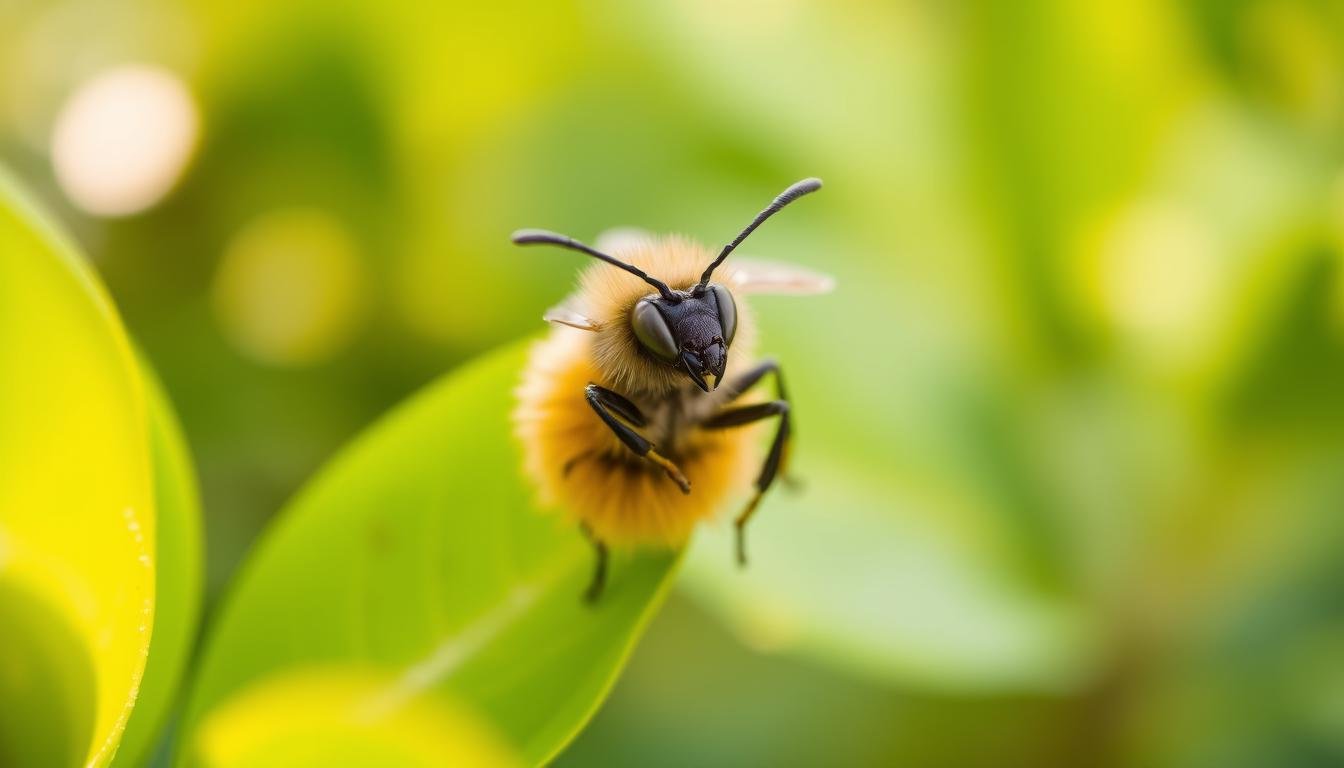
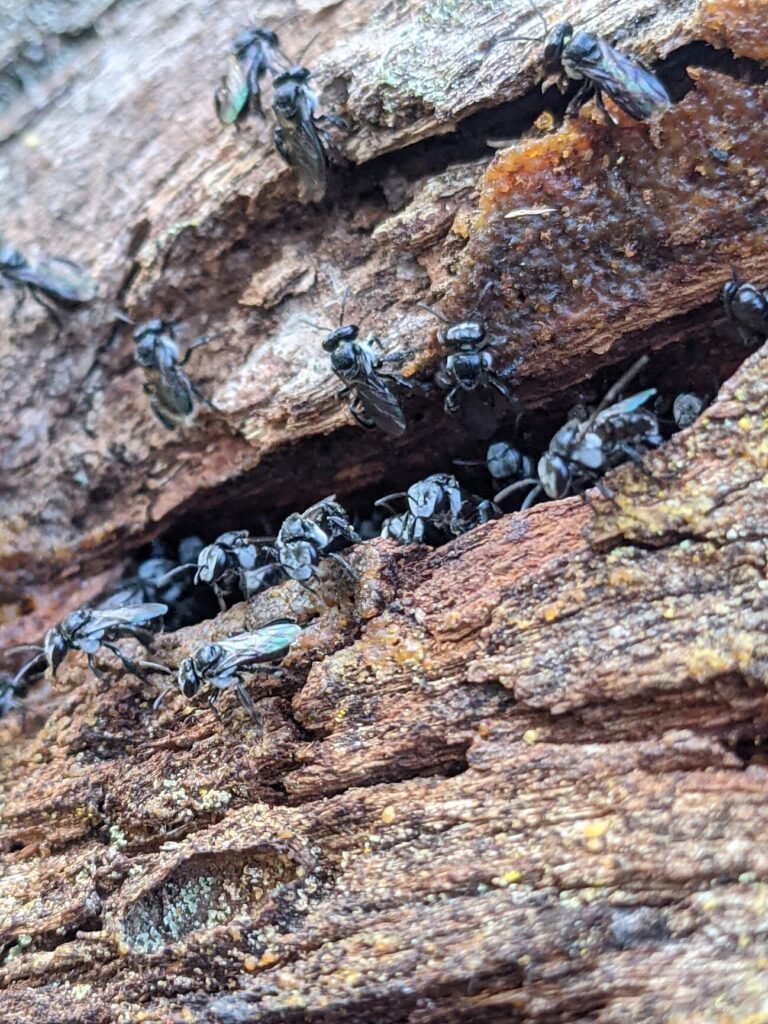
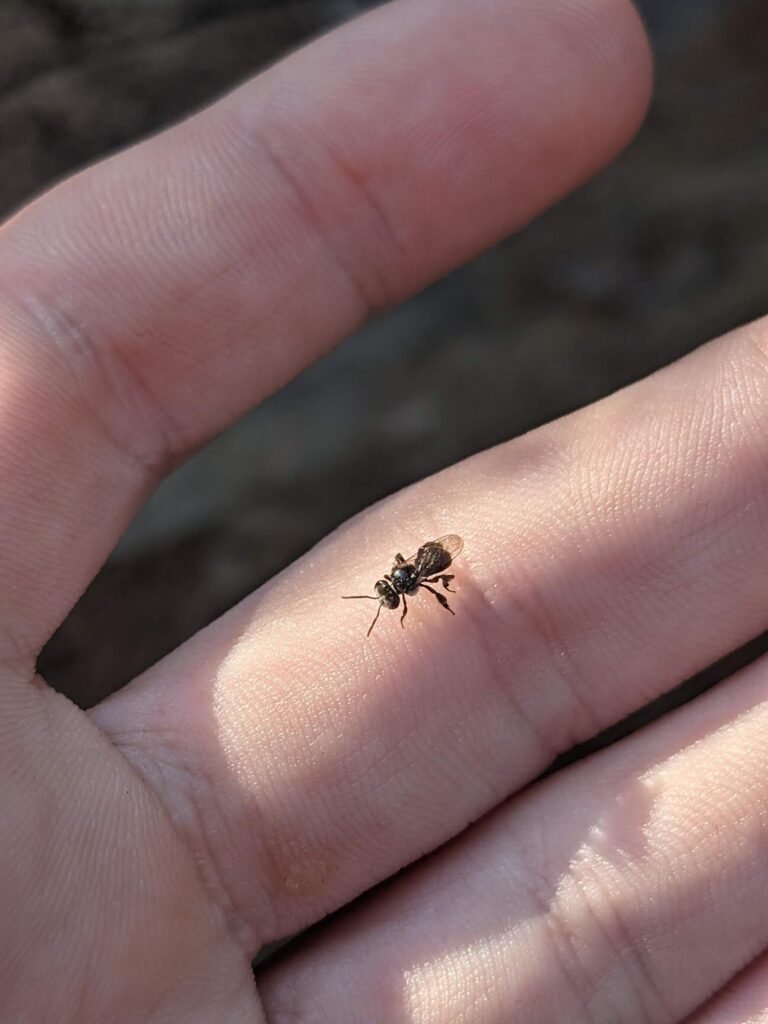
Australia’s native stingless bees belong primarily to the genera Tetragonula (formerly classified under Trigona) and Austroplebeia, restricted largely to tropical and subtropical regions across northern and eastern Australia where climate conditions suit them. Like the Melipona beecheii bees at the center of Maya meliponiculture, these are genuinely stingless species, though they can still bite defensively, and they build compact nests inside naturally hollow trees rather than the exposed comb structures used by giant honey bees or the frame-based hives most Western beekeeping content focuses on. Colony sizes and honey yields are modest compared to Apis mellifera, which is part of why sugarbag has historically been gathered opportunistically from wild nests rather than farmed at commercial honey-industry scale.

Traditional Harvesting Knowledge
Traditional sugarbag harvesting required genuinely sophisticated ecological knowledge: locating a nest by tracking foraging bees back to their hollow-tree entrance, correctly reading external signs of an active colony, and using appropriate tools to open the hollow without unnecessarily destroying the tree or the colony’s long-term viability where sustainable practice was intended. Harvested sugarbag was consumed directly, often including pollen stores and even portions of brood alongside the honey itself, reflecting a whole-nest use pattern rather than a honey-only extraction approach – a meaningfully different relationship to the resource than most modern honey harvesting, closer in spirit to the direct nest-opening approach used in Gurung cliff honey hunting than to managed apiculture, even though the two traditions developed independently on opposite sides of the world with entirely different bee species and terrain.
“We look for a hollow tree and if you see a bee coming out, then you’ve got your sugarbag. You can eat it straight from the tree, or use it to make yellow cordial or have it on toast.”
Rock Art and Cultural Significance
Honey-gathering and bee imagery appear in Aboriginal rock art at various sites across northern Australia, including documented examples in Arnhem Land, understood by researchers and Traditional Owners as depicting sugarbag-related activity and belief. It is honest to be precise about what can and cannot be claimed here: exact dating of specific rock art motifs is often difficult and sometimes disputed among researchers, and this article does not assert a specific unverified age for any individual artwork – what is well supported is that sugarbag holds genuine, longstanding cultural and spiritual significance within various Aboriginal communities, including its documented presence in Dreaming stories and continued significance as living cultural knowledge, not merely a historical curiosity preserved only in art.
The Modern Native Beekeeping Movement
A genuine modern native beekeeping movement has grown in Australia around Tetragonula and Austroplebeia, using purpose-designed hive boxes that allow colonies to be kept, split, and managed similarly in principle – though not in specific technique – to how Maya beekeepers manage jobon hives. This movement spans hobbyist backyard keepers in suitable climate zones, boutique honey producers marketing native stingless bee honey as a premium specialty product, and growing interest in native stingless bees as supplementary pollinators for certain crops and native plant conservation efforts. It represents a genuinely new chapter built directly on ancient traditional ecological knowledge, rather than an entirely separate modern invention with no connection to the practice’s origins.
Habitat Loss and Conservation Concerns
Native stingless bee populations face real, documented pressure from land clearing and habitat loss, particularly the loss of mature, hollow-bearing trees that these species depend on for nesting – hollows that can take many decades to form naturally and cannot be quickly replaced once large old trees are cleared. This makes habitat conservation a genuinely load-bearing concern for the long-term viability of both wild sugarbag populations and the broader ecological role native stingless bees play as pollinators of native Australian flora, a concern that connects directly to the modern native beekeeping movement’s growing interest in maintaining managed colonies as a partial buffer against ongoing wild habitat loss.
Native Pollinators of Australian Flora
Tetragonula and Austroplebeia play a genuine ecological role as pollinators of native Australian plants, many of which evolved alongside these bees long before European honeybees were introduced to the continent. This gives sugarbag bees an ecological significance beyond their honey – they are part of the pollination system supporting native plant communities in the same tropical and subtropical regions where sugarbag has traditionally been harvested, which is part of why habitat loss affecting these bees carries consequences reaching well beyond honey production alone. Some native plant species show foraging relationships with native stingless bees that differ from how introduced honeybees interact with the same flora, an area of real ongoing ecological research interest rather than a fully settled body of knowledge.
Sugarbag in the Wider World of Stingless Beekeeping
Sugarbag sits alongside Maya meliponiculture as one of several independently developed stingless beekeeping traditions this site now documents, each built around entirely different Meliponini genera on different continents with no shared origin. The parallel is instructive precisely because it is not a shared lineage: fixed-comb, hollow-tree-nesting, genuinely stingless bees produced broadly similar cultural responses – direct nest harvesting, eventual movement toward managed hive-keeping, and real modern revival or growth movements – independently in Mesoamerica and in Australia, suggesting something structural about how human societies tend to relate to this particular category of bee, rather than a case of cultural transmission between the two regions.
Sugarbag vs. Other Stingless Bee Traditions
| Aspect | Australian Sugarbag | Maya Meliponiculture |
|---|---|---|
| Bee genera | Tetragonula, Austroplebeia | Melipona |
| Traditional nest location | Wild hollow trees | Wild hollow trees, later moved into jobon hives |
| Traditional harvest style | Direct nest-opening, whole-nest use | Comb cut from sealed log hive ends |
| Cultural documentation | Rock art, Dreaming stories, oral tradition | Codices, including the Madrid Codex |
| Modern status | Growing hobbyist/boutique native beekeeping movement | Community cooperatives, revival efforts |
Common Misconceptions
- “Sugarbag always refers to European honeybee honey.” Its core, original meaning is native stingless bee honey and nest contents; feral honeybee honey use is a secondary, later extension of the term after European bees were introduced to Australia.
- “Native Australian stingless bees are the same species as Maya stingless bees.” They belong to entirely different genera – Tetragonula and Austroplebeia versus Melipona – and the traditions developed completely independently on different continents.
- “This is purely a historical practice with no modern relevance.” A genuine, active modern native beekeeping movement exists today, alongside continued living cultural significance within Aboriginal communities – it is not solely a subject for historical or archaeological study.
Frequently Asked Questions
What does “sugarbag” mean?
Sugarbag is an Aboriginal English term for the honey, pollen stores, and nest contents of Australia’s native stingless bees, traditionally harvested from wild hollow trees, though the term is sometimes also applied more loosely to feral European honeybee honey.
What bee species produce sugarbag honey?
Primarily species in the genera Tetragonula and Austroplebeia, Australia’s native stingless bees, found in tropical and subtropical regions of northern and eastern Australia.
Is sugarbag gathering still practiced today?
Traditional knowledge remains culturally significant within Aboriginal communities, and a genuine modern native beekeeping movement has grown around keeping Tetragonula and Austroplebeia in purpose-built hive boxes, extending the tradition into contemporary hobbyist and boutique-honey contexts.
Are Australian native stingless bees threatened?
They face real, documented pressure from habitat loss, particularly the clearing of mature, hollow-bearing trees needed for nesting, which take decades to form and cannot be quickly replaced.
Is sugarbag honey safe to eat straight from a wild nest?
Sugarbag honey has been safely consumed by Aboriginal Australians for an extremely long span of time and continues to be eaten today, though as with any wild-harvested food, correct species identification and reasonably fresh, uncontaminated nest contents matter, which is exactly the kind of practical knowledge traditional harvesters developed and passed down through direct experience.
Can Tetragonula bees be kept anywhere in Australia?
No. Tetragonula and Austroplebeia are restricted to tropical and subtropical climate zones across northern and eastern Australia and generally do not tolerate the colder conditions found across much of the country’s southern regions, similar to how Melipona beecheii is confined to the tropical Mesoamerican climate it evolved in. This climate restriction is a genuine biological constraint on where the modern native beekeeping movement can realistically operate, not simply a matter of tradition or regional preference.
How is sugarbag different from typical commercial honey?
It generally has a more tart, complex flavor profile shaped by wild forage and smaller colony scale, and traditional harvest often involved consuming pollen stores and portions of the nest alongside the honey itself, rather than honey-only extraction.
For more on this topic, see Aussie Bee, Australia's leading native and stingless bee research resource.
Image credits: Photo: James Niland, Wikimedia Commons, CC BY 2.0; Photo: Lachlan Macnaughtan, Wikimedia Commons, CC BY-SA 4.0.