Last Updated September 15, 2026
Japan maintains two genuinely distinct honeybee traditions side by side: large-scale commercial beekeeping using Apis mellifera, introduced from the West during the Meiji era, and a smaller-scale, culturally beloved traditional practice centered on Nihonmitsubachi (日本蜜蜂), the Japanese honeybee – a regional population of Apis cerana kept in simple, low-intervention hives that look nothing like a modern Langstroth box. Our existing Asian giant hornet article already explains the remarkable thermal “bee ball” defense Apis cerana populations use against hornet attacks in real mechanistic detail; this article instead focuses on the broader traditional beekeeping culture built around Nihonmitsubachi in Japan specifically – the hive style, the hobbyist revival, the distinctive honey, and how this tradition sits alongside Japan’s much larger modern commercial industry.
Key Takeaways
- Japan harvests roughly 30 metric tons of honey annually from Nihonmitsubachi versus about 2,800 metric tons from Western honeybees (Apis mellifera) – Nihonmitsubachi accounts for well under 10% of Japan’s domestic honey.
- Western honeybees typically yield 20-30 kg of honey per hive per season under intensive management, versus roughly 5-8 kg per hive for traditionally kept Nihonmitsubachi – the core reason the tradition survives on cultural and hobbyist interest rather than commercial economics.
- Of Japan’s roughly 5,000 beekeepers, only an estimated 50-100 keep Nihonmitsubachi commercially; the rest of its keepers are overwhelmingly hobbyists.
- Western honeybees were introduced to Japan starting in 1877, concentrated first in Wakayama, Nagano, and Tokyo, and gradually displaced Nihonmitsubachi as the commercial default.
- Slow Food International’s Ark of Taste has catalogued Nihonmitsubachi honey as a food-heritage product worth actively preserving.
Table of Contents
- What Is Nihonmitsubachi?
- A Genuinely Different Hive Philosophy
- The Meiji-Era Introduction of Apis mellifera
- A Distinctive, Wild-Forage Honey
- The Modern Hobbyist Revival
- Natural Hornet Resistance
- Real Challenges Facing Nihonmitsubachi
- How Traditional Colonies Are Captured
- Japan in the Wider Pattern of Apis cerana Traditions
- Nihonmitsubachi vs. Commercial Apis mellifera Beekeeping
- Common Misconceptions
- FAQ
What Is Nihonmitsubachi?
Nihonmitsubachi refers to Japan’s regional population of Apis cerana, the Asian honey bee already covered in more biological depth in our existing Apis cerana comparison guide. Unlike the large-scale commercial Apis mellifera operations that dominate Japan’s modern honey production volume, Nihonmitsubachi is generally kept in a more traditional, lower-intervention style, and remains genuinely closer to its wild behavior and colony dynamics than intensively managed commercial honeybee stock. Slow Food International’s Ark of Taste catalog – which documents foods at risk of disappearing and worth actively preserving – lists Nihonmitsubachi honey specifically, noting Japanese honeybee workers run about 10-13 mm long and 60-90 mg, roughly 20% smaller than Western honeybee workers, with colonies of several thousand to about twenty thousand bees, smaller than a typical Western honeybee colony.

A Genuinely Different Hive Philosophy
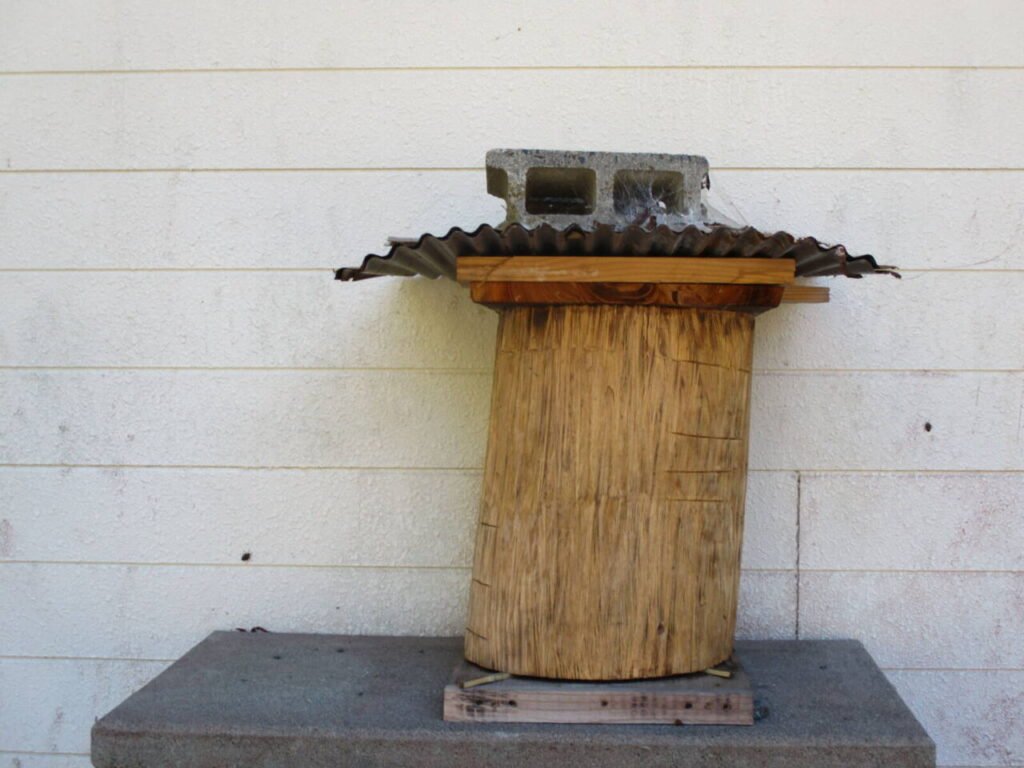
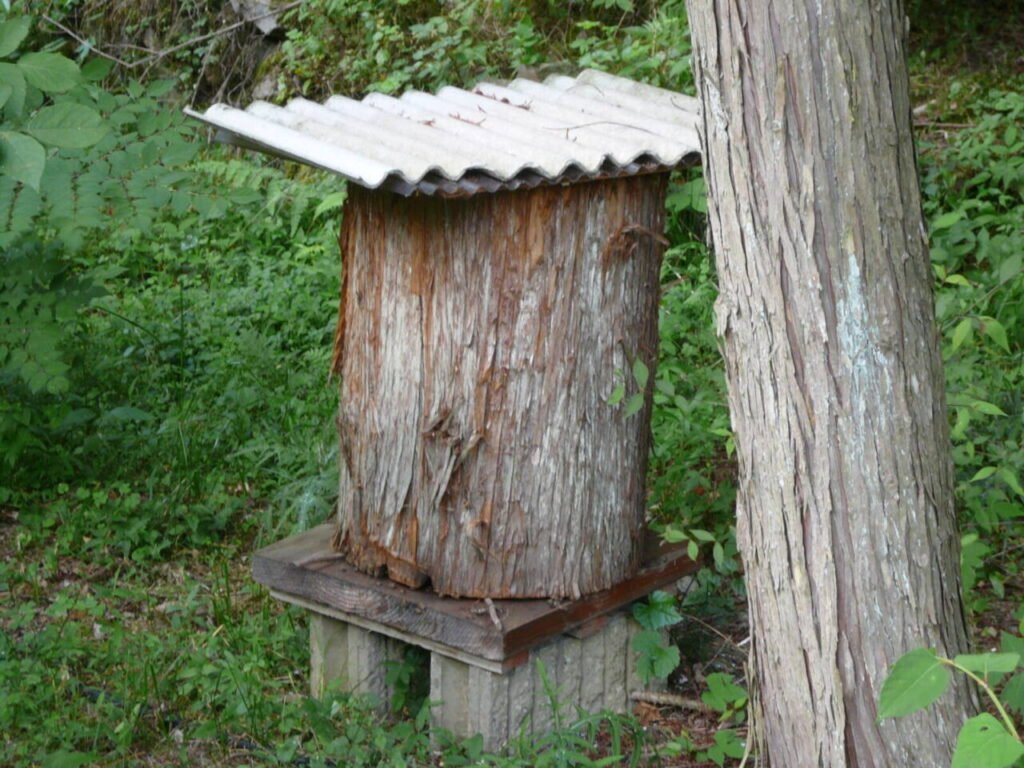
Traditional Nihonmitsubachi keeping generally uses simple wooden box or hollow-log style hives without the removable frames central to Langstroth-style Western beekeeping, closer in basic fixed-comb logic to several other traditional hive styles documented elsewhere in this series, including traditional Chinese cylindrical hives. The underlying philosophy is genuinely different too: rather than actively managing and optimizing a colony’s productivity the way commercial Apis mellifera operations do, traditional Nihonmitsubachi keeping is often closer to providing a wild colony an attractive place to settle and then observing and lightly harvesting from it, a more hands-off relationship with the bees than intensive commercial apiculture generally involves. Harvest itself reflects this: beekeepers typically cut out only a third to half of the comb using a specialized knife each autumn, calming the colony with smoke first and deliberately leaving the rest of the nest intact so the colony survives into the next season.
The Meiji-Era Introduction of Apis mellifera
Apis mellifera was introduced to Japan starting in 1877, according to Slow Food International’s Ark of Taste documentation, part of the broader Meiji-era modernization period in which Japan actively imported Western agricultural and industrial practices and technology – the pioneering phase concentrated in the prefectures of Wakayama, Nagano, and Tokyo before spreading more widely. This introduction fundamentally reshaped Japan’s commercial honey industry over time, since Apis mellifera offers substantially higher honey yields under intensive management than Nihonmitsubachi does and, per the Ark of Taste account, directly drove the decline of Japanese honeybee keeping as commercial beekeepers switched over – the same basic yield-driven shift toward introduced Western honeybee stock already documented in this site’s coverage of China’s own dual-track modern beekeeping structure, even though Japan and China developed this parallel pattern through entirely separate historical processes.
A Distinctive, Wild-Forage Honey
Nihonmitsubachi honey is generally prized for a genuinely distinctive flavor profile shaped by broad, multi-source wild foraging rather than the more controlled or monofloral forage patterns typical of managed commercial operations, since traditional Nihonmitsubachi colonies are rarely moved to follow specific blooms the way migratory commercial operations are. This wild-forage character gives the honey a complex, often more intense flavor that specialty and connoisseur markets in Japan genuinely value, even though total yield per colony runs considerably lower than commercial Apis mellifera production – a real quality-over-quantity tradeoff central to why this tradition has persisted culturally despite its lower commercial output, and exactly the kind of distinction that earned it a place in Slow Food’s Ark of Taste.
The Modern Hobbyist Revival
Nihonmitsubachi keeping has seen genuine, documented renewed hobbyist interest in modern Japan, appealing specifically to keepers drawn to its lower-intervention, more naturalistic approach compared to intensive commercial-style apiculture. Of Japan’s roughly 5,000 total beekeepers, only an estimated 50-100 keep Nihonmitsubachi as a commercial operation – the tradition today is overwhelmingly a hobbyist and cultural practice rather than a production industry, functioning as an actively growing hobbyist movement, not merely a preserved cultural artifact, similar in spirit to the modern native-beekeeping hobbyist movements already documented in this site’s coverage of Australian sugarbag bee keeping, even though the specific bee species and cultural context are entirely different.
Natural Hornet Resistance
Apis cerana populations, including Nihonmitsubachi, have evolved alongside Asian giant hornets over a very long shared evolutionary history and developed the thermal “bee ball” defensive response already explained in detail in our Asian giant hornet article – engulfing an invading hornet in a tight cluster and raising the internal temperature to a level the hornet cannot survive but the bees themselves can tolerate. This evolved resistance is a genuine, real practical advantage of keeping Nihonmitsubachi in regions where these hornets are present, distinguishing it meaningfully from introduced Apis mellifera populations that lack this shared evolutionary history and the corresponding defensive adaptation.
Real Challenges Facing Nihonmitsubachi
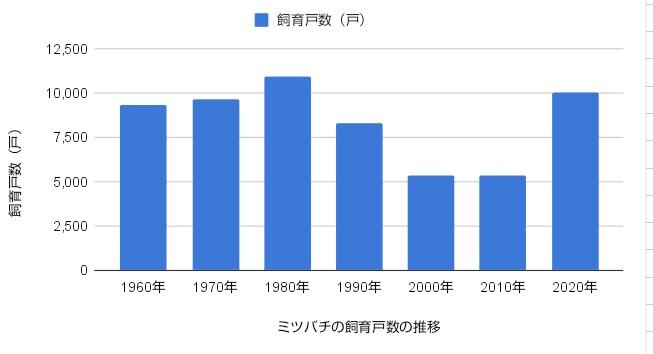
Nihonmitsubachi faces genuine modern pressures, including habitat loss affecting wild colony populations, pesticide exposure, and competition for forage and nesting sites in increasingly developed landscapes, alongside the basic economic reality that lower honey yields make Nihonmitsubachi commercially less attractive than Apis mellifera for large-scale production. A widely cited tally of Japan’s beekeeping households from 1960 to 2020 shows the long-run decline in the number of households keeping bees commercially across this period, consistent with the broader consolidation of Japanese beekeeping into fewer, larger commercial Apis mellifera operations. These pressures mean the tradition’s continued vitality depends significantly on the hobbyist and cultural interest sustaining it, rather than commercial economic incentive alone – a genuinely different sustainability dynamic than industries driven primarily by production-scale economics.
How Traditional Colonies Are Captured
Traditional Nihonmitsubachi keeping typically begins not with purchasing established colonies the way commercial beekeepers acquire package bees, but with attracting a wild swarm to settle into a prepared hive box using scent lures and favorable box placement, then simply allowing the colony to establish itself naturally. This swarm-attraction approach reflects the broader hands-off philosophy already discussed in this article – rather than actively installing and managing a colony from the start, traditional Nihonmitsubachi keepers create favorable conditions and let a wild colony choose to move in, a genuinely different starting relationship with the bees than most commercial or even hobbyist Western-style beekeeping involves.
Japan in the Wider Pattern of Apis cerana Traditions
Japan’s Nihonmitsubachi tradition takes its place alongside other Apis cerana-centered beekeeping traditions this site has documented, including traditional Chinese cylindrical hive keeping, even though the two traditions developed independently with genuinely different hive styles, cultural framing, and modern trajectories. What both share is the same underlying dual-track modern structure – a native Apis cerana tradition persisting culturally alongside a larger-scale, higher-yield Apis mellifera commercial industry introduced from the West – a pattern that recurs specifically wherever Apis cerana‘s native range overlapped with 19th- and 20th-century Western agricultural modernization efforts, rather than being a coincidence unique to either country individually.
Nihonmitsubachi honey has “been cherished and eaten by people for over 10,000 years,” and preserving the bee and its honey today is “vital in passing on culinary culture.”
Nihonmitsubachi vs. Commercial Apis mellifera Beekeeping
| Aspect | Nihonmitsubachi | Commercial Apis mellifera |
|---|---|---|
| Species | Apis cerana (Japanese population) | Apis mellifera (introduced 1877) |
| Hive style | Simple box/log, fixed comb, low intervention | Standardized frame hives, active management |
| Honey yield per hive | ~5-8 kg/season | ~20-30 kg/season |
| National annual volume | ~30 metric tons | ~2,800 metric tons |
| Hornet resistance | Strong evolved thermal defense | No comparable evolved defense |
| Modern role | Hobbyist and cultural tradition | Commercial production backbone |
Common Misconceptions
- “Nihonmitsubachi and Apis mellifera are the same bee kept differently.” They are entirely different species – Apis cerana versus Apis mellifera – not simply two management styles applied to the same bee.
- “Japan only has one honeybee tradition today.” Both large-scale commercial Apis mellifera beekeeping and traditional Nihonmitsubachi keeping coexist as genuinely distinct, parallel practices in modern Japan.
- “Nihonmitsubachi keeping is a purely historical practice with no modern relevance.” It has seen genuine, documented renewed hobbyist interest in modern Japan, functioning as an actively growing practice today, not solely a preserved historical curiosity.
Frequently Asked Questions
What is Nihonmitsubachi?
Japan’s regional population of Apis cerana, traditionally kept in simple, low-intervention wooden box or log hives, genuinely distinct from the large-scale commercial Apis mellifera beekeeping introduced to Japan starting in 1877.
Why do people still keep Nihonmitsubachi despite much lower honey yields?
Its distinctive wild-forage flavor profile, cultural significance recognized by Slow Food’s Ark of Taste, natural hornet resistance, and appeal to hobbyists drawn to a more naturalistic, lower-intervention beekeeping approach all continue to sustain genuine interest despite yielding roughly a quarter of what commercial Apis mellifera hives produce.
Does Nihonmitsubachi have any natural defense against hornets?
Yes, like other Apis cerana populations, it has evolved a thermal “bee ball” defense against Asian giant hornets, engulfing an invading hornet and raising internal cluster temperature to a lethal level for the hornet – explained in full mechanistic detail in this site’s Asian giant hornet article.
Is Nihonmitsubachi honey harder to find commercially than regular honey?
Yes – with only an estimated 50-100 commercial Nihonmitsubachi beekeepers nationwide producing roughly 30 metric tons a year combined, against about 2,800 metric tons from Western honeybees, Nihonmitsubachi honey is typically found through specialty channels rather than mainstream commercial honey retail.
How does traditional Nihonmitsubachi harvest differ from commercial honey extraction?
Traditional harvest generally involves a beekeeper cutting out only a third to half of the comb by hand each autumn with a specialized knife, leaving the rest of the nest intact for the colony to survive into next season – a genuinely different, more hands-on process than the frame-based extraction common in commercial Apis mellifera operations, which typically removes the whole crop.
Is Nihonmitsubachi considered a separate species from Apis cerana found elsewhere in Asia?
Nihonmitsubachi is generally understood as a regional population within the broader Apis cerana species rather than a fully separate species, similar to how other regional Apis cerana populations across its wide Asian range – including in China, covered elsewhere on this site – represent local variation within the same species rather than entirely distinct species in their own right.
Are there dedicated communities or clubs for Nihonmitsubachi hobbyists?
Yes, the modern hobbyist revival of Nihonmitsubachi keeping is generally associated with dedicated enthusiast communities and NPOs sharing knowledge and technique, consistent with how hobbyist movements around traditional or native-bee-focused beekeeping in other countries covered on this site have also organized around shared community interest and knowledge exchange.
Further Reading
Primary sources: Japan’s Ministry of Agriculture, Forestry and Fisheries official beekeeping page; Slow Food International, Ark of Taste – Nihon Mitsubachi.