Last Updated September 15, 2026
Turkey occupies a genuinely unusual position in the world of beekeeping: it is the world’s third-largest honey producer by volume, behind only China and India, it hosts a remarkable diversity of native honeybee subspecies thanks to its geographic position bridging Europe, Asia, and the Middle East, and it is home to Anzer honey, a high-altitude specialty honey that rivals Sidr honey – covered elsewhere on this site – as one of the world’s most expensive. This article covers Anatolian beekeeping’s real depth: its ancient roots, its genetic diversity, its traditional log-hive mountain communities, and its modern position as a genuine beekeeping powerhouse.
Key Takeaways
- Turkey produced roughly 95,500 tonnes of honey, the third-largest national total in the world after China and India, according to FAO production data.
- Turkey’s territory hosts native honeybee populations from three recognized Apis mellifera subspecies of the O-lineage – A. m. anatoliaca, A. m. caucasica, and A. m. meda – plus genetic material from a fourth lineage along the Levantine coast, a concentration of diversity most single countries do not host.
- The earliest written references to beekeeping in Anatolia appear in Hittite cuneiform law texts from the 2nd millennium BCE, which treated honey as a taxed commercial good and legally protected ownership of a hive and its colony.
- Anzer honey, harvested from a single high-altitude plateau in Rize province, is among the most expensive honey varieties in the world because of its genuinely tiny annual yield, not just marketing.
- TAB (Türkiye Arı Yetiştiricileri Merkez Birliği), Turkey’s national beekeepers’ union, represents roughly 72,000 members across the country’s provinces.
Table of Contents
- Ancient Anatolian Roots
- A Genuinely Unusual Concentration of Subspecies
- The Black Sea Mountain Log-Hive Tradition
- Anzer Honey: The Rize Highland Specialty
- Ottoman-Era Beekeeping
- Turkey’s Modern Hive-Count Scale
- Real Challenges Facing the Industry
- A Familiar Pattern: Mountain Log Hives
- Anatolian Beekeeping in the Wider World
- Anzer Honey vs. Sidr Honey
- Common Misconceptions
- FAQ
Ancient Anatolian Roots
Beekeeping in Anatolia has a genuinely ancient documented history. The earliest written evidence comes from Hittite cuneiform texts of the 2nd millennium BCE, part of the archive of roughly 25,000 tablets recovered at the Hittite capital Hattusha, near modern Boğazköy. According to a 2022 analysis of these texts by archaeologist Serkan Demirel of Karadeniz Technical University, published in The European Zoological Journal, Hittite law treated honey as a commercial product traded at a set value and legally protected ownership of a beehive and its colony – making apiculture one of the earliest professions on record to receive explicit legal protection anywhere in the ancient Near East.
A Genuinely Unusual Concentration of Subspecies
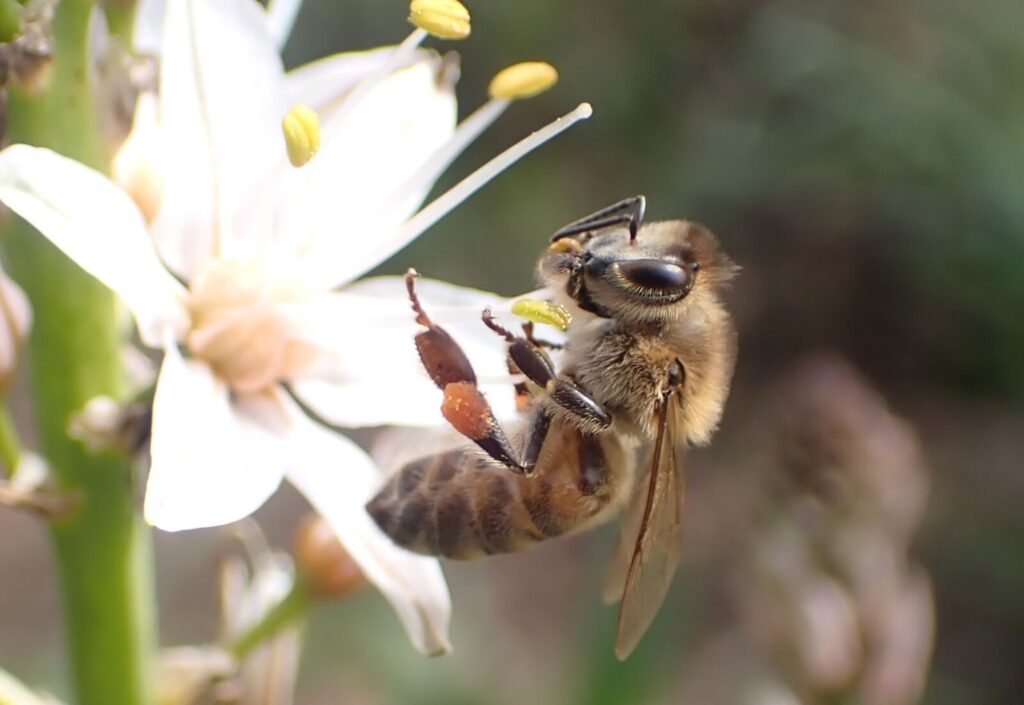
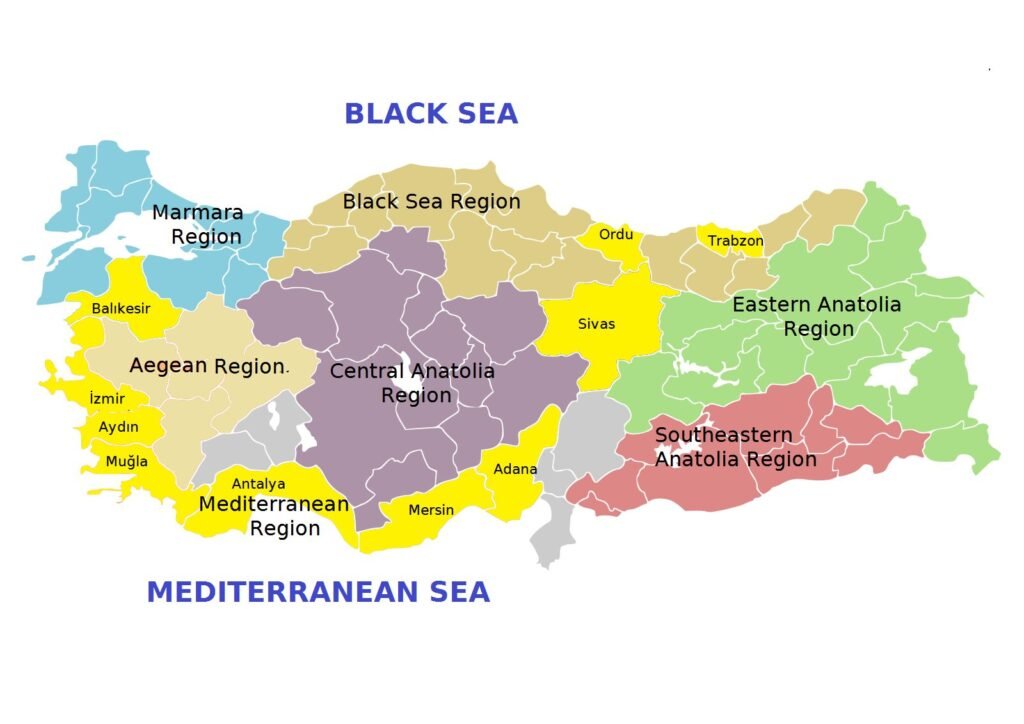
Turkey’s geographic position, bridging European, Middle Eastern, and Central Asian ecological zones, has produced a genuinely unusual concentration of distinct native honeybee subspecies within a single country’s borders. Research on mitochondrial DNA from Turkish honeybee populations has identified three subspecies of the O-lineage established across the country – Apis mellifera anatoliaca distributed through most of the interior, A. m. caucasica in the northeast, and A. m. meda in the southeast – with genetic material from a fourth, distinct African-origin (A) lineage also detected in native bees along Turkey’s Levantine coast. That level of subspecies diversity within one country’s borders is unusual: most individual countries host at most one or two recognized subspecies. This matters beyond biological curiosity – it makes Turkey a genuinely significant location for honeybee genetic conservation, with real practical relevance to global efforts to preserve locally adapted honeybee populations against the homogenizing pressure of a small number of commercially dominant breeding lines spreading worldwide, a pattern already discussed in this site’s coverage of the German dark bee and neighboring Caucasian honey bee, both from populations geographically and genetically adjacent to Anatolia’s own diverse honeybee heritage.
The Black Sea Mountain Log-Hive Tradition
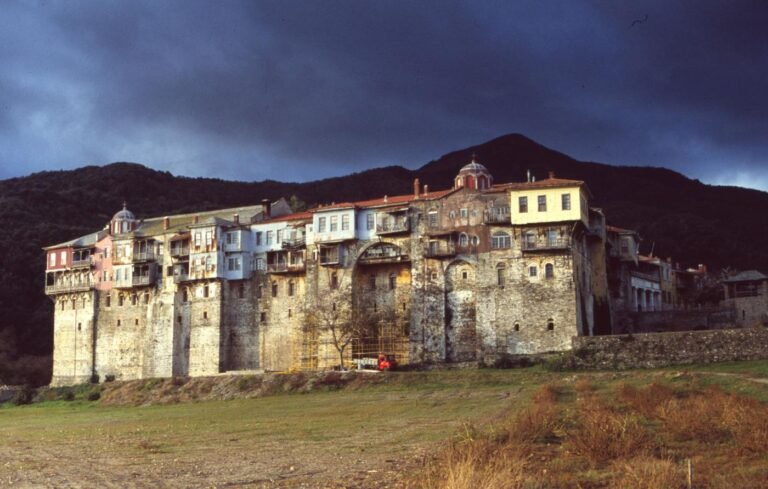
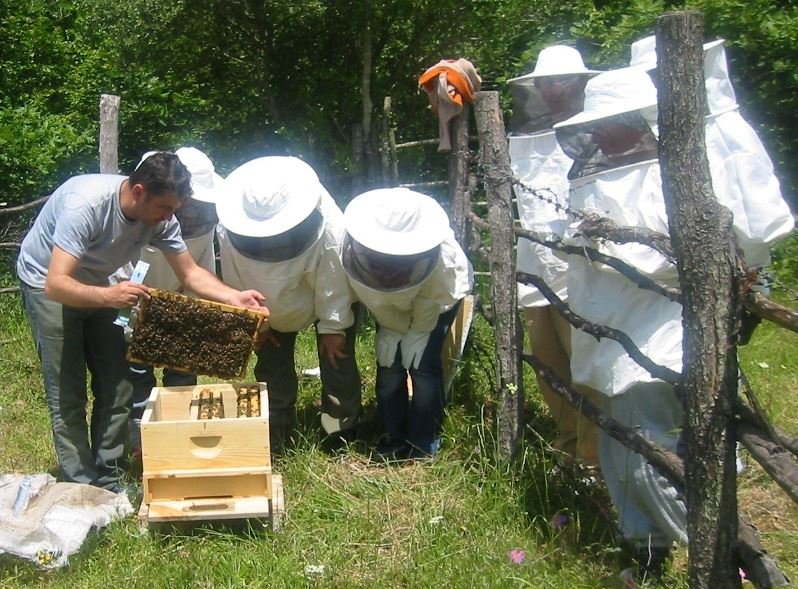
Turkey’s Black Sea coastal mountain regions, including areas around Rize and Artvin, maintain a documented traditional log and cylinder hive culture in more remote, mountainous communities, conceptually related to the same broad category of fixed-comb log and cylinder hive traditions this site has documented independently in Ethiopia, Yemen, and Russia’s bortnichestvo tree-beekeeping practice. This kind of rugged mountain terrain, favoring smaller-scale, locally sourced hive materials over standardized commercial equipment, is a recurring pattern across multiple unrelated traditional beekeeping cultures worldwide, and Turkey’s Black Sea highlands represent a genuine, still-documented example of this broader global pattern.

Anzer Honey: The Rize Highland Specialty
Anzer honey, produced from the exceptionally diverse high-altitude wildflower meadows of the Anzer (Ballıköy) plateau in Rize province’s İkizdere district, is widely regarded as one of the most prized and expensive honey varieties in Turkey and among the most expensive honey varieties in the world generally, rivaling Yemen’s Sidr honey in relative rarity and price. Its premium status rests on a similar underlying logic to Sidr honey’s scarcity-driven pricing: production is confined to a genuinely tiny high-altitude area accessible mainly on foot, with total annual global yield reported at well under a tonne, so total supply is structurally limited by geography rather than purely by market positioning. Reported per-kilogram prices vary widely across retailers and years – a real symptom of how much counterfeit “Anzer” honey circulates – which makes sourcing from a traceable, reputable supplier genuinely important rather than a marketing footnote.
Ottoman-Era Beekeeping
Beekeeping held real economic significance during the Ottoman era, part of the broader agricultural economy of a large, long-lasting empire spanning territory with genuinely diverse beekeeping traditions across its different regions. This article treats Ottoman-era beekeeping’s broad economic significance as well-supported historical context rather than asserting specific, detailed institutional or taxation claims this article cannot verify with full confidence – the honest, appropriately scoped historical claim here is that beekeeping mattered economically across a long imperial period spanning genuinely diverse regional practices, not a precise institutional history this overview can fully reconstruct.
Turkey’s Modern Hive-Count Scale
Turkey is the world’s third-largest honey producer by volume, behind only China and India, producing roughly 95,500 tonnes according to FAO production data – a genuinely significant modern beekeeping scale reflecting both the country’s long beekeeping tradition and substantial contemporary commercial and hobbyist activity. Representing that industry is TAB (Türkiye Arı Yetiştiricileri Merkez Birliği), the national beekeepers’ union founded in 2003, which describes itself as follows:
“Türkiye’de arı ve arıcıların temsil edildiği ve faaliyetlerini sürdüren en büyük sivil toplum kuruluşudur” – “the largest civil society organization representing and conducting activities for bees and beekeepers in Turkey.”
Real Challenges Facing the Industry
Turkish beekeeping faces genuine, documented modern challenges shared with beekeeping industries worldwide, including varroa mite management, pesticide exposure, and habitat and forage pressure affecting colony health, alongside challenges specific to maintaining and protecting the country’s unusually diverse native subspecies heritage against uncontrolled commercial-stock importation and cross-breeding. A 2023 study in the journal Animals on local honeybee populations in southeastern Turkey’s Adıyaman province found that regionally distinct populations carry valuable adaptive traits for arid conditions and recommended active conservation as a genetic resource for future breeding – exactly the kind of genetic-conservation work this diversity requires. This dimension is a genuinely distinctive modern challenge for Turkey specifically, given how much subspecies diversity is concentrated within its borders relative to most other individual countries.
A Familiar Pattern: Mountain Log Hives
Turkey’s Black Sea log-hive tradition bears a genuine structural resemblance to Russia’s bortnichestvo tree-beekeeping tradition covered elsewhere on this site, even though the two developed entirely independently in different mountain ranges with different local bee populations. Both reflect the same underlying pattern: rugged, forested mountain terrain favoring smaller-scale, locally sourced hive materials and techniques passed down through generations of practitioners working the same specific landscape, rather than standardized commercial equipment – a recurring theme across several of the traditional beekeeping cultures this site has now documented in mountainous regions worldwide.
Anatolian Beekeeping in the Wider World
Turkey’s position within this site’s broader coverage of global beekeeping traditions is genuinely distinctive: few other countries combine ancient documented beekeeping history, an unusually diverse concentration of native honeybee subspecies, a persisting traditional mountain hive culture, and a globally significant modern commercial beekeeping scale, all within one nation’s borders. Most traditions covered elsewhere in this series emphasize one or two of these dimensions strongly – Ethiopia’s modern production scale, Slovenia’s cultural depth, Yemen’s scarcity-driven premium honey – while Anatolia genuinely combines several of these dimensions simultaneously, making it a particularly rich single case study within the broader global pattern this site has been documenting.
Anzer Honey vs. Sidr Honey
| Aspect | Anzer Honey (Turkey) | Sidr Honey (Yemen) |
|---|---|---|
| Source | High-altitude multifloral meadow, Rize province | Single tree species, Ziziphus spina-christi |
| Floral character | Diverse multifloral blend | Monofloral, single-species source |
| Scarcity driver | Limited high-altitude growing area | Narrow seasonal bloom window |
| Cultural context | Turkish highland specialty tradition | Deep Middle Eastern cultural/religious significance |
Common Misconceptions
- “Turkey has always used modern frame hives.” Traditional log and cylinder hive culture persists in more remote mountain regions, including parts of the Black Sea highlands, alongside widespread modern commercial beekeeping.
- “Anzer honey is the same kind of honey as typical wildflower honey.” Its specific high-altitude, exceptionally diverse floral source and genuinely limited production area give it a distinct premium status closer to Sidr honey’s scarcity-driven pricing than typical multifloral honey.
- “Turkey’s honeybee population is genetically uniform.” Turkey hosts a genuinely unusual concentration of distinct native honeybee subspecies due to its geographic position bridging multiple ecological zones.
For where Turkey ranks today, see the top honey-producing countries in the world.
Frequently Asked Questions
What is Anzer honey?
A high-altitude multifloral specialty honey from the Anzer (Ballıköy) plateau in Turkey’s Rize province, widely regarded as one of the most expensive honey varieties in the world due to its genuinely limited production area and exceptionally diverse floral source.
Why does Turkey have such diverse honeybee subspecies?
Its geographic position bridging European, Middle Eastern, and Central Asian ecological zones has produced a genuinely unusual concentration of distinct native honeybee subspecies within its borders – research has documented three O-lineage subspecies (anatoliaca, caucasica, and meda) plus genetic material from a fourth lineage on the Levantine coast.
Are traditional log hives still used in Turkey today?
Yes, in more remote, mountainous communities, particularly in parts of the Black Sea coastal highlands around Rize and Artvin, traditional log and cylinder hive culture persists alongside widespread modern beekeeping practice.
Is Turkey a major honey producer by volume, not just by hive count?
Yes – Turkey is the world’s third-largest honey producer by volume according to FAO data, trailing only China and India, with roughly 95,500 tonnes produced annually.
How is Anzer honey different from Sidr honey?
Anzer honey is multifloral, sourced from a diverse high-altitude meadow ecosystem, while Sidr honey is monofloral, sourced specifically from the Sidr tree – both are premium, scarcity-driven honeys but with genuinely different floral origins and character.
Is migratory beekeeping practiced in Turkey?
Yes, moving colonies to follow seasonal bloom across Turkey’s genuinely diverse regional flora, from coastal to mountain to interior plateau ecosystems, is a documented practice within Turkish beekeeping, reflecting the same basic seasonal-forage-chasing logic behind migratory beekeeping traditions documented elsewhere in this site’s coverage, including American migratory beekeeping’s much larger industrial scale.
What challenges does Turkish beekeeping face today?
Varroa mite management, pesticide exposure, and habitat pressure shared with beekeeping industries worldwide, alongside a genetic-conservation challenge specific to protecting Turkey’s unusually diverse native honeybee subspecies heritage – a challenge active research is now specifically documenting province by province.
Further Reading
- Painted Beehive Panels: Slovenia’s Unique Folk Art Tradition
- Western Ghats Honey Hunting: India’s Kadar and Irula Tribes
- Beehive Fences: How Kenyan Farmers Use Bees to Stop Elephants
Primary sources: the Turkish Beekeepers' Central Union (TAB); Demirel, “Apiculture in Hittite cuneiform texts,” The European Zoological Journal (2022); FAO honey production rankings; and Oztokmak et al., “Conservation of Local Honeybees in Southeastern Turkey,” Animals (2023).