Last Updated September 15, 2026
Walk through a traditional Slovenian apiary and you won’t just see rows of identical hive boxes – you’ll see a gallery. On the front of each compartment in a traditional Slovenian horizontal beehive sits a small, hand-painted wooden panel, often depicting anything from religious scenes to village satire to animals dressed as humans going about improbably human business. This distinctive folk art tradition, known as panjske končnice, is one of Slovenia’s most genuinely unique cultural contributions to world beekeeping, developed independently of – though closely intertwined with – the hive engineering already covered in our existing AZ beehive article and the teaching legacy of Anton Janša covered elsewhere on this site.
Key Takeaways
- The oldest surviving panel, “Božjepotna Marija” (Pilgrim Mary), is dated 1758 and is held at the Museum of Apiculture in Radovljica, which displays more than 600 original panels – Slovenia’s only specialized national museum for the tradition.
- The painting tradition most likely began in the mid-18th century in Upper Carniola, the same region where beekeeper-educator Anton Janša lived, and peaked in popularity between 1820 and 1880.
- Named historical painters, including Leopold Layer (active mid-1800s) and Gregor Benedik (died 1923), produced dozens of documented panels each, alongside many painted by beekeepers themselves.
- In December 2022, UNESCO added “Beekeeping in Slovenia, a Way of Life” to its Representative List of the Intangible Cultural Heritage of Humanity, formally recognizing the painted-panel tradition alongside the country’s broader beekeeping culture.
Table of Contents
- Key Takeaways
- What Are Panjske Končnice?
- Likely Origins
- Recurring Subject Matter
- A Genuine, If Debated, Practical Function
- Who Actually Painted Them?
- Museums and Preservation Today
- UNESCO and Slovenia’s Beekeeping Heritage
- Painted Panels in the Wider World of Beekeeping Folk Art
- Painted Panels vs. Other Beekeeping Folk Art Traditions
- Common Misconceptions
- FAQ
What Are Panjske Končnice?
Panjske končnice are the small, individually hand-painted wooden front panels used on traditional Slovenian horizontal beehives (“kranjiči”), with each panel serving as the visible entrance-end board for one compartment within a larger hive structure housing multiple colonies side by side. Because a traditional Slovenian apiary typically arranged many such compartments together, a single hive structure could display an entire small gallery of individually painted scenes, each one distinct, rather than a uniform, unmarked row of identical hive fronts.
Likely Origins
Painted decorations began appearing on hive fronts in the middle of the 18th century, most likely first in the Upper Carniola region – the same area where beekeeper and educator Anton Janša lived and worked. The oldest surviving dated panel, “Božjepotna Marija” (“Pilgrim Mary”), is dated 1758 and is held today in the Museum of Apiculture’s collection in Radovljica. The tradition’s most prolific period ran from roughly 1820 to 1880, after which it gradually declined into the early 20th century as hive designs and rural life changed. Pinning down an exact founding moment beyond that oldest surviving panel is inherently harder than dating a single invention credited to one named inventor – this was a distributed craft tradition that spread across many individual beekeepers and painters over more than a century, not a clean, single-point origin.
Recurring Subject Matter
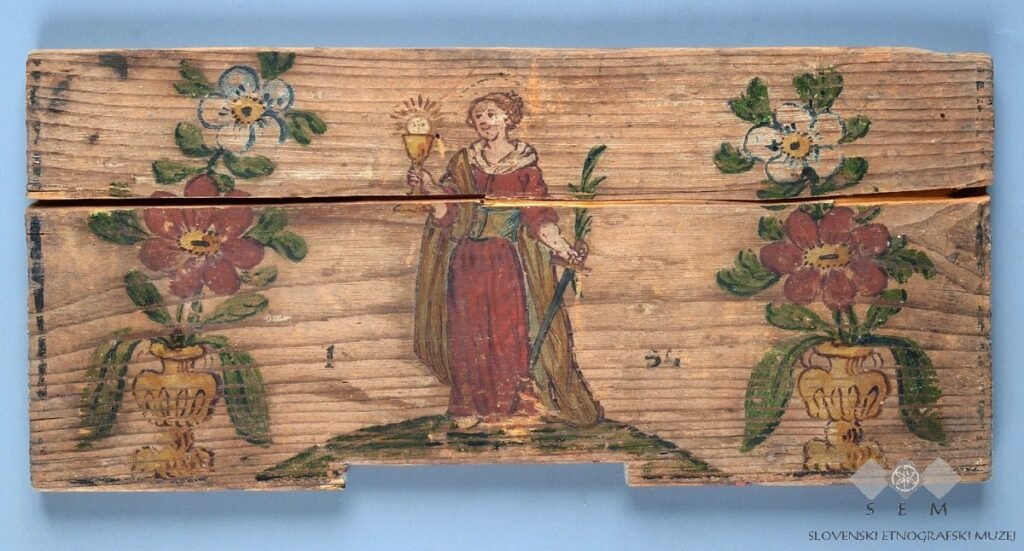
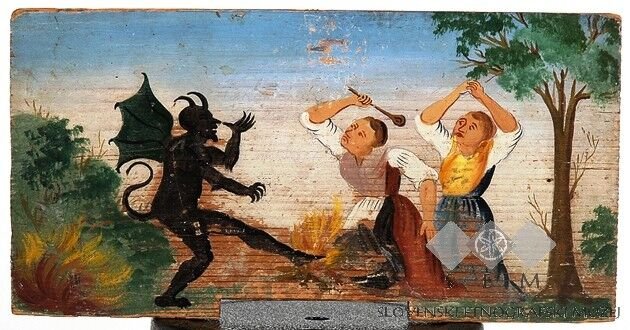
Panjske končnice cover a genuinely wide range of subject matter: religious imagery drawn from illustrated Bibles, icons, and glass paintings; depictions of everyday village and rural life; historical events; hunting scenes; and – among the tradition’s most distinctive and frequently cited motifs – satirical, moralizing scenes in which animals take on human roles and behaviors, often used to poke fun at recognizable human foibles, vices, or social types. This anthropomorphic, satirical strand is part of what gives the tradition its genuinely distinctive character compared to more purely devotional or purely decorative folk painting traditions elsewhere in Europe – it functioned partly as a form of accessible, visually engaging social commentary and humor available to ordinary rural communities.
A Genuine, If Debated, Practical Function
Beyond decoration and cultural expression, the painted panels are widely believed to have served a genuine practical function: helping bees more reliably recognize and return to their own specific hive entrance within a large apiary containing many visually similar compartments arranged closely together. It is worth noting honestly that the precise extent to which distinct visual patterns actually improve individual bee homing accuracy, as opposed to bees primarily relying on other cues like scent and spatial memory, is a question this article does not claim to resolve with full scientific certainty – what can be said confidently is that this practical-function theory is a genuine, commonly cited explanation within the tradition itself, not a modern retrospective invention with no grounding in beekeeper practice or belief.
Who Actually Painted Them?
Panels were painted both by the beekeepers themselves and, in many documented cases, by dedicated local folk painters commissioned specifically for the work – and some of those painters are individually documented today. Leopold Layer, active in the mid-1800s, has dozens of surviving dated panels attributed to him, including a “Sv. Barbara” (Saint Barbara) panel dated 1854. Gregor Benedik (died 1923) is another documented painter whose work, including satirical scenes, survives in museum collections. This range matters for understanding the tradition accurately: it was not exclusively either “beekeepers doodling on their own hives” or “professional artists working to formal commission,” but a genuine mixture of both across different communities, periods, and individual circumstances, producing real variation in artistic skill and stylistic sophistication across the surviving body of work.
Museums and Preservation Today
Slovenia maintains active institutional preservation of this tradition, centered on the Museum of Apiculture (Čebelarski muzej) in Radovljica – the country’s only specialized national museum dedicated to beekeeping – which displays more than 600 original panjske končnice spanning the 18th century through the tradition’s early-20th-century decline. This institutional preservation effort matters because, like many folk art traditions tied to functional everyday objects rather than fine-art originals intentionally created for permanent display, individual panels were genuinely vulnerable to loss, damage, and simple attrition over time as old hives were replaced or fell out of use – active museum preservation is part of why a meaningful historical record of the tradition survives today rather than having been largely lost.
UNESCO and Slovenia’s Beekeeping Heritage
On December 1, 2022, UNESCO inscribed “Beekeeping in Slovenia, a Way of Life” on its Representative List of the Intangible Cultural Heritage of Humanity – formal international recognition covering the country’s beekeeping culture as a whole, including hive design, painted panels, and the broader cultural practices tied to beekeeping, part of the same pattern of formal heritage protection already documented in this series for Russia’s bortnichestvo tree-beekeeping tradition. This kind of recognition matters specifically because panjske končnice, like many folk-craft traditions tied to everyday functional objects, depends on active transmission of both painting skill and cultural knowledge to survive – formal heritage status helps support continued preservation and public awareness rather than leaving the tradition’s survival purely to informal, unsupported continuity.
Painted Panels in the Wider World of Beekeeping Folk Art
Panjske končnice represent a genuinely distinctive entry in the broader, worldwide pattern of beekeeping-adjacent folk art and craft traditions this site has begun documenting – a category that also includes the ownership-marking carvings used in Russian bortnichestvo and the cultural symbolism explored in our broader article on bee symbolism across cultures. What distinguishes the Slovenian panels within this pattern is the sheer individual artistic expression involved – unlike a simple ownership mark or a shared cultural symbol, each panel represents a genuinely unique, individually composed artistic statement, often by a documented named painter, giving the tradition a personal and creative dimension not found in most other functional beekeeping marking systems.
Painted Panels vs. Other Beekeeping Folk Art Traditions
| Aspect | Slovenian Painted Panels | Bortnichestvo Ownership Marks |
|---|---|---|
| Medium | Painted wooden hive-front panels | Carved symbols on living trees |
| Primary purpose | Decoration, folk expression, possible hive recognition | Property/ownership marking within shared forest |
| Subject range | Religious, satirical, everyday-life scenes | Simple identifying symbols |
| Oldest documented example | 1758 (“Božjepotna Marija”) | N/A – practice, not individual dated artifacts |
| Modern status | UNESCO-recognized (2022), actively preserved museum heritage | Practice largely historical, symbol tradition faded |
Common Misconceptions
- “Panjske končnice were purely religious icon painting.” Subject matter spans religious scenes, satire, everyday rural life, and anthropomorphic animal scenes – a genuinely broad range, not a single devotional genre.
- “Only anonymous, untrained beekeepers painted these panels.” Named, documented painters like Leopold Layer and Gregor Benedik produced dozens of dated panels each, alongside work by beekeepers themselves.
- “The practical hive-recognition function is scientifically proven fact.” It is a genuine, commonly cited explanation within the tradition, but this article does not claim it is a fully scientifically settled finding about bee homing behavior specifically.
Frequently Asked Questions
What does “panjske končnice” mean, and what is the oldest surviving example?
It refers to the traditional Slovenian hand-painted wooden front panels used on horizontal beehive compartments. The oldest surviving dated panel, “Božjepotna Marija” (Pilgrim Mary), dates from 1758 and is held at the Museum of Apiculture in Radovljica.
When did this painting tradition begin, and when was it most popular?
It began in the mid-18th century, most likely first in Upper Carniola, and was most prolific between 1820 and 1880, after which it gradually declined into the early 20th century.
Who painted panjske končnice historically?
Both beekeepers themselves and dedicated local folk painters. Some painters are individually documented today, including Leopold Layer, whose dozens of surviving dated panels include a “Sv. Barbara” from 1854, and Gregor Benedik, who died in 1923.
Is Slovenia’s beekeeping tradition officially recognized by UNESCO?
Yes – on December 1, 2022, UNESCO inscribed “Beekeeping in Slovenia, a Way of Life” on its Representative List of the Intangible Cultural Heritage of Humanity, covering the country’s beekeeping culture as a whole, including the painted-panel tradition.
Did the painted panels actually help the bees?
They are widely believed to have helped bees recognize their specific hive entrance among many similar compartments, a genuine and commonly cited explanation within the tradition, though this article does not claim the precise effect on bee homing behavior is fully scientifically settled.
Can you still see panjske končnice today?
Yes – the Museum of Apiculture in Radovljica, Slovenia’s only specialized national beekeeping museum, displays more than 600 original panels, and the tradition continues in a living, practiced form among some Slovenian beekeepers and folk artists today.
Was this tradition unique to Slovenia?
While decorated hive elements appear in various forms across different European beekeeping traditions, panjske končnice as a specific, sustained, richly developed painting tradition with its own recognizable stylistic conventions, named painters, and recurring motifs is consistently treated as a distinctively Slovenian cultural phenomenon.
Further Reading
- Western Ghats Honey Hunting: India’s Kadar and Irula Tribes
- Anatolian Beekeeping: Turkey’s Ancient and Modern Tradition
- Beehive Fences: How Kenyan Farmers Use Bees to Stop Elephants
For more on this topic, see the Slovenian Beekeepers’ Association, custodian of the painted-panel tradition and UNESCO’s official listing for “Beekeeping in Slovenia, a Way of Life”.