Last Updated September 16, 2026
The Mawalis of the Sundarbans, the world’s largest mangrove forest spanning the India-Bangladesh border, are one of the only honey-hunting communities on Earth who harvest wild honey in territory shared with a large population of man-eating tigers — a risk serious enough that credible estimates put annual tiger-attack deaths in and around the Indian Sundarbans at around 30 people, with honey collectors consistently among the professions most affected. Every April through June, Mawali crews still go in anyway, following a tradition passed down for generations to harvest honey from Apis dorsata, the giant honey bee, from combs built high in the mangrove canopy.
Key Takeaways
- The Sundarbans is the world’s largest contiguous mangrove forest, covering roughly 10,000 square kilometers split between India (about 40%) and Bangladesh (about 60%), and it hosts one of the last significant wild tiger populations living in such close proximity to a human harvesting economy.
- Mawalis harvest honey from Apis dorsata, the giant honey bee, whose colonies migrate into the Sundarbans in large numbers beginning around December, with the main honey harvest concentrated in the April-to-June season.
- Local communities and researchers estimate around 30 tiger-attack deaths occur annually in and around the Indian Sundarbans, while official state forest department figures are considerably lower, at roughly seven to eight per year — a gap researchers attribute partly to underreporting of informal, undocumented forest access.
- A peer-reviewed study of tiger-attack casualties recorded 368 deaths and 63 injuries in the Indian Sundarbans between 1999 and 2014, with honey collectors, fishermen, crab collectors, and woodcutters as the professions most affected.
- Despite the danger, Sundarbans honey is prized for its distinctive flavor, drawn from the forest’s unique mix of mangrove flowering species found nowhere else, and the harvest remains a genuine cultural and economic tradition rather than a purely commercial extraction operation.
Table of Contents
- The Sundarbans: World’s Largest Mangrove Forest
- How the Giant Honey Bee Harvest Works
- The Real Scale of the Tiger Risk
- Why the Tradition Continues
- Firsthand Accounts and the Numbers Behind the Risk
- Frequently Asked Questions
The Sundarbans: World’s Largest Mangrove Forest
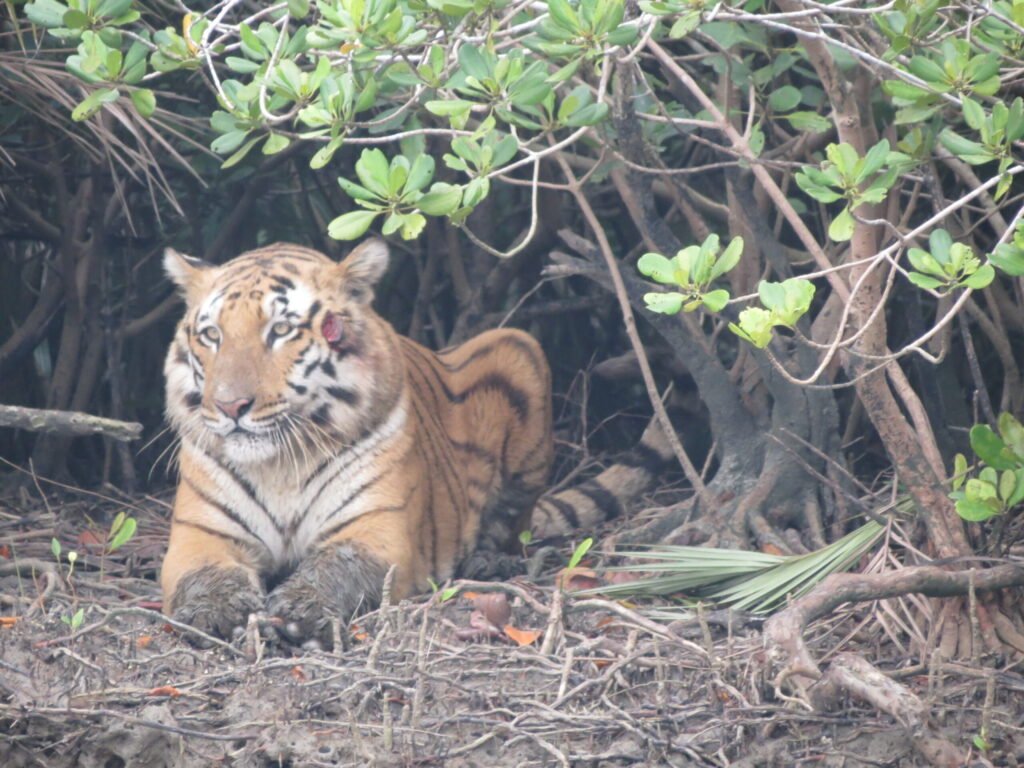
The Sundarbans — the name translates roughly as “beautiful forest” — is the largest contiguous mangrove forest on Earth, covering approximately 10,000 square kilometers of tidal waterways, mudflats, and dense mangrove stands straddling the delta where the Ganges, Brahmaputra, and Meghna rivers meet the Bay of Bengal. Roughly 60% of the forest lies within Bangladesh and 40% within India, and both sides support significant populations of the Bengal tiger, which has adapted to this unusual amphibious mangrove habitat in a way tigers elsewhere haven’t. That combination — a working forest economy of fishing, wood-cutting, crab-collecting, and honey-hunting operating inside genuine tiger territory — makes the Sundarbans one of the most distinctive human-wildlife coexistence zones left in the world.
How the Giant Honey Bee Harvest Works
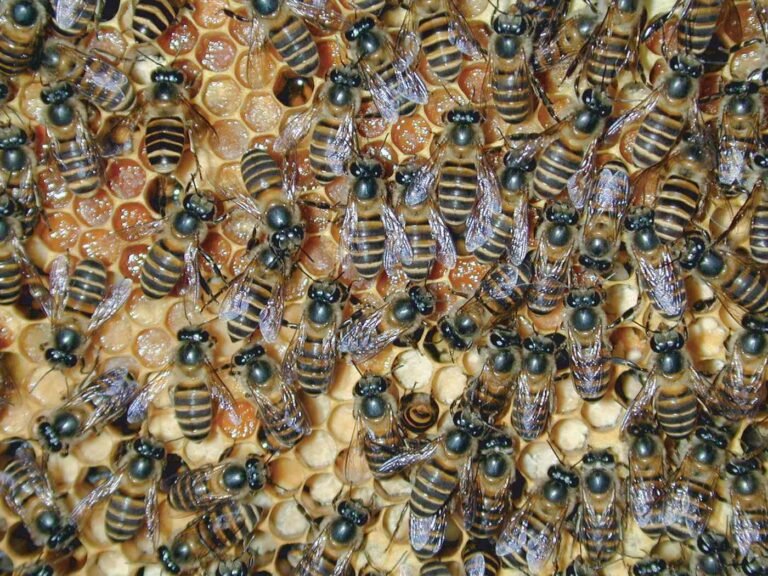
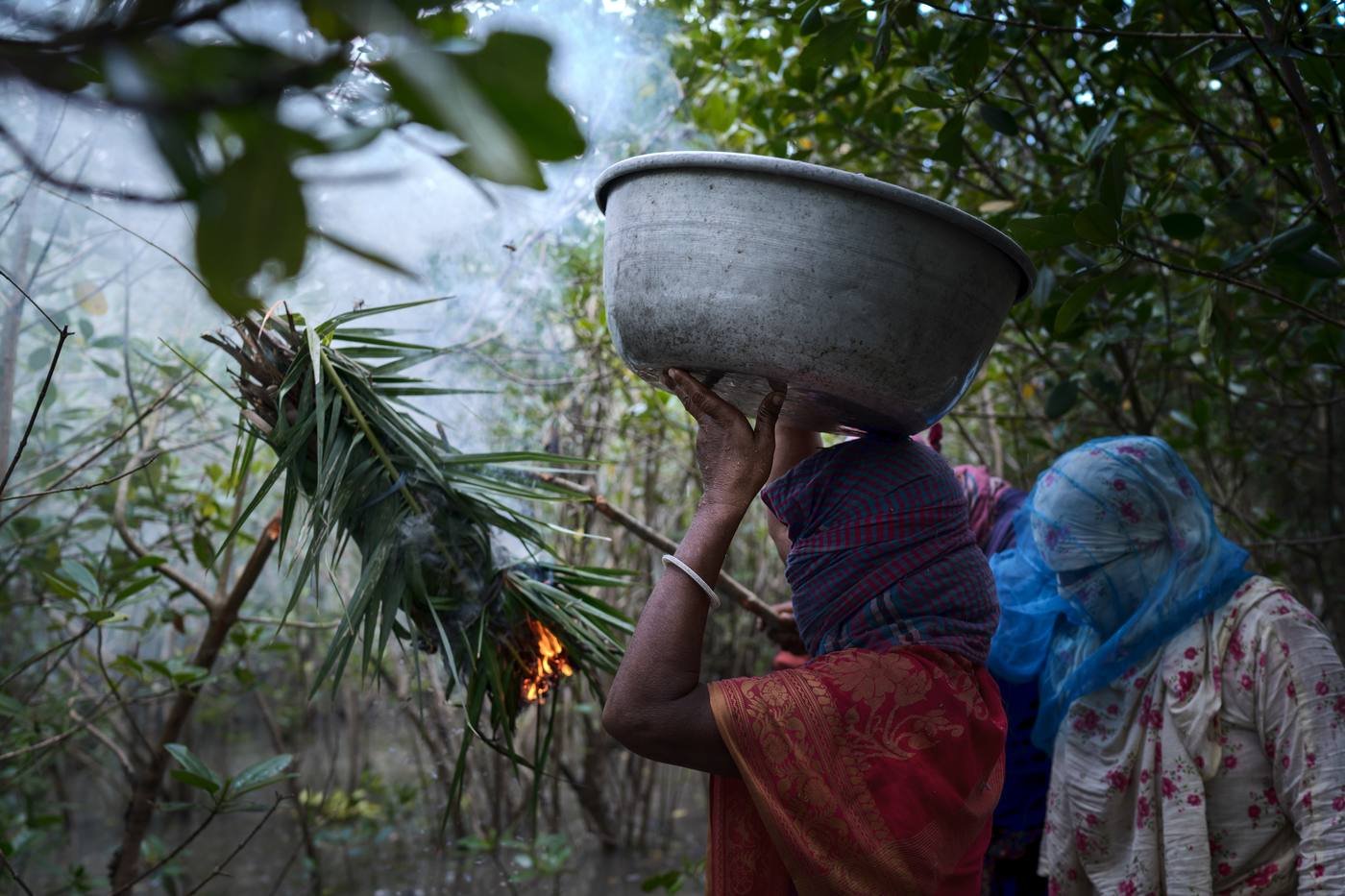
The honey harvested in the Sundarbans comes from Apis dorsata, the giant honey bee — the largest honey bee species in the world, which this site has covered in detail elsewhere — whose colonies build large single-comb nests high in tree canopies rather than nesting in cavities. Giant honey bee colonies migrate into the Sundarbans in substantial numbers beginning around December, and the traditional harvest season runs from April through June, when Mawali crews, organized in small groups following customs passed down across generations, travel by boat deep into the forest to locate active combs, smoke the bees off, and cut the honey-laden comb down by hand — physically demanding, precisely-timed work performed with minimal modern equipment.
The Real Scale of the Tiger Risk
The tiger risk facing Mawalis isn’t folklore or exaggeration — it’s documented in peer-reviewed research. A published study characterizing human casualties from tiger attacks in the Indian Sundarbans recorded 368 deaths and 63 injuries between 1999 and 2014 alone, with fishermen the most frequently affected group, followed by honey collectors, woodcutters, and forest department staff — honey collectors face a genuinely elevated per-trip risk despite spending fewer total months in the forest each year than fishermen do. Estimates of current annual deaths vary considerably depending on the source: local communities, researchers, and NGOs working in the region put the figure at around 30 deaths per year in and around the Indian Sundarbans, while official state forest department statistics report a considerably lower seven to eight deaths annually — a gap researchers attribute at least partly to unofficial, undocumented forest access that never gets recorded in formal casualty counts. Casualties cluster in two seasonal peaks, the pre-monsoon period from April to June (which overlaps directly with the main honey harvest) and again in the early winter months from January to March, with the highest-risk hours falling in the mid-morning and mid-afternoon.
Why the Tradition Continues
Given the documented risk, the persistence of Mawali honey hunting says something real about both economic necessity and cultural continuity in the region. For many Sundarbans communities, honey collection remains one of the few available livelihoods tied directly to the forest, and Sundarbans honey itself commands a premium precisely because of its distinctive character — a flavor profile shaped by the forest’s unusual mix of mangrove-specific flowering plants unavailable to bees anywhere else, similar in spirit to how this site’s coverage of other indigenous honey-hunting traditions in India’s Western Ghats and Nepal’s cliff-face Gurung tradition shows genuine cultural knowledge and generational skill behind what can look from the outside like simple foraging. Local folk belief and ritual — including invoking the forest deity Bonbibi for protection before entering tiger territory — remains part of how many Mawali crews frame and prepare for the harvest, a reminder that the risk is fully understood and culturally addressed, not ignored.
Firsthand Accounts and the Numbers Behind the Risk
Preparation for the harvest is as ritualized as the harvest itself. Before entering tiger territory, many Mawali crews hold a ceremony invoking Bonbibi, the forest’s guardian deity in local folk belief, asking for protection from Dakkhin Rai, the tiger-formed adversary believed to threaten anyone who enters without her blessing — a practice observed by both Hindu and Muslim honey-collecting families in the region, reflecting a shared, syncretic relationship with the forest’s real dangers.
The bee itself is worth understanding on its own terms, not just as a backdrop to the risk. Apis dorsata colonies build a single exposed comb that can exceed a meter across, hanging from a high branch with no cavity or entrance to defend — a nesting strategy this site covers in full in its guide to the giant honey bee, and one that shapes exactly how a harvesting crew has to approach a hive: from below, using smoke, and quickly, since a fully exposed comb offers the bees far less to lose by mounting a mass defense than a colony sheltered inside a hollow tree would.
None of that makes the honey any less real a draw. Sundarbans honey collected from Apis dorsata combs carries a distinctive taste profile shaped by mangrove-specific flowering species — keora, goran, and other salt-tolerant trees found nowhere outside this particular tidal ecosystem — which is part of why buyers seek it out specifically rather than treating it as interchangeable with honey from inland Indian apiaries.

Long-form reporting from inside Mawali honey-hunting crews puts a human voice on the casualty statistics. One honey hunter, describing a near-fatal encounter, told a journalist:
“When the tiger roared, I screamed, and the other two came running back, but the tiger jumped in front of me and knocked me over and grabbed me easily by my shoulder.”
Zahangir, Sundarbans honey hunter, quoted in Longreads, “The Honey Hunters”
| Metric | Figure |
|---|---|
| Deaths recorded, 1999-2014 (peer-reviewed study) | 368 |
| Injuries recorded, 1999-2014 | 63 |
| Estimated annual deaths (local/NGO sources) | ~30 per year |
| Official state forest department figure | ~7-8 per year |
| Peak-risk seasons | April-June and January-March |
Background on the ecosystem itself is available from the UNESCO-listed Sundarbans National Park entry.
Frequently Asked Questions
What bee species produces Sundarbans honey?
Apis dorsata, the giant honey bee, which builds large exposed single-comb nests in tree canopies and migrates into the Sundarbans in significant numbers each year.
How dangerous is Sundarbans honey hunting, really?
Genuinely dangerous: a peer-reviewed study recorded 368 tiger-attack deaths in the Indian Sundarbans between 1999 and 2014 alone, with honey collectors among the professions most affected, and current annual estimates from local sources run around 30 deaths per year.
When does the Sundarbans honey harvest happen?
The main harvest season runs from April through June, coinciding with one of the two annual peak periods for tiger-attack casualties in the region.
Who are the Mawalis?
The Mawalis are the traditional honey-collecting community of the Sundarbans, a livelihood and cultural practice passed down across generations in forest-dependent communities on both the Indian and Bangladeshi sides.
Why is Sundarbans honey considered special?
It’s valued for a distinctive flavor drawn from the forest’s unique combination of mangrove-specific flowering plants, a floral source unavailable to bees anywhere outside this particular ecosystem.
Related Reading
Image credits: Photo: Mohammad Rakibul Hasan, CC BY 4.0, via Wikimedia Commons.