Honeybees understandably get most of the public attention, but this site now covers well over a dozen distinct native North American bee species, each with genuinely distinct nesting behavior, foraging specialization, and appearance. This chart organizes every one of them by how they actually nest and live — the single most useful sorting principle for identification — so you can find the species you spotted in your yard and jump straight to its full guide.
Table of Contents
- How to Use This Chart
- Ground-Nesting Solitary Bees
- Cavity and Stem-Nesting Solitary Bees
- From Extreme Specialists to Generalist Foragers
- A Quick Note on Pollen-Carrying Differences
- Social Native Bees
- Nest Parasites: Cuckoo Bees
- How These Species Relate to Managed Honeybees
- Master Native Bee Guide
- Quick Decision Guide: What Am I Looking At?
- What This Means for Garden Habitat
- Common Mistakes When Using a Chart Like This
- Frequently Asked Questions
How to Use This Chart
Each section groups species by real nesting biology rather than superficial coloring or size, since nesting behavior is both the most reliable identification clue and the most actionable piece of information for anyone trying to support a specific species in their own yard. Find the nesting style that matches what you observed — bees emerging from ground burrows, bees using hollow stems, a fuzzy bumblebee-like colony, or a bee that never seems to be provisioning its own nest at all — then click through for the full species guide.
Ground-Nesting Solitary Bees
The majority of native bee species nest in the ground, digging individual burrows in bare or sparsely vegetated soil. Each female provisions her own nest independently, and several species covered here nest in dense aggregations that can look alarming but represent completely normal, harmless behavior.
| Species | Notable Trait | Active Season |
|---|---|---|
| Mining Bees | Early spring emergence | Early spring |
| Alkali Bees | Managed for alfalfa seed pollination | Summer |
| Digger Bees | Fast, agile fliers | Spring/summer |
| Squash Bees | Extreme cucurbit specialist | Summer, dawn-active |
| Cactus Bees | Desert cactus specialist | Late spring/early summer |
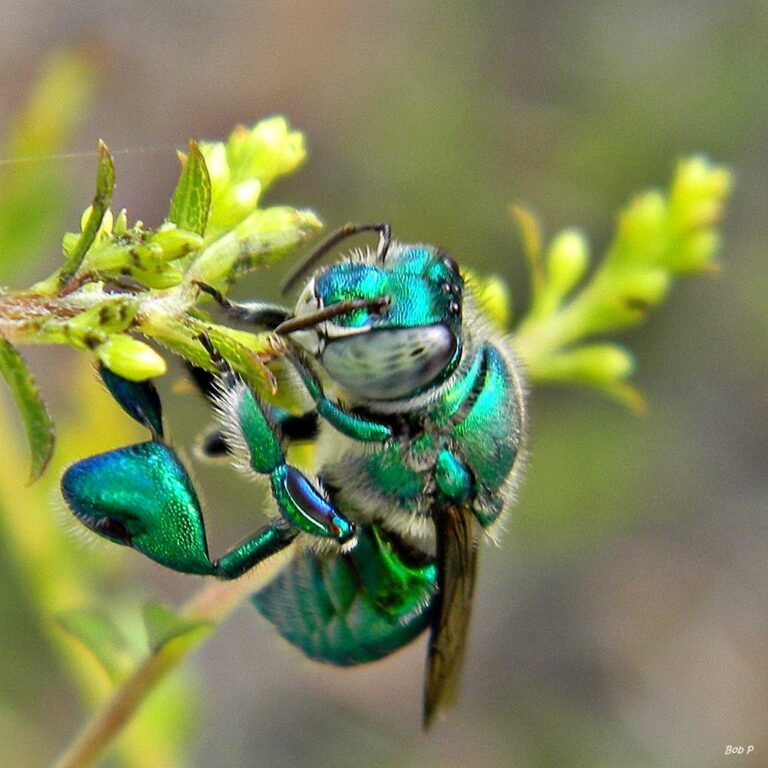
| Sweat Bees | Tiny, often metallic green | Spring through fall |
| Oil-Collecting Bees | Collects floral oil, not just pollen | Summer |
| Plasterer Bees | Cellophane-like nest lining | Varies by species |
| Long-Horned Bees | Males have very long antennae | Summer |
Cavity and Stem-Nesting Solitary Bees
These species nest in pre-existing narrow cavities — hollow or pithy plant stems, old beetle tunnels in wood, or similar gaps — rather than digging into the ground. This makes them the group most directly supported by leaving dead stems standing or providing a bee house.
| Species | Notable Trait | Nest Material |
|---|---|---|
| Mason Bees | Excellent orchard pollinators | Mud |
| Leafcutter Bees | Cuts distinctive leaf discs | Cut leaf pieces |
| Small Carpenter Bees | Genuinely tiny, easily overlooked | Pithy stems |
| Yellow-Faced Bees | Carries pollen internally, not externally | Cellophane-like secretion |
| Wool Carder Bees | Aggressively territorial males | Plant fiber “wool” |
From Extreme Specialists to Generalist Foragers
A genuinely useful additional way to think about the species on this chart is where they fall on a spectrum from extreme host-plant specialization to broad generalist foraging. Squash bees, cactus bees, and oil-collecting bees sit at the specialist end, tied tightly to one narrow plant group or resource and unable to simply switch to whatever else happens to be blooming. Mining bees, digger bees, and bumblebees sit closer to the generalist end, visiting a wide range of flowering plants across their active season. Understanding where a given species falls on this spectrum matters practically: a specialist species can’t be supported by “pollinator-friendly” plantings in general the way a generalist can, since it needs its specific host plant present and healthy.
Social Native Bees
Unlike the great majority of North American native bees, which are solitary, this group forms genuine colonies with a queen and workers cooperating together, closer in structure to honeybees than to most other species on this chart.
| Species | Colony Structure | Notable Trait |
|---|---|---|
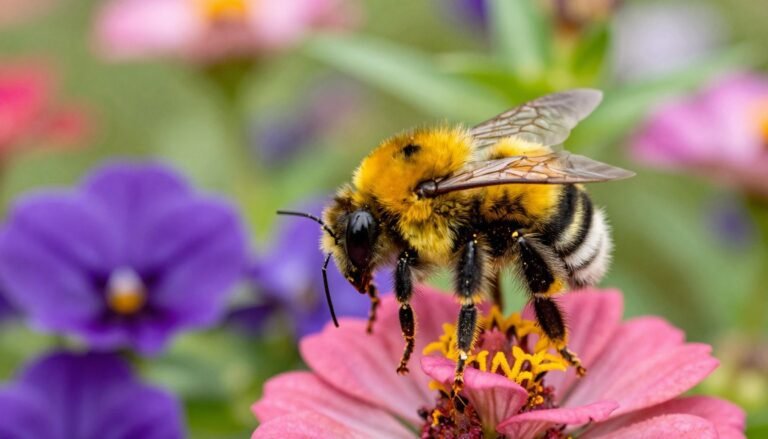
| Bumblebees | Queen + workers, annual colony | Buzz pollination capability |
Nest Parasites: Cuckoo Bees
These species never build or provision a nest of their own, instead relying entirely on another bee species’ labor to raise their offspring — a genuinely distinct reproductive strategy from every other group on this chart.
| Species | Host Target | Key Identification Clue |
|---|---|---|
| Cuckoo Bees | Various solitary bee nests | No pollen-carrying hairs |
| Cuckoo Bumblebees | Established bumblebee colonies | No pollen baskets, thicker exoskeleton |
A Quick Note on Pollen-Carrying Differences
Most bees on this chart carry pollen externally on specialized body hairs, typically on the hind legs, but two genuinely notable exceptions are worth calling out directly: leafcutter bees carry pollen on the underside of the abdomen rather than the legs, and yellow-faced bees carry pollen internally, having swallowed it, rather than externally at all. These aren’t minor cosmetic differences but real, distinct pollen-transport strategies, and noticing which method a bee is using can itself be a useful identification clue alongside nesting behavior.
How These Species Relate to Managed Honeybees
None of the species covered in this chart compete meaningfully with managed honeybee colonies or pose any threat to them; if anything, the relationship runs the other direction, with some research suggesting high honeybee density can create local floral-resource competition pressure on native bees rather than the reverse. Beekeepers reading this chart should understand these species as ecologically complementary neighbors rather than either a threat or a resource relevant to apiary management specifically, distinct from the predatory wasps and hornets covered in this site’s separate wasp identification chart.
Master Native Bee Guide
For a broader introduction to native bee diversity before diving into individual species, the native bee species overview already on this site is the right starting point, covering the general landscape of native pollinators that the more detailed species guides above build on.
Quick Decision Guide: What Am I Looking At?
If you’re seeing many small holes in bare soil with bees flying in and out, you’re almost certainly looking at one of the ground-nesting species above, most likely mining bees if it’s early spring. If you’re seeing activity around hollow stems, drilled wood blocks, or a bee house, you’re looking at one of the cavity-nesting species, most commonly mason bees or leafcutter bees depending on season. A large, fuzzy, colonial insect visiting flowers in numbers is almost certainly a bumblebee. And a bee that looks slightly “off” — sleeker, less hairy, or oddly proportioned compared to bees actively foraging nearby — may be a cuckoo bee, since these species have visibly reduced pollen-carrying structures they simply don’t need.
What This Means for Garden Habitat
Because this chart is organized by nesting behavior, it doubles as a practical habitat guide: supporting ground-nesting species means leaving some bare, undisturbed soil rather than mulching or planting every square foot, while supporting cavity-nesting species means leaving dead or hollow plant stems standing rather than cutting everything back each fall. A garden that offers both types of nesting habitat, alongside diverse flowering plants across the growing season, realistically supports the widest range of species covered on this chart at once.
Common Mistakes When Using a Chart Like This
The most common mistake is assuming every ground-nesting bee sighting represents a threat requiring removal, when the great majority of species in that group are docile solitary bees posing essentially no sting risk to people. A second common mistake is assuming all native bees look broadly similar to honeybees, when several species on this chart, particularly sweat bees and small carpenter bees, are considerably smaller and easy to mistake for flies or other unrelated insects entirely.
Why is bumblebees the only species listed in the social bees category?
Bumblebees are genuinely the primary social native bee most readers of this site are likely to encounter regularly; while a small number of other native bee species show varying degrees of social or communal nesting behavior, true colonial social structure with a queen and worker caste is otherwise largely limited to honeybees among the bees commonly discussed in North American beekeeping and gardening contexts.
Are cuckoo bees and cuckoo bumblebees dangerous or harmful to have around?
No, neither poses any meaningful sting risk to people, and both are naturally occurring parts of native bee ecology rather than something requiring control or removal, even though their reproductive strategy of relying on another bee’s labor can sound alarming when first learning about it.
Which species on this chart is the easiest for a beginner to confidently identify?
Bumblebees tend to be the most approachable starting point given their large size, distinctive fuzzy appearance, and colonial behavior, while distinguishing between several of the smaller ground-nesting or cavity-nesting solitary species often takes more practice and closer observation of nesting behavior specifically.
Do the ground-nesting species on this chart ever nest in lawns specifically?
Yes, several ground-nesting species will readily nest in lawns, particularly thinner or sparser turf areas, and finding small burrow openings in a lawn during spring or summer is a common, harmless native bee encounter rather than a sign of a lawn problem needing treatment.
Should I be concerned about a large number of ground-nesting bees appearing in the same area at once?
No, dense nesting aggregations are a normal, well-documented behavior for several species on this chart, including mining bees and cactus bees, and represent good nesting habitat conditions rather than any kind of infestation or problem requiring intervention.
Are any of these native bees considered rare or of conservation concern?
Population status varies by species, with some, like the highly specialized oil-collecting bees and cactus bees, tied closely to specific habitat and host-plant availability in a way that makes them more vulnerable to local habitat loss than the more widespread generalist species also covered on this chart.
Is it possible for a single garden to realistically support species from every category on this chart?
Yes, with enough habitat diversity a single yard can realistically support ground-nesters, cavity-nesters, bumblebees, and even the cuckoo species that depend on them, since cuckoo bees and cuckoo bumblebees will only be present if their specific host species are already established nearby, making a genuinely diverse garden the foundation for the whole chart’s worth of species potentially showing up over time.
Why does small carpenter bees appear here but full-sized carpenter bees don’t?
Regular carpenter bees are covered elsewhere on this site within the predatory-and-lookalike-insect identification cluster rather than this native bee chart specifically, since that article’s focus centers more on the “is it damaging my home” identification question than on the nesting-biology framework this chart is built around. The same site also maintains a companion wasp and predatory insect comparison chart for readers whose sighting turns out not to be a bee at all.
Will this chart eventually include species not currently found in North America?
This chart and the underlying species guides are focused specifically on native North American bee species relevant to most readers of this site, so species from other continents aren’t part of its current or planned scope, unlike some of the honey bee species content covered elsewhere on the site that does address genuinely global Apis diversity.
Is there a best time of year to start watching for native bees using this chart?
Spring is generally the best starting point, since several ground-nesting species like mining bees emerge early in the season, giving observant gardeners a natural first entry point before the broader mix of summer-active species covered elsewhere on this chart begins appearing as the growing season progresses.
Frequently Asked Questions
Which of these native bees are actually dangerous to people?
None of them pose meaningful sting risk under normal circumstances; as solitary or small-colony species without the large, aggressively defended colonies honeybees and social wasps maintain, unprovoked stings from any species on this chart remain rare.
Do any of these native bees compete with honeybees for the same flowers?
Some overlap in flower visitation is normal and generally not considered a significant problem, though several species here are specialists tied to specific host plants that honeybees rarely if ever visit, reducing direct competition in practice.
How can I attract the widest variety of these species to my own yard?
Providing both undisturbed bare soil patches and standing dead or hollow plant stems, combined with a diverse range of flowering plants blooming across spring through fall, supports the broadest range of nesting styles and foraging preferences covered in this chart.
Will more native bee species be added to this chart over time?
Yes, this chart is intended as a living reference updated as additional native bee identification guides are published on this site, so it’s worth checking back rather than treating it as a permanently fixed list.
For more on this topic, see the USGS Native Bee Inventory and Monitoring Lab.