Last Updated September 14, 2026
Look closely at a cluster of bees seemingly asleep on a wilted flower stem in the early morning, antennae draped well past their own body length, and there’s a good chance you’ve found a group of male long-horned bees, one of the more genuinely charming and easily overlooked behaviors among North America’s native pollinators. These robust, sunflower-loving bees get their name from the males’ dramatically elongated antennae, a trait visible enough to be a reliable identification clue on its own. This guide covers what long-horned bees actually are, the genuinely distinctive antenna length behind their name, their well-documented male sleeping-cluster behavior, and their significant role pollinating sunflowers and other composite-family flowers.
Table of Contents
- Key Takeaways
- What Long-Horned Bees Actually Are
- Why the Antennae Are So Genuinely Long
- Male Sleeping Clusters: A Genuinely Distinctive Behavior
- Sunflower and Composite-Flower Specialists
- Agricultural Relevance for Sunflower Growers
- Nesting Behavior
- Long-Horned Bees vs. Other Native Bees on This Site
- A Sharp Contrast Between the Sexes Beyond Just Antennae
- How Females Carry Pollen Back to the Nest
- How Long-Horned Bee Pollination Compares to Honeybees in Sunflower Fields
- Life Cycle and Timing
- Common Mistakes
- Frequently Asked Questions
Key Takeaways
- Long-horned bees (genus Melissodes, plus the related Eucera) are solitary native bees named for the males’ dramatically elongated antennae, sometimes nearly as long as the bee’s entire body.
- Males form communal overnight “sleeping clusters,” gripping plant stems with their mandibles and roosting together until temperatures warm the next morning — a distinctive behavior even though the species is solitary in every other respect.
- Many species specialize on composite-family flowers (Asteraceae), especially sunflowers, and are documented by university research as a genuinely valuable complement to managed honeybees in commercial sunflower fields.
- Females are solitary ground-nesters that dig, provision, and seal their own individual burrows; the group produces no honey and stores no surplus food the way honeybee colonies do.
- Most species complete one generation per year, with adults active for roughly six to eight weeks during mid-to-late summer.
- Females can sting but are docile and low-risk; males have no stinger at all.
What Long-Horned Bees Actually Are
Long-horned bees belong primarily to the genus Melissodes, with several closely related genera including Eucera also commonly grouped together under the same broad common name, all part of the tribe Eucerini within the family Apidae. Dozens of species are found across North America, and like every other native bee covered on this site, they’re entirely solitary, with each female independently digging, provisioning, and defending her own individual nest.

Why the Antennae Are So Genuinely Long
The trait that gives this group its common name is genuinely striking once you know to look for it: male long-horned bees have antennae noticeably longer, sometimes nearly as long as their entire body, than the shorter, more typical antennae found on females of the same species. This pronounced sexual dimorphism makes males relatively easy to distinguish from females at a glance, an identification shortcut that isn’t available for most other native bee genera covered on this site, where males and females look considerably more similar to each other. The exact adaptive function of the elongated antennae isn’t fully settled, though the leading explanations relate to enhanced sensory detection useful for locating females or navigating efficiently while patrolling for mates, a plausible role given how much of a male long-horned bee’s adult life is oriented around finding mating opportunities.

Male Sleeping Clusters: A Genuinely Distinctive Behavior
One of the most visually memorable and well-documented long-horned bee behaviors is male sleeping aggregation: groups of males, sometimes a dozen or more, gather on plant stems, seed heads, or dried vegetation in the evening, grip on with their mandibles, and remain clustered together motionless overnight until temperatures warm again the following morning. This communal overnight roosting, despite the bees otherwise being solitary in every other respect, is a genuinely distinctive behavior not shared by most other solitary bee genera covered on this site, and it’s specific to males, who don’t have a nest to return to overnight the way provisioning females do.
Sunflower and Composite-Flower Specialists
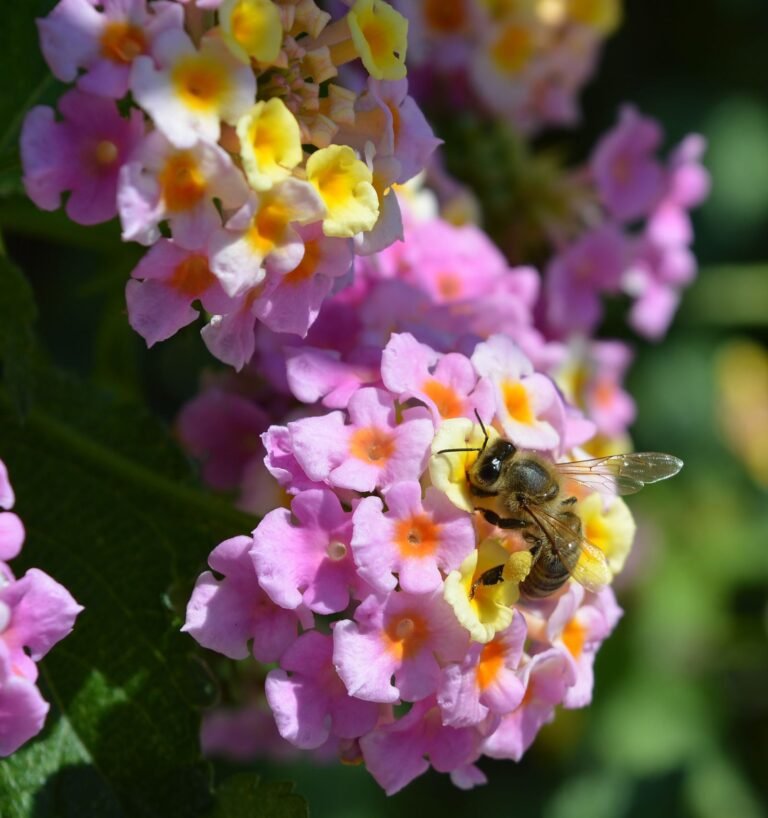
Many Melissodes species show meaningful specialization toward the composite flower family (Asteraceae), which includes sunflowers, asters, and many related wildflowers, a foraging pattern broadly similar in principle to the specialist relationship already documented for squash bees and their preferred squash-family flowers elsewhere on this site. This specialization means long-horned bee activity tends to track closely with composite-flower bloom timing, typically concentrated in mid-to-late summer across much of their range.
Agricultural Relevance for Sunflower Growers
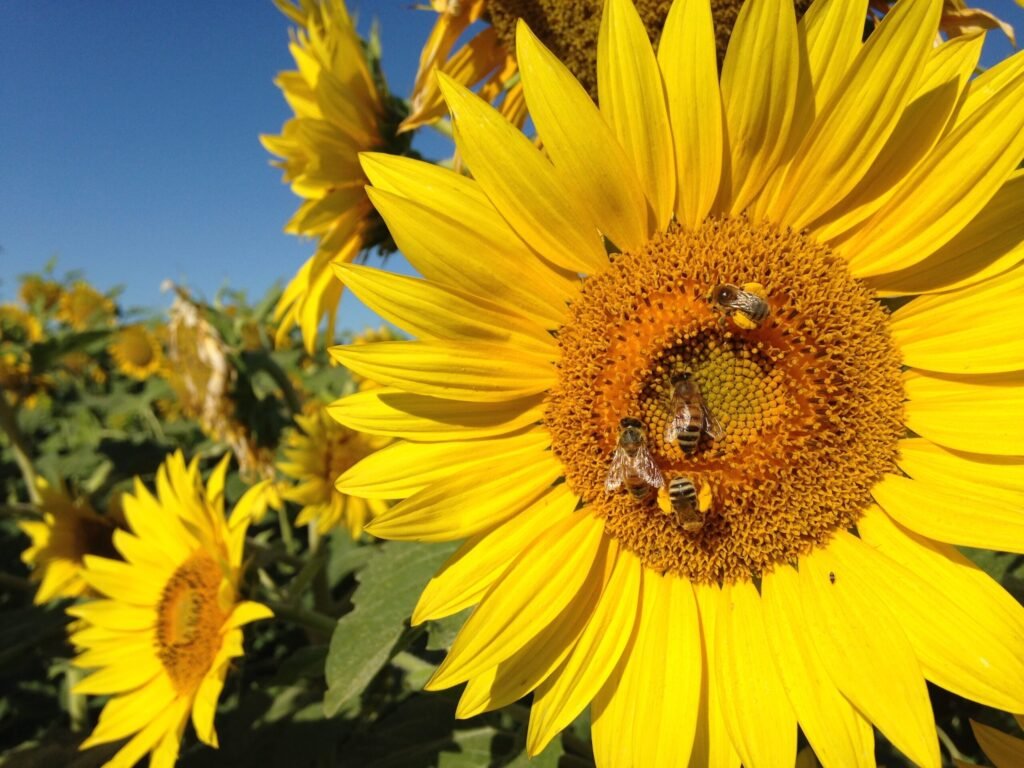
Long-horned bees have drawn genuine agricultural research interest specifically for their role in commercial sunflower pollination. South Dakota State University Extension has documented native bees, Melissodes species prominently among them, as among the most abundant pollinators observed in regional sunflower fields, showing meaningful native-bee contribution alongside managed honeybee colonies. Because sunflowers benefit from cross-pollination to maximize seed set, and because native bees like Melissodes species are already adapted specifically to sunflower and related composite flowers, their presence represents a genuinely valuable complementary pollination resource for growers rather than a purely incidental garden visitor. Active management of long-horned bees specifically remains far less developed than established practices for honeybees or commercially available mason bees, though growers interested in supporting wild native bee populations can benefit from maintaining nearby undisturbed nesting habitat and reducing pesticide exposure during bloom, a step that protects long-horned bees the same way it protects any other pollinator active during that window.
Nesting Behavior
Female long-horned bees are ground-nesters, excavating individual burrows in bare or sparsely vegetated soil, sometimes in aggregations alongside other females, a nesting pattern broadly consistent with several other native bee genera covered on this site including mining bees and digger bees. Each female provisions her own cells independently with pollen and nectar gathered predominantly from composite flowers, then seals the nest before the next generation develops through the following season.
Long-Horned Bees vs. Other Native Bees on This Site
| Bee | Genus | Distinctive Trait | Active Season |
|---|---|---|---|
| Long-horned bee (this article) | Melissodes/Eucera | Males have dramatically long antennae; sleep in clusters | Mid-late summer |
| Squash bee | Peponapis/Xenoglossa | Squash-flower specialist, active before sunrise | Summer |
| Bumblebee | Bombus | Social, forms annual colonies | Spring-fall |
A Sharp Contrast Between the Sexes Beyond Just Antennae
Beyond the dramatic antenna length difference, male and female long-horned bees also differ meaningfully in daily behavior and lifestyle: females spend their active hours almost entirely engaged in foraging and nest provisioning, returning to their burrow each night, while males have no nest responsibilities at all and instead spend their time patrolling for mating opportunities and, as evening approaches, gathering into the sleeping clusters described elsewhere in this guide. This split, one sex tied to a fixed nest location and daily provisioning routine, the other free-ranging with no fixed base, is a genuinely useful lens for understanding solitary bee biology more broadly, since a similar male/female behavioral split, just without the antenna difference, applies across most other solitary bee genera covered on this site.
How Females Carry Pollen Back to the Nest
Female long-horned bees, like most bees in the family Apidae, carry collected pollen back to their nest using specialized dense hairs on their hind legs, called scopa, rather than the internal crop-carrying method used by honeybees. A heavily loaded female returning from a successful foraging trip to composite flowers is often visibly carrying a substantial, densely packed clump of pollen on her legs, a genuinely useful visual cue for identifying an actively provisioning female during peak summer bloom.

How Long-Horned Bee Pollination Compares to Honeybees in Sunflower Fields
Comparative agricultural pollination studies have found that some native bee species, including long-horned bees, can be genuinely more efficient at pollinating individual sunflower heads on a per-visit basis than honeybees, since their foraging movements across the flower head’s many small individual florets differ in ways that can improve pollen transfer efficiency. This doesn’t mean native bees are expected to fully replace managed honeybee pollination in commercial settings, since honeybee colonies still offer far greater sheer numbers and easier large-scale management, but it does mean a sunflower field with a healthy wild long-horned bee population alongside managed honeybee hives can see a genuinely meaningful combined pollination benefit rather than the native bees being a purely incidental presence.
Life Cycle and Timing
Long-horned bees typically complete one generation per year across most of their North American range, with adults active for a period of roughly six to eight weeks during the mid-to-late summer window when their preferred composite flowers are in peak bloom. After a female provisions and seals her nest cells, the developing offspring pass through egg, larval, and pupal stages before entering a dormant period underground that lasts through fall, winter, and early spring, emerging as new adults only once temperatures and day length trigger the following summer’s activity window. This tightly synchronized single-generation timing means long-horned bee visibility in a given garden or field is genuinely concentrated into a fairly narrow window each year rather than spread evenly across the whole growing season.
Common Mistakes
The most common mistake is assuming a cluster of bees sleeping together overnight on a stem must be a social species with a shared colony nest, when it’s actually a temporary, non-reproductive overnight gathering of independent solitary males with no nest connection at all. Another mistake is mistaking a robust, fuzzy long-horned bee for a small bumblebee at a glance, when the antenna length on males and the ground-nesting rather than colony-nesting behavior are reliable distinguishing clues. People also sometimes overlook long-horned bees’ agricultural value simply because they’re less commercially managed than mason bees or honeybees, when their genuine contribution to sunflower and composite-crop pollination is well documented in the research literature.
Sources and Further Reading
This guide draws on South Dakota State University Extension’s research on pollinators in sunflower fields, identification imagery and species data from the USGS Bee Inventory and Monitoring Lab at the Eastern Ecological Science Center, and native-bee habitat guidance from ATTRA/NCAT’s Alternative Pollinators: Native Bees. This is general educational information, not professional agricultural or pest-management advice.
Frequently Asked Questions
Can long-horned bees sting?
Females are physically capable of stinging but are considered docile and low-risk, consistent with nearly every solitary bee covered on this site, and males, which lack a stinger entirely, pose no sting risk whatsoever regardless of behavior.
Do long-horned bee males protect the sleeping cluster from predators overnight?
There’s no evidence of active, coordinated group defense; the clustering behavior appears primarily thermoregulatory and energy-conserving, huddling together for warmth and stability overnight, rather than a deliberate defensive strategy against predators.
Can gardeners plant specific flowers to attract long-horned bees?
Yes, planting native composite-family flowers such as sunflowers, asters, coneflowers, and related species is the most direct, genuinely effective way to attract long-horned bees given their strong foraging preference for that plant family.
Are long-horned bees found throughout the United States?
Melissodes and related genera are widespread across most of North America, with different species adapted to regional climates and locally available composite-family flowers, making long-horned bees a genuinely common, if under-recognized, presence in gardens and agricultural areas across a broad range.
Do long-horned bees produce honey the way honeybees do?
No, like every solitary bee covered on this site, long-horned bees don’t produce or store surplus honey; each female collects only enough pollen and nectar to provision her own individual nest cells, with no colony-level food storage of the kind honeybees maintain for winter survival.
Are long-horned bees ever targeted by cuckoo bees the way other ground-nesting solitary bees are?
Yes, several cleptoparasitic bee genera are known to target Melissodes and related long-horned bee nests, following the same general nest-parasitism pattern covered in more depth in this site’s guide to cuckoo bees.
Can long-horned bees be raised or managed commercially the way mason bees sometimes are?
Not in any established, widely available commercial sense; unlike mason bees, which have a mature nesting-box and management industry built around them, long-horned bee populations remain primarily wild and unmanaged, supported indirectly through habitat preservation and reduced pesticide use rather than through any dedicated commercial rearing product.
For beekeepers dealing with this, our article on competition between honeybees and native bees walks through the details.