

Yes — a growing body of peer-reviewed research confirms that managed honeybees genuinely compete with wild native bees for nectar and pollen, and in at least one tightly controlled 2025 study, removing honeybees from an island let wild bee numbers recover by roughly 80% over four years. This isn’t a fringe theory anymore. It’s a real, measurable ecological effect with a specific mechanism, and it matters directly to anyone deciding where and how densely to keep hives.
Key Takeaways
- A 2025 Current Biology study on Giannutri Island, Italy, found that removing honeybees for just 11 hours a day increased nectar volume by roughly 60% and pollen availability by roughly 30% — and that wild bee populations declined by about 80% over the four years honeybees were present.
- A 2025 Penn State-led study on the Tibetan Plateau found migratory apiaries of 60-100 colonies reduced native bee abundance and diversity nearby, but populations bounced back within a year of the apiaries being removed — evidence of displacement, not local extinction.
- A 2026 systematic review of 83 field studies found floral resource overlap between honeybees and wild bees in 100% of studies that measured it, though most studies used indirect indicators rather than direct fitness measures.
- The effect is strongest where floral resources are genuinely limited — a small island, a resource-poor urban garden, a high-altitude meadow — not necessarily in a resource-rich backyard with diverse, continuous bloom.
- This doesn’t mean backyard beekeeping is inherently harmful everywhere; it means hive density and local floral abundance are the variables that actually matter, and they’re both things a beekeeper can assess and adjust.
Table of Contents
- The Clearest Evidence Yet: The Giannutri Island Study
- Migratory Apiaries and the Tibetan Plateau Study
- How Solid Is the Overall Evidence, Really?
- What This Actually Means for a Backyard or Small-Scale Beekeeper
- Frequently Asked Questions
The Clearest Evidence Yet: The Giannutri Island Study
The strongest, most direct evidence for honeybee-native bee competition published to date comes from Giannutri Island, a 2.6 km² protected part of Italy’s Tuscan Archipelago National Park that has hosted managed honeybee colonies since 2018. A team from the University of Florence and University of Pisa ran a genuinely elegant experiment: they physically removed honeybee colonies from parts of the island for 11 hours a day and measured what happened to flowers and wild bees.
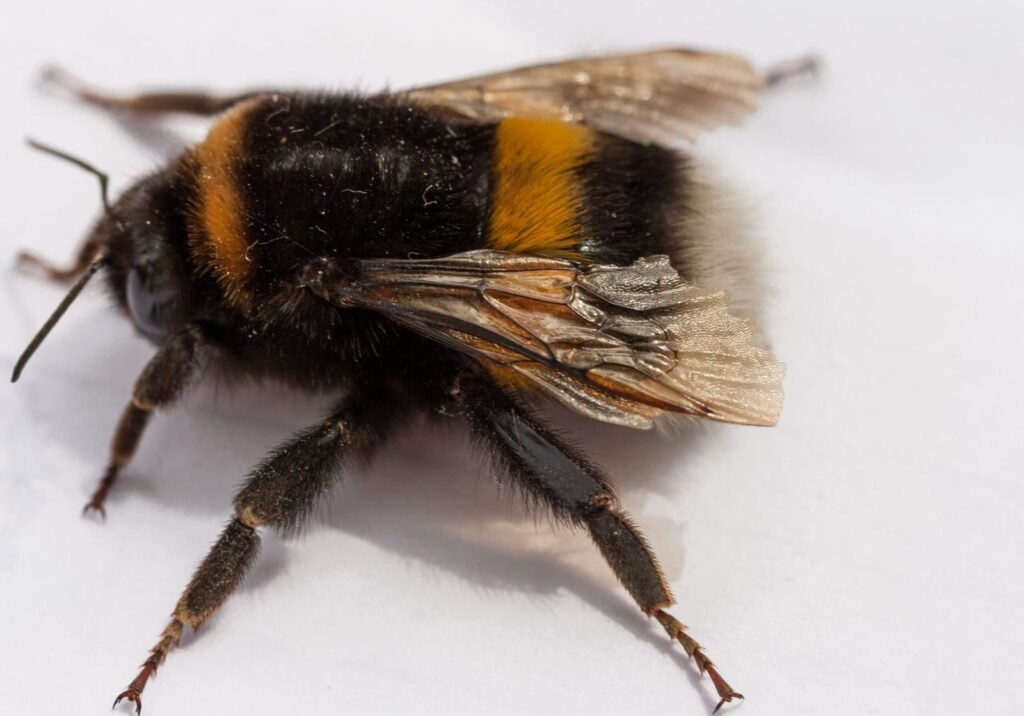
The results, published in Current Biology in 2025, were stark: with honeybees temporarily removed, nectar volume rose by about 60% and pollen availability by about 30%. Over the four years honeybees had been present on monitored transects, wild bee populations — specifically the native carpenter bee Anthophora dispar and the buff-tailed bumblebee Bombus terrestris — had declined by roughly 80%. When honeybees were absent, those same wild bees became the dominant visitors on flowers and spent measurably longer feeding per visit.
What makes this study different from earlier, more circumstantial evidence is that it isolates honeybee presence as the actual cause, not just a correlated factor. As the researchers put it, the island-wide removal design provides strong causal evidence that honeybee competition, rather than environmental change, is responsible for the wild bee decline.
Mann Lake Bee Supply’s own explainer below covers the practical side of this same question — what a beekeeper actually sees and can do about it, as a companion to the research above.
Migratory Apiaries and the Tibetan Plateau Study
A second, independent line of evidence comes from a very different environment: the alpine meadows of China’s Tibetan Plateau, where honeybees don’t occur naturally at all and are present only because migratory beekeepers move managed apiaries of roughly 60 to 100 colonies into the area seasonally. A Penn State-led team, publishing in the Journal of Insect Science in 2025, found that when these migratory apiaries moved in, native bee abundance and species diversity measurably dropped nearby.
The more encouraging part of the same study: those declines weren’t permanent. Native bee numbers and diversity recovered within about a year after apiaries were removed from a site.
“The populations temporarily decreased due to native bees being displaced and not because they died out.” — Margarita López-Uribe, Penn State, on the Tibetan Plateau migratory beekeeping study
That distinction — displacement rather than die-off — is genuinely important. It means the underlying wild bee population wasn’t destroyed by the competition; it was pushed elsewhere while the apiary was present, and came back once it left. That’s a meaningfully different (and more manageable) problem than permanent local extinction.
How Solid Is the Overall Evidence, Really?
It’s worth being honest about how consistent this picture is across the wider research, not just the two headline studies above. A 2026 systematic review covering 83 field studies on honeybee-native bee floral resource overlap found that overlap was detected in 100% of the studies that actually measured it — but the review also flagged a real limitation: 82.1% of those studies relied on indirect indicators (like changes in visitation rates) rather than direct fitness measures like survival or reproductive success. Only 17.9% used the more rigorous direct measures.
| Study | Location/setting | Key finding |
|---|---|---|
| Pasquali et al., Current Biology (2025) | Giannutri Island, Italy (protected, resource-limited) | ~80% wild bee decline over 4 years of honeybee presence; recovery within hours of removal |
| López-Uribe et al., Journal of Insect Science (2025) | Tibetan Plateau alpine meadows, China (migratory apiaries) | Native bee abundance/diversity dropped near apiaries; recovered ~1 year after removal |
| Systematic review, Journal of Apicultural Research (2026) | 83 field studies, global | Floral resource overlap found in 100% of studies measuring it; most used indirect indicators |
The honest synthesis: the mechanism (floral resource overlap) is now about as well-established as ecological research gets, and the Giannutri study is a genuinely strong causal test of it. What’s still being refined is exactly how much real-world population-level harm that overlap causes across different landscapes — resource-poor islands and remote alpine meadows are not the same as a flower-rich suburban neighborhood, and the review’s own authors caution against assuming the effect size is identical everywhere.
What This Actually Means for a Backyard or Small-Scale Beekeeper
This site’s own look at whether backyard beekeeping specifically hurts wild bees covers the smaller-scale side of this question in more depth — the short version is that hive density relative to local floral abundance is the variable that actually predicts harm, not simply “keeping bees at all.” A single hive in a flower-rich yard with a long, diverse bloom season is a very different proposition than several hives clustered in a resource-poor urban lot or a protected natural area already supporting specialist wild bees.
Practical takeaways that follow directly from the research above:
- Avoid placing multiple hives in genuinely resource-limited or ecologically sensitive sites — small nature reserves, islands, and similar low-floral-diversity protected areas are exactly where the Giannutri-style effect is strongest.
- Planting more, and more continuous, forage helps everyone — this site’s guide to building a pollinator meadow is a direct, practical way to reduce the resource competition these studies measure, benefiting honeybees and wild bees together rather than trading one off against the other.
- If you keep or support several colonies, actively supporting native bee habitat isn’t optional goodwill — it’s the actual mitigation the research points to. This site’s guide to how beekeeper practices can support native bee conservation covers specific, real steps.
- Migratory and high-density commercial operations carry more real risk than a single backyard hive — the Tibetan Plateau study’s 60-100 colony apiaries are a different scale of impact entirely from one or two home hives.
For the wider evidence, including colony losses and hive density, see is beekeeping sustainable?
Frequently Asked Questions
Do honeybees actually outcompete native bees, or is this overstated?
The evidence is genuinely solid at this point, not overstated. The 2025 Giannutri Island study provides real causal evidence (not just correlation) that honeybee presence directly reduces nectar and pollen availability and wild bee numbers, and a 2026 review found resource overlap in 100% of the 83 studies that measured it.
Does this mean I shouldn’t keep bees at all?
No — the research points to hive density and local floral resources as the real variables, not beekeeping itself. A single hive in a flower-rich area with diverse, season-long bloom is a very different situation from multiple hives in a resource-poor or ecologically sensitive site.
If honeybees push out native bees in an area, is the damage permanent?
Not necessarily. The Tibetan Plateau study specifically found native bee populations recovered within about a year after migratory apiaries were removed — evidence of temporary displacement rather than local extinction, at least in that setting.
What’s the single most useful thing a beekeeper can do about this?
Increase local floral diversity and abundance rather than just reducing colony count — the Giannutri study’s mechanism is resource depletion, so adding more forage addresses the actual cause, benefiting both honeybees and wild bees.
Is this effect the same everywhere, or does location matter?
Location matters a great deal. The strongest documented effects come from resource-limited settings — a small protected island, a high-altitude meadow with a short bloom season — not necessarily a typical suburban yard with continuous, diverse flowering.


