A fast, loudly buzzing bee that looks convincingly like a small bumblebee but disappears into a hole in a bare patch of sloped soil rather than a colony nest is very likely a digger bee, one of North America’s most common but least recognized native pollinators. Some species even build a small, distinctive mud chimney at their nest entrance, a genuinely unusual architectural feature not shared by most other ground-nesting bees. This guide covers what digger bees actually are, why they’re so often mistaken for bumblebees, the genuinely unusual chimney-building behavior found in some species, and why supporting bare ground in a garden matters more than most people realize for this specific pollinator.
Table of Contents
- What Digger Bees Actually Are
- Identification: Why They’re Confused With Bumblebees
- The Chimney Bee: A Genuinely Unusual Nest Feature
- Nesting in Aggregations, Not Colonies
- Pollination Role and Plant Specialization
- Competitive Male Patrolling Behavior
- Digger Bees vs. Other Ground-Nesting Bees on This Site
- A Notably Long Tongue for Deep Flowers
- How Digger Bees Survive the Off-Season
- Cuckoo Bees That Target Digger Bee Nests
- Emerging Interest in Managed Digger Bee Populations
- Regional Variation Across North America
- Common Mistakes
- Frequently Asked Questions
What Digger Bees Actually Are
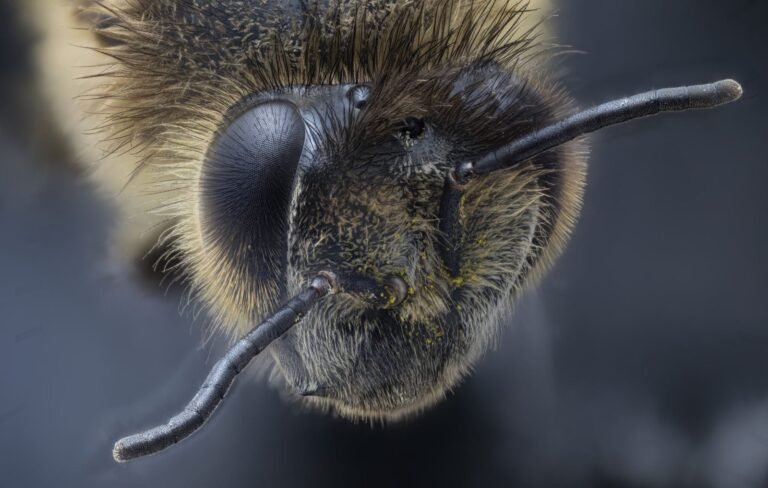
Digger bees belong specifically to the genus Anthophora, part of the broader family Apidae, the same broader bee family that includes honeybees and bumblebees, though digger bees themselves are entirely solitary, with each female excavating and provisioning her own individual nest rather than participating in a shared colony. Dozens of Anthophora species are found across North America, and they’re active predominantly in spring and early summer, making them one of the earliest, most reliable native pollinators active in a given season.
Identification: Why They’re Confused With Bumblebees
Digger bees are robust, densely furry bees with a loud, distinctive buzz and fast, hovering flight that genuinely does resemble a small bumblebee at first glance, a resemblance strong enough that many people who encounter digger bee nesting aggregations assume they’ve found a bumblebee colony instead. The key distinguishing behavior is nesting: bumblebees establish a single shared colony nest with a queen and workers, while digger bees are solitary, with every female in an aggregation independently digging, provisioning, and defending her own separate burrow, even when dozens or hundreds of individual nests are clustered close together in the same patch of ground.
The Chimney Bee: A Genuinely Unusual Nest Feature
Certain Anthophora species, most notably Anthophora abrupta, commonly called the chimney bee, construct a small turret of mud or packed soil rising directly above their nest entrance, sometimes an inch or more tall, giving the burrow opening a genuinely distinctive, almost architectural appearance unlike the plain round holes typical of most other ground-nesting bees. The exact function of the chimney isn’t fully settled in the research, though proposed explanations include protecting the entrance from rain runoff and making the nest opening more defensible against small parasites or intruders looking to enter the burrow.
Do all digger bee species build these chimney structures?
No, chimney-building is specific to a subset of Anthophora species rather than a trait shared by the entire genus, so many digger bees simply nest in a plain, unadorned burrow entrance similar to other ground-nesting bees covered on this site.
Nesting in Aggregations, Not Colonies
Digger bees frequently nest in dense aggregations, sometimes numbering in the hundreds of individual burrows packed into the same favorable patch of ground, typically bare, well-drained, and often sloped or vertical soil banks that offer good drainage and easy digging. Despite the crowded appearance, this remains fundamentally solitary behavior: there’s no shared brood care, no worker caste, and no queen, each female works entirely independently even while nesting shoulder-to-shoulder with dozens of others, a pattern shared with the mining bees covered elsewhere on this site.
Pollination Role and Plant Specialization
Digger bees are genuinely valuable early-season pollinators, active during exactly the window when many spring wildflowers and some fruit trees bloom, often before honeybee colonies have built up to full spring foraging strength. Some Anthophora species show meaningful specialization toward specific plant families for pollen collection, a pattern of specialist foraging behavior similar to what’s already documented for squash bees on this site, though digger bees as a genus overall are somewhat more generalist than that specific specialist example.
Competitive Male Patrolling Behavior
Male digger bees display a genuinely distinctive mating strategy, patrolling actively over an active nesting aggregation, sometimes aggressively jostling or competing with other males, in an effort to intercept and mate with emerging females before they’ve even fully left their burrows. This patrolling behavior can make a digger bee aggregation appear considerably more chaotic and active than the actual number of nests would suggest, since a relatively small number of females can attract a disproportionately large, highly visible swarm of competing males circling overhead.
Are the male digger bees swarming a nesting aggregation dangerous to be near?
No, despite the sometimes intense-looking swarming activity, male bees of every species covered on this site, including digger bees, are physically incapable of stinging, making even a large, active patrolling swarm of males genuinely harmless to walk past or observe closely.
Digger Bees vs. Other Ground-Nesting Bees on This Site
| Bee | Genus | Distinctive Nest Feature | Active Season |
|---|---|---|---|
| Digger bee (this article) | Anthophora | Some species build mud chimneys | Spring-early summer |
| Mining bee | Andrena | Small volcano-shaped soil mounds | Early spring |
| Squash bee | Peponapis/Xenoglossa | Plain burrow near squash plants | Summer |
| Sweat bee | Various (e.g. Agapostemon) | Small, often metallic-colored bee | Spring-fall |
A Notably Long Tongue for Deep Flowers
Many Anthophora species have a genuinely notably long tongue relative to their overall body size, allowing them to access nectar in tubular, deep-throated flowers that shorter-tongued bees struggle to reach effectively. This trait makes digger bees particularly valuable pollinators for certain native wildflower species with deep corollas, plants that might otherwise rely on a narrower range of visiting pollinators, and it’s part of why digger bees are increasingly recognized in native plant restoration circles as a genuinely important, if underappreciated, complement to shorter-tongued bees like many sweat bees and mining bees.
How Digger Bees Survive the Off-Season
After a female provisions and seals her nest cells with pollen and nectar for her offspring, the developing bees remain inside the protected underground burrow through the fall and winter, typically as a pre-pupal or pupal stage, emerging as adults only once temperatures warm sufficiently the following spring. This underground overwintering strategy is broadly similar to the approach used by mining bees and several other solitary ground-nesting bees covered on this site, offering meaningful protection from both cold temperatures and many aboveground predators during the long dormant period between active seasons.
Cuckoo Bees That Target Digger Bee Nests
Like many solitary ground-nesting bees, digger bee nests are sometimes targeted by cleptoparasitic bees, species that sneak into a completed nest cell to lay their own egg rather than provisioning a nest of their own, a strategy covered in more general depth in this site’s guide to cuckoo bees. Certain cuckoo bee genera specifically target Anthophora nests, and their presence hovering low and inspecting active digger bee burrows is a genuinely interesting, if somewhat unsettling, natural behavior to observe around an active nesting aggregation.
Emerging Interest in Managed Digger Bee Populations
Beyond their role in home gardens and wild landscapes, certain Anthophora species have drawn some research interest as potential supplementary managed pollinators for early-blooming fruit crops, given their cold tolerance and activity during a season when honeybee foraging can still be limited by cooler temperatures. This remains a considerably smaller-scale, more experimental area of interest compared to the well-established commercial use of mason bees for orchard pollination, but it reflects a broader recognition among researchers that relying on honeybees alone for early-season crop pollination may leave a genuine gap that native solitary bees like digger bees are well positioned to help fill.
Regional Variation Across North America
Anthophora species diversity varies considerably by region, with different species adapted to specific local soil types, climate conditions, and flowering plant communities across the continent, from arid Southwestern species tolerant of sandy, well-drained desert soils to species found in more temperate eastern woodland and meadow habitats. This regional specialization means the specific digger bee species a gardener is likely to encounter, and the exact bloom timing to expect, genuinely depends on location, though the broad solitary, ground-nesting, spring-active pattern described throughout this guide holds true across the genus regardless of region.
Common Mistakes
The most common mistake is assuming a dense cluster of digger bee burrows represents a single bumblebee colony nest, when the aggregation is actually made up of many entirely independent solitary nests. Another mistake is treating an active digger bee aggregation as a pest problem requiring insecticide treatment, when the bees are genuinely beneficial pollinators posing minimal sting risk and typically active for only a few weeks each season before the aggregation naturally quiets down. People also sometimes assume the loud buzzing of patrolling males signals aggression, when the behavior is entirely mating-related rather than defensive.
Do digger bees produce honey the way honeybees do?
No, like every solitary bee covered on this site, digger bees don’t produce or store surplus honey; each female collects only enough nectar and pollen to provision her own individual nest cells, with no excess production or storage the way a honeybee colony maintains for winter survival.
What time of day are digger bees most active?
Digger bees are generally most active during the warmer, sunnier parts of the day, similar to most solitary bees, with activity typically picking up mid-morning once temperatures rise and slowing again as afternoon heat peaks or temperatures drop toward evening.
Should homeowners be concerned about digger bee holes damaging a lawn?
Generally no; individual digger bee burrows are narrow and don’t cause meaningful structural damage to turf, and since most aggregations favor bare, sparsely vegetated soil over dense healthy lawn grass in the first place, they’re more commonly found in thin or bare patches already present rather than actively damaging otherwise healthy turf.
Are digger bees affected by pesticide drift the same way honeybees are?
Yes, digger bees are generally similarly vulnerable to insecticide exposure as honeybees and other pollinating bees, so gardening and lawn-care practices that limit pesticide use during their active spring flight period benefit digger bee populations in essentially the same way they benefit any other pollinating bee species active at that time.
Do digger bees interact at all with managed honeybee colonies kept nearby?
Not in any meaningfully competitive or conflicting way; digger bees and honeybees may forage on some of the same flowers, but the two groups don’t compete for nesting space since digger bees nest in soil rather than cavities, and no documented pattern of meaningful conflict or resource competition significant enough to concern a beekeeper has ever been clearly established between the two groups.
Sources
See the Xerces Society’s Pollinator Conservation Program for further verification of the material covered here.
Frequently Asked Questions
How long does a digger bee nesting aggregation stay active each year?
Most digger bee species have a relatively short active season, often just a few weeks during spring or early summer, after which the aggregation goes quiet until the next generation emerges the following year.
Can homeowners encourage digger bees to nest in their yard on purpose?
Yes, maintaining a patch of bare, undisturbed, well-drained soil, ideally on a gentle slope and free of mulch or heavy groundcover, is the most practical way to offer suitable nesting habitat, similar to the approach recommended for other ground-nesting native bees covered on this site.
Do digger bees pose any risk to lawns or garden structures the way some burrowing insects do?
No meaningful structural risk is associated with digger bee nesting; their burrows are narrow and don’t undermine lawns, foundations, or pavement in any damaging way, unlike some larger burrowing pests.
Are digger bees at risk from the same threats affecting honeybee colonies?
Digger bees face some overlapping pressures, including habitat loss and pesticide exposure, though as solitary ground-nesters they aren’t affected by colony-specific threats like Varroa mites, since they have no shared hive or brood structure for a colony pest to exploit.