Last Updated September 15, 2026
A honeybee’s brain contains roughly one million neurons – a tiny fraction of the roughly 86 billion in a human brain. And yet researchers at RMIT University in Melbourne, working with the University of Toulouse, have demonstrated that honeybees can be trained to perform genuine numerical tasks: discriminating between different quantities, applying simple arithmetic rules to novel numbers they’ve never seen before, and – most remarkably – treating the concept of zero as a number on a numerical continuum, a level of numerical abstraction not even all vertebrate animals reliably demonstrate. This article covers what researchers have actually found about bee numerical cognition, how the experiments work, and why such sophisticated processing emerging from such a tiny brain matters well beyond beekeeping.
Key Takeaways
- Researchers Scarlett R. Howard, Aurore Avarguès-Weber, and Adrian G. Dyer (RMIT University and the University of Toulouse) published two peer-reviewed studies establishing bee numerical cognition: on zero (Science, June 2018) and on addition/subtraction (Science Advances, February 2019).
- In the zero study, bees correctly ranked an empty set as smaller than any set with one or more elements – a concept that puts them in the company of primates and some birds, and that takes human children real developmental time to grasp.
- In the arithmetic study, bees trained in a Y-maze learned that blue meant “add one” and yellow meant “subtract one,” then correctly applied the rule to new starting quantities they had never seen before – across 100+ trials spanning 4 to 7 hours of training per bee.
- This site’s companion deep dive on the honeybee brain covers general cognition, learning, and memory; this article focuses specifically on the numerical-cognition research thread.
Table of Contents
- The Basic Finding: Bees Can Discriminate Quantity
- How These Experiments Actually Work
- The Remarkable Zero Finding
- Simple Addition and Subtraction
- A Tiny Brain Asking a Big Question
- What This Research Does Not Claim
- Why This Research Matters Beyond Bees
- The Sensory Basis Behind These Abilities
- Part of a Wider Pattern of Underappreciated Bee Cognition
- Bee Numerical Cognition vs. Other Animals
- Common Misconceptions
- FAQ
The Basic Finding: Bees Can Discriminate Quantity
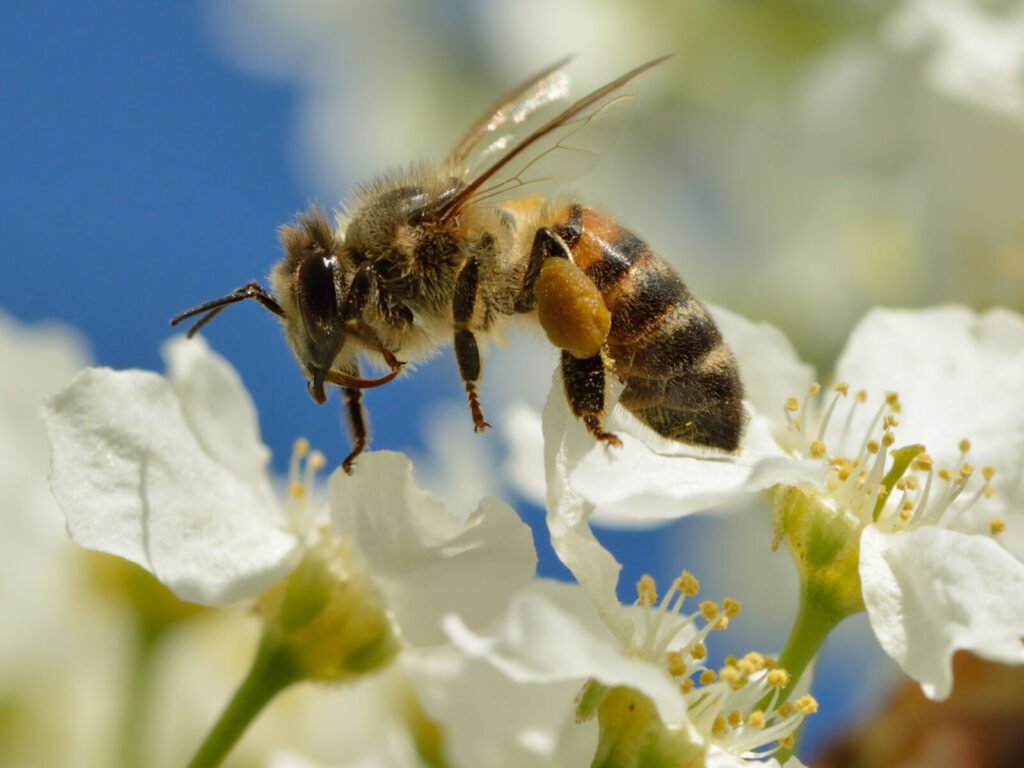
Researchers have demonstrated that honeybees can learn to reliably distinguish between different small quantities of visual elements, choosing correctly between options based on numerical difference rather than other visual cues like total area or pattern shape, which experimenters carefully controlled for in order to confirm the bees were genuinely responding to quantity itself. This baseline capability – genuine numerical discrimination rather than a simpler visual-pattern-matching shortcut – is the essential foundation the more advanced findings, including the zero concept and arithmetic results, were built on.
How These Experiments Actually Work
The RMIT/Toulouse research team’s arithmetic study used a Y-shaped maze in which individual bees were trained with sugar-water rewards for correct choices and a bitter quinine solution for incorrect ones, learning over 100-plus trials spanning roughly 4 to 7 hours that a blue cue meant “add one element” and a yellow cue meant “subtract one element.” Bees were then tested on entirely novel starting quantities they had never encountered during training, to confirm they had learned a genuine, generalizable numerical rule rather than simply memorizing specific training images. This training-then-generalization-test design is a genuinely important methodological safeguard – it’s what allows researchers to distinguish real numerical cognition from simple rote memorization of previously seen patterns, and it’s a standard, rigorous approach in comparative cognition research generally.
The Remarkable Zero Finding
Perhaps the most striking documented finding, published by Howard, Avarguès-Weber, Dyer, and colleagues in Science in June 2018, is that honeybees can be trained to treat zero – the absence of any elements – as a number positioned below one on a “less than” numerical continuum, correctly ranking an empty (zero-element) option as representing a smaller quantity than a set containing one or more elements, despite never having been directly trained on an empty set. This matters because understanding zero as a genuine number, rather than simply as an absence or a non-event, represents a real, documented cognitive achievement – human children take real developmental time to grasp zero as a number in this sense, and the bees’ performance places them alongside primates and some bird species previously shown to have this capability.
“Zero is a difficult concept to understand and a mathematical skill that doesn’t come easily – it takes children a few years to learn. What we haven’t known – until now – is whether insects can also understand zero.”

Simple Addition and Subtraction
Beyond quantity discrimination, the team’s follow-up study in Science Advances (February 2019) demonstrated that bees can learn to apply simple “add one” or “subtract one” rules to a shown quantity, using a color cue – blue meaning add, yellow meaning subtract – to correctly select a resulting quantity, including applying the rule successfully to novel starting quantities not used during training. This is a genuinely more demanding cognitive task than quantity discrimination alone, since it requires the bee to hold an initial quantity in working memory, apply a learned operational rule to it, and then correctly identify a resulting quantity it needs to compute rather than simply recognize.
“You need to be able to hold the rules around adding and subtracting in your long-term memory, while mentally manipulating a set of given numbers in your short-term memory.”
A Tiny Brain Asking a Big Question
The genuinely remarkable part of this research isn’t only what bees can do, but what it implies about how much sophisticated cognitive processing is actually possible with an extremely small number of neurons. A honeybee brain’s roughly one million neurons stand in stark contrast to the billions found in mammalian brains capable of comparable numerical tasks. As co-author Aurore Avarguès-Weber of the University of Toulouse put it, “the discovery that bees can show such elaborated understanding of numbers was really surprising given their tiny brain” – a finding with real, actively researched relevance to artificial intelligence and machine learning research into efficient, minimal computational architectures capable of abstract reasoning, not just to entomology or animal cognition research narrowly.
What This Research Does Not Claim
It is important to be precise about what this research does and does not demonstrate: bees performing these numerical tasks are not doing conscious, deliberate mathematics the way a human solving an arithmetic problem does, and this article does not claim bee numerical cognition is equivalent to human mathematical reasoning in either mechanism or subjective experience. What the research does support is that bees possess genuine, measurable capacity to process and act on numerical information in ways that go beyond simple pattern recognition – a real, well-documented cognitive capability, described accurately as numerical cognition rather than overstated as bees “doing math” in a human sense.
Why This Research Matters Beyond Bees
This research connects to the same broader pattern of genuinely underappreciated bee cognitive sophistication already documented elsewhere in this site’s coverage, including Karl von Frisch’s discovery of the waggle dance as a genuine symbolic communication system and this site’s broader deep dive into honeybee brain and cognition – both findings reflect a recurring theme in honeybee research: patient, carefully designed experimentation repeatedly revealing that honeybee cognition is considerably more sophisticated than casual assumptions about “simple insect behavior” would suggest, a pattern worth keeping in mind whenever bee intelligence gets casually dismissed.
The Sensory Basis Behind These Abilities
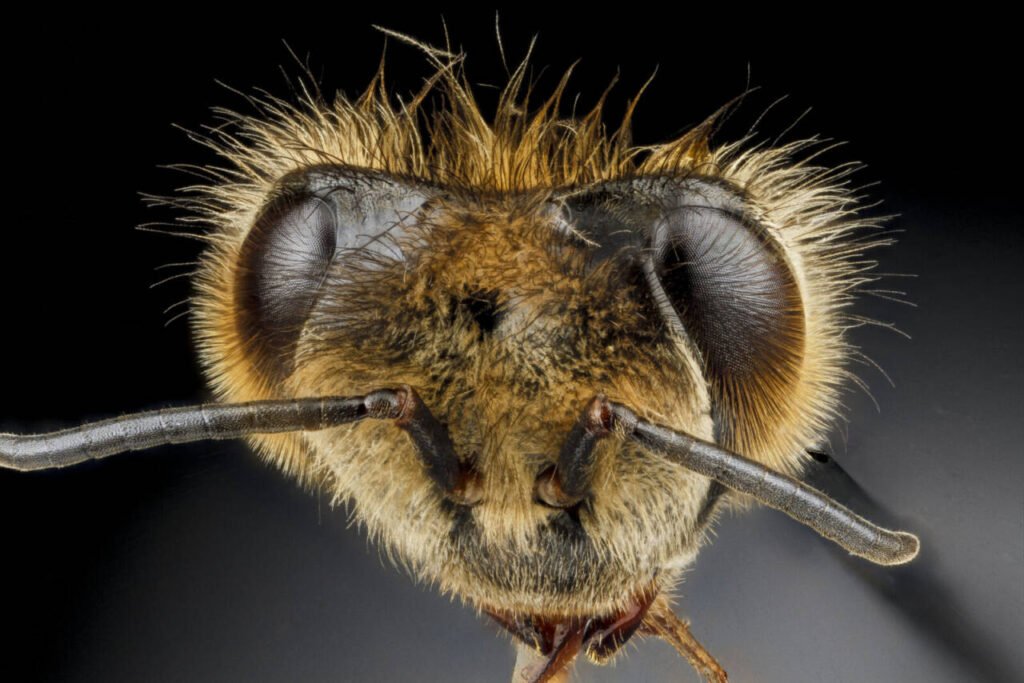
Numerical cognition experiments rely on bees’ visual system – compound eyes and ocelli working together – to detect and process the quantity and arrangement of the elements shown in each trial, a sensory pathway that works alongside the other honeybee sensory systems already documented in this site’s sensory organs overview and, in a genuinely different sensory modality, the tarsal contact chemoreception covered in our article on how bees taste with their feet. Numerical cognition specifically depends on visual processing rather than the taste or touch-based systems covered in those other articles, but all three reflect the same broader point: honeybee sensory and cognitive processing is considerably richer and more specialized across multiple distinct channels than a simple, single-sense view of insect perception would suggest.
Part of a Wider Pattern of Underappreciated Bee Cognition
Bee numerical cognition research fits a recurring pattern already visible elsewhere in this site’s coverage of honeybee science history: careful, patient, methodologically rigorous experimentation repeatedly revealing that honeybee behavior long dismissed as simple instinct actually reflects genuine, measurable cognitive sophistication. This pattern connects numerical cognition research directly to the same observational tradition that produced Karl von Frisch’s waggle dance discovery decades earlier – both cases where sustained, careful scientific attention uncovered real cognitive and communicative complexity that casual observation of “just an insect” would never have revealed on its own.
Bee Numerical Cognition vs. Other Animals
| Capability | Honeybees | Some Vertebrates (e.g., primates, corvids) |
|---|---|---|
| Basic quantity discrimination | Demonstrated | Demonstrated |
| Zero as a number concept | Demonstrated (Howard et al., 2018) | Demonstrated in some species tested |
| Simple addition/subtraction rules | Demonstrated (Howard et al., 2019) | Demonstrated in some species tested |
| Approximate neuron count | ~1 million | Billions |
Common Misconceptions
- “Bees are literally doing conscious math like humans.” Research demonstrates genuine numerical cognition and rule application, not conscious, deliberate human-style mathematical reasoning – a meaningfully different and more precise claim.
- “This research is just a cute trivia fact with no real scientific significance.” It was published in Science and Science Advances and raises genuine, actively researched questions about minimal neural architecture requirements for abstract cognitive processing, with real relevance to neuroscience and artificial intelligence research.
- “Only large-brained animals can understand zero as a number.” Honeybees, with roughly one million neurons, have been documented treating zero as a number on a numerical continuum, challenging assumptions that this capability requires a large brain.
Frequently Asked Questions
Can bees actually count?
Research from RMIT University and the University of Toulouse demonstrates bees can discriminate between quantities, apply simple addition and subtraction rules, and treat zero as a number – genuine numerical cognition, though not conscious, deliberate mathematics in the human sense.
Do bees really understand the concept of zero?
Yes – Howard, Avarguès-Weber, Dyer and colleagues showed in a 2018 Science paper that bees can be trained to correctly rank zero (the absence of elements) as representing a smaller quantity than one or more elements, a genuine, documented numerical achievement.
Can bees do addition and subtraction?
Yes – a 2019 follow-up study in Science Advances by the same research team demonstrated bees can learn to apply simple “add one” or “subtract one” rules using color cues, correctly applying the learned rule to novel starting quantities not used during training.
How do researchers test whether bees understand numbers?
Through Y-maze experiments using sugar-water rewards and a bitter quinine solution for incorrect choices, where bees are trained on a numerical rule over 100-plus trials and then tested on novel quantities they weren’t specifically trained on, confirming genuine rule learning rather than memorization.
Is understanding zero actually difficult for animals generally?
Yes, genuinely so – treating zero as a number positioned on a continuum below one, rather than simply as an absence or non-event, represents a real cognitive step beyond basic quantity discrimination, and human children take documented developmental time to grasp this distinction, which is part of why finding it in an insect with such a small brain drew significant scientific attention.
Why is it significant that bees can do this with such a small brain?
It raises genuine, actively researched questions about what minimal neural architecture is actually necessary for abstract numerical processing, with real relevance to neuroscience and artificial intelligence research into efficient cognitive systems – a point both Dyer and Avarguès-Weber highlighted directly in discussing their findings.
Is bee numerical cognition the same as human mathematical ability?
No – this research demonstrates genuine numerical cognition and rule application, but does not claim equivalence to conscious, deliberate human mathematical reasoning in either mechanism or subjective experience.
Further Reading
Primary sources: Howard et al., “Numerical ordering of zero in honey bees,” Science (2018); Howard et al., “Numerical cognition in honeybees enables addition and subtraction,” Science Advances (2019); RMIT University research announcement; background on numerical cognition.