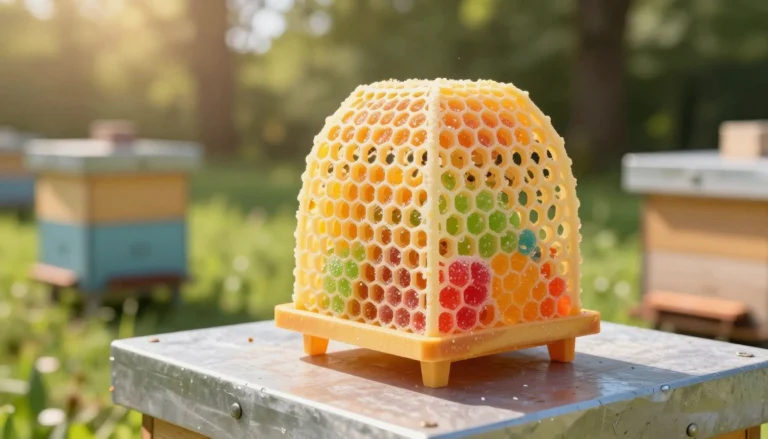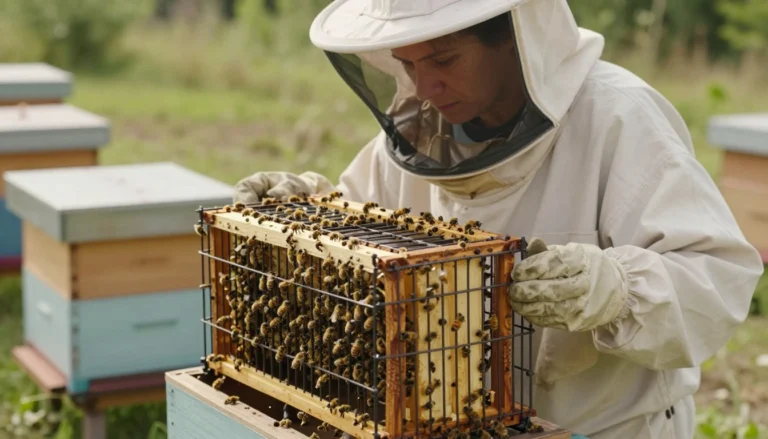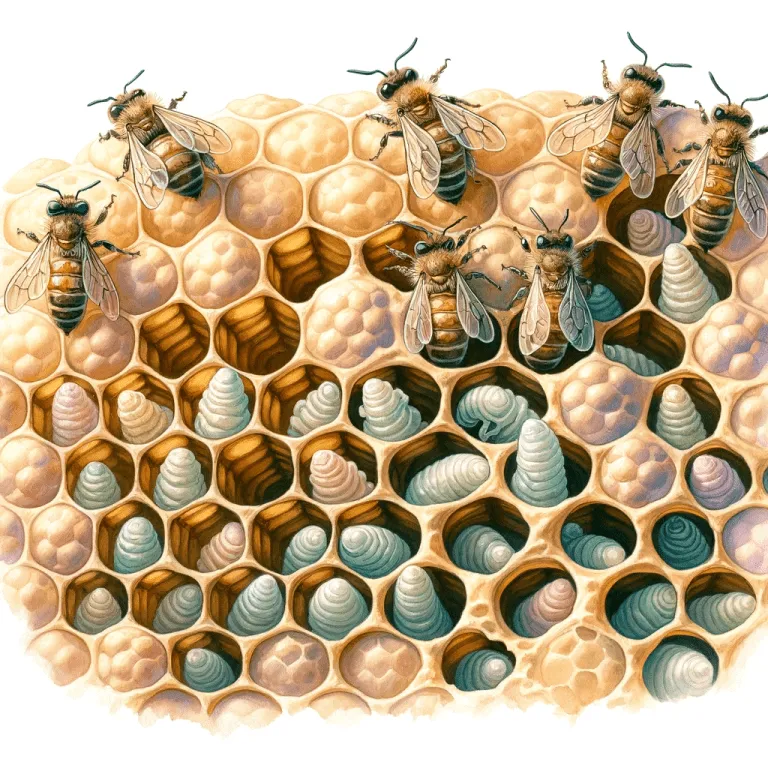
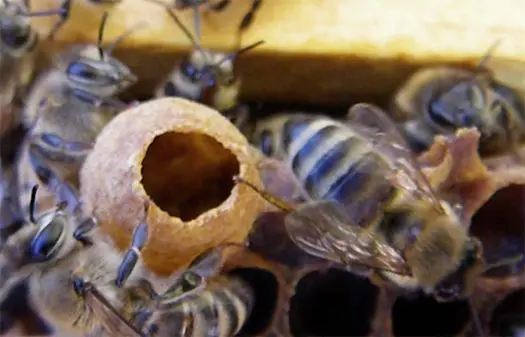
Every beekeeper eventually spots one: an oddly shaped, peanut-sized wax cell hanging off the bottom edge of a frame, unmistakably different from the flat hexagonal comb around it. The standard explanation has always been genetics and royal jelly — a queen becomes a queen because of what she’s fed and which genes she carries, and the cell is just a container. A 2026 study in Nature, led by Boris Baer at the University of California, Riverside, complicates that story in a genuinely useful way: the cell itself, it turns out, isn’t a passive container at all.
The Cell Is Doing Real Work
Baer’s team examined the mechanical and chemical properties of queen cells directly, alongside the building behavior of the worker bees that construct them. What they found is that queen cells have distinct mechanical characteristics compared to ordinary worker comb, and that the wax itself isn’t simply reused material from elsewhere in the hive — it’s actively modified and chemically enriched by a specific subset of workers during construction.
That subset — described in the paper as “queen cell builders” — turned out to be physiologically distinct from typical worker bees: generally younger, running higher thoracic temperatures, and showing a different metabolic profile than nurse bees or foragers of similar age. Rather than just recycling wax pulled from nearby cells, these bees actively dilute and enrich the queen cell’s wax chemistry as they build, effectively engineering a specific physicochemical microenvironment rather than just shaping a bigger hole.
Why the Container Turns Out to Matter
The clearest evidence that the cell itself matters, not just what’s fed to the larva inside it, came from a direct comparison: queens that developed in irregular, worker-built emergency cells — the kind a colony throws together in a hurry after losing its queen unexpectedly — showed higher mortality and emerged smaller than queens raised in properly constructed queen cells. That’s a meaningful finding for anyone who has read this site’s coverage of emergency queen cells versus supersedure cells, which already covers the practical beekeeping distinction between the two — this research adds a concrete biological reason emergency-raised queens are often considered lower quality than queens raised under planned supersedure or swarm conditions, beyond the commonly cited explanation of larval age at selection.
It also reframes caste determination — the process by which a genetically identical female larva becomes either a worker or a queen — as something shaped by at least three interacting factors rather than two: genetics, larval diet, and now the physical and chemical environment the colony’s own worker bees construct around the developing queen. None of the three appears to work in isolation.
Frequently Asked Questions
What is a “queen cell builder”?
A physiologically distinct subset of worker bees identified in the 2026 study — typically younger, with higher thoracic temperature and a different metabolic profile — that specializes in constructing and chemically modifying queen cells rather than simply reusing existing wax.
Does this mean royal jelly and genetics don’t matter for queen development?
No. The study adds a third factor rather than replacing the established roles of genetics and larval diet — it shows the physical queen cell environment also measurably affects developmental outcomes.
Does cell quality affect which type of queen cell is better for requeening?
The findings are consistent with why beekeepers and queen breeders generally consider properly built swarm or supersedure cells more reliable than hastily built emergency cells, since irregular emergency cells were linked to higher queen mortality and smaller size in the study.