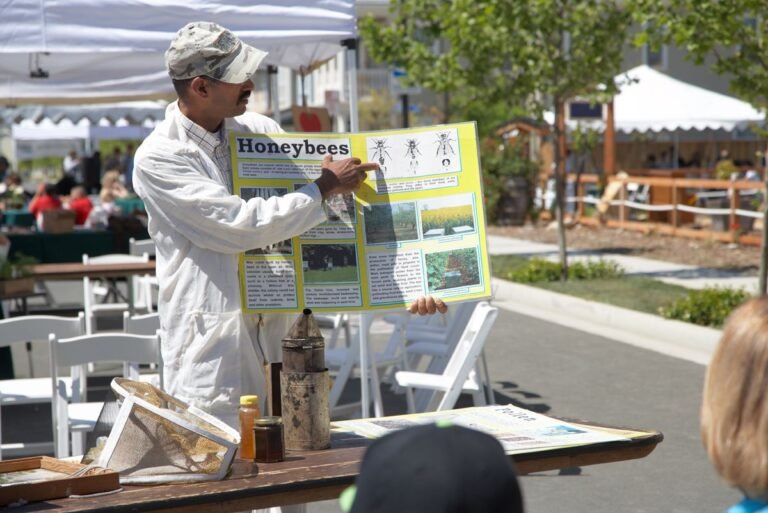
A “bee-cation” — building a family trip around visiting apiaries, honey festivals, or bee museums — works best as one or two activities woven into a normal vacation rather than an entire trip’s itinerary, since even the most engaging apiary visit runs one to two hours. Here’s how to actually plan one, including what ages it suits, how to build a realistic itinerary around it, and what to check before you commit travel days to it.
Key Takeaways
- Treat an apiary visit as an anchor activity for a day, not the whole trip — most bee farm tours and museum visits run one to two hours, so pair them with other regional attractions.
- Behind-glass observation-hive visits work for almost any age, including toddlers, while hands-on hive-opening experiences are better suited to kids old enough to follow safety instructions calmly, typically school-age and up.
- Book hands-on or guided apiary tours in advance — walk-in visitor centers are more flexible, but guided or suited-up experiences often have limited daily slots.
- Check the season: many observation hives and outdoor apiary experiences are only active or bookable during the warmer months when colonies are foraging.
- Confirm bee-sting allergy status for every family member before booking any hands-on hive-opening experience specifically, and always carry any prescribed epinephrine auto-injector along on the visit.
Table of Contents
- Building a Realistic Bee-Cation Itinerary
- Matching the Experience to Your Kids’ Ages
- Practical Planning: Timing, Booking, and Safety
- Rounding Out the Trip Beyond the Farm Visit
- Frequently Asked Questions
Building a Realistic Bee-Cation Itinerary
The single most common planning mistake is over-committing an entire vacation day (or worse, a whole trip) around one apiary visit. A guided farm tour typically runs 60 to 90 minutes; even a full hands-on experience rarely exceeds two hours including the safety briefing and suiting-up process. A realistic family itinerary treats the apiary visit as a morning or afternoon anchor and pairs it with something else nearby — a regional museum, a nature trail, or simply lunch in town. This is exactly how established multi-attraction farms like Chain Bridge Honey Farm in Northumberland are actually set up: the apiary and museum visit is free and self-paced, but it sits alongside a vintage vehicle collection and a café specifically so a family can spend a longer, more varied afternoon on-site without the bees themselves being the only draw.
If you’re building a trip specifically around apitourism rather than adding one stop to a broader vacation, look for a region with more than one relevant activity within a reasonable drive — pairing an apiary tour with a honey festival happening the same weekend, or a bee museum an hour away, makes far better use of travel time than a single isolated farm visit.
Matching the Experience to Your Kids’ Ages
Not every apitourism experience suits every age, and being honest about this in advance avoids a miserable, rushed visit:
- Toddlers and young children (under about 5): Stick to behind-glass observation hives, museum exhibits, and honey tastings. An observation hive lets very young children watch live bees safely with zero sting risk, which is genuinely engaging at this age without requiring them to sit still through a long safety briefing.
- School-age children (roughly 6-12): This is typically the sweet spot for family-oriented guided tours like those at Iron Bee Apiary, which are specifically designed to let kids safely encounter live hives at a comfortable distance with an experienced beekeeper narrating.
- Older kids and teens: A full hands-on, suited-up hive-opening experience — like the one offered at Neshanic Station Apiaries, where visitors can hold an actual frame of bees under supervision — becomes realistic once a child can reliably follow calm, still-movement safety instructions for an extended period.
Practical Planning: Timing, Booking, and Safety
A few planning details make the difference between a smooth bee-cation day and a frustrating one:
- Book ahead for anything guided or hands-on. Free walk-in visitor centers are flexible, but guided tours and hands-on experiences often run limited daily time slots and can sell out, especially in peak summer travel season.
- Check the season before you travel. Some observation hives are only stocked with a living, viewable colony during warmer months — Slovenia’s Museum of Apiculture in Radovljica, for instance, only displays a live bee colony in its observation hive from May through October — so a winter visit to a similar attraction elsewhere may mean no live bees to see at all.
- Disclose allergies clearly when booking, not just showing up and mentioning it on arrival, particularly for any tour that involves being physically near open hives.
- Dress appropriately even for observation-only visits — light colors and closed shoes are a reasonable default even where you won’t be directly near open hives, since many farms are also active outdoor apiary properties.
Rounding Out the Trip Beyond the Farm Visit
A well-rounded bee-cation day often pairs the apiary visit with one adjacent activity: a honey tasting or purchase directly from the farm’s own shop, a nearby farmers market where local beekeepers sell, or — for older kids and adults — a mead tasting room if one exists in the region, since mead production and beekeeping culture overlap heavily in most regions with an active apitourism scene.
Frequently Asked Questions
What age is appropriate for a hands-on beehive tour?
There’s no universal minimum age, but most operators expect a child to be able to stay calm and follow simple safety instructions for an extended period, which usually means school-age children and up are better suited to a full hands-on hive-opening experience than toddlers.
Is it safe to bring kids near an active beehive?
Reputable, visitor-oriented apiaries manage this carefully with protective gear, small group sizes, and an experienced beekeeper present, and behind-glass observation hives remove sting risk entirely. The main safety factor to manage yourself is disclosing any known bee-sting allergy before booking a hands-on visit.
How long should we plan to spend at a bee farm?
Most guided tours run 60-90 minutes; a full hands-on experience with a safety briefing can run closer to two hours. Free walk-in visitor centers are self-paced and can be as short or long as your family wants.
Do we need to book an apiary tour in advance?
For guided or hands-on tours, yes — these typically run limited daily slots. Free walk-in visitor centers with observation hives are generally more flexible and don’t require advance booking.
What’s the best time of year for a family bee-cation?
Late spring through early fall is generally best, since this is when colonies are most active and many observation hives are only stocked with a live, viewable colony during these warmer months.
For more background on this, see American Beekeeping Federation.