Last Updated September 15, 2026
Watch a patch of loose beach or dune sand long enough on a summer afternoon and you may spot a wasp doing something genuinely unusual among the solitary hunting wasps already covered on this site: repeatedly flying off, returning with a fly, disappearing into a burrow, and doing it all again a few hours later, sometimes for days in a row. Sand wasps are unique among this site’s solitary wasp coverage for practicing progressive provisioning, actively feeding their growing larva fresh prey over time rather than sealing a fully stocked cell and moving on. This guide covers what sand wasps actually are, their distinctive drawn-out parental care behavior, why they specifically target flies as prey, and how their sandy nesting habitat shapes where you’re likely to find them.
Table of Contents
- Key Takeaways
- What Sand Wasps Actually Are
- Progressive Provisioning: A Genuinely Distinctive Parental Behavior
- Why Flies Specifically, Not Spiders or Caterpillars
- Why Loose Sand Matters So Much
- Identification and Flight Behavior
- Sting Risk and Temperament
- Sand Wasps vs. Other Solitary Hunting Wasps on This Site
- Fabre and the Research History Behind Sand Wasp Behavior
- Life Cycle and Seasonal Timing
- Common Mistakes
- Frequently Asked Questions
Key Takeaways
- Sand wasps (genus Bembix) are progressive provisioners — a female keeps a single nest cell open and returns repeatedly over days to feed her larva fresh flies, unlike the “stock once and seal” strategy used by mud daubers, potter wasps, and the great golden digger wasp.
- The North American species Bembix americana grows 16-20mm, with five white bands crossing a black abdomen, green eyes, and mostly yellow legs — genuinely specific, checkable identification markers.
- A single B. rostrata female can raise at most about eight larvae across a summer, a direct consequence of how resource-intensive progressive provisioning is compared to faster mass-provisioning strategies.
- Sand wasp behavior fascinated 19th-century naturalist Jean-Henri Fabre enough that he built some of his foundational insect-behavior studies around this genus specifically.
- No documented evidence links sand wasps to honeybee predation — their diet is exclusively flies, making them ecologically unrelated to the wasp threats covered in this site’s bee-vs-wasp guide.
What Sand Wasps Actually Are
Sand wasps belong primarily to the genus Bembix, part of the tribe Bembicini, traditionally classified within the subfamily Bembicinae of family Crabronidae (some recent taxonomic treatments split this subfamily out into its own family, Bembicidae — the classification is still actively debated among specialists). It’s a genuinely large, cosmopolitan genus of roughly 380 described species of solitary, ground-nesting wasps found on every continent except Antarctica wherever suitable loose, sandy soil is available. Like every other solitary wasp covered on this site, each female works entirely alone to excavate and provision her own nest, with no colony, no queen, and no worker caste involved at any stage.
Progressive Provisioning: A Genuinely Distinctive Parental Behavior
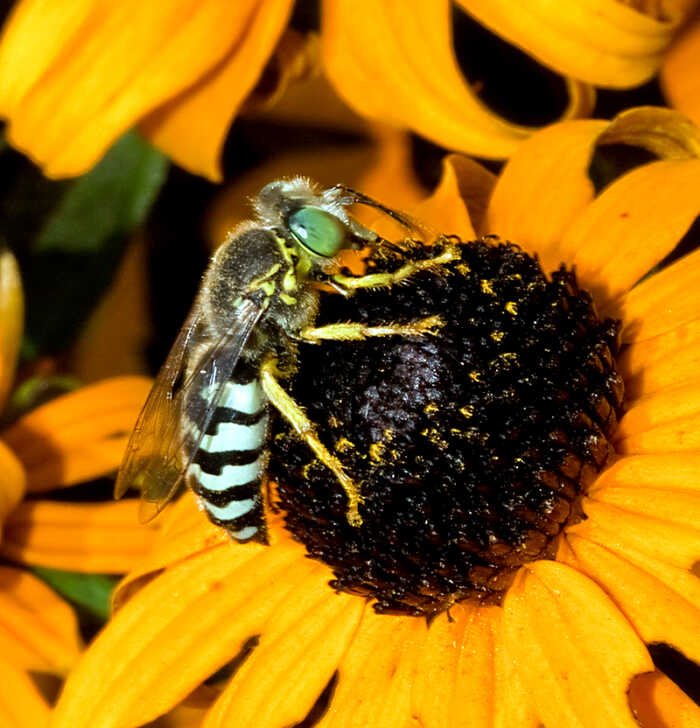
What genuinely sets sand wasps apart from nearly every other solitary wasp covered on this site is progressive provisioning: rather than fully stocking a nest cell with prey and permanently sealing it before moving on, as mud daubers, potter wasps, and the great golden digger wasp all do, a female sand wasp keeps a single cell open and returns repeatedly over several days, bringing fresh flies to feed her growing larva as it develops, carefully re-sealing the nest tube after each individual feeding visit. This ongoing, hands-on feeding pattern is considerably closer to active parental care than the “stock once and abandon” strategy typical of solitary wasp provisioning. The tradeoff is real and measurable: in the well-studied European species Bembix rostrata, a female can raise at most around eight larvae across the entire high summer, since each one demands so much sustained, repeated foraging effort compared to a single mass-provisioning trip.
Why would progressive provisioning be more resource-intensive for the female than the stock-and-seal approach?
Repeatedly locating, hunting, and returning fresh prey to the same nest cell over multiple days requires considerably more total foraging trips and sustained investment per offspring than provisioning a cell once and sealing it permanently, meaning a female practicing progressive provisioning can generally raise fewer total offspring across her lifetime than a species using the faster stock-and-seal method, a genuine tradeoff between offspring quantity and per-offspring investment.
Why Flies Specifically, Not Spiders or Caterpillars
Sand wasps specialize specifically in hunting true flies (order Diptera), paralyzing them with a precise sting before carrying them back to provision the nest, a genuinely distinct prey choice compared to the spiders, caterpillars (including the caterpillar specialists covered in this site’s guide to thread-waisted wasps), katydids, and grubs targeted by the other solitary hunting wasps already covered on this site. In the well-documented European species B. rostrata, nests are typically stocked with dozens of flies over the provisioning period, predominantly from the families Tabanidae (horse flies) and Syrphidae (hover flies) — genuinely large-bodied prey relative to the wasp’s own size. This fly-hunting specialization makes sand wasps a genuinely useful, if under-recognized, natural check on fly populations in the sandy habitats where they’re established, including some species considered pests in agricultural or residential settings.
Why Loose Sand Matters So Much
Sand wasps require genuinely loose, well-drained, sandy soil to excavate their burrows efficiently using a specialized “tarsal rake,” a row of stiff spines on each front leg built specifically for rapid sand excavation, which is precisely why they’re most commonly found in coastal dune systems, sandy riverbanks, and other naturally sandy habitats rather than the more general bare-soil conditions favored by many other ground-nesting bees and wasps covered on this site. Nest tunnels in B. americana typically run 10 to 27 centimeters long and contain one to three cells, with females often excavating an entirely new nest for each new egg rather than reusing the same tunnel. This specific soil requirement means sand wasp populations are genuinely more geographically concentrated than species with looser habitat requirements, tied closely to wherever suitable sandy ground actually exists within their broader range.
Identification and Flight Behavior
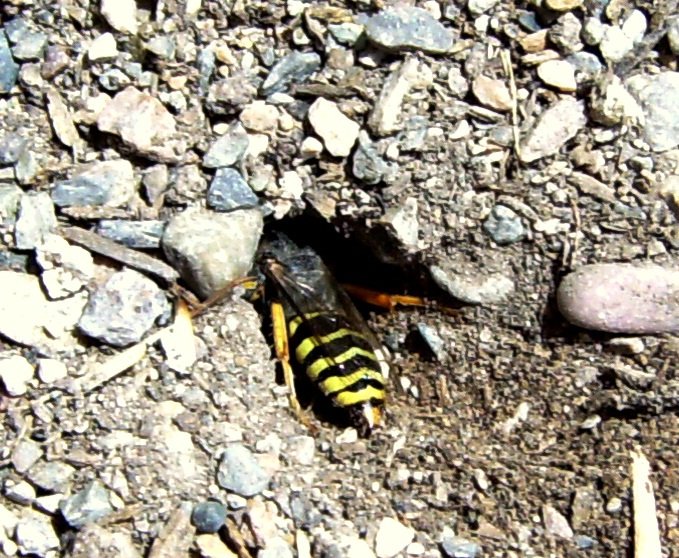
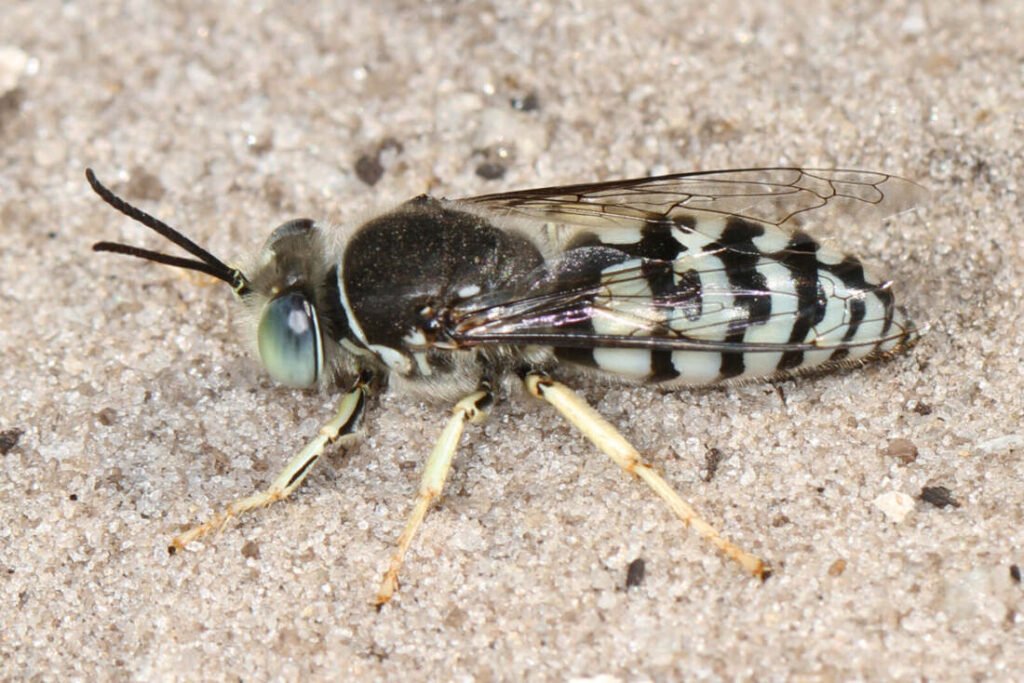
Sand wasps are generally medium-to-large for a solitary wasp, with the common North American species Bembix americana running 16 to 20mm long, typically marked with five white bands crossing a black abdomen, green eyes, short hairs on the head and thorax, clear wings with brown veins, and mostly yellow legs (exact coloring varies somewhat by subspecies and individual). Their distinctive fast, low, darting flight pattern keeps them close to the sand surface as they search for prey or locate their own burrow entrance among many others in a nesting aggregation. This low, quick flight style, combined with their preference for open sandy ground, makes them a genuinely recognizable presence once you know to look for the pattern, even before getting close enough to check coloring details.
Sting Risk and Temperament
Sand wasps share the same generally low-aggression temperament seen across nearly every solitary wasp covered on this site: with no shared colony or brood cluster to defend, females have little evolutionary incentive to behave defensively toward people, and documented stings are uncommon, typically occurring only with direct handling. Even in dense nesting aggregations on a busy beach or dune area, sand wasps generally pose minimal practical risk to people simply walking through or near the area.
Sand Wasps vs. Other Solitary Hunting Wasps on This Site
| Wasp | Prey | Provisioning Style | Preferred Nesting Ground |
|---|---|---|---|
| Sand wasp (this article) | Flies | Progressive (ongoing feeding) | Loose sand specifically |
| Mud dauber wasp | Spiders | Mass provisioning (stock and seal) | Sheltered surfaces, mud tubes |
| Great golden digger wasp | Katydids, crickets | Mass provisioning (stock and seal) | General bare/sandy soil |
| Potter wasp | Caterpillars | Mass provisioning (stock and seal) | Twigs, mud pots |
Fabre and the Research History Behind Sand Wasp Behavior
Sand wasp behavior has drawn serious scientific attention for well over a century, not just recently. The 19th-century French naturalist Jean-Henri Fabre, often called the father of modern entomology, built some of his foundational insect-behavior studies specifically around Bembix rostrata, fascinated by exactly the progressive-provisioning behavior covered above. That research interest has continued into the present: sand wasps’ documented ability to track and manage multiple active nest cells simultaneously in some species has made the genus a genuinely useful modern subject for researchers studying insect cognition and decision-making, since successfully managing ongoing provisioning across several open nests at once requires a level of behavioral organization not typically associated with insects generally assumed to operate on simpler, more fixed instinctive patterns.
Life Cycle and Seasonal Timing
Sand wasps are generally active during the warmer months, with B. americana activity in North America typically peaking from June through August and declining as fall arrives, once temperatures and sand conditions are suitable for adults to emerge, mate, and begin nesting. After the progressive provisioning period covered earlier in this guide concludes and the larva has consumed enough prey to complete its roughly two-week development, it pupates within the sealed burrow and typically overwinters there, emerging as a new adult the following season once conditions warm again, a general overwintering pattern shared with several other solitary ground-nesting wasps and bees covered on this site.
Common Mistakes
The most common mistake is assuming a wasp making repeated trips to the same burrow entrance over several days must be building or maintaining a nest structure, when for sand wasps that repeated activity is often actually progressive provisioning, ongoing feeding of a single developing larva rather than construction. Another mistake is assuming a dense sand wasp nesting aggregation on a beach or dune represents a genuine sting hazard requiring avoidance, when the species remains genuinely low-risk to people despite the sometimes striking visual density of an active nesting area. People also sometimes overlook sand wasps’ fly-control value simply because their prey, unlike a dramatic spider or katydid catch, is less visually memorable to witness.
Frequently Asked Questions
Can a single female sand wasp really manage several open nests with developing larvae at the same time?
Yes, this multi-nest management has been documented in several Bembix species, with a female tracking and revisiting multiple separate burrows to continue provisioning each one’s developing larva, a genuinely more complex logistical pattern than the simpler one-nest-at-a-time approach typical of most other solitary wasps covered on this site.
Do sand wasps pose any risk to honeybee colonies kept near sandy nesting habitat?
No documented evidence links sand wasps to honeybee predation; their diet is specifically flies, making them ecologically unrelated to the predator concerns covered in this site’s bee vs. wasp identification guide.
Is it possible to attract sand wasps deliberately to a property for their fly-control benefit?
The most practical approach is maintaining a patch of genuinely loose, undisturbed sandy soil in a sunny location, since sand wasps will naturally colonize suitable habitat on their own once it exists, rather than requiring any active introduction or specialized habitat structure the way some managed pollinators do.
How large do sand wasps typically get compared to other solitary wasps covered on this site?
Bembix americana, the common North American species, runs about 16-20mm, generally smaller than the great golden digger wasp but larger than many of the smaller solitary bees also covered on this site, making them noticeable but not among the largest wasps a person is likely to encounter.
Are there sand wasp species found outside North America too?
Yes, the genus Bembix is genuinely widespread globally, with roughly 380 described species documented across every continent except Antarctica wherever suitable sandy nesting habitat exists, making the progressive-provisioning behavior covered throughout this guide a broadly shared trait across the group rather than a purely North American phenomenon.
Do male sand wasps help with any part of the provisioning or nest-building process?
No, consistent with the pattern seen across essentially every solitary wasp and bee covered on this site, males play no role in nest-building or provisioning, spending their adult lives instead seeking mating opportunities, while all the hunting, digging, and progressive feeding described throughout this guide is performed entirely by females.
Further Reading
- Thread-Waisted Wasps: The Caterpillar-Hunting Cousin of the Digger Wasp
- Mud Dauber Wasps: Identification and Why They’re Beneficial
- Great Golden Digger Wasp: Identification and Why It’s Beneficial
- Bee vs. Wasp: The Complete Identification Guide
Image credits: Photo: WanderingMogwai, via Wikimedia Commons. Licensed CC BY-SA 4.0; Photo: Judy Gallagher, via Wikimedia Commons. Licensed CC BY 2.0.