Most people who say they were “stung by a bee” at a picnic, near a trash can, or while mowing the lawn were actually stung by a yellowjacket, a wasp frequently, and quite understandably, confused with a honeybee given their overlapping size and general coloring at a quick glance. This particular mix-up matters more than it might first seem, since it shapes how people think about bees generally, often unfairly blaming gentle, non-aggressive honeybees for the more aggressive, unprovoked stinging behavior that’s actually far more characteristic of yellowjackets specifically. This guide covers how to reliably and quickly tell the two apart, why their behavior around humans is so different, why yellowjackets are also a genuine threat to honeybee colonies themselves, and what that means in practice for anyone dealing with either insect.
Table of Contents
- What Yellowjackets Actually Are
- The Fast Visual Way to Tell Them Apart
- Why Yellowjackets Sting So Much More Readily
- Nesting: Ground and Wall Cavities, Not Hives
- A Genuine Threat to Honeybee Colonies
- Yellowjackets vs. Other Common Wasps
- What Actually Happens After a Yellowjacket Sting
- The Ecological Role People Rarely Give Them Credit For
- Common Mistakes
- Why Yellowjacket Encounters Spike in Late Summer and Fall
- Frequently Asked Questions
What Yellowjackets Actually Are
Despite the common name, yellowjackets aren’t bees at all; they’re wasps, belonging to the genus Vespula (and the closely related Dolichovespula), part of the family Vespidae. They’re social insects that build large paper nests, often housing several thousand individuals by late summer, but their biology, diet, and behavior diverge from honeybees in almost every meaningful way despite the superficial size and coloring similarity that causes so much confusion.
The Fast Visual Way to Tell Them Apart
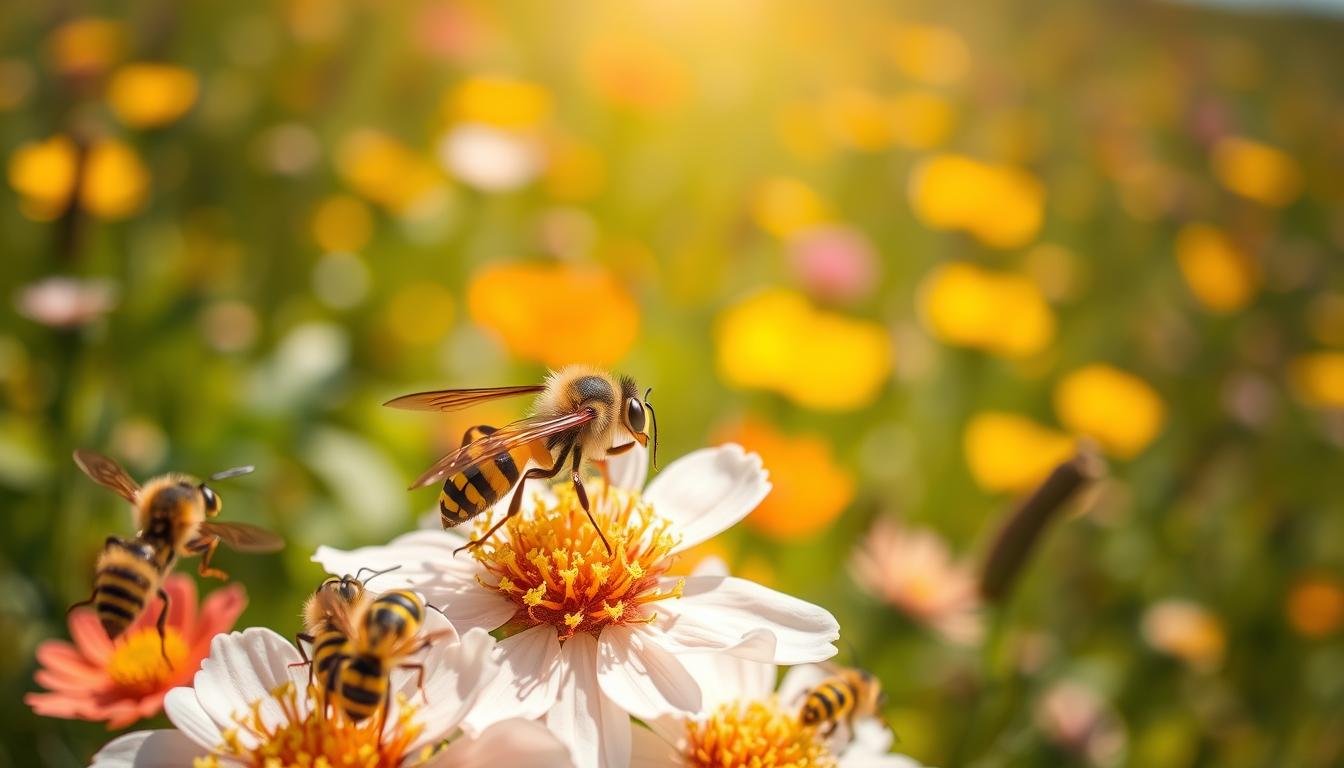
Body texture is the single most reliable identifier. Honeybees are fuzzy all over, covered in branched hairs adapted specifically for collecting pollen, and have a muted, golden-amber to brownish coloring rather than sharply contrasting stripes. Yellowjackets, by contrast, are smooth and shiny with essentially no visible body hair, and their black-and-yellow banding is crisp, high-contrast, and much more clearly defined. Body shape reinforces the same distinction: honeybees have a rounder, softer-looking abdomen, while yellowjackets have a more slender, tapered, almost polished-looking abdomen. If in doubt, texture settles it: shiny and hairless means yellowjacket, fuzzy and dull-colored means honeybee.
Why Yellowjackets Sting So Much More Readily
This is the difference that actually matters most to the average person’s day-to-day experience, and it’s rooted in genuine biological differences rather than mere reputation. A honeybee’s stinger is barbed and stays lodged in whatever it stings, tearing away part of the bee’s abdomen in the process, which kills the honeybee; because of this fatal cost, honeybees are naturally reluctant to sting and generally only do so defending the hive from a direct threat. A yellowjacket’s stinger is smooth, not barbed, meaning it can sting repeatedly without dying, and yellowjackets are considerably more prone to stinging without much provocation at all, sometimes even biting to get a firmer grip on skin before stinging. This single anatomical difference, barbed versus smooth stinger, explains most of the practical behavioral gap people actually notice between the two insects.
Nesting: Ground and Wall Cavities, Not Hives
Yellowjackets typically build nests underground, often in abandoned rodent burrows, or inside wall voids, hollow trees, and other enclosed cavities, constructing the nest from a paper-like material they make by chewing wood fiber mixed with saliva, visually similar to a hornet’s nest but usually hidden from view rather than the exposed, football-shaped nests some other wasps build in open air. Like bumblebee colonies, yellowjacket colonies are annual: only newly mated queens survive winter, each starting an entirely new colony from scratch the following spring, and the entire worker population, along with the nest itself, dies off by the end of the season. This is a meaningful contrast to a honeybee colony, which is perennial and can persist for years given adequate care and stores.
Do all yellowjacket species build underground nests?
Most do, but not all; some species, along with the closely related bald-faced hornet discussed above, build aerial paper nests instead, so an above-ground papery nest doesn’t automatically rule out a yellowjacket-family wasp even though ground nesting is the more typical pattern for the group as a whole.
A Genuine Threat to Honeybee Colonies
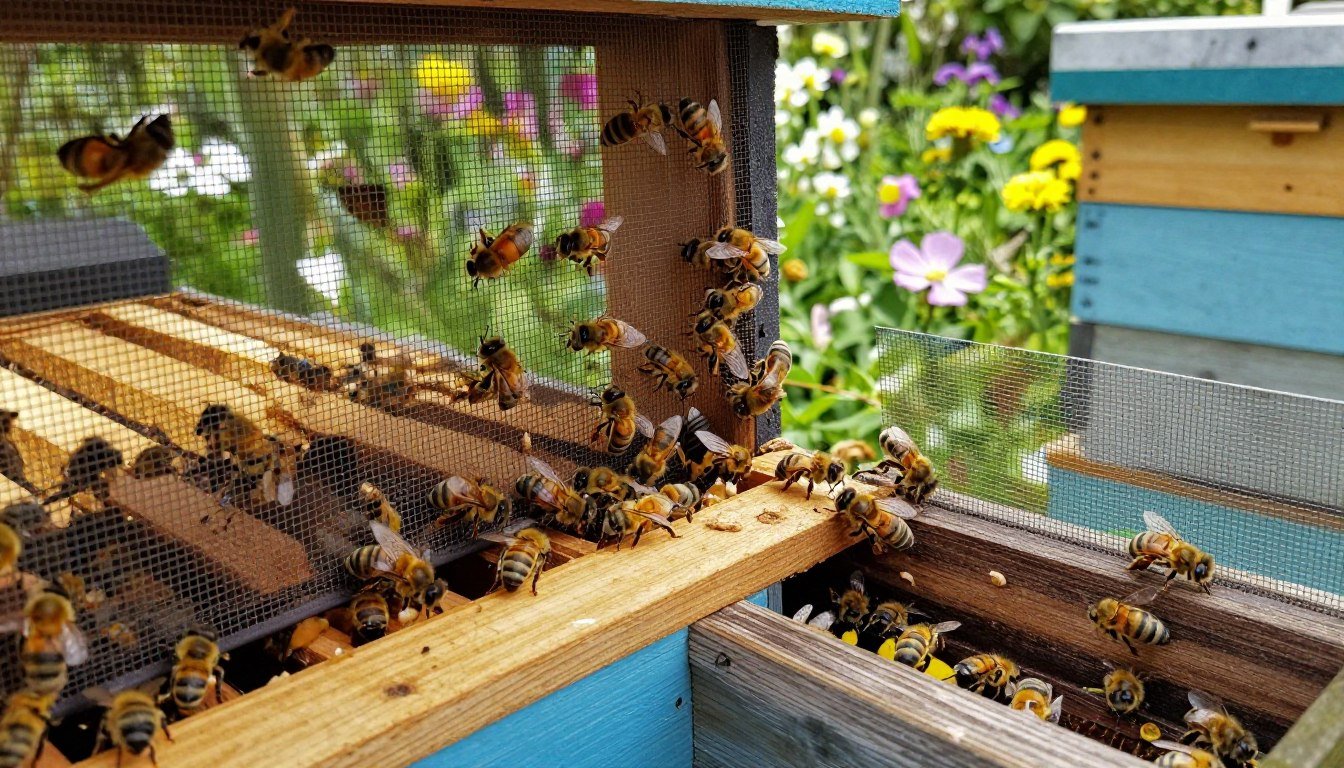
Beyond confusing homeowners, yellowjackets pose a real, practical threat to actual honeybee colonies, particularly in late summer and fall when yellowjacket populations peak and natural nectar sources begin to dwindle. Yellowjackets are opportunistic scavengers that will readily rob a weak or poorly defended honeybee colony for its honey stores, sometimes overwhelming a small, poorly-guarded, or already-struggling hive entirely if the robbing pressure goes unchecked. This is part of why late-season hive entrance reduction and robbing screens are standard recommended practice for beekeepers, a genuinely practical defensive measure against yellowjacket (and honeybee-on-honeybee) robbing pressure during the exact window when yellowjacket activity is highest and floral nectar is scarcest.
Yellowjackets vs. Other Common Wasps
Yellowjackets aren’t the only wasp regularly mistaken for a bee, and separating them from other common wasps helps round out accurate identification. Bald-faced hornets, despite the name, are actually a close relative of yellowjackets rather than a true hornet, mostly black and white rather than yellow, and build large, exposed, football-shaped paper nests hanging from tree branches or eaves, unlike the hidden ground or wall nests yellowjackets prefer. Paper wasps are more slender still, with long dangling legs visible in flight, build small, open, umbrella-shaped combs without any outer paper envelope, and are generally less aggressive and less inclined to sting unprovoked than yellowjackets. Of the three, yellowjackets are by far the most likely to be encountered around human food sources and are responsible for the large majority of “bee sting at a picnic” complaints.
What Actually Happens After a Yellowjacket Sting
Because a yellowjacket’s stinger isn’t barbed, it doesn’t remain lodged in the skin the way a honeybee’s does, so there’s no stinger to scrape or pull out after a yellowjacket sting, one more practical way the two differ even after the fact. Basic care mirrors general sting treatment: wash the area, apply a cold compress to reduce swelling, and take an antihistamine or pain reliever as needed for typical local reaction symptoms. Because yellowjackets can sting repeatedly in immediate succession, a single encounter can result in multiple stings and a correspondingly higher venom dose, one reason yellowjacket encounters near nests are considered more dangerous than an isolated honeybee sting, particularly for anyone with a known insect sting allergy.
Should I try to remove a yellowjacket nest myself?
Generally not recommended for an established nest, particularly one found later in the season when the colony has already grown large; because yellowjackets can sting repeatedly and often defend a nest in large numbers at once, professional pest control is the safer choice for anything beyond a very small, newly started nest identified early in spring.
The Ecological Role People Rarely Give Them Credit For
It’s worth acknowledging, even in an article largely about why yellowjackets get unfairly blamed for honeybee behavior, that yellowjackets themselves aren’t purely a nuisance. As predators, adult yellowjackets capture large numbers of caterpillars, flies, and other soft-bodied insects to feed their larvae, making them a genuinely significant natural pest-control agent in home gardens and agricultural settings across most of the growing season. Adult yellowjackets also visit flowers for nectar and incidentally contribute some pollination, though nowhere near as effectively or deliberately as a genuine specialist pollinator. The species’ late-season reputation as a picnic nuisance and occasional honeybee-hive robber shouldn’t completely obscure the fact that, for most of the year, a yellowjacket colony is doing real, unpaid pest control work in the surrounding landscape.
Why do yellowjackets seem to get more aggressive as summer goes on?
Colony size and food scarcity both build across the season, and a larger, hungrier colony with dwindling natural forage genuinely does become more assertive and more willing to investigate human food and drink as an alternative resource, so the perception that yellowjackets get “worse” late in summer reflects a real underlying change in colony behavior, not just increased human awareness of them.
Can beekeepers do anything besides robbing screens to protect hives from yellowjackets?
Yes, keeping colonies strong and well-populated heading into late summer is one of the best general defenses, since a robust, well-guarded hive is far less appealing and far harder for yellowjackets to successfully overwhelm than a small or already weakened one, making overall colony health as much a part of yellowjacket defense as any single physical barrier.
Common Mistakes
The most common and consequential mistake is blaming honeybees for unprovoked stings that were actually delivered by yellowjackets, an association that unfairly damages public perception of a generally gentle, ecologically vital insect. People also frequently misidentify yellowjackets as “bees” building a nest in a wall or ground cavity, when a genuine honeybee colony almost never nests in those locations without human intervention and is far more likely found in a hollow tree cavity or man-made hive box. Another mistake is assuming any yellow-and-black striped flying insect near outdoor food is dangerous and swatting at it aggressively, when swatting is precisely the behavior most likely to provoke an actual sting from a species that, unlike honeybees, has no fatal cost to stinging repeatedly.
Do yellowjackets and honeybees ever compete for the same nectar sources?
Yes, particularly late in the season when overall floral resources decline; both species will forage the same remaining flowers, though honeybees remain focused almost entirely on nectar and pollen while yellowjackets split their attention between nectar, protein from other insects, and, when available, human food sources.
Why Yellowjacket Encounters Spike in Late Summer and Fall
The seasonal timing of the classic “aggressive bee at a barbecue” complaint isn’t a coincidence. Yellowjacket colonies build steadily across spring and summer, reaching peak population, often several thousand workers, by late summer, precisely as their natural food sources, other insects for protein and flower nectar for carbohydrates, begin to taper off heading into fall. A large, hungry colony with dwindling natural forage turns opportunistically to human food sources and to robbing weaker insect colonies, including honeybee hives, exactly as covered above. This seasonal biology, colony size peaking just as natural food supply drops, is the actual underlying reason yellowjacket problems cluster so heavily in August and September rather than earlier in the season, a pattern broadly similar in shape, though driven by different specifics, to the annual colony cycle seen in bumblebee colonies.
If yellowjackets are already working your hive entrances, see how to protect beehives from yellow jackets with entrance changes, traps and lures.
For how the stings compare, see bee sting vs wasp sting: which is worse.
Sources
For additional authoritative detail on this topic, see University of Maine Cooperative Extension’s fact sheet on hornets, wasps, and yellowjackets.
Frequently Asked Questions
Is a yellowjacket sting more dangerous than a honeybee sting?
For a non-allergic person, the venom itself is broadly comparable in effect, but the real-world risk from yellowjackets tends to run higher simply because a single encounter more often results in multiple stings, and unprovoked encounters happen far more frequently given how readily yellowjackets investigate human food and drink compared to honeybees.
Are yellowjacket traps effective for reducing problems around a patio or deck?
Commercial baited traps can meaningfully reduce local yellowjacket activity around a specific outdoor area, particularly when set out early in the season before populations peak, though they work best as one part of a broader approach that also includes keeping food and sugary drinks covered and trash sealed rather than as a complete standalone solution.
Can yellowjackets sting more than once?
Yes. Unlike honeybees, their stinger isn’t barbed, so a single yellowjacket can sting repeatedly without injuring or killing itself in the process.
Why do yellowjackets show up around food and trash but honeybees don’t?
Yellowjackets are opportunistic scavengers that eat other insects, meat, and sugary substances, which draws them to picnics, trash, and sweet drinks; honeybees feed exclusively on nectar and pollen from flowers and have no comparable interest in human food waste.
If I have a ground or wall nest, is it likely honeybees or yellowjackets?
Almost certainly yellowjackets. Honeybee colonies overwhelmingly prefer enclosed cavities like hollow trees rather than underground burrows, and an active ground-level nest with wasp traffic is a strong indicator of yellowjackets rather than bees.