Last Updated September 15, 2026
If a paper wasp nest around your home looks more yellow-and-black striped than the brown paper wasps you remember from childhood, you may be looking at Polistes dominula, the European paper wasp — a species that has spread rapidly and steadily across most of the United States since its accidental introduction near Boston in 1978, and in many areas has genuinely become more common than the native paper wasps it has gradually displaced over the intervening decades. This article covers, in detail, what makes this specific species genuinely different from the general paper wasp identification content already on this site, why its yellowjacket-like coloring causes more unnecessary alarm than it should, and a real ecological cost — to monarch butterflies specifically — that goes beyond simply displacing native paper wasps.
Table of Contents
- Key Takeaways
- What Is the European Paper Wasp?
- How It Arrived and Spread Across North America
- How Far Has It Spread Today?
- Identification: The Orange-Tipped Antennae Test
- Displacing Native Paper Wasp Species
- A Documented Cost to Monarch Butterflies
- Why It Gets Mistaken for a Yellowjacket
- Nesting Habits and Behavior
- Ecological Role: A Genuinely Mixed Picture
- Is This Species Any Concern for Honeybee Colonies?
- Sting Risk to People and Pets
- European Paper Wasp vs. Native Paper Wasps vs. Yellowjackets
- Common Identification Mistakes
- Frequently Asked Questions
Key Takeaways
- The European paper wasp was first reported in North America around Boston, Massachusetts in 1978 — not Pennsylvania, a location sometimes cited incorrectly — and has since spread coast to coast, remaining less common in the Southeast and Great Plains.
- Orange-tipped antennae are the most reliable field mark separating this species from native paper wasps; dangling the legs during flight (rather than holding them close to the body) is a secondary behavioral clue.
- A long-term northeastern U.S. field study found P. dominula colonies survived to the reproductive period at roughly three times the rate of native P. fuscatus colonies, with native reproductive output declining in direct proportion to how invaded a site was — genuine population-level displacement, not just anecdote.
- A 2020 University of Kentucky study (Baker & Potter, Scientific Reports) found this species killed 67-80% of monarch butterfly caterpillars placed as sentinels in urban gardens, turning well-meaning pollinator gardens into what the authors call an “ecological trap” for monarchs.
- Despite that real cost, European paper wasps are not considered a meaningful threat to honeybee colonies specifically — their hunting focuses on caterpillars and other soft-bodied prey, not adult bees.
What Is the European Paper Wasp?
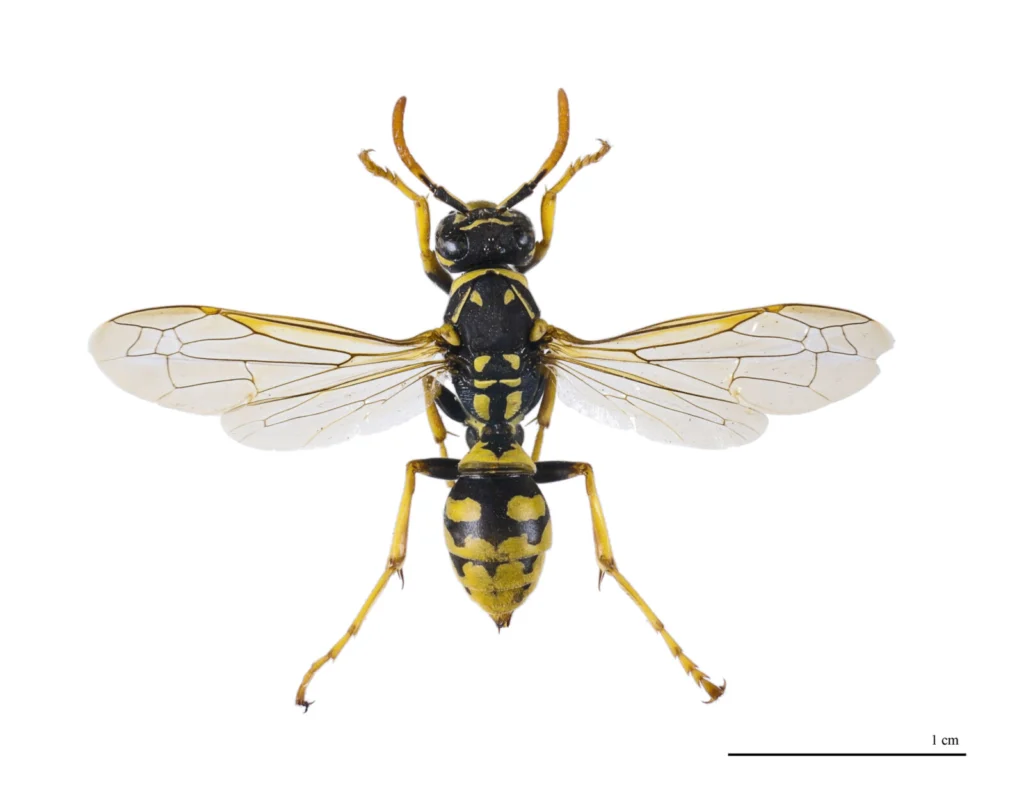 Polistes dominula is a paper wasp species native to Europe, the Mediterranean region, and parts of Asia. It was first reported in North America around Boston, Massachusetts in 1978, and has since spread across the vast majority of the continental United States and into southern Canada, becoming one of the most commonly encountered paper wasp species in many regions rather than a rare or occasional find.
How It Arrived and Spread Across North America
The species’ introduction to North America is generally attributed to accidental transport, most likely via international shipping or cargo, with the Boston area serving as the first well-documented detection point in 1978 rather than Pennsylvania, a location sometimes cited incorrectly in secondary sources. From that initial establishment, the European paper wasp expanded its range remarkably quickly across the continent over the following decades — first through the Northeast, then into the Midwest, and more recently toward the western and southwestern United States — a spread pattern that entomologists have tracked and documented as one of the more notable insect range expansions in recent North American history.
How Far Has It Spread Today?
Decades after its initial detection near Boston, the European paper wasp is now established across the great majority of the continental United States, with documented populations spanning coast to coast, though it remains apparently less common in the Southeast and Great Plains than elsewhere. This wide, continuing range means most readers in the US, regardless of region, have at least some realistic chance of encountering this species specifically rather than only a native paper wasp, which is part of why species-level identification has become more practically useful than it would have been a few decades ago.
Identification: The Orange-Tipped Antennae Test
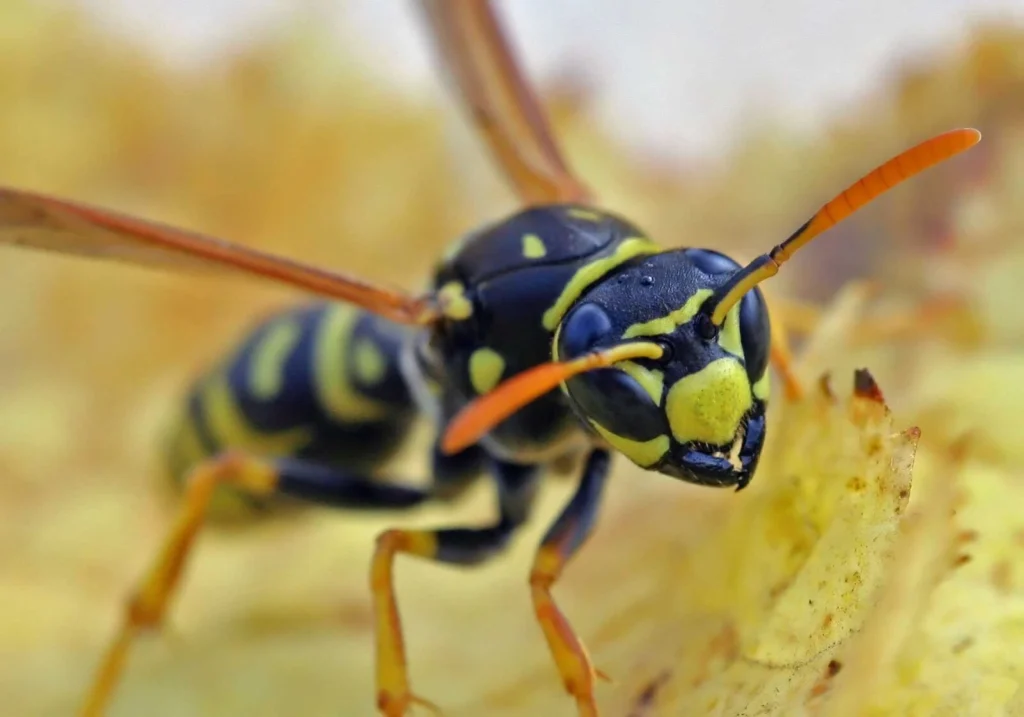
The most reliable field mark separating the European paper wasp from native North American paper wasp species is antennae color: European paper wasps have antennae that are distinctly orange, particularly toward the tips — a trait no native paper wasp species shares — while native paper wasps like Polistes fuscatus typically have darker, more uniformly brown or black antennae. Body coloring is also a helpful secondary clue: European paper wasps tend to show brighter, more contrasting yellow-and-black banding, a slender body with a noticeably thin waist, and a yellow face, all of which look noticeably closer to a yellowjacket’s pattern than the duller brown-and-yellow coloring typical of many native paper wasp species. One more behavioral clue worth checking: European paper wasps tend to let their legs dangle during flight rather than holding them tucked close to the body.
Displacing Native Paper Wasp Species
One of the more genuinely significant findings in the research on this species is documented, population-level displacement of native paper wasps in areas where the European paper wasp has become established. A long-term field study published in Biological Invasions tracking colonies across sites in Massachusetts and Maine found that P. dominula colonies survived to the August reproductive period at roughly three times the rate of native P. fuscatus colonies, and that P. fuscatus reproductive output declined in direct proportion to how heavily a given site had been invaded — nests at the most-invaded sites produced roughly a third as many cells as nests at uninvaded sites. Researchers attribute this primarily to exploitative competition rather than direct fighting between the species: P. dominula develops from egg to first worker roughly a week faster than P. fuscatus and shows a greater tendency to store nectar even before workers emerge, compounding advantages that add up over a season. In practical terms, this means homeowners in many parts of the country are now considerably more likely to encounter this introduced species on their property than the native paper wasps that were historically more common in the same areas — a genuine, measured ecological shift rather than a minor curiosity.
A Documented Cost to Monarch Butterflies
Beyond competing with native paper wasps, European paper wasps carry a documented ecological cost that has nothing to do with displacement: they’re effective, opportunistic predators of monarch butterfly caterpillars, and urban and suburban gardens planted specifically to help monarchs can end up concentrating that risk. A 2020 University of Kentucky study published in Scientific Reports placed monarch caterpillars as sentinels in urban gardens and found P. dominula killed 77% of second-instar, 80% of third-instar, and 67% of fourth-instar caterpillars, with predation significantly higher in urban gardens (averaging about 6.5 meters from buildings) than in rural meadow sites roughly 257 meters from structures — plausibly because the wasps themselves nest disproportionately on buildings. The study’s authors describe well-intentioned pollinator gardens near structures as a potential “ecological trap” for monarchs specifically because of this dynamic, an under-recognized cost worth knowing about for anyone gardening for monarchs near a home or other structure.
Why It Gets Mistaken for a Yellowjacket
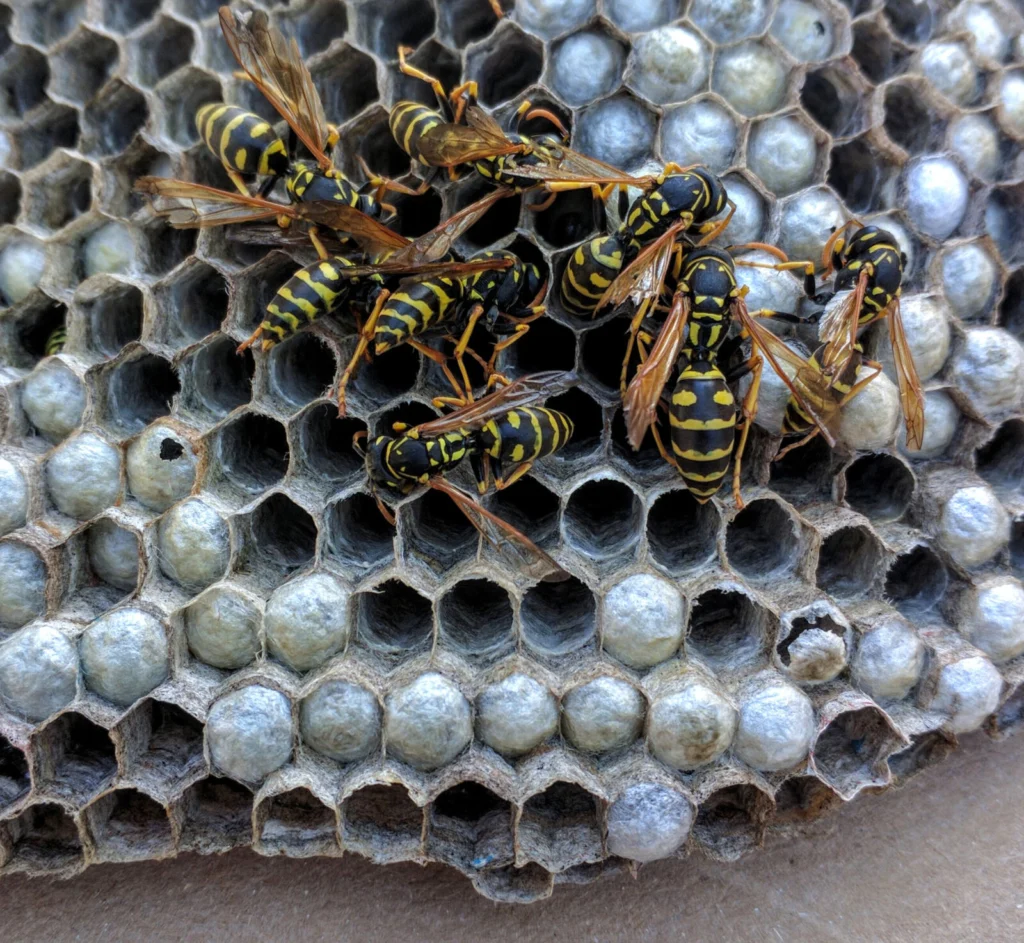
Because of its brighter yellow-and-black coloring compared to native paper wasps, the European paper wasp is frequently mistaken for a yellowjacket by homeowners, which tends to generate more alarm than the species actually warrants. This is a genuinely common point of confusion worth addressing directly, and the distinction matters practically: as covered in the yellowjacket identification guide on this site, true yellowjackets are generally more defensive and more likely to be encountered in large numbers near ground-level or wall-void nests, while European paper wasps, like other paper wasps, tend to live in smaller colonies with open, umbrella-shaped nests and a comparatively calmer temperament unless directly disturbed.
Nesting Habits and Behavior
European paper wasps build the same general style of open, umbrella-shaped paper nest typical of the genus Polistes, often attached to eaves, overhangs, attics, wall voids, and other sheltered structural features around homes and outbuildings — documented nesting sites have included light fixtures, parking meters, grills, and even motor homes. Some research and pest-control observation suggests this species may nest at somewhat higher densities in suitable habitat compared to native paper wasps, consistent with its broader pattern of successful establishment and spread, though nest size and colony population remain generally comparable to other paper wasp species rather than dramatically larger.
Ecological Role: A Genuinely Mixed Picture
Despite being an introduced species, European paper wasps fill largely the same general ecological role as native paper wasps: adults hunt caterpillars and other soft-bodied insect prey to feed their developing larvae, making them a real, if underappreciated, form of natural pest control in gardens and landscapes for many caterpillar species. This is worth noting honestly rather than treating every introduced species as purely negative — but as the monarch research above shows, “eats caterpillars” isn’t an unambiguous positive when the caterpillars in question are a conservation-sensitive species like the monarch. The honest picture is mixed: genuine pest-control value for many garden pests, genuine population-level pressure on native paper wasps, and a genuine, specific documented cost to monarch survival in the exact urban garden settings people often plant to help them.
Is This Species Any Concern for Honeybee Colonies?
European paper wasps aren’t considered a meaningful threat to honeybee colonies. Unlike true hornets, which can prey directly on honeybees at hive entrances, paper wasps generally focus their hunting on caterpillars and other soft-bodied garden insects rather than adult bees, and there’s no significant documented pattern of this species targeting managed hives. Beekeepers noticing paper wasp nests near an apiary generally don’t need to treat them differently from any other paper wasp nest on the property.
Sting Risk to People and Pets
European paper wasps can sting, and like other paper wasps, they will defend an actively disturbed nest. That said, they are not considered unusually aggressive compared to native paper wasp species, and most sting incidents involve direct nest disturbance rather than unprovoked attacks. The exaggerated alarm this species sometimes generates is more a function of its yellowjacket-like appearance than any genuine difference in temperament from the paper wasps people are more used to seeing.
European Paper Wasp vs. Native Paper Wasps vs. Yellowjackets
| Feature | European Paper Wasp | Native Paper Wasp (e.g. P. fuscatus) | Yellowjacket |
|---|---|---|---|
| Origin | Introduced (Europe, 1978) | Native | Native (most species) |
| Antennae color | Orange-tipped | Dark brown/black | Dark |
| Body coloring | Bright yellow-black | Duller brown-yellow | Bright yellow-black |
| Nest type | Open umbrella nest | Open umbrella nest | Enclosed, often underground |
| Temperament | Moderate, defends nest | Moderate, defends nest | More defensive |
Common Identification Mistakes
The most common mistake is assuming any brightly yellow-and-black striped wasp on an open paper nest must be a yellowjacket, when the nest style itself — an open, exposed comb rather than an enclosed paper envelope — is a strong indicator of a paper wasp rather than a yellowjacket regardless of color intensity. A second common mistake is assuming all paper wasps look the same; checking antennae color is a fast, genuinely reliable way to tell whether a given paper wasp is the introduced European species or a native one. A third, more recently documented mistake is assuming a paper wasp nest near a monarch-friendly garden is only a minor curiosity rather than a real, studied predation risk to the caterpillars that garden was planted to support.
Frequently Asked Questions
Why is the introduction of a paper wasp species considered a problem at all if it still provides pest control?
The concern researchers document isn’t about the species itself lacking value, but about two specific, measured effects: displacing native paper wasps from nest sites they would otherwise use, and a documented predation cost to monarch butterfly caterpillars in urban gardens specifically, even while the overall pest-control function performed by paper wasps as a group continues largely uninterrupted.
Do European paper wasps overwinter, and what happens to a colony each year?
Like other paper wasps, European paper wasp colonies are annual: only newly mated queens survive the winter, typically sheltering in protected spots such as under bark or inside structures, while the rest of the colony including workers dies off in fall, and each surviving queen starts an entirely new nest the following spring rather than reusing the previous year’s nest.
Can European paper wasps and native paper wasps coexist on the same property?
Yes, coexistence at the property level is common even in areas where the European paper wasp has become the more numerous species regionally; the documented displacement effect operates more at a population and habitat-competition level over time than as a guarantee that native paper wasps will be entirely absent from any given yard.
Is professional pest control ever necessary for a European paper wasp nest?
Professional removal is generally reserved for nests in high-traffic locations, near entryways, or in situations involving someone with a known wasp-sting allergy, following the same general risk-based guidance used for paper wasp nests of any species rather than any special protocol unique to this particular introduced species.
Is it worth trying to eradicate European paper wasps to protect native species or monarchs?
Large-scale eradication isn’t a realistic or generally recommended approach for an already widely established introduced insect species; the monarch research above instead points toward a more practical response, siting monarch host plants and pollinator gardens somewhat farther from buildings and structures where this species preferentially nests, rather than attempting broad control aimed at the wasp population itself.
Does climate affect where European paper wasps are found within the US?
The species has proven adaptable across a wide range of North American climates, from warmer southern states to considerably colder northern regions, which helps explain its broad continental spread, though it remains apparently less common in the Southeast and Great Plains than in other regions.
Further Reading
- Paper Wasps: Identification and Why They’re Less Aggressive Than You Think
- Yellow-Legged Hornet: The Invasive Species Actually Spreading in the US Right Now
- Cicada Killer Wasps: The Giant, Harmless Wasp Everyone Panics About
- Yellowjackets vs. Honeybees: How to Tell Them Apart
Image credits: Photo: Didier Descouens, via Wikimedia Commons. Licensed CC BY-SA 4.0; Photo: Dicklyon, via Wikimedia Commons. Licensed CC BY-SA 4.0.