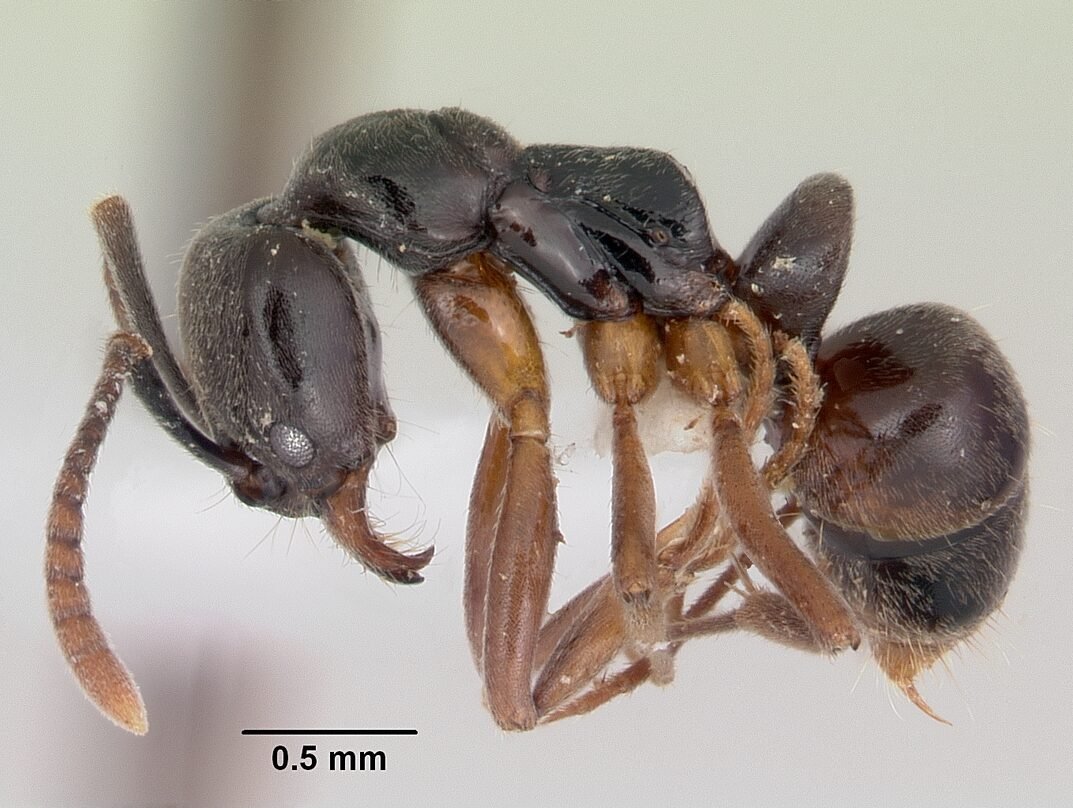
The Asian needle ant (Brachyponera chinensis) is a small, shiny black, stinging ant native to East Asia that has become established and is actively spreading across the southeastern United States — and while it isn’t a direct predator of honeybees the way a hornet is, its documented ability to displace native ant species by as much as 96% in invaded areas makes it a real ecological disruption worth beekeepers knowing about. This is a different animal, literally and figuratively, from the invasive hornets this site has already covered in detail, like the yellow-legged hornet and European hornet — it doesn’t hunt bees at the hive entrance, but it’s spreading through some of the same landscapes apiaries occupy, and its sting carries a real, if rare, anaphylaxis risk worth understanding.
Key Takeaways
- The Asian needle ant is established and spreading in the southeastern U.S., identified by its shiny black-brown body and comparatively slow, deliberate movement compared to more frantic native ant species.
- It isn’t a direct honeybee predator — its main documented ecological impact is displacing native ant species, with one study showing a 96% reduction in the native ant Aphaenogaster rudis in invaded areas.
- Its sting is disproportionately painful for the ant’s small size and carries a real, though rare, risk of anaphylaxis in sensitive individuals — a distinct concern from its ecological impact.
- Beekeepers should care less about direct hive predation and more about ecosystem disruption in and around apiary sites, plus the practical safety issue of a stinging ant now present in areas where hives are worked by hand.
- It’s easily confused with several native ant species on sight alone — a photo submitted through a real identification method is the reliable way to confirm a suspected sighting, not a guess based on color alone.
What It Actually Looks Like and Where It’s Spreading
The Asian needle ant is small (workers run roughly 5 millimeters), shiny, and dark brown to black, with a distinctively slower, more methodical walking pattern than the fast, erratic movement of many common native ant species — a genuinely useful field cue once you’ve seen the comparison, though not a substitute for a confirmed identification. It’s native to East Asia and has become established across a growing portion of the southeastern United States, with populations continuing to expand into new counties and states as of recent tracking.
Unlike honeybees or the invasive hornets covered elsewhere on this site, Asian needle ants nest in soil, leaf litter, and under logs or landscaping timbers rather than building an aerial or cavity nest — meaning an apiary’s ground cover and surrounding woodpile or mulch areas are the more likely places to encounter them, not the hive itself.
The Real Ecological Impact: Native Ants, Not Honeybees
The most significant documented harm from Asian needle ant invasion isn’t predation on honeybees directly — it’s what happens to native ant communities. Research has found the native ant species Aphaenogaster rudis reduced by as much as 96% in areas where Asian needle ants have become established, a collapse with ripple effects since Aphaenogaster and other native ants play a real ecological role in seed dispersal for many native woodland plants. For a beekeeper thinking about the health of the broader forage landscape around an apiary — the same logic behind interest in companion planting for pollinators and native plant diversity — a landscape-level disruption to native ant populations is a genuine, if indirect, concern for long-term forage plant diversity.
“The native ant species Aphaenogaster rudis was reduced by 96% in invaded areas containing the Asian needle ant” — a stark measure of how thoroughly this invasive species can restructure a local ant community once established.
The Sting: A Separate, More Immediate Concern
Apart from its ecological footprint, the Asian needle ant’s sting is a genuine, practical safety consideration for anyone working outdoors in an area where it’s established. The sting is reported as disproportionately painful relative to the ant’s small size, often described as coming in distinct waves rather than a single sharp pain, and — while rare — it can trigger a life-threatening anaphylactic reaction in sensitive individuals, similar in principle to a honeybee sting allergy but from an entirely different insect and venom. Anyone doing hive work in the southeastern U.S. who experiences an unusually severe or delayed reaction to a sting from a small dark ant, rather than a bee or wasp, has reasonable cause to mention Asian needle ant specifically to a healthcare provider, since it’s easily mistaken for a more minor insect sting if the ant itself isn’t identified.
Telling It Apart From Similar-Looking Ants
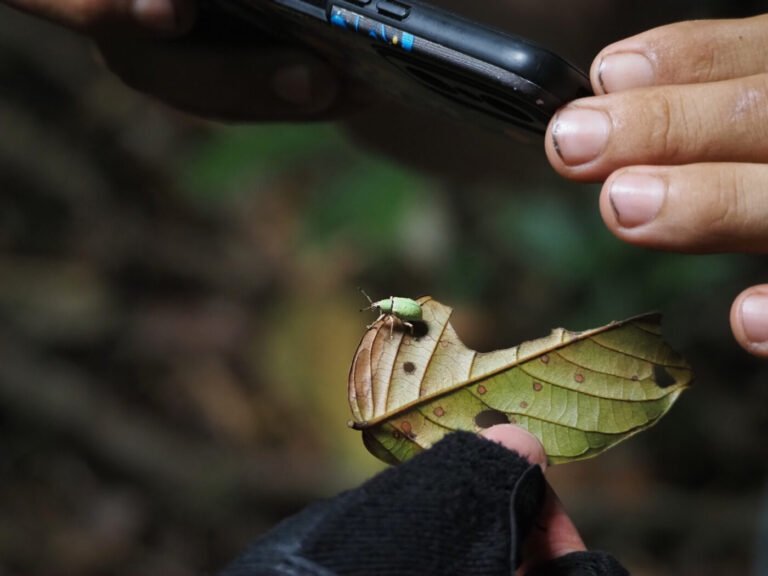
Confident field identification matters here because several native ant species share the Asian needle ant’s general size and dark coloring. Rather than guessing from color alone, a photo submitted through a real identification method — the same community-verification approach covered in this site’s comparison of insect identification tools — is the reliable path to confirmation, and a confirmed new-county sighting is genuinely useful to report to a state extension office or invasive species tracking program, since range data for this species is still actively being updated as it continues to spread.
What Beekeepers Should Actually Do
- Don’t expect it to behave like a hive predator — it isn’t one, and no defensive measure built for wasps or hornets is relevant here.
- Do treat an unusual, severe, or delayed sting reaction from a small dark ant as worth mentioning specifically to a doctor, given the documented anaphylaxis risk.
- Keep ground cover, mulch, and woodpiles near an apiary reasonably managed, since these are the ant’s preferred nesting habitat, not the hive itself.
- Report a suspected new-area sighting to a state extension or invasive species program rather than assuming it’s already known to be present locally.
Frequently Asked Questions
Does the Asian needle ant attack honeybee hives?
No direct hive-predation relationship is documented — its impact is primarily on native ant communities through competitive displacement, not honeybee colonies specifically.
Is the Asian needle ant’s sting worse than a honeybee sting?
It’s reported as disproportionately painful for the ant’s size, sometimes described as coming in waves, and carries a rare but real anaphylaxis risk — comparable in seriousness to a bee sting allergy but from a different venom and species, so it shouldn’t be assumed to be “just a bee sting” if misidentified.
Where in the U.S. has it actually spread?
It’s established across a growing portion of the southeastern United States, with its range continuing to expand — current extent is best checked through a state extension service or invasive species tracker, since the documented range has been changing.
What should I do if I think I’ve found one somewhere new?
Photograph it, avoid handling it directly given the sting risk, and report the sighting to your state’s agricultural extension office or an invasive species reporting program rather than assuming it’s already documented in your area.
The Asian needle ant isn’t a threat to bees the way a hornet is — it’s a reminder that not every invasive species disrupting a beekeeper’s landscape does so by going after the hive directly.