Tropilaelaps mites — a genus of tiny, fast-reproducing parasitic mites native to Asia — are now spreading westward through Central Asia, the Caucasus, and toward Europe, and researchers increasingly describe them as a bigger long-term threat to global beekeeping than Varroa destructor. They are not yet established in the Americas, but their westward march over the past several years, combined with traits that make them harder to control than Varroa, is why apiculture researchers are treating this as an emerging crisis rather than a distant hypothetical.
This site has covered how Varroa mites invaded America in 1987 and the ongoing fight against them in detail. Tropilaelaps is a genuinely different parasite, not a rebrand of the same problem — and understanding the difference now, before it potentially reaches new regions, is exactly the kind of preparation beekeepers wish they’d had before Varroa’s own arrival.
Key Takeaways
- Tropilaelaps mercedesae, the species researchers are most focused on, has spread from Southeast and East Asia westward into Central Asia, the Caucasus, and parts of western Eurasia including Georgia and Russia in recent years.
- Unlike Varroa, Tropilaelaps has a much shorter phoretic phase (the time spent riding on adult bees rather than reproducing in brood cells), higher mobility, and a faster reproductive rate — traits that make standard Varroa-era timelines and treatments less directly transferable.
- A 2026 study documented Tropilaelaps mites hitching rides on swarming honey bees for the first time, showing they can spread to new colonies through natural swarming, not just human-assisted colony movement.
- The mites already carry known bee viruses, including deformed wing virus and black queen cell virus, meaning an introduction could deliver an immediate viral load on top of the parasitic damage itself.
- Tropilaelaps is not currently established in North America — this article is about awareness and monitoring, not a treatment protocol for a mite most U.S. and European beekeepers won’t currently encounter.
What Tropilaelaps Actually Is
Tropilaelaps is a genus of parasitic mites originally associated with the Asian honey bee (Apis dorsata) before jumping to the Western honey bee (Apis mellifera) — the same basic host-shift story that originally brought Varroa destructor out of its native range and into the managed colonies most of the world’s beekeeping now depends on. Several species exist, but Tropilaelaps mercedesae is the one drawing the most current research attention specifically because of its documented range expansion.
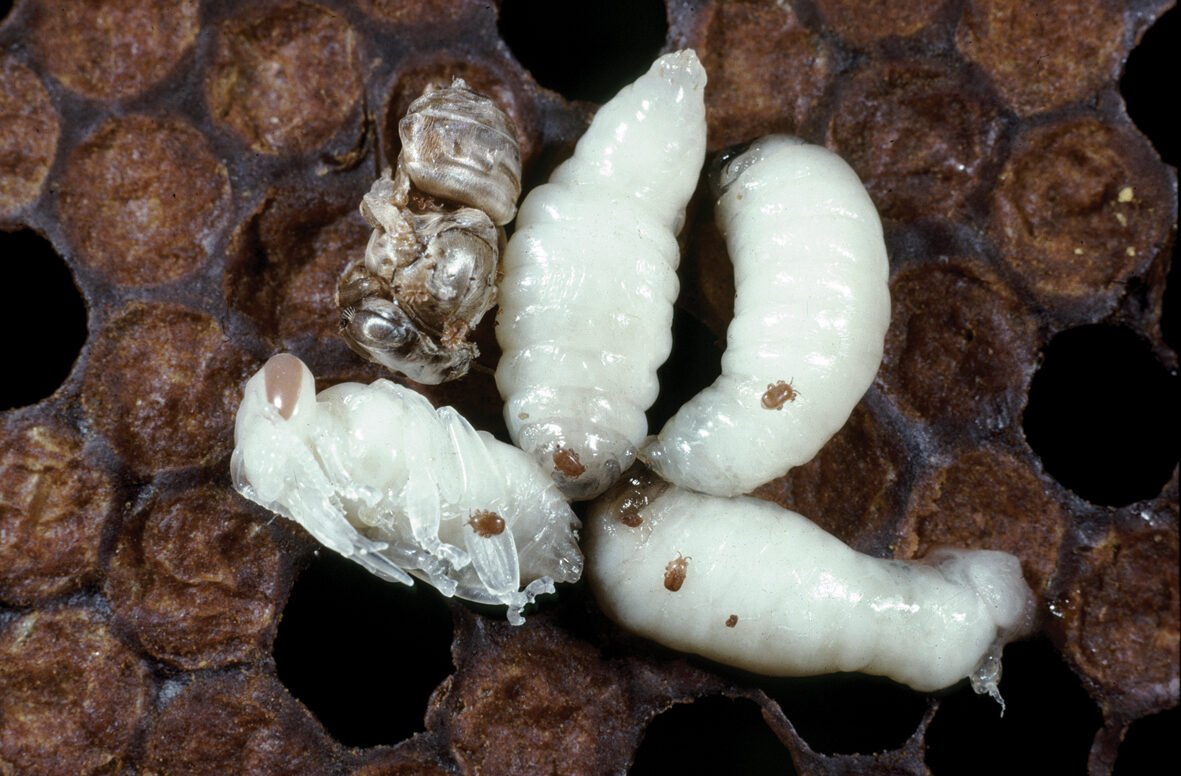
Physically, Tropilaelaps mites are smaller and faster-moving than Varroa, which makes them harder to spot during a routine visual inspection and contributes to under-detection in regions where beekeepers haven’t been specifically trained to look for them.
Tropilaelaps vs. Varroa: The Practical Differences
| Trait | Varroa destructor | Tropilaelaps mercedesae |
|---|---|---|
| Phoretic phase (time on adult bees, outside brood) | Days to weeks | Much shorter — mites depend more heavily on brood cells and spend less time on adult bees |
| Reproductive rate | High, but on a slower cycle than Tropilaelaps | Faster reproductive cycle, contributing to quicker population buildup |
| Mobility between colonies | Drifting bees, robbing, human equipment movement | Same routes, plus documented spread via swarming bees as of 2026 research |
| Current range | Nearly worldwide, including the Americas and Europe | Historically Asia; actively expanding into Central Asia, the Caucasus, and western Eurasia |
| Known viral association | Strongly linked to deformed wing virus transmission | Already found carrying deformed wing virus and black queen cell virus |
The shorter phoretic phase is the detail researchers keep coming back to: because Tropilaelaps spends comparatively little time riding on adult bees between brood cycles, some of the phoretic-stage treatments and timing windows beekeepers have spent decades refining for Varroa may not translate directly, since much of a Tropilaelaps population’s life cycle is happening inside capped brood rather than exposed on adult bees where a mite treatment can reach it.
How It’s Actually Spreading
For years, Tropilaelaps’ spread was assumed to track mainly with human-assisted colony movement — the sale and transport of package bees, queens, and combs between regions. A study published in 2026 changed part of that picture: researchers documented Tropilaelaps mercedesae mites successfully hitching a ride on swarming honey bees and surviving and reproducing in the swarm’s new colony, the first time this transmission route had been directly shown. That matters because a swarm is a natural, unassisted event — it means the mite doesn’t need a beekeeper’s truck or a queen shipment to establish itself in a new area once it’s regionally present, which raises the ceiling on how fast a genuine introduction could spread once it reaches a new continent.
“While Varroa destructor is widely recognized as the primary global driver of colony losses, mites of the genus Tropilaelaps, particularly Tropilaelaps mercedesae, are emerging as a serious and still underestimated threat” — a description echoed across current entomology research as the westward range expansion continues.
Why This Matters Even Where It Hasn’t Arrived
The parallel to Varroa’s own history is the whole point: Varroa was a well-documented Asian parasite for years before its 1987 discovery in U.S. colonies, and American beekeeping had essentially no head start in adapting monitoring or treatment protocols before it arrived and began causing significant colony losses. Tropilaelaps researchers are explicitly trying to avoid a repeat of that lag — publishing range-expansion data, host-shift research, and now transmission-route studies specifically so that regions not yet affected have real information to act on rather than starting from zero if and when an introduction occurs. For a beekeeper in North America or Western Europe today, the practical takeaway isn’t a new treatment to buy — it’s awareness: knowing the name, knowing it looks and behaves differently from Varroa, and knowing that an unusual mite sighting or an inspection result that doesn’t match typical Varroa patterns is worth reporting to a state apiary inspector rather than assumed to be a familiar problem.
Frequently Asked Questions
Is Tropilaelaps present in the United States?
Not currently. Its documented range remains centered on Asia, with an active westward expansion into Central Asia, the Caucasus, and parts of western Eurasia as of recent research — it has not been established in North America to date.
Can current Varroa treatments also control Tropilaelaps?
Some overlap exists in general miticide approaches, but Tropilaelaps’ much shorter phoretic phase and faster reproductive cycle mean that treatment timing developed for Varroa may not transfer directly, which is a major focus of current research rather than a settled answer.
How would a beekeeper outside Asia even recognize Tropilaelaps if it appeared?
It is noticeably smaller and faster-moving than Varroa during a visual inspection, which is part of why it’s easy to overlook without specific training — any unusual mite activity that doesn’t match typical Varroa appearance is worth reporting to a state or national apiary inspector for confirmation rather than assumed.
How does this compare to other current threats like small hive beetle or Nosema?
It’s a different category of concern — small hive beetle and Nosema are already established and manageable problems in most affected regions, while Tropilaelaps represents a potential future introduction that researchers are trying to prepare for in advance, similar to how Varroa itself was watched with concern before its actual 1987 U.S. arrival.
Tropilaelaps isn’t a reason for beekeepers outside its current range to panic — it’s a reason to know the name now, while the only cost of paying attention is awareness, rather than learning it the way Varroa was learned: after the fact.