
Reviewed by Sofia T. · How we review
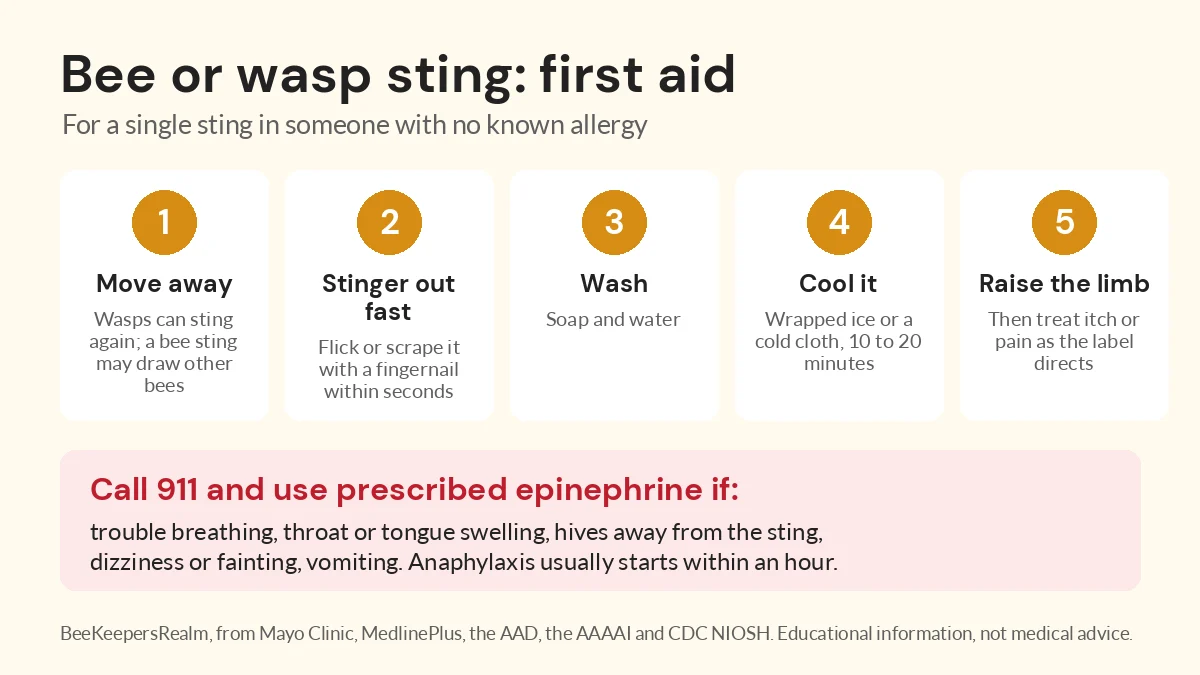
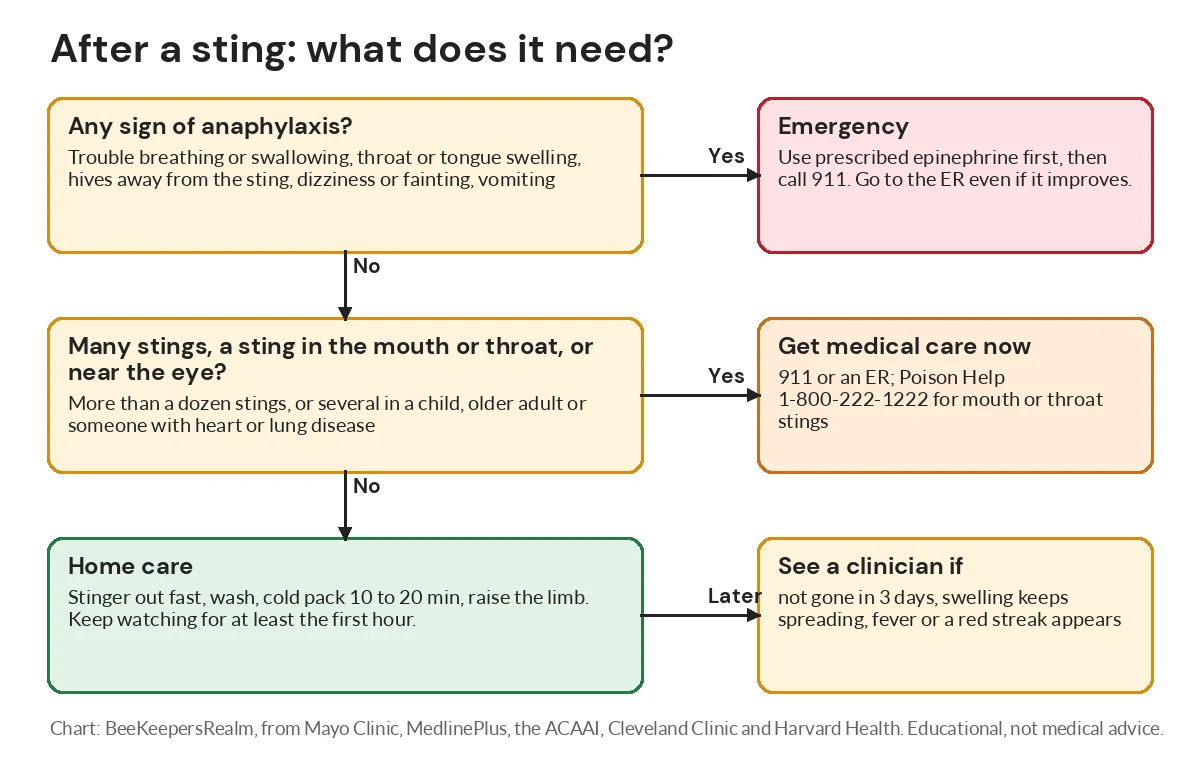
To treat a bee or wasp sting, walk away from the insects, get any stinger out within seconds, wash the spot with soap and water, and hold a wrapped cold pack on it for 10 to 20 minutes. Most stings stop hurting within a few hours. Trouble breathing, a swelling tongue or throat, hives away from the sting, or dizziness can mean anaphylaxis: use an epinephrine auto-injector if one has been prescribed and call 911.
Educational information, not medical advice. For a severe reaction, call 911 or your local emergency number; otherwise, talk to a clinician or pharmacist. Our steps follow the U.S. National Library of Medicine’s MedlinePlus guide to bee, wasp and hornet stings and the other medical sources named below. Sofia T. reviewed the beekeeping facts; the medical guidance comes from those organizations, not from our own clinical experience.
Emergency: if anyone has trouble breathing, a tight throat, swelling of the lips, tongue or face, spreading hives, or feels faint after a sting, call 911 and help them use their epinephrine auto-injector if they carry one.
Key Takeaways
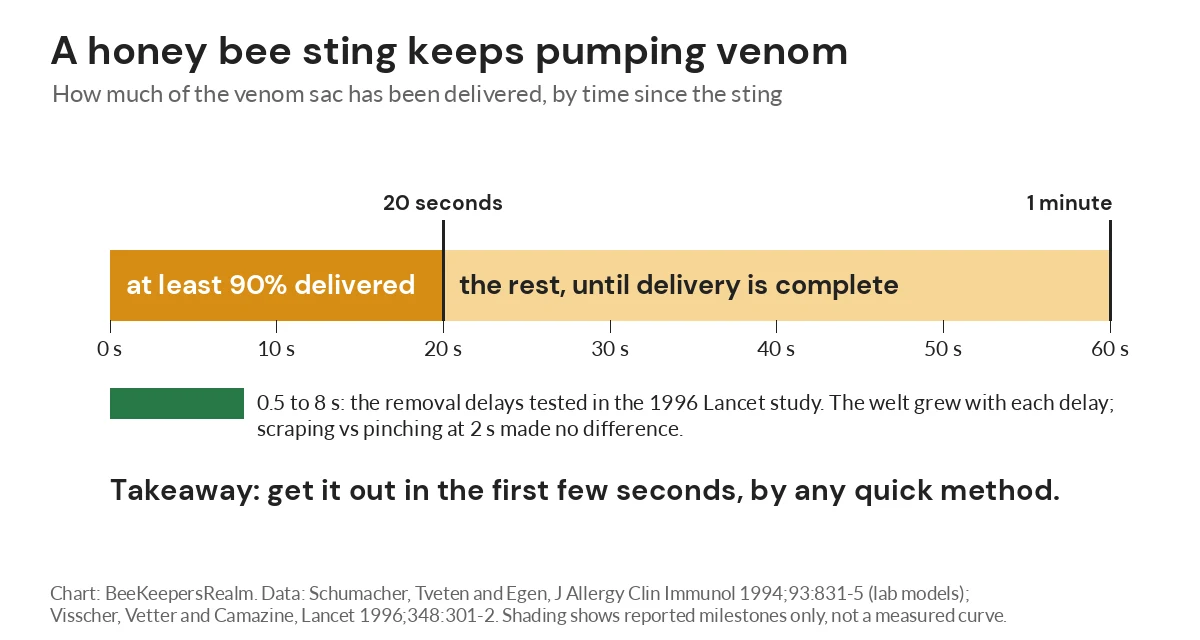
- Speed beats technique: at least 90% of a honey bee’s venom sac empties within 20 seconds, so flick the stinger out with a fingernail instead of hunting for a card.
- Normal stings settle within hours. A large local reaction can swell a whole limb for a week and is usually not dangerous.
- Anaphylaxis usually starts within an hour. Epinephrine comes first, then 911, even if symptoms ease.
- More than a dozen stings can make someone sick without any allergy; a sting inside the mouth or throat calls for poison control or an ER.
- Baking soda, meat tenderizer and aspirin paste have not beaten ice in the few trials that tested them.
Table of Contents
- First Aid for a Bee or Wasp Sting, Step by Step
- Getting the Stinger Out: Scrape, Flick or Pinch?
- What a Normal Reaction Looks Like and How Long It Lasts
- Signs of Anaphylaxis and When to Use Epinephrine
- Many Stings, or Stings in the Mouth, Throat or Eye
- Stings in Children and During Pregnancy
- Bee, Wasp or Hornet: What Changes After the Sting
- Do Home Remedies Work?
- Signs a Sting Is Infected
- Frequently Asked Questions
First Aid for a Bee or Wasp Sting, Step by Step
For a single sting in someone with no known allergy, Mayo Clinic, MedlinePlus, the American Academy of Dermatology (AAD) and the American Academy of Allergy, Asthma & Immunology (AAAAI) give nearly the same steps:
- Move away. Wasps can sting again, and the CDC’s NIOSH guidance notes that stinging bees release a chemical that may attract other bees.
- Get the stinger out fast if you see one, a small black dot or splinter. Usually only honey bees leave one.
- Take off rings and tight clothing near the sting before it swells.
- Wash with soap and water.
- Cool it. Mayo Clinic advises a cold, damp or ice-filled cloth for 10 to 20 minutes, repeated as needed. MedlinePlus suggests wrapped ice 10 minutes on, 10 off, for less time if circulation is poor.
- Raise the arm or leg if that is where the sting is.
- Treat itch and pain if needed. Mayo Clinic lists hydrocortisone cream or calamine lotion up to four times a day, an oral antihistamine for itching, and ibuprofen or acetaminophen for pain. The AAD says to follow the label and use the correct dose. Some antihistamines cause drowsiness.
- Don’t scratch, rub mud on it or apply heat, all on Mayo Clinic’s avoid list.
- Keep watching. CDC guidance says someone should stay with the person to see if an allergic reaction develops.
In this 72-second American Academy of Dermatology video, five on-screen steps cover the basics: stay calm, remove the stinger with a fingernail or gauze, wash the sting, ice it, and take ibuprofen or acetaminophen for pain. A closing card lists emergency signs, including difficulty breathing, a feeling that the throat is closing, swollen lips, tongue or face, chest pain and dizziness.
Getting the Stinger Out: Scrape, Flick or Pinch?
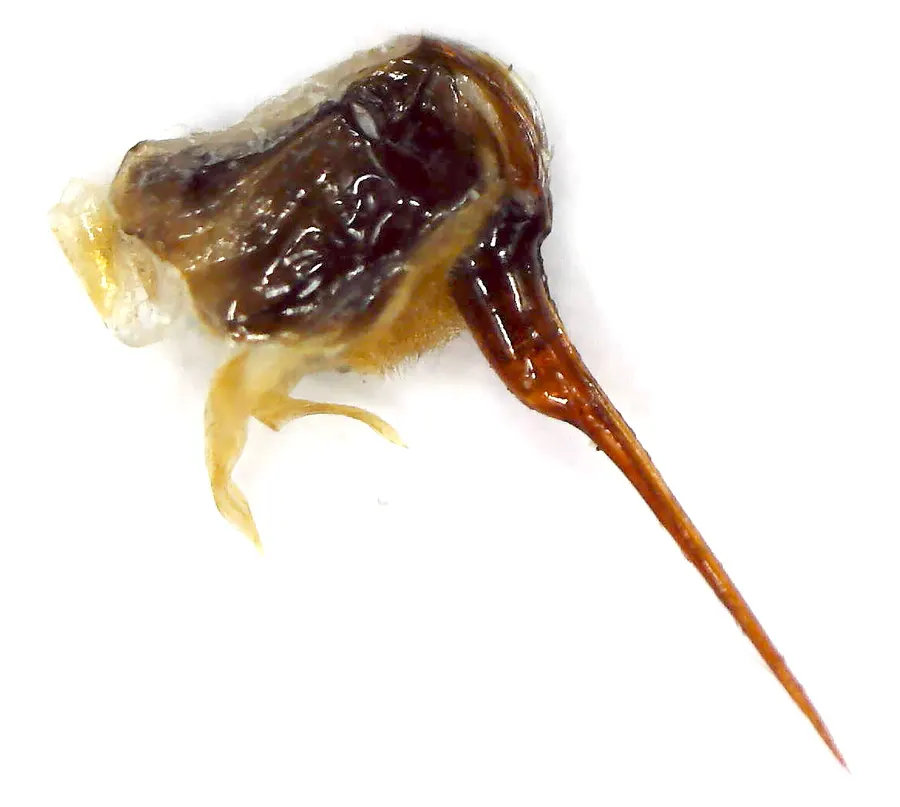
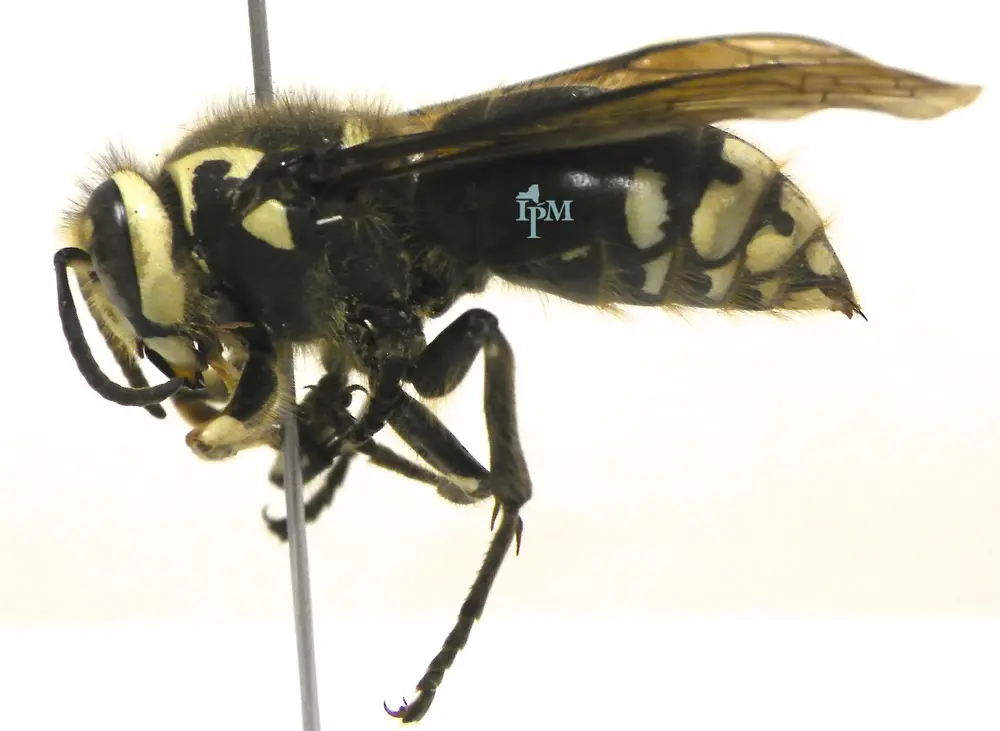
A honey bee’s sting is barbed. It stays in the skin and tears free, taking the venom sac and the muscles that keep it pumping. Yellowjackets, hornets and paper wasps usually keep their stingers, so they can sting again.
Why seconds count
In a 1994 University of Arizona study in the Journal of Allergy and Clinical Immunology, at least 90% of the venom sac’s contents went in within 20 seconds, and delivery was complete within a minute. In 1996, entomologists from UC Riverside and Penn State stung themselves and timed removal from half a second to 8 seconds. The welt grew with every delay, even of a few seconds, and they found no difference between stings scraped or pinched off after 2 seconds (The Lancet).
Their expanded write-up gives the anatomy: the detached sting pumps venom through a valve system, and the venom sac has no muscle to squeeze. They also put escape first, because alarm pheromone released at the base of the sting makes other bees more likely to sting (see how honeybees defend the colony).
What the official advice says
Most U.S. agencies still say not to squeeze. CDC’s NIOSH page for outdoor workers says to wipe gauze or scrape a fingernail over the area and never squeeze the stinger or use tweezers. In 2023, entomologist Justin Schmidt and colleagues challenged that warning in American Family Physician:
“Scraping out the stinger with fingernails or pulling it out with fingers is faster than fumbling around to find a dull (knife) blade or credit card.”
The physicians they answered replied that the evidence is limited, since the Lancet test used two volunteers, and that they would still advise removing the stinger as fast as possible, preferably by scraping or flicking. Both sides agree on speed, so a quick fingernail sweep right away is the practical answer.
| Source | Stinger advice |
|---|---|
| CDC NIOSH (2026) | Gauze or fingernail scrape; never squeeze or use tweezers |
| MedlinePlus (2025) | Scrape with a straight edge; do not pinch the venom sac |
| AAAAI (2026) | Remove within 30 seconds with a quick fingernail scrape |
| American Academy of Pediatrics (2024) | Scrape with a card or lift with sticky tape; a piece under the skin can be left alone |
| Visscher et al., Lancet (1996) | Remove quickly; method made no difference |
If a fragment breaks off below the skin, Mayo Clinic advises leaving it; it comes out as the skin sheds.
What a Normal Reaction Looks Like and How Long It Lasts
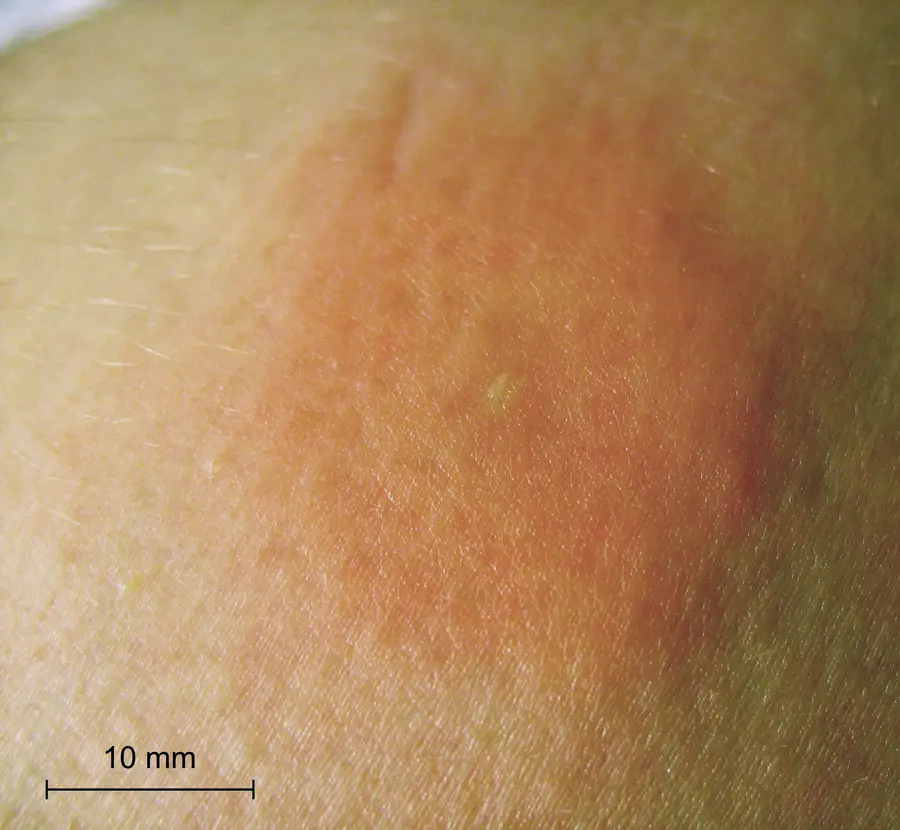
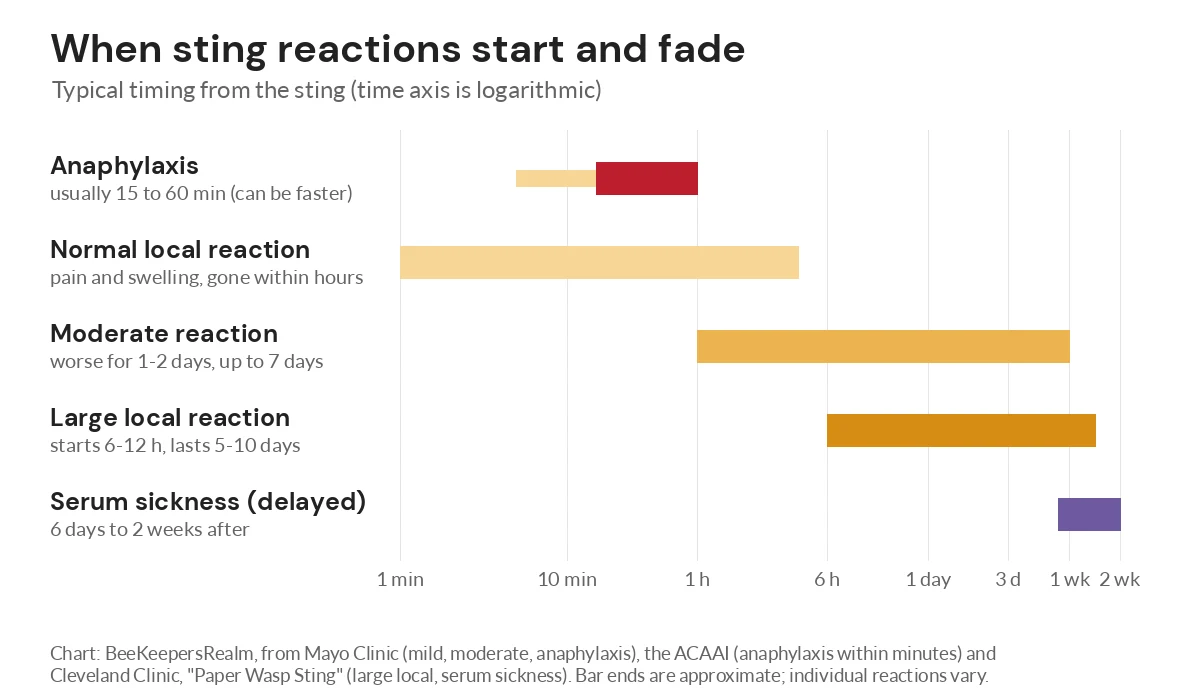
Most stings cause sharp, burning pain, redness and a welt. Mayo Clinic says swelling and pain go away within a few hours in most people, while a moderate reaction worsens for a day or two and can last up to seven days.
Large local reactions
The ACAAI describes swelling generally more than 3 inches across; a sting on the forearm can swell the whole arm. It usually peaks two to three days after the sting and can last a week or more, and is not life-threatening. Ice, elevation and antihistamines are the usual treatment, and a clinician sometimes prescribes a corticosteroid for an unusually large or painful one. Big swelling at the sting is not anaphylaxis; hives, breathing trouble or swelling elsewhere on the body are.
| Reaction | What you see | Typical timing | What to do |
|---|---|---|---|
| Mild local | Pain, redness, small welt | Fades within a few hours | Home care |
| Moderate local | Welt, itching, growing swelling | Worse for 1 to 2 days; up to 7 days | Home care; see a clinician if not gone in 3 days |
| Large local | Swelling over 3 in, maybe a whole limb | Starts 6 to 12 h, peaks 2 to 3 days, lasts 5 to 10 days | Ice, elevation, antihistamine; call a clinician if severe |
| Anaphylaxis | Hives elsewhere, throat or tongue swelling, wheezing, dizziness, vomiting | Usually 15 to 60 minutes; can be faster | Epinephrine, then 911 |
| Delayed (serum sickness) | Fever, joint or muscle pain, rash or hives | 6 days to 2 weeks later | See a clinician |
Sources: Mayo Clinic; ACAAI; Cleveland Clinic, “Paper Wasp Sting,” 2024.
Signs of Anaphylaxis and When to Use Epinephrine
Mayo Clinic says anaphylaxis usually starts 15 minutes to an hour after the sting; the ACAAI says it can occur within minutes. Watch for:
- hives, itching or swelling away from the sting
- swelling of the lips, tongue or throat, a hoarse voice or trouble swallowing
- wheezing, chest tightness or trouble breathing
- dizziness, fainting or a sudden drop in blood pressure
- stomach cramps, vomiting or diarrhea
Mayo Clinic says to call 911 even if only one or two symptoms appear, and, if epinephrine has been prescribed, to inject it first and then call 911. The ACAAI recommends keeping two doses and calling emergency services whenever one is used, even if symptoms improve; the AAAAI says a second dose is needed about a third of the time.
“Remember that epinephrine is a rescue medication only, and you must still have someone take you to an emergency room immediately if you are stung.”
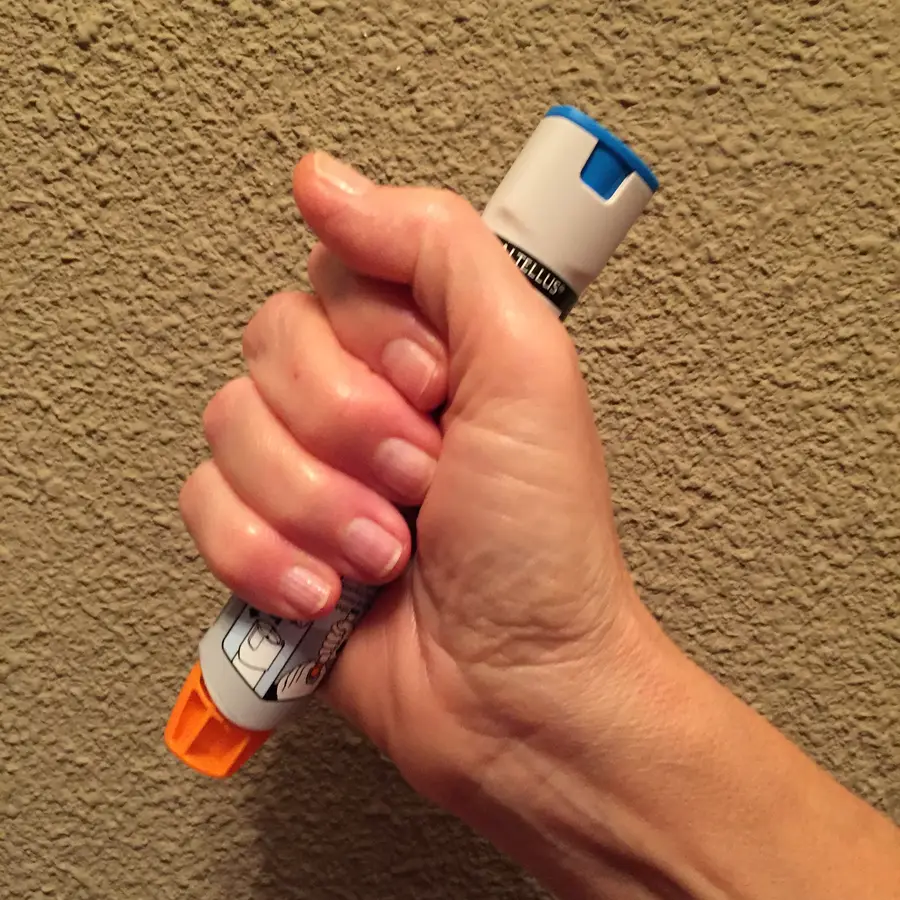
During a severe reaction, MedlinePlus says not to apply a tourniquet or give stimulants, aspirin or other pain medicine unless prescribed. The CDC counted 1,109 U.S. deaths from hornet, wasp and bee stings from 2000 to 2017, an average of 62 a year.
After any whole-body reaction, see an allergist. Mayo Clinic puts the chance of anaphylaxis at the next sting at about 50% after a severe reaction; the ACAAI gives 60% for a similar or worse reaction after any allergic one. Read about venom allergy testing, venom allergy shots, epinephrine prescriptions and storage and keeping bees with a sting allergy.
Many Stings, or Stings in the Mouth, Throat or Eye
Mayo Clinic warns that more than a dozen stings can make someone quite sick, with nausea, vomiting, diarrhea, fever and lightheadedness, and advises 911 or immediate care for multiple stings in children, older adults and people with heart or breathing problems. A 2017 review in the Revista do Instituto de Medicina Tropical de São Paulo links kidney injury after bee stings to muscle breakdown, low blood pressure and direct venom toxicity, with severity tracking the number of stings. The AAAAI notes that Africanized honey bees, found in the Southwestern U.S., may sting in swarms.
MedlinePlus says to call poison control (Poison Help, 1-800-222-1222) or an emergency room if the person is allergic to the insect or was stung inside the mouth or throat. Cleveland Clinic says stings on or near the eye need emergency care, and stings on the head, face or neck deserve quick medical attention because the swelling can be dangerous.
Stings in Children and During Pregnancy
Children
The ACAAI estimates that potentially life-threatening venom reactions occur in 0.4% to 0.8% of children, against 3% of adults. The American Academy of Pediatrics (AAP) says a child known to be severely allergic should get epinephrine right away after any sting, even with mild symptoms, then a 911 call; a second dose may be needed after five minutes if symptoms worsen or do not improve. In a nonallergic child, swelling can increase for 48 hours and last up to a week.
The ACAAI says not to give aspirin to anyone under 19, and the AAD says to seek medical attention right away when a child has been stung several times. Our family guide to telling bees from wasps helps children avoid stings.
Pregnancy
None of the U.S. sources above gives sting-specific pregnancy advice, so we checked the allergy literature. A 2023 review by Cleveland Clinic specialists in Immunology and Allergy Clinics of North America says that, apart from positioning, anaphylaxis treatment in pregnancy is similar to everyone else’s, with a focus on prompt epinephrine. A 2026 review in The Journal of Allergy and Clinical Immunology: In Practice stresses the safety and critical importance of prompt intramuscular epinephrine as first-line therapy. For a mild sting, Cleveland Clinic lists whether over-the-counter pain medicine is safe for you among the questions to ask a doctor; in pregnancy, ask an obstetric clinician or pharmacist before taking any oral medicine.
Bee, Wasp or Hornet: What Changes After the Sting
The first aid is the same; WebMD’s medically reviewed guide says to treat a wasp sting the way you would a bee sting. What differs is the stinger and the risk of repeat stings.
| Honey bee | Yellowjacket | Paper wasp | Hornet | |
|---|---|---|---|---|
| Stinger left in skin? | Usually, with venom sac | Usually not | Usually not | Usually not |
| Stings repeatedly? | No; the worker dies | Yes | Yes | Yes |
| First move | Get away, then remove stinger | Get away from the nest | ||
| Allergy testing | Honey bee venom | Yellowjacket, hornet and wasp venoms can be tested too | ||
Sources: ACAAI; Cleveland Clinic; Mayo Clinic.
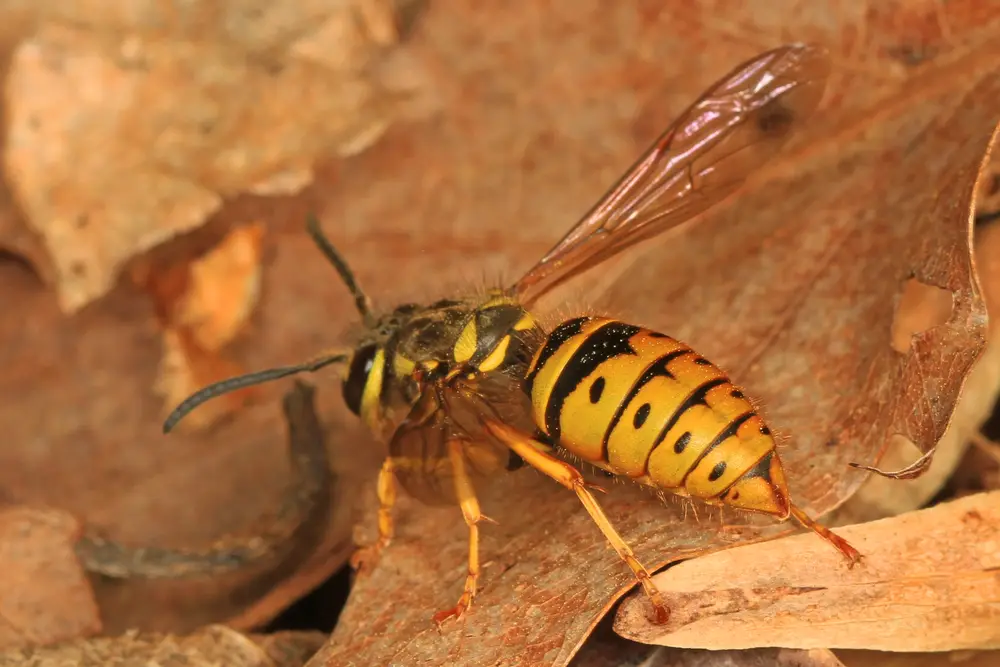
Cleveland Clinic says the average wasp sting injects one-tenth the venom of a bee sting, though wasps sting harder and more than once. Our pages on bee sting vs wasp sting and telling bees, wasps and hornets apart cover identification and pain.
Do Home Remedies Work?
Medical sources split. The AAP’s parent site suggests meat tenderizer, an aluminum-based deodorant or baking soda paste and says it neutralizes the venom. The UK’s NHS says not to use home remedies such as bicarbonate of soda. Cleveland Clinic takes the middle line:
“Research shows these home remedies aren’t effective (no matter how much or how many people swear by them). But they also aren’t likely to hurt you either.”
The few controlled tests we found back that reading:
| Remedy | The claim | What we found |
|---|---|---|
| Aspirin paste | Less swelling and pain | 2003 randomized trial, 56 callers to an Australian poisons center: no better than ice alone, and redness lasted longer (median 6 hours vs 2) |
| Meat tenderizer | Breaks down venom | 1987 trial, 22 volunteers stung by fire ants: no difference in pain, itch or skin blood flow; no bee or wasp trial found |
| Baking soda | Neutralizes venom | No trial found; AAP suggests it, NHS advises against it |
| Vinegar | Neutralizes wasp venom | No trial found; WebMD warns it is acidic and can burn skin |
| Sugar | Draws out venom | 2010 report in Allergy: “Sugar bandage is not effective for local reactions to bee stings” |
| Honey, toothpaste, onion | Soothe or draw out venom | No sting trials found in our PubMed searches |
| Mud | Cools the sting | Mayo Clinic: don’t; mud contains many germs |
Sources: Balit et al., Journal of Toxicology: Clinical Toxicology, 2003; Ross et al., Journal of the American Academy of Dermatology, 1987; Mosbech et al., Allergy, 2010; our PubMed searches, October 24, 2026.
The acid-versus-alkali idea behind baking soda and vinegar does not hold up either; see our bee vs wasp sting guide. If a remedy burns or the redness spreads, wash it off.
Signs a Sting Is Infected
Cleveland Clinic says stings rarely get infected on their own; scratching is the usual route for germs. Infection also keeps a different clock from a large local reaction, which starts within hours. MedlinePlus says to watch for increasing redness, swelling or pain over the next several days. Cedars-Sinai’s guide says redness and swelling that keep expanding over several days with a fever likely mean a bacterial infection needing antibiotics, and Harvard Health adds a red line running from the sting toward the heart as a reason to call a doctor.
Mayo Clinic advises an appointment if symptoms have not gone away within three days. Fever, rash or aching joints a week or two later can be serum sickness, which also needs a clinician.
Frequently Asked Questions
How long does a bee sting last?
Pain and swelling usually fade within a few hours. A bigger reaction can last up to about a week; MedlinePlus says people who are not allergic usually get better within a week.
Does vinegar help bee stings?
There is no good evidence that it does, and WebMD notes vinegar can burn the skin. Soap, water and ice are the standard advice.
How do you know if a bee stinger is still in you?
Look for a small black dot or splinter at the center of the sting, sometimes with a pale sac attached. Wasp stings usually leave none.
Is it okay to leave a bee sting untreated?
A single sting with only local pain often settles on its own, but remove any stinger at once and watch for anaphylaxis for at least the first hour.
What is the fastest way to ease a wasp sting?
Wash it and apply a wrapped cold pack for 10 to 20 minutes at a time. An antihistamine or hydrocortisone cream helps itching; ibuprofen or acetaminophen helps pain, used as the label directs.
What should you not do after a sting?
Don’t scratch, apply mud or heat, or dig for a stinger fragment buried below the skin.
Can bee stings get infected?
Yes, rarely, usually after scratching. Redness that keeps spreading over several days, especially with fever or a red streak, needs a clinician.
If You Get Stung Often
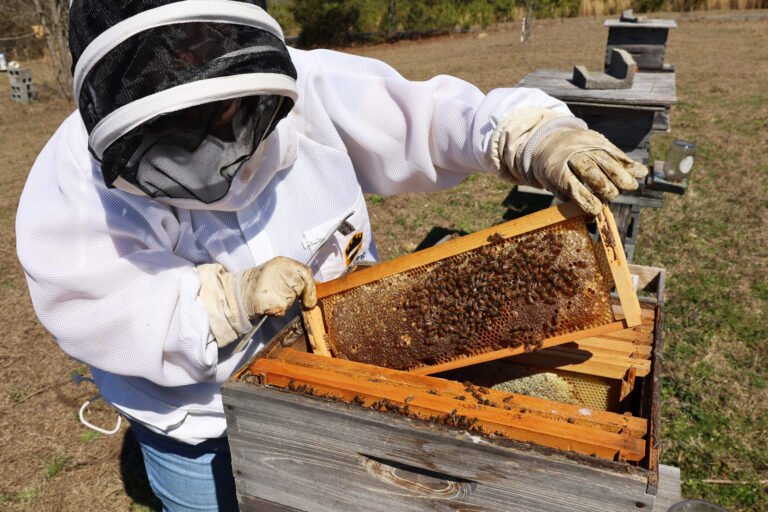
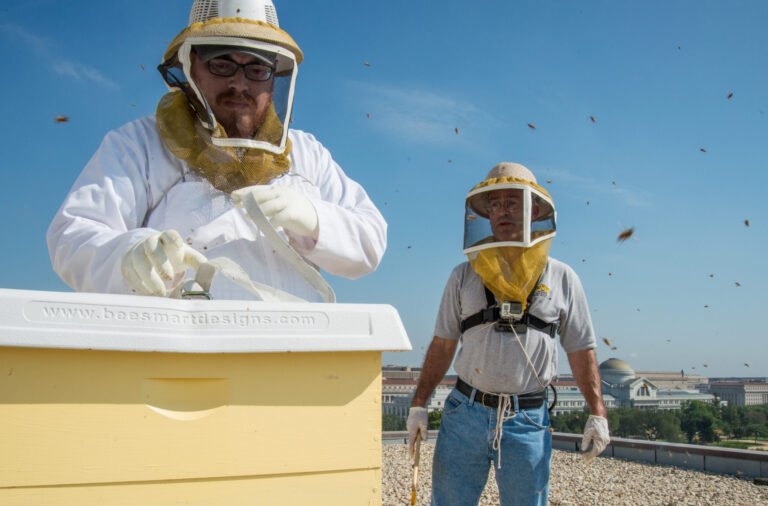
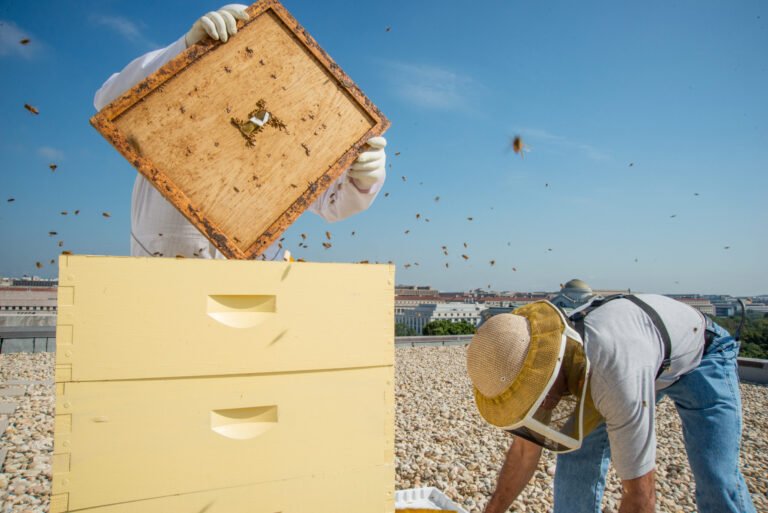
Gardeners, outdoor workers and beekeepers should keep a cold pack, an antihistamine, hydrocortisone cream and any prescribed epinephrine in one place. See what belongs in a bee sting first aid kit, and our urban beekeeping guide for keeping neighbors safe around backyard hives.


.jpg)