Last Updated September 15, 2026
A single bee sting is rarely dangerous to a dog or cat, but the details matter more than the general rule: where the sting lands, how many stings there are, and whether your specific pet turns out to be allergic can turn a minor annoyance into a genuine emergency. For beekeepers who also share a yard with dogs or cats, understanding both the real risk level and the practical ways to keep pets and hives apart is worth more than either blind confidence or unnecessary panic. Most of the time, bees and household pets coexist without incident for years, but knowing what a normal reaction looks like versus a genuine emergency means you’ll recognize the difference immediately if it ever comes up.
This article covers general safety information for pet owners and beekeepers, not personalized veterinary advice. If your pet shows signs of a serious reaction, contact your veterinarian or an emergency animal clinic right away.
Key Takeaways
- Most single bee stings in dogs and cats cause only mild, localized swelling and pain that resolves within 12 to 24 hours.
- A sting to the face, mouth, or throat is more dangerous than a sting elsewhere, even without a true allergy, because of swelling near the airway.
- Allergic reactions in pets usually appear within 20 minutes but can be delayed several hours in a less common biphasic reaction.
- Mass envenomation (many stings at once) can be dangerous even in a pet with no allergy at all — it’s a separate risk from anaphylaxis, not just a bigger version of it.
- Keeping meaningful physical distance between a hive and the area where pets roam or are kenneled is the single most effective prevention strategy.
Table of Contents
- How Dangerous Is a Bee Sting to a Dog or Cat, Really?
- What a Normal, Mild Reaction Looks Like
- When a Sting Becomes a Veterinary Emergency
- Mild Reaction vs. Emergency: Quick Reference
- Why Face and Mouth Stings Are Different
- Cats vs. Dogs: Any Real Differences?
- Multiple Stings and Swarm Events
- Basic First Aid Before You Reach the Vet
- Can I Give My Dog Benadryl?
- Prevention: Distance Between Hives and Pet Areas
- Prevention: Training, Barriers, and Scent
- Frequently Asked Questions
How Dangerous Is a Bee Sting to a Dog or Cat, Really?
For most dogs and cats, a single bee sting is uncomfortable but not dangerous. The bigger risk factors are location on the body, the total number of stings, and whether the individual animal happens to have a bee venom allergy — which, just as in humans, isn’t something you necessarily know about until the first serious reaction happens. Small dog breeds and cats generally face a somewhat higher relative risk from multiple stings than a large dog would, simply because the same total dose of venom represents a larger proportion of body weight. A pet that’s been stung before without incident isn’t guaranteed to react the same way to a future sting, since sensitivity can develop over time, much like it can in people. This is exactly why a calm, uneventful history of past stings shouldn’t be treated as proof that a pet is simply immune to a serious reaction going forward.

What a Normal, Mild Reaction Looks Like
A typical mild reaction involves localized swelling, redness, and pain right at the sting site, often on a paw, muzzle, or lip after a dog snaps at a bee out of curiosity. Affected pets commonly whine, pace, lick at the area repeatedly, or paw at their own face, and a swollen paw or muzzle is one of the most frequent presentations veterinarians see after a single sting, usually the result of a dog snapping at a bee mid-flight or stepping on one while walking barefoot through grass. These symptoms typically resolve within 12 to 24 hours without intervention beyond basic comfort care, and most pets return to their normal behavior well before the visible swelling has fully gone down.
“Most of the bee stings in dogs are on the face and head as they are investigating the bee when it stings them.”
When a Sting Becomes a Veterinary Emergency
Watch for facial swelling beyond the immediate sting site, vomiting, diarrhea, difficulty breathing, hives spreading across the body, weakness, or collapse — these are signs of a true allergic reaction rather than a normal localized response, and they warrant an immediate call to a veterinarian or emergency animal clinic. Pale gums, excessive drooling, and sudden disorientation are additional red flags worth treating with the same urgency as the more commonly cited symptoms. Most allergic reactions appear within the first 20 minutes after a sting, though a less common delayed reaction, sometimes called a biphasic reaction, can occur three to four hours later even after initial symptoms seemed to settle down completely – which is exactly why continued, attentive observation for several hours after any sting is genuinely worthwhile, even when the pet initially seems completely fine.

Mild Reaction vs. Emergency: Quick Reference
| Sign | Mild, Localized Reaction | Emergency — Call the Vet |
|---|---|---|
| Swelling | Confined to the sting site (paw, muzzle, lip) | Spreading beyond the sting site, especially face/throat |
| Behavior | Whining, pawing at the area, licking | Weakness, collapse, sudden disorientation |
| Breathing | Normal | Difficulty breathing, excessive drooling |
| Digestive | Normal | Vomiting or diarrhea |
| Skin | Redness only at sting site | Hives spreading across the body |
| Timeline | Improves within 12–24 hours | Can appear within 20 minutes or, less commonly, 3–4 hours later |
Why Face and Mouth Stings Are Different
A sting anywhere near the face, mouth, or throat carries added risk even for a pet with no underlying allergy, simply because of where the resulting swelling occurs. Dogs are especially prone to this particular kind of sting since they often snap at, chase, or lick a bee out of pure curiosity, and swelling inside or near the mouth and throat can restrict breathing even without a true allergic reaction driving it. Any sting in this location is worth a call to your vet for guidance, even if the pet seems fine in the first few minutes, simply because swelling in a confined space like the throat can progress faster than swelling anywhere else on the body.
Cats vs. Dogs: Any Real Differences?
The basic risk picture is similar for cats and dogs, but cats show a couple of their own tells worth knowing. Veterinarians at VCA Animal Hospitals note that cats normally don’t breathe through their mouths, so a cat that starts panting after a sting is showing you something dogs’ panting doesn’t reliably signal — it’s worth a call to your vet rather than something to wait out. Cats are also somewhat more likely than dogs to show digestive upset (vomiting or diarrhea) as part of a reaction. First aid basics are otherwise the same across both species: scrape out a visible stinger rather than pinching it, apply a brief cold compress, and don’t give any human medication, including plain aspirin or ibuprofen, without checking with your vet first — several common over-the-counter pain relievers are genuinely toxic to cats even in small doses.
Multiple Stings and Swarm Events
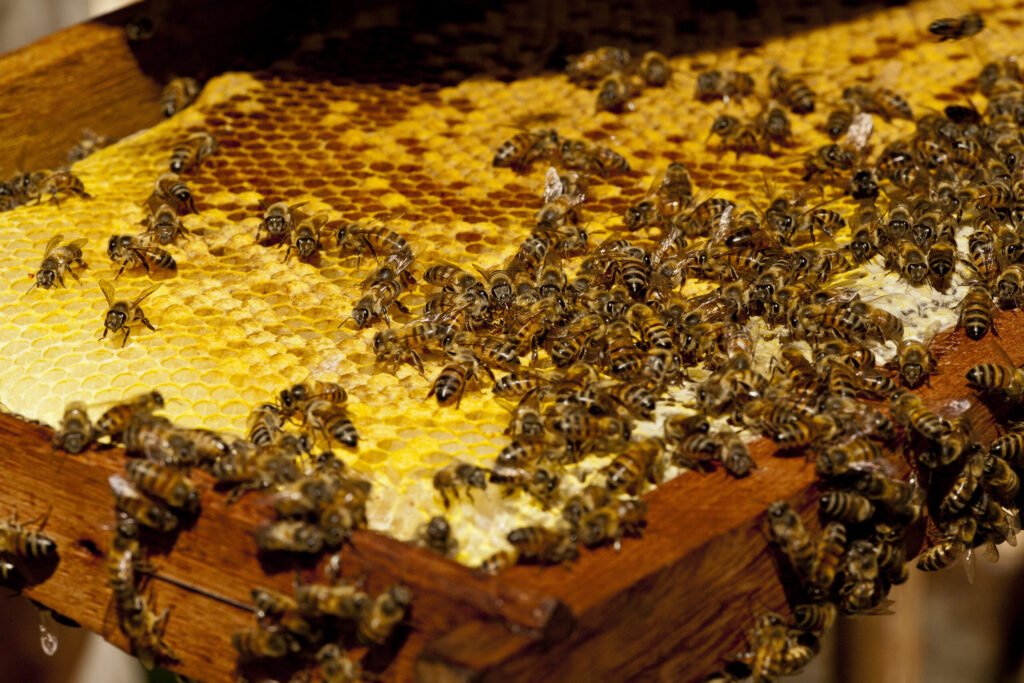
A single sting and a mass-stinging event are genuinely different situations. If a pet disturbs a hive directly — knocking it over, digging near it, chasing a stray forager back to the entrance, or triggering defensive behavior from an entire colony — the resulting multiple stings introduce a much larger dose of venom than any single-sting scenario, regardless of whether the animal has a true allergy. Veterinary toxicology reference Pet Poison Helpline treats this as a genuinely separate danger mechanism from anaphylaxis: roughly 20 stings per kilogram of body weight (about 9 stings per pound) has been shown to be lethal in mammals generally, meaning a small dog or cat needs far fewer stings to reach a dangerous dose than a large dog does. A dog that has knocked over a hive box or dug at its base should be moved away from the area immediately and monitored closely for at least the next hour, even if no stings are visible right away and the animal seems outwardly calm. In regions where Africanized honey bee genetics are present, this risk is worth taking especially seriously, since Africanized colonies are known for a stronger, faster, and more sustained mass-defensive response than typical European honey bee colonies, which can mean dozens or even hundreds of stings in a genuine swarm-attack scenario rather than the handful a typical defensive European colony might deliver.
Basic First Aid Before You Reach the Vet
If your pet is stung and shows only mild, localized symptoms, a few basic steps can help before or in addition to reaching out to your vet: if you see a stinger left behind (only honey bees leave one – wasps do not), remove it by gently scraping across the skin with a firm edge like a credit card rather than pinching it with tweezers, which can squeeze more venom into the surrounding tissue. A cold compress wrapped in cloth, applied to the area for five to ten minutes, can help with swelling and discomfort. Keeping a pet calm and limiting activity for the first hour or so after a sting, rather than continuing a walk or playtime as usual, gives you a better chance of noticing early signs of a developing reaction before they become severe. None of this substitutes for a veterinary evaluation if you see any of the more serious warning signs described above, and when in doubt, a quick phone call to your vet or an emergency line costs nothing and can rule out a developing problem early.
Can I Give My Dog Benadryl?
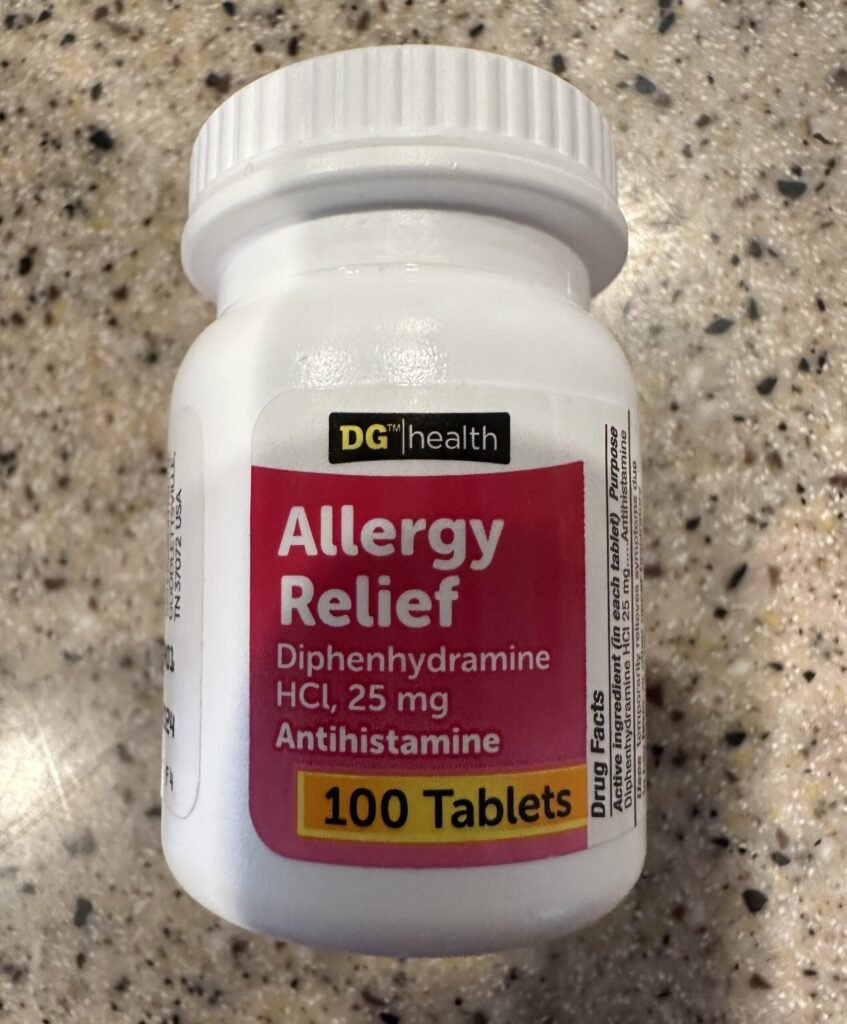
Sometimes, but only with your vet’s confirmation of the dose for your specific pet. The Merck Veterinary Manual lists a general diphenhydramine (Benadryl) dose of 2–4 mg per kilogram of body weight for dogs and cats, but a general reference dose isn’t the same as a confirmed safe amount for your particular animal, especially one with other health conditions or medications. The bigger practical risk isn’t the diphenhydramine itself — it’s the rest of the tablet. Many human allergy products combine diphenhydramine with decongestants like pseudoephedrine, which is genuinely toxic to dogs even at moderate doses, so check that any product you give contains diphenhydramine alone, with no other active ingredients, and confirm the dose and timing with your vet before giving it.
Prevention: Distance Between Hives and Pet Areas
The single most effective prevention strategy is straightforward: keep meaningful physical distance between where your hives sit and where your pets roam, play, or are kenneled. Most experienced beekeepers who also keep dogs recommend against kenneling a dog in the same section of yard as an apiary at all, and positioning hives at the farthest practical point on your property from where pets spend most of their time meaningfully reduces the odds of an accidental encounter in the first place. Even a modest increase in distance, combined with a hedge, fence, or other visual barrier along the way, tends to reduce casual pet traffic near the hive far more than most beekeepers initially expect.
Prevention: Training, Barriers, and Scent
Beyond distance, a few other practical steps help: basic obedience training with commands like “leave it” or “come” gives you a reliable tool to redirect a curious dog’s attention away from bees investigating flowers or a hive entrance before a chase or a snap ever happens. Physical barriers like fencing around a hive or a dog’s play area add another layer, even though bees can simply fly over a fence to reach their hive — the barrier mainly works by keeping a dog from wandering close enough on the ground to provoke a defensive response in the first place, rather than stopping bee flight itself. It’s also worth avoiding strongly scented shampoos, conditioners, or grooming products on pets that spend time near hives, since sweet or floral scents can attract foraging bees and increase the odds of an unwanted close encounter. This applies just as much to scented flea and tick treatments or perfumed pet colognes, both of which can carry the same kind of floral notes that draw bees toward flowers in the first place. The Texas A&M College of Veterinary Medicine covers additional precautions worth knowing, particularly in regions where Africanized bee genetics are more established — see our guide to beekeeping in Texas for more on managing hives in areas where Africanized genetics are common — including guidance on what to do if a pet is caught in an actual mass-stinging event rather than a single opportunistic sting.
Wondering about the sweet stuff itself? See can dogs eat honey safely.
Frequently Asked Questions
Is one bee sting dangerous to my dog or cat?
Usually not. A single sting typically causes mild, localized swelling and discomfort that resolves within 12 to 24 hours, though location on the body and individual allergy risk both matter.
What are the warning signs of a serious reaction in a pet?
Facial swelling beyond the sting site, vomiting, diarrhea, difficulty breathing, spreading hives, weakness, or collapse all warrant an immediate call to your veterinarian.
Why are face and mouth stings more dangerous?
Swelling near the mouth or throat can restrict breathing even without a true allergic reaction, making these locations riskier than a sting on a paw or the body.
How many bee stings are dangerous to a dog?
Research summarized by Pet Poison Helpline puts the lethal dose for mammals generally around 20 stings per kilogram of body weight — meaning smaller pets reach a dangerous dose from far fewer stings than a large dog would, separate from any allergy risk.
Can I give my dog Benadryl for a bee sting?
Only after checking with your vet on the dose for your specific pet, and only a product containing diphenhydramine alone — many combination allergy products also contain decongestants that are toxic to dogs.
How do I keep my dog away from my beehives?
Keep meaningful distance between hives and areas where pets roam or are kenneled, use basic training and physical barriers, and avoid strongly scented grooming products near the apiary.
Should I worry more if my pet gets multiple stings at once?
Yes. Multiple stings from a disturbed hive introduce a much larger dose of venom than a single sting and warrant immediate veterinary attention regardless of known allergy status.