
Reviewed by Elena P. · How we review
The bees you are most likely to see in the United States fall into a short list of everyday types: honey bees, bumble bees, carpenter bees, sweat bees, mason bees, leafcutter bees, mining bees, squash and long-horned bees, and cuckoo bees. The world has more than 20,000 bee species and about 4,000 are native to the U.S., but you can sort most of what lands on a flower with four clues: size, how hairy it is, its color and where it nests.
This guide is organized by what you see, not by Latin family. Sizes come from the Pollinator Partnership’s bee identification guide, nesting and seasons from a Utah State University Extension guide, and nearly every type is shown in a photo of a specimen identified to species. Follow the links for a full guide to any one of them.
Key Takeaways
- The world has more than 20,000 bee species and about 4,000 are native to the U.S. (USGS). Honey bees are not native: they came with European settlers.
- Sort by size, hair, color and nest. Bumble bees are fuzzy all over, large carpenter bees have a bare glossy abdomen, sweat bees are small and often metallic green, and honey bees are brown with pale bands.
- Only honey bees and bumble bees build large colonies with a queen and workers. Most other bees are solitary, and a few are nest parasites.
- Only female bees can sting. Honey bee workers sting once, bumble bees can sting repeatedly, and solitary bees rarely sting at all.
- Some bees look like wasps (cuckoo, yellow-faced, wool carder), and hover flies copy bees. Check the wings, eyes and hair.
- Guides print slightly different size ranges, so treat millimeter figures as ranges, not rules.
Table of Contents
- How Many Types of Bees Are There?
- A Look-First Key for Telling Bee Types Apart
- Types of Bees at a Glance
- The Common Types of Bees, One by One
- Solitary, Social or Parasite?
- Bees That Look Like Wasps, Flies or Other Bees
- Which Types of Bees Sting?
- How to Find the Types of Bees in Your Area
- Frequently Asked Questions
- The Bottom Line
How Many Types of Bees Are There?
Scientists count types of bees as species. The U.S. Geological Survey reports over 20,000 known bee species in the world and 4,000 native to the United States, and about 10% of U.S. bees have yet to be named or described. The USDA Forest Service’s Bee Basics guide uses the same 4,000 figure.
“Our bees come in as many sizes, shapes, and colors as the flowers they pollinate.”
Local lists are shorter. Utah State University Extension counts over 1,000 native species in Utah alone, and says southern Utah has about as many bee species as the entire eastern U.S. coast. Your yard will hold only a small slice of that.
Honey bees count as just one of those species, Apis mellifera, and the USGS notes that honeybees are not native to North America. Most of the other types are native, though a few species within them, such as some mason and leafcutter bees, were introduced. Utah State calls bumble bees the only native bees with queen and worker castes, and most bees are solitary.
“Three types of bees in a hive” is a different question. Queens, workers and drones are jobs inside one honey bee colony, not separate kinds of bee. Our guide to worker bee roles by age covers them.
A Look-First Key for Telling Bee Types Apart
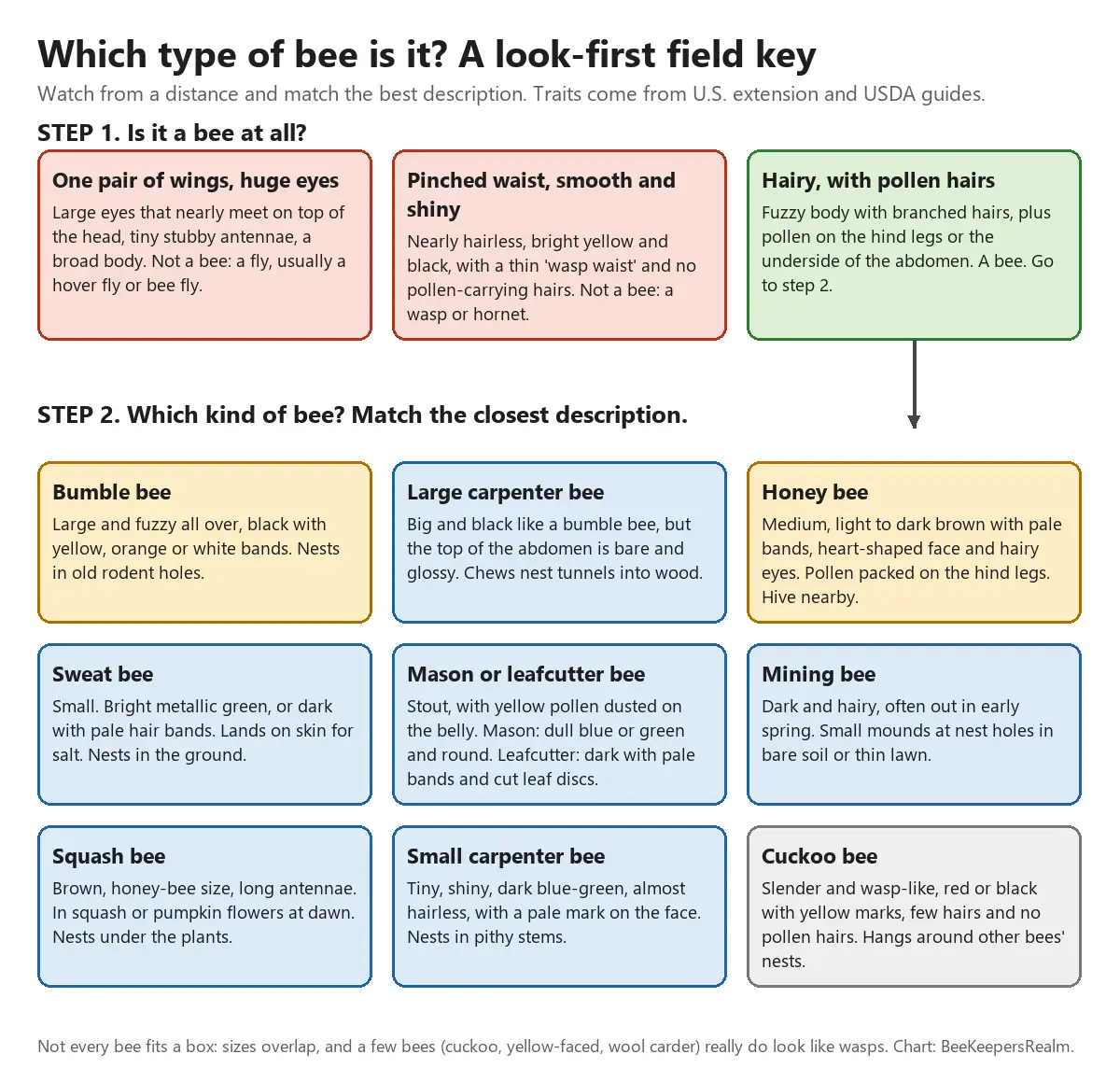
Start with whether it is a bee at all. Flies have one pair of wings, huge eyes and very short antennae, while bees have two pairs of wings and hairs that branch like feathers. Wasps are nearly hairless, glossy and thin-waisted, with no pollen-carrying hairs. If it is a bee, match its size, hair and color to the closest card below, then confirm with the table. A 10x to 30x hand lens helps with the small ones.
Types of Bees at a Glance
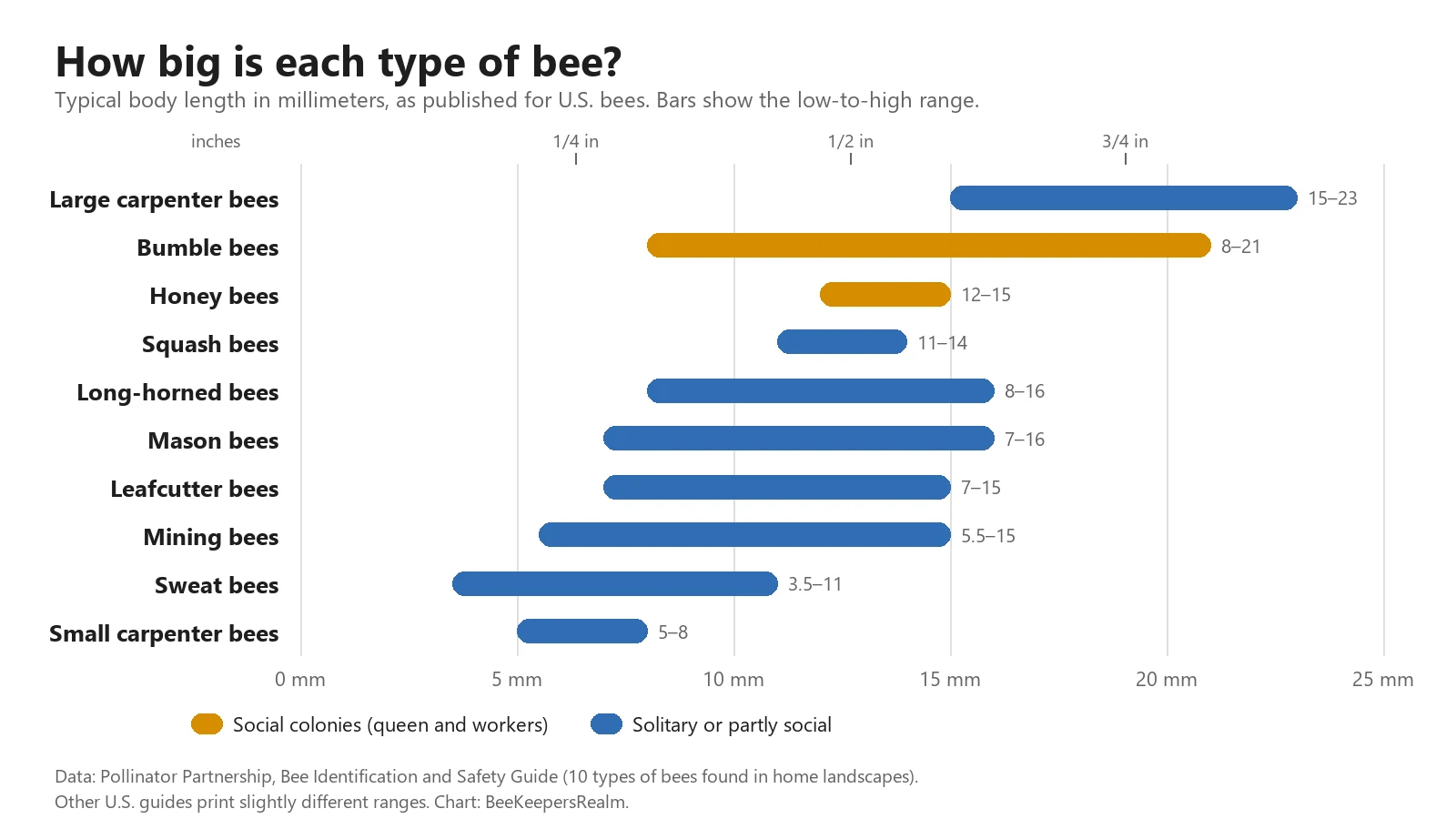
The size chart at the top of this page plots the Pollinator Partnership ranges used in the table (that guide does not include cuckoo bees). The sting column is the short version; the sting section has the details.
| Type | Typical size | What you see | Nest | Sting | Active (Utah) |
|---|---|---|---|---|---|
| Honey bees | 12 to 15 mm (0.5 to 0.6 in) | Light to dark brown, pale bands, heart-shaped face | Cavities and hives, tens of thousands per colony | Defends the hive, one sting | Mar to Nov |
| Bumble bees | 8 to 21 mm (0.3 to 0.8 in) | Fuzzy, black with yellow, orange or white bands | Old rodent burrows, one-season colony | Defends the nest, can sting repeatedly | Mar to Nov, peak Jul to Aug |
| Large carpenter bees | 15 to 23 mm (0.6 to 0.9 in) | Big and black, bare glossy abdomen | Tunnels in wood | Females only | Apr to Oct, peak Apr |
| Small carpenter bees | 5 to 8 mm (0.2 to 0.3 in) | Tiny, shiny dark blue-green, pale face mark | Pithy plant stems | Rarely | Jun to Sep |
| Sweat bees | 3.5 to 11 mm (0.1 to 0.4 in) | Metallic green, or dark with pale hair bands | Ground, solitary to partly social | Rarely | Mar to Oct, peak Jun to Aug |
| Mason bees | 7 to 16 mm (0.3 to 0.6 in) | Stout, dull blue-green or dark with pale hair | Existing holes, mud walls | Rarely | Mar to Jun, peak Apr |
| Leafcutter bees | 7 to 15 mm (0.3 to 0.6 in) | Stout, dark, pale abdominal bands | Existing holes lined with cut leaf | Rarely | Apr to Oct, peak Jul |
| Mining bees | 5.5 to 15 mm (0.2 to 0.6 in) | Dark, hairy, often pale hair bands | Ground, mounds in bare soil or thin lawn | Rarely | Mar to Sep, peak Apr |
| Squash bees | 11 to 14 mm (0.4 to 0.6 in) | Brown, dense light hair, long antennae | Ground, under squash plants | Rarely | Dawn, while squash blooms |
| Long-horned bees | 8 to 16 mm (0.3 to 0.6 in) | Hairy, brown or gray, males with very long antennae | Ground | Rarely | May to Sep, peak Jul to Aug |
| Cuckoo bees | 6 to 13 mm (0.25 to 0.5 in) | Slender, wasp-like, few hairs, often red or yellow | None: lay eggs in other bees’ nests | Rarely | Apr to Aug, peak Apr to May |
Sizes are from the Pollinator Partnership’s Bee Identification and Safety Guide, except cuckoo bees (a quarter to a half inch, from the Utah State guide, converted to millimeters). Seasons are Utah State Extension’s windows for Utah and will shift earlier or later with your climate; the squash bee entry is from the USDA Forest Service guide.
The Common Types of Bees, One by One
Honey bees (Apis mellifera)
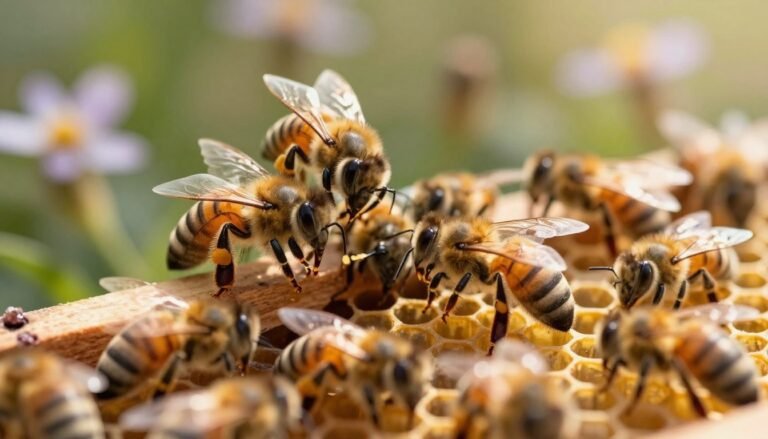
The honey bee is the one type most people can name, and the one type here that came over from Europe. Workers are 12 to 15 mm long, light to dark brown with pale and dark bands, with a heart-shaped head and a barrel-shaped abdomen, and they pack pollen on the hind legs. Utah State lists three marks that separate them from native look-alikes: no tibial spurs on the hind legs, hairs on the compound eyes, and an abdomen whose front edge forms a right angle instead of a curve.
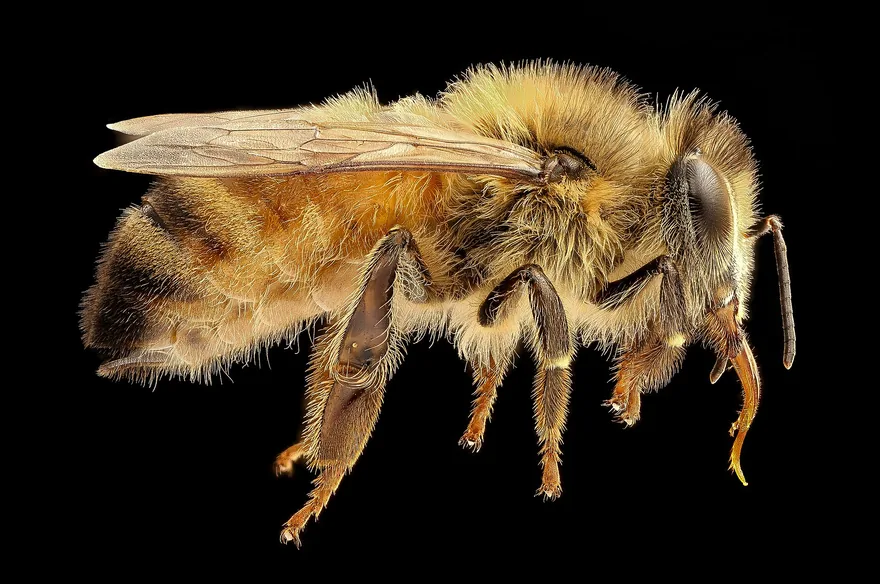
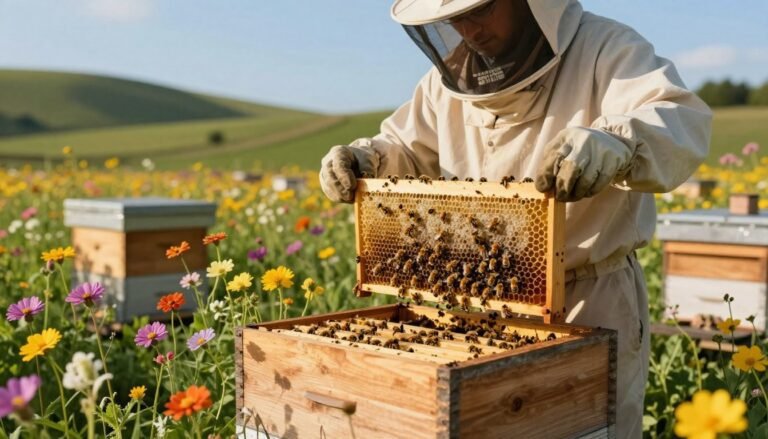
Honey bees nest in cavities such as attics, tree hollows and rock cavities, or in hives, in colonies of tens of thousands. Italian, Carniolan, Russian and Buckfast bees are strains of this one species; our bee breed comparison sorts them out, and Africanized vs. European honey bees covers the hybrid strain. If you want to keep them, start with our beginner’s guide to starting beekeeping.
Bumble bees (Bombus)
Bumble bees are the big fuzzy ones: robust, covered in black hair with bands of yellow, orange or white, and 8 to 21 mm long. The USDA Forest Service counts about 50 species in North America. A colony lasts one season. A queen starts it in spring, usually in an abandoned mouse nest or similar burrow, it grows to a few hundred workers, and by the end of summer only the new mated queens survive to overwinter.
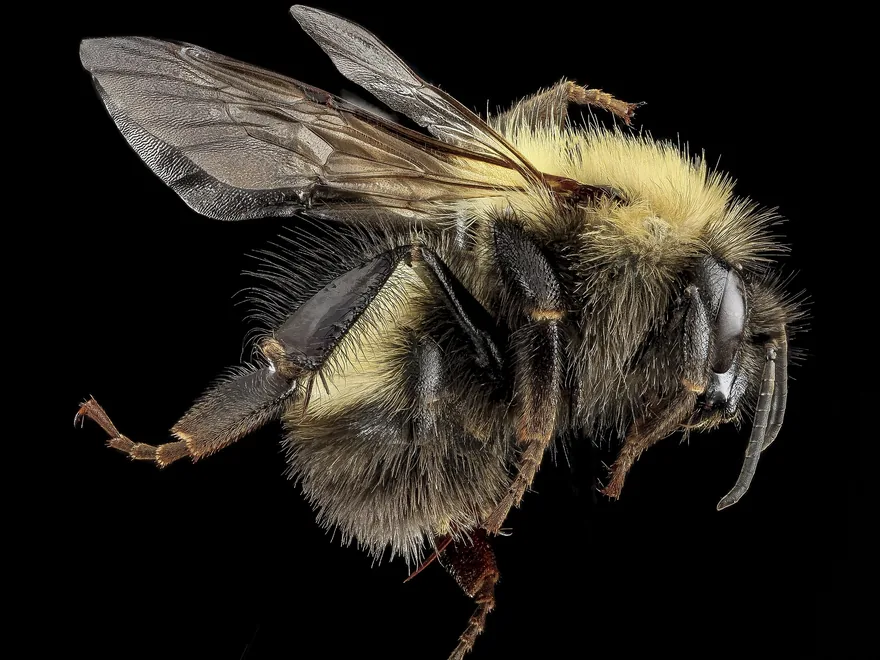
They can work in cool, cloudy weather, and they buzz-pollinate tomatoes, shaking the pollen loose. Our complete guide to bumblebees covers common species and how to help them.
Carpenter bees, large and small
Large carpenter bees (Xylocopa) are the bumble bee look-alikes. Bumble bees are fuzzy all over, while the upper abdomen of a carpenter bee is almost hairless and glossy. At 15 to 23 mm they are the largest bees in the Pollinator Partnership guide. Females chew nest tunnels into soft wood, which is why people notice them, and painting or staining wood deters them. Males patrol the nest site and chase almost anything that moves, but males have no stinger.
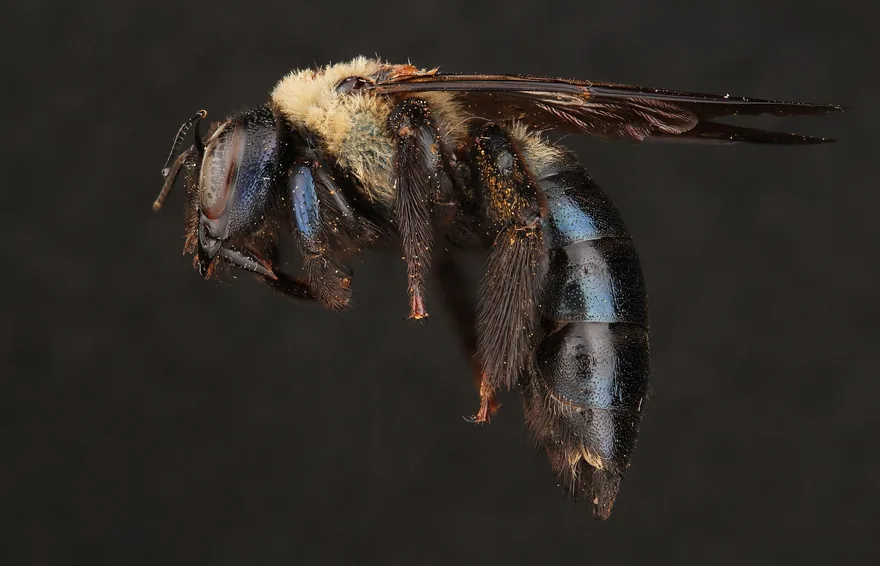
Small carpenter bees (Ceratina) are another story: 5 to 8 mm, shiny dark blue-green, nearly hairless, with a pale mark on the face. They nest in pithy stems such as blackberry and rose canes, and Utah State notes they are sometimes mistaken for sweat bees. Our carpenter bee identification guide covers both and the wood-damage question.
Sweat bees (Halictidae)
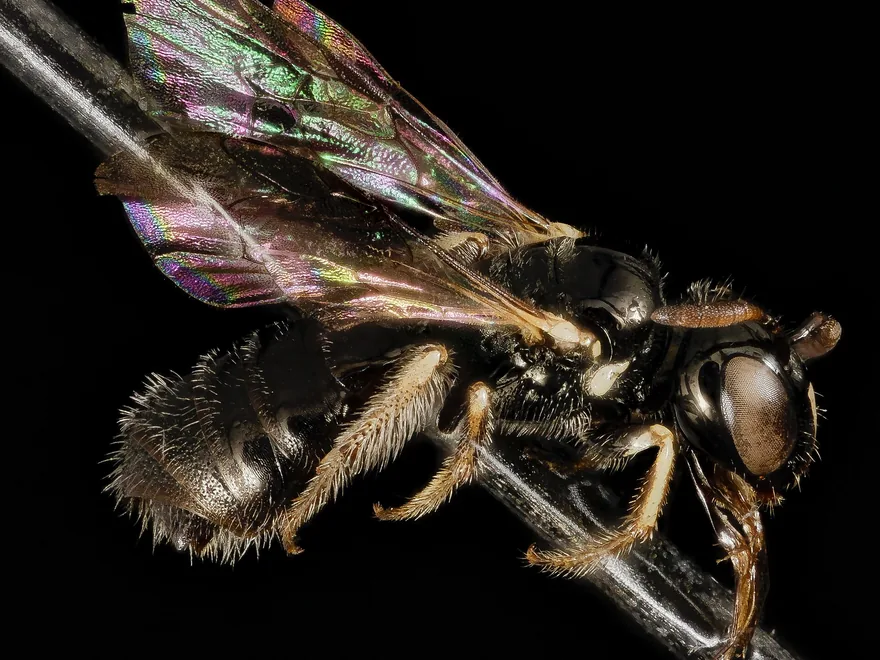
Sweat bees are small, 3.5 to 11 mm. Many are shiny metallic green; others are black or brown with pale bands of hair, and the USDA Forest Service adds blue, copper and gold forms. Some species land on skin for the salt in sweat, which gives the family its name. Most nest in the ground, and they sit between solitary and social: some females nest alone, some share an entrance, and a few species divide the work between a mother and her daughters.
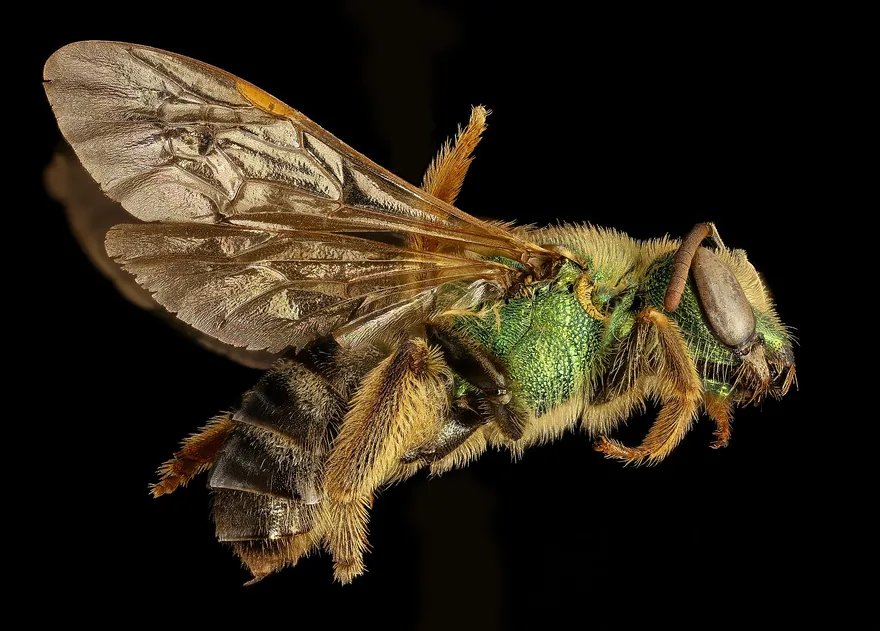
See our sweat bee identification guide for the common genera and the sting question.
Mason bees (Osmia)
Mason bees are stout, 7 to 16 mm, with a head as wide as the thorax. Some are black with pale hair; others are dull metallic blue-green. Like leafcutters, they belong to the family Megachilidae, which carries pollen on the underside of the abdomen instead of on the legs. A honey-bee-sized bee with a yellow-dusted belly is a good bet for this family. Mason bees use existing holes such as beetle tunnels and wall the cells with mud, fly from March to June, and are exceptionally good at pollinating fruit trees, according to Utah State.
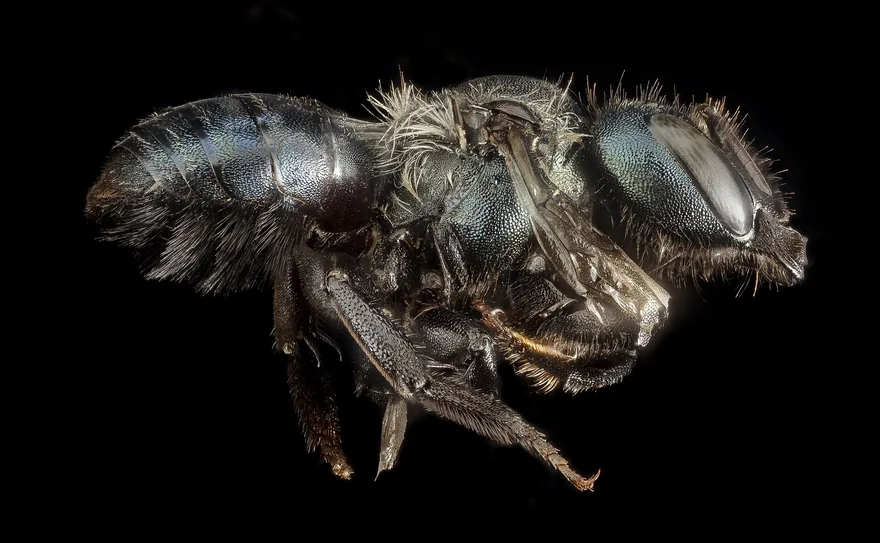
Our guide to building and maintaining a mason bee house shows how to host them.
Leafcutter bees (Megachile)
Leafcutters are stout, dark bees, 7 to 15 mm, with pale bands on the abdomen and a pollen brush of hairs on the belly. Females cut neat circles from leaves to line their nest cells; rose leaves are a common target. The Forest Service guide asks gardeners not to begrudge them the leaf, and Utah State says the cuts do not harm the plant. They are active from April to October, peak in July, and are important pollinators of alfalfa, clovers and lupines. More in our leafcutter bee guide.
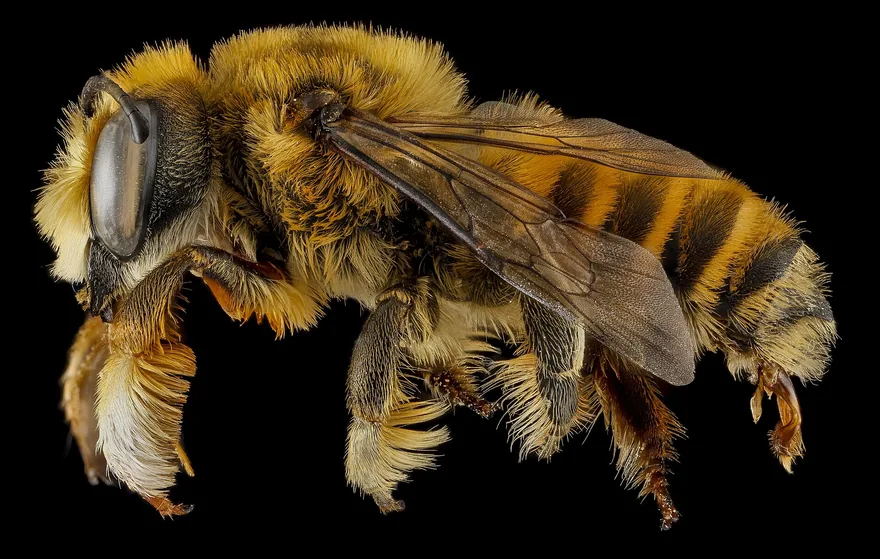
Mining bees and other ground nesters
Mining bees (Andrena) are dark, hairy and often among the first bees out in spring. All of them nest in the ground, and Utah State notes they turn up in thin or patchy lawns, where each nest hole has a small mound beside it. They are mostly black or reddish, sometimes metallic blue. They are active from March to September, peaking in April.
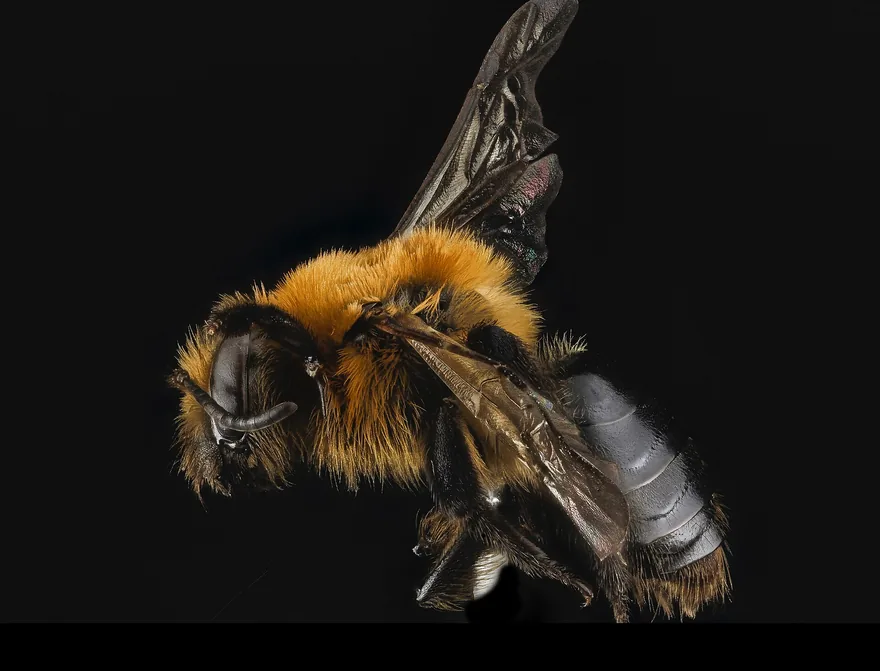
Other ground nesters are easy to confuse with them. Digger bees (Anthophora) are larger, hairy, usually gray with bold stripes, fast flyers that nest in big groups, and Utah State calls them not aggressive toward humans or pets. Polyester bees (Colletes) line their burrows with a waterproof secretion. See our guides to mining bees and digger bees.
Squash bees and long-horned bees
Squash bees (Peponapis and Xenoglossa) are about the size and brown color of honey bees. You tell them apart by behavior: squash bees start work at or before dawn when squash and pumpkin flowers open, plunge straight in and leave, while honey bees arrive later and linger. They nest underground beneath the crop, and the Pollinator Partnership says they collect pollen only from squash and pumpkin plants.
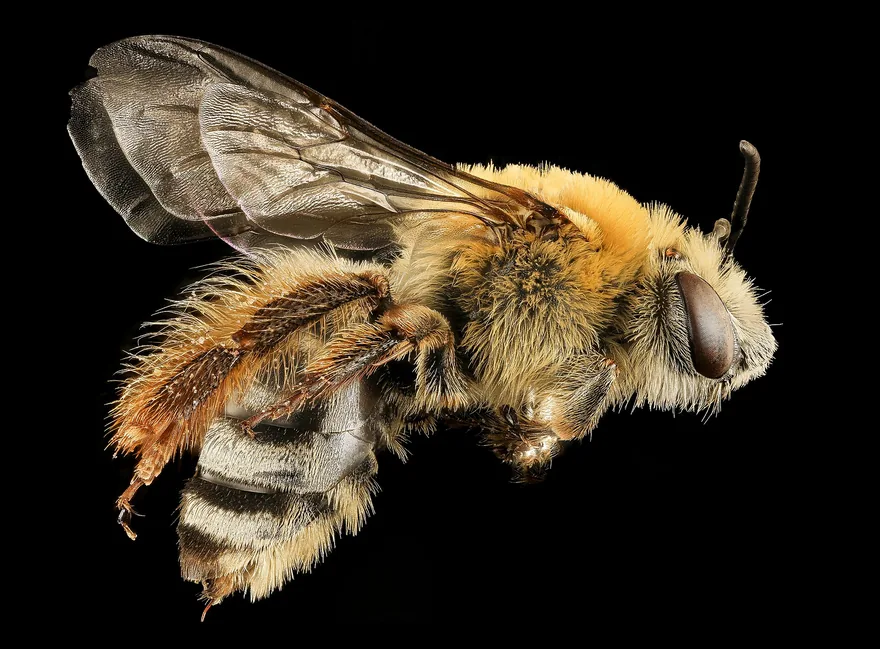
Long-horned bees (Melissodes) are close relatives: hairy, brown or gray, 8 to 16 mm, with males whose antennae are very long. Both ground nesters are covered in our squash bee guide.
Cuckoo bees (Nomada and others)
Cuckoo bees never build or stock a nest. A female waits near a host’s nest, slips in while the owner is away and lays her egg; the cuckoo larva then eats the host’s stored pollen. That lifestyle changes how they look:
“Cuckoo bees do not gather pollen and have lost their pollen baskets and much of their hair. In fact, at first glance some cuckoo bees are often mistaken for wasps.”
Nomada bees are usually red or yellow, sometimes with whitish markings, and many parasitize mining bees. They fly from April to August, peaking in April and May.
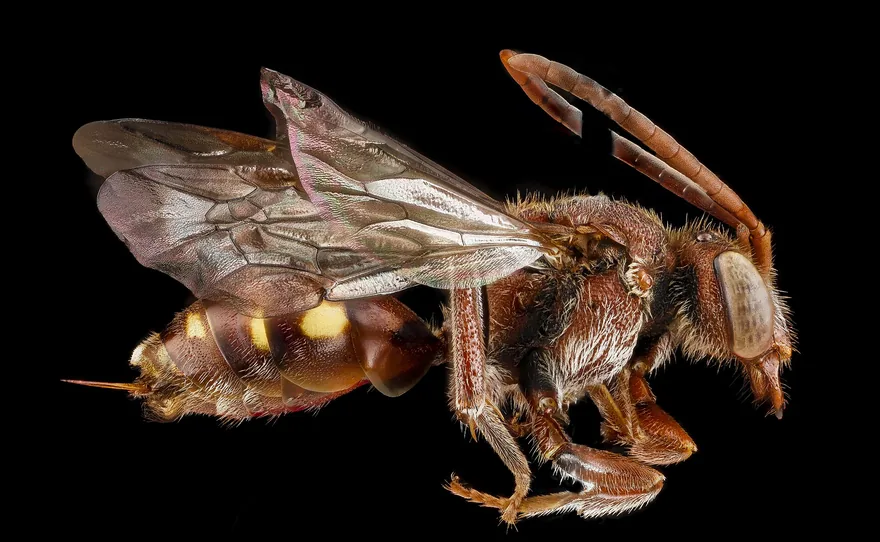
See our cuckoo bee guide for hosts and identification clues.
Solitary, Social or Parasite?
Lifestyle explains a lot about where and how you meet each type.
- Colony builders: honey bees and bumble bees, with a queen and workers.
- Solitary nesters: carpenter, mason, leafcutter, mining, digger, squash and long-horned bees. Each female finds or digs her own nest and stocks every cell herself.
- In between: sweat bees, from solitary to truly social.
- Parasites: cuckoo bees, which use someone else’s nest.
By nest site, mining, digger, sweat, squash and long-horned bees nest in the ground. Mason, leafcutter and carpenter bees use holes, stems or wood. Bumble bees use cavities such as old rodent burrows. Our native bee identification chart sorts the species on this site the same way.
Bees That Look Like Wasps, Flies or Other Bees
Most mix-ups happen at the edges. Hover flies are the most common bee mimics, and Utah State says they are often confused with solitary bees and some bumble bees; our hover fly guide shows the differences. Wasps are nearly hairless and always lack pollen baskets. A bee-like insect that is drawn to meat or table scraps is usually a wasp.
A few real bees do look like wasps. Cuckoo bees are nearly hairless and wasp-like. Yellow-faced bees (Hylaeus) are less hairy than other bees, carry pollen in their crops rather than on their bodies, and are easily mistaken for wasps. Wool carder bees (Anthidium) have yellow and black stripes but a stockier shape and hair; see our wool carder bee guide. For the full comparison, read bee vs. wasp: the complete identification guide.
Which Types of Bees Sting?
Only female bees have stingers. Honey bees and bumble bees use theirs strictly for defense, and foraging bees rarely sting unless they are stepped on or aggravated, according to the University of Illinois’s BeeSpotter program. A honey bee’s barbed stinger detaches, so she can sting only once. A bumble bee’s stinger is smooth, so she can sting more than once. Solitary bees have no colony to defend, and Utah State says most bees are not aggressive and rarely sting. Male carpenter bees will chase people but have no stinger.
This is educational information, not medical advice. If someone has trouble breathing, swelling of the face or throat, or faints after a sting, call 911. For what a sting from each insect feels like and how to tell them apart, see bee sting vs. wasp sting.
How to Find the Types of Bees in Your Area
Your local list depends on climate and flowers, so a state or regional guide is the best next step. Many university extension offices publish a free bee identification guide; search for “[your state] bee identification guide.” Photograph the bee from the side and the top, note what it was visiting and how it moved, and use the key above. Utah State’s gear list is a hand lens, a net, a vial and a ruler, and says to release captured bees where you found them. To contribute your sightings, see citizen science programs for pollinators, or read our overview of native bee species in the United States.
Frequently Asked Questions
How many types of bees are there?
The USGS counts more than 20,000 known bee species worldwide and about 4,000 native to the U.S. Most people mean the common groups on this page: honey, bumble, carpenter, sweat, mason, leafcutter, mining, squash, long-horned and cuckoo bees.
Which types of bees sting?
Only females can. Honey bees sting once and bumble bees can sting repeatedly, mostly when defending a nest. Solitary bees such as mason, leafcutter and mining bees rarely sting.
Which bees live in the ground?
Mining, digger, sweat, squash and long-horned bees nest in the ground, and so do most bumble bee colonies, in old rodent burrows. Each solitary female digs her own tunnel.
What is the big, black, shiny bee?
Usually a large carpenter bee. It looks like a bumble bee, but the top of its abdomen is bare and glossy where a bumble bee’s is fuzzy.
Which types of bees make honey?
Honey bees make and store honey in quantity. Bumble bee queens store honey and pollen in wax pots, but their colonies are small and last one season.
What bees look like wasps?
Cuckoo bees, yellow-faced bees and wool carder bees. Check for hair, a stocky body and pollen hairs on the legs or belly.
Are honey bees native to the United States?
No. The USGS notes honeybees are not native to North America. European settlers brought them over, and native bees were pollinating the continent long before.
The Bottom Line
Match size, hair, color and nest, using the key and table above, and expect a few bees to resist easy sorting. When one does, take a closer look with a hand lens or check a guide written for your state.
Image credits: Featured image, a chart of bee size ranges: BeeKeepersRealm, built from Pollinator Partnership data. Field key: BeeKeepersRealm. Bee photographs: credits and licenses appear under each photo; all are public domain or CC0, via Wikimedia Commons.



)_(35111776353).jpg)


