
Last Updated September 14, 2026
Few genuinely ordinary insect encounters generate as much alarmed texting-a-photo-to-everyone-you-know energy as the American pelecinid wasp, Pelecinus polyturator — an all-black wasp with a body so extraordinarily elongated it looks like something assembled from spare parts. Despite the intimidating length of that trailing structure, this species belongs firmly in the same “harmless despite appearances” category as the ichneumon wasps covered elsewhere on this site.
Key Takeaways
- Pelecinus polyturator is the only pelecinid wasp species in North America, identifiable by the female’s extraordinarily long, thread-like, segmented black abdomen.
- That long “tail” is not a stinger — it’s an extended ovipositor the female uses to probe soil and lay eggs on host beetle grubs.
- Many North American populations, especially in the north, reproduce largely through parthenogenesis, meaning unmated females can produce viable offspring without males at all.
- Larvae are parasitoids of June beetle and other scarab beetle grubs underground, making the species a genuine, if minor, natural form of lawn grub control.
- It poses no meaningful sting risk to people or pets and has no documented relevance to honeybee colonies — an unrelated, beneficial insect rather than a hive concern.
Table of Contents
- What Is the Pelecinid Wasp?
- Identification: The Extraordinarily Long Abdomen
- That Long “Tail” Isn’t a Stinger
- A Genuinely Old Scientific Discovery
- The Genuinely Strange Reproductive Biology
- Parasitizing June Beetle Grubs Underground
- Range and Season
- Any Relevance for Beekeepers Specifically?
- Sting Risk to People and Pets
- Pelecinid Wasps vs. Other Elongated Parasitic Wasps
- Common Identification Mistakes
- Frequently Asked Questions
What Is the Pelecinid Wasp?
Pelecinus polyturator is the only pelecinid wasp species found in North America, and the sole representative of the small family Pelecinidae on the continent, with a handful of additional related species found in Central and South America. It is a parasitoid wasp, meaning its larvae develop by consuming a host insect, following the same general biological strategy as several other unusual-looking wasps covered on this site. The University of Wisconsin–Milwaukee Field Station profiles the species in its “Bug of the Week” entry on the American pelecinid wasp.
Identification: The Extraordinarily Long Abdomen
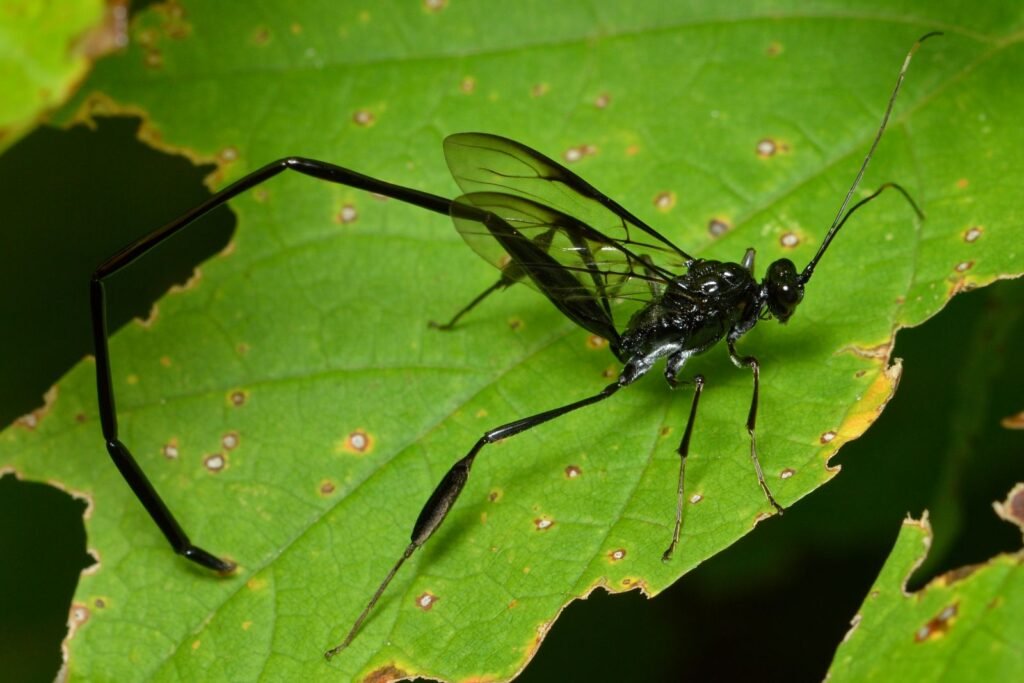
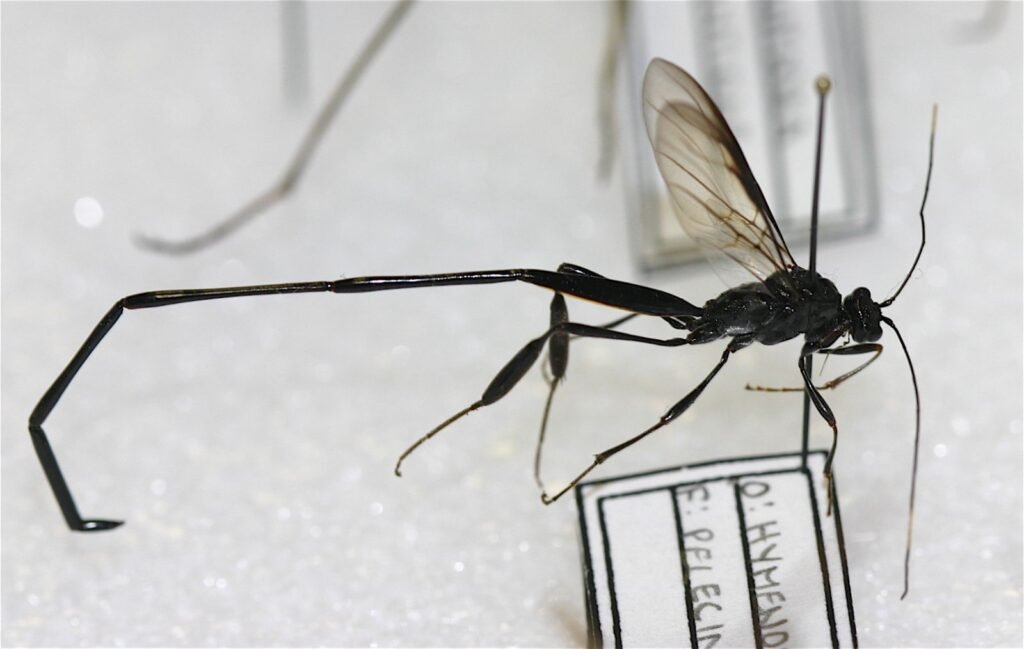
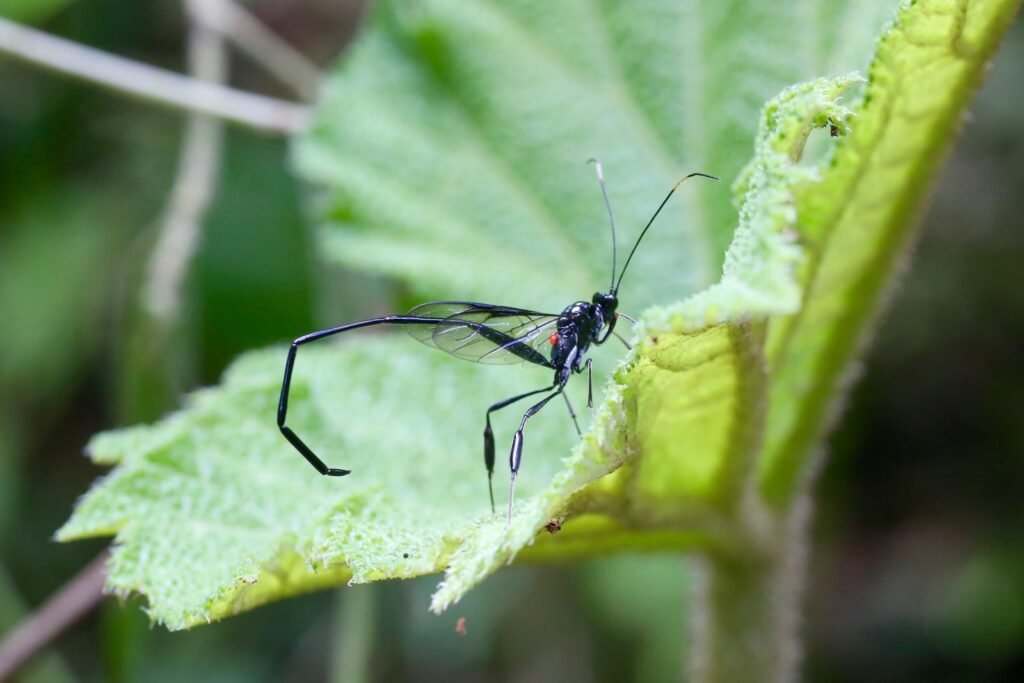
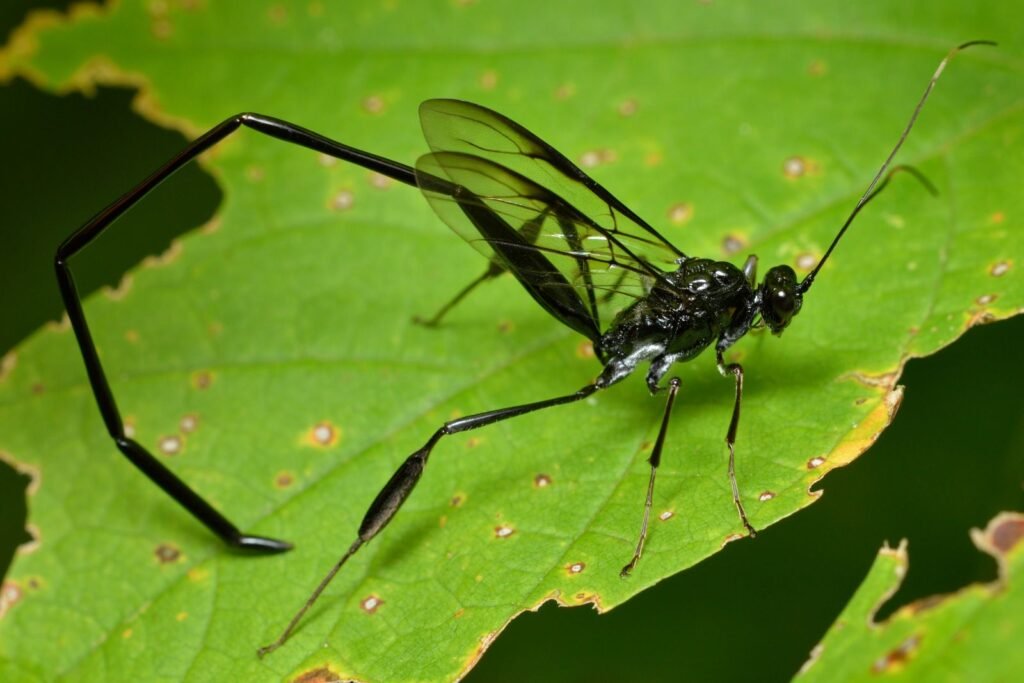
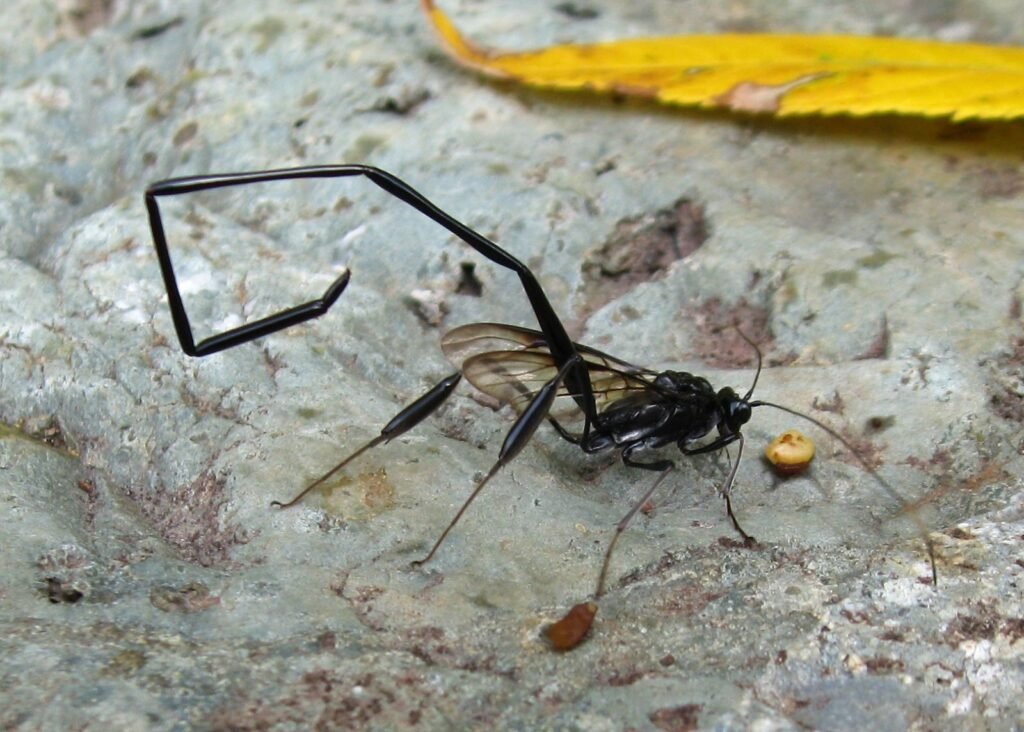
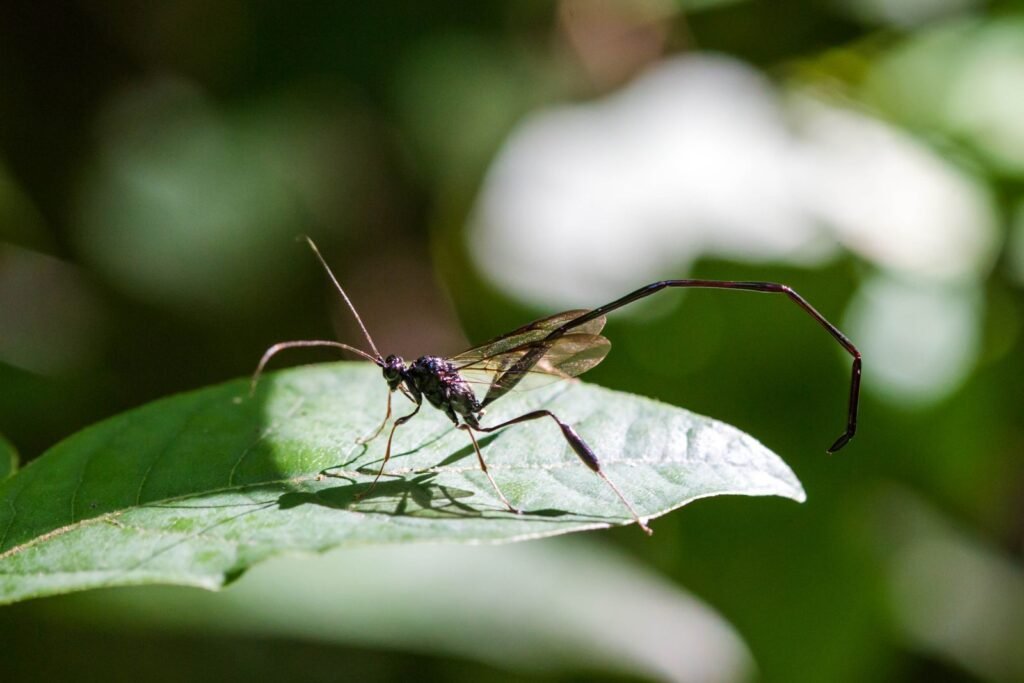
The defining feature of this species is impossible to miss: females have a strikingly elongated, thread-like, jointed abdomen that can measure roughly two inches long, often longer than the rest of the wasp’s body combined. The whole insect is a uniform glossy black, and the abdomen has a distinctive segmented, almost mechanical appearance that makes it one of the most visually distinctive wasps in North America. Males, by contrast, are considerably smaller and lack the dramatically elongated abdomen, which contributes to how rarely they are noticed or correctly identified compared to females.
That Long “Tail” Isn’t a Stinger
As dramatic as it looks, the elongated abdomen is not a stinger, and it isn’t used for defense against people. It functions as a highly extended ovipositor and sensory structure that the female uses to probe down into soil in search of host insects, then to reach a host precisely enough to lay an egg on it. This is the same general biological theme covered in the ichneumon wasp article on this site: a dramatic-looking trailing structure that reads as threatening to most people but is actually a reproductive tool rather than a weapon.
A Genuinely Old Scientific Discovery
The species was formally described by the entomologist Dru Drury in 1773, making it one of the longer-studied wasp species covered on this site rather than a recent discovery. Its genus name, Pelecinus, derives from a Greek root referring to a hatchet or axe shape, likely a reference to the segmented, blade-like appearance of the female’s elongated abdomen when viewed from certain angles. This long taxonomic history hasn’t translated into wide public familiarity, though, since the species’ habit of probing soil for hidden grubs keeps much of its life cycle out of everyday view.
The Genuinely Strange Reproductive Biology
One of the more scientifically interesting facts about this species is how rare males actually are, particularly in the northern parts of its range. Documented research indicates that many North American pelecinid wasp populations reproduce largely or entirely through parthenogenesis — unmated females producing viable female offspring without fertilization — meaning it’s entirely possible to observe active, reproducing populations of this species in some areas without ever encountering a male at all. This is a genuinely unusual reproductive strategy worth stating plainly rather than glossing over, since it’s one of the more scientifically noteworthy and genuinely interesting things about an otherwise fairly obscure and rarely discussed species.
Parasitizing June Beetle Grubs Underground
Female pelecinid wasps use their extraordinarily long abdomen to probe into soil and locate the grubs of June beetles and other related scarab beetles, laying an egg directly on or near a located grub. The wasp larva then develops as a parasitoid, consuming the grub over time much like the parasitoid lifecycle described for ichneumon and braconid wasps elsewhere on this site, ultimately contributing a genuine, if little-known, form of natural control on scarab beetle grub populations in soil and turf. Colorado State University’s Colorado Insect of Interest series covers this host relationship in its pelecinid wasp fact sheet.
Range and Season
Pelecinid wasps are found primarily in the eastern half of North America, from parts of Canada down through much of the eastern and central United States, generally becoming more common toward late summer and early fall. Because females spend considerable time probing soil and low vegetation searching for host grubs, sightings often happen in gardens, lawns, and other grassy areas rather than on flowers, though adults are also known to visit flowers occasionally.
Any Relevance for Beekeepers Specifically?
Pelecinid wasps aren’t a concern for honeybee colonies. Their host relationship is fixed on underground scarab beetle grubs, entirely unrelated to bees or hive activity, and there’s no documented interaction between this species and managed honeybee colonies at all. Beekeepers who spot one in the garden are simply seeing an unrelated, beneficial insect going about its own business.
Sting Risk to People and Pets
Pelecinid wasps pose essentially no meaningful sting risk to people. The elongated abdomen isn’t built for defense, and while some sources note the species is technically capable of a very mild, largely symbolic sting if handled roughly, this isn’t considered a real-world safety concern for anyone who simply leaves the insect alone, which is the general recommendation whenever one is encountered.
Pelecinid Wasps vs. Other Elongated Parasitic Wasps
| Feature | Pelecinid Wasp | Ichneumon Wasp | Thread-Waisted Wasp |
|---|---|---|---|
| Family | Pelecinidae | Ichneumonidae | Sphecidae |
| Notable structure | Extremely long abdomen (females) | Long ovipositor | Extreme narrow waist |
| Host | Scarab beetle grubs | Wide range of insects | Caterpillars |
| Danger to people | Essentially none | Essentially none | Essentially none |
| Notable biology | Frequent parthenogenesis | Vast taxonomic diversity | Documented tool use |
Common Identification Mistakes
The most common mistake is assuming the long trailing abdomen must be a stinger simply because of its dramatic length, when it functions as an ovipositor used for finding and laying eggs on underground grubs rather than for defense. A second common mistake is assuming such an unusual-looking insect must be rare or exotic, when in much of its eastern North American range this species is a regular, if often overlooked, late-summer sighting. As with any unfamiliar wasp-like insect, the bee vs. wasp identification guide on this site is a useful starting point before narrowing down a specific species.
Frequently Asked Questions
Is the pelecinid wasp dangerous to people?
No, not in any meaningful sense. The dramatic structure that looks like a stinger is the female’s long abdomen and egg-laying apparatus, used to reach scarab beetle grubs down in the soil, not a weapon. The insect poses essentially no real-world safety concern to people.
Can pelecinid wasps fly well despite such a long abdomen?
Yes, despite the dramatic length of the female’s abdomen, pelecinid wasps are capable fliers, and the abdomen trails behind in flight rather than significantly impeding it, though the insect’s overall flight style tends to look somewhat slow and deliberate compared to smaller, more compact wasps.
Why do I only ever see females of this species?
Males are genuinely rare in much of the northern part of the range because many populations reproduce largely through parthenogenesis, meaning unmated females can produce offspring without a male at all.
Do pelecinid wasps build any kind of nest?
No, they don’t build nests. As a parasitoid species, the female’s reproductive effort is focused entirely on locating and ovipositing on host grubs already present in the soil, rather than constructing and provisioning a nest structure the way many other wasps covered on this site do.
Are pelecinid wasps considered beneficial for gardens and lawns?
Yes, since their larvae develop by consuming scarab beetle grubs, which can otherwise damage grass roots and garden plants in sufficient numbers, pelecinid wasps provide a genuine, if minor and largely unmanaged, form of natural grub control wherever they occur.
Could a pelecinid wasp be confused with a giant ichneumon wasp?
At a glance, yes, since both are elongated black parasitoid wasps, but the pelecinid wasp’s abdomen is distinctly segmented and rod-like along its entire length in a way that looks quite different from the thinner, thread-like ovipositor structure typical of large ichneumon wasps, making a close look a reliable way to tell them apart.
What does the pelecinid wasp eat as an adult?
Adults are believed to feed on nectar and other sugary plant fluids, similar to many other parasitoid wasps whose larvae depend on a host insect while the adults themselves feed on very different food sources.
Are pelecinid wasps considered rare, threatened, or of any conservation concern?
No, the species is not generally considered rare or of conservation concern within its established eastern North American range; it’s simply an insect that most people rarely notice given its ground-focused, slow-moving foraging behavior rather than one with any documented population decline.
Image credits: Photo: Ryan Hodnett, CC BY-SA 4.0, via Wikimedia Commons; Photo: IronChris, CC BY-SA 3.0, via Wikimedia Commons; Photo: yakovlev.alexey, CC BY-SA 2.0, via Wikimedia Commons; Photo: KristinLee, CC BY-SA 3.0, via Wikimedia Commons; Photo: Melissa McMasters, CC BY 2.0, via Wikimedia Commons.