
Last Updated September 15, 2026
An all-black wasp well over three-quarters of an inch long, dragging a paralyzed katydid slowly across your lawn toward a waiting burrow, is a genuinely alarming sight the first time you happen to see it — and it’s also a genuinely beneficial, harmless-to-people encounter with the great black wasp, Sphex pensylvanicus. This species shares a genus with the great golden digger wasp already covered on this site, and the two make a genuinely useful side-by-side comparison for anyone trying to sort out large solitary ground-nesting wasps.
Key Takeaways
- Identification: Essentially uniformly black with smoky, iridescent wings, and 20–35 mm (about 0.8–1.4 inches) long, per the University of Minnesota Extension and Wikipedia’s cited taxonomic data — among the largest solitary wasps in North America.
- Diet: Adult females hunt katydids almost exclusively (genera including Microcentrum, Amblycorypha, and Scudderia) to provision underground nest burrows, per University of Minnesota Extension research.
- Sting risk: Not aggressive toward people. Females sting almost exclusively to subdue prey; there’s no colony to defend.
- Easiest ID marker vs. its cousin: Color. The great black wasp is entirely black; the great golden digger wasp shows a reddish-orange abdomen band and golden thorax hair.
- Not a beekeeping threat: No documented interaction with managed honeybee colonies — its prey specialization is fixed on katydids and similar Orthoptera.
Table of Contents
- What Is the Great Black Wasp?
- Identification: All-Black and Genuinely Large
- Great Black Wasp vs. Great Golden Digger Wasp
- Range and Habitat
- Why It’s Called the Katydid Hunter
- Nesting Behavior: Provisioned Ground Burrows
- Carrying Prey Many Times Its Own Size
- Any Relevance for Beekeepers Specifically?
- Temperament and Sting Risk
- Garden and Landscape Value
- Great Black Wasp vs. Other Large Solitary Wasps
- Common Identification Mistakes
- Frequently Asked Questions
What Is the Great Black Wasp?
Sphex pensylvanicus is a large solitary wasp in the family Sphecidae, native to and widespread across most of North America. As a solitary hunting wasp, it lives and nests independently rather than forming a colony, with each female digging and provisioning her own nest burrow rather than sharing labor with other wasps the way social species like yellowjackets do.
Identification: All-Black and Genuinely Large
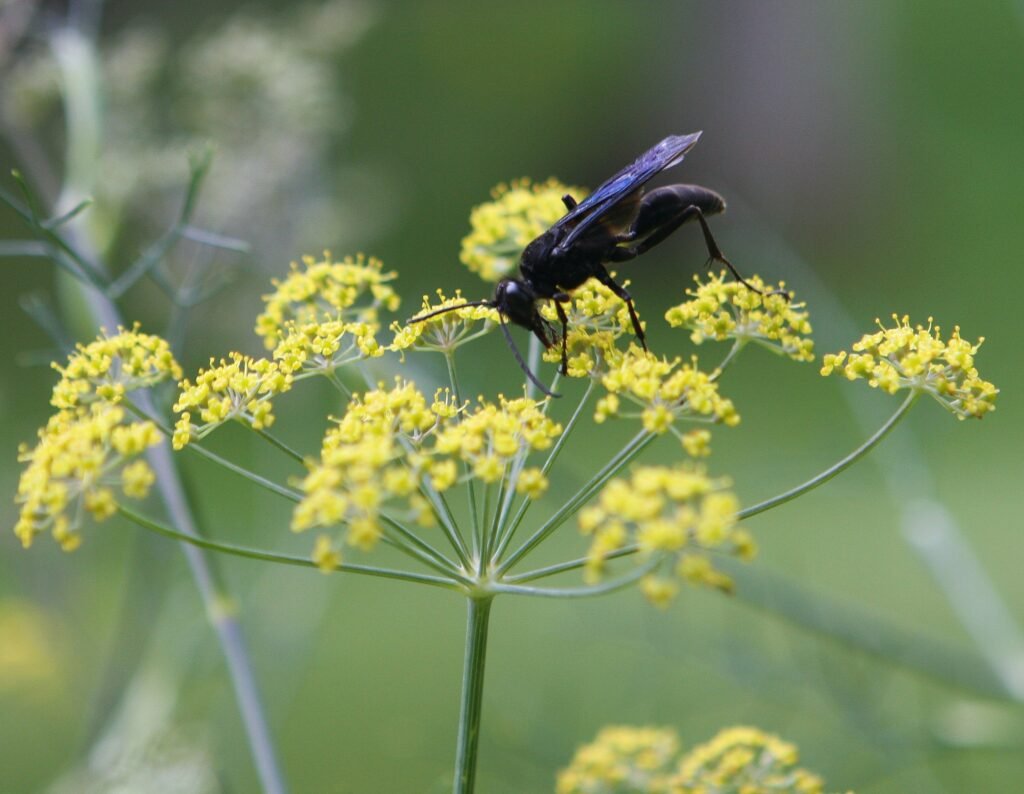
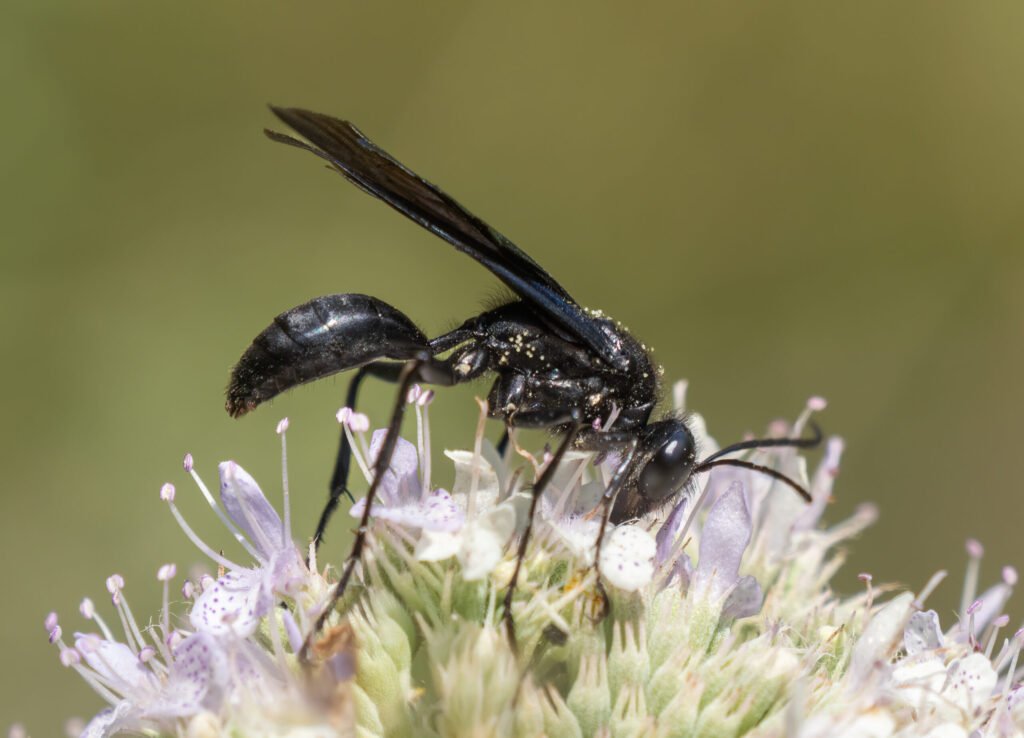
The great black wasp earns its common name honestly: it is essentially uniformly black, including its wings, which often show a dark, smoky iridescence in good light. According to the University of Minnesota Extension’s entomology department, adults typically measure 20–35 mm (roughly 0.8 to 1.4 inches), placing it among the largest solitary wasps found in North America and making it genuinely startling to encounter for anyone unfamiliar with the species despite its harmless disposition toward people.
Great Black Wasp vs. Great Golden Digger Wasp
Because the great black wasp and the great golden digger wasp share the same genus, Sphex, and overlap significantly in size, habitat, and general behavior, they invite direct comparison. The clearest distinguishing feature is color: the great black wasp is essentially entirely black, while the great golden digger wasp shows a distinctive reddish-orange abdomen segment along with golden hair on the thorax, giving it a noticeably more colorful appearance. Prey choice also differs meaningfully between the two species, covered in more detail below.
Range and Habitat
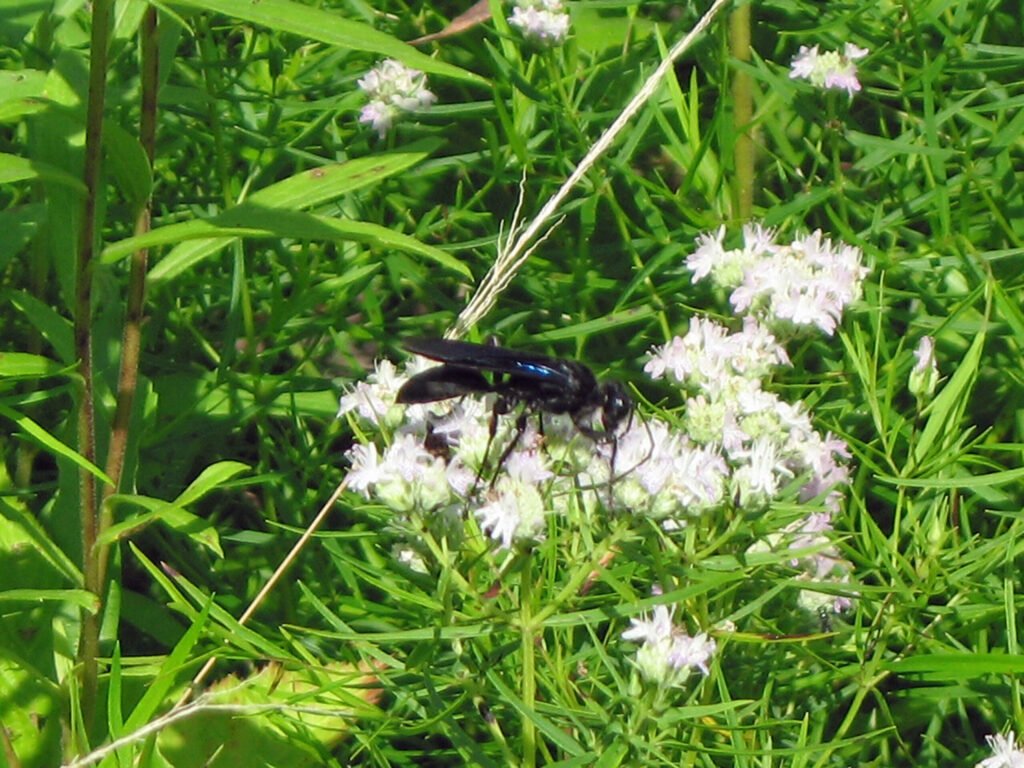
The great black wasp is widespread across most of the continental United States and southern Canada, found in a broad range of open, sunny habitats including gardens, meadows, roadsides, and other areas with abundant flowering plants and suitable dry, well-drained soil for nesting. Adult males and females are also commonly seen visiting flowers for nectar, particularly late-summer bloomers, which is often when people notice the species despite its ground-nesting habits keeping much of its life cycle out of sight.
Why It’s Called the Katydid Hunter
The great black wasp is sometimes informally called the “katydid hunter” because of its documented prey specialization: adult females hunt katydids (family Tettigoniidae, including the genera Microcentrum, Amblycorypha, Phaneroptera, and Scudderia) almost exclusively, along with occasional other large Orthopteran insects such as certain grasshoppers, to provision their nest burrows. This is a meaningfully different prey specialization from the great golden digger wasp, which primarily targets crickets and grasshoppers rather than katydids specifically — a real, checkable behavioral distinction between two otherwise visually similar relatives. Each brood cell is typically stocked with two to six paralyzed katydids or grasshoppers, per field observations compiled by the Pollinators & Native Plants Sphex pensylvanicus fact sheet.
Nesting Behavior: Provisioned Ground Burrows
Female great black wasps dig burrow nests in the ground, typically in dry, sunny, well-drained soil, then provision each individual brood cell within the burrow with one or more paralyzed katydids before laying a single egg on the provisioned prey and sealing the cell. This mass-provisioning strategy — fully stocking a cell before sealing it rather than repeatedly feeding a developing larva — is the same general approach used by several other solitary wasps covered on this site, including mud daubers and potter wasps, though the specific prey and nest architecture differ by species. It contrasts directly with the thread-waisted wasp, a related ground-nesting hunter that targets caterpillars rather than katydids.
Carrying Prey Many Times Its Own Size
One of the more genuinely impressive aspects of great black wasp behavior is prey transport: a paralyzed katydid can weigh considerably more than the wasp carrying it, and females are documented dragging prey across the ground or making short flights while gripping it, using considerable strength relative to their own body size to move prey back to the nest burrow. This capability reflects the same broader pattern of specialized prey-handling strength seen across several solitary hunting wasps in this identification cluster.
The venom of the great black wasp does not kill its prey; it merely paralyzes the victim.
That distinction, drawn by University of Maryland entomology professor Michael J. Raupp, matters for understanding why the wasp’s hunting strategy works at all: a paralyzed but living katydid stays fresh as food for the developing larva over the following days and weeks, rather than decomposing the way dead prey would.
Any Relevance for Beekeepers Specifically?
Great black wasps aren’t a concern for honeybee colonies. Their prey specialization is fixed on katydids and similar large Orthopteran insects rather than bees, and there’s no meaningful documented pattern of this species interacting with managed hives at all. Beekeepers who spot one in the yard or garden are simply seeing a beneficial predator going about unrelated business, not a threat requiring any response.
Temperament and Sting Risk
Despite its intimidating size and all-black coloring, the great black wasp is not considered aggressive toward people. Like most solitary hunting wasps, females reserve their sting almost exclusively for subduing prey, and stings toward people are rare, generally occurring only if a wasp is handled directly or accidentally trapped against skin. There is no colony to defend, which removes the main behavioral driver behind the more defensive stinging seen in social wasps like yellowjackets.
Garden and Landscape Value
As a specialized predator of katydids and other large Orthopteran insects, the great black wasp provides genuine, if easily overlooked, natural pest control in gardens and landscapes where these prey insects can otherwise damage plants in significant numbers. Its presence is generally worth tolerating rather than treating as a problem, consistent with the broader pattern across the solitary wasps covered on this site of predatory behavior that benefits people’s yards more than it threatens them.
Great Black Wasp vs. Other Large Solitary Wasps
| Feature | Great Black Wasp | Great Golden Digger Wasp | Thread-Waisted Wasp |
|---|---|---|---|
| Species | Sphex pensylvanicus | Sphex ichneumoneus | Ammophila spp. |
| Coloring | All black | Black with reddish abdomen, golden hair | Black/red, extreme narrow waist |
| Primary prey | Katydids | Crickets, grasshoppers | Caterpillars |
| Nest type | Ground burrow | Ground burrow | Ground burrow |
Common Identification Mistakes
The most common mistake is assuming any large, entirely black flying insect must be dangerous or aggressive, when the great black wasp’s size is not correlated with any real threat to people. A second common mistake is confusing this species with other large dark solitary wasps, such as certain mud daubers, without checking the specific combination of body size, uniform black coloring, and ground-nesting (rather than mud-nest-building) behavior that identifies the great black wasp specifically. As with any large, unfamiliar wasp, the bee vs. wasp identification guide on this site is a good starting point for ruling out bees entirely before narrowing down the specific wasp species.
Frequently Asked Questions
Is the great black wasp dangerous to people?
No, not in any meaningful sense. It is not aggressive toward people and stings are rare, generally limited to situations involving direct handling.
How can I tell a great black wasp from a great golden digger wasp?
Check color first: the great black wasp is essentially entirely black, while the great golden digger wasp has a visible reddish-orange abdomen section and golden body hair that the great black wasp lacks.
Does the paralysis inflicted on a katydid kill it immediately?
No — as UMD entomologist Michael Raupp notes, the sting delivers venom that paralyzes rather than kills the katydid outright, keeping the prey alive but immobile so it stays fresh as a food source for the developing larva over the following days and weeks, the same general strategy used by many other solitary hunting wasps covered on this site.
Is the great black wasp the same insect as a “cicada killer” wasp?
No, they are different species covered separately on this site. The cicada killer wasp is a related large ground-nesting solitary wasp that specializes in hunting cicadas rather than katydids, and while the two share a broadly similar burrow-nesting lifestyle and harmless temperament toward people, they differ in coloring, size, and prey.
What should I do if I find a great black wasp nest burrow in my yard?
No action is generally necessary. Because the species is docile toward people and provides genuine pest-control value against katydids and similar insects, most guidance recommends simply leaving an identified burrow undisturbed rather than attempting removal — unprovoked attacks are unlikely, and a female is more likely to continue her own business than act defensively toward a person who isn’t directly handling her or the nest.
How long do adult great black wasps live?
Like most solitary wasps, adult great black wasps have a single active season, typically emerging in mid-to-late summer and remaining active for a period of weeks to a couple of months before dying off as colder weather arrives, with the next generation overwintering in an immature stage inside the sealed nest burrow rather than as adults.
Do great black wasps reuse the same burrow year after year?
Generally no; each female typically digs her own new burrow or set of cells for a given season’s brood rather than reusing a previous year’s nest structure, though favorable nesting sites with the right soil conditions can see repeated use by different individuals across multiple seasons.
Further Reading
For further verification of the material covered here, see the University of Maryland Extension’s guide to social wasps and BugGuide.net’s photographed record of great black wasp behavior.