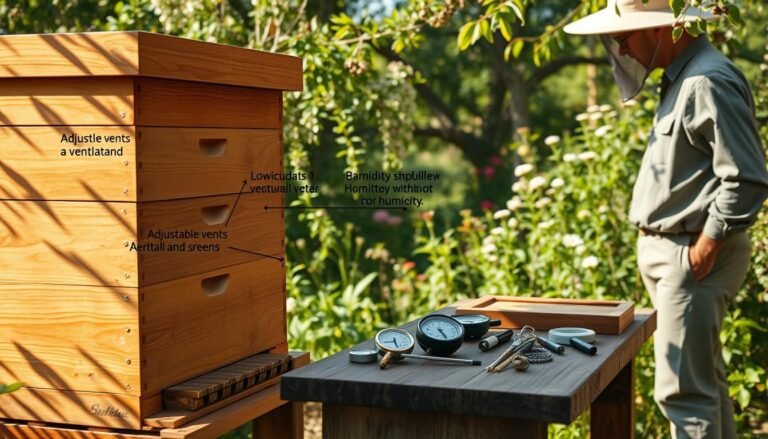
Practical preparation keeps you calm and lowers risk before you ever lift a frame. Plan your goals, stage your equipment, and set an exit path so each inspection runs like a small operation.
Arrive suited and ready: zip your veil, have a charged phone and first-aid kit, and light a smoker that produces cool, steady smoke. These small steps cut time at the hive and reduce agitation in the bees.
Know your personal profile as a beekeeper: review allergies, access to care, and how close neighbors and pets are. Choose light clothing, avoid perfumes and diesel smells, and pick the best time of day for inspections to minimize heat stress and defensive behavior.
Keep essentials close: spare veil, fuel for the smoker, a clean hive tool, and a stocked first-aid kit with an EpiPen if prescribed. A written checklist makes this process repeatable and reliable across the season.
Key Takeaways
- Treat protection as a planned process, not an afterthought.
- Arrive fully suited with smoker, phone, and first-aid kit ready.
- Minimize triggers: light clothes, no strong scents, pets away.
- Work during calm, warm weather and avoid peak heat times.
- Keep spare gear and written checklists to reduce errors.
Start Smart: Understanding Risks and Choosing Gentle Bees
Choose calm stock and clear plans before you ever open a hive. Picking gentle strains reduces defensive behavior while you learn frame handling and inspections.
Popular calm strains include Italian, Carniolan, and Caucasian bees. Many beekeepers also find Russian lines both gentle and mite-resilient.
If a colony stays hot, requeening with a milder queen often changes temperament within one brood cycle—about six weeks as new workers emerge.
“Requeening is the fastest practical way to reset colony tone when defensiveness becomes persistent.”
Health and allergy planning
Before you keep bees, get evaluated for allergies. Discuss testing and whether an EpiPen is right for you.
- Evaluate on warm, calm days and avoid standing in front of entrances to reduce collisions and agitation.
- Work a mentor into your first inspections so you learn subtle cues and responses to a bee sting or an allergic reaction.
- Document temperament, queen lineage, and changes to help guide future requeening or management decisions.
| Topic | Action | Expected Result |
|---|---|---|
| Choose strain | Select Italian, Carniolan, Caucasian, or Russian | Lower defensive responses |
| Requeen | Introduce gentle queen to aggressive colony | Temperament shift in ~6 weeks |
| Allergy plan | Get tested; train with EpiPen if prescribed | Faster response to severe allergic reaction |
Protective Clothing and Gear: What to Wear and Why
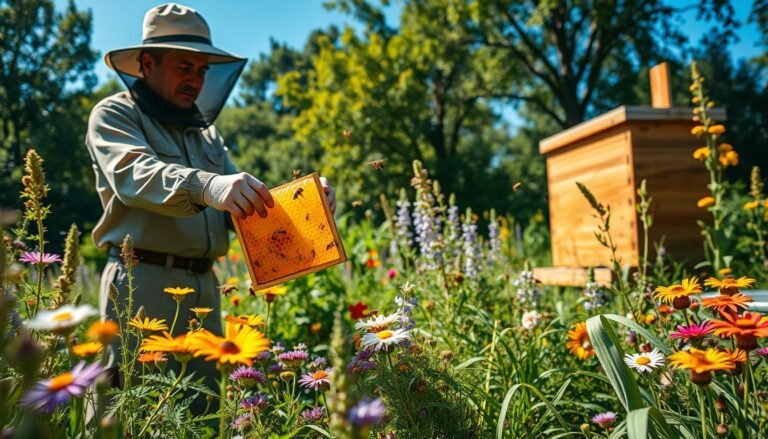
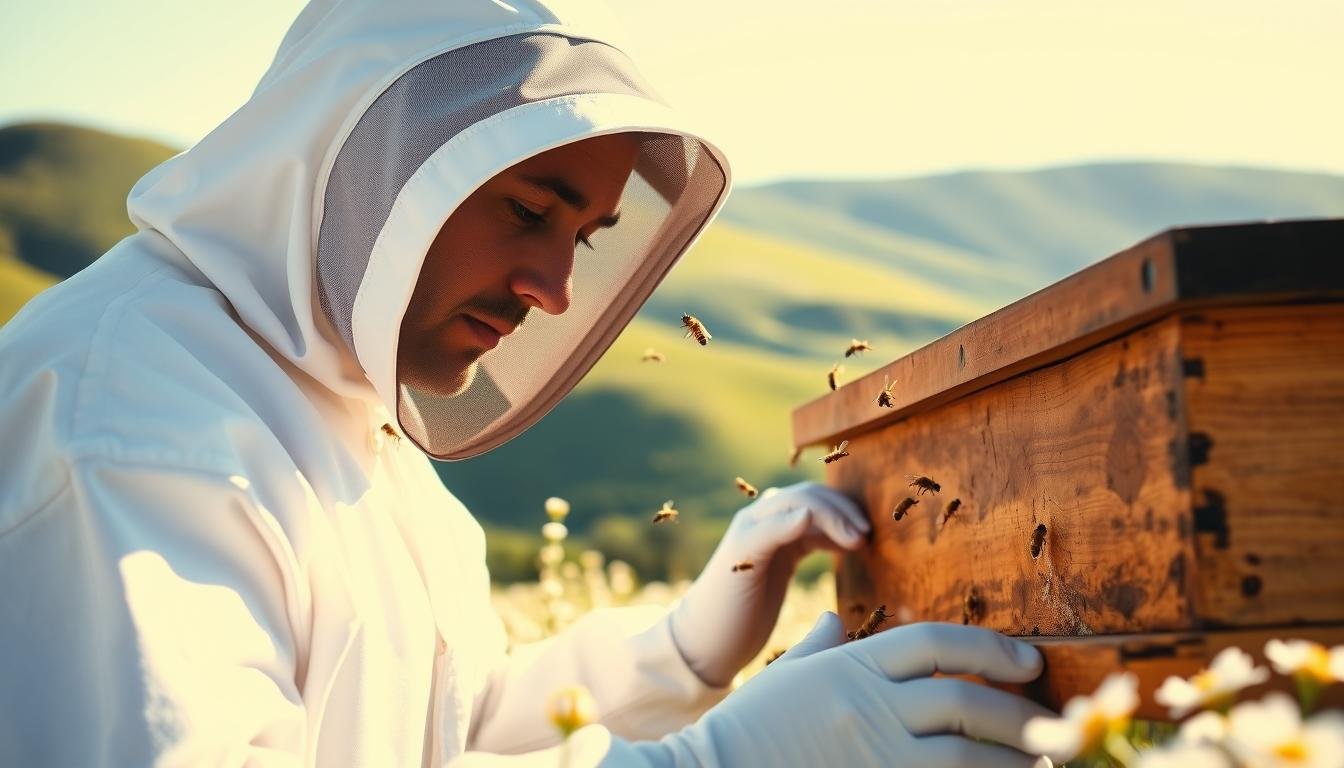
Pick gear that seals well and breathes where you need it most. Choose purpose-built components: a wide-brim hat or helmet with a fitted or zip-on veil, a full suit or a jacket/pants set, boots with bands, wrist protectors, and reliable gloves.
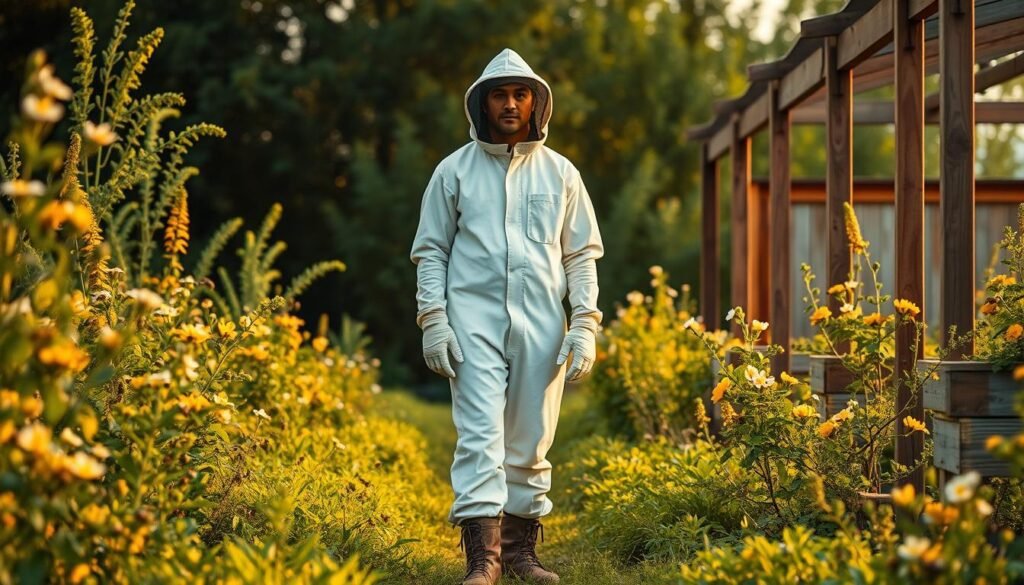
Veils, jackets, suits, and boots
Select a veil that keeps mesh off the face and head—either a zip-on hood or hat-and-veil system that holds clear spacing while you work around smoke and moving frames.
Decide between a full suit and a jacket/pants setup based on task and confidence. A suit gives continuous coverage; a jacket is faster for quick checks. Look for multiple pockets, double-stitched seams, and strong zips.
Materials and ventilation
Match materials to climate. Woven cotton is comfortable in mild weather but can run hot. Cotton/poly blends balance breathability and durability.
For hot, humid days choose partially or fully vented suits with mesh panels. These maximize airflow while still protecting skin and reducing heat stress.
Fit and closures
Prioritize fit that is loose but not baggy so fabric does not press against skin. Ensure elastic at wrists and ankles and zips that close fully without gaps.
Stage simple equipment like boot bands and wrist protectors to seal common entry points. Keep a spare jacket and extra veils for visitors.
Gloves compared
Gloves trade dexterity for protection. Leather gives the best barrier but reduces feel. Goatskin balances dexterity and safety. Nitrile preserves fine touch for queen work but offers less sting protection.
- Start with thicker gloves for confidence, then switch to thinner goatskin or nitrile for delicate tasks.
- Standardize light-colored clothing and avoid strong odors like perfume or diesel to reduce triggers from nearby bees.
- Always bring a reliable protective gear reference and follow practical precautions for inspections.
Beekeeping safety in Your Apiary: Location, Weather, and Access
Pick a level, sheltered spot that keeps hive entrances pointed away from foot traffic and neighbors. Site your apiary where walkers and pets won’t cross the landing path. A clear, level work area beside or behind the hive bodies makes lifting boxes easier and cuts trip risks.
Proper placement and flight path
Map the entrance flight path and never block it. Position yourself to the side or rear when bees are returning to avoid collisions.
Make sure tall grass is trimmed so carrying supers and using a lit smoker is safe.
Best time and weather to open hives
Choose warm, sunny days with light wind. In hot climates, inspect early morning or late evening to reduce heat stress and defensive behavior.
Working in public or remote places
When visitors are present, stage a spare veil and brief observers on ground rules: no dark clothing and keep distance from the entrance.
Keep a charged phone on your person and confirm coverage. In remote sites, share your itinerary and a map pin with someone you trust.
“Wear your jacket or suit with closures fastened before you approach within 40–50 feet, and verify the smoker is producing cool smoke.”
- Place hives away from walkways; orient entrances from traffic.
- Ensure quick vehicle access and a shaded rest spot.
- Carry spare gear: veil, gloves, and a working smoker.
Smoker Use and Fire Safety Around Hives
A reliable lighting routine for your smoker prevents last-minute scrambling and hazards. Start by building a hot core, then add cool-burning fuel to produce steady white/gray smoke that calms bees without overheating them.
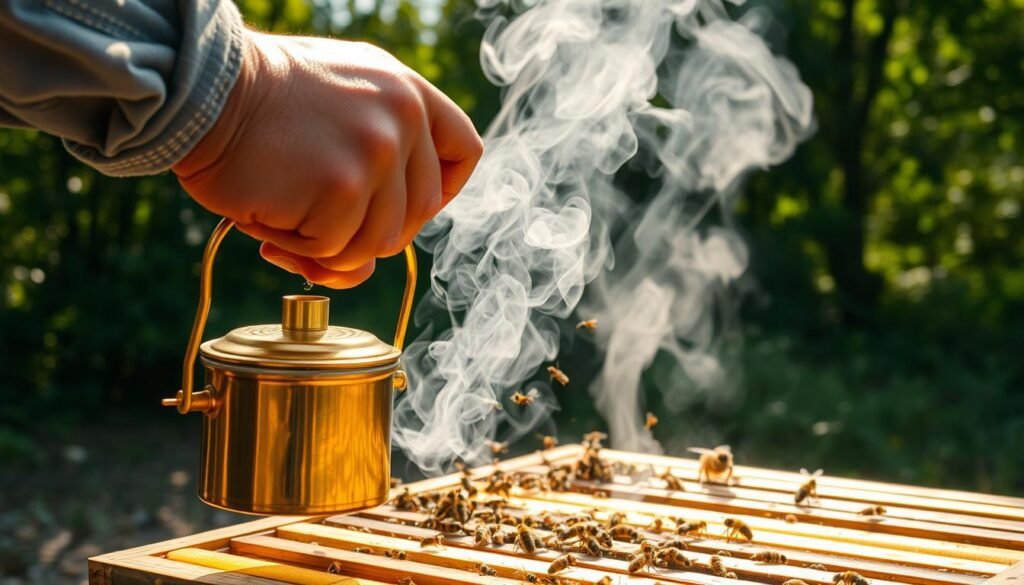
Fuel choices and producing cool white/gray smoke
Choose clean, dry materials such as burlap, pine needles, untreated wood pellets, or compressed natural starter. These create long-lasting, cool smoke and leave less residue on equipment.
Handling during inspections
Make sure the smoker is producing cool smoke before opening the hive. Test a puff on your glove to check temperature.
Keep the smoker within reach and puff periodically. Never leave a lit smoker unattended; set it on nonflammable ground and secure the bellows.
Extinguishing and disposal
At the end of the session, douse the contents thoroughly with plenty of water. Stir and repeat until no hot spots remain.
Avoid dumping embers on dry grass or brush. Stage a small fire kit and agree on an emergency plan with other beekeepers working with you.
| Fuel | Burn Character | Best Use | Disposal Note |
|---|---|---|---|
| Burlap | Long, cool smoke | General inspections | Soak and cool before discarding |
| Pine needles | Fast-starting, smoldering | Quick checks | Avoid piles near dry grass |
| Wood pellets | Clean, steady burn | Extended sessions | Douse with water when done |
Handling Hives the Safe Way
Work deliberately at each hive to keep bees calm and reduce disruptions. Approach from the side or rear and avoid standing in front of the entrance. Move slowly and use steady, predictable motions to minimize the chance of a defensive sting.
Calm movements and disruption control
Make sure zippers, clasps, and elastic are secured before you crack the lid so you can focus on frames. Keep a steady rhythm with the smoker to maintain calm while removing supers or inspecting brood.
Manual handling and lifting techniques
Medium boxes filled with honey often weigh 30–50 pounds. Bend at the hips, keep the load close, and lift with your legs. Break boxes into smaller parts when possible and use carts or a partner for heavy moves.
- Wear appropriate gloves: goatskin for dexterity, leather when handling propolized or heavy boxes where a sting risk rises.
- Keep the work area tidy and avoid stacking boxes in flight paths to prevent trips while carrying frames.
- If the colony grows agitated, pause, give gentle smoke, reassemble in reverse order, and step back until the hive settles.
| Task | Recommended Action | Reason |
|---|---|---|
| Approach hive | Enter from side or rear | Reduces collisions and defensive responses |
| Open hive | Zip jacket and secure veil first | Prevents distractions and gear fiddling |
| Move boxes | Lift with legs; use carts or partners | Minimizes back injuries with 30–50 lb boxes |
| Work flow | Keep smoker steady; tidy flight path | Maintains calm and lowers sting and trip risk |
Bee Sting Response, Heat, and On-Site Emergencies
A prompt, calm response to a sting cuts the risk of a worsening reaction. Move away from the hive right after a sting to escape alarm pheromones. This reduces the chance of more stings.
Recognize reactions quickly
Normal responses include localized pain, redness, and brief swelling of the skin.
Mild to moderate swelling or spreading redness may need cold compresses and monitoring. Watch for signs of systemic reaction like throat tightness, facial swelling, or breathing trouble. Those signs require urgent care.
Immediate actions on site
Move to a safe spot, then scrape the stinger out quickly—do not pinch. Scraping lowers venom delivery.
Apply cold, keep the wound clean, and document the event for future reference.
EpiPen, medical care, and working rules
Make sure an EpiPen is on you if prescribed and that helpers know how to use it. For severe allergic reaction, use the EpiPen and call 911 immediately. Emergency response guidance outlines steps for serious events.
Never work alone in remote yards; carry a charged phone and a stocked first-aid kit.
Heat readiness
Hydrate, eat quick snacks, and rest in shade. Wear ventilated garments to reduce heat stress and check closures at wrist, head, and face before handling frames.
| Scenario | Immediate Step | When to Escalate |
|---|---|---|
| Single localized sting | Move away, scrape stinger, ice | Seek care if swelling worsens |
| Multiple stings | Leave area, cool skin, monitor vitals | Visit ER if systemic signs appear |
| Severe allergic reaction | Administer EpiPen, call 911 | Always seek emergency care |
Conclusion
A tight routine at the end of every inspection turns good intentions into reliable habits. Prepare your gear, confirm the fit of protective clothing and suit, light the smoker, and walk the work area before opening any hive.
Prioritize calm stock and plan requeening when temperament needs change so your bees are easier to manage. Rely on light-colored clothing, a sealed veil, and well-fitted gloves or a jacket to keep space between stingers and your skin.
Standardize inspection flow: keep frames over the hive, step away from the entrance, and plan lifts for honey-heavy boxes. Close with diligence—check elastics, zips, and cuffs, douse the smoker with water, tidy gear, and log what worked. These small steps help you keep bees with confidence and care.
FAQ
What are the first steps to reduce risks when starting an apiary?
Start by choosing docile bee breeds such as Italian or Carniolan stock and plan for requeening if temper is an issue. Test for allergies before regular hive work and keep an EpiPen available if a medical professional recommends one. Select a calm, accessible site and learn basic hive behavior to lower the chance of aggressive encounters.
How do I choose the right veil, jacket, or suit?
Look for full coverage that seals at the wrists, ankles, and waist with durable zippers or elastic closures. A veil should give clear visibility and attach securely to the jacket or suit. Boots or high-top footwear help prevent bees from entering. Try gear on before use to ensure mobility and no gaps where bees can enter.
What materials work best for hot-weather inspections?
Lightweight cotton blends and mesh panels offer better ventilation while still providing protection. Breathable fabrics and built-in vents reduce overheating. Avoid synthetic layers that trap heat; instead, choose ventilated suits or jackets and take frequent shade breaks.
Should I wear gloves, and which type is best?
Gloves protect hands but can reduce dexterity. Leather or goatskin gloves give strong puncture resistance for heavy lifting and smokers. Nitrile or thin synthetic gloves provide better tactile control for delicate tasks like queen handling. Keep a pair of both types on hand and practice tasks with each to find your preference.
Do clothing color and scents affect bee behavior?
Yes. Light-colored clothing is less likely to provoke defensive responses than dark colors. Avoid floral perfumes, scented lotions, or strong-smelling soaps; these can alarm or attract bees. Clean, neutral-smelling clothing is the safest choice.
Where is the safest place to set up hives on my property?
Place hives on level ground with a clear flight path away from walkways, driveways, and play areas. Provide a windbreak and morning sun exposure. Position the entrance to direct bee traffic toward fences or hedges rather than human activity, and maintain a tidy work area with clear approach paths.
When is the best time to open hives?
Inspect during warm, calm, and sunny conditions when most foragers are out. Mid-morning to early afternoon is ideal. Avoid inspections during cold, rainy, or windy weather, or at dusk and night when bees are more defensive.
How should I manage visitors or public access near my apiary?
Post clear signs, keep a safe perimeter, and provide spare veils for curious onlookers. Inform visitors to stand back and avoid sudden movements. Maintain phone access and a plan to call for help if someone has a severe reaction.
What fuels are recommended for a smoker and how do I produce good smoke?
Use natural fuels like untreated burlap, pine needles, cardboard, or wood pellets for steady, cool white/gray smoke. Light gradually, keep the smoker puffing gently, and avoid producing hot flames. Good smoke calms bees without overheating them or nearby grass.
How do I handle a smoker safely during inspections?
Keep the smoker upright and within reach while working. Never leave it unattended on dry ground or near combustible materials. Use the bellows gently to avoid embers spitting out and always have water or a lid ready to smother the fire if needed.
What’s the safest way to extinguish and dispose of smoker fuel?
Douse the smoker with water and allow it to cool completely before storing it in a noncombustible container. Empty cooled ash away from dry vegetation. Never place a warm smoker on dry grass or inside a vehicle until fully cooled.
How should I lift and move hive boxes to avoid injury?
Bend at the knees, keep the load close to your body, and use both hands. Lift with your legs, not your back. Work with a partner for heavy supers and consider using a hive lifter or equipment like wheelbarrows to transport boxes when possible.
How can I minimize bee agitation during inspections?
Move calmly and smoothly, avoid quick jerks, and do not block the entrance. Smoke gently to settle bees, work methodically to reduce open-hive time, and replace frames and covers precisely to limit disturbance.
What are the signs of a normal versus a severe sting reaction?
Normal reactions include localized pain, swelling, redness, and itching around the sting site. Severe or anaphylactic signs are difficulty breathing, swelling of the face or throat, rapid pulse, dizziness, or loss of consciousness. Seek emergency care immediately for any severe symptoms.
What should I do immediately after getting stung?
Move away from the hive to avoid more stings, remove the stinger quickly by scraping with a fingernail or a flat tool, clean the area with soap and water, and apply ice to reduce swelling. Take an antihistamine if you normally use one and monitor symptoms closely.
When and how should an EpiPen be used?
Use an EpiPen at the first sign of anaphylaxis—difficulty breathing, throat tightness, or widespread hives—if a healthcare provider has prescribed it. Inject into the outer thigh, hold for several seconds, then seek emergency medical care immediately. Never rely on an EpiPen as the sole treatment.
What heat-related precautions should I take while working hives?
Stay hydrated, bring salty snacks, take regular breaks in the shade, and wear ventilated gear. Monitor for signs of heat exhaustion such as dizziness, heavy sweating, or nausea. Plan heavy tasks for cooler parts of the day and never work alone when conditions are extreme.