Modern beekeepers need reliable readings to meet strict water-content rules when selling their crop. A well-set instrument gives consistent results and helps you avoid costly mistakes.
In early beekeeping, Roger Patterson notes that a hefty shake test was the main way to judge readiness. That simple method shows how much the craft has changed.
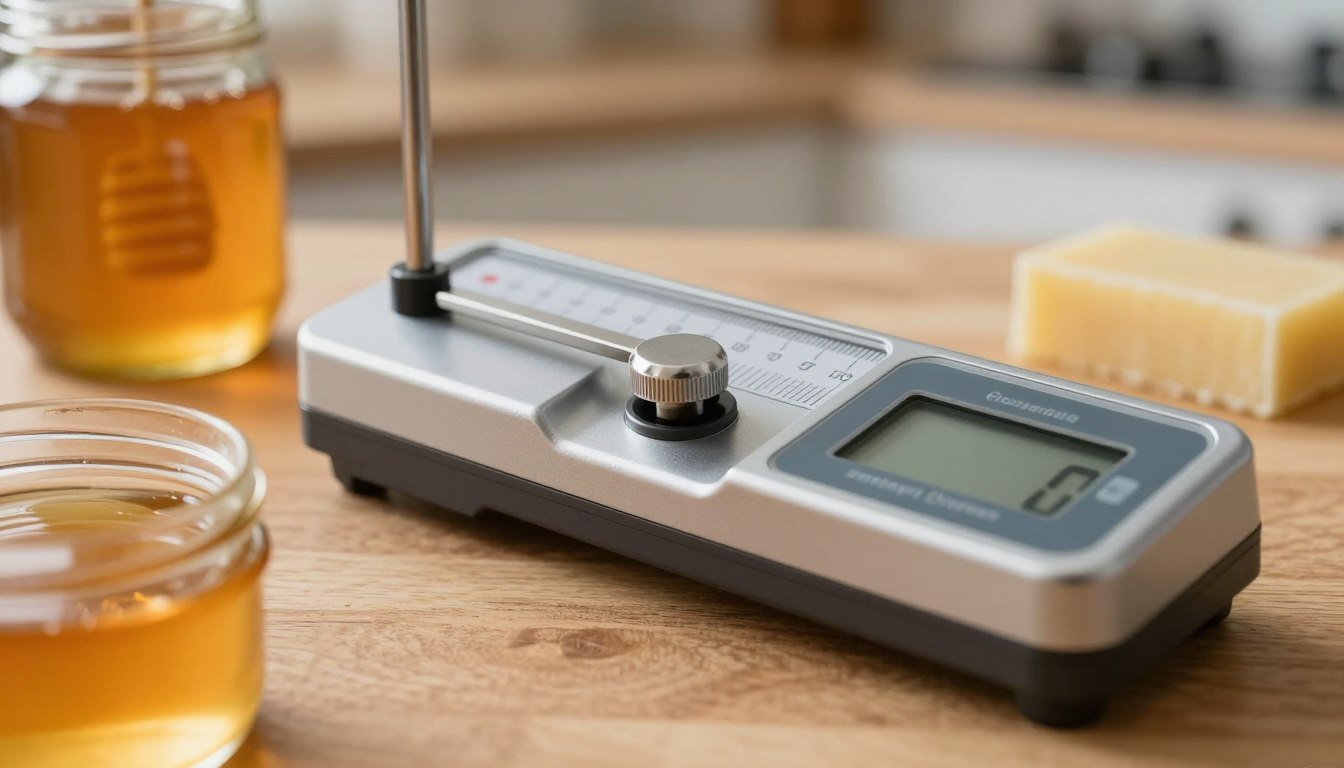
Today, a handheld refractometer is the standard tool to check moisture in honey. Proper calibration lets your device match industry targets and produce repeatable values across batches.
Follow a clear workflow: set the instrument, sample cleanly, and read in good light. Small habits—wiping the prism, averaging several drops, and recording dates—boost confidence in each result.
Need step-by-step guidance? See the manual instructions and practical moisture testing methods to refine your process.
Key Takeaways
- Accurate setup ensures readings align with market standards.
- Historical shake tests show how testing has evolved.
- Clean sampling and repeated reads improve reliability.
- Small maintenance steps prevent systematic drift.
- Use trusted guides to standardize your routine.
Understanding the Importance of Refractometer Calibration for Honey
Ensuring stable moisture is one of the most important tasks for today’s apiary managers. Modern rules require proof that jars meet set water-content limits to protect quality and safety.
Many handheld refractometers sold to hobbyists show about a 1% variance in moisture reading. That small gap can mean a rejected shipment or sticky, fermenting product.
Adjustment screws can shift during routine use. That is why regular checks and simple maintenance matter. Even precise lab units need periodic inspection, and common models are best treated as guidance tools.
- Record readings and note any drift.
- Compare against a trusted guide — see a practical use manual here: use and adjustment guide.
- Learn why regular checks matter at this FAQ page: why checks are important.
Choosing reliable gear and verifying readings helps you present a stable, high-quality product. For comparisons and recommended models, review expert picks: best devices for beekeepers.
Essential Tools and Preparation for Accurate Readings
Choosing the right instrument matters more than squeezing extra features into your kit. Not every field unit covers the typical water content range in jars. Aim for a model designed to read between 10% and 30% water content, such as the RHF-30/ATC, to avoid misreads and wasted tests.
Selecting the Right Instrument
Look for a tool that lists its water-scale range clearly and has good user support.
- Model fit: RHF-30/ATC suits most apiary needs.
- Documentation: check manufacturer instructions and expert posts like those on Dave Cushman’s site.
- Warnings: many units marketed to backyard beekeepers are actually meant for fruit juices, so verify specs before you buy.
Cleaning the Prism Surface
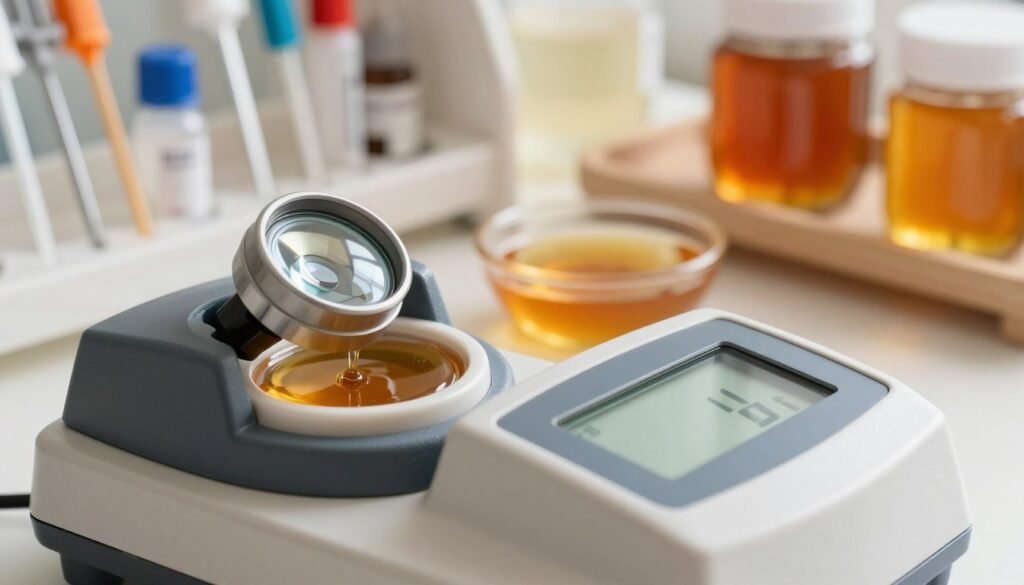
Always wipe the prism before each reading. Residue or stray oil from hands can shift values and obscure the line.
Thorne’s 2016 note: medicinal liquid paraffin should register at 24.5% on the water scale.
If a reading remains unclear, try a simple shake test on frames to check consistency before re-testing.
Learn more detailed procedures in these practical guides: professional guide, tool overview, and a simple testing FAQ at purity testing posts.
Step-by-Step Calibration Using Olive Oil
Use a single, steady drop of quality olive oil to set your instrument’s reference point. This method gives a stable baseline you can repeat before each batch.
Applying the Oil Sample
Place one drop of extra virgin olive oil on the prism. Use a clean pipette or the bottle tip. Wipe the prism first, then add the drop.
Adjusting the Calibration Screw
Look at the line on the scale. Turn the small screwdriver until that line falls on the 27% mark if you use Filippo Berio. Tom Moore found Sainsbury’s and Bertolli read about 27.2%.
Brian P. Dennis: “One drop of extra virgin olive oil will read between 71 and 72 on the Brix scale.”
Verifying the Moisture Content
After adjustment, test a real sample and confirm readings match expectations. Keep the oil bottle in a cool, stable spot to keep results consistent.
- Tip: If your lock nut shows 71.5 Brix with extra virgin oil, the water content reference is set correctly.
- Check: Repeat the oil test monthly or after any heavy use.
| Brand | Honey-scale (%) | Brix (approx.) |
|---|---|---|
| Filippo Berio (extra virgin) | 27.0 | 71.5 |
| Sainsbury’s (regular) | 27.2 | 71.7 |
| Bertolli (regular) | 27.2 | 71.7 |
For community tips use the community guide. Read about how drying and air affect readings at curing humidity effects.
Conclusion
Routine checks and simple care are the best defense against erratic moisture readings. Keep a short schedule of tests, clean the prism after each use, and follow practical instructions from experienced beekeepers. This habit helps you catch drift early and keeps jars within acceptable water content limits.
Using common kitchen oil as a reference gives a repeatable baseline across the season. Compare sample readings to trusted standards and community posts to spot anomalies before labels go on the jar.
Proper maintenance and precise adjustment extend equipment life and protect product quality. For more on device precision and long‑term use, see this detailed guide: precision and quality for beekeepers.
FAQ
What is the best way to prepare equipment before calibrating a refractometer?
Clean the prism with distilled water and soft lint-free tissue, then dry it. Ensure the instrument and any glass slides reach room temperature. Use a calibrated pipette or dropper to apply samples, and keep a spare bottle of distilled water and a small bottle of extra virgin olive oil on hand for checks.
Can I use olive oil to set the scale for moisture or Brix readings?
Yes. A light-tasting extra virgin olive oil with known properties provides a stable reference to adjust the instrument’s adjustment screw. Apply a small drop to the prism, close the cover plate if present, read the scale, and tweak until the instrument matches the known value.
How much sample should I place on the prism when measuring viscous liquids?
Use a single small drop that fully covers the prism without spilling over the edges. For thick syrups or viscous oils, warm the sample slightly in a glass container to reduce viscosity—do not heat above 35°C (95°F). Wipe the prism after each test to avoid cross-contamination.
How often should I check and adjust the instrument’s screw or zero point?
Check the zero point daily when in regular use, and after any impact, cleaning, or temperature change. Perform a full verification with distilled water and the olive oil reference at least weekly to ensure consistent moisture and content readings.
What steps show whether a reading reflects true water content in products like syrup or oil blends?
After applying the sample and allowing it to settle, take three consecutive readings and average them. If results vary by more than the instrument’s specified tolerance, clean the prism, reapply the sample, and retest. Confirm with a lab method if accuracy within 0.1% is required.
My readings drift when measuring mixed products. What causes this and how do I fix it?
Drift often stems from temperature differences, residue on the prism, or air bubbles in viscous samples. Match sample and instrument to the same temperature, clean the prism thoroughly, apply the sample slowly to avoid bubbles, and allow the instrument to stabilize before recording.
Is it safe to use the same instrument for both olive oil and water-based syrups?
Yes, with careful cleaning between samples. Use distilled water to flush and a soft cloth to dry the prism. For sticky syrups, follow with a mild solvent compatible with the instrument’s manual, then rinse with distilled water to avoid residue affecting future readings.
Which brands or models are recommended for reliable field measurements?
Look for well-known manufacturers like Atago, Mettler Toledo, or KERN that offer models designed for food and agricultural use. Choose models with automatic temperature compensation (ATC) and replaceable prisms for ease of maintenance in beekeeping and oil testing.
How do I verify accuracy if I suspect an incorrect moisture percentage?
First, run a distilled water check and an olive oil reference check. Take multiple repeated readings on the suspect sample. If doubt remains, send a sealed sample to an accredited lab for Karl Fischer titration or comparative analysis to confirm water content.
Can frequent handling or shaking of sample bottles affect readings?
Yes. Vigorous shaking can introduce air bubbles and change temperature. Gently invert samples to homogenize and let bubbles rise before testing. For layered or emulsified products, mix slowly and allow the sample to equilibrate before taking a measurement.