
Reviewed by Thomas B. · How we review
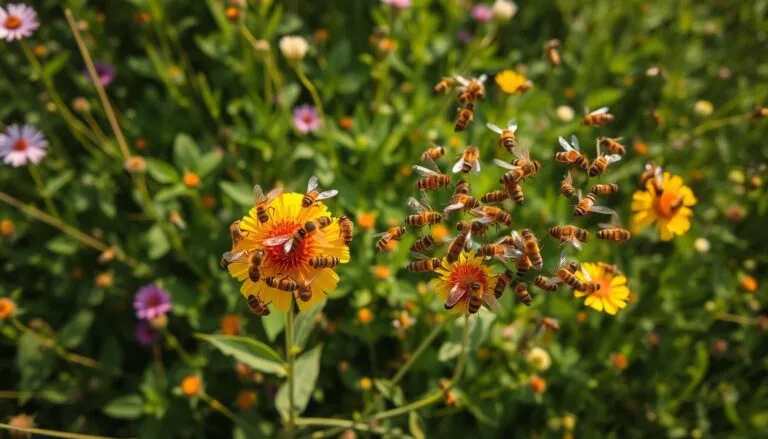
Industrial single-crop systems boost short-term yields but raise tough questions about long-term resilience, especially as the land devoted to a single crop species keeps expanding steadily across major farming regions worldwide. Recent University of Oregon research on sunflower monocultures shows mass-bloom fields can amplify parasite spread even when gut microbial diversity stays intact.
That matters because crop choices and land use shape regional pollinator needs. Global analyses find crop diversity rose over decades, yet pollinator-dependent acreage grew faster, creating new mismatches between food production and healthy ecosystems that beekeepers, land managers, and policymakers now have to navigate directly and often without clear precedent.
Practical steps such as hedgerows and native vegetation strips near fields cut infection spread and give wild and managed pollinators safer foraging options, often at relatively modest cost to the farmer once the initial planting is established. This section sets expectations: we’ll explain disease transmission at mass-bloom events, compare honey and wild pollinators, and connect pesticide and soil pressures to wider biodiversity and food security concerns.
Key Takeaways
- Single-crop systems can elevate disease transmission among pollinators despite otherwise stable, healthy-looking gut microbes.
- Edge plantings and hedgerows reduce infection risk and support broader biodiversity across the whole farm.
- Pollinator-dependent crops have expanded rapidly worldwide, raising the stakes for ecosystem health.
- Pesticide use and soil decline add further pressure to pollinator populations and long-term farm productivity.
- Understanding these links helps inform practical, field-scale mitigation strategies and broader policy choices alike.
Table of Contents
- What monoculture means for bees, farms, and biodiversity
- How monoculture farming harms bees
- From fields to food systems: ecosystem-wide effects and farmer realities
- Conclusion
- FAQ
What monoculture means for bees, farms, and biodiversity
Large single-crop fields reshape daily choices on the farm and ripple across nearby habitats, often in ways that are not immediately obvious until several years of the same rotation have already passed.
Operationally, single-crop systems simplify planting, pest schedules, and harvests, since machinery and labor can be scheduled around one predictable crop cycle instead of several overlapping ones. Growers gain real efficiency, but uniform fields shrink overall habitat complexity and reduce seasonal floral variety.
Globally, crop diversity rose about 20% from 1961–2016, yet pollinator-dependent crops more than doubled over the same period. That shift increases reliance on pollinators and raises the stakes for stable production and food security.
Regional patterns matter. Africa expanded agricultural area with less pollinator dependence, while Europe saw more pollinator-dependent crops on smaller land bases, concentrating pollinator demand into a much tighter geographic footprint than before. Local choices shape outcomes for pollinator populations and ecosystem services.
- Monoculture often means higher pesticide and fertilizer use, adding both financial and environmental costs over time.
- Farm-level practices can either support or harm pollinator populations and long-term crop yields, depending on how they’re managed.
- Honeybees help meet immediate pollination needs, but diverse wild pollinators strengthen overall system resilience.
In short: diversity in crops, habitats, and management underpins stronger ecosystems and steadier agricultural output, benefiting both the farmer’s bottom line and the surrounding wildlife that shares the same land.
How monoculture farming harms bees
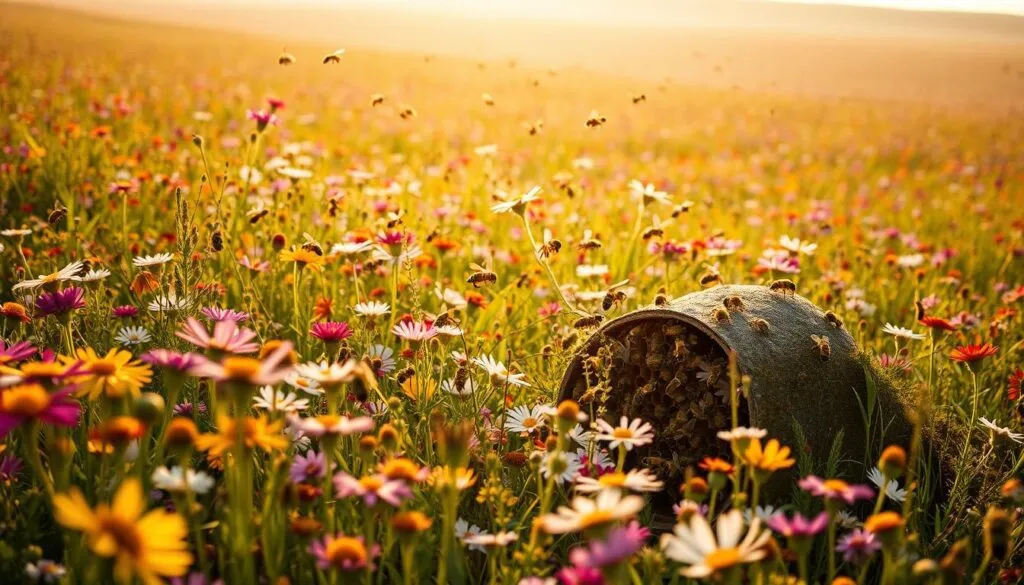
Uniform bloom timing concentrates foraging on the same floral patches, since there is often nowhere else nearby that offers a comparable amount of food. That raises direct contact among insects and boosts parasite and pathogen transmission via shared nectar and pollen.
Mass-blooming crops amplify spread
When many flowers open together, visitation rates climb sharply within a short window. More visits mean more transfers of spores, viruses, and mites between individuals that would otherwise rarely cross paths.
Field studies in California sunflowers show higher infection prevalence at mass-bloom events, even when gut communities remain varied, suggesting exposure frequency matters more than any single bee’s internal resilience.
Microbiomes stay diverse — infections still rise
Physiological filtering helps maintain gut microbial diversity, but it does not stop repeated exposure to pathogens carried in from every other visitor to the same bloom.
Frequent contacts overwhelm defenses and raise infection rates despite that internal diversity, since even a healthy gut microbiome can only do so much against constant re-exposure.
“Mass-bloom events can turn shared flowers into hotspots for disease transmission among the very insects that depend on them.”
Compounding stresses: pesticides, soil, and nutrients
High-input systems increase pesticide and fertilizer use to keep a single crop productive year after year. Those chemicals weaken immune responses and interact with pathogens to worsen health outcomes for any pollinator that visits the field.
Soil loss from simplified rotations also lowers floral quality and food reliability, stressing pollinator populations over time even in years when bloom timing itself looks normal.
| Factor | Effect on pollinator health | Evidence | Mitigation |
|---|---|---|---|
| Mass blooms | Higher contact rates and faster pathogen spread among foragers | California sunflower field research | Plant strips to dilute visits |
| Pesticide use | Immune suppression, sublethal toxicity, impaired navigation | Economic and health impact estimates in U.S. | Reduce application, adopt IPM |
| Soil degradation | Lower floral resource quality and reduced nectar output | Links to erosion and simplified rotations | Cover crops, diverse rotations |
| Pollinator demand | Supply strain on managed hives and wild species alike | Pollinator-dependent acreage rising faster than crop diversity | Hedgerows, diverse perennials |
Honeybees forage socially and can amplify within-hive spread, since a single infected forager can quickly pass pathogens on to the rest of the whole colony. Wild and solitary species still face shared risks when crowded at blooms, so both groups need landscape-level solutions rather than hive-by-hive fixes alone.
For practical guidance and a broader look at the underlying research, see a concise summary at this overview of single-crop impacts.
From fields to food systems: ecosystem-wide effects and farmer realities
Landscape simplification for commodity crops strips away the refuge areas that once buffered pollinator losses. This conversion reduces nesting sites and seasonal forage across large areas, leaving fewer places for wild species and managed hives to rest, reproduce, and recover between foraging seasons.
Regional hotspots include rapid soy expansion in Brazil, Argentina, Paraguay, and Bolivia and palm oil growth in Malaysia and Indonesia. Those shifts displaced forests and meadows over just a few decades, shrinking habitat and raising disease and resource stress for native pollinator species.
Local impacts and farmer choices
In California’s Central Valley, simplified land use magnified contact during bloom and created longer off-bloom gaps when almost nothing else was flowering. Where farmers added perennial strips and hedgerows, parasite effects fell and forage improved noticeably within just a season or two.
- Environmental costs: higher pesticides and soil erosion undermine services that support production and biodiversity, costs that rarely show up on the farm’s own balance sheet.
- Food-system risk: lower pollination can cut yields and affect crop quality, hitting farmer income and supply chains that depend on a predictable harvest.
- Practical options: targeted edge plantings and diversified field margins reconnect fragmented areas and reduce disease spread during peak bloom without taking much productive land out of rotation.
For further guidance on on-farm conservation that supports both honeybees and wild pollinator species, see a short resource on the importance of honeybee conservation.
Conclusion
Evidence shows that large, synchronized blooms raise parasite prevalence in pollinating insects even when gut microbial diversity stays intact, a pattern that holds across multiple independent field studies.
Translate research into action: prioritize field-edge practices such as native hedgerows, perennial strips, and staggered flowers to dilute contacts and stabilize forage across the entire growing season, not just during peak bloom.
Adopt diversified crop rotations and multi-species cover plants. Reduce pesticide use with integrated pest management and time applications carefully to avoid peak foraging hours. Improve soil health to support both healthier plants and more resilient long-term production.
For honey producers and growers: expanding habitat and lengthening bloom windows helps both managed hives and wild species alike. These practices cut disease pressure, boost pollination stability, and protect farmer livelihoods along with the broader environment they depend on.
FAQ
What is meant by large-scale single-crop production and why does it matter for pollinators?
Large-scale single-crop production refers to extensive areas planted with one species for multiple seasons, often the same crop year after year with little rotation. This pattern reduces floral variety and shortens the season of nectar and pollen availability. Pollinators such as honeybees and wild bee species lose reliable food sources and nesting habitat, which lowers colony resilience and biodiversity across the landscape.
How do mass-blooming fields affect disease and parasite dynamics in hives and wild pollinators?
When many hectares bloom simultaneously, large numbers of insects concentrate on the same floral resources within a very short window. That close contact speeds the transfer of pathogens and parasites like Nosema and Varroa among honeybees and can increase pathogen spillover to bumblebees and solitary bees. The result is higher infection rates despite local abundance of forage during the bloom itself.
Why can bee gut communities remain diverse even as infections increase?
Bee gut microbiomes can retain taxonomic diversity because microbes disperse across flowers and nests as bees move between colonies and forage sites. Yet toxic residues, poor nutrition from single-source pollen, and immune suppression can allow opportunistic pathogens to proliferate regardless. In short, diversity exists but functional balance shifts, making bees more susceptible to disease even while their gut still looks healthy on paper.
What role do pesticides and fertilizers play in pollinator health on these landscapes?
Insecticides, fungicides, and systemic chemicals reduce survival, impair navigation, and weaken immune responses, sometimes at sublethal doses that never actually kill a bee outright. Synthetic fertilizers alter plant chemistry and soil biology, changing nectar and pollen quality in ways bees can detect. Combined with repeated soil disturbance, these factors compound stress on pollinator populations and hive productivity over multiple seasons.
How does limited crop variety increase demand on pollinator services?
As acreage of pollinator-dependent crops grows, more insect pollination is needed during brief bloom windows, sometimes lasting only a couple of weeks per site. Because fields offer little else the rest of the season, beekeepers move hives frequently across long distances to meet demand. This practice stresses colonies and raises disease transmission risks while native pollinators, which cannot simply relocate, face resource gaps for the rest of the year.
Do managed honeybees and wild bees respond the same way to uniform agricultural landscapes?
No. Honeybees live in large, mobile colonies and are often transported by beekeepers over long distances, which can concentrate pathogens and stress within a single hive. Wild bees include solitary and social species with varied foraging ranges and nesting needs; many decline rapidly when nesting sites and diverse flowers disappear, since they cannot be trucked to better habitat the way managed hives can. Both groups share increased exposure to chemicals and reduced nutrition in a simplified landscape.
How does habitat loss from crop expansion affect overall pollinator numbers and ecosystem services?
Converting meadows, hedgerows, and mixed farms into extensive cropland eliminates nesting sites and floral corridors that once connected otherwise isolated patches of habitat. Populations shrink, reducing pollination of wild plants and crops that rely on native insects. That loss cascades through food webs and lowers resilience of agroecosystems to pests, disease outbreaks, and climate extremes alike.
Which regions show notable environmental costs from large-scale soy and oil palm cultivation?
Tropical regions in Southeast Asia, parts of South America, and some areas of West Africa have seen rapid oil palm and soybean expansion over the past few decades. These conversions drive deforestation, fragment remaining habitats, and replace diverse floras with single-species stands, intensifying pressures on pollinators and on local communities that depend directly on ecosystem services for their livelihoods.
What practical steps can farmers and land managers take to support pollinator health in intensive agricultural areas?
Strategies include planting flower strips and cover crops, restoring hedgerows along field margins, reducing pesticide use through integrated pest management, providing nesting substrates for solitary bees, and diversifying crop rotations wherever the operation allows. Collaborative measures—such as coordinated bloom calendars between neighboring farms and shared habitat corridors—help both commercial beekeepers and wild pollinator communities thrive side by side.