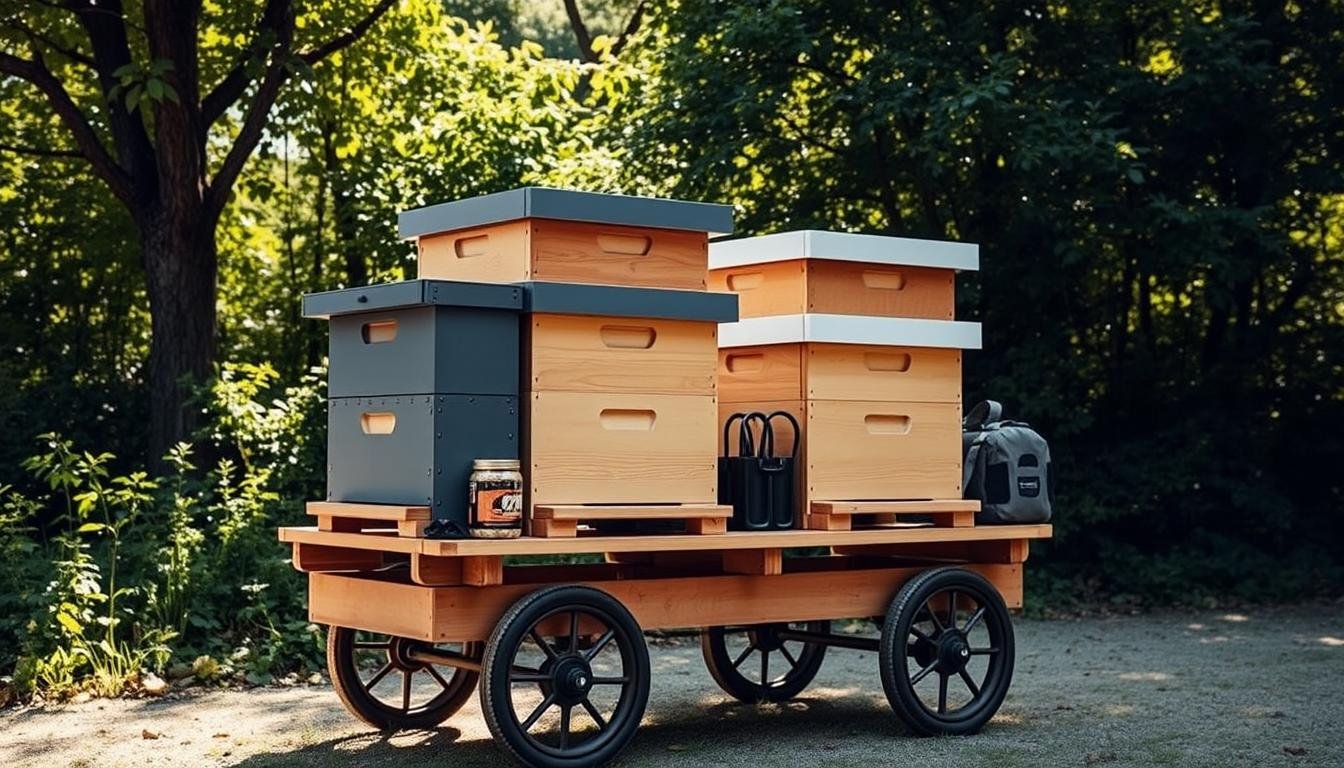
Start smart: this short guide gives new beekeepers a clear roadmap for choosing and moving a mobile hive system with confidence.
We cover practical features that matter in the field: insulated bodies (R‑value specs), active ventilation, secure locks and handles, and built‑in accessories that cut extra buys. Brands like Apimaye USA highlight double-layer insulation and ducted vents. Flow Hive US offers Flow-style options and seasonal deals. BM Dooney Farms demonstrates sealed, viewable colonies for safe observation and public demos.
Expect clear advice on selecting a hive type, planning transport, and handling pests and feeding while on the move. You’ll learn which products simplify first-year learning and which features improve bee survival during relocation.
This introduction previews a product-focused, user-friendly path from basics to comparisons and real-world feedback.
Key Takeaways
- Choose insulated, ventilated designs to protect colonies during transport.
- Prioritize integrated accessories to reduce extra purchases and setup time.
- Observation windows and sealed demos boost safety and learning.
- Secure latches, division boards, and handles ease short moves.
- Compare brands, seasonal offers, and sustainability when buying.
Table of Contents
- Modern, portable beehives for on-the-go beekeepers in the United States
- Why travel-friendly beekeeping (portable hives) matters for beginners
- Travel-friendly beekeeping (portable hives): product options at a glance
- Key features that make a hive portable and beginner-friendly
- Compare portable hive technologies and build materials
- Use cases: education, small apiaries, and seasonal travel
- Customer reviews and real-world performance
- Promotions, availability, and buying tips for the present season
- Conclusion
- FAQ
Modern, portable beehives for on-the-go beekeepers in the United States
Today’s on-the-go hive systems focus on modularity, ergonomic handling, and easy frame compatibility. Designers aim to make setup, transport, and inspections faster for busy users.
- What “modern” means: modular bodies, ergonomic handles, secure latches, and standard frames for easy parts sourcing.
- Climate control technology: insulated beehives with engineered ventilation keep internal conditions stable during travel across regions.
- Accessory compatibility: choose systems that accept feeders, pest trays, and entrance reducers so routine care continues on the road.
- Flow-style harvesting: Flow systems cut heavy lifting and frequent openings, making honey collection cleaner and quicker for mobile use.
- Observation panels: sealed windows speed inspections without full teardown—ideal for short stops and demos.
- Compact formats: NUC and Fusion options work when transport space is limited, yet scale up to full-size setups.
U.S. buyers benefit from local support and deals: Apimaye USA lists Ergo 10-Frame sets, 7-Frame NUCs, and Fusion boxes with R‑value 6.93 and active vents. Flow Hive US offers comparison tools and seasonal Black Friday offers. BM Dooney Farms shows how sealed observation boxes work well for schools and public demos.
Why travel-friendly beekeeping (portable hives) matters for beginners
A compact, observation-ready setup changes how new keepers learn and manage bees on a tight schedule.
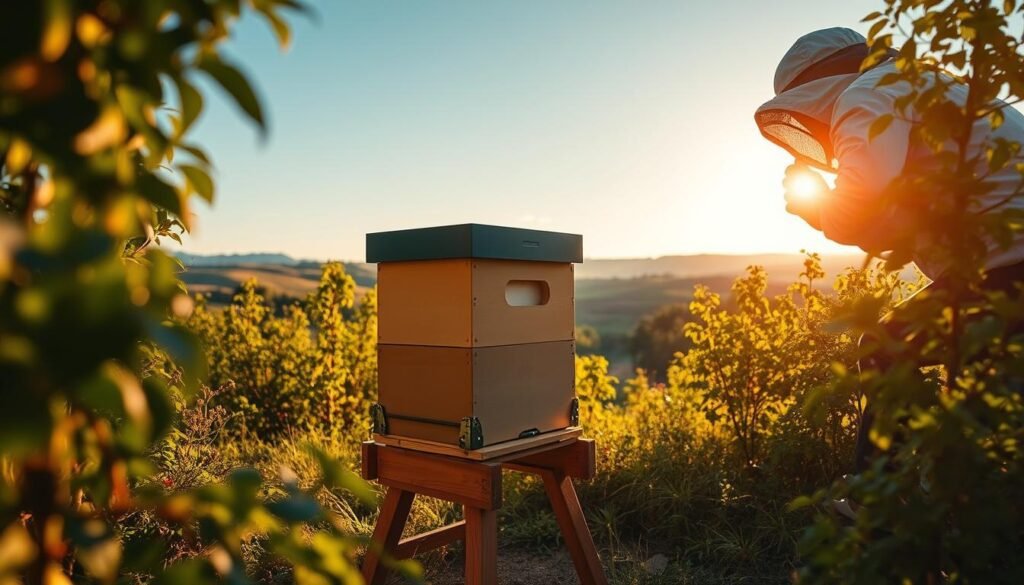
Travel-ready gear helps a beginner keep a single colony healthy across home, community gardens, or classrooms. Targeted inspections take less time and reduce stress for you and the colony.
Quick routines—feed when needed, check ventilation, and scan frames through a window—let you complete essential checks in minutes. Start with one manageable hive and add equipment as skills grow.
Observation-first learning without sting risk
Sealed box designs with plexiglass windows let students and families study brood patterns and flight activity without opening the colony. BM Dooney Farms’ Portable-Live-Hive is a practical example of this approach.
Benefits at a glance:
- See queen activity and food stores quickly.
- Lower sting risk for novices and children.
- Use photos through the window and short logs to track progress.
Plan demos in warmer months when bees are active and transport is easier. Small, consistent wins build confidence and encourage regular care—an efficient way to learn beekeeping safely and with less time commitment.
Travel-friendly beekeeping (portable hives): product options at a glance
Here’s a concise view of designs that balance climate control, visibility, and ease of lift.
Insulated thermo systems for climate control
Insulated thermo models stabilize internal temperatures during transport. Apimaye’s double-layer design with an R value of 6.93 and active ventilation is a strong benchmark.
Key features: removable bottom tray for Varroa monitoring, top feeder, entrance reducer, and integrated queen excluder.
Observation boxes with plexiglass windows
Sealed observation boxes mirror BM Dooney Farms’ design. They let students and guests watch bees safely without opening the colony.
Flow-style harvesting systems
Flow-style options simplify honey extraction. Fewer full inspections mean cleaner, faster harvests—handy for mobile routines and demos.
Compact NUC and Fusion formats
7-frame NUCs and Fusion boxes reduce weight and fit standard frames. These formats make scaling from a starter colony to full boxes simpler over a season.
| Type | Mobility | Key benefit | Best use |
|---|---|---|---|
| Thermo (Apimaye) | High | R‑value 6.93, active vents, pest trays | Regional moves, mixed climates |
| Observation box (BM Dooney) | Medium | Sealed plexiglass viewing | Education, demos |
| Flow-style | Medium | Tool-free honey extraction | Frequent harvests, demos |
| 7-frame NUC / Fusion | Very High | Compact, standard frame fit | Short trips, starter colonies |
Tip: Shortlist two or three models based on climate, transport frequency, and desired observation level before buying.
Key features that make a hive portable and beginner-friendly
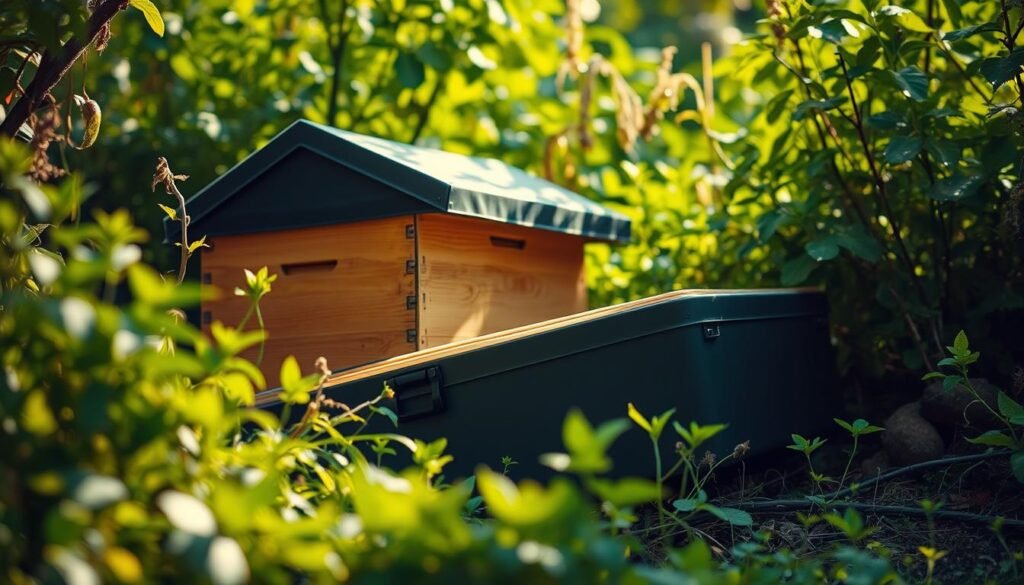
A well-designed mobile hive blends insulation, airflow, and secure hardware to reduce stress on a moving colony.
Thermal protection and airflow
High insulation (R value 6.93) cuts thermal shock during transport and seasonal swings. That stability helps steady brood patterns and keeps bees calmer.
Active ventilation moves air from the screened bottom through internal ducts to top louvres. This pathway limits moisture, reducing mold and yeast risks.
Built-in accessories that matter
Integrated feeders, pollen traps, and a removable bottom tray simplify care and cut spills while moving. The sticky board in the bottom tray traps Varroa and small hive beetles for easy monitoring.
Secure handling and colony management
Lock/latch handles keep boxes aligned and frames steady during lifts. Queen excluders and division boards let you compartmentalize a colony to protect the queen and ease transport.
Materials and compatibility
Durable plastics offer consistent insulation and easy cleaning. Wood brings repairability and familiar handling. Check frame compatibility so you can expand without replacing core parts.
| Feature | Benefit | Best for |
|---|---|---|
| R‑value 6.93 insulation | Stable temperature, less brood stress | Regional moves, mixed climates |
| Active ventilation (bottom → louvres) | Moisture control, lower mold risk | Humid or variable routes |
| Removable bottom tray + sticky board | Pest monitoring and easier cleaning | Beginners tracking Varroa |
| Lock/latch handles, entrance reducer | Secure transport, pest protection | Frequent lifting and relocation |
For help choosing a matching option, see a short guide on which beehive meets your needs.
Compare portable hive technologies and build materials
Choosing the right build affects weight, humidity control, and how you run quick inspections. Match materials and tech to your goals—education, production, or frequent moves.
Insulated vs wooden beehives: weight, moisture, and temperature control
Insulated composite bodies (Apimaye’s double-layer, R value 6.93) deliver stable internal temps during travel. Active ventilation and a screened bottom board cut humidity and lower mold risk.
Wood stays common because it is repairable and frame-compatible with legacy parts. It usually needs extra sealing and straps for secure transport and can offer lower insulation.
Cost trade-off: insulated designs often cost more up front but reduce accessory buys and colony stress over seasons.
Observation frames and boxes for education, demos, and reviews
Sealed plexiglass observation boxes, like BM Dooney Farms’ designs, let audiences see bees without full openings. That reduces intrusive inspections and speeds roadside checks.
“Observation components paired with clear logs turn short demos into useful data for reviews and classroom use.”
- Frames compatibility: ensure 7‑frame NUCs and Fusion formats match standard frame sizes to keep upgrade paths open.
- Maintenance: plastics resist rot and clean easily; wood allows customization and on-site repair.
- Handling: insulated boxes often have molded grips; wooden boxes may need straps for safe transport.
| Feature | Insulated / Composite | Wood |
|---|---|---|
| Temperature control | High (R‑value + vents) | Moderate |
| Moisture management | Screened bottom, active venting | Depends on sealing |
| Repair & cleaning | Easy clean, durable | Repairable, needs maintenance |
For model comparisons and buying tips, see a short guide to the best portable beehives.
Use cases: education, small apiaries, and seasonal travel
Classroom and community demos work best with a sealed observation box that lets people see brood, foragers, and sometimes the queen without opening the colony.
BM Dooney Farms’ Portable‑Live‑Hive is built for sting‑free viewing and short public demos. A simple tasting station with 0.5 oz honey links what visitors see to local nectar sources.
Portable live hive presentations with sealed colonies
Use a clear agenda and brief safety talk. Start with a 5‑minute window observation, then show close‑up photos or logs. Offer small honey samples and keep time tight to keep bees calm.
Painting box, frame setup, and quick inspections
At family events, invite attendees to decorate the outer box with non‑toxic washable crayons for easy cleanup and local branding.
For small apiaries, begin with one compact hive and add a second for resource balancing. Integrated feeders and removable trays cut routine work and save time.
- Seasonal travel checklist: check latches, set ventilation, reduce the entrance, and secure frames before moving.
- 30‑minute beginner inspection: visual checks through the window first; open only if needed.
- Log and iterate: document setup, timing, and audience flow to refine future events.
“Well-planned, observation-ready boxes and integrated accessories turn outreach into repeatable, professional events.”
Practical tip: set a simple travel policy—limits on distance and modest fees for trips over 60 miles—to cover time and transport costs when offering demos off-site.
Customer reviews and real-world performance
Hands-on reviews from U.S. buyers highlight practical wins for new keepers. Many comment that integrated systems simplify first‑season setup and cut routine tasks, saving precious time and reducing stress for a novice.
Beginner-friendly setup that saves time and reduces stress
Customer feedback praises clear assembly steps, built-in feeders, and secure latches. These features let a new beekeeper finish checks faster and with fewer invasive openings.
Performance in extreme weather and value over time
Field reports note winter survival in Michigan and Minnesota, and cooler summer performance in Texas. Users say efficient temperature and moisture control helped colonies forage better and, in some cases, produced more honey.
Value comments repeat a common theme: higher upfront cost often pays off with lower maintenance and better survival rates.
Quality, durability, and beehive safety feedback
Reviews stress tight seals, sturdy latches, and robust bodies that resist bumps and animal encounters. Safety features like controlled airflow, pest trays, and secure entrances earn specific praise.
“Observation setups proved reliable in school demos and public events—safe for viewers and simple for handlers.”
Tip: read reviews from climates like yours and pair testimonials with personal notes and photos over a season to confirm fit for your management style.
Promotions, availability, and buying tips for the present season
Seasonal promos now shape the best moment to buy a complete kit or add-on parts. Major sellers run limited windows with bundled accessories that boost overall value.
Black Friday savings and bundle value
Time purchases around Black Friday to capture bundled extras and direct discounts. Flow Hive US and Apimaye USA advertise special offers and comparison tools that add hundreds in savings.
Tip: make a short checklist of target models, required protective gear, and spare parts before the sale.
Choosing frames, supers, and accessories that fit your workflow
Shortlist products that include feeders, pest trays, and entrance reducers by default. That avoids piecemeal buys and saves long-term costs.
Match frames and supers to your chosen platform so you can scale from a NUC to a full box without replacing parts. Start with one or two setups and keep spare frames and a nuc box for splits or transport contingencies.
| Decision point | What to check | Why it matters |
|---|---|---|
| Bundle contents | Feeders, trays, reducers | Reduces follow-up purchases, adds immediate value |
| Frame compatibility | 7-frame vs 10-frame fit | Ensures smooth scaling and spare parts use |
| Stock & shipping | Regional availability, lead time | Align delivery with spring setup or demo dates |
| Warranty & parts | Replacement frames, latches | Makes long-term repair and maintenance easier |
Final way to assess value: weigh insulation and ventilation against price, and prefer systems that include core hardware. Check availability for BM Dooney Farms’ educational dates (June–September) and budget for travel fees beyond 60 miles when booking outreach.
Conclusion
Conclusion: Choose models that pair proven technology—insulation, active ventilation, and secure latching—with easy handling to protect a colony during moves. Apimaye’s Thermo design, Flow Hive US comparison tools, and BM Dooney Farms’ observation boxes show how features translate to real use.
Trust customer reviews and hands‑on feedback when you compare options. Observation windows and correct frames speed learning and cut disturbance to bees. An integrated kit reduces setup mistakes and lets you focus on good work from day one.
Stable internal conditions help produce better honey and cleaner inspections across a season. Start small, document each trip, and check seasonal availability before you buy. Compare shortlisted models, confirm parts and frame compatibility, and plan your first mobile setup before the next major nectar flow.
FAQ
What exactly is a travel-friendly beekeeping (portable hives) system?
A travel-friendly beekeeping system uses lightweight, secure hive boxes and modular frames designed for easy transport. These units often include handles, latches, integrated ventilation, and insulation to stabilize temperature and humidity during moves. Popular options on the market include insulated poly hives, observation boxes with plexiglass panels, and NUC-style nucs built for short-distance transport.
Are portable hives safe for the colony during transport?
Yes, when you follow best practices. Use entrance reducers, secure lids and latch systems, and provide ventilation to prevent heat buildup. Short, calm trips are best. For longer hauls, ensure adequate insulation and monitoring; products with R-value ratings and active vents reduce stress on the bees and lower mortality risk.
Can beginners manage colonies with portable hives while traveling?
Absolutely. Portable designs often prioritize observation and simplified inspections, making them suitable for new keepers. Look for hives with observation frames, clear inspection windows, and integrated feeders. These features reduce handling time and the chance of accidental queen loss during travel.
What materials are best: wood boxes or durable plastics?
Both have strengths. Cedar or pine wooden boxes offer natural insulation and breathability, while high-density polyethylene (HDPE) or polypropylene hives resist moisture and rot and require less maintenance. Choose wood for aesthetics and traditional performance, plastic for lightweight durability and low upkeep.
How do observation box hives work for education and demos?
Observation hives use clear panels or frames so viewers can watch brood patterns, comb building, and bee behavior without opening the colony. For public demos, pick sealed observation units with secure locking panels. They provide safe, low-stress viewing while protecting bees from drafts and contaminants.
What accessories are essential for transporting a hive?
Must-haves include secure latches or locks, handles for lifting, entrance reducers, breathable mesh or vents, and division boards to keep frames steady. Carrying straps or insulated transport crates help stabilize the colony during moves. A basic toolkit and a spare frame or feeder are also handy.
How do insulated thermo hives help during travel and extreme weather?
Insulated thermo hives maintain internal temperatures and reduce thermal shock when relocating or during cold snaps. High R-value panels and reflective barriers minimize heat loss or gain. Combined with active ventilation, they protect brood viability and reduce stress from rapid temperature swings.
Are flow-style honey systems compatible with mobile setups?
Some flow-style systems work in mobile setups, but they require careful installation to prevent leakage and to protect bees during movement. Many mobile keepers prefer removable supers with standard frames for secure transport and reserve flow systems for stationary hives or post-trip extraction.
What legal or local considerations apply when transporting bees across state lines?
Regulations vary by state. Check USDA and state agriculture department rules for permits, disease inspections (e.g., American foulbrood), and required certifications. Some states require inspection certificates or restrict bee movement during certain seasons to prevent pest spread.
How do compact NUCs and fusion hives differ for travel use?
Compact NUCs are small, standardized nucleus colonies designed for short-term transport and quick hive startups. Fusion hives combine features—like modular frames and reinforced boxes—to balance colony stability and portability. NUCs work well for temporary moves; fusion hives suit frequent transport with more robust hardware.
What inspection routine should I follow after moving a hive?
Inspect within 24–48 hours to check queen presence, brood pattern, food stores, and ventilation. Look for signs of stress, queenlessness, or disease. Keep inspections short and avoid heavy manipulation until the colony regains normal activity levels.
How do I choose frames, supers, and accessories for a portable workflow?
Prioritize lightweight, standardized frames and shallow or medium supers for easier handling. Choose frames with reinforced top bars or plastic foundations to reduce breakage. Bundles that include feeders, bottom trays, and entrance reducers speed setup and match the mobility workflow.
Where can I find reliable product reviews and customer feedback?
Look to established retailers like Mann Lake, Brushy Mountain, and Betterbee, plus community forums such as Beesource and the American Beekeeping Federation resources. Reviews that mention setup time, durability, and performance in extreme weather provide real-world insight.
Do portable hive systems affect honey yield or colony health long term?
Properly managed mobile systems do not inherently reduce yield. Success depends on insulation, ventilation, gentle handling, and timing moves to avoid disrupting nectar flows. Many hobbyist keepers report stable productivity when they use quality materials and follow good transport practices.