
This guide helps beekeepers plan accurate follow-up testing to judge whether a chosen treatment worked.
Accurate mite counts depend on sampling about 300 bees—roughly a half cup—from brood areas while avoiding the queen. Using an alcohol wash yields precise results, but it sacrifices the sampled bees.
Timing matters. Proper intervals let you read true infestation levels and support integrated pest management choices that protect the colony and queen. Record each count and action for clear trend analysis.
Practical techniques, like the alcohol wash and sticky-board checks, are explained in linked resources for field use. Learn sampling steps in the alcohol wash guide and see seasonal scheduling for proactive management.
Follow this concise guide and you will balance colony stress with timely decisions that keep hives healthy and productive.
Key Takeaways
- Sample ~300 bees (½ cup) from brood frames and avoid the queen.
- Alcohol wash gives reliable mite counts but kills sampled bees; plan accordingly.
- Keep clear records of counts and each treatment for trend-based decisions.
- Use seasonal schedules for proactive management: see the proactive schedule.
- Consult an alcohol wash procedure for proper sample handling and equipment.
proactive schedule alcohol wash procedure
The Importance of Timing in Varroa Management
Seasonal rhythms of bees set the pace for every effective pest control action. The biological link between honey bee reproduction and mite growth makes scheduling essential.
Brood peaks drive mite population rises. When brood rearing is high, mites reproduce inside cells and numbers climb quickly.
The Biological Link Between Bees and Mites
Mites favor nurse bees and brood cells. This behavior raises risk for the queen and the hive’s core workers.
“Understanding these cycles lets beekeepers act before infestations threaten the colony.”
Seasonal Thresholds
The Honey Bee Health Coalition sets action limits at 2% in spring and summer and 1% in fall. Lower fall thresholds protect winter bees that must survive until spring.
Late summer often shows spikes as brood declines and mites move onto adults. Regular monitoring supports integrated pest management and guides the use of oxalic acid or other approved options.
| Season | Action Threshold | Why it matters | Recommended focus |
|---|---|---|---|
| Spring | 2% | Brood expands; mites can rise with colony growth | Monitor and hold queen health |
| Summer | 2% | Peak brood activity; population can spike | Target control during brood peaks |
| Fall | 1% | Preparing winter bees; viruses spread easily | Lower thresholds, tighten control |
For comparisons of product choices, see formic pro vs oxalic acid for context on methods and timing.
Understanding How Soon to Retest After Varroa Treatment
A reliable follow-up count depends on waiting long enough for the colony to settle. Wait at least 14 days before running a post-check. This interval allows new nurse bees to emerge and gives the hive time to recover from inspection stress.
Testing earlier often produces misleading mite counts because disturbed bees and shifting populations skew results. Use an alcohol wash or another validated method for both pre- and post-counts so you can calculate true efficacy.
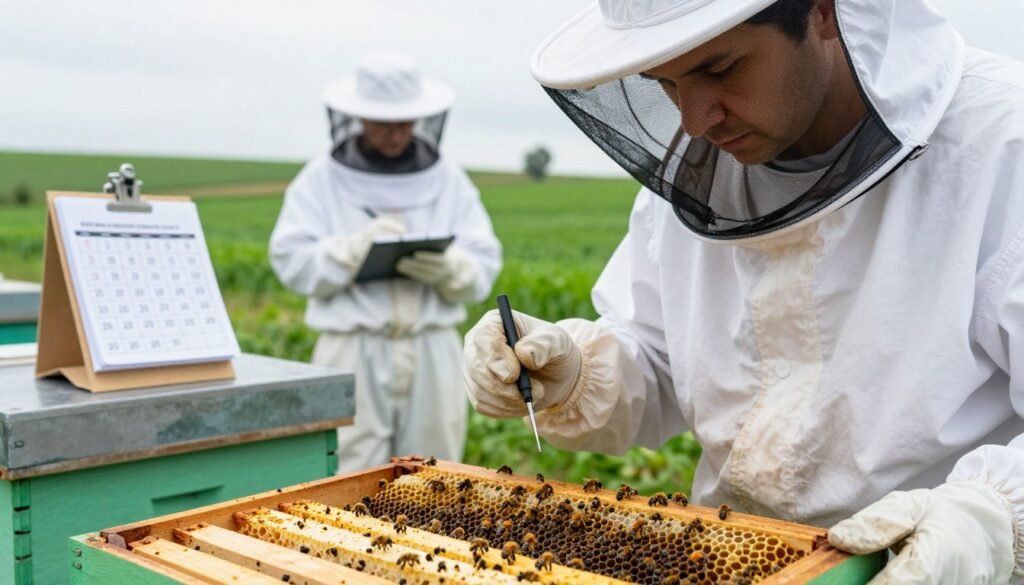
During active season, monitor every 3–4 weeks. That rhythm helps track population changes and confirms whether a product like oxalic acid reduced mites below seasonal thresholds.
- Key practice: always record a pre-count and a post-count for each intervention.
- Give the hive the required days before another check; patience yields accurate mite counts.
Preparing Your Colony for Post-Treatment Monitoring
A calm hive before and during follow-up checks gives the most reliable data.
Minimizing colony stress starts with limiting inspections. Bees need about three days to return to normal after an in-hive check. Waiting helps brood and the queen recover and lowers the risk of damage when you apply a treatment.
Open the hive only when necessary. Locate the queen before you collect your sample of roughly 300 bees so she is not included in an alcohol wash or roll. This protects her and keeps the brood nest intact.
Excessive disturbance raises the chance colonies will abscond. A calm, methodical routine reduces that risk and improves long-term management outcomes.
- Plan monitoring rounds with recovery days in mind.
- Limit handling and keep inspections brief.
- Record each count and any product used for trend analysis.
For practical protocols and sampling tips, consult the Formic Pro guide and the post-count guidance for clear steps on alcohol wash monitoring.
Selecting the Right Testing Method for Your Apiary
Choose a test that matches your hive size and monitoring goals for clearer results.
Alcohol wash remains the gold standard for accurate mite counts. It gives reliable numbers for management decisions, though sampled nurse bees are sacrificed. Use this method when precision matters, such as pre- and post-intervention counts.
The sugar roll is a gentler option for small colonies. It preserves sampled bees and still produces useful data when handled consistently. For new beekeepers, it is an accessible way to track population trends without heavy loss.
Always sample within the brood nest. Frames with open brood and older larvae host the highest phoretic mite levels and yield representative counts. Locate the queen and avoid including her in the sample.
Complement tests with non-invasive tools. A Langstroth screened bottom board and monitoring tray give a 24-hour drop count that helps track year-round changes.
Field notes for product choices
Formic acid products such as Formic Pro require at least six frames of brood before use. HopGuard3 works when daytime temps reach about 50°F. Match product options to season, colony size, and your monitoring results for sound varroa management.
Interpreting Your Mite Count Results
A clear read of your post-count numbers is the single best signal of control or failure in a hive.
Compare pre- and post-counts to calculate true efficacy. EPA labels expect about a 90% drop when a treatment is applied correctly. Use the same method for both samples so your math is valid.
If your post-count stays above 2%, the result suggests failure or reinfestation. Check application steps, consider resistance, and inspect nearby colonies for sources.
“Good records turn one-off checks into trend lines that protect colony health.”
- Use an alcohol wash or sugar roll for accurate numbers when precision matters; learn to read an alcohol wash mite count.
- A three-day sticky board drop can flag heavy populations in spring before obvious symptoms appear.
- Keep clear counts and notes — they guide follow-up choices and support inspections.
Effective testing and methods help interpret results and protect your bees from viruses carried by mites.
Diagnosing Treatment Efficacy and Potential Failures
Poor control outcomes signal either application error or emerging resistance in your apiary. A short, orderly review will point you toward the correct response and reduce long-term risk.

Start with basic checks: confirm correct dosing, label-listed temperature windows, and that the queen is still laying. The first three days after product start are most critical for proper action.
Identifying Application Errors
Incorrect placement, wrong dose, or missed exposure windows often explain low efficacy. If your post-count is under 80% effective, inspect those steps first.
Never repeat the same product class within 14 days; doing so raises resistance risk and wastes effort.
Recognizing Resistance Patterns
When efficacy declines across multiple colonies or seasons, suspect resistance. Switching product classes can restore control and slow further loss of effectiveness.
“A pattern of falling efficacy is the single best signal that resistance is developing.”
When to Switch Product Classes
Move from synthetic options like amitraz to organic acid approaches when regional data support it. For example, oxalic vaporization may be repeated if the initial series was incomplete, while a dribble application is labeled for a single use.
For regulatory details and safety information, consult the product dossier.
- Diagnose; then act. Verify records and counts before changing strategy.
- Consider local weather and hive strength when choosing treatment options.
- Protect long-term control by alternating product classes and monitoring counts regularly.
Strategies for Managing Reinfestation Risks
Drifting bees and robbing events are the most common routes for new mite pressure in healthy apiaries.
Identify the source. If your post-count jumps after a successful application, suspect incoming mites from a nearby collapsing colony or aggressive robbing.
Treating only your hive rarely solves the problem. Address infected neighbors or remove collapse sites to stop the flow of mites and preserve your colony.
- Watch for robbing behavior and reduce entrances when risk is high.
- Coordinate schedules with nearby beekeepers so treatments and counts align across the apiary.
- Keep precise records of counts and treatments; this separates reinfestation from failed control.
Maintain steady control. A consistent treatment rhythm lowers regional mite pressure even under heavy reinfestation risk.
“Proactive monitoring and community coordination are the best defenses against mite spread.”
Best Practices for Long-Term Integrated Pest Management
A clear, consistent log is the backbone of long-term mite control in any apiary. Keep brief, dated entries for every count and action so trends are obvious at a glance.

Record what matters: product name, EPA number, dates, method used (alcohol or sugar), and each mite count. These items meet state inspection needs and help you compare year-to-year performance.
Maintaining Accurate Beekeeping Records
Use a digital tool like VarroaVault to store monitoring data, run automatic threshold checks, and export state-ready reports. Digital logs speed analysis and reveal subtle population shifts.
| Record element | Why it matters | Best practice |
|---|---|---|
| Product name & EPA number | Compliance and traceability | Log exactly as labeled |
| Dates & counts | Trend detection and efficacy checks | Record date, method, and count each time |
| Colony status notes | Context for counts (brood, queen, strength) | Note broodless status before oxalic use |
Rotate product classes across spring, summer, fall, and winter to slow resistance. Bill Hesbach recommends three or four different products over the year for durable control.
Maintain year-round monitoring with extra checks during spring and fall. Plan a verified broodless inspection in late November before oxalic acid applications for best results.
For seasonal threshold comparisons and scheduling, consult the varroa mite threshold by month guide and align records with those benchmarks.
Conclusion
Small, regular checks turn raw counts into protective action for your colony.
Wait at least 14 days before a follow-up count. That gap gives brood time to cycle and makes the post-intervention mite numbers meaningful. Use consistent methods and record each value so trends are clear.
Mastering timing and records helps you diagnose whether a treatment worked and when further steps are needed. Keep the queen protected and prioritize winter bee health for better survival and productivity.
For sample size and practical sampling tips, see the sample guidance. Use this guide, stay proactive, and let good records lead your decisions.
FAQ
What is an optimal interval for retesting mites after treatment?
Most beekeepers wait 7–14 days before sampling again. This window lets treatments act on phoretic mites and reveals early failures. For short-contact options like oxalic acid vapor or dribble, a 7-day check often shows immediate impact. For slower-acting products such as formic acid pads or thymol strips, allow 10–14 days before counting to capture steady decline.
Why does timing matter in mite management?
Timing links colony biology and pest life cycles. Mite reproduction ties to brood cycles; counts taken at the wrong time can under- or overestimate pressure. Season, queen status, and brooding levels affect mite distribution. Retesting at recommended intervals improves decision-making and keeps colonies healthy.
How do bee and mite biology influence monitoring schedules?
Mites reproduce within capped brood cells, so counts change with brood availability. When brood is abundant, fewer mites appear on adult bees. Sampling during brood breaks or low-brood times gives a clearer picture of phoretic mite levels. Schedule tests around brood patterns for accurate results.
What seasonal thresholds should guide action?
Thresholds vary by season and region. In spring and summer, act sooner because rising populations harm honey production and overwintering prospects. Many advisors recommend treating if alcohol wash or sugar roll shows more than 3% mites in summer or above 2% in late season. Always adapt thresholds to local guidelines and colony strength.
When should I start post-treatment monitoring?
Begin sampling at the interval recommended for the product used. For oxalic acid vapor, check at about 7 days; for formic acid treatments, check after 10–14 days. For legal, slow-release products like amitraz strips, initial checks may occur 2–3 weeks after application. Follow label instructions and integrated pest management principles.
How can I prepare my colony for accurate post-treatment tests?
Reduce disturbance the day before sampling and avoid feeding that alters mite behavior. Work mid-morning when foragers are out. Ensure frames are relatively even and remove heavy honey supers that can skew counts. Proper preparation gives more reliable samples.
What steps minimize colony stress during monitoring?
Open the hive quickly and calmly. Use smoke sparingly and avoid prolonged frame exposure. Replace frames and close the hive promptly. Check weather and do tests on calm, warm days. Minimizing stress helps bees recover and keeps mite distribution normal for sampling.
Which testing method suits my apiary: alcohol wash or sugar roll?
Alcohol wash gives the most accurate mite count and works well in research and winter checks. Sugar roll is nonlethal and practical in the field when you plan to return bees to the hive. Choose alcohol wash for precision; choose sugar roll for ease and colony preservation.
How should I sample from the brood nest for best results?
Sample frames from the center brood area where nurse bees cluster. Collect 300 bees for alcohol wash or sugar roll, taken from several frames to represent the colony. Mixing bees from different frames reduces sampling bias and improves count reliability.
How do I interpret mite count results?
Convert counts into percentages: mites found divided by bees sampled. Compare to seasonal thresholds and colony condition. Low percentages mean good control; rising counts signal possible failure or reinfestation. Use trends across multiple checks, not a single number, to guide action.
How can I tell if a treatment failed?
Persistent high counts after the typical action window indicate failure. Look for little change 7–14 days after application for fast-acting measures, or consistently high levels after a full treatment course for slow-acting products. Repeated high counts suggest application error, reinfestation, or resistance.
What application errors commonly reduce efficacy?
Mistakes include wrong dosage, poor placement, treating in extreme temperatures, and short treatment duration. Using expired or degraded products and ignoring label directions also lowers success. Follow manufacturer instructions and training for best results.
How do I recognize resistance in mite populations?
Resistance may show as minimal reduction in counts despite proper application and timing. If multiple colonies fail the same product class repeatedly, suspect resistance. Confirm with local extension services and rotate chemistries as part of integrated management.
When is it appropriate to switch product classes?
Consider switching when a product repeatedly underperforms in your apiary, or when tests indicate survival despite correct use. Rotate chemical classes—such as alternating organic acids with synthetic acaricides—to slow resistance development and maintain control.
What steps reduce reinfestation risk after treatment?
Isolate new colonies, regularly monitor neighboring apiaries, and requeen weak colonies. Maintain strong colony populations and close entrance sizes to deter robbing. Timely retreatment of high-risk hives and coordinating treatment dates with nearby beekeepers also lowers reinfestation.
What long-term practices support integrated pest management?
Combine cultural, mechanical, and chemical tactics. Use screened bottom boards, brood interruption, and resistant stock. Keep accurate treatment records and monitor regularly. Integrating these steps reduces reliance on any single product and improves sustainability.
How should I keep accurate beekeeping records for mite control?
Record dates of tests, methods used, mite counts, products applied, dosages, weather, and queen status. Note colony strength and brood levels. Clear records let you track trends, evaluate product performance, and plan rotations to minimize resistance and losses.