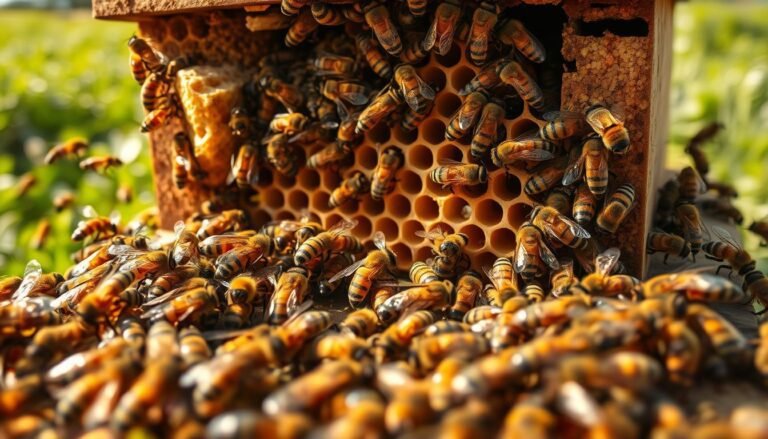
Early recognition saves colonies. A hive can look busy while brood production quietly falls. Hilary Kearney and Blake Shook note that missing eggs, larvae, or capped brood is an early alert, and workers may grow nervous and loud.
This short guide helps both new and experienced beekeepers quickly identify a lost queen, confirm the condition with repeatable checks, and pick the right corrective action in time. Every day without a queen reduces worker replacements and erodes brood capacity.
We focus on frame-level observations, temperament cues, and a practical brood test with donor frames. The approach is methodical: spot key indicators, validate with inspections, then act based on season and colony strength. Sources include Flow Hive US and The Bee Supply to reflect common field checks.
Key Takeaways
- Missing eggs or capped brood often signals a missing queen.
- Active bees can mask population decline; inspect frames carefully.
- Repeatable checks—like the brood test—confirm queenlessness before intervention.
- Every day without a queen reduces future population and productivity.
- Use proper timing and technique to avoid misreads and wrong fixes.
- For further colony management tips, see the beekeeping expansion guide.
Why diagnosing queenlessness matters right now
Spotting a missing egg layer early gives beekeepers the best chance to preserve colony strength. When no eggs or larvae appear, a decline begins fast. Without fresh brood, workers are not replaced and the population shrinks each day.
In active months—February through October—missing brood across frames almost always signals trouble. Flow Hive US and field reports note that stores can rise while brood areas vanish, a deceptive pattern that hides real loss.
Behavior also matters. Colonies may become loud and jittery, guiding insect managers to act quickly. Delaying action for weeks raises the chance of laying workers and makes requeening harder and costlier.
- Act within days when brood is absent in warm season inspections.
- Understand labor shifts: fewer nurse bees, more foragers, and empty brood frames.
- Log dates and frame status to track trends and choose the best way to restore egg laying.
For seasonal timing and tasks, consult a practical guide on seasonal beekeeping or read a focused piece on the queenless colony checklist.
3. signs your hive is queenless
Quick, focused checks on frames reveal the earliest warnings that a colony has lost its laying female. Inspect several central frames slowly under good light. Look for tiny rice-like eggs and milky white larvae before drawing conclusions.
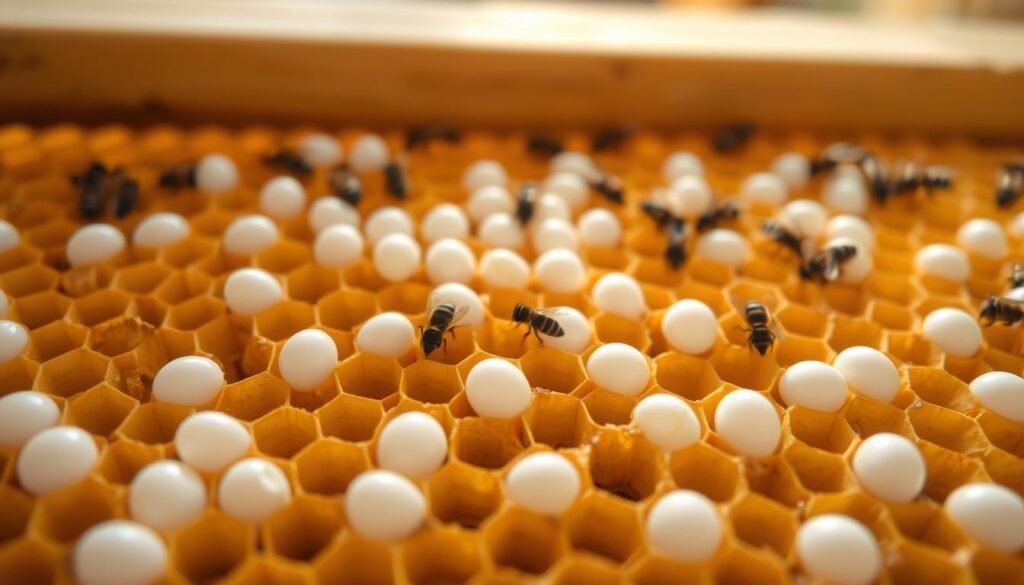
Lack of eggs, larvae, and capped brood across frames
A consistent absence of eggs, larvae, and capped brood on multiple frames is the primary red flag. Eggs vanish first when the queen is gone. If worker brood stops appearing, the colony will shrink fast.
Honey and pollen increasing where brood once was
Frames that held brood often refill with nectar, honey, and rings of pollen. This happens as more bees switch to foraging and fewer nurse bees remain.
Queen cells or cups paired with no brood
Queen cells or cups alone do not confirm loss. But, when no fresh brood is found, these cells strongly suggest queen absence. Check whether the cell contains a larva, is capped, or already hatched.
Temperament shifts and dwindling population
“Absent eggs are the first clear sign.”
Behavioral clues: cranky guards, a high-pitched roaring at the entrance, and fewer foragers all track with a lost queen. Note any residual capped drone brood—short-lived—but rely on ongoing worker brood checks.
- Do slow, frame-by-frame inspections under good light.
- Document frames with missing brood and where honey or pollen increased.
- Record queen cell stages to time interventions.
How to confirm queenlessness step by step
A methodical check of brood, eggs, and cell activity removes doubt before you act. Start with season-aware timing: during the active months, plan inspections when daylight and mild temperatures let you open the hive slowly.
Review recent history. Note when a queen was last seen, any splits or swarms, and how many days it has been since viable brood appeared. This context guides whether a gap is normal or alarming.
Reading frames correctly
Handle frames deliberately at the open hive. Use the sun at your back, tilt each frame about 45 degrees, and inspect the center of the brood nest where eggs and very young larvae cluster.
Compare patterns: a healthy brood pattern shows tight, continuous worker brood progressing from eggs to capped brood. A queenless pattern has empty cells, scattered brood, or brood replaced by nectar or pollen.
The brood test
Select a donor frame with fresh eggs and very young larvae. Place it in the suspect colony and return in a few days. If workers build queen cells on that frame, the colony most likely lacks a queen; if they do not, look again for a new or stealthy queen before requeening.
Spotting laying workers
Laying workers leave telltale marks: multiple eggs per cell, eggs on cell walls, and a rise in drone-only or drone-biased brood. Confirm the pattern across several frames to avoid a single-frame anomaly.
- Time inspections to warm, calm days.
- Record frame findings and days since last known eggs.
- Use the donor-frame brood test to confirm queenlessness before major interventions.
“A brood test is a low-risk way to prove queen absence.”
When laying workers are present, note that introduced queens often fail. Consider combining resources or alternative strategies rather than repeated attempts at requeening. For a practical checklist, see the queenless colony checklist.
Queenless or just between queens? Avoid common misreads
Distinguishing a true loss of the egg-layer from a normal requeening gap saves time and avoids needless intervention.
New queen gap: why a colony can look broodless
A colony raising a new queen often creates a short brood gap while workers feed larvae and wait for emergence. This phase can last several days to a few weeks, depending on cell stage and weather.
Check queen cells and their stage. Capped, developing cells point to a planned replacement. Empty frames with fresh queen cells suggest rearing rather than permanent loss.
Seasonal cues and timing
Between February and October, a prolonged lack of eggs and larvae across all frames usually means trouble. In dearth periods short gaps are more common.
Why spotty brood isn’t always a failing queen
Patchy brood can reflect mite pressure, disease, resource placement, or stored nectar in brood areas. Random drone brood through worker areas may signal a queen low on sperm.
- Inspect twice: find eggs under good light before acting.
- Log queen cell dates, expected emergence, and when eggs should reappear.
- Consult a seasonal calendar or a field guide for timing: beekeeping calendar.
For more on common colony cues and when to intervene, read a focused piece at common queenless indicators.
What to do when your hive is queenless
Decide fast: allow bees to rear a new queen or install a mated queen for quicker recovery. Match your choice to colony strength, nectar flow, and local queen availability.

Option A: Let them raise a new queen and monitor progress
Give the colony a frame of very young brood to trigger queen cell construction. Stabilize the brood nest so nursing behavior continues and morale stays high.
Check queen cells after the brood test, then step back. Monitor stages in days: open larva → capping → emergence. Expect first eggs after mating and return from nuptial flights.
Option B: Purchase and install a mated queen for faster recovery
Use a slow-release introduction and handle the queen gently. Acceptance improves in calm colonies; strong or defensive groups may need extra care.
Verify there are no laying workers before installing. Colonies with laying workers often reject new queens, wasting time and resources.
Critical timing: every day without a laying queen matters
“Every day without a laying queen reduces worker numbers.”
Weigh the time cost: letting the colony make a queen saves money but takes longer. Buying a queen can restore brood fast, but only if acceptance is likely.
- Record queen cell counts, acceptance dates, and first observed eggs.
- Feed and rebalance space to support brood rearing once eggs return.
- Plan checks in clear intervals of days to avoid damaging developing cells.
Special cases: laying workers and drone-laying queens
Some colony failures need a different response than simple requeening. Prolonged lack of a laying female lets laying workers develop. A failing queen can also produce mixed drone brood. Proper inspection guides the right fix.
Recognizing laying workers and why requeening often fails
Colonies with laying workers show multiple eggs per cell and eggs on cell walls. You will see mostly drone brood and little worker brood.
Warning: introduced queens are often killed in these colonies. Standard requeening usually fails without changing colony pheromones first.
Options include combining with a strong queenright colony, adding open brood repeatedly, or shaking out and regrouping bees to break laying patterns.
Drone brood mixed in worker brood: a failing queen
If drone cells appear scattered amid worker brood across many frames, the queen may be running out of sperm. This differs from isolated drone patches at frame edges, which can be normal seasonally.
Remove or replace a failing queen promptly to restore proper queen lay and normal worker brood production.
| Issue | Key cues | Why requeen fails | Recommended action |
|---|---|---|---|
| Laying workers | Multiple eggs per cell; eggs on walls; many drones | Workers reject new queens; pheromone imbalance | Combine colonies; add open brood; shake out |
| Drone-laying queen | Drone brood mixed with worker brood across frames | Queen low on sperm; poor queen lay | Locate and remove/replace queen; requeen promptly |
| Normal drone patches | Edge frames; seasonal increases | Not a systemic failure | Monitor; confirm across multiple frames before acting |
“Confirm patterns across frames before decisive action.”
Conclusion
Close with practical steps that help beekeepers move from diagnosis to intervention.
Trust the core cues: absent eggs and larvae, former brood space filled with honey or pollen, and queen cells paired with no fresh brood. Note behavioral cues like a louder entrance roar and dwindling workers.
Confirm before you act: inspect frames in good light at the open hive, run a quick brood test with young brood, and log cell stages and dates. That record helps you spot laying workers or a failing drone-laying queen.
Decide fast: let the colony make a new queen from added young brood or introduce a mated new queen based on season and resources. In laying-worker cases, combine colonies or use open brood to reset pheromones before requeening.
Act within days to protect brood and worker numbers, then schedule follow-up inspections to verify eggs return and brood patterns normalize. Keep a simple frame log and photos to sharpen future checks.
FAQ
How can I tell if a colony lacks a queen by inspecting frames?
Look for a consistent absence of eggs, tiny larvae, and capped brood across multiple frames. Check several frames in different hive areas; a single empty frame is normal. If most frames show no brood stages and workers concentrate on honey and pollen where brood used to be, the colony may lack a laying queen or have a failing queen.
What should I watch for when brood seems to disappear but workers remain?
Rising stores of honey and pollen in former brood areas often indicate brood loss. Pair that with fewer nurse bees and a reduced worker population. Also listen for a louder, more agitated hum. Those signs together suggest the queen is not laying enough or workers are abandoning brood care.
Are queen cells always a clear sign of queenlessness?
No. Queen cups and cells appear during natural requeening, swarming, or when a beekeeper disturbs the colony. If you find mature queen cells but no eggs or young larvae nearby, the original queen may be gone. Verify by looking for recent egg laying elsewhere before assuming queenlessness.
How do I schedule inspections to confirm the queen situation?
Time checks for mid-morning on warm, calm days when many workers are foraging. Avoid inspections right after introducing frames or during heavy nectar flows. Inspect every few days when rearing is suspected; confirm across multiple inspections because one visit can miss an intermittently laying queen.
What is the brood test and how does it work?
The brood test involves adding a frame of very young brood to the suspect colony and waiting about a week to see if workers begin making queen cells. If they attempt to rear a queen from that brood, the colony likely lacked a functional queen. This test helps distinguish temporary gaps from true queenlessness.
How can I tell if laying workers are present instead of a missing queen?
Laying workers deposit multiple eggs per cell and prefer laying unfertilized eggs that become drones. Scan cells closely: many cells with several eggs or only drone brood in worker-sized cells point to laying workers. Requeening often fails unless you clear out laying workers first.
What does a drone-laying queen look like in the brood pattern?
A drone-laying queen produces mostly unfertilized eggs, resulting in many drone-sized brood and spotty worker brood. You’ll see irregular, patchy patterns with more drone cells and few or no workers. Assess cell sizes and brood uniformity across frames.
When is it better to buy a mated queen instead of letting the colony raise one?
Buy a mated queen when you need rapid recovery, during peak nectar flows, or if the colony shows signs of laying workers. Introducing a mated queen shortens the brood gap and stabilizes population faster than waiting for in-hive rearing, which can take weeks and sometimes fails.
How long can a colony go without a laying queen before population declines?
Every day without a laying queen reduces future worker numbers because no new workers are produced. Within a few weeks the workforce dwindles noticeably. Act quickly: restoring a queen within one to two brood cycles minimizes long-term losses.
Could seasonal factors make a healthy colony appear queenless?
Yes. In late winter, early spring, or during dearths, queens may temporarily reduce laying. Brood patterns can look spotty while the colony conserves resources. Consider recent weather, forage availability, and known management actions before declaring queenlessness.
What immediate steps should I take if I confirm there is no laying queen?
Options include allowing the colony to rear a new queen from suitable brood, introducing a purchased mated queen, or performing a unified nuc transfer. If laying workers are present, you may need to combine with a strong queenright colony or replace many workers before requeening.
How do inspections differ when checking for a new queen versus a temporary gap?
For a new queen, look for emerging or sealed queen cells and watch for gradual brood increase over two weeks. For temporary gaps, expect low but consistent egg or larval presence and quick brood return when conditions improve. Compare multiple inspections to avoid misreading a brief lull.