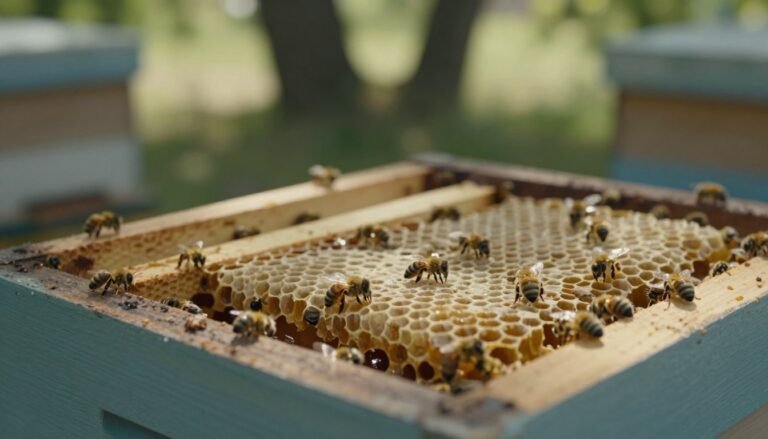
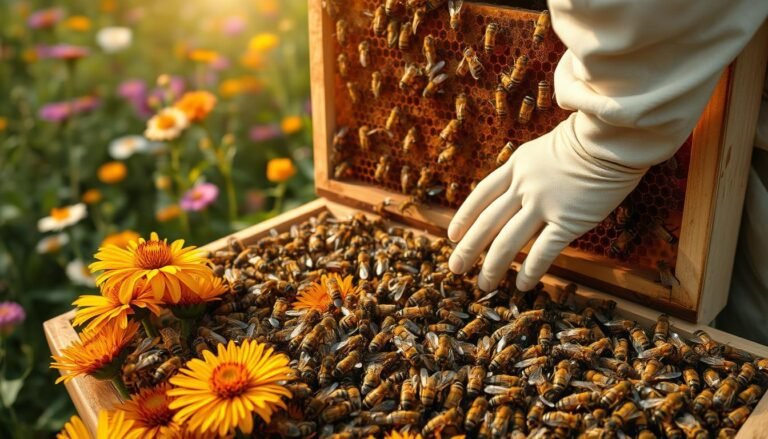
Many people start with big ideas about bees and hives that don’t match reality. Newcomers often expect to control colonies like machines, but a colony behaves as a superorganism that largely self-regulates. This piece clears up common beekeeping myths with research and practical knowledge.
Early-year honey yields are modest; first seasons may give just a jar or two, and heavy production can take years. Expect physical work—lifting full honey boxes and doing summer inspections—and learn that hive style alone won’t stop pests like varroa.
Smoke masks alarm pheromones; used correctly it helps, but overuse can harm colonies. Historical research, such as Dr. Leslie Bailey’s work, shows how evidence overturned past claims about pests and viral causes. This listicle unpacks these points so beekeepers can make informed choices and protect colonies over time.
Key Takeaways
- Colonies act as a unit; you guide them but can’t micromanage every behavior.
- Honey in the first years is usually small—prioritize health over harvest.
- Expect physical demands and regular inspections to keep hives strong.
- Hive type doesn’t replace good management or site selection.
- Use smoke sparingly; it masks alarms and can stress bees if overdone.
- Trust research and historical lessons when diagnosing colony problems.
Setting realistic expectations: what new U.S. beekeepers get wrong about bees, honey, and time
New hive owners often expect immediate rewards, but a colony’s first priority is nest building and population growth. That focus leaves little surplus for harvest in the first year.
Myth: You’ll get tons of honey right away from a first-year hive
First-year colonies frequently use all incoming nectar to draw comb and feed brood. Expect as little as one to two jars early on, with well-sited hives reaching roughly 20 lb in later years. Pulling honey too soon weakens the colony.
Myth: Beekeeping won’t hurt after enough stings
Stings always hurt. Quick stinger removal reduces venom and swelling. Some beekeepers report lower reactions after years of exposure, but protective gear and calm handling still matter.
“Focus on colony health before harvest; the honey will follow when the colony is ready.”
Myth: You’re “saving the bees” just by keeping a hive
Keeping a hive helps honey bees, but broader pollinator support and disease monitoring are crucial too. Site choice, forage access, and steady care determine whether a hive produces surplus honey over time.
| Year | Expected honey | Main colony focus |
|---|---|---|
| 1 | 0–2 jars | Draw comb, raise workers |
| 2–3 | Some surplus (up to 20 lb) | Build reserves, pest control |
| 4+ | More consistent harvests | Management, seasonal timing |
For seasonal checklists and timing, see this seasonal tasks guide. For basic procedures and safety, consult a beginner guide.
45. U.S. beekeeping myths and misconceptions about hives, boxes, and management
Bees often build downward from the cavity ceiling, so adding boxes on top changes their natural pattern. That behavior explains why Langstroth supering can trigger frantic filling of overhead space.
Warré-style nadiring aligns with natural downward comb construction and reduces the need for bees to rush upward to cover a void.
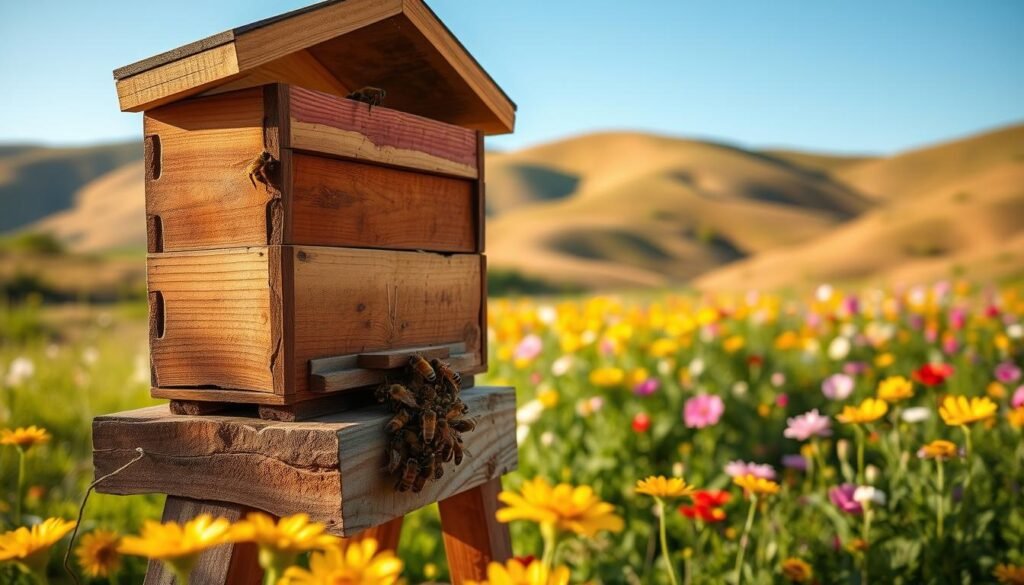
- Space matters: adding a top box forces bees to fix an empty overhead gap, not because they prefer upward work but to close distressing voids.
- Foundation isn’t speed: wax foundation helps limit cross-comb, yet it rarely speeds comb building; foundationless frames can match pace when nectar is abundant.
- Hive style is not a cure-all: Langstroth, top bar, Layens, Warré, and Flow each have trade-offs; varroa control, nutrition, and sound management matter more than the box brand.
- Swarming and feeding: enlarging a hive won’t stop reproductive swarms, and feeding first-year colonies beyond about two to three weeks can promote swarming and reduce foraging drive.
- Winter stores: goldenrod nectar granulates fast and can cause winter dysentery; reserve earlier-season honey for cold months.
“Work with how a colony builds; choose space and management that match natural behavior.”
For historical research that overturned old claims about pests and disease, see this research summary.
Queen, colony, and behavior myths that mislead beekeepers
Successful hive work starts with humility: colonies are not machines to command. A skilled beekeeper learns to read signals, not issue orders. That shift from control to stewardship improves outcomes and lowers stress for people and bees.
Myth: The beekeeper is the boss; the colony follows commands
Reality: You guide, you do not control. Intervene to assist the colony’s goals—space, brood pattern, and stores—rather than forcing an agenda on fixed times.
Myth: The queen dictates everything the colony does
Reality: The queen lays eggs and emits pheromones, but most decisions emerge from worker interactions. Rare absconding can follow a queen’s loss, yet day-to-day behavior is decentralized.
Myth: Smoke “calms” bees rather than masking alarm pheromones
Reality: Smoke masks alarms to reduce defensive responses. Heavy smoke can trigger honey-gorging or even stress-driven departures, so use it sparingly and with purpose.
Myth: Worker bees only expel drones in autumn—and do it gently
Reality: Workers evict drones when stores fall or numbers swell. Eviction can be violent; you may find dead drones at the entrance after forceful removal.
“Work with what the bees are trying to do, not against it.”
- Read signals: match inspections to colony condition and weather.
- Handle gently: efficient moves reduce alarm and the need for excess smoke.
- Interpret context: changes in brood or drone levels usually reflect resource shifts, not immediate failure.
For broader perspective on pollinator narratives and evidence-based claims, see a detailed review.
Honey production, foraging, and seasonality myths across years and weather
Predicting a single hive’s harvest is a poor strategy. Local bloom timing, colony strength, and short weather windows shape outcomes more than pedigree. Strong colonies sometimes make 150 lb in a good year; other years they may yield nearly nothing.
Myth: You can predict honey production for a hive each year
Treat yield as a range. Two neighboring hives can diverge because management, forage, and pests differ. Use past data but plan for variation.
Myth: Less rain always means less honey production
Dry seasons can outperform wet ones when bees access irrigated crops or drought-tolerant forage. What matters is uninterrupted flight time and available nectar.
Myth: Bees only swarm in spring—and first-year colonies won’t swarm
Bees may swarm in late summer or fall. First-year hives can swarm if buildup is fast or if heavy feeding causes congestion.
Myth: A hive that swarms can’t produce harvestable honey that year
Not always. If a nectar flow follows recovery, a colony can rebuild and add surplus. Prompt management after a swarm preserves production opportunities.
Myth: Bees forage for either nectar or pollen, never both on the same trip
Foragers can return with full pollen baskets and distended abdomens from nectar on the same run. Their choices are flexible and need-based.
“Plan for variability: match supering and splits to local season and crop calendars, not a fixed schedule.”
| Factor | Impact on production | Management tip |
|---|---|---|
| Weather windows | High — limits foraging days | Time inspections to stable days |
| Local crops | High — can create short, intense flows | Map bloom calendars and be ready |
| Colony strength | High — workforce drives collection | Adjust splits and feeding to peak timing |
- Use local guides: a seasonal checklist helps align work; see a practical seasonal calendar.
- Follow real-year stories: reading a year-in-the-life account sets better expectations than a single forecast.
Location, media narratives, and disease myths in U.S. beekeeping
Location often decides whether hives thrive or struggle, regardless of how well you suit them. Areas with steady bloom lower robbing, reduce pathogen spread, and support stronger colonies through the season.
Myth: Bees do just as well in dense urban areas as in forage-rich rural sites
Urban roofs can host colonies, but sparse nectar and short floral windows strain bees. Limited forage raises robbing pressure and disease risk, while rural greenbelts with continuous bloom usually produce more reliable honey and stores.
Secure water, wind breaks, and sun exposure cut stress and improve brood rearing. Good siting matters before you keep bees; map local crops and plantings to match seasonal needs.
Myth: Tracheal mites explained historic “Isle of Wight disease”
Media reports once blamed mites for massive losses. Tracheal mites (Acarapis woodi) were found in 1919, yet later research showed viruses — likely chronic bee paralysis virus — caused the crawling-bee syndrome.
“Mites rose during poor weather and low forage, but correlation did not equal causation.”
- Interpret mites in context: they appear in healthy and sick foragers; stresses raise mite pressure.
- Avoid harmful fixes: past remedies like disinfectants and odd feeds did more harm than good.
- Follow evidence: ensure adequate stores for winter, diagnose properly, and use peer-reviewed research to guide action.
For further reading, consult a practical guide to beekeeping resources and books that emphasize diagnosis, site selection, and modern treatments backed by field research.
Conclusion
Smart care beats quick fixes: watch colonies, keep notes, and choose actions that match the season.
Good outcomes come from steady practices more than gear promises or headlines. Prioritize brood quality, food stores, timely space, and varroa checks to help bees thrive through spring, summer, and winter.
Expect variation from year to year; honey may be modest early on, and a swarm need not destroy future gains. Use tools like smoke with purpose, avoid disruptive interventions, and pick sites with reliable forage and water.
Keep learning and share results with other beekeepers. For practical scaling and siting advice, see these expansion tips to help you plan equipment, timing, and management.
FAQ
What should new beekeepers realistically expect from their first-year hive?
First-year colonies rarely produce large honey harvests. New beekeepers often focus on honey, but initial priorities are colony establishment, queen acceptance, and building worker populations. Many beekeepers need to feed sugar syrup or pollen substitutes during bloom gaps, and weather can limit foraging. Expect modest stores and plan to leave most honey for the bees to survive winter.
Will repeated stings make beekeeping painless over time?
No. Some people become less reactive after low-level exposure, but others develop increased sensitivity or true allergic reactions. Use protective gear, learn safe handling, and have an emergency plan. Never assume tolerance; monitor reactions after each sting.
Does installing a single hive mean I’m “saving the bees”?
Keeping one hive helps local pollination and provides a learning opportunity, but it doesn’t address large-scale threats such as habitat loss, pesticides, and pathogens. Supporting native pollinator habitat, planting diverse forage, and practicing disease-aware management have broader impact than a single hive alone.
Is beekeeping a low-time hobby suitable for retirement with minimal work?
Not usually. Hives require seasonal inspections, pest monitoring, and occasional manipulations. Spring and fall demand more effort. Time commitment depends on colony health, local nectar flows, and pests like Varroa mites. Treat it as a seasonal small-scale livestock enterprise, not a set-and-forget pastime.
Do bees prefer to work upward inside multi-box hives?
Bees build comb where conditions are right, not strictly upward. In Langstroth boxes they often extend comb into available frames, but brood and stores placement depends on brood nest dynamics, temperature, and space. Proper frame arrangement and consistent management guide comb distribution better than assuming vertical preference.
Is adding supers on top always the best way to give bees more space?
Adding space too quickly can confuse a colony and sometimes trigger swarming. Bees need a consistent cluster and cues for brood rearing. Often it’s better to add a super when nectar flow begins and bees are actively drawing comb. Proper timing, entrance management, and monitoring are key.
Will wax foundation make bees build comb faster?
Foundation can guide straight comb and reduce worker time shaping cells, but drawn or foundationless frames may lead to quicker natural comb construction in some cases. Bees draw comb based on colony strength and nectar flow. Foundation helps in production beekeeping but isn’t a universal speed solution.
Does one hive style solve most management problems for me?
No. Langstroth, top-bar, Layens, Warre, and Flow each have trade-offs. Langstroth suits migratory or honey-focused operations; top-bar and Warre favor natural comb and low-disturbance beekeeping. Choose based on goals, local climate, and management skills; no style eliminates pests or seasonal challenges on its own.
Can you prevent swarming simply by enlarging the hive?
Not always. While space reduction can contribute to swarming, triggers include colony genetics, congestion, queen age, and seasonal cues. Strategic splits, queen replacement, and timely inspections are more reliable swarm-control tools than only adding boxes.
Should first-year colonies be continuously fed to boost honey production?
Continuous feeding can build population but risks creating dependence and poorer foraging drive. First-year colonies need balanced management: feed during dearths or while establishing, but allow them to forage and build stores when nectar flows occur. Overfeeding can lead to weaker winter hardiness.
Is goldenrod nectar a reliable source for winter honey stores?
Goldenrod provides significant fall nectar in some regions, but its timing and sugar concentration vary by species and weather. It can contribute to stores but shouldn’t be the only relied-upon forage. Diverse late-season floral sources produce more consistent winter provisions.
Is the beekeeper the colony’s boss and able to make it follow instructions?
Beekeepers guide conditions but cannot command colony behavior. Colonies self-organize with complex social regulation. Management works by altering resources, space, and pheromonal cues—rather than direct obedience—so success depends on working with bee biology, not against it.
Does the queen control everything the colony does?
The queen influences colony physiology via pheromones and egg laying, but workers drive most behaviors: foraging, nest construction, brood care, and swarming decisions. Beekeeping interventions often affect worker responses more than queen intent.
Does smoke calm bees, or does it only mask alarm pheromones?
Smoke masks alarm pheromones and triggers feeding behavior that reduces aggression. It doesn’t truly “calm” bees chemically; it disrupts their defensive coordination. Use smoke sparingly and correctly to reduce defensive responses during inspections.
Do workers only eject drones in autumn, and is that done gently?
Workers reduce drone numbers when resources decline, often in late season, but drone eviction can occur whenever colony balance and resources change. Removal is a forceful process—workers push drones out and restrict drone access to food and brood areas—not a gentle seasonal ritual.
Can you predict honey yields for a hive year to year?
No reliable prediction exists. Honey production fluctuates with forage availability, weather, colony health, queen quality, and pest pressure. Plan conservatively and track local bloom calendars to set realistic expectations rather than counting on consistent yields.
Does less rain always mean reduced honey production?
Not always. Drier seasons can limit floral nectar in some regions, but in others an early dry spell concentrates nectar or reduces fungal disease, which can boost yields. The effect depends on local flora, timing of rains, and temperature patterns.
Do bees only swarm in spring, and are first-year colonies safe from swarming?
Swarming peaks in spring, but it can occur in summer when resources and colony strength align. First-year colonies can and do swarm if they grow rapidly or become congested. Monitor hive space and queen status regardless of colony age.
If a hive swarms, is it impossible to get harvestable honey that same year?
Not necessarily. A swarm reduces workforce, but if the colony requeens quickly and nectar flows continue, it can rebuild and produce surplus honey later in the season. Recovery depends on timing, local nectar availability, and management after the swarm.
Do bees forage for either nectar or pollen, never both on the same trip?
Bees often specialize on a single resource per trip but can collect both depending on floral arrangement and colony needs. Foraging patterns change with resource distribution and brood demand; bees are flexible foragers rather than strictly single-mission workers.
Do honey bees fare equally well in dense urban areas compared with rural forage-rich sites?
Urban areas can offer diverse, extended bloom and reduced pesticide drift in some neighborhoods, but forage diversity and continuity vary widely. Rural farmland with monoculture may lack resources outside bloom windows. Site assessment for continuous forage matters more than simple urban vs rural labels.
Did tracheal mites cause historic Island losses and explain massive bee declines?
Tracheal mites (Acarapis woodi) severely affected colonies historically, but later large-scale losses stem from multiple factors, including Varroa destructor, viruses, pesticides, and habitat change. Tracheal mites played a role in certain outbreaks but don’t alone explain modern, multifactorial declines.