Table of Contents
- The Three Real Starting Options
- Package Bees: Honest Pros and Cons
- Nucs: Honest Pros and Cons
- Swarms: Honest Pros and Cons
- Real Cost Comparison
- Timing and Availability Differences
- Side-by-Side Comparison Table
- What Experienced Beekeepers Actually Recommend
- Which Option Fits Your Situation
- Common Mistakes
- Installing a Package: Step-by-Step Basics
- Installing a Nuc: Step-by-Step Basics
- Assessing and Hiving a Swarm Safely
- Equipment Differences Between the Three Options
- Absconding and Failure Risk by Option
- Genetics and Queen Quality Considerations
- Combining Options: Using More Than One Method
- Sustainability and Local Sourcing
- Regional and Seasonal Considerations
- Long-Term Colony Performance Differences
- Feeding Requirements in the First Weeks
The Three Real Starting Options
New beekeepers typically start a colony one of three ways — buying a package (a screened box of loose worker bees with a separately caged queen), buying a nuc (a small established colony already on drawn frames with brood), or catching or receiving a free swarm — each with genuinely different costs, timelines, and success-rate profiles worth understanding honestly before choosing. This guide compares all three side by side; for a deeper dive into just one pairing, see our dedicated package vs. nuc comparison or package vs. swarm capture comparison.
This choice matters more than ever right now: the most recent national survey, run by Auburn University, the Apiary Inspectors of America, and Oregon State University, found beekeepers lost an estimated 55.6% of managed colonies between April 2024 and April 2025 – the highest annual loss rate recorded since national tracking began in 2010-2011. With losses that high, a large share of beekeepers restart or replace colonies every single year, making the package-vs-nuc-vs-swarm decision a recurring one for experienced keepers, not just a one-time beginner question.
Package Bees: Honest Pros and Cons
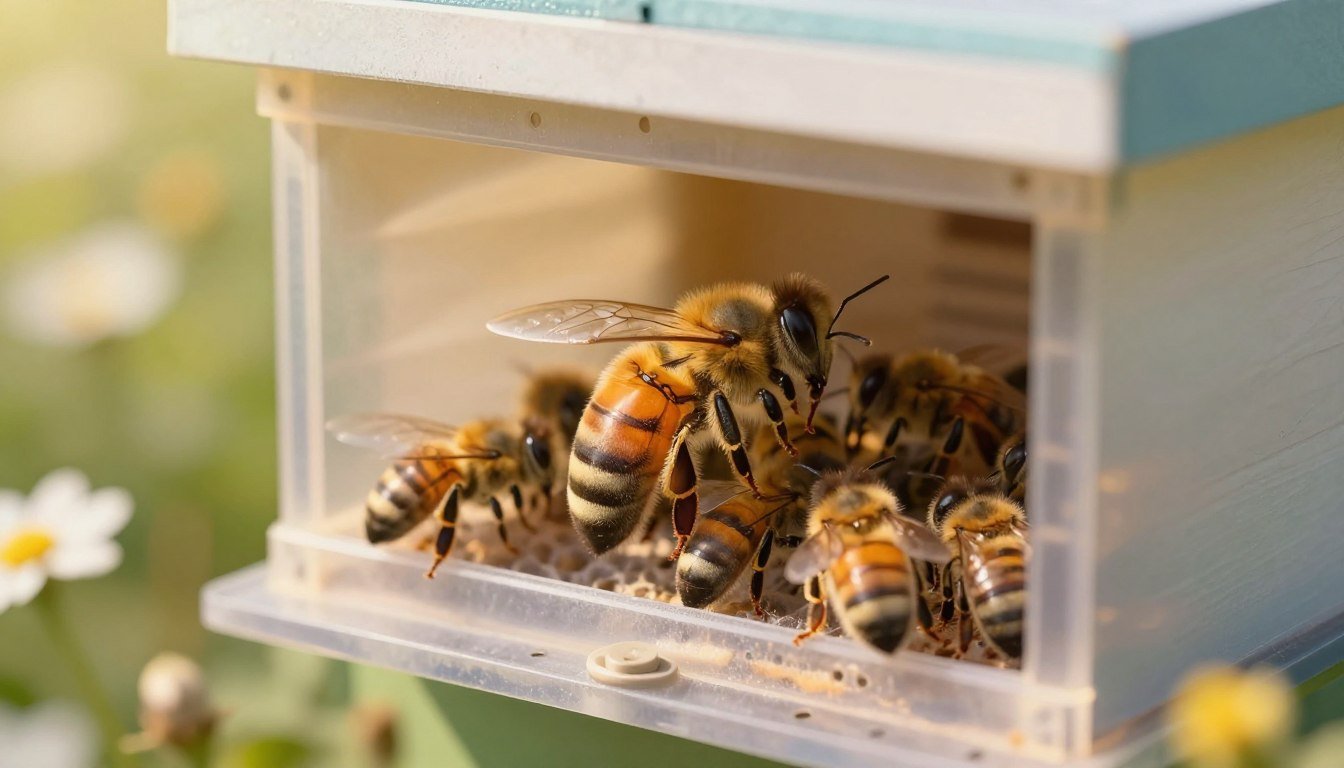
Package bees typically cost 60-75% of what a comparable nuc costs, and because the colony builds entirely from scratch with no existing comb, packages generally start with a genuinely lower pathogen load than an established nuc might carry. The real downside: the worker population actually decreases for the first roughly three weeks after installation, since the original package workers are aging and dying off before the new queen’s first eggs mature into replacement workers — a genuine population dip new beekeepers should expect rather than worry over.
Worker and Hive Bee Supply covers the same core trade-offs discussed throughout this guide – cost, timing, and early establishment speed – from a bee-supplier’s perspective on what beginners actually ask before buying.
Nucs: Honest Pros and Cons
A nuc arrives as an already-functioning small colony on drawn frames with active brood and food stores, giving it a genuine head start and generally higher first-season success rate than a package — this established-colony advantage is why many experienced beekeepers specifically recommend nucs for true beginners. The trade-offs: nucs typically cost up to twice as much as a comparable package, are usually not available until later in spring (often missing the earliest nectar flow packages can catch), and can grow and reach swarming readiness faster than a new beekeeper monitoring for the first time might expect.
Swarms: Honest Pros and Cons
A captured or received swarm costs nothing beyond your own time and equipment, and swarming bees are often genuinely strong, motivated comb-builders in the early days after capture. The real downsides: swarm availability and timing are entirely unpredictable, you have no advance information about the swarm’s genetics, temperament, or disease status, there’s no guarantee the swarm even includes a viable queen, and successfully assessing and managing a wild-caught swarm generally requires more existing beekeeping judgment than either purchased option.
Real Cost Comparison
Packages represent the lower-cost purchased option at roughly 60-75% of nuc pricing, nucs cost meaningfully more reflecting their established-colony head start, and swarms are free but come with the least predictability of the three options — cost alone shouldn’t be the only deciding factor, since a cheaper option that fails outright costs more in wasted time and disappointment than a pricier option succeeding on the first attempt.
Timing and Availability Differences
Packages are generally available earlier in spring and are the only option that can be reliably shipped long distances by mail, as covered in our guide to shipping bees by mail, while nucs typically aren’t available until later in spring once local suppliers have built up enough established colonies to split and sell. Swarms follow their own unpredictable natural timing tied to regional bloom and colony conditions, offering no guaranteed availability window at all.
Side-by-Side Comparison Table
| Factor | Package | Nuc | Swarm |
|---|---|---|---|
| Cost | Lower (60-75% of nuc) | Higher | Free |
| Early success rate | Moderate | Generally highest | Variable, unpredictable |
| Availability timing | Earliest in spring | Later in spring | Unpredictable |
| Genetics/health known | Yes, from supplier | Yes, from supplier | No |
| Beginner-friendliness | Good | Best | Requires more experience |
What Experienced Beekeepers Actually Recommend
Recommendations genuinely vary based on your specific goals: beekeepers wanting to learn colony growth from the very beginning, and comfortable with a slower early population buildup, often do fine with a package, while those specifically prioritizing the highest realistic first-season success rate and willing to pay more for it are frequently steered toward a nuc as the more forgiving beginner choice. Swarms are generally recommended primarily for beekeepers who already have at least one full season of hands-on experience under their belt.
Which Option Fits Your Situation
A genuine first-time beginner prioritizing the highest chance of first-season success, and able to pay the higher nuc price, is well served starting with a nuc. A budget-conscious beginner comfortable with a slower start and the population-dip learning curve can reasonably choose a package instead. An experienced beekeeper with the judgment to assess an unknown colony’s health and queen status on the spot is the right fit for pursuing free swarms, ideally alongside purchased options rather than relying on swarms as a sole primary source.
Installing a Package: Step-by-Step Basics
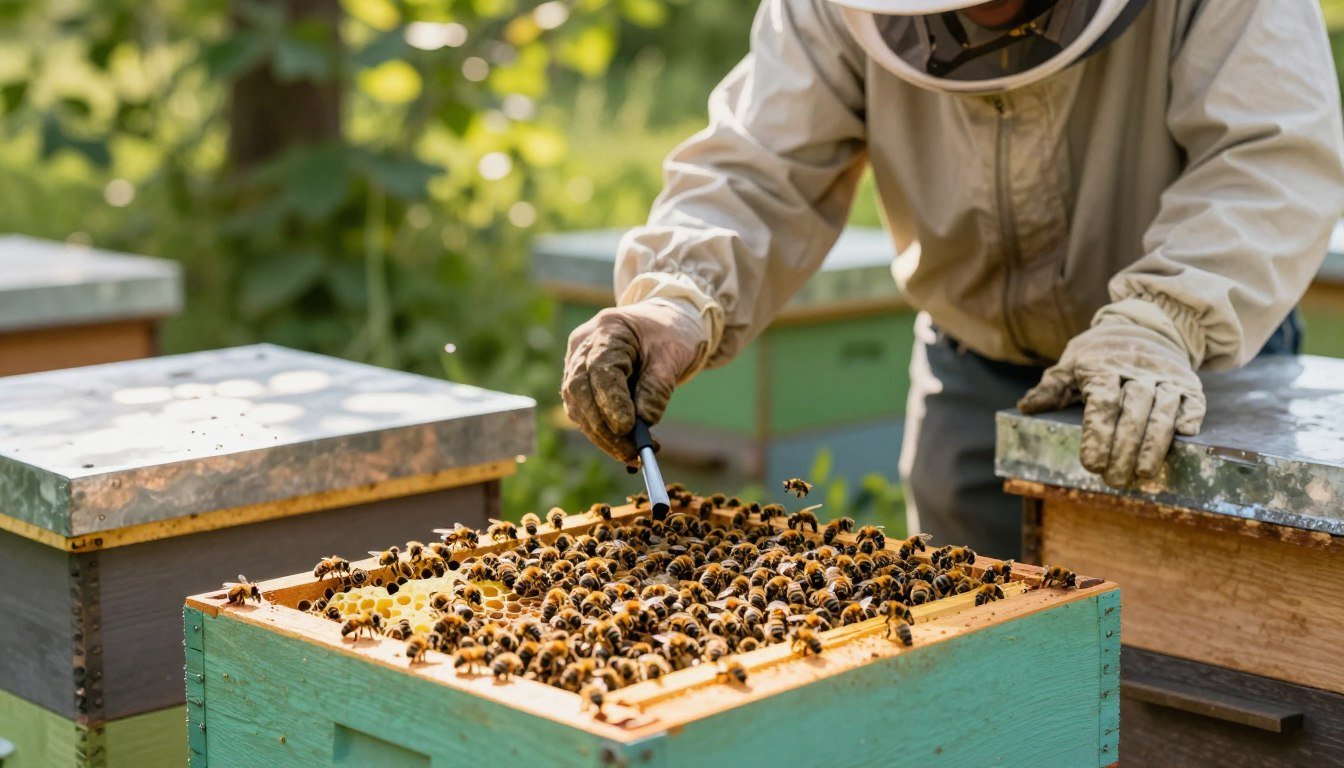
Installing a package involves removing the syrup can, hanging the caged queen between two center frames with the candy-plug end facing up, and shaking or gently pouring the loose workers down over her before closing the hive and leaving it undisturbed for several days so the colony can release the queen and begin drawing comb around her. Feeding sugar syrup right away is essential, since a package colony has no stored honey reserves of its own until new comb and foraging catch up.
Installing a Nuc: Step-by-Step Basics
Installing a nuc is comparatively simple: the frames are lifted directly out of the nuc box in their existing order and placed into the center of the permanent hive body, preserving the brood nest arrangement the colony already established. Because the nuc arrives with active brood, food stores, and a laying queen already accepted by the colony, there is no queen-release waiting period the way there is with a package, and the colony can generally be left to continue building outward from day one.
Assessing and Hiving a Swarm Safely
As covered in our guide to catching a swarm safely, a captured swarm should be hived into a box with drawn comb or foundation as soon as possible after capture, then checked within the first week or two to confirm a queen is actually present and laying, since a queenless swarm will otherwise dwindle without ever building a viable colony. Swarms should also be watched closely for absconding in the first days, as a newly hived swarm that finds its chosen cavity unsuitable can simply leave entirely, something neither packages nor nucs are prone to doing once accepted.
Equipment Differences Between the Three Options
A package requires only an empty hive body with frames and foundation or drawn comb, plus a queen cage and a way to feed syrup immediately. A nuc requires a hive body sized to accept its frames directly, with no additional queen-introduction equipment needed. A swarm requires a bait box, skep, or container suited to capture and transport, plus the same feeding and monitoring setup as a package once it’s hived, since a swarm starts from the same comb-free position a package does.
Absconding and Failure Risk by Option
Packages carry a real, though generally low, risk of the caged queen being rejected or of the colony absconding shortly after installation if she isn’t properly accepted before release. Nucs carry the lowest overall early-failure risk of the three, since the colony, queen, and brood nest are already a functioning, accepted unit before the beekeeper ever takes possession. Swarms carry the highest variability: a freshly captured swarm can abscond within days if the cavity doesn’t suit it, and there is no guarantee at capture time that a viable, mated queen is even present.
Genetics and Queen Quality Considerations
Both packages and nucs purchased from a reputable supplier typically come with a queen of known, often selectively bred, genetics, giving the beekeeper real information about traits like temperament, disease resistance, and productivity going in. A swarm’s queen, by contrast, is entirely unknown, which can mean anything from excellent locally adapted survivor genetics to an old, poorly mated, or soon-to-be-superseded queen the colony was already in the process of replacing when it swarmed.
Combining Options: Using More Than One Method
Many established beekeepers don’t rely on a single method exclusively, instead starting new colonies with a purchased package or nuc for reliability while also keeping swarm traps out during swarm season as a free way to add colonies or requeen with locally adapted genetics. This combined approach spreads risk: a purchased colony provides a dependable baseline while any swarms caught become a bonus rather than the sole plan.
Sustainability and Local Sourcing
Buying a nuc or package from a local supplier, rather than one shipped a long distance, generally means bees already somewhat adapted to your regional climate and forage, and supports local beekeeping infrastructure the way many mentorship-driven community programs, discussed in our beekeeping mentor guide, tend to encourage. Locally caught swarms take this a step further, since a swarm’s genetics come directly from colonies already surviving in your immediate area, though this benefit only holds if the swarm can be confirmed healthy and properly queenright.
Regional and Seasonal Considerations
In regions with a short productive season, a nuc’s established head start can matter more than usual, since a package’s slow early buildup leaves less time to draw comb and store honey before fall. In milder climates with a longer forage season, a package has more time to catch up, narrowing the practical difference between the two. Swarm timing is tied entirely to local bloom and colony conditions and can’t be scheduled around a beekeeper’s preferred season the way a purchased package or nuc delivery can.
Long-Term Colony Performance Differences
By the end of a first full season, well-managed packages and nucs typically converge to similar colony strength, since the nuc’s early advantage is mostly about how quickly the colony reaches a given size rather than a permanent ceiling on its eventual potential. A successfully established swarm can perform just as well long-term as either purchased option, provided it turned out queenright and reasonably healthy, though the higher variance at the outset means a wider range of possible outcomes compared to the more predictable purchased routes.
Feeding Requirements in the First Weeks
Packages need immediate, heavy sugar syrup feeding from the moment of installation, since there is no drawn comb or stored honey to fall back on while the colony builds its first wax and the queen begins laying. Nucs generally need lighter, more occasional feeding, since they arrive with some stored honey and pollen already in place. A hived swarm typically needs feeding on par with a package, since it also starts with no comb or stores unless it happened to move in carrying a full honey stomach from its original colony.
Common Mistakes
Choosing based purely on lowest cost without weighing the real success-rate trade-offs risks a disappointing first season that costs more in frustration and lost time than the money saved. Assuming a captured swarm is automatically free of health issues just because it wasn’t purchased overlooks that swarms carry genuinely unknown disease and genetic status. Panicking over a package colony’s normal population dip in the first three weeks, assuming something has gone wrong, misreads an entirely expected part of the package-installation process.
Sources
Cost figures and comparative performance details reflect published beekeeping supplier and educator guidance on package, nuc, and swarm colony-starting methods, including the University of Florida IFAS Osceola County Extension’s package-vs-nucs guide. Colony loss figures come from the 2024-2025 national colony loss survey conducted by Auburn University, the Apiary Inspectors of America, and Oregon State University. For swarm-specific guidance, see University of Florida IFAS Extension’s Swarm Control for Managed Beehives guide.
FAQ
Is a nuc really better for beginners than a package?
Many experienced beekeepers do recommend nucs for true beginners given their higher establishment success rate, though a package remains a genuinely reasonable choice too, particularly for budget-conscious beginners comfortable with a slower early buildup.
Why does a package colony’s population drop after installation?
The original package workers age and die off during the roughly three weeks before the queen’s first new eggs mature into replacement workers — a completely normal, expected part of the process, not a sign of a problem.
Are swarms safe to use as a starting colony?
They can be, but come with genuinely unknown genetics, temperament, and health status compared to a purchased package or nuc, making them a better fit for beekeepers with enough experience to properly assess and manage that uncertainty.
Which option is available earliest in spring?
Packages are generally available earliest, since nucs require suppliers to first build up established colonies before splitting and selling them, typically pushing nuc availability later into spring.
This connects closely with what we cover in our guide on earn extra income selling overwintered nucs.