Published November 26, 2025 · Last Updated August 26, 2026
May 20—World Bee Day offers a timely entry point for families to plan a focused unit that connects nature study with core lessons.
Flexible schedules let children spend a day or a full week exploring pollination through documentaries, read-alouds, garden tasks, and simple science experiments.
A practical unit includes planning pages, multilevel lesson plans, age-based read-aloud lists, and supply checklists for protective gear, frames, and journals.
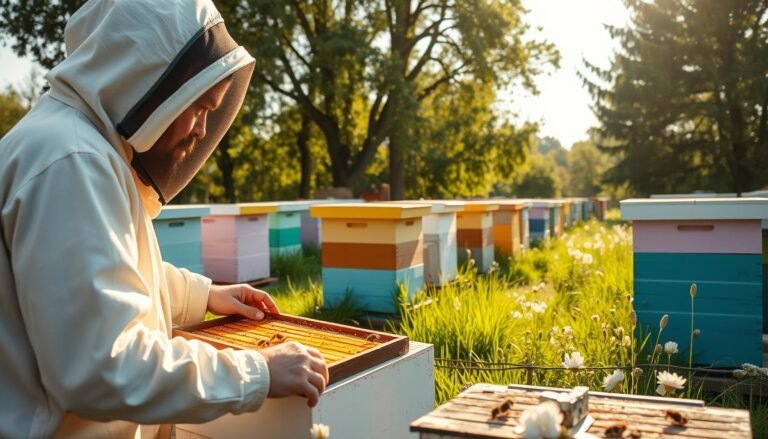
Local apiary visits add real-world context: smokers, queen spotting, and first-year hive etiquette make abstract concepts tangible.
This guide shows families how to map a unit from daily rhythms to cross-subject targets, build low-cost tools like a straw skep, and use curated content to save prep time.
Follow the link for a sample observation-hive program that supports hands-on studies: observation-hive program.
Key Takeaways
- World Bee Day is an ideal hook for focused units on pollination and stewardship.
- Short, flexible time blocks let families fit hands-on studies into existing curriculum.
- Units should combine planning pages, read-alouds, supply lists, and printable activities.
- Apiary visits provide demonstrations that enhance classroom content.
- Projects build practical skills, responsibility, and measurable learning outcomes.
Why integrate bees into homeschooling: benefits, goals, and scope
Framing a themed study around bees gives families a hands-on path from backyard observation to richer classroom goals. This approach blends concrete science with literacy and life skills. Use a short, realistic scope—one week or several modules—to match your existing curriculum.
Key benefits for families and children
Authentic inquiry builds real-world science skills as children observe hive behavior, anatomy, and pollination. Time outdoors deepens a child’s nature connection and curiosity.
Character growth follows from routine tasks: patience, responsibility, and careful observation become daily habits.
Learning objectives by age and stage
Early learners label parts of a bee and match simple shapes. Elementary students run habit-based pollination experiments and record results in journals.
Older students compare hive designs, explain the role of honey in ecosystems, and design mini labs or presentations. Multi-age households can use multilevel lessons so older siblings mentor younger ones.
“Short daily observation minutes and weekly labs help turn casual interest into measurable learning.”
For reliable resources, pull vetted guides and local experts and see a concise overview of beekeeping benefits to support planning.
How to plan your beekeeping unit: timelines, safety, and materials
Start your unit by setting clear safety rules, a simple materials list, and a flexible timeline that suits weather and bloom cycles. Safety first keeps learners confident while they observe a hive or join a field visit.
Safety and readiness
Fit protective gear before any approach. Review slow movements, calm voices, and avoid synthetic fragrances. Position observers with a clear return path and a safe distance from the beehive.
Explain smoker use: smoke makes bees gorge on honey and masks alarm pheromones. Rehearse roles away from the hive so children know boundaries and what questions are appropriate during an inspection.
Partner with a local beekeeper to schedule observation windows. Confirm first-year hives will not be harvested and why this protects colony strength.
Supply and materials checklist
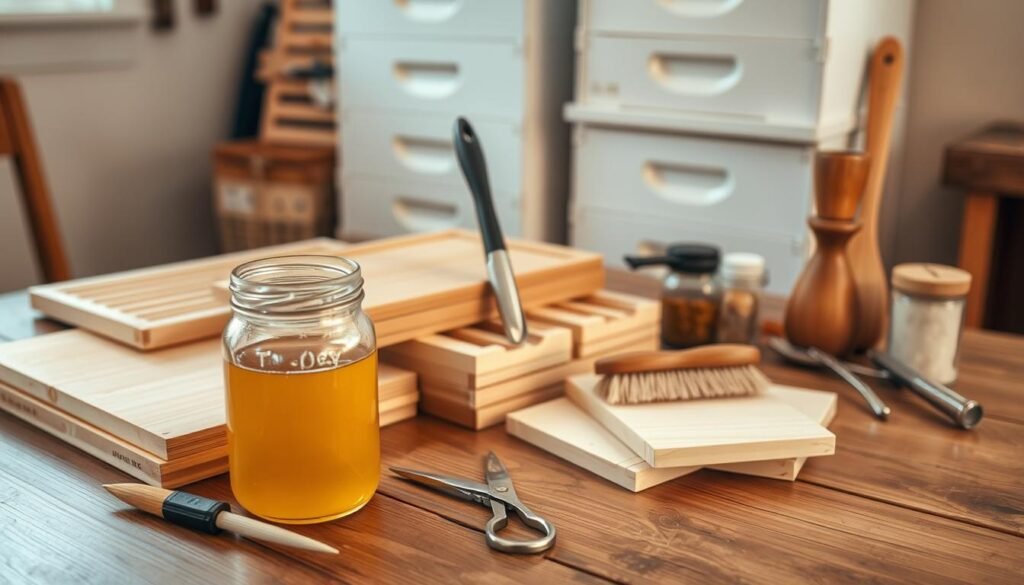
Build a compact kit: frames for demos, basic tools named for learners, nature journals, coloring sheets, and age-appropriate field guides. Keep a binder for printed content and data logs.
- Books and read-alouds by age
- Frames, tools, and journals
- Printable packs: vocabulary, puzzles, and activity pages
Daily, weekly, and monthly cadence
Map short daily observations with brief journal entries. Plan weekly labs—straw skep or solar wax melter builds—and monthly garden actions like planting native flowers.
Anchor each week with a family read-aloud, then rotate focus days (science lab, language arts, art, math). Set regular review times to update supplies, refine schedules, and adjust for bloom times or beekeeper availability.
“Brief rehearsals and clear roles turn curious learners into careful observers.”
For a vetted resource list and book guides, see this resource list.
Beekeeping and homeschooling integration across core subjects
Use classroom subjects as lenses to turn a single bee unit into multiple, skill-rich lessons across the week. This approach lets learners practice discrete skills while exploring the same living topic.
Science
Compare hive types, list essential tools, build a straw skep and a simple solar wax melter. Run pollination experiments and log temperature effects in short lab notes.
Nature study
Teach honey bee identification versus look-alikes. Make bee-vision glasses, run color trials, and keep observation journals that record foraging choices.
Language arts
Study a familiar story to spot interjections and anthropomorphism. Then write playful, “punny” notes that reinforce vocabulary and audience skills.
Writing workshop
Plan, draft, revise with a checklist, storyboard illustrations, and bind a finished children’s book for family reading time.
History, Geography, Music, Art, Math
Trace hive evolution from skeps to moveable frames; map Bolivia’s elevations and stewardship ideas; record garden soundscapes and study Flight of the Bumblebee; explore hex patterns with mixed-media art; practice skip-counts and “sum flowers.”
For seasonal pacing and task lists that fit this cross-subject plan, see seasonal beekeeping tasks.
Hands-on bee activities, garden projects, and field experiences
Create a living lab where short activities link outdoor observation with hands-on crafts and simple experiments. Small projects let learners see pollination, anatomy, and honey science in the same week.
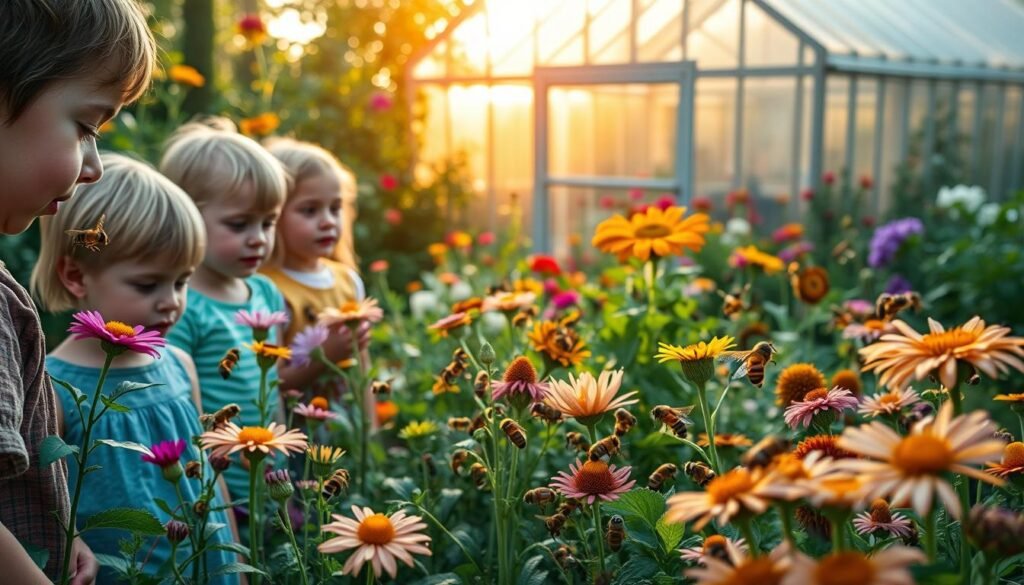
Create a bee-friendly garden by planting regionally native flowers to extend bloom periods. Lay out pollination pathways between beds and install a shallow pond with stones for safe landings. Avoid pesticides and allow clover and dandelions to support foragers.
Interactive anatomy and lifecycle
Use clay models, puzzles, and a flip book to show stages from egg to adult. These tactile activities help children label pollen baskets and wings while using accurate terms. Keep materials simple for small-group work.
Honey studies
Run a tasting to compare color, aroma, and flavor across varietals. Observe crystallization over days and try a supervised, simple honey fermentation to link chemistry with preservation traditions.
Field experience with a beekeeper
Prepare students by modeling smoker use—smoke prompts honey gorging and masks alarm pheromones. Practice standing to the side of a beehive entrance and agreeing on signals to step back if bees become active.
- On site, spot the queen (often marked) and inspect a frame for eggs, drawn comb, capped stores, drone ratio, disease signs, and swarming cues.
- Explain why first-year hives are not harvested and assign follow-up observations at home.
- Record field data: date, weather, bloom status, bee counts, and notes; turn entries into simple graphs for math practice.
“Short, repeatable projects help learners connect garden work to measurable classroom outcomes.”
World Bee Day in your homeschool: timely studies and community action
Use May 20 as a calendar anchor to show children the role bees play in local food webs and daily life. This gives families a clear purpose for short, hands-on learning that also benefits the neighborhood.
One-day and one-week plans for May 20
For a one-day plan, show a 20–30 minute documentary, read a picture book, then do a 20-minute garden activity to spot pollinators.
For a one-week plan, use focused mini-lessons: anatomy, pollination, hive tools, honey studies, and stewardship. Each day ends with a short journal entry.
Short-on-time options
If time is tight, run a story time with a downloadable flip book and take a quick observation walk. Curate a small resource basket ahead of time to make sure the day flows.
Community engagement and practical action
Translate learning into action: buy local honey, plant native flowers, skip synthetic pesticides, and let clover or dandelions bloom when safe.
- Map nearby apiaries to plan future visits.
- Have children create a one-page guide for neighbors about building a bee-friendly yard.
- Wrap up with a reflection: one new fact, one action taken, one community commitment.
“Short, focused plans on World Bee Day turn learning into measurable community impact.”
Conclusion
Wrap the unit by guiding your family from simple yard observations to hands-on field checks that tie classroom subjects to living colonies.
Begin with short observations and clear safety rules. Move into cross-subject lessons. Finish with a supervised hive visit that shows brood patterns, frame care, and queen presence.
Durable outcomes include stronger knowledge of honey bee biology, how a hive and its frames work, and why colony health links to garden choices. Practical actions—avoid pesticides, plant natives, let clover bloom, buy local honey—matter.
Keep journals, garden tasks, and short read-alouds over times. Try one final action: gift a child-authored bee book to relatives or share bee-safe yard tips with a neighbor. This approach strengthens subjects while building habits of careful work, observation, and service.
FAQ
What are the primary educational benefits of adding bee study to a family learning plan?
Integrating bee study brings hands-on science, ecology, and life-skills into family lessons. Children gain real-world experience with pollination, plant-animal interactions, and seasonal cycles. Lessons build observation, data recording, and responsibility while encouraging curiosity, stewardship, and teamwork across ages.
At what ages can children participate in hive-related activities safely?
Young children (preschool–early elementary) can join through observation, art, and tasting honey. Upper elementary and middle schoolers can help with simple garden tasks, journaling, and controlled frame inspections with adult supervision. Teenagers may assist experienced beekeepers and take on tool use if trained in safety and hive etiquette.
What protective gear and safety steps should families use before any hive visit?
Basic protective gear includes a veil or full suit, gloves, and closed-toe shoes. Prepare children with calm behavior expectations, no sudden movements, and minimal scent (no strong perfumes). Work with a local mentor or apiary club for hands-on guidance and emergency contact plans.
Which core subjects can bee projects support and how?
Bee projects cross science (life cycles, pollination), language arts (research, picture-book writing), math (counts, measurements), history (ancient practices, hive evolution), geography (regional pollinators), art (hexagonal design, mixed media), and music (rhythm inspired by flight). Each subject gains contextual, project-based learning opportunities.
What supplies and curriculum materials are essential for a unit study?
Start with age-appropriate books, a nature journal, magnifying lens, specimen guides, and printable activity sheets. Include basic tools like a smoker for demonstrations, frames for show-and-tell, and simple lab supplies for honey experiments. Partnering with educational publishers or local beekeeping associations provides vetted lesson plans and safety checklists.
How do I structure daily, weekly, and monthly activities for a patchwork study?
Use daily short read-alouds or observation logs, weekly hands-on activities or experiments, and monthly field experiences or deeper projects like book creation or garden installation. Rotate focus areas—science, art, writing—to maintain engagement while building cumulative outcomes over a semester or year.
What outdoor garden projects best support pollinator learning?
Create a native-plant pollinator patch, design pollination pathways between beds, and include water sources like shallow bee ponds. Use plant lists for your USDA hardiness zone and schedule seasonal planting. These projects demonstrate habitat needs and invite data collection on floral visits.
Can families do meaningful bee studies without keeping hives at home?
Yes. Observation gardens, visits to local apiaries, museum programs, and partnerships with community gardens offer strong learning. Classroom or backyard activities—modeling anatomy with clay, tasting honey varieties, and conducting pollination experiments—deliver practical knowledge without onsite hive management.
How can I use World Bee Day (May 20) to enrich family lessons?
Plan a focused day or week with documentaries, read-alouds, garden planting, and community outreach like supporting local honey producers. Short activities—flip-book downloads, guided walks, and classroom presentations—offer flexible options for busy schedules while promoting conservation action.
What are simple, age-appropriate hands-on projects for learning bee anatomy and life cycle?
Clay models, interactive flip books, puzzles, and staging a life-cycle timeline on poster board work well. Younger children benefit from tactile projects; older students can research metamorphosis, create lab notebooks, and design experiments tracking development stages.
How can families assess learning outcomes for multi-level students in the same unit?
Use tiered objectives: observation and vocabulary for early learners; experiments, data charts, and short reports for older students; and a capstone project—like a children’s book or community presentation—that integrates contributions from all ages. Rubrics tailored by age ensure clear expectations and measurable growth.
Where can I find reliable resources, mentors, or local groups for hands-on support?
Contact state beekeeping associations, your local cooperative extension, or nature centers. Organizations such as the National Honey Board and the Xerces Society offer educational materials. Local beekeepers and apiary clubs often welcome family volunteers and provide live demonstrations and safety training.
What are key considerations when planning a field trip to an apiary?
Confirm host safety protocols, attendee limits, appropriate clothing, and allergy precautions. Schedule a pre-visit briefing about behavior and learning goals. Include hands-on elements like identifying hive parts, watching a controlled inspection, and discussing first-year hive expectations.