Reviewed by Elena P. · How we review
Honey garlic salmon is salmon seared or baked, then finished in a sauce of honey, soy sauce, garlic and a little acid. It is safe to eat when the thickest part reaches 145°F, the FDA’s guideline for fish, and it rarely burns if the honey goes in during the last few minutes over medium-low heat.
Key Takeaways
- Cook salmon to 145°F at the thickest part, the FDA and USDA guideline for fish. Three of the 11 top recipes we compared aim for 120°F to 130°F.
- Any mild liquid honey works, such as clover or alfalfa. Crystallized honey melts into the sauce.
- Honey is 41% fructose by USDA data, and fructose browns from about 230°F, so add the sauce last and keep the heat at medium-low.
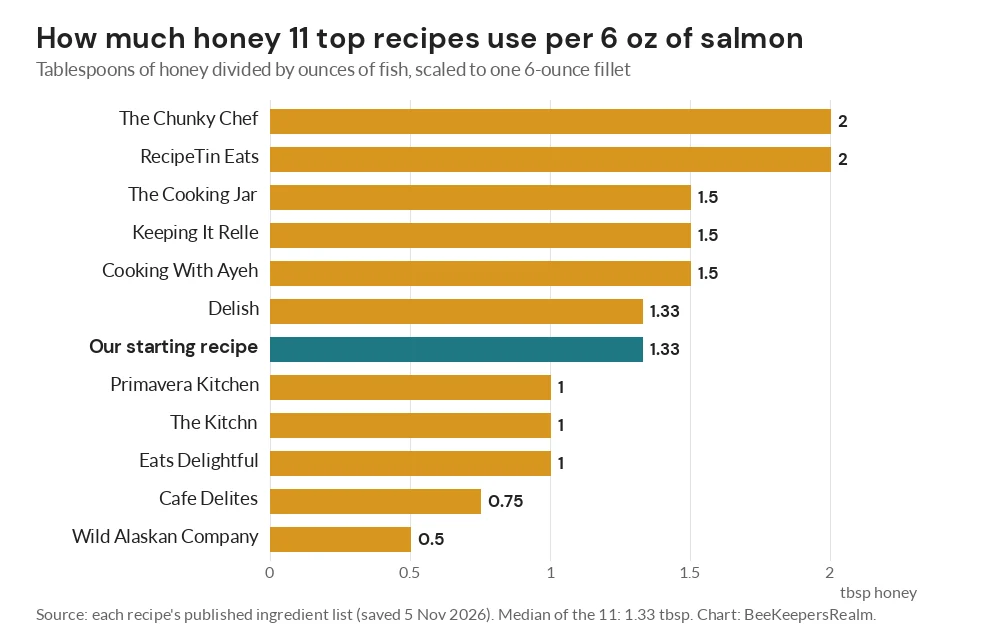
- The 11 recipes use 0.5 to 2 tablespoons of honey per 6-ounce fillet. None of them says which honey to buy.
- Refrigerate leftovers within 2 hours and eat them within 3 to 4 days, per USDA guidance.
Table of Contents
- Pan-Seared Honey Garlic Salmon: The Recipe
- Baked, Broiled and Air Fryer Versions
- Which Honey Makes the Best Glaze
- Why Honey Glazes Burn, and the No-Burn Method
- How 11 Popular Recipes Handle the Honey
- Safe Doneness: 145°F and the Fork Test
- Substitutions and Variations
- Storing and Reheating Leftovers
- What to Serve With It, and Nutrition
- Frequently Asked Questions
- The Bottom Line
Pan-Seared Honey Garlic Salmon: The Recipe
We built this recipe from the 11 published recipes compared below, using the median amount of honey, and from FDA and USDA food-safety guidance. We have not test-cooked this exact version, so treat the times as estimates and let a thermometer decide. Serves 4; about 20 minutes.
Ingredients
- 4 salmon fillets, about 6 oz (170 g) each and 1 inch thick, skin on or off
- 1/2 tsp kosher salt and 1/4 tsp black pepper
- 1 tbsp olive oil or another cooking oil
- 1/3 cup (113 g) mild liquid honey, such as clover
- 3 tbsp soy sauce (low-sodium if you prefer)
- 2 tbsp water
- 1 tbsp rice vinegar or lemon juice
- 3 garlic cloves, minced
- Sesame seeds and sliced green onions, to serve
Method
- Pat the fillets dry and season both sides with the salt and pepper.
- In a clean bowl, whisk the honey, soy sauce, water and vinegar. Keep the garlic separate.
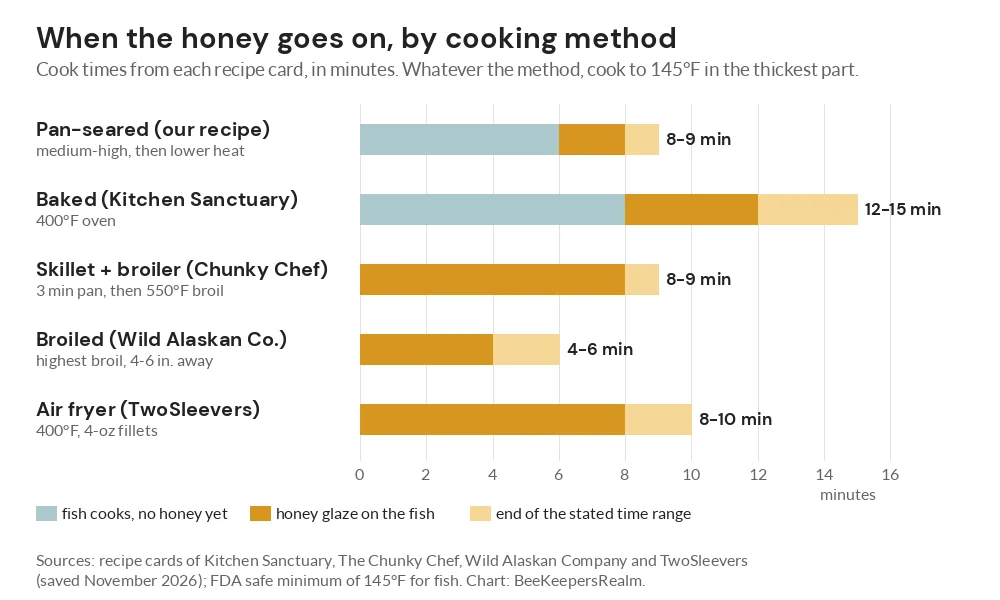
- Heat the oil in a 12-inch nonstick or cast-iron skillet over medium-high. Lay the fillets in, flesh side down, and cook without moving for about 4 minutes, until golden. Flip and cook 2 minutes more.
- Turn the heat to medium-low. Scatter the garlic around the fish and stir it in the oil for about 15 seconds.
- Pour in the sauce. Simmer gently for 2 to 3 minutes, spooning it over the fillets, until it turns syrupy and the thickest part reads 145°F. If the sauce thickens before the fish is done, add water a tablespoon at a time.
- Take the pan off the heat and top with the sesame seeds and green onions.
That is 1.33 tablespoons of honey per fillet, the median of the 11 recipes. By volume, the other liquids slightly exceed the honey, which keeps the sauce wet for longer.
Baked, Broiled and Air Fryer Versions
Baked
Kitchen Sanctuary bakes at 400°F (200°C, fan) for 8 minutes, bastes, then bakes 4 to 7 minutes more. To spare the garlic, simmer it in the sauce in a small pan for 2 to 3 minutes first. Bake the fillets plain for 8 minutes, brush on half the sauce and finish to 145°F. Keep the other half, untouched by the raw-fish brush, for the table.
In this 2 minute 33 second video, Kitchen Sanctuary makes its honey garlic butter baked salmon. Its chapter list runs from preparing the salmon and making the glaze to glazing and garnishing, baking, and serving. We have not checked the video beyond that chapter list and the written recipe it accompanies.
Broiled
The broiler is where honey burns fastest. The Chunky Chef sets its rack in the middle and warns that a high rack burns the sauce. Wild Alaskan Company broils 4 to 6 inches from the element and says to move the fish lower if the glaze starts to burn.
Air fryer
TwoSleevers cooks 4-ounce fillets at 400°F for 8 to 10 minutes and brushes on more glaze during the last few minutes. A 6-ounce fillet will likely need longer, so check for 145°F rather than trusting the clock.
Which Honey Makes the Best Glaze
Any liquid honey works; the sauce needs sugar and body more than flavor. The National Honey Board (NHB) says light-colored honey generally tastes milder and darker honey stronger, so pick a light one if you want to taste the garlic and soy.
“It is also perfect for mildly sweet marinades for fish or chicken.”
| Honey | What the NHB says | How it suits salmon (our judgment) |
|---|---|---|
| Clover | Sweet, flowery aroma and a mild taste; excels “in the oven” | The safe default |
| Alfalfa | Mild; suited to “marinades for fish or chicken” | The NHB’s only named fish match |
| Orange blossom | Sweet and fruity; good in marinades | Pairs with a lemon or orange glaze |
| Wildflower | Mixed, undefined flower sources | Fine, but varies from jar to jar |
| Buckwheat | Dark, with molasses and malt flavors; used in barbecue sauces | Will cover the garlic; better for a smoky glaze |
For other jars on the shelf, see our guide to 16 popular U.S. honey varieties. A pricey raw jar adds little here, because the simmering sauce heats it anyway.
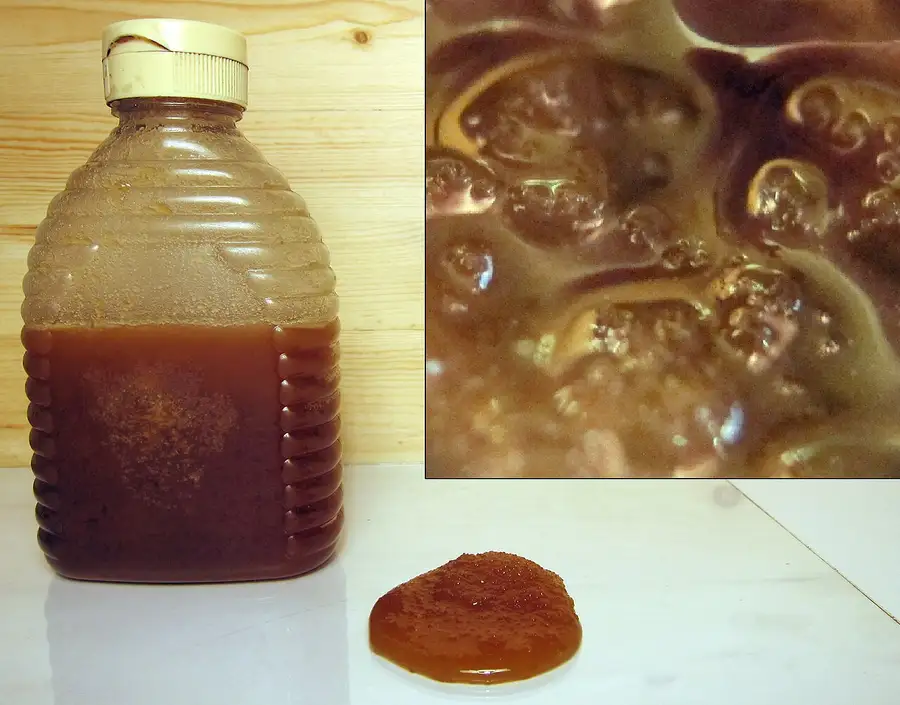
Crystallized honey is still good, the NHB says: the crystals are glucose coming out of solution. Weigh it (113 g per 1/3 cup) and it melts as the sauce warms. To make the whole jar pourable again, see how to reliquefy crystallized honey without damage.
Why Honey Glazes Burn, and the No-Burn Method
Honey is mostly sugar, and its main sugar browns early. USDA FoodData Central lists 100 g of honey as 17.1 g water, 40.9 g fructose, 35.8 g glucose and 0.9 g sucrose. The Science of Cooking caramelization table puts fructose at 230°F (110°C) and glucose and sucrose at 320°F (160°C). Other tables give somewhat different figures, but fructose is the lowest in each one we have seen.
“Products made with honey brown faster than foods made with other sweeteners.”
That is why bakers lower the oven by 25°F when they substitute honey for sugar. A wet sauce stays near 212°F. Our inference: a glaze burns once its water cooks off and the syrup climbs past the fructose point. Our 113 g of honey holds only about 19 g of water, so the other liquids do that job.
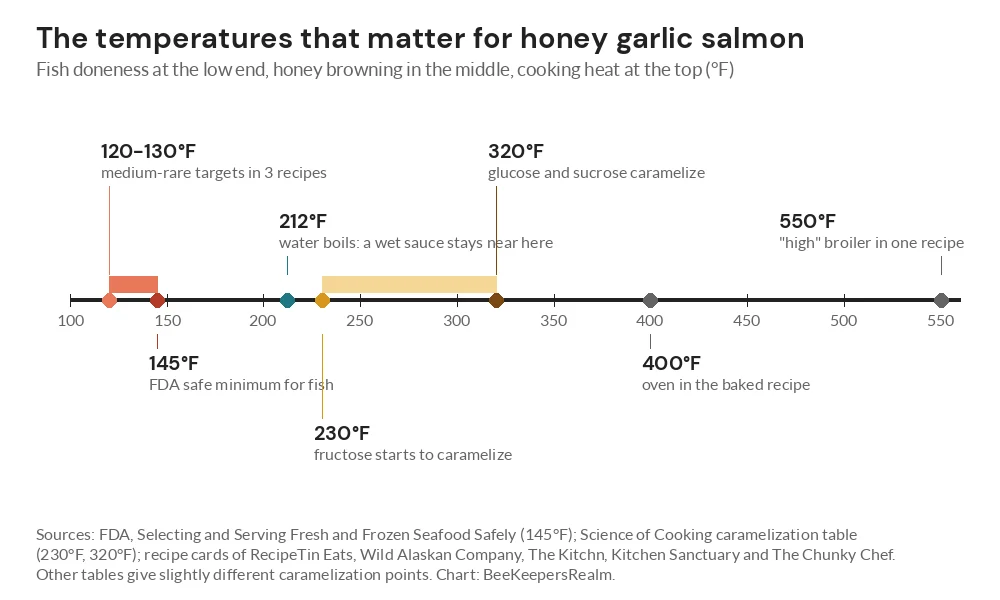
The no-burn method, drawn from the recipes compared below:
- Cook the fish first. The sauce goes in for the last 1 to 4 minutes on the stove, or the last few minutes in the oven.
- Lower the heat before you pour. Cooking With Ayeh drops to low; The Kitchn uses medium throughout.
- Keep liquid in the sauce. Cooking With Ayeh adds water to stop the sauce burning, and RecipeTin Eats adds water if it thickens too soon.
- Give garlic seconds, not minutes. The Kitchn cooks it about 15 seconds, until fragrant but not browned.
How 11 Popular Recipes Handle the Honey
We saved the 10 top Google results for “honey garlic salmon” on November 5, 2026, plus Cafe Delites from Bing’s top four. Then we read each recipe card.
| Recipe and method | When the honey goes in | Doneness given |
|---|---|---|
| The Chunky Chef, skillet then broiler | At the start, then broiled 5 to 6 min | 145°F (USDA, in post) |
| RecipeTin Eats, skillet | After searing, about 1 min | 120°F medium-rare |
| Delish, skillet | After the flip, about 3 min | None |
| The Cooking Jar, oven 350°F | Marinade, plus a baste halfway | 145°F or flakes |
| Keeping It Relle, skillet | After browning, until thick | 145°F |
| Primavera Kitchen, skillet | After cooking, 1 to 2 min | 145°F |
| Wild Alaskan Company, broiler | Glazed before broiling | 120°F medium-rare |
| Cooking With Ayeh, skillet | After the flip, heat to low, 2 min | None |
| The Kitchn, skillet | After the flip, 3 to 4 min | 120°F to 145°F |
| Eats Delightful, skillet | Fish returned to warm sauce | None |
| Cafe Delites, skillet then broiler | At the start, then broiled 5 to 6 min | None |
Sources: recipe cards and post text saved November 5, 2026. Four recipes give 145°F as the target. The Kitchn gives 120°F to 130°F for medium-rare or 135°F to 145°F for more well-done. Wild Alaskan Company cites the FDA’s 145°F in its text but targets 120°F in its card.
None of the 11 names a honey variety; Wild Alaskan Company only says any type works.
Safe Doneness: 145°F and the Fork Test
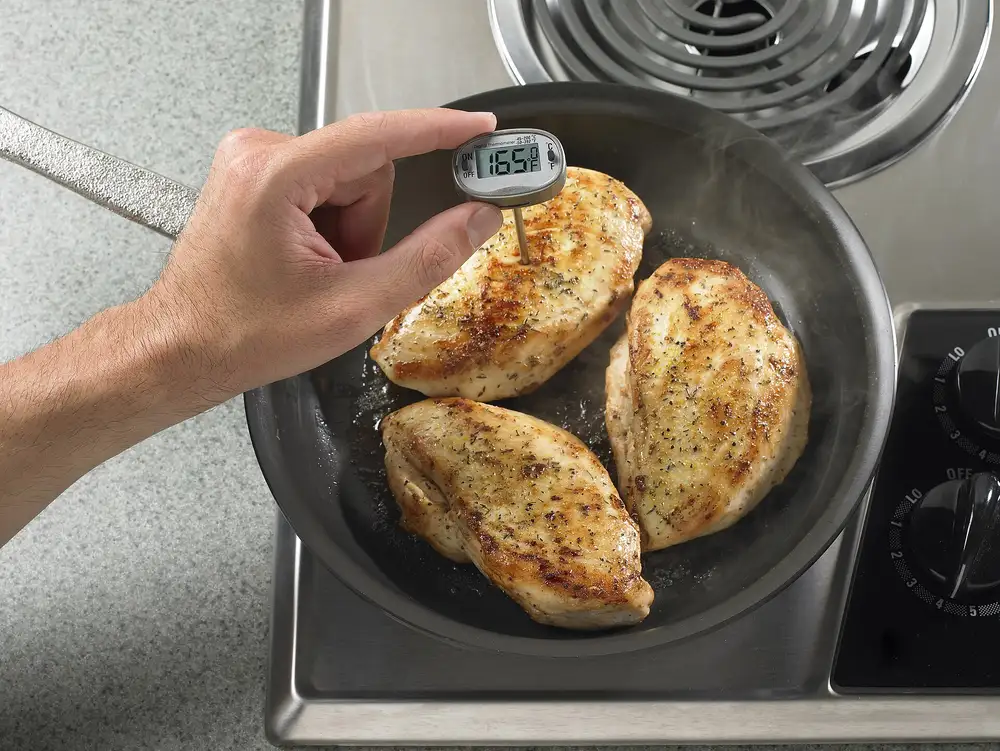
The FDA’s seafood guidance and the USDA Food Safety and Inspection Service’s safe minimum internal temperature chart both give 145°F (62.8°C) for fish.
“Most seafood should be cooked to an internal temperature of 145°F. If you don’t have a food thermometer, there are other ways to determine whether seafood is done.”
For fish, the FDA’s backup cue is flesh that separates easily with a fork. Put the thermometer into the center of the thickest fillet, as The Kitchn advises. Recipes that pull salmon at 120°F to 130°F are below that guideline, and the FDA says pregnant women, children, older adults and people with weakened immune systems should avoid undercooked fish. Before cooking, the FDA says to refrigerate raw seafood at 40°F or below if you will use it within 2 days, and to freeze it otherwise.
Babies are a separate case. University of Missouri Extension says honey and products made with honey must not be fed to infants younger than one year, and that the spores in honey are not destroyed by regular cooking. Serve this dish only to children over 12 months; read more on why honey is unsafe for babies.
Wild salmon is leaner, so it cooks faster. USDA data list 6.3 g of fat per 100 g of raw wild Atlantic salmon against 13.4 g for farmed. This is educational information from FDA and USDA sources, not professional advice.
Substitutions and Variations
- Gluten-free: standard soy sauce is brewed from soy and wheat. USDA lists it as “Soy sauce made from soy and wheat (shoyu)”. Use a soy sauce or tamari labeled gluten-free.
- Soy-free: replace the soy sauce with an equal amount of broth or water and salt to taste. We have not tested this; the sauce will be milder.
- Spicy: brush on homemade hot honey at the end, or add red pepper flakes as Delish does.
- Trout: RecipeTin Eats and Primavera Kitchen both list trout as a swap for salmon.
- Do not jar leftover sauce as garlic honey. Raw garlic in honey needs a safe method; see how to infuse honey safely.
Storing and Reheating Leftovers
USDA FSIS says to refrigerate leftovers within 2 hours (1 hour above 90°F). The USDA FoodKeeper data give cooked fish 3 to 4 days in the refrigerator and 1 to 2 months in the freezer. Store it in a shallow covered container. FSIS says to reheat leftovers to 165°F. Discard any sauce that touched raw fish.
What to Serve With It, and Nutrition
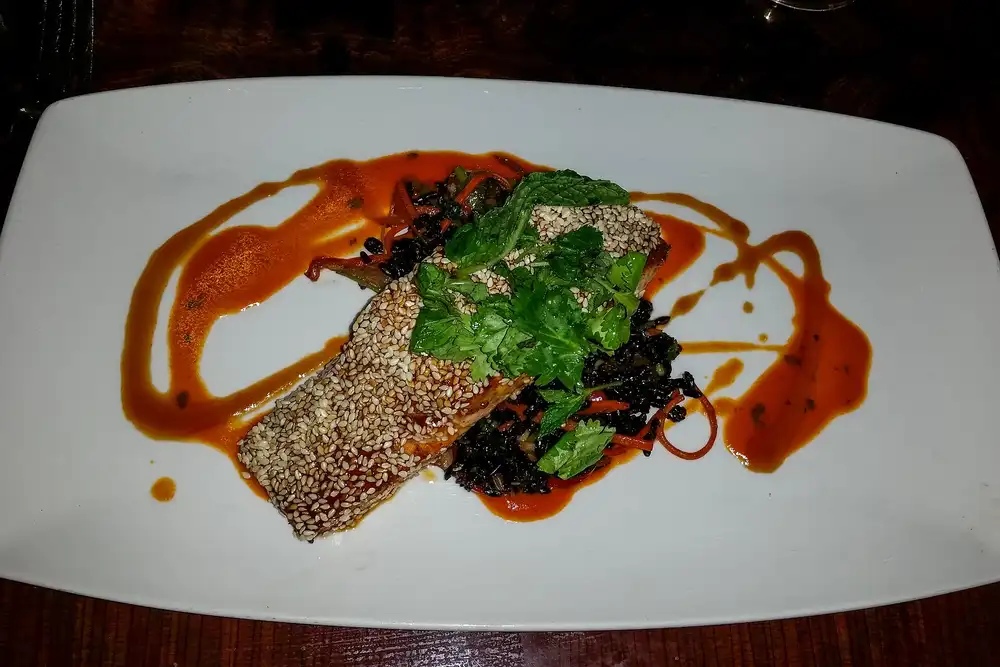
The recipes we read suggest jasmine or coconut rice to catch the sauce, quinoa, potatoes, steamed broccoli or asparagus, or a green salad.
| Per serving (1 fillet plus sauce) | Farmed salmon |
|---|---|
| Calories | About 480 kcal |
| Protein | 36 g |
| Fat | 26 g |
| Carbohydrate (sugars) | 25 g (23 g) |
| Sodium, regular soy sauce | 760 mg |
Our arithmetic from USDA FoodData Central values for raw farmed Atlantic salmon, honey, soy sauce, garlic and olive oil, assuming all the sauce is eaten. Wild Atlantic salmon cuts it to about 370 kcal. An estimate, not a lab analysis.
The honey alone adds about 86 calories per serving; see calories in honey by the spoon.
Frequently Asked Questions
Do you add honey to salmon before or after cooking?
Near the end. Cook the fish most of the way, then add the honey sauce for the last few minutes over lower heat. Honey’s fructose starts to caramelize near 230°F, so sauce added early, especially under a broiler, is the usual cause of a burnt glaze.
Do honey and garlic go with salmon?
Yes. All 11 recipes we compared pair them, most with soy sauce for salt, and the National Honey Board names marinades for fish as a use for mild alfalfa honey. Cook the garlic only briefly: The Kitchn gives it about 15 seconds, until fragrant but not browned.
Is it better to cook salmon at 350 or 400 in the oven?
Both appear in published recipes: The Cooking Jar bakes at 350°F for 15 to 20 minutes, Kitchen Sanctuary at 400°F for 12 to 15. A shorter, hotter bake with the glaze added late is the gentler route for honey. Either way, 145°F decides doneness.
What is the biggest mistake when cooking salmon?
With a honey glaze, two problems stand out in the recipes we read: a broiler rack set too high, which The Chunky Chef warns burns the sauce, and no doneness check at all, which four of the 11 recipes leave out.
What is a good glaze to put on salmon?
The most common glaze in the top recipes is the one above: honey, soy sauce, garlic and a little acid such as vinegar or lemon juice. Hot honey makes it spicy, and orange blossom honey suits a citrus version. Whichever you choose, add it in the last few minutes and cook the fish to 145°F.
The Bottom Line
Use a mild honey, cook the salmon first, add the sauce over low heat for the final minutes and check for 145°F.
Image credits: featured photo of pan-seared glazed salmon by Daderot, CC0; crystallized honey by Zaereth, CC0; honey maple glazed salmon by Haydn Blackey, CC BY-SA 2.0; soy-glazed salmon by HarshLight, CC BY 2.0; food thermometer by USDA, public domain. All via Wikimedia Commons, cropped or resized. Charts by BeeKeepersRealm.