Reviewed by Daniel M. · Last Updated September 23, 2026 · How we review
Size a honey settling tank for the largest single extraction you do, not your whole year’s crop. Divide the pounds you extract in one session by 12 (a US gallon of honey weighs about 12 pounds), add roughly 15% for the sieve, foam and headroom, then round up to the next standard tank size. For most hobby beekeepers with one to four hives, that lands between a 5-gallon bucket (about 60 lb) and an 18-gallon tank (about 200 lb).
Many sizing charts online come from industrial tank makers and quote 100 to 5,000 gallons. That is food-factory equipment. A beekeeper with a handful of hives needs something a thousand times smaller, and the calculation below gets you there in two minutes.
Key Takeaways
- Honey weighs about 12 lb per US gallon. Suppliers rate their tanks this way: Mann Lake sells a 9.17-gallon tank as 110 lb and a 70-gallon tank as 840 lb.
- Size for your biggest single pull, not your annual total. You bottle between batches.
- Leave about 15% headroom so the sieve bottom stays above the honey and foam has room to rise.
- A full 13-gallon tank holds about 150 lb of honey. Put it on its stand before you fill it, because you will not move it afterward.
- Two smaller tanks beat one big one if you keep varietals separate or extract fast-crystallizing honey such as canola.
Table of Contents
The Sizing Formula
A settling tank has one job: hold freshly extracted honey still for a day or two so air bubbles and fine wax rise to the top, where you skim them off, before you bottle from the gate at the bottom. It does not need to hold a season’s crop. It needs to hold one extraction day’s honey, plus a little room to work.
Use this three-step calculation:
- Estimate your largest single extraction in pounds. Count the supers you pull on your biggest day. A fully capped 10-frame medium super typically yields somewhere around 35 to 40 lb of extracted honey, and a shallow super less. If you already weigh your honey, use last year’s biggest day.
- Convert pounds to gallons. Divide by 12. Honey is roughly 1.4 times as dense as water, so a gallon weighs close to 12 lb. Tank makers use the same figure: Mann Lake’s stainless steel storage tanks are rated at 9.166 gallons/110 lb, exactly 12 lb per gallon, and 18.375 gallons/200 lb, which leaves a little headroom.
- Add about 15% and round up. The double sieve that sits in the top of most settling tanks needs clearance above the honey, and a layer of foam forms as the honey settles. Filling to the brim means honey backs up into the sieve and slows straining.
Worked example: you pull four medium supers in one day. At about 38 lb each, that is roughly 150 lb. 150 ÷ 12 = 12.5 gallons. Add 15% and you need about 14.4 gallons, so an 18-gallon tank fits comfortably, or a 13-gallon tank if you bottle a few jars before the last supers go through the extractor.
Tank Size by Hive Count
If you don’t know your per-super yield yet, start from hive count. The table below uses real production data for our region. USDA’s Honey report released March 13, 2026 put North Dakota’s 2025 average at 67 lb per colony, which is the highest total production of any state at 30.8 million pounds. Neighboring Minnesota averaged 50 lb, and the national average was 48.0 lb.
The “biggest single pull” column assumes you harvest twice a season, as many Red River Valley beekeepers do (a midsummer pull and a final pull in late August or September), with the larger pull being about 60% of the year. That percentage is a planning assumption, not a measured figure. Adjust it to your own pattern.
| Hives | Annual crop at 67 lb/colony | Biggest single pull (approx.) | Gallons needed (incl. 15% headroom) | Sensible tank |
|---|---|---|---|---|
| 1 | about 67 lb | 40 lb | about 4 gal | 5-gallon bucket with honey gate |
| 2 | about 134 lb | 80 lb | about 8 gal | 9 to 10-gallon tank |
| 3 to 4 | 200 to 270 lb | 120 to 160 lb | 11.5 to 15.5 gal | 13 or 18-gallon tank |
| 5 to 6 | 335 to 400 lb | 200 to 240 lb | 19 to 23 gal | 18-gallon tank plus a bucket, or a 26 to 30-gallon tank |
| 8 to 10 | 535 to 670 lb | 320 to 400 lb | 31 to 38 gal | Two 18 to 20-gallon tanks, or a 40-gallon tank |
| 15+ | 1,000 lb and up | 600 lb and up | 57+ gal | Sump plus heated 55 to 70-gallon bottling tank |
A good year can double these numbers. If your colonies sit next to sunflower or canola, plan for the upper end. If you’re still choosing how you’ll extract, our comparison of manual vs. electric extractors by hive count uses the same hive-count bands.
Standard Tank Sizes and What They Hold
Settling and bottling tanks are sold in a fairly consistent set of sizes. Capacities below are the makers’ own ratings. Note that some quote slightly less than 12 lb per gallon to allow headroom.
| Nominal size | Honey capacity | Typical user | Notes |
|---|---|---|---|
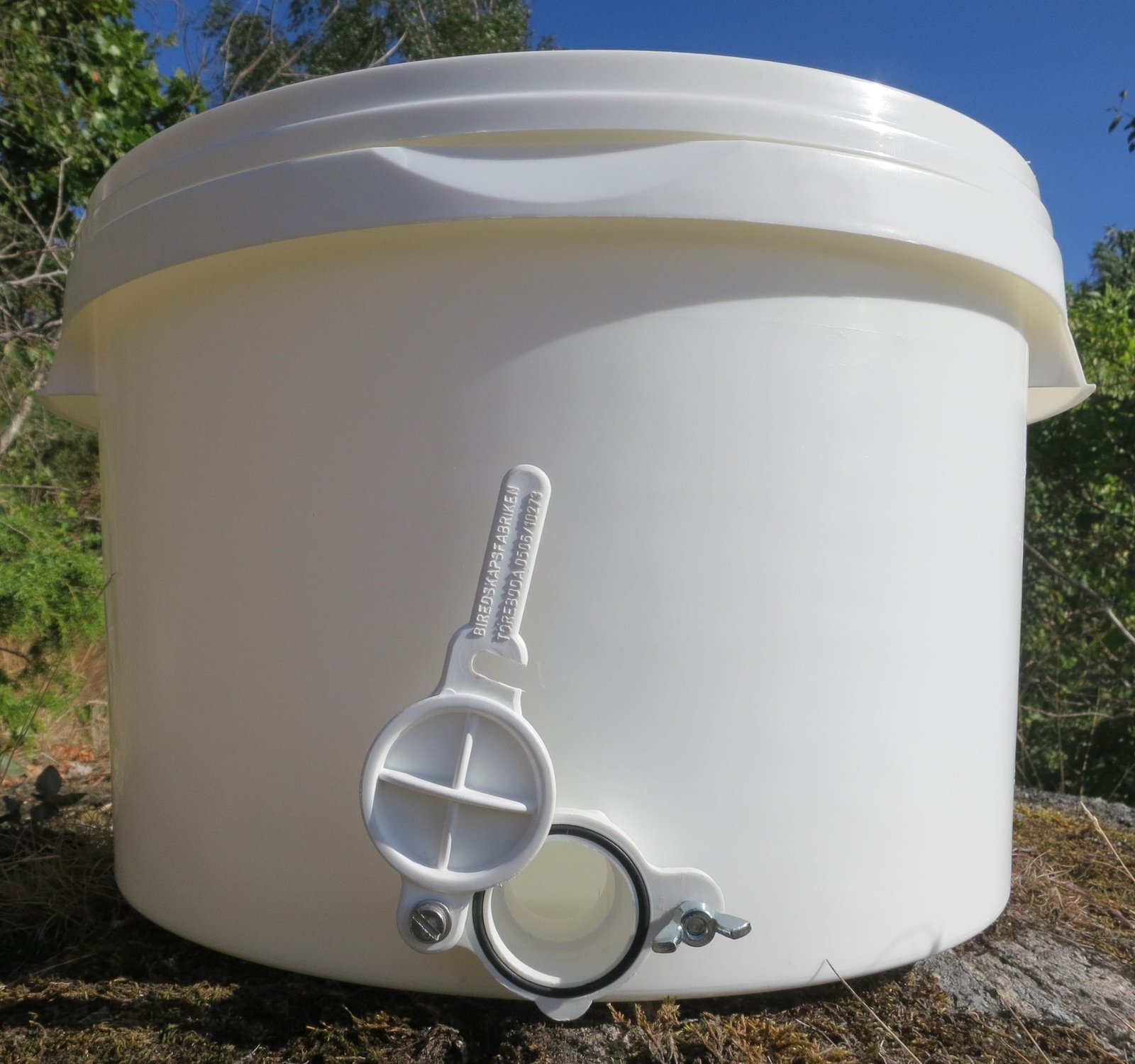
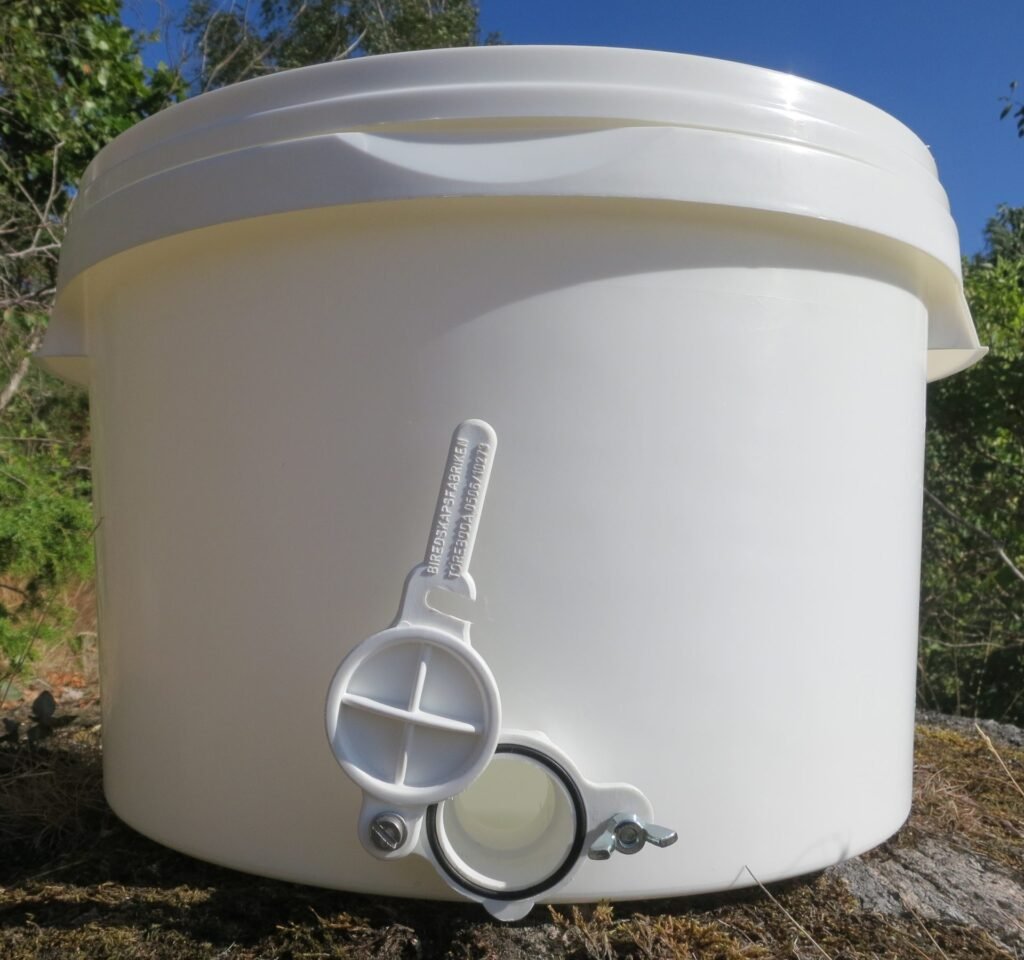
| 5 to 6-gallon bucket | about 60 lb | 1 to 2 hives | Food-grade plastic with a honey gate; cheapest start |
| 5.5-gallon settling tank | about 60 lb | 1 to 2 hives | Betterbee rates its SAF 5.5-gallon tank at about 60 lb |
| 9 to 10 gallons | about 110 lb | 2 to 3 hives | Still light enough to move when empty |
| 13 gallons | about 150 lb | 3 to 4 hives | A common hobby size |
| 18 to 20 gallons | about 200 to 220 lb | 4 to 6 hives | Needs a solid stand |
| 26 to 30 gallons | about 300 to 350 lb | 6 to 10 hives | Heated versions start to make sense |
| 55 to 70 gallons | about 660 to 840 lb | Sideline | Usually heated, often fed by a sump and pump |
Material matters less than people think at hobby scale. Food-grade plastic works well for a bucket setup, and stainless lasts longer and tolerates heat. We cover the trade-offs in stainless steel vs. plastic bottling tanks, and specific models in the best bottling tanks for small producers.
One Big Tank or Two Small Ones?
Once your biggest pull passes about 150 lb, you have a choice: one large tank or two smaller ones. For most Northern Plains beekeepers, two is the better answer, for three reasons.
- Varietals stay separate. Light clover and alfalfa honey and darker late-season honey sell differently. Two tanks let you settle and bottle them separately.
- Fast-crystallizing honey doesn’t wait. Canola is grown widely in North Dakota, and its high-glucose honey sets fast. Rusty Burlew of Honey Bee Suite advises extracting canola within 24 hours of collecting it and marketing it quickly. A half-full tank you can empty in one bottling session is safer than a big one that sits.
- You keep working. While one tank settles, the other receives the next extraction. With one tank, you wait a day or two before you can extract again.
If a batch does start to granulate in the tank, use gentle warming. Our guide to honey bottling temperatures covers safe ranges, and how to avoid overheating honey explains why hotter is not faster in the long run.
Weight, Stands and Gate Height
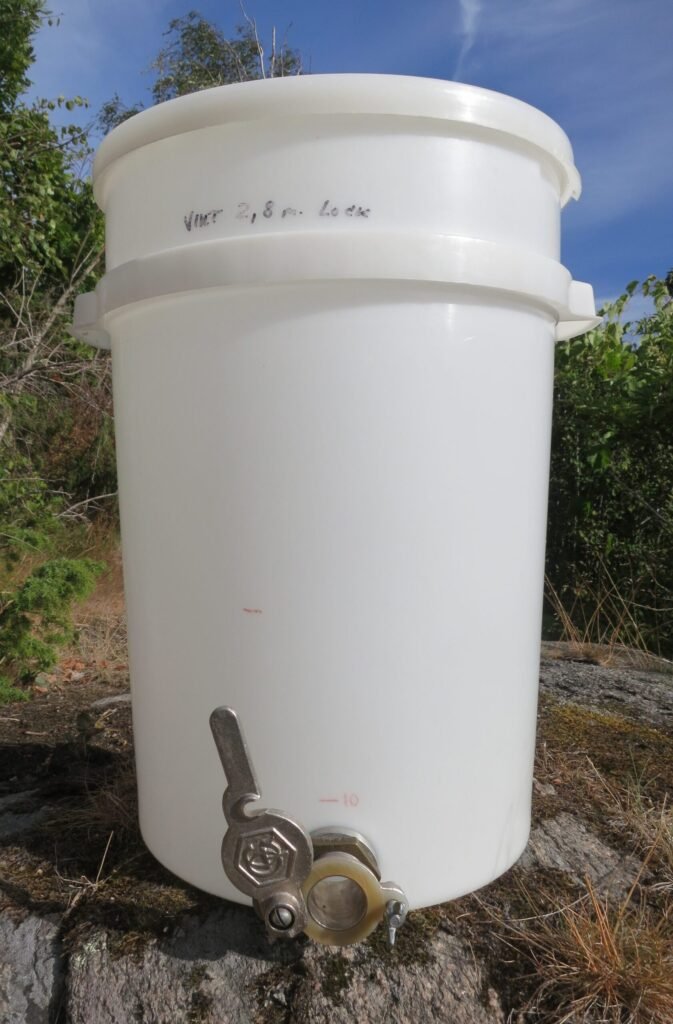
Capacity decisions are also weight decisions. A 13-gallon tank of honey is about 150 lb, and an 18-gallon tank is about 200 to 220 lb before you add the steel. Three practical rules:
- Set the tank on its stand before filling it. Nobody should lift 150 lb of honey onto a counter.
- Check the stand and the surface. A folding table rated for 100 lb is not a honey stand. Put heavy tanks on a purpose-built stand or a solid bench, near a floor drain if you have one.
- Measure gate clearance. The honey gate must sit higher than your tallest jar plus a hand’s width. A tall tank on a short stand forces you to bottle into small jars only.
A worn or dripping gate wastes honey whatever the tank size. See our guide to honey gate replacements if yours leaks.
When a Bigger Tank Is the Wrong Answer
Oversizing has costs. Honey is hygroscopic, so a large, partly filled tank exposes more surface to air and humid honey-house air. A heated tank warms honey you don’t need yet. And honey sitting for weeks in a tank is honey that isn’t in jars.
If your extraction days are outgrowing your tank, a bigger tank isn’t always the fix. Betterbee’s equipment sizing guide suggests that beekeepers running extractors up to about 20 frames can simply drain the extractor through a double sieve into a bucket or bottling tank. Operations running 30-frame extractors and larger usually add a sump with a vertical sieve so honey strains continuously. Before you buy a tank that holds more, ask whether you need to strain faster, bottle more often, or both.
Also check moisture before any honey goes into long settling. Honey above about 18.6% water can ferment, whatever the tank. Our guide to target moisture for ripe honey explains how to check.
Frequently Asked Questions
How many pounds of honey fit in a 5-gallon bucket?
About 60 lb. Honey weighs close to 12 lb per gallon, so a 5-gallon bucket holds roughly 60 lb when full. Fill it slightly less if a sieve sits in the top.
What size settling tank does a beginner with one or two hives need?
A food-grade 5 or 6-gallon bucket with a honey gate is enough for most one-hive harvests. With two productive hives, a 9 to 10-gallon tank saves you from bottling in the middle of extracting.
How long should honey sit in a settling tank?
Suppliers commonly recommend 24 to 48 hours at warm room temperature, long enough for air bubbles and fine wax to rise so you can skim them. Cool rooms slow the process. Don’t leave honey in an open or partly filled tank for weeks.
Is a settling tank the same as a bottling tank?
Usually yes, at hobby scale. The same tank with a gate at the bottom does both jobs. Larger operations sometimes separate them, using a sump or settling tank upstream and a heated bottling tank near the jar-filling station.
Do I need a heated settling tank?
Not for a few hives in summer. Heat helps when you bottle in a cool room, handle a lot of honey, or bottle weeks after extraction. For hobby use, a warm room does the same job for less money.
Should I size my tank for my whole year’s harvest?
No. Size it for your largest single extraction day. You bottle between pulls, so the tank rarely needs to hold more than one batch at a time.
The Bottom Line
Weigh or estimate your biggest extraction day, divide by 12, add about 15%, and round up to the next standard size. For most hobby beekeepers, that means a bucket or a 9 to 18-gallon tank. Past about 150 lb per pull, two tanks usually serve better than one. For the full journey from comb to jar, see our overview of how honey is processed.