Reviewed by Thomas B. · How we review
This article synthesizes work across bees, ants, and other social insects to show how early life cues build the architecture of worker and queen castes.
Larvae are developmentally plastic individuals whose nutrition, hormone levels, and social context steer their developmental path. Small shifts in food quality and timing change size and body condition, and that can push a young individual toward a worker or a queen role — a process rooted in exactly how and when nurse bees feed developing larvae, detailed in this site’s stage-by-stage guide to how honeybee larvae are fed at each stage.
We review molecular pathways, such as juvenile hormone signaling, and social routes like trophallaxis and trophic eggs. Models linking larval signals to colony-level outcomes clarify how individual growth choices affect reproduction and task allocation across colonies.
By combining empirical studies with theoretical models, this article connects individual development to life-history patterns, seasonality of provisioning, and the evolution of size-related roles in social groups.
Key Takeaways
- Early nutrition and hormones guide larval fates toward worker or queen roles.
- Trophic eggs and trophallactic signals act as social cues for growth.
- Timing and food quality change adult size and reproductive potential.
- Individual outcomes scale up to affect colony reproduction and task balance.
- Comparative and modeling work reveals convergent and divergent mechanisms across species.
Scope, definitions, and the present state of knowledge in social insects
This section sets clear definitions and frames current knowledge on how early growth paths produce workers and queens across Hymenoptera.
Working definitions:
- caste: a stable adult role, typically reproductive (queen) or non-reproductive (worker), defined by morphology and function.
- larvae: juvenile stages that integrate nutritional, hormonal, and social cues to follow alternate growth programmes.
- workers and queens: adults distinguished by size, reproductive anatomy, and task repertoires across taxa.
Comparative studies show that advanced eusocial species (e.g., honey bees) use nurse-mediated nutrition and molecular signals, while primitively social taxa often rely on provisioning rates and behaviour to bias outcomes.
The reader should expect a rigorous scientific article that synthesizes peer-reviewed experiments, comparative analyses, and models. We highlight how young individuals collect signals and resources, and how colony behaviour amplifies those signals.
Key metrics used across species include body-size distributions, developmental thresholds, and frequency-based measures of role variation. Examples span bees and ants to illustrate molecular, physiological, and ecological levels.
For a comparative ant study and detailed methods, see this resource: comparative ant study.
Open questions remain about plasticity, sampling protocols, and controlling behaviour versus environment; later sections map these issues and propose experimental and modeling approaches.
Caste determination factors in larvae
A compact set of controls—nutrition, endocrine signals, and social care—shapes how young individuals travel toward distinct adult roles. These mechanisms operate together during critical windows of growth and set the stage for later adult function.
Core mechanisms: nutrition, endocrine signals, and social context
Nutrition pulses and the timing of feeding events change body reserves and growth rate. Small early differences in intake amplify across molts and lead to large variation in size and condition.
Hormonal sensitivity windows align with feeding. When a hormone spike coincides with high nutrition, responses are nonlinear and can push an individual toward queen or worker paths.
From larval development to adult castes: timing and thresholds
Brood care, nurse behaviour, and colony stocks set which larvae cross key thresholds. Access to extra meals or trophic resources often defines whether a juvenile attains the mass and physiology of a future queen.
Individuals also vary in begging and uptake, making development a dynamic contest among siblings and caretakers. Internal physiology and external provisioning create multiple control points for final fate.
Preview: The next sections unpack nutrition mechanics, signaling, and hormone interactions and present case studies and models that knit these processes into an evolutionary framework.
Nutritional pathways: quantity, quality, and timing of food
Timed food pulses and nutrient balance during critical windows shape whether an individual grows large or remains small. Brief differences early on can cascade, creating lasting size and role outcomes.
Differential nutrition and body size outcomes
How much and what a young receives determines energy stores and growth rate. High-quality feed raises growth and builds reserves needed for future reproduction.
Resource pulses, brood access, and nurse-mediated control
Nurse behaviour affects who gets extra meals. Queueing, preferential allocation, and access to pulses set levels of nutrition across brood.
Worker vs queen development: size, growth rate, and energy balance
Repeated feeds accelerate growth and let some reach reproductive thresholds. Missed pulses keep a juvenile below those thresholds and bias outcomes toward worker roles.
Key contrasts
| Feed feature | Effect on size | Energy allocation | Likely adult path |
|---|---|---|---|
| High-quality pulses | Large size gain | Fat and ovary reserves | Queen trajectory |
| Skipped pulses | Stunted growth | Somatic maintenance | Worker trajectory |
| Repeated moderate feeds | Intermediate size | Balanced allocation | Small-worker or specialized roles |
Note: Macronutrient balance and micronutrients alter tissue allocation and metabolic rate. Species life history and colony resource goals modulate nurse choices, and these nutrition-driven pathways interact with endocrine cues explored next.
Larval signaling and worker response: coevolved control systems
Signals from young brood act as costly honest cues that steer feeding and later adult roles. Each larva adjusts signal strength based on nutrition, but producing a strong cue reduces net reserves by a cost C. This cost keeps signals informative and prevents runaway exaggeration.
Larval signals of nutritional state and their costs
Signals decline as nutrition improves under diminishing returns. When returns accelerate, some brood amplify signals after early meals, producing runaway growth for a few.
Nurse selectivity and softmax feeding probabilities
Nurses allocate food with probability Pl = exp(αSl)/Σexp(αSi). Higher α raises selectivity and shifts access toward strong-signalling larvae, concentrating resources and altering size distributions.
Task allocation trade-offs: nursing versus foraging reaction norms
Workers use reaction norms that integrate summed larval signals and their body condition. Individuals then trade time between nursing and foraging to optimize colony gains under current signal levels.
- Coevolutionary feedback: larval signals shape nurse choices; nurse selectivity reshapes signaling strategies.
- Emergent control: decentralized interactions produce an efficient information-processing system that biases which larvae cross developmental thresholds.
Preview: trophic eggs and hormones further modulate these signalling-access dynamics and will be discussed next.
Trophic eggs as developmental cues, not just nutrition
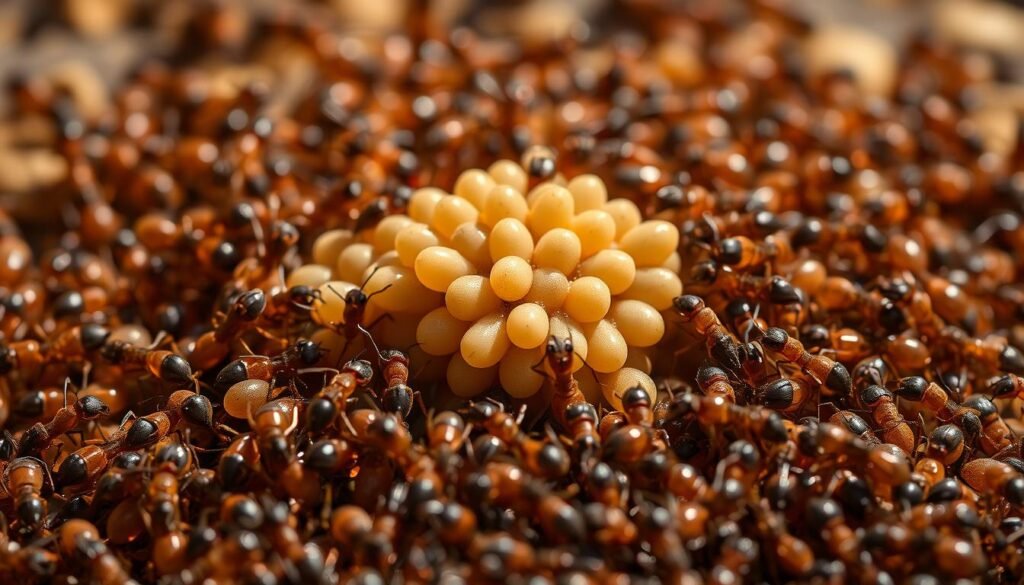
Experimental work in Pogonomyrmex rugosus shows that access to trophic eggs biases young females toward worker outcomes. First-instar brood given trophic eggs mostly became workers, while those without such eggs tended to become queens.
P. rugosus case and biochemical contrasts
Trophic eggs are larger (94.3 ± 4.3 nL) than viable eggs (63.3 ± 1.6 nL) but lack embryos. They contain lower protein, triglycerides, glycogen, and glucose, suggesting a signalling role beyond pure feeding.
Small RNAs and seasonal patterns
Trophic eggs have reduced DNA and small RNA loads. miRNA fragment size distributions differ significantly (Mantel rM = 0.26, p < 0.0001), consistent with informational differences between egg types.
- Queens lay trophic eggs in sequences; workers lay viable eggs but not trophic eggs.
- Before hibernation ~61.6% of eggs are trophic; after ~50.3% are trophic, showing seasonal control.
- Colonies given trophic eggs produced fewer queens (27 ± 9%) than controls (83 ± 10%), despite slightly higher larval survival.
Implication: Maternal and colony-level control of trophic egg presence offers a lever to tune reproductive output and workforce size across seasons and contexts.
Endocrine effects and juvenile hormone in larval pathways
Endocrine signals act as a bridge between feeding cues and final adult roles across bees and ants. Evidence from multiple Hymenoptera shows that juvenile hormone acts as a central mediator linking nutrition to phenotype.
Across honey bees and ants, experimental manipulations of juvenile hormone change the odds of queen versus worker outcomes. In Pogonomyrmex barbatus, maternal treatments with JH analogs altered trophic-egg rates and later worker size.
Timing matters. JH titers must align with critical larval development windows to shift growth trajectories. A pulse at the sensitive stage produces large, reproductive-bound individuals while mistimed exposure has little effect.
Social fluids add an external endocrine route. Trophallactic fluid and trophic eggs contain non-digestive proteins, microRNAs, and juvenile hormone. These components deliver signals that vary across caregivers and colonies.
Differences in receptor sensitivity and endocrine uptake let some young follow queen paths while siblings become workers under similar feeding. Worker behavior then tunes feeding timing, synchronizing nutrition pulses with hormonal windows.
These hormone–nutrition interactions are nonlinear and shaped by colony ecology, with clear implications for evolution of coordinated control systems.
Species case study: honey bee and nutrition-dependent development
In honey bees, brief switches in diet during early growth set a path toward large, reproductive adults or smaller helpers.
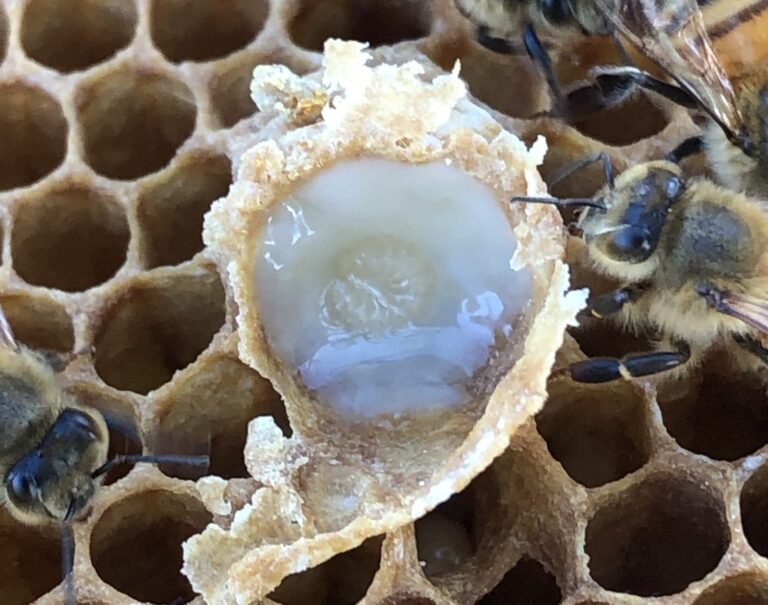
Royal versus worker jelly: composition and caste fate
Queen-destined young receive prolonged royal jelly. Worker-destined brood get worker jelly with distinct composition and shorter feeding windows.
Key compositional differences:
- Worker jelly is enriched with more microRNAs than royal jelly, and those miRNAs are linked to gene regulation during larval development.
- Royal jelly has abundant proteins and sugars that promote rapid growth and ovarian development for future queens.
Timing matters. A short early pulse of royal jelly can produce lasting size and reproductive outcomes. Workers control who gets extended royal feeding, so social behavior sets the critical windows for fate shifts.
Broader perspective: This honey bee example shows a clear nutritional and molecular route to adult outcomes that complements hormone-based models. Comparable signal transfer occurs in ants via trophallaxis and trophic eggs, pointing to shared social-fluid pathways across species.
For background on developmental stages and feeding regimens see a hive life stages guide and a relevant review at PMC.
Species case study: trophic aspects in primitively eusocial sweat bees
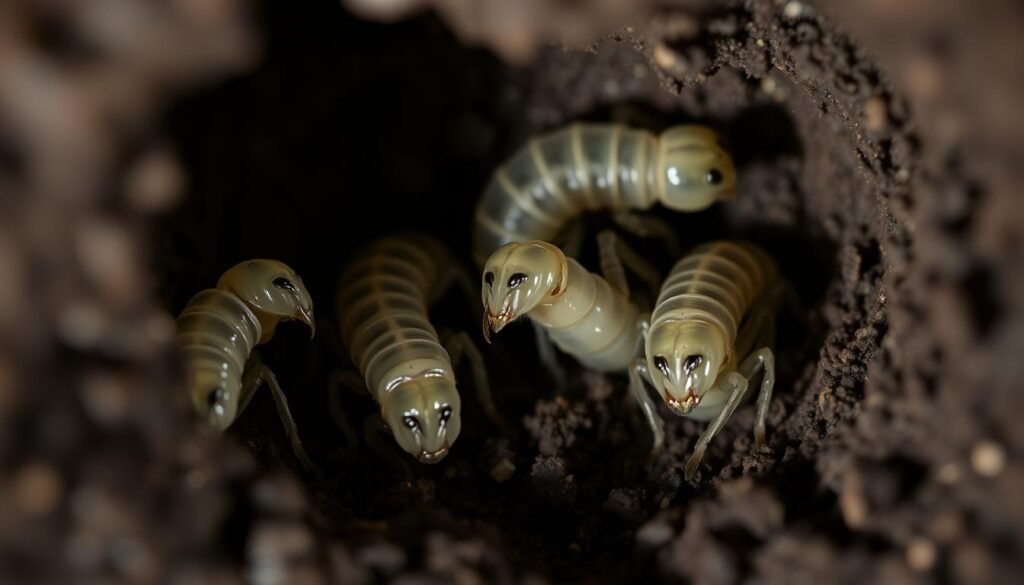
Halictus ligatus shows how mass provisioning shapes adult roles through simple nutritional rules. Researchers found that gyne-destined larvae received larger provision masses with slightly higher sugar than those that became workers.
Provision mass size and sugar content
Early access to bigger, sweeter provision masses biased a larva toward gyne development. Larger provision size produced larger body size and greater fat stores at emergence.
Fat reserves and diapause readiness
Newly-emerged gynes were notably fatter than workers. Those fat reserves link directly to diapause readiness and lower susceptibility to behavioral control by nestmates.
Ecological and comparative notes
Mass-provisioning contrasts with ant systems where trophic eggs cue worker outcomes. In H. ligatus, seasonal resource availability and colony timing alter how many female offspring get gyne-level food.
Implication: simple provisioning rules yield clear patterns at the colony level, showing how ecology and food access shape size, body condition, and future reproductive roles.
Modeling insights: symmetry breaking and worker polymorphism
When return-on-effort rises with body mass, selection favors two clear worker roles. Simple simulations show that accelerating returns (b = 1.5) produce large foragers and small nurses. This division of labour emerges from feedback between growth, foraging payoff, and feeding priority.
Accelerating returns and division of labour
With b = 1.5, larger individuals bring back disproportionately more resources. Colonies evolve a bimodal size distribution as large workers forage and small workers nurse.
Hump-shaped signaling and symmetry breaking
Larval signals evolve a hump-shaped reaction norm. After an initial meal, some individuals amplify signals to secure more food. That amplifies early differences and yields two size classes and clear caste roles.
Colony-level fitness and parameter sensitivity
Feeding allocation follows a softmax with selectivity α; higher α concentrates food and increases variation. Under diminishing returns (b = 0.5), signaling stays monotonic and size distributions remain unimodal. Key parameters are Tdev (the growth window), r (reproduction rate per resource), and b (return curvature). Together they set how many large versus small workers a colony produces and how reproduction scales with resource stock.
| Regime | b (returns) | Feeding selectivity (α) | Colony outcome |
|---|---|---|---|
| Accelerating | 1.5 | High α → high selectivity | Bimodal sizes: large foragers, small nurses; higher reproduction |
| Diminishing | 0.5 | Low α → even feeding | Unimodal size; weak caste differentiation; stable but lower peak returns |
| Sensitivity | — | Tdev, r | Short Tdev limits growth window; higher r ties reproduction to resource stock |
Temporal dynamics: seasonality, colony stage, and reproductive timing
Timing across the year reshapes how colonies allocate care and which offspring become reproductive.
Seasonal shifts in trophic-egg presence drive predictable changes in brood outcomes. In Pogonomyrmex rugosus, the proportion of trophic eggs is higher before hibernation (~61.6%) and drops after (~50.3%). That higher presence before winter aligns with fewer queens produced that season.
After hibernation, reduced trophic-egg presence and altered provisioning favor queen emergence. Similarly, when a colony loses its queen, sequences of viable eggs often replace trophic sequences and the number of new queens rises.
How timing shapes brood outcomes
- Annual cycle: Pre-hibernation high trophic-egg presence biases production toward workers; post-hibernation low presence favors queens and reproduction.
- Colony stage: Orphaned colonies switch to viable-egg sequences, increasing queen output to restore reproduction.
- Behavioral tuning: Workers and queens jointly modulate trophic resource presence to match life-stage goals.
Studies show consistent timing in queen production linked to seasonal resource dynamics and colony life. These patterns let colonies plan the number and composition of workers across the year to meet foraging and nursing demands.
Implications: Seasonality interacts with endocrine and molecular signals to fine-tune developmental outcomes. Understanding this timing clarifies interannual variation in colony productivity and queen output.
| Phase | Trophic egg presence | Typical outcome | Colony action |
|---|---|---|---|
| Pre-hibernation | High (~61.6%) | Lower queen production; build worker stocks | Increase trophic eggs; favor nursing |
| Post-hibernation | Lower (~50.3%) | Higher queen emergence; focus on reproduction | Reduce trophic eggs; allocate viable eggs |
| Queen loss / orphaned | Reduced trophic sequences | Rapid queen production | Shift to viable-egg sequences; reallocate resources |
Molecular and epigenetic regulators: miRNAs and trophallactic signals
Social feeding transfers more than calories: it passes regulatory RNAs, non-digestive proteins, and hormones that alter gene expression during sensitive growth windows.
miRNA enrichment and links to worker and queen paths
Worker jelly in the honey bee is enriched for microRNAs relative to royal jelly. Those miRNAs correlate with gene networks tied to worker traits and can repress growth or reproductive pathways.
Proteins, small RNAs, and juvenile hormone in social fluids
In Camponotus floridanus, trophallactic fluid carries non-digestive proteins, microRNAs, and juvenile hormone. These molecules act as a molecular delivery system that shifts physiology and behavior during critical windows of development.
- Evidence: P. rugosus viable and trophic eggs differ in small RNA quantity and miRNA fragment sizes, suggesting informational roles beyond nutrition.
- Workers and queens bias which individuals receive these signals through provisioning, creating structured variation among individuals.
Implication: molecular cargos complement endocrine and nutritional routes, and mapping these signatures across species will strengthen mechanistic models that link diet to outcome.
| Molecular signal | Source | Observed effect |
|---|---|---|
| microRNAs | Worker jelly, trophallactic fluid, eggs | Gene regulation; bias toward worker pathways |
| Non-digestive proteins | Trophallactic fluid | Growth and behavioral maturation cues |
| Juvenile hormone | Trophallaxis, trophic eggs | Triggers reproductive physiology when timed with nutrition |
| Small RNA size variants | Viable vs trophic eggs (P. rugosus) | Different regulatory potentials; seasonal signal shifts |
Colony ecology and control: brood care, resource stocks, and task specialization
A colony’s stored resources and a simple spending rule set how brood develop and when reproduction happens. The model treats the resource stock R as central and assumes queens invest a fraction rR each time step to produce new eggs.
Resource stock R, reproductive investment r, and brood development
Foraging workers add to R. Nursing consumes R to feed brood and let young cross developmental thresholds.
Size-dependent foraging follows F = aX^b, so larger worker bodies bring accelerating returns. That raises R and allows more reproduction when rR is allocated.
Behavioral feedbacks: foraging efficiency, body size, and division of labor
Feedback loops emerge: better foragers raise R, which funds more brood care and growth. Some individuals specialize as foragers; others focus on nursing.
Colony-level ecology and seasonal resource shifts change the balance between acquisition and care. These dynamics align with molecular and endocrine signals that act within larvae to lock in outcomes.
| Process | Mechanism | Colony effect |
|---|---|---|
| Foraging | F = aX^b (size-dependent) | Increases R; favors large worker roles |
| Nursing | Consumes R to feed brood | Enables growth above thresholds; lowers short-term R |
| Reproduction | Queens invest rR | Depends on sustained R; links colony economy to output |
Comparative perspectives across species and life histories
Different life histories split species into distinct strategies: egg feeding, trophallaxis, or a mix that layers control over brood outcomes.
Where egg provisioning or fluid transfer mediate early cues
Some species, such as Pogonomyrmex rugosus, depend heavily on trophic eggs as the primary route to bias worker outcomes. Other hymenoptera, notably many ants and bees, use trophallaxis and social fluids to deliver hormones, miRNAs, and proteins.
Mixed strategies occur. In several social insects both routes coexist and provide layered signals: eggs give bulk nutrition plus seasonal cues, while trophallaxis delivers finer molecular payloads timed to sensitive windows.
Ecology, colony size, and body-size effects
Ecology shapes mechanism presence. Species with unpredictable food or large colonies often favor fluid-based systems that let workers rapidly redirect resources.
Nesting habits and life span also matter. Mass-provisioning bees show different patterns than resource-buffered ant colonies.
| Strategy | Typical taxa | Key payloads | Ecological correlates |
|---|---|---|---|
| Trophic eggs | P. rugosus and some ants | Bulk nutrients; altered small RNA loads | Seasonal control; maternal pacing |
| Trophallaxis | Honey bees, Camponotus spp. | Hormones, miRNAs, proteins | Large colonies; flexible allocation |
| Mixed strategies | Multiple hymenoptera | Layered nutritional + molecular cues | Intermediate colony sizes; fine-tuned timing |
Comparative studies show clear variation across species in reliance on each route. Recognizing presence or absence of specific mechanisms is essential for cross-taxonomic inference.
Hypotheses for future work: link nesting ecology, resource predictability, and colony size to mechanism prevalence; test how body-size distributions favor egg versus fluid strategies across species.
Research gaps and future directions in caste determination studies
To advance mechanistic understanding, targeted experiments must vary trophic-egg number and composition while tracking outcomes over time.
First, controlled manipulations that change the number and biochemical make-up of trophic eggs will isolate causal drivers of worker and queen outcomes across Hymenoptera.
Experimental manipulations of trophic egg quantity and composition
Designs should randomize egg sequences, measure survival and size, and sample hormones at sensitive windows. Standardized reporting of sample sizes, timepoints, and assay methods will let studies compare results across taxa.
Integrating omics with individual-based models of larval signaling
Combine transcriptomics, small RNA profiling, and proteomics with agent-based evolution models. That link will map molecular payloads to behavioral rules, variation among individuals, and colony-level outcomes.
- Priorities: quantify how individuals vary in signaling and sensitivity, track worker versus queen provisioning roles, and couple endocrine pulses to feeding events.
- Call to action: fund collaborations between empiricists and modelers to scale microdynamics to colony evolution and test hypotheses about evolution of role allocation.
Conclusion
This article closes by linking nutrition, hormones, and social feeding into a unified view of how young brood develop distinct adult roles across social insects.
Key synthesis: nutrition pulses, endocrine timing, and caregiver provisioning converge to produce robust caste outcomes. Molecular cargos in social fluids and trophic eggs carry informational cues beyond calories and help guide determination toward queen or worker paths. Evolutionary feedbacks — where size-dependent payoffs favor specialized work — can generate stable polymorphism and division of labor.
Implications and next steps: well-timed provisioning and control over access to cues tune colony resilience and reproduction. Future work should test trophic-egg composition, map endocrine responses in real time, and combine omics with models. This article provides a foundation for integrative studies that link mechanisms to colony-level evolution and function.
FAQ
What determines whether a female larva becomes a worker or a reproductive in social Hymenoptera?
Multiple interacting influences shape fate: the amount and composition of food delivered by nurses, endocrine signals such as juvenile hormone, timing of feeding during critical growth windows, and social context including brood access and colony needs. Together these factors set growth trajectories and gene-expression states that bias larvae toward worker or reproductive roles.
How does nutrition specifically influence size and adult role?
Both quantity and quality matter. Larger feedings rich in protein and lipids accelerate growth and fat accumulation, often producing reproductives. Lower or intermittent provisioning favors smaller adult body size and worker-like physiology. Timing matters too: nutrient pulses during sensitive larval stages have outsized effects on final caste-related traits.
What role does juvenile hormone play in developmental pathways?
Juvenile hormone (JH) acts as a key endocrine mediator that integrates nutritional cues with developmental timing. Elevated JH levels during larval growth frequently promote reproductive development, while lower JH favors worker physiology. The hormone interacts with nutrient signaling and can shift threshold responses during critical windows.
Are there non-nutritional larval signals that influence caregiver behavior?
Yes. Larvae produce chemical and possibly small-RNA signals that convey nutritional status or developmental needs. Nurses detect these cues and adjust provisioning. Such signaling imposes costs and can evolve alongside caregiver responsiveness, producing coadapted control systems within colonies.
What are trophic eggs and how do they affect developing brood?
Trophic eggs are unfertilized or specially provisioned eggs laid as food for larvae or nurses. They provide concentrated proteins and lipids and can bias development toward worker outcomes when access is high. Their biochemical profile differs from reproductive eggs and can carry regulatory molecules that affect growth.
How do seasonal and maternal effects modify brood outcomes?
Seasonal shifts alter resource availability and colony priorities, changing provisioning rates, egg types, and hormone profiles. Maternal condition and timing can influence egg composition and the propensity to produce trophic versus reproductive eggs, thereby affecting offspring phenotype and readiness for diapause or reproduction.
What evidence links small RNAs or miRNAs to caste-related pathways?
Studies report differential miRNA profiles between egg types and social fluids, and distinct expression patterns in larvae destined for different roles. These molecules can regulate gene networks tied to metabolism, growth, and hormone signaling, providing a molecular layer that complements nutritional and endocrine control.
How do nurse behaviors like selective feeding shape colony-level outcomes?
Nurse selectivity—preferentially feeding certain brood—creates feedback loops that amplify size and role differences. When nurses favor particular larvae, those individuals grow faster and are more likely to develop reproductive traits, while others receive limited resources and assume worker roles. Such choices affect division of labor and colony fitness.