A honeybee colony doesn’t need a minimum acreage to survive — a single hive can sit on a suburban quarter-acre lot — but a colony forages across roughly 2,000 to 9,000 acres of surrounding land regardless of how much of that you actually own, which is why “how much land do I need” is really a question about layout and neighbors, not about square footage. For a homestead already juggling a garden, an orchard, and maybe chickens or goats, the real planning question is where a hive fits without creating flight-path conflicts with everything else you’re growing and raising.
This is a different question than whether bees are worth adding to a homestead at all, which this site covers separately. Here, the assumption is that you’ve decided bees make sense — this article is about the physical planning: minimum space, flight paths, setback and orientation, and how a hive shares ground with a garden, an orchard, chickens, or small livestock.
Key Takeaways
- A single hive needs only about 10–15 square feet of physical footprint, but its bees forage across a 2- to 3-mile radius regardless of your property’s size, so forage quality within that radius matters more than your own acreage.
- Mississippi State University Extension and other land-grant apiculture programs generally recommend 1–2 hives per acre for pollination-focused placement and up to 2–4 per acre where honey production is the priority and forage is strong.
- Flight-path planning — orienting the entrance away from foot traffic and using a hedge or fence to force bees to fly up and over — matters more for close neighbors than raw distance does.
- Bees, a garden, an orchard, and most homestead livestock coexist well on the same small property when hives are placed to avoid crossing high-traffic paths, not by being kept far apart.
- Local zoning and setback rules vary significantly by city and county — check yours directly rather than assuming a rule from another area applies.
Table of Contents
- The Actual Physical Footprint of a Hive
- Forage Range vs. Property Size: Why They’re Different Questions
- How Many Hives Per Acre, Realistically
- Flight Paths, Setbacks, and Sharing Space With a Garden or Orchard
- Fitting Bees in Alongside Chickens, Goats, and Other Homestead Systems
The Actual Physical Footprint of a Hive
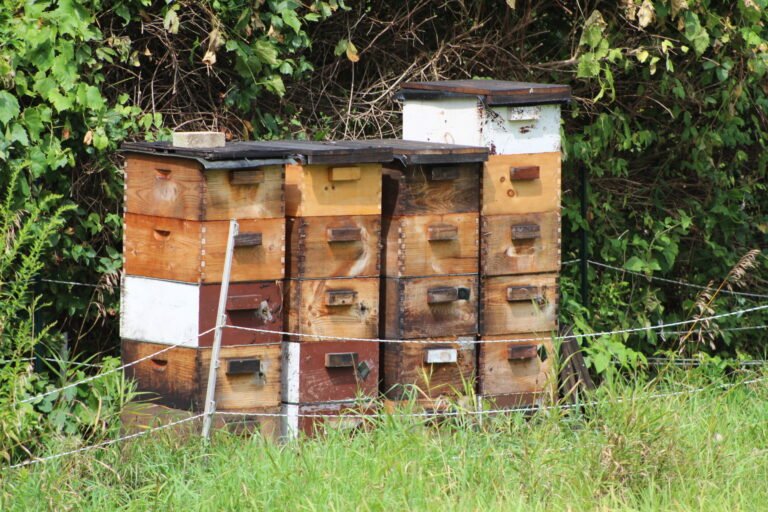
A single Langstroth hive on its stand occupies roughly 10 to 15 square feet of ground — smaller than a doghouse. Give it a few feet of clearance on the sides and behind for you to work, and a realistic working footprint per hive is closer to a 4-by-6-foot area. That means the physical space requirement for even a handful of hives is genuinely trivial on almost any residential or homestead lot; it’s essentially never the actual constraint.
What the footprint number doesn’t capture is the space you need in front of the hive entrance — a clear flight path so bees aren’t launching directly across a walkway, a patio, or a neighbor’s yard. That’s a layout problem, not a total-acreage problem, and it’s the one homesteaders on small lots most often get wrong by focusing on how much land they own rather than how the bees will actually fly off that land.
Forage Range vs. Property Size: Why They’re Different Questions
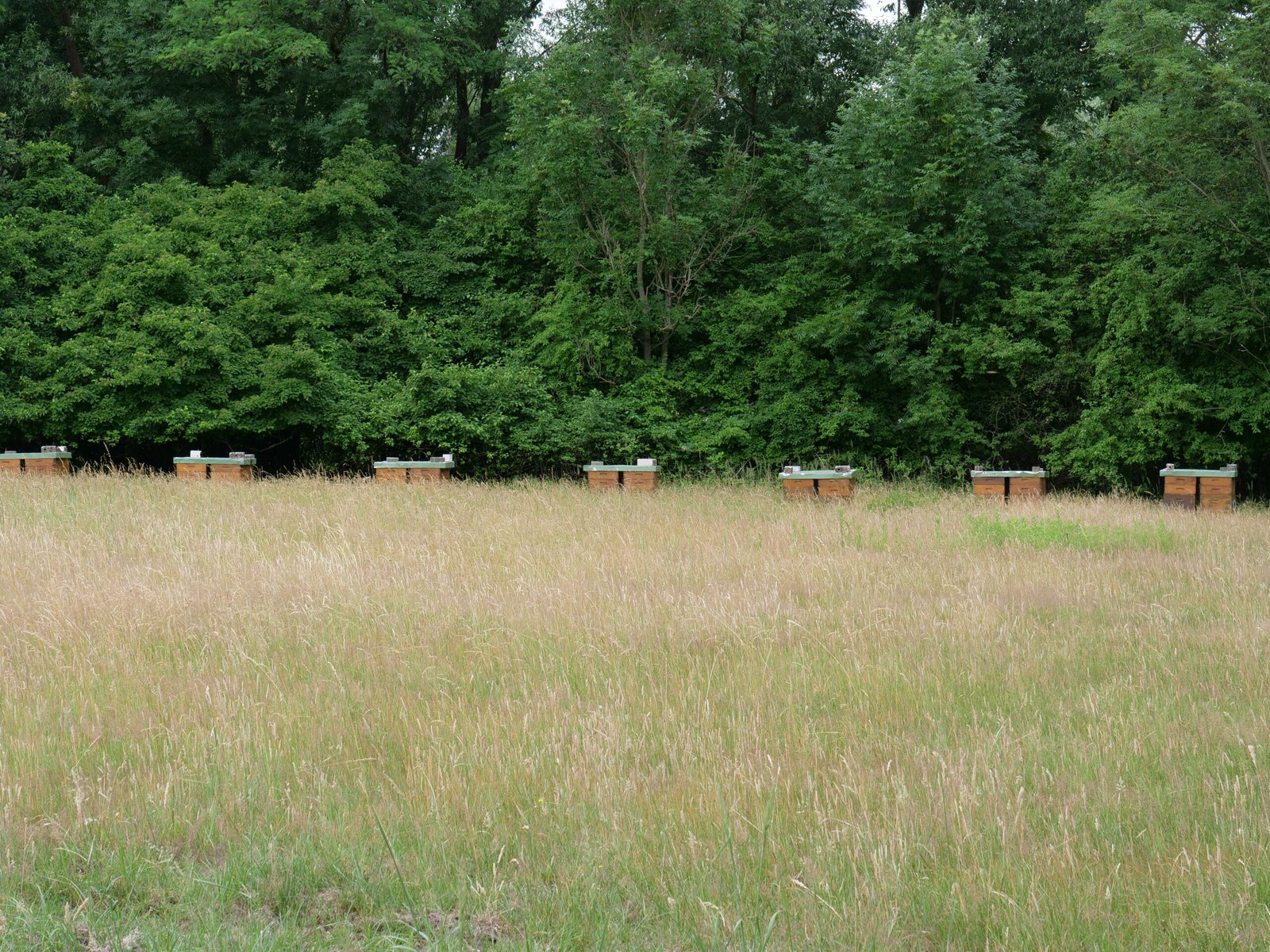
Honeybees regularly forage within about a 2-mile radius of the hive and are capable of ranging up to 3 miles when needed — a radius that covers somewhere between roughly 8,000 and 18,000 acres, depending on which flight-range estimate you use. University of California research summarized on UC ANR’s apiculture blog frames this as the colony’s real “foraging force,” and it means your own property’s size is almost never the limiting factor on what a colony can access. A colony on a one-acre homestead surrounded by diverse flowering hedgerows, neighboring gardens, and wild forage can out-produce a colony sitting on ten acres of mowed lawn and little else.
This is the single most useful reframe for a homesteader worried about not having “enough” land: the question isn’t how many acres you personally control, it’s how much genuinely diverse, pesticide-light forage exists within a couple of miles in every direction — most of which you don’t own and can’t directly control, but can supplement by planting bee-friendly trees, shrubs, and cover crops on the acreage you do have.
How Many Hives Per Acre, Realistically
Land-grant extension guidance generally lands in a similar range: roughly one to two hives per acre when the goal is pollination service for a specific crop, and two to four hives per acre where honey production is the priority and forage is genuinely strong enough to support that density without colonies competing hard with each other for the same bloom. Mississippi State University Extension’s guidance on maximizing honey production frames colony placement density around matching hive count to available forage rather than to a fixed acreage rule — the same principle as the forage-vs-property-size point above, just applied to your own hive count instead of your property boundary.
| Goal | Recommended density | Limiting factor |
|---|---|---|
| Backyard/homestead honey for household use | 1–2 hives on almost any lot size | Physical footprint and neighbor flight-path only |
| Serious honey production | 2–4 hives per acre of quality forage | Local forage diversity and bloom density |
| Dedicated crop pollination | 1–2 hives per acre of the crop being pollinated | Crop bloom timing and colony strength |
Flight Paths, Setbacks, and Sharing Space With a Garden or Orchard
The layout habit that solves most small-property conflicts is orienting the hive entrance away from where people actually walk, and using a solid fence, hedge, or wall roughly six feet tall directly in front of the entrance to force departing bees to climb steeply before leveling off — by the time they clear a six-foot barrier a few feet from the hive, they’re flying well above head height for anyone nearby. This single technique does more to prevent neighbor complaints and stray encounters than adding raw distance ever does, and it’s the reason experienced beekeepers can run hives on surprisingly small urban and suburban lots without incident.
For a garden or young orchard, the placement question flips: you generally want the hive close enough that foraging bees find your crops easily and pollination benefits are concentrated where you want them, but positioned so the flight path doesn’t cross your most-trafficked garden beds. A hive at the back corner of a garden, angled so bees head out over a fence line rather than across the rows you’ll be kneeling in to weed, gets you the pollination benefit without turning every harvest session into a bee encounter.
Fitting Bees in Alongside Chickens, Goats, and Other Homestead Systems
Bees coexist well with most homestead livestock on the same small property, provided placement respects a few practical points. With chickens specifically, the main friction point is shared water access, not the birds and bees interacting directly — see this site’s dedicated guide for how to keep both watered without one crowding out the other. With goats or other larger livestock, the practical concern is simpler still: keep the hive stand out of a pasture area where animals could bump or knock it over, and give it its own small fenced footprint if livestock free-range across the property.
Zoning and setback rules genuinely do vary by city and county — some require hives set back a minimum distance from property lines, others require a flyway barrier at a specific height, and some have no beekeeping-specific rules at all. Checking your own local ordinance before finalizing hive placement takes one phone call or a search of your county’s code and is worth doing before you build a stand, since it’s the one part of this whole planning question that isn’t governed by the bees’ own biology.
Conclusion
The land question for homestead beekeeping resolves into two separate, much smaller questions than “how many acres”: does the physical hive footprint fit somewhere with a clear flight path (almost always yes, on any homestead-sized lot), and is there enough genuinely diverse forage within two to three miles to support the colony (usually yes, and improvable by what you plant on your own acreage). Get the layout and flight-path details right, and hive count per acre becomes a forage-quality decision rather than a land-availability one.
Frequently Asked Questions
What is the minimum land size needed to keep one beehive?
There’s no real minimum — a single hive’s physical footprint is roughly 10 to 15 square feet, small enough for most suburban lots, provided the entrance has a clear flight path away from foot traffic.
How many beehives can fit on one acre?
Extension guidance generally suggests one to two hives per acre for pollination-focused placement and two to four per acre for honey production where forage is strong, though hive count should be matched to actual forage availability rather than a fixed acreage rule.
Do bees need more land if I also keep chickens or a garden?
No — bees, a garden, and a small flock share a homestead well because bees forage widely beyond your property lines; the planning concern is flight-path placement and shared water access, not total land allocation.
How far do honeybees actually travel to forage?
Honeybees regularly forage within about 2 miles of the hive and can range up to 3 miles when local forage is scarce, meaning colonies draw resources from thousands of surrounding acres regardless of your own property’s size.
Are there legal setback requirements for how close a hive can be to a property line?
Many cities and counties do set minimum setback distances or require a flyway barrier, but rules vary significantly by jurisdiction — check your local zoning ordinance directly rather than assuming a rule from elsewhere applies to your property.