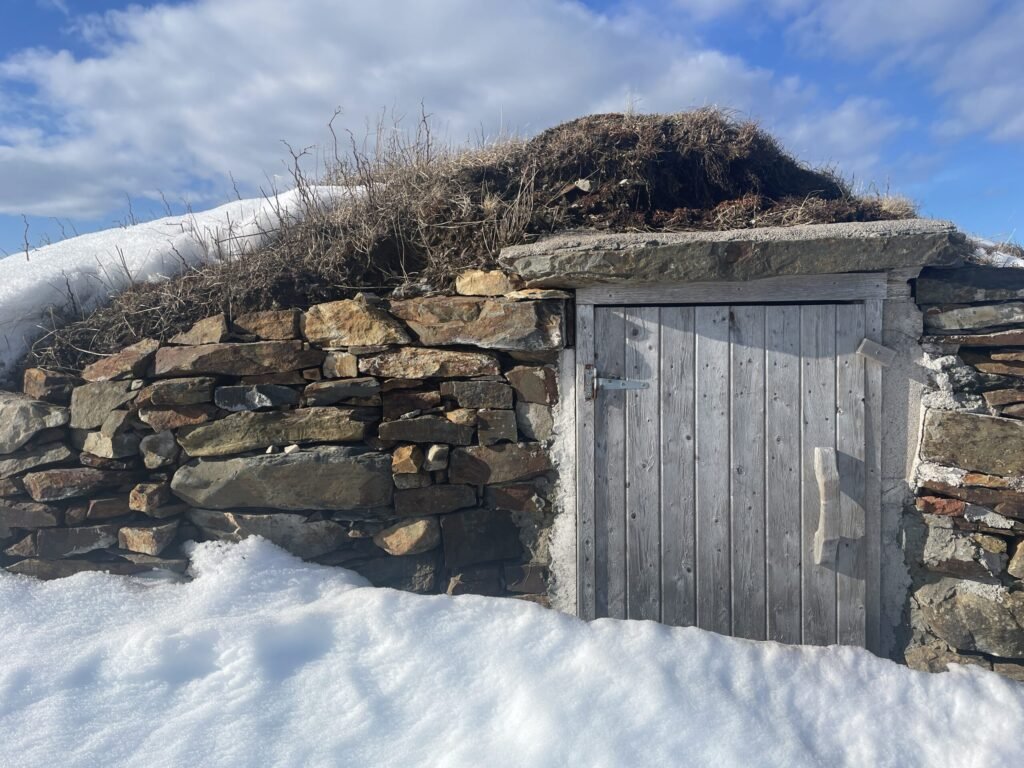
It’s a reasonable assumption: a homestead already has a root cellar for potatoes and squash, so why not tuck the honey and wax storage right next to it? The problem is that a root cellar’s ideal conditions and a honey room’s ideal conditions are nearly opposite each other — cold and damp is exactly what a root cellar is built for, and exactly what accelerates honey crystallization and risks mold on stored wax.
Key Takeaways
- A honey and wax storage room needs 50–70°F and under 60% relative humidity — nearly the opposite of a root cellar’s cold, damp 32–40°F and 85–95% humidity.
- Honey is hygroscopic and actively absorbs moisture from humid air; the USDA’s own grading standard for extracted honey treats moisture content as a core quality factor because it drives fermentation risk.
- Beeswax itself isn’t a fire hazard in passive storage — its roughly 400°F flash point only becomes relevant while actively rendering or melting wax, not while finished blocks sit on a shelf.
- Wax moths, not fire, are the realistic pest threat to stored wax and comb, and NC State Extension’s guidance points to cool, well-ventilated storage plus freezing as the practical defenses.
- Building the room near an existing root cellar for convenience is fine — sharing one climate between the two spaces is not.
Table of Contents
| Root cellar | Honey and wax storage room | |
|---|---|---|
| Temperature | 32–40°F | 50–70°F |
| Humidity | 85–95% | Below 60% |
| Light | Dark (produce doesn’t mind) | Dark or low light (UV fades wax color and can affect honey) |
| Why | Slows produce decay and moisture loss | Keeps honey flowing and slows crystallization; keeps wax dry and pliable |
That doesn’t rule out building the honey room near the root cellar for convenience — same building, same general area of the homestead — it just means the two spaces need separate insulation, ventilation, and humidity control rather than sharing one climate. Treat “root-cellar-adjacent” as a location choice, not a shared-environment shortcut.
Getting the Room’s Conditions Right
A honey storage space held between 50°F and 70°F keeps honey flowing well enough to bottle without needing to warm it first, while staying cool enough to slow the natural crystallization process. Push much colder and crystallization speeds up noticeably; push much warmer for extended periods and you risk degrading honey’s flavor and enzyme content — the same reasoning behind getting the ideal temperature for decrystallizing honey right when it does set up.
The USDA’s own standards for grading extracted honey build moisture content into the quality score itself — a reminder that this isn’t a cosmetic detail. Honey that picks up too much water from a humid storage room isn’t just lower quality; it’s at real risk of fermenting in the jar.
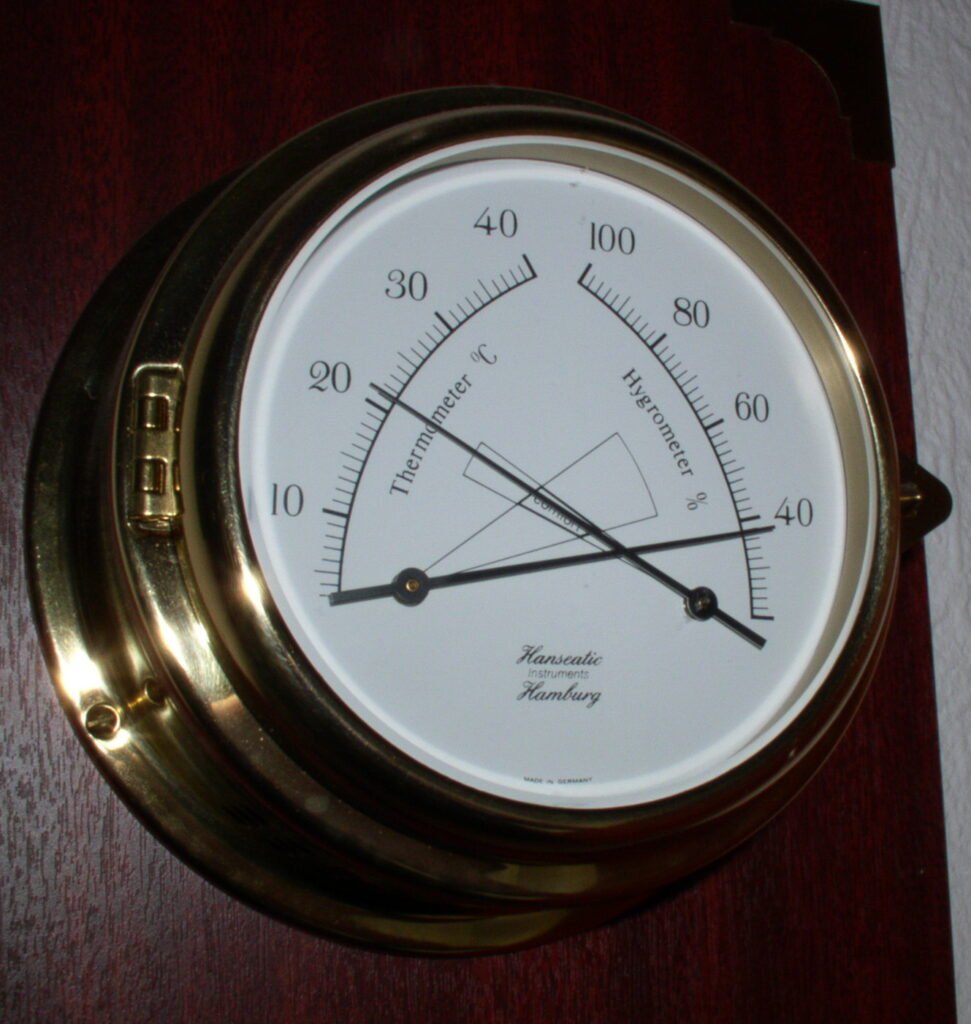
Humidity matters just as much as temperature: honey is hygroscopic, meaning it actively absorbs moisture from humid air, which can raise its water content enough to invite fermentation over time. The USDA’s grades and standards for extracted honey use a points-based system where moisture is one of the core quality factors precisely because of this fermentation risk. Keeping the room below 60% relative humidity, with reasonable ventilation and a vapor barrier if the space is partially underground, protects both the honey and any wax you’re storing alongside it. A cheap wall-mounted or digital thermo-hygrometer is the only way to actually confirm the room is holding those numbers rather than assuming it — see our roundups of the best humidity meters for honey processing rooms and best digital thermometers for honey rooms if you don’t already own one.
Building Materials, Insulation, and Shelving
The room doesn’t need to be elaborate — a well-insulated corner of a barn, garage, or dedicated shed works, as long as it can be sealed off thermally from the rest of the building. Rigid foam board or standard fiberglass batt insulation in the walls and ceiling, plus a door that actually seals (weatherstripping, not just a latch), does most of the work of keeping the space in its own climate zone rather than drifting with the outdoor temperature. If the room is partially below grade or shares a wall with damp ground, a plastic vapor barrier between the insulation and that wall keeps ground moisture from working its way in and pushing humidity back up.
For shelving, open wire or slatted wood shelving beats solid plastic tubs for airflow around bottled honey and boxed wax, which helps prevent the still, humid microclimate that both fermentation and wax moths favor. Keep shelving at least a few inches off the floor and away from exterior walls where condensation is more likely to form. If your homestead setup doesn’t have mains power reaching the storage building, our guide to off-grid beekeeping equipment covers realistic options for running a small dehumidifier or space heater from solar or battery power to hold the room’s climate steady.
The Fire-Safety Question, Answered Honestly

Honey itself is not a meaningful fire hazard under any normal storage condition — it won’t ignite without sustained exposure to temperatures well above anything a storage room would ever reach. Beeswax is a different story only in the context of active processing, not passive storage: its flash point is commonly cited around 400°F, which matters if you’re rendering or melting wax in the same building, but is irrelevant to wax simply sitting on a shelf at room temperature. A solar wax extractor, the kind Mississippi State University Extension publishes plans for, sidesteps the open-flame and hot-element risk entirely by using sunlight instead of direct heat — worth considering if wax rendering is a regular part of your homestead routine. Our comparison of solar wax melter brands covers the commercial options if building your own isn’t practical.
The practical takeaway is to keep active wax-melting equipment (a solar or electric wax melter) physically separate from where finished blocks of wax and bottled honey sit in long-term storage, rather than treating the whole room as a fire-risk zone because processing happens somewhere in the building.
The Bush Bee Man, a beekeeper whose YouTube channel has built a genuine following around hands-on apiary and honey-house builds, walks through setting up a dedicated honey extraction and storage room from scratch in the video below — useful to watch before finalizing your own room’s layout, since it shows how extraction equipment, bottling, and storage actually get separated in a working space rather than crammed into one shared area.
Keeping Pests Out

Wax moths are the main pest risk for stored wax and drawn comb, and they thrive in warm, poorly ventilated storage — another reason not to default to a warm, closed-off corner of a barn without airflow. NC State Extension’s guidance on wax moth control in stored equipment lists freezing as a practical option for smaller quantities of comb — it kills anything currently living in the wax along with any eggs present — plus direct sunlight exposure (frames hung so light passes between them) and Bacillus thuringiensis spray as a biological control that only affects moth larvae. (NC State also lists PDB crystals for stacked supers; we don’t recommend them, because PDB residues persist in beeswax and can carry into honey.) Our own walkthroughs of freezing drawn comb to kill wax moth eggs and preventing wax moths in stored equipment go through both methods step by step.
Rodents are the other concern for a homestead storage room generally, and the fix is the standard one: solid walls and door seals rather than open shelving accessible from a barn floor, since a mouse chewing into a case of bottled honey is a nuisance but a mouse getting into stored comb or pollen is a genuine loss.
Storage and Organization for the Finished Product
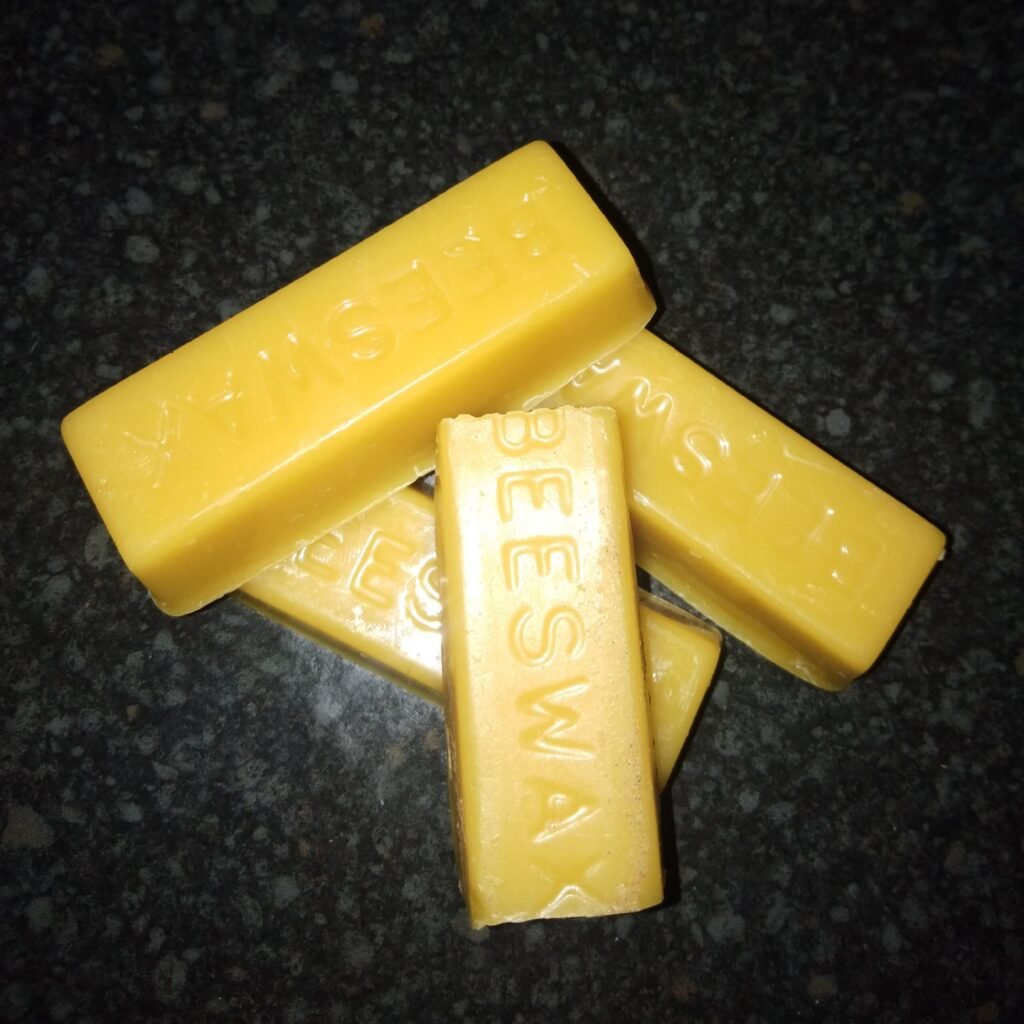
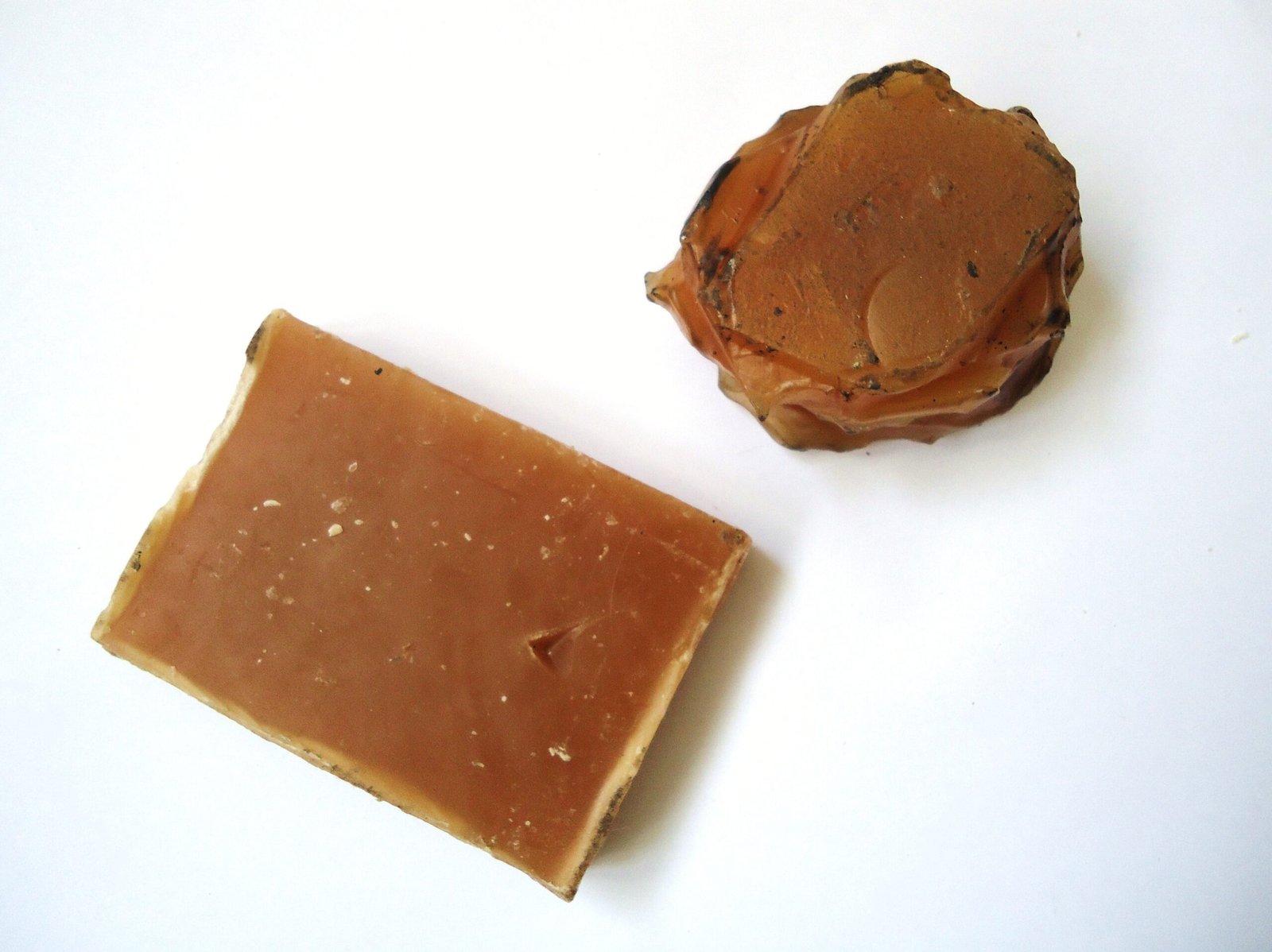
Once honey is bottled — see our guide to honey bottling temperatures and best practices if you’re setting up that step too — it stores best in tightly sealed jars filled close to the top, minimizing the airspace (and moisture) in contact with the honey’s surface. Cured beeswax blocks, once fully cooled and hardened, are inert enough to stack directly on open shelving without special containers; keeping them out of direct sunlight simply preserves their natural color, since UV exposure gradually bleaches wax pale over time. Grouping stock by harvest date on the shelf, oldest in front, keeps the room’s contents actually usable rather than becoming a place where jars quietly sit for years.
Frequently Asked Questions
Can I store honey in my root cellar?
Not ideally — a root cellar’s typical 32–40°F and 85–95% humidity accelerates honey crystallization and risks moisture absorption, the opposite of the cooler-but-drier conditions honey actually needs.
What temperature should a honey storage room be?
Between 50°F and 70°F is the standard target — cool enough to slow crystallization without needing to warm the honey before bottling.
Is stored honey or beeswax a fire hazard?
Not under normal storage conditions. Honey won’t ignite without extreme sustained heat, and beeswax’s roughly 400°F flash point only becomes relevant during active melting or rendering, not passive storage.
How do I keep wax moths out of stored comb and wax?
Keep the storage area cool and well-ventilated rather than warm and closed-off, and freeze drawn comb before long-term storage to kill any existing eggs, per NC State Extension’s guidance.
What humidity level is too high for a honey and wax storage room?
Above roughly 60% relative humidity, honey’s hygroscopic nature starts pulling in enough ambient moisture to raise fermentation risk, and residual moisture can encourage mold on stored wax.
Do I need a dedicated building, or can a corner of an existing shed work?
A sealed, insulated corner of an existing barn, garage, or shed works fine — what matters is that it can hold its own temperature and humidity independent of the rest of the structure, not that it’s a separate building.
Image credits: Photo: Mauro Cateb, CC BY-SA 3.0, via Wikimedia Commons.