Reviewed by Sofia T. · How we review
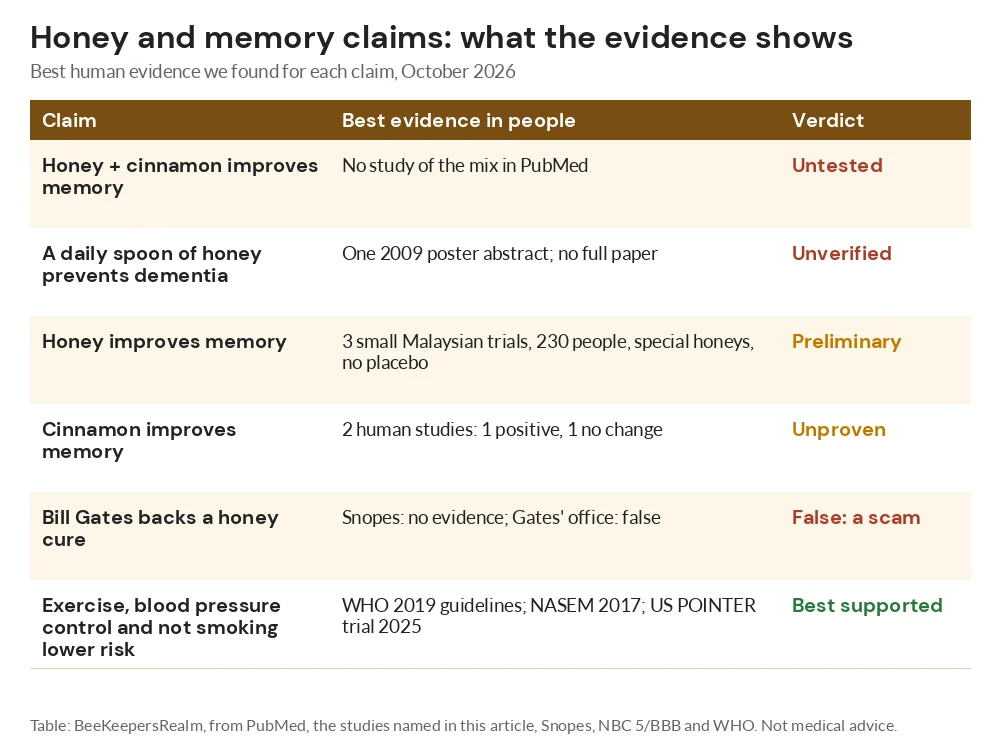
No honey recipe has been shown to improve memory or prevent dementia. The viral “honey recipe for memory,” usually raw honey stirred into warm water with cinnamon, has never been tested in a single study we could find, and the “Bill Gates brain honey” ads that push it are a scam. Honey itself has been tested for memory in three small trials with 230 people in total, all using special Malaysian honeys, and the most-quoted dementia figure comes from a 2009 conference abstract that was never published as a full paper.
Below, we trace each claim to its source and list what does have evidence. As beekeepers, we also explain which honeys the studies used, because they are not the jar most people have at home.
This is educational information, not medical advice. For evidence-based guidance on memory and dementia, see the National Institute on Aging’s page Preventing Alzheimer’s Disease: What Do We Know? If you or someone you love has new memory problems, see a doctor rather than a recipe.
Written by Thomas B.; beekeeping and honey facts reviewed by Sofia T. Health statements come from the studies and agencies named beside them, not from our own medical expertise. Sources checked October 28 and 29, 2026.
Key Takeaways
- The viral recipe (honey plus cinnamon, turmeric, walnuts or cocoa) has no clinical trial behind it. A PubMed search on October 28, 2026 found no study of honey mixed with cinnamon for memory or dementia.
- Snopes rated the “Bill Gates brain honey” ads a scam, and Gates’ office told NBC 5 Chicago the endorsement claims are false.
- The claim that honey cut dementia from about 28% to under 7% traces to a one-page 2009 poster abstract with no full paper, no described placebo and no stated way of diagnosing dementia.
- The three published human trials were small (48 to 102 people), short (8 to 16 weeks), unblinded against no-honey controls, and used tualang or kelulut honey, not supermarket honey.
- Half a teaspoon of cassia cinnamon a day, the most common kind in North America, is about 65% of a 60 kg adult’s daily coumarin limit by our arithmetic from German risk-assessment figures.
- What has evidence: physical activity, not smoking, managing blood pressure and other heart-health habits. WHO advises against vitamin and multi-supplement pills for dementia prevention.
Table of Contents
- What the Viral Honey Recipe for Memory Says
- The “Bill Gates Brain Honey” Ads Are a Scam
- Where the “Honey Prevents Dementia” Number Comes From
- Every Human Trial of Honey and Memory We Found
- Rats, Worms and Cells: Why Lab Studies Don’t Settle It
- The Cinnamon Half of the Recipe
- Safety Checks Before Anyone Tries a Honey Brain Tonic
- What Actually Has Evidence for Memory
- Frequently Asked Questions
- The Bottom Line
What the Viral Honey Recipe for Memory Says
There is no single recipe. When we searched Google for “what is the honey recipe to help memory” on October 28, 2026, its AI Overview listed three mixtures from wellness sites: a “Golden Honey Shield” of half a cup of raw honey with turmeric and black pepper, a “Cinnamon & Honey Morning Elixir” of 1 teaspoon of raw honey and half a teaspoon of Ceylon cinnamon in warm water, and a walnut and honey blend. A one-page “Morning Memory Elixir” on Scribd, one of the top results, describes the same honey and cinnamon drink taken daily on an empty stomach.
Other versions swap in different foods. Forbes, covering the scam ads in April 2026, said most posts start with a “natural remedy” of honey combined with blueberries, cocoa, coffee or other foods before pushing a paid product.
| Viral version | Typical ingredients | Where we saw it | Tested in a study? |
|---|---|---|---|
| Honey and cinnamon “morning elixir” | 1 tsp raw honey, 1/8 to 1/2 tsp cinnamon, warm water | Google AI Overview, Scribd, wellness blogs | No |
| “Golden Honey Shield” | Raw honey, turmeric, black pepper | Google AI Overview, wellness blogs | No |
| Walnut and honey blend | Raw honey, walnuts, salt | Google AI Overview | No |
| “Brain honey” ad remedy | Honey with cocoa, blueberries or coffee, then a supplement | Social media ads (Forbes, Snopes) | No |
None of these pages cites a trial of its own mixture. Each borrows credibility from separate research on honey’s antioxidants, cinnamon in animals or turmeric’s curcumin, but evidence for one ingredient does not transfer to a blend.
The “Bill Gates Brain Honey” Ads Are a Scam
In 2025 and 2026, social media ads used the faces of Bill Gates, Dr. Sanjay Gupta and other public figures to promise that a secret honey formula reverses Alzheimer’s disease. On April 14, 2026, Snopes rated the claim that Gates developed, endorsed or sells products such as “Brain Honey,” “Mind Boost” or “Memopezil” a scam.
“We found no evidence that Gates created, endorsed or sold products marketed under names such as “Brain Honey,” “Mind Boost” and “Memopezil.” Rather, the ads and landing pages matched a familiar scam pattern of using Gates’ name and image to draw people into long sales pitches for unproven supplements.”
On June 30, 2026, NBC 5 Chicago reported a Better Business Bureau warning that AI-generated deepfake videos of Gates, Anderson Cooper, Bruce Willis and others were selling a honey-based Alzheimer’s remedy, sometimes on subscription. The BBB said there is “no scientific evidence supporting claims that honey-based supplements can cure, reverse, or prevent Alzheimer’s disease, dementia, or significant memory loss.” Gates’ private office told the station, “Claims that Gates is supporting these products– are false,” and the Alzheimer’s Association said it “does not endorse any food, ingredient or supplement (such as honey) as being beneficial for treating or preventing Alzheimer’s.”
The UK charity Alzheimer’s Research UK added a July 2026 warning listing Memohoney, Neuromind Pro, Memopryl, Memopezil, Memocept, IQ Honey, Neuroline Pro and Honeypezil as products falsely tied to Gates. The kernel of truth the ads exploit: Gates really does fund dementia research; Snopes notes he said in a 2018 speech that he had personally committed $100 million to it. Funding research is not the same as endorsing a jar.
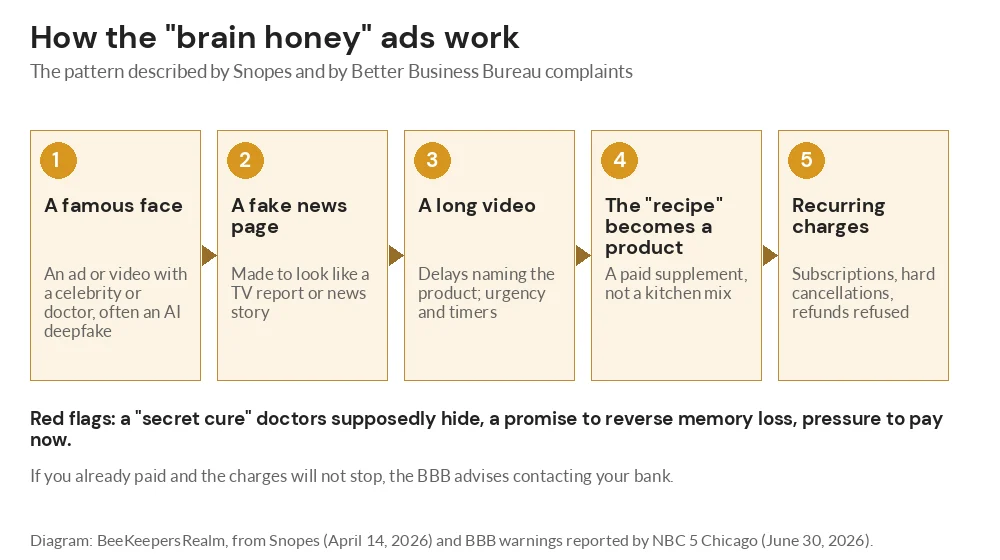
Red flags, and what to do if you paid
The BBB’s warning signs are claims of “secret cures” hidden from the medical community, guarantees to reverse memory loss and pressure to pay immediately. Snopes adds countdown timers, pages dressed up as news reports and long videos that delay naming the product. The U.S. Food and Drug Administration has warned about this whole category of product for years:
“At best, the products offered by these scam artists will have no effect on the patient; at worst they may pose a danger to a patient who takes them.”
If you already entered card details and the charges will not stop, the BBB advises reporting it to your bank. The FDA says products advertised as Alzheimer’s treatments can be reported on its website.
Where the “Honey Prevents Dementia” Number Comes From
Articles promoting honey for memory often repeat one impressive figure: in a five-year trial of 2,893 older adults, far fewer people who ate honey developed dementia. A 2023 review in Antioxidants puts it as about 28% of the placebo group versus less than 7% of the honey group. We traced the figure to its source.
It comes from a single conference poster abstract: Fizel A. Al-Himyari of the University of Babylon, Iraq, “The use of honey as a natural preventive therapy of cognitive decline and dementia in the middle east,” poster P1-241, printed in a 2009 supplement of Alzheimer’s & Dementia. The abstract describes 2,290 cognitively normal people and 603 with mild cognitive impairment, aged 65 and older, given “one daily tablespoon of honey or placebo” at teaching hospitals in Baghdad and Babylon from November 2003 to November 2008. Dementia developed in 95 of the 1,493 honey takers and 394 of the 1,400 on placebo. That is 6.4% versus 28.1% by our arithmetic.
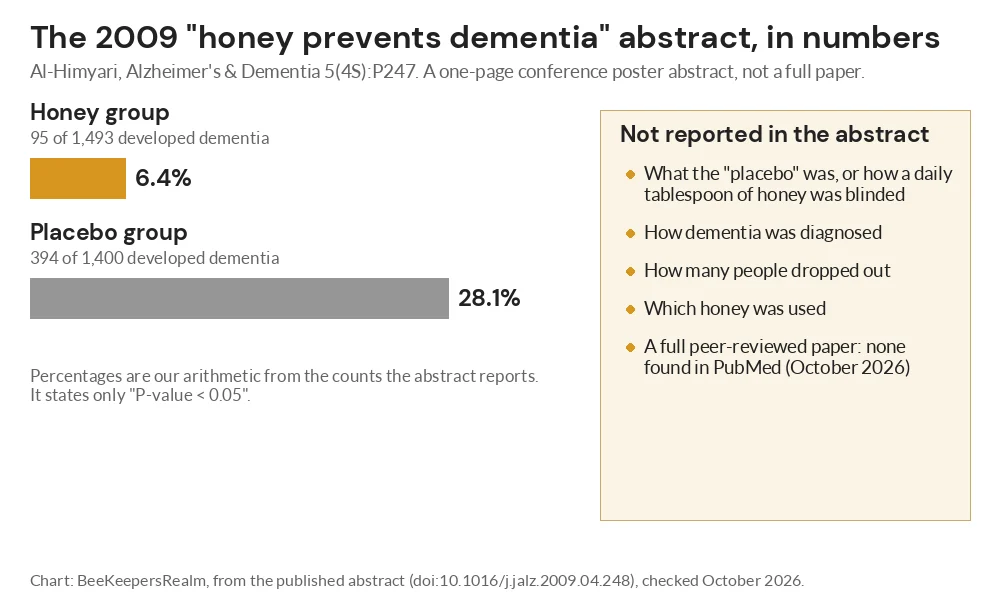
Here is why that figure cannot carry the weight placed on it:
- It is an abstract, not a study report. It runs to four short paragraphs. It does not say what the placebo was, how a daily tablespoon of honey was disguised from participants, which honey was used, how dementia was diagnosed or how many people dropped out.
- No full paper followed. Searching PubMed for the author’s name on October 28, 2026 returned five records, none about honey.
- The statistics are thin. The only result given is “P-value< 0.05,” with no effect size or confidence interval.
- It keeps getting upgraded. A 2015 review in Medical Sciences summarized it as a randomized pilot study, a 2023 review in Frontiers in Aging Neuroscience listed it among the first human evidence, and a 2025 stroke trial cited it as a “randomised, placebo-controlled study on 2,893 elderly individuals.” Each repetition makes a poster sound more like a finished trial.
The Alzheimer’s Association tells readers to ask whether research is “data-backed and peer-reviewed” before trusting a health claim. This one has not cleared that bar.
Every Human Trial of Honey and Memory We Found
Beyond the 2009 abstract, we found three published trials in people. All come from Malaysian universities, all compared honey with no honey rather than with a placebo, and none measured dementia.
| Study | People | Honey and amount | Length | Result |
|---|---|---|---|---|
| Othman et al., Menopause 2011 | 102 healthy postmenopausal women (three groups) | Tualang honey, 20 g a day, vs hormone therapy vs nothing | 16 weeks | Better immediate word recall than untreated women; no gain in delayed recall |
| Yahaya et al., Heliyon 2020 | 80 people with schizophrenia (40 per group) | Tualang honey, 20 g sachet a day, vs no honey | 8 weeks | Higher total learning score; no gain in long-term memory |
| Zarim et al., Malaysian Journal of Medical Sciences 2025 | 48 stroke patients (24 per group) | Trigona (kelulut) honey, 10 g twice a day, vs no supplement | 12 weeks | Larger rise in a cognitive screening score (MoCA) |
| Al-Himyari, poster abstract 2009 | 2,893 adults 65 and older | “One daily tablespoon of honey,” type not stated | 5 years | Fewer dementia cases reported; no full paper |
The three published trials add up to 230 people. None tested honey with cinnamon, none used a placebo that tasted like honey, and none has been repeated by an independent group outside Malaysia. The 2025 trial was funded by a Universiti Sains Malaysia grant and its authors declared no conflicts of interest; the university group behind the 2011 trial reports grant funding from the same university for its tualang honey work. Still, when people know whether they are getting honey, their expectations can affect test scores.
These results justify a proper trial, not a purchase. The positive findings were limited to short-term recall, and nothing here shows that honey prevents or slows Alzheimer’s disease.
What tualang and kelulut honey are: a beekeeper’s note
The honey in these trials is not ordinary clover or wildflower honey. Tualang honey is made by the giant rock bee, Apis dorsata, which builds single open combs high on the tualang tree, Koompassia excelsa, one of the tallest trees in Southeast Asia’s rainforests. These bees are not kept in hives; tualang honey comes from wild colonies. The researchers who studied it describe it as dark brown and more acidic than other Malaysian honeys, with a pH of 3.55 to 4.00. This remarkable bee has its own page: our profile of the giant honey bee, Apis dorsata.

Kelulut honey, which the stroke trial called Trigona honey, comes from a different insect entirely: the stingless bee Heterotrigona itama. Stingless bees store their honey in small wax-and-resin pots rather than in hexagonal comb. Australia’s native stingless bees produce a similar honey, described in our piece on sugarbag bees and stingless beekeeping.
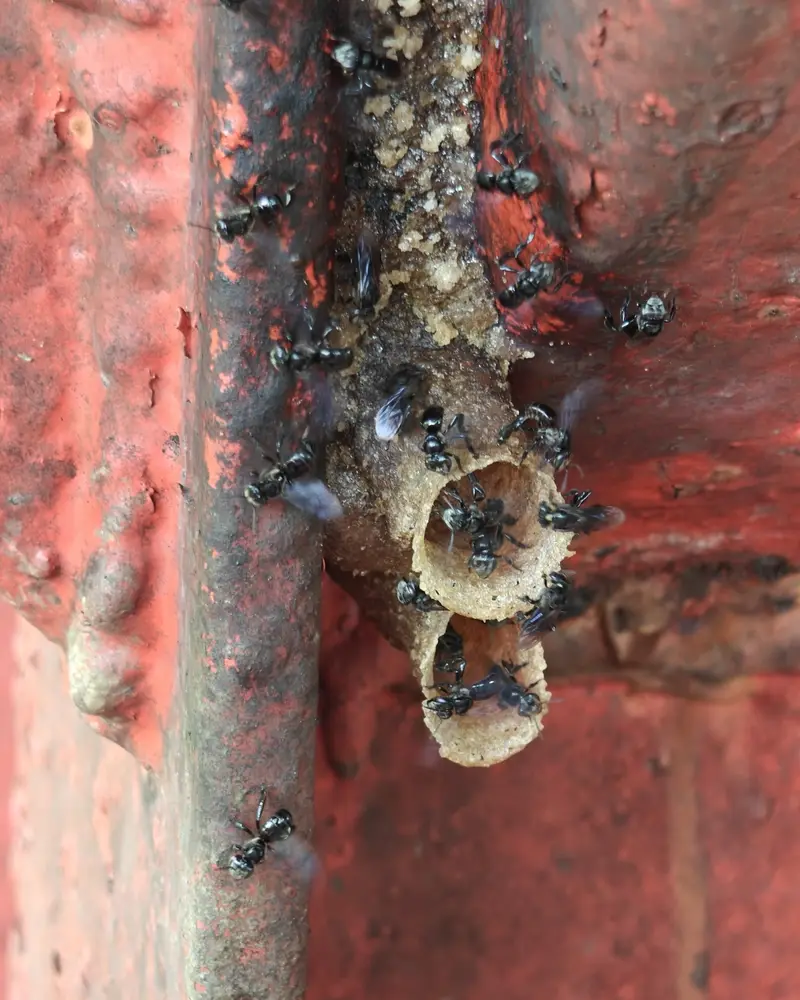
Honey’s chemistry depends on the flowers and the bee, which is why antioxidant levels vary widely between honey types. A result with tualang or kelulut honey, even if it holds up, says little about a squeeze bottle of blended honey. The same caution applies to the “best honey for memory” lists that sell manuka; no memory trial used it, and its real evidence is for wounds, as our manuka honey guide explains.
Rats, Worms and Cells: Why Lab Studies Don’t Settle It
Most of the research behind claims that honey is good for the brain was done in animals or cells. A 2025 review in Nutrients by Navarro-Hortal and colleagues at the University of Granada screened the literature for honey and Alzheimer’s mechanisms and kept 27 studies, done in cell cultures, roundworms, fruit flies and rodents. Its abstract concludes that “clinical validation is still lacking” and that current evidence “remains preliminary.” In worms engineered to make tau protein, some honeys even worsened movement, which the authors suspect was linked to sugar.
Animal results often fail to carry over to people. Rats in honey studies are typically stressed, given toxins or have their ovaries removed to model memory loss, then given measured doses of honey. The Alzheimer’s Association puts the limit plainly: until research is “tested in humans, researchers will never know if it is safe and effective.”
We also ran our own count. On October 28, 2026 we searched PubMed for records with “honey” plus memory, cognition, dementia or Alzheimer’s in the title. Of the 118 results, about 85 turned out to be about the memory of honey bees themselves, often how pesticides impair it. Only one was tagged as a randomized controlled trial in people.
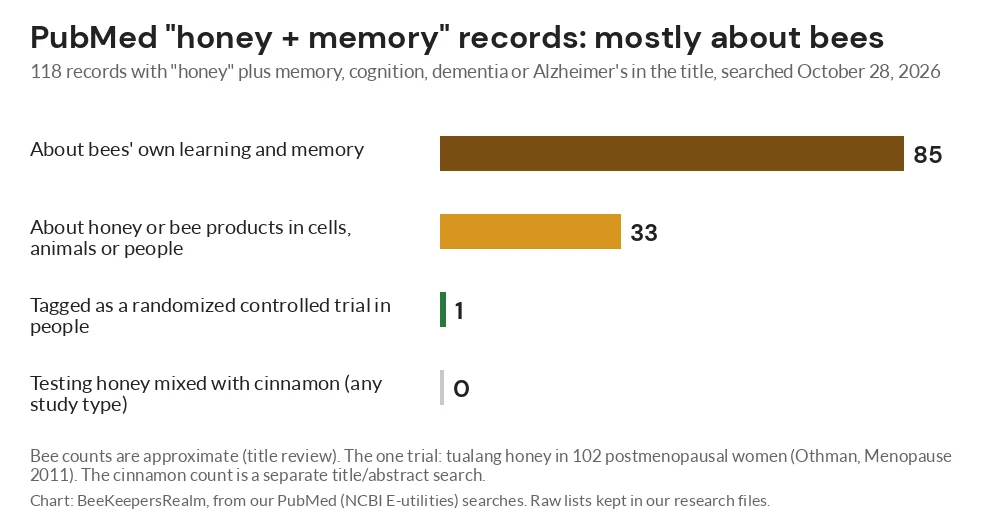
Bee memory is real science, covered in our overview of honeybee cognition research. It tells you nothing about your own.
The Cinnamon Half of the Recipe
Cinnamon’s case for memory is weaker than honey’s. A 2024 systematic review in Nutritional Neuroscience by Nakhaee and colleagues found 40 eligible studies: 33 in animals, 5 in cells and only 2 in people. Of the two human studies, one showed a positive effect and one found no change in cognitive function. In a 2014 Taiwanese trial of 48 older adults with prediabetes, a single 2 g dose of cinnamon with breakfast did not change working memory, while turmeric slightly did.
The U.S. National Center for Complementary and Integrative Health sums up all cinnamon research this way:
“Research doesn’t clearly support using cinnamon for any health condition.”
Ceylon or cassia: the coumarin question
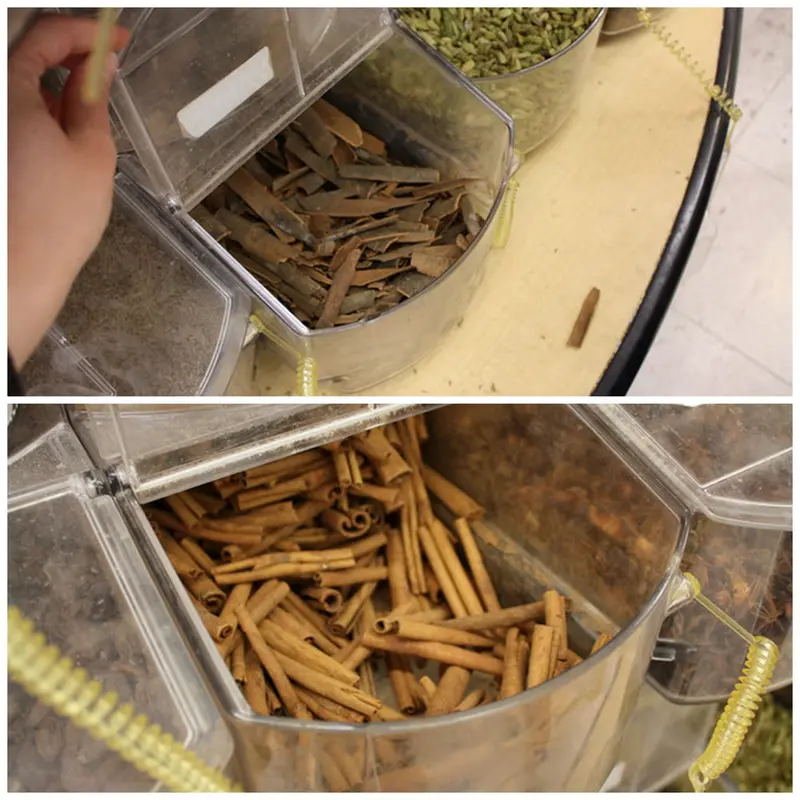
Some recipes specify Ceylon cinnamon for a reason. NCCIH says cassia cinnamon is the most common type sold in North America, and cassia is rich in coumarin, a natural flavoring that can harm the liver in sensitive people. U.S. rules treat food with added coumarin or tonka beans as adulterated (21 CFR 189.130), but that rule does not cover cinnamon.
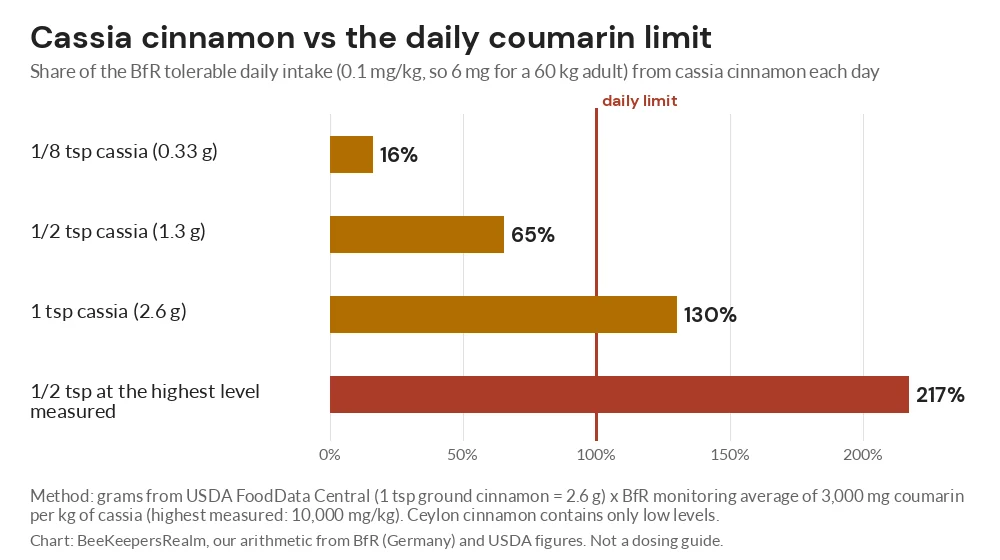
Germany’s Federal Institute for Risk Assessment (BfR) set a tolerable daily intake of 0.1 mg of coumarin per kg of body weight, which is 6 mg a day for a 60 kg adult. Its coumarin FAQ says cassia averages about 3,000 mg of coumarin per kg, with samples as high as 10,000 mg per kg, and that a 60 kg adult reaches the limit with about 2 g of cassia a day. We converted the viral recipe’s spoon measures using USDA FoodData Central, which lists a teaspoon of ground cinnamon at 2.6 g:
| Daily cassia cinnamon | Grams | Coumarin (average cassia) | Share of a 60 kg adult’s limit |
|---|---|---|---|
| 1/8 teaspoon | 0.33 g | About 1 mg | About 16% |
| 1/2 teaspoon | 1.3 g | About 3.9 mg | About 65% |
| 1 teaspoon | 2.6 g | About 7.8 mg | About 130% |
| 1/2 teaspoon, highest-coumarin cassia | 1.3 g | About 13 mg | About 217% |
The BfR says going slightly over the limit for a week or two is not a risk; the concern is large amounts of cassia eaten daily for a long time, which is exactly what a daily morning ritual is. Lighter people reach the limit sooner. NCCIH adds that prolonged cassia use could be a problem for people with liver disease, and that cinnamon may interact with some medicines.
Safety Checks Before Anyone Tries a Honey Brain Tonic
A spoonful of honey in tea is an everyday food for most adults. Turning it into a daily “treatment” raises a few points first.
- Never for babies under 1 year. The CDC says honey “can contain the bacteria that cause botulism” and should not be fed to children younger than 1, including through honey pacifiers. Our guide to infant botulism and honey covers baked goods and labels.
- It is sugar. USDA FoodData Central lists a tablespoon of honey at 21 g, with about 17 g of sugars and 64 calories. The 2009 abstract itself reported weight gain in 73 honey takers. If you have diabetes, honey counts like other sugars; see what the research shows about honey for diabetics and ask your care team.
- Allergies. Some people react to pollen or other bee products in honey. Read whether you can be allergic to honey if you react to bee products. NCCIH lists stomach upset and allergic reactions with larger amounts of cinnamon.
- Medicines. The FDA warns that ingredients in products sold as Alzheimer’s cures may interfere with essential medications. Tell a doctor or pharmacist about any supplement or herbal routine.
- Delay is the biggest risk. The FDA notes that these products may delay people from getting the care and support they need. Memory changes can have treatable causes, and only an exam can find them.
If you do enjoy honey, buy it from a source you trust; our checklist for finding real local honey shows what to ask a beekeeper, and the True Source Certified label explains one industry check against honey fraud. Neither makes honey a medicine.
What Actually Has Evidence for Memory
No food or supplement has been shown to prevent Alzheimer’s disease; the strongest evidence points to habits that protect the heart and blood vessels. In 2019 the World Health Organization issued guidelines on lowering the risk of cognitive decline and dementia. Its Director-General summed them up: “what is good for our heart, is also good for our brain.”
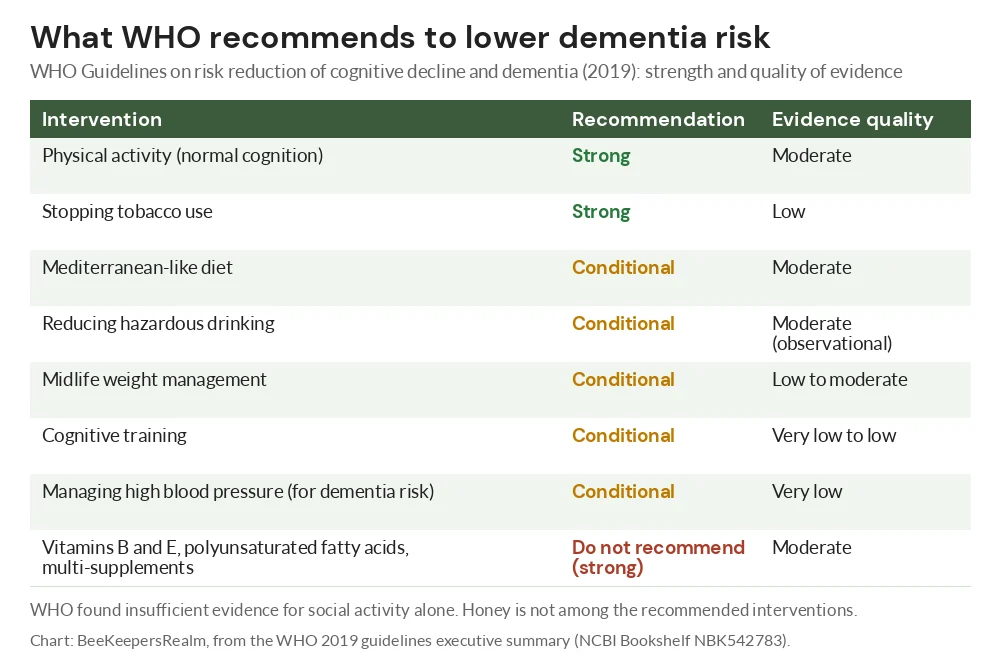
- Physical activity is WHO’s strongest recommendation for adults with normal cognition. Stopping smoking is also strongly recommended.
- Blood pressure. The NIA reports that the SPRINT-MIND trial of more than 8,000 adults found that lowering systolic pressure below 120 mmHg significantly reduced the risk of mild cognitive impairment.
- Several habits together. In the Alzheimer’s Association’s US POINTER trial (JAMA, 2025), 2,111 adults aged 60 to 79 combined exercise, a healthier diet, mental and social activity and heart-health checks for two years. Cognition improved in both groups, and slightly more in the structured, coached group.
- Diet as a whole pattern. WHO says a Mediterranean-like diet may be recommended. Even so, the three-year MIND diet trial of 604 people (New England Journal of Medicine, 2023) found no significant difference in cognition from a control diet. If a whole diet struggles to show an effect, a spoonful of anything is unlikely to.
- Not pills. WHO says vitamins B and E, polyunsaturated fatty acids and multi-complex supplements “should not be recommended” to reduce the risk of cognitive decline or dementia.
The 2024 Lancet Commission on dementia lists 14 modifiable risk factors: less education, hearing loss, high blood pressure, smoking, obesity, depression, physical inactivity, diabetes, heavy drinking, traumatic brain injury, air pollution, social isolation, untreated vision loss and high LDL cholesterol. Honey is not on it. A National Academies review cited by the NIA called the evidence for blood pressure control, physical activity and cognitive training “encouraging but inconclusive,” which is still more than any honey recipe has.
Honey does have evidence-backed uses: for coughs in children over 1 and adults, and as sterile medical-grade honey on wounds. Claims such as local honey curing allergies or propolis as a cure-all have much less support.
Frequently Asked Questions
What is the honey recipe to help memory?
The viral version is about 1 teaspoon of raw honey with 1/8 to 1/2 teaspoon of cinnamon in warm water, taken each morning. No study has tested it, and no honey recipe has been shown to improve memory.
Is the Bill Gates honey recipe real?
No. Snopes rated the “Brain Honey” ads a scam, and Gates’ office told NBC 5 Chicago that claims he supports these products are false.
Should I take a teaspoon of honey at night for my brain?
No evidence shows bedtime honey helps memory. A teaspoon adds about 21 calories of sugar.
How do you mix honey and cinnamon for brain health?
There is no tested ratio, because the combination has never been studied for memory. If you use cinnamon as a food flavoring every day, the BfR suggests low-coumarin Ceylon cinnamon.
What is the best honey for memory?
None has been proven. The small human trials used Malaysian tualang and kelulut honeys, and their results have not been confirmed by independent researchers.
Does honey cause memory loss?
We found no study showing that eating ordinary honey causes memory loss. Many studies show pesticides can impair the memory of honey bees, but that research is about the bees.
Is a spoonful of honey every day good for you?
For most healthy adults, a spoonful fits a diet that limits added sugars. It is a food, not a treatment, and never for babies under 1.
Which vitamin cuts dementia risk?
None has been shown to. WHO’s 2019 guidelines say vitamins B and E, polyunsaturated fatty acids and multi-complex supplements should not be recommended for reducing dementia risk.
The Bottom Line
Enjoy honey because it tastes good, not because an ad promised to save your memory. If the worry is real, put the money toward a doctor’s visit, a daily walk and your blood pressure instead.
Image credits: Featured photo: Scott Bauer, USDA Agricultural Research Service, via Wikimedia Commons, public domain, cropped. Other photos are credited in their captions. Charts and diagrams: BeeKeepersRealm.