
Reviewed by Daniel M. · How we review
Honey and cinnamon each have some human evidence behind them, but the mix itself has barely been studied. The only randomized trial we found of a cinnamon-enriched honey, in 12 adults with type 2 diabetes, did not improve blood sugar. Cinnamon capsules modestly lower fasting glucose and honey eases children’s coughs, but no human study supports the pair for arthritis, acne or overnight fat loss.
This is educational information, not medical advice. Ask your doctor before taking supplement-sized cinnamon, especially with diabetes, liver disease or regular medication. Never give honey to a baby under 12 months, per the CDC’s botulism prevention guidance. Sources checked November 3, 2026.
Key Takeaways
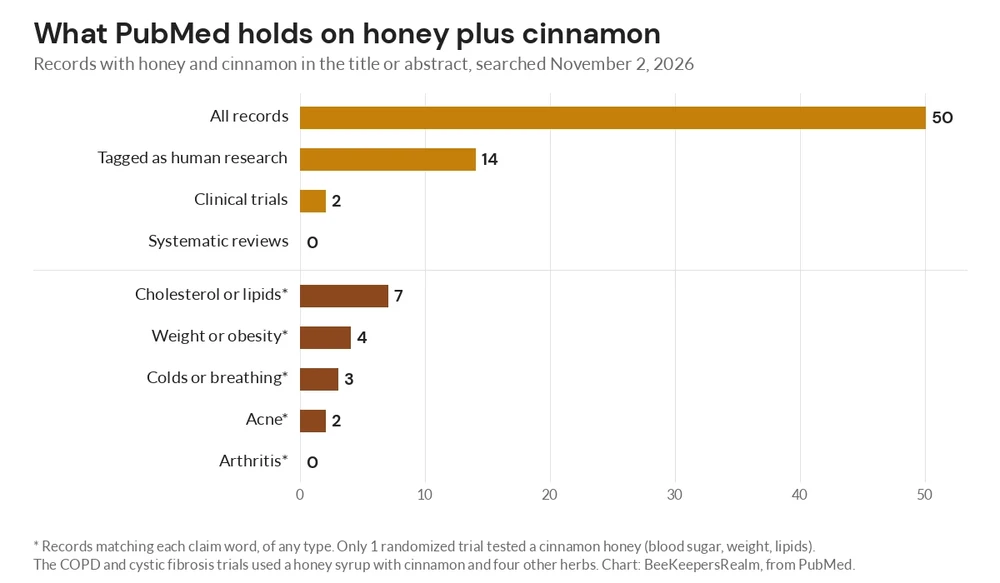
- A PubMed search on November 2, 2026, found 50 records on honey and cinnamon: 2 clinical trials, no systematic reviews.
- The one randomized trial of a cinnamon-enriched honey found no change in fasting glucose or HbA1c.
- Cinnamon alone, mostly as capsules, lowered fasting glucose about 15 mg/dL across 28 trials, yet NIH’s NCCIH says research does not clearly support cinnamon for any condition.
- Honey has the best evidence for easing cough in children over 1. Cinnamon adds nothing proven for colds.
- Half a teaspoon of average cassia supplies about 65% of a 132-pound adult’s daily coumarin limit. Use Ceylon for a daily habit.
- Check ground cinnamon against the FDA lead alert.
Table of Contents
- Honey and Cinnamon Benefits: Every Claim Graded
- We Counted the Studies: One Trial of the Mix
- Blood Sugar: Cinnamon Has Data, Honey Adds Sugar
- Weight Loss: The Bedtime Drink Is Untested
- Cholesterol and Heart Health
- Colds, Coughs and Sore Throats
- Acne and Arthritis: No Human Trials
- Cassia vs Ceylon: How Much Cinnamon Is Too Much
- Lead in Ground Cinnamon: Check the FDA List
- Who Should Skip or Limit It
- Frequently Asked Questions
- The Bottom Line
Honey and Cinnamon Benefits: Every Claim Graded
Most benefit lists credit a study on one ingredient to both. The table separates them and shows whether anyone tested the mix.
| Claim | Strongest human evidence | Mix tested? | Our verdict |
|---|---|---|---|
| Lowers blood sugar | Cinnamon: 28 trials, 3,054 adults with type 2 diabetes; a 2012 Cochrane review called the evidence insufficient | One 12-person trial: no glucose benefit | Cinnamon: modest, inconsistent. The mix: not shown |
| Weight loss | Cinnamon supplements: 21 trials, 1,480 adults, about 2 lb average loss | Same trial: 2.2 kg lower weight | Small at best; bedtime drink untested |
| Cholesterol and heart | Cinnamon: 13 trials, lower total cholesterol and triglycerides, no LDL change. Honey: 18 trials, mostly low certainty | Same trial: LDL down slightly | Small marker changes; no heart outcomes studied |
| Colds and coughs | Honey: Cochrane review, 6 trials, 899 children, moderate certainty | Only in five-herb syrups | Honey helps cough; cinnamon unproven |
| Acne and skin | A lab-dish study only | Never on human skin | Not shown |
| Arthritis | One 8-week trial of cinnamon capsules in 36 women | No PubMed record | Not shown for the mix |
Each study is named in the sections below.
In this video, family physician Dr. Jen Caudle explains Ceylon versus cassia cinnamon and why cinnamon and diabetes studies are hard to interpret. She warns that large, long-term amounts of cassia can harm the liver, while cooking amounts are fine.
We Counted the Studies: One Trial of the Mix
On November 2, 2026, we searched PubMed for honey and cinnamon in titles or abstracts. It returned 50 records. Only 14 were tagged as human research, mostly folk-remedy surveys. Two were clinical trials. None was a systematic review.
The only randomized trial of the pair came from Wellington Regional Hospital in New Zealand. Twelve adults with type 2 diabetes ate 53.5 g a day (about 2.5 tablespoons) of kanuka honey blended with cinnamon, chromium and magnesium, and plain kanuka honey, for 40 days each. The trial found no significant difference in fasting glucose, HbA1c or insulin. Against plain honey, the blend lowered weight by 2.2 kg and total and LDL cholesterol by 0.29 mmol/L (about 11 mg/dL).
“The addition of cinnamon, chromium and magnesium supplementation to kanuka honey was not associated with a significant improvement in glucose metabolism or glycaemic control in individuals with type 2 diabetes.”
With 12 people, no blinding and two added minerals, it cannot credit cinnamon. The other trial (cystic fibrosis) and a COPD trial used an Iranian honey syrup with cinnamon plus four other herbs, so neither isolates the pair.
Blood Sugar: Cinnamon Has Data, Honey Adds Sugar
A 2025 Nutrition Reviews meta-analysis pooled 28 randomized trials in 3,054 adults with type 2 diabetes. Cinnamon lowered fasting glucose about 15 mg/dL against controls, most clearly as capsules, but the trials disagreed sharply. A 2012 Cochrane review of 10 trials found “insufficient evidence” for cinnamon in diabetes.
In a 2024 UCLA crossover trial, 18 adults with prediabetes took 4 g of cinnamon a day (about 1-1/2 teaspoons) for four weeks. Glucose monitors showed lower 24-hour levels and smaller peaks than on placebo. If that dose were average cassia, it would exceed the coumarin limit for most adults.
Honey still raises blood sugar; a teaspoon (7 g) adds about 6 g of carbohydrate, per USDA data. Our guide to whether honey is good for diabetics covers carb counting. The NCCIH cinnamon fact sheet calls its value for diabetes “unclear.”
Weight Loss: The Bedtime Drink Is Untested
No study has tested honey and cinnamon before bed. Only the New Zealand trial, with its mineral-fortified honey, has measured weight change.
A 2020 Phytotherapy Research meta-analysis of 21 trials and 1,480 adults found an average 0.92 kg (about 2 lb) loss and no significant change in waist size. A second review of 12 trials found a similar 1.02 kg loss.
The honey costs calories: USDA lists a tablespoon at 21 g and 64 calories, about 450 calories a week if taken nightly. Use it in place of sugar, not on top; our honey-for-sugar conversion guide shows how.
Cholesterol and Heart Health
A 2017 meta-analysis of 13 cinnamon trials (750 people) found total cholesterol down 13.9 mg/dL and triglycerides down 23.9 mg/dL, but no significant LDL or HDL change. A 2023 review of 18 honey trials found small, mostly low-certainty drops in total and LDL cholesterol; our review of honey’s health benefits has the doses.
No trial of either ingredient, or the mix, has measured heart attacks or strokes. The viral “cures” list promising relief from heart attacks to cancer was traced by Snopes to a January 17, 1995, item in the Weekly World News tabloid.
Colds, Coughs and Sore Throats
Honey carries this claim. A 2018 Cochrane review of 6 trials with 899 children aged 1 to 18 found honey probably relieves cough better than placebo or no treatment (moderate certainty). A 2021 BMJ Evidence-Based Medicine meta-analysis of 14 studies found honey beat usual care for upper respiratory symptoms. See honey for cough and sore throat.
We found no human trial of cinnamon for colds. In tea, let the drink cool a little first: heat breaks down honey’s enzymes.

Acne and Arthritis: No Human Trials
Acne and skin
The acne claim rests on a 2017 lab study from Bandung, Indonesia: cinnamon bark extract and honey had an additive effect against two acne bacteria in dishes. Nobody has tested a honey and cinnamon mask on people, and NCCIH notes that cinnamon on the skin can cause irritation or contact dermatitis. For honey’s proven skin use, see medical-grade honey in wound care.
Arthritis
PubMed has no record of honey and cinnamon for arthritis. A “Copenhagen University” study said to have relieved pain in 73 of 200 patients within a week is repeated on several pages; we found no such study on PubMed. The closest real evidence: in a 2018 Iranian trial, 36 women with rheumatoid arthritis took four 500 mg cinnamon capsules or placebo daily for 8 weeks, and the cinnamon group had lower inflammatory markers and fewer tender and swollen joints.
Cassia vs Ceylon: How Much Cinnamon Is Too Much
Cassia, the most common cinnamon in North America per NCCIH, is rich in coumarin, which can damage the liver in sensitive people. Germany’s Federal Institute for Risk Assessment (BfR) sets a tolerable daily intake of 0.1 mg of coumarin per kilogram of body weight, the same value as the European Food Safety Authority. Its coumarin FAQ puts average cassia at about 3,000 mg per kg, with samples up to 10,000 mg.
We converted those figures using USDA’s 2.6 g per teaspoon of ground cinnamon:
| Daily cassia | Grams | Coumarin, average (high) | Share of limit, 132-lb adult | Share of limit, 33-lb child |
|---|---|---|---|---|
| 1/4 teaspoon | 0.65 g | 2.0 mg (6.5 mg) | 33% (108%) | 130% (433%) |
| 1/2 teaspoon | 1.3 g | 3.9 mg (13 mg) | 65% (217%) | 260% (867%) |
| 1 teaspoon | 2.6 g | 7.8 mg (26 mg) | 130% (433%) | 520% (1,733%) |
Limits: 6 mg a day for a 60 kg (132 lb) adult and 1.5 mg for a 15 kg (33 lb) child, per BfR; 8 mg for a 176-lb adult. Ceylon contains only traces of coumarin. Arithmetic by BeeKeepersRealm.
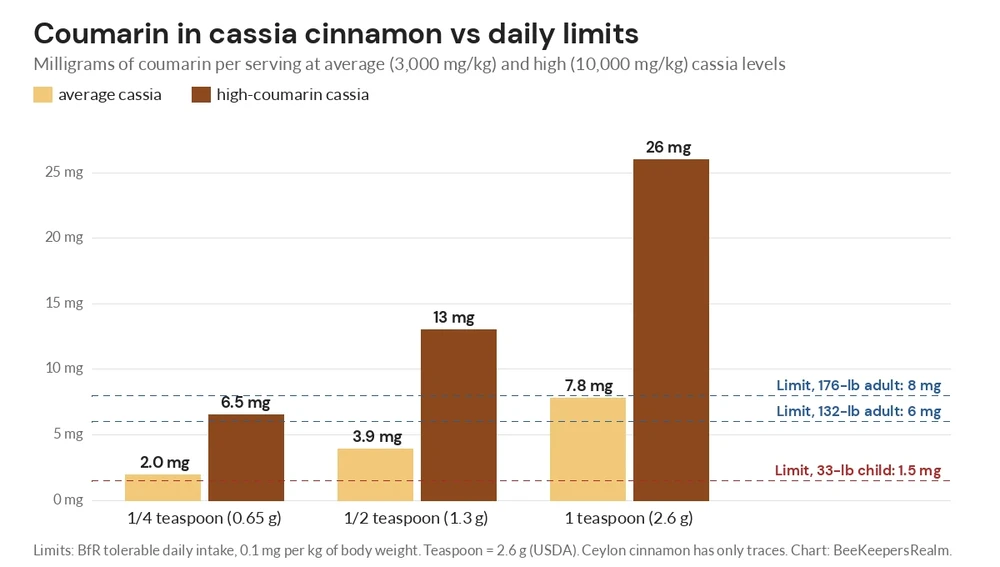
The BfR says going slightly over for one to two weeks is safe; the risk is large amounts of cassia for a long time, which a daily ritual becomes. US law bans added coumarin but not the coumarin in cinnamon, and a University of Mississippi study found it in every local cinnamon sample tested.
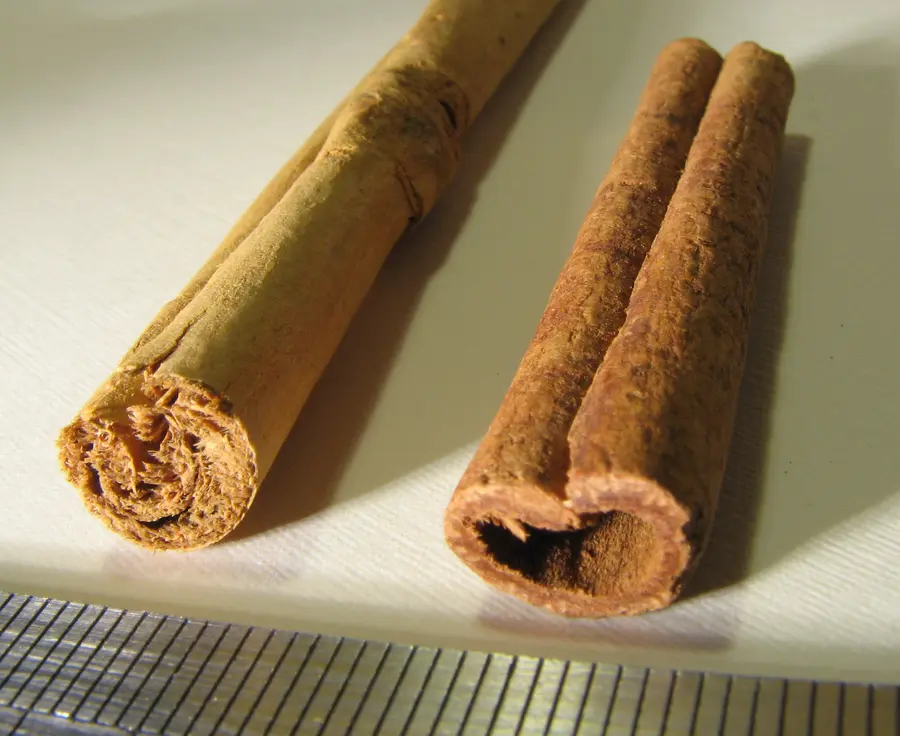
For daily use, buy cinnamon labeled Ceylon or Cinnamomum verum. Sticks help: a Ceylon quill is thin layers rolled like a cigar; cassia is one thick curl.
“If the cinnamon is in powder form, it is hardly possible for consumers to tell Ceylon cinnamon and Cassia cinnamon apart.”
Lead in Ground Cinnamon: Check the FDA List
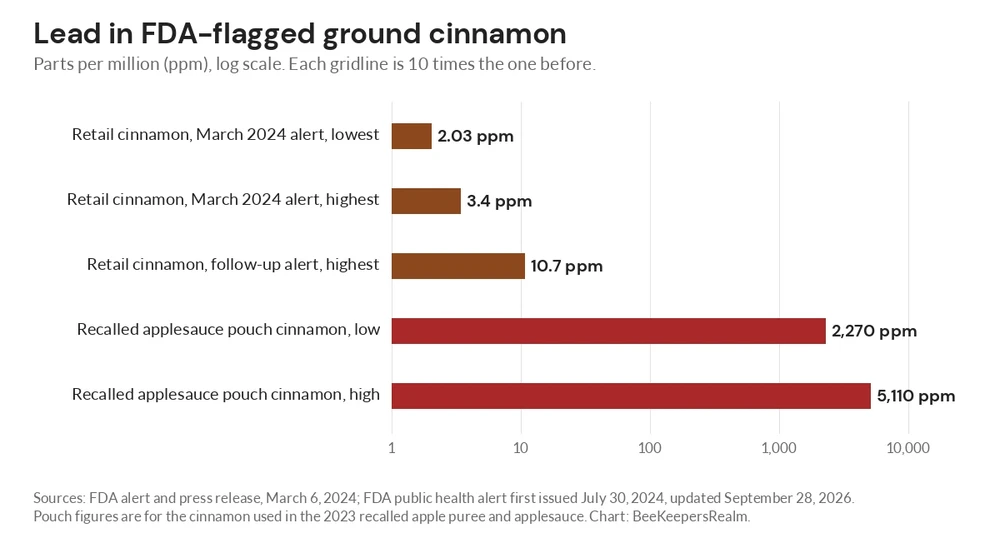
After cinnamon applesauce pouches poisoned young children in 2023, the FDA tested ground cinnamon from discount stores and, on March 6, 2024, told consumers to discard products with 2.03 to 3.4 parts per million (ppm) of lead. A follow-up FDA public health alert, updated September 28, 2026, lists products up to 10.7 ppm. The pouch cinnamon held 2,270 to 5,110 ppm.
“The levels of lead we found in some ground cinnamon products are too high and we must do better to protect those most vulnerable to the negative health outcomes of exposure to elevated levels of lead.”
Most people have no obvious immediate symptoms of lead exposure, the FDA notes, so check brand and lot codes before a daily habit.
Who Should Skip or Limit It
- Babies under 12 months: no honey in any form, including honey pacifiers, per the CDC; see why honey is unsafe for babies. A 33-lb child reaches the coumarin limit with about 0.5 g of cassia (BfR).
- Liver disease: NCCIH says prolonged cassia use could be a problem for sensitive people, such as those with liver disease.
- Diabetes: count the honey as carbohydrate and ask your prescriber before supplement-sized cinnamon.
- Regular medicines: NCCIH advises checking with your provider first.
- Pregnancy: NCCIH says food amounts appear safe, but larger amounts of Ceylon cinnamon are considered unsafe.
- Allergies: both can trigger reactions; see honey allergy signs.
Otherwise, honey with a pinch of Ceylon on oatmeal is simply good food. To make a jar, see how to infuse honey safely, and compare raw, manuka and local honey before paying extra.
Cinnamon is also a staple of fire honey, a spiced cold-season honey.
Frequently Asked Questions
What does taking a spoonful of honey and cinnamon do?
It adds about 21 calories per teaspoon of honey, plus flavor. No study shows a combined health effect.
Is cinnamon and honey good before bed?
For a cough in a child over 1, honey has trial support. For weight loss, the bedtime mix has never been tested.
Does cinnamon and honey help you lose belly fat?
No trial shows it. Cinnamon supplements averaged about 2 lb of weight loss, with mixed results for waist size.
How often should you take cinnamon and honey?
There is no tested dose. If daily, choose Ceylon, or keep average cassia near 1/2 teaspoon for a 132-lb adult.
Which cinnamon is best with honey?
Ceylon (Cinnamomum verum), which contains only traces of coumarin.
What happens if you drink warm cinnamon water every morning for 7 days?
No study has tested it. The BfR says slightly exceeding the coumarin limit for one to two weeks is safe; long-term, high cassia intake is the concern.
The Bottom Line
Enjoy honey and cinnamon as food, not treatment. For a daily habit, buy Ceylon and check the FDA lead list.
Image credits: Featured photo: Paul Arps, via Wikimedia Commons, CC BY 2.0 (File:Oatmeal porridge with shredded apple, raisins, cinnamon and a few drops of honey). Cropped and resized.