Reviewed by Elena P. · How we review
Royal jelly is a milky, sour secretion that young worker bees make in glands in their heads. They feed it to every young larva and, in far larger amounts, to the larvae that will become queens. People also take royal jelly as a supplement, but the human evidence is thin. Easing menopause symptoms has the best support, from a handful of small trials. Claims for cholesterol, blood sugar, fertility, skin and wound healing rest on single small studies, mixed results or animal work. The best-documented harms are allergic: royal jelly has triggered asthma attacks and anaphylaxis, including a reported death, and it may interact with warfarin.
This article summarizes published research for general education only and is not medical advice. Royal jelly can cause severe allergic reactions, especially in people with asthma, eczema, hay fever or allergies to bee products. Talk to a doctor or pharmacist before using it, particularly if you are pregnant or breastfeeding, have a hormone-sensitive cancer, or take blood thinners, blood pressure or diabetes medicines.
Key Takeaways
- Nurse bees make royal jelly in two head glands: proteins from the hypopharyngeal glands, acidic fatty acids such as 10-HDA from the mandibular glands.
- No single “queen protein” has been confirmed. A 2020 U.S. study found the amount of food a larva gets matters more than the recipe.
- The ISO standard for fresh royal jelly allows 62% to 68.5% water, 11% to 18% protein and at least 1.4% 10-HDA.
- Menopause symptoms have the strongest human evidence (6 studies, 471 women). Several other claims failed in trials.
- In the U.S., royal jelly is a dietary supplement. The FDA does not approve supplements before sale.
- Avoid it if you have asthma, eczema, bee or pollen allergies, or take warfarin. Ask a doctor first if you take blood pressure, diabetes or hormone medicines.
Table of Contents
- What Is Royal Jelly?
- How Royal Jelly Shapes a Queen
- What Royal Jelly Is Made Of
- How Royal Jelly Is Harvested
- Royal Jelly Benefits: What Human Studies Show
- Side Effects and Who Should Avoid Royal Jelly
- Is Royal Jelly FDA Approved?
- Royal Jelly vs. Honey, Bee Pollen and Propolis
- Frequently Asked Questions
- The Bottom Line
What Is Royal Jelly?
Royal jelly is a gland secretion of worker honey bees (Apis mellifera). It is made by young nurse bees, which secrete it between the sixth and twelfth days of their adult life, according to a 2012 trial report from Gifu University in Japan. Two pairs of glands in the bee’s head contribute. The hypopharyngeal glands make the protein-rich part. The mandibular glands add fatty acids, including 10-HDA, which make the jelly acidic. That division of labor is described in a 2024 review by Nada Oršolić and Maja Jazvinšćak Jembrek in the International Journal of Molecular Sciences. Our guide to worker bee jobs by age shows where nursing fits in a bee’s working life.
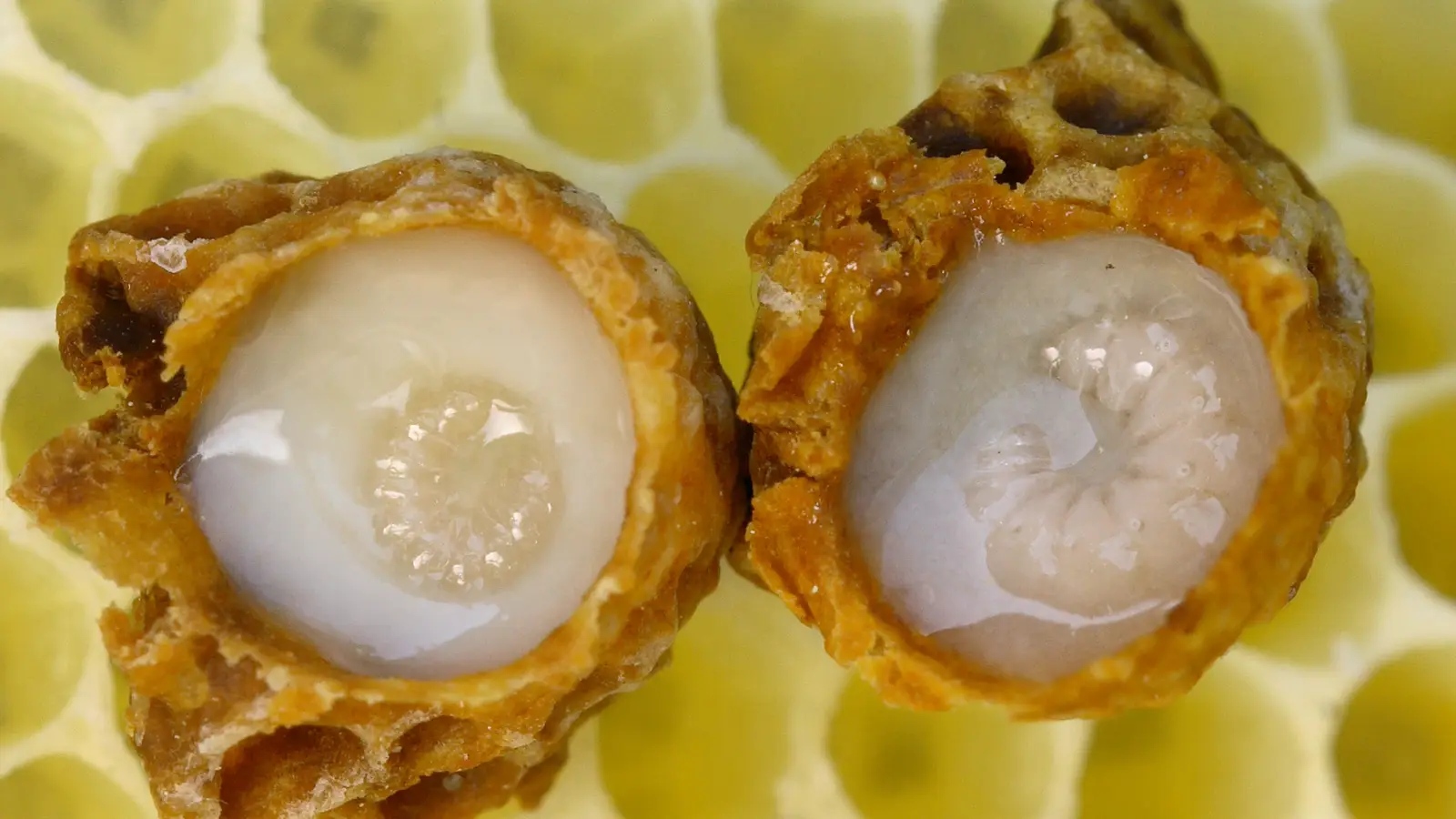
Fresh royal jelly is whitish with yellow or beige tinges. It has a pungent, phenolic smell and a sour taste, according to the United Nations Food and Agriculture Organization (FAO) beekeeping bulletin written by Rudolf Krell. It is not honey and contains no nectar, but nurse bees need pollen to make it. Emily O’Neil, staff scientist at The Best Bees Company in Boston, notes that a hive’s royal jelly supply depends heavily on its pollen supply. Our page on honey bee nutrition covers that link between pollen and brood.
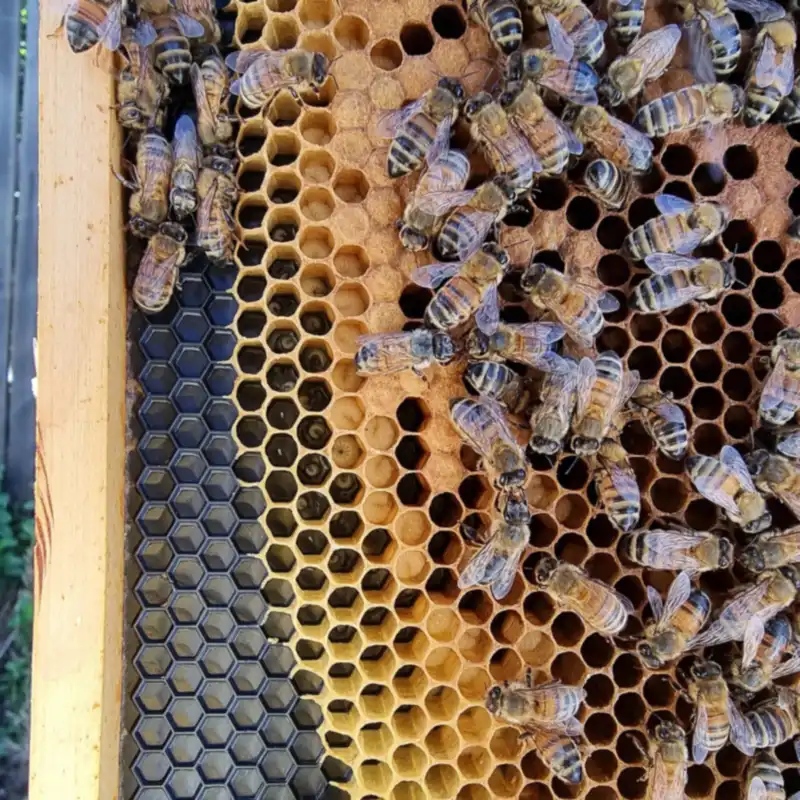
Nurse bees feed royal jelly to all young larvae, then only to larvae in queen cells and to the adult queen. Our page on how honey bee larvae are fed at each stage follows that schedule day by day.
How Royal Jelly Shapes a Queen
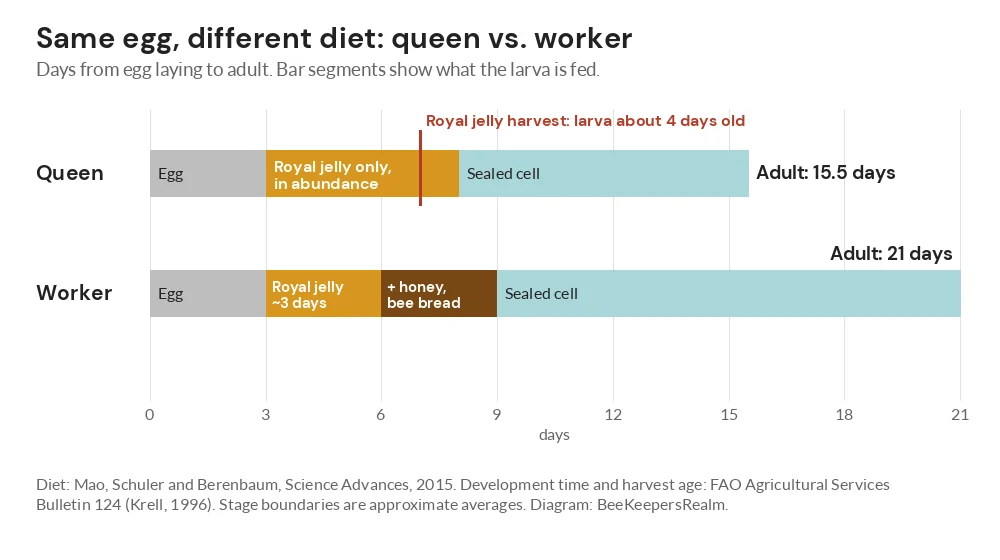
A queen and a worker can hatch from identical fertilized eggs. What separates them is how they are fed as larvae. A worker-destined larva gets royal jelly for about its first three days. After that, nurse bees switch it to a jelly with honey and bee bread mixed in. A queen-destined larva gets royal jelly throughout her larval life. That description comes from a 2015 study in Science Advances by Wenfu Mao, Mary Schuler and May Berenbaum at the University of Illinois at Urbana-Champaign.
The difference shows up fast. A queen develops from egg to adult in 15.5 days on average, while a worker needs 21, according to the FAO bulletin. The queen also emerges larger, with fully developed ovaries, while workers stay largely sterile. Our day-by-day queen cell timeline covers the stages from egg to emergence, and our guide to how honey bee brood develops covers worker and drone cells.
The royalactin story, and why it fell apart
In 2011, Japanese researcher Masaki Kamakura reported in Nature that a single royal jelly protein called royalactin induced larvae to become queens. In his experiments it increased body size and ovary development and shortened development time, even in fruit flies.
In 2016, Anja Buttstedt and colleagues at Martin Luther University Halle-Wittenberg in Germany repeated the work. Their reply in Nature was titled “Royalactin is not a royal making of a queen.” They fed larvae royal jelly with the royalactin removed or added back. The university’s announcement quotes Buttstedt saying that neither diet “produced any differences in queen caste determination.” Larvae without royalactin still became queens.
Quantity matters more than any one ingredient
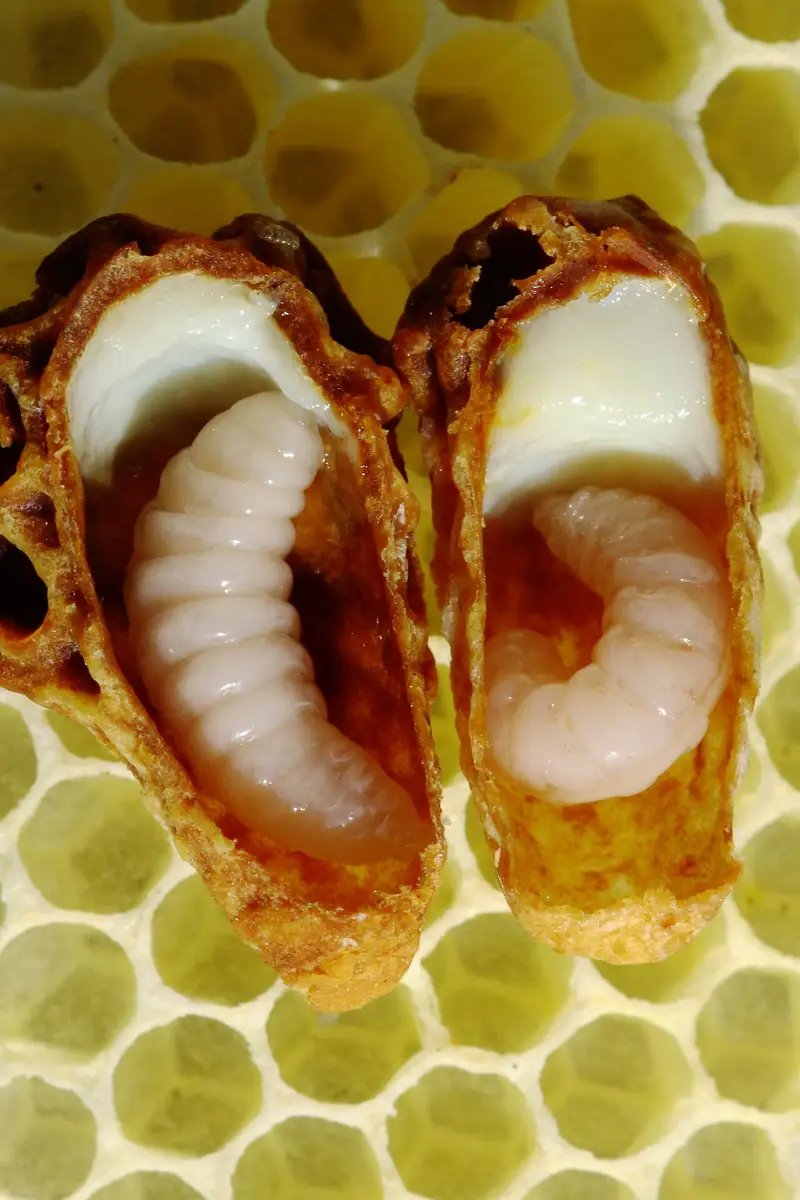
A 2020 study from North Dakota State University and the USDA Agricultural Research Service in Fargo tested a simpler idea. Garett Slater, George Yocum and Julia Bowsher reared larvae in the lab on nine diets that varied in royal jelly and sugar content, fed in eight different quantities. Larvae fed as much as they would eat were indistinguishable from commercially reared queens. How queen-like the adults turned out did not depend on the ratio of protein to carbohydrate in their food.
“These results indicate that total diet quantity fed to larvae may regulate the difference between queen and worker castes in honeybees.”
Diet chemistry still plays a part. The Illinois team found that p-coumaric acid, a plant compound common in honey and bee bread, changed caste-related gene activity, and larvae fed royal jelly with it added developed smaller ovaries. The cell itself may matter too; see our summary of new research on queen cell architecture.
What Royal Jelly Is Made Of
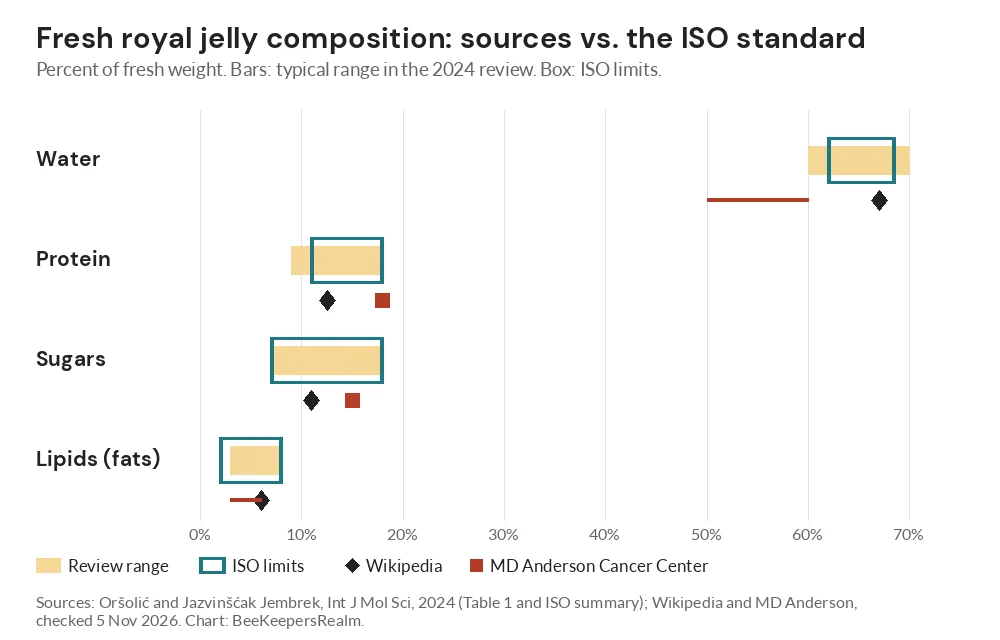
Popular sources give different numbers. Wikipedia lists 67% water and 12.5% protein. MD Anderson Cancer Center lists 50% to 60% water and 18% protein. The 2024 Oršolić review gives 60% to 70% water and 9% to 18% protein, and lists the International Organization for Standardization (ISO) limits, which make a better yardstick.
| Component | Fresh royal jelly, typical range | ISO limits, fresh | Freeze-dried powder |
|---|---|---|---|
| Water | 60% to 70% | 62.0% to 68.5% | Under 5% |
| Protein | 9% to 18% | 11% to 18% | 27% to 41% |
| Sugars | 7% to 18% | 7% to 18% | Not given |
| Lipids (fats) | 3% to 8% | 2% to 8% | 8% to 19% |
| 10-HDA | Over 1.4% | At least 1.4% | Over 3.5% |
| Minerals | 0.7% to 1.5% | Not listed | Not given |
| pH | 3.4 to 4.5 | Not listed | Not given |
Source: Oršolić and Jazvinšćak Jembrek, International Journal of Molecular Sciences, 2024, Table 1 and its summary of ISO requirements.
Against that standard, Wikipedia’s figures fall inside the fresh-jelly limits, while MD Anderson’s 50% to 60% water sits below the ISO minimum of 62%. A 2026 Turkish study of jelly from 15 colonies measured 12.9% protein and 1.41% 10-HDA, just above the 1.4% threshold. The same study found more protein in worker jelly (16.8%) and drone jelly (18.4%) than in royal jelly. Extra protein, in other words, is not what makes royal jelly special.
Proteins: the MRJP family
Up to 15% of royal jelly is protein, according to a 2014 review by Anja Buttstedt, Robin Moritz and Silvio Erler. Most of it belongs to a family of nine “major royal jelly proteins,” or MRJPs. MRJP1 is the protein Kamakura called royalactin. The same proteins matter for allergy: Memorial Sloan Kettering Cancer Center (MSK) identifies MRJP3 as the main allergen that can induce anaphylaxis.
10-HDA: the purity marker
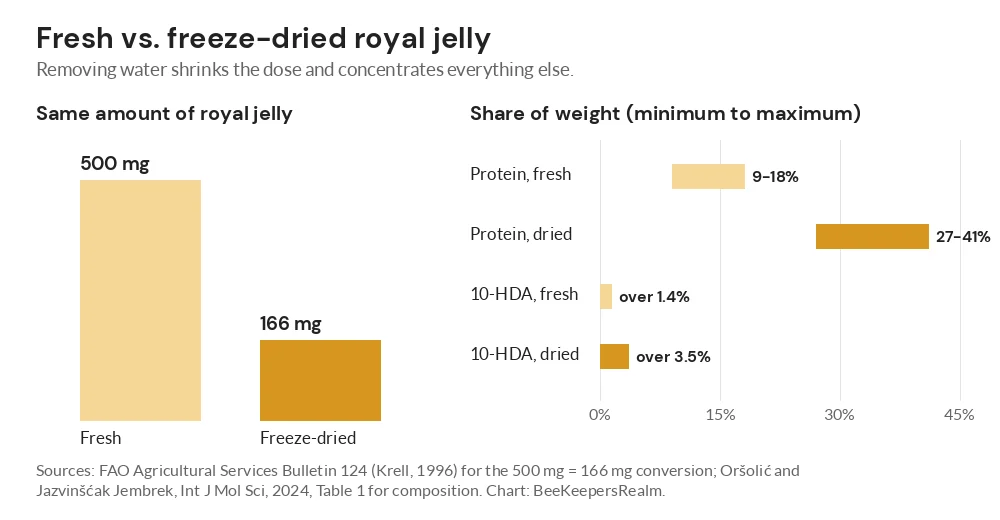
10-hydroxy-2-decenoic acid, or 10-HDA, is a fatty acid found only in royal jelly, according to a 2026 review in Foods by Zou and colleagues. Labs use it as a marker of authenticity and freshness. Freeze-dried powder tests higher because the water is gone: by the FAO’s conversion, 166 mg of freeze-dried royal jelly equals about 500 mg of fresh. A label’s milligram count means little unless it names the form.
How Royal Jelly Is Harvested
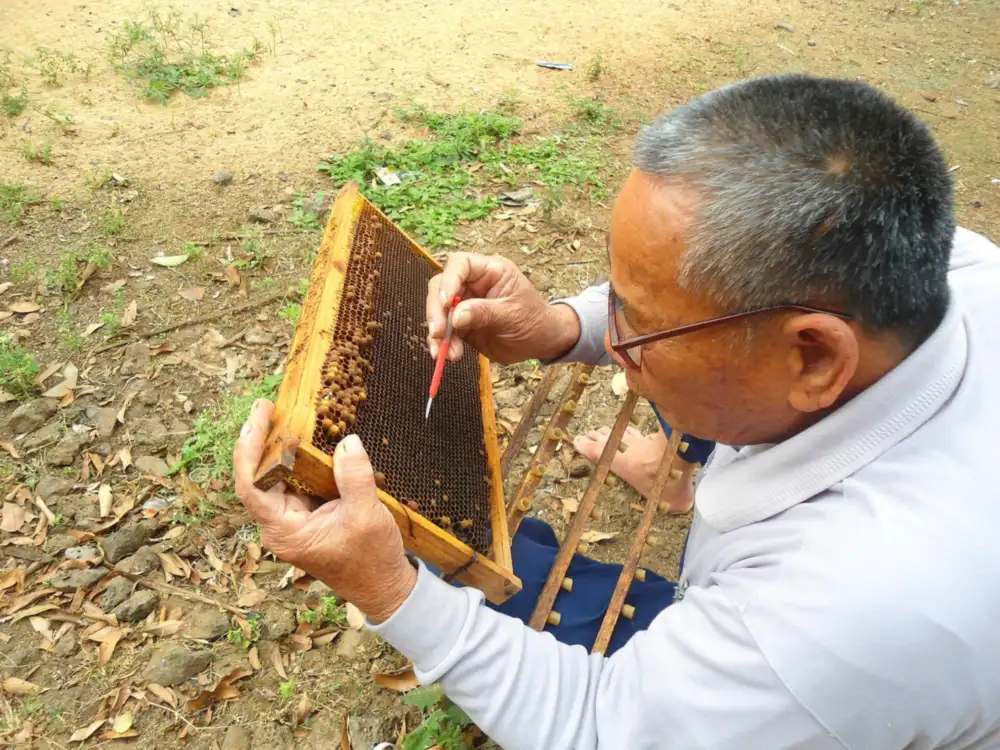
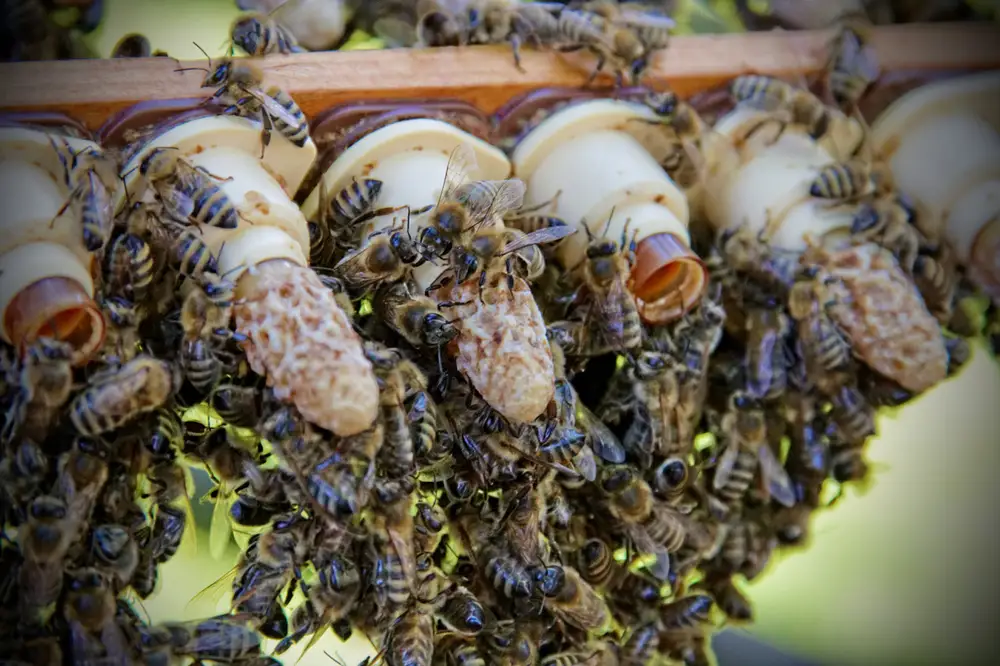
Royal jelly can only be collected in useful amounts from queen cells, which nurse bees stock generously. Without queen rearing, a hive yields only a gram or two, the FAO bulletin notes, so producers run a shortened queen-rearing cycle:
- Graft young larvae. Very young worker larvae are moved into artificial queen cups on a bar frame, the same first step as in the Doolittle grafting method.
- Give them to a strong colony. The frame goes into a colony with plenty of nurse bees, which fill the cups with jelly.
- Remove the cells after three days. Instead of the usual ten days, cells are pulled three days after grafting, when the larvae are about four days old. Each cell should hold at least 200 mg.
- Take out the larvae and collect the jelly. O’Neil notes that it is usually collected with a vacuum device or small syringe, then strained to remove wax and larval skins.
- Chill it at once. The FAO calls refrigeration at 0 °C to 5 °C a minimum precaution and storage below -17 °C better.
The FAO bulletin also warns that the schedule is unforgiving: “Constant attendance is essential as one day off can eliminate two days of production.” For hands-on detail, see our guide on how to harvest royal jelly.
Yields are small. A well-managed hive can produce about 500 g (18 oz) of royal jelly over a five- to six-month season, according to Wikipedia. O’Neil puts it another way: it takes 125 or more queen cells to yield an ounce (28 g) of jelly.
Royal Jelly Benefits: What Human Studies Show
Most royal jelly benefits you read about come from cell and animal studies. Human trials exist, but most are small and short, and many come from a few countries. MSK’s summary is blunt: “Evidence on royal jelly in humans is limited, with no clear benefit for conditions like diabetes or heart disease.” The table below lists the main human evidence for each common claim, from strongest to weakest.
| Claimed benefit | Best human evidence | What it found | Strength |
|---|---|---|---|
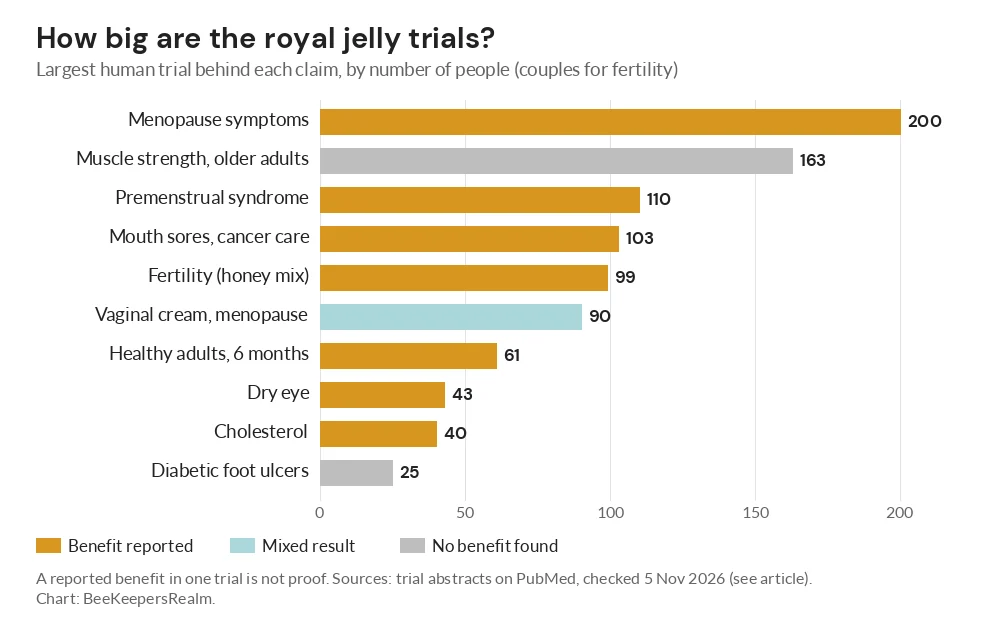
| Menopause symptoms (oral) | 2026 meta-analysis, 6 studies, 471 women; 2019 trial, 200 women | Symptoms improved more than with placebo | Moderate, the strongest of any claim |
| Quality of life after menopause (vaginal cream) | 2016 trial, 90 women | Quality of life improved; estrogen cream did better on vaginal atrophy | Limited, one small trial |
| Cholesterol | 2025 umbrella review; 2017 trial, 40 adults | Total cholesterol fell about 11 mg/dL on average | Low to moderate; publication bias found |
| Blood pressure | 2025 umbrella review | Diastolic pressure fell about 2.5 mmHg | Moderate certainty, small effect |
| Premenstrual syndrome | 2014 trial, 110 students | PMS scores fell more than with placebo | Limited, one trial |
| Mouth sores during cancer treatment | 2014 studies, 103 and 13 patients | Sores healed faster or were milder | Limited, small studies |
| Dry eye | 2017 trial, 43 patients | Tear volume increased | Limited, one small trial |
| Male-factor fertility (vaginal honey mix) | 2008 crossover study, 99 couples | More pregnancies than insemination | Weak; honey mix, not royal jelly alone |
| Blood sugar | 2019 and 2023 meta-analyses | No overall effect | No reliable benefit |
| Muscle strength in older adults | 2017 trial, 163 analyzed | No significant improvement | No reliable benefit |
| Diabetic foot ulcers (topical) | 2015 trial, 25 patients | No difference from placebo | No benefit found |
| Anti-aging, immunity, cancer, brain health | Mostly cell and animal studies | No reliable human evidence | Unproven in people |
Sources: PubMed abstracts and full texts of the studies named in the sections below, checked November 5, 2026.
Menopause symptoms: the strongest case
In a 2019 double-blind trial in Bandar Abbas, Iran, 200 postmenopausal women aged 45 to 60 took 1,000 mg royal jelly capsules or a placebo daily for eight weeks. Menopause scores fell significantly in the royal jelly group but not in the placebo group. A 2026 meta-analysis in the journal Menopause by Ferraz and colleagues included 6 studies involving 471 women. Royal jelly improved symptoms compared with placebo, but that pooled result came from just two studies with 312 women, rated moderate-quality evidence. The authors call royal jelly a “promising” non-hormone option, which is not the same as proven.
Cleveland Clinic’s Robert Saper, MD, MPH, a wellness and preventive medicine specialist, calls the 200-patient Iranian trial well designed. He still urges caution:
“However, this study must be replicated by other researchers with a standardized product and larger numbers before we can recommend it.”
Vaginal use is a separate question. In a 2016 Iranian trial, 90 women used a 15% royal jelly vaginal cream, an estrogen cream (Premarin) or a plain lubricant for three months. The royal jelly cream improved quality of life more than either. On Pap smear tests, though, vaginal atrophy improved most with the estrogen cream, and royal jelly did no better than the lubricant.
Cholesterol and blood pressure: small, uncertain effects
A 2025 umbrella review in Nutrition & Diabetes pooled randomized trials of honey, royal jelly and propolis. Royal jelly lowered total cholesterol by about 11 mg/dL, rated moderate certainty, but the authors found significant publication bias for that result. Triglycerides fell about 5 mg/dL (low certainty), and diastolic blood pressure fell about 2.5 mmHg (moderate certainty). In a 2017 Taiwanese trial of 40 adults with mildly high cholesterol, nine 350 mg capsules a day for three months lowered total and LDL cholesterol but not triglycerides. These effects are small, and royal jelly is no substitute for prescribed treatment.
Blood sugar: no reliable effect
Two meta-analyses found no overall benefit. A 2019 review of 5 trials found royal jelly lowered fasting glucose by under 1 mg/dL, which was not significant. A 2023 review of 10 trials found no significant effect overall; only trials lasting eight weeks or more showed a drop, of about 4 mg/dL. A 2012 Gifu University trial gave 61 healthy volunteers 3,000 mg a day or a placebo for six months. Fasting glucose rose slightly in both groups, though less with royal jelly; it did not fall. If you have diabetes, royal jelly is not a treatment, and it may interact with your medicine (see below).
PMS, mouth sores, dry eye and fertility: single small trials
- Premenstrual syndrome. In a 2014 triple-blind trial of 110 Iranian students, 1,000 mg a day for two cycles cut PMS scores roughly in half. The placebo group barely changed.
- Mouth sores (oral mucositis). A 2014 Turkish study of 103 cancer patients found sores resolved faster with royal jelly added to standard mouthwash. A Japanese study of 13 patients also found less mucositis but was single-blind and tiny.
- Dry eye. In a 2017 Japanese trial, 43 patients took six 1,200 mg tablets a day or a placebo for 8 weeks. Tear volume rose in the royal jelly group, most clearly in patients who started with low tear production.
- Fertility. A 2008 Egyptian crossover study of 99 couples with low sperm motility used honey mixed with royal jelly inside the vagina around ovulation. It recorded 8.1% pregnancies per cycle against 2.6% with intrauterine insemination. It tested a honey mixture, not royal jelly alone.
Where royal jelly did not help
In a 2017 Chinese trial, protease-treated royal jelly did not improve muscle strength in 163 elderly nursing home residents after a year. In a 2015 Iranian trial of 25 patients with 64 diabetic foot ulcers, a 5% topical preparation did no better than placebo. Cleveland Clinic also rates royal jelly probably ineffective for allergies. Claims about immunity, aging, memory and cancer rest mainly on lab and animal work.
Side Effects and Who Should Avoid Royal Jelly
Royal jelly’s best-documented risk is allergy. In 1996, researchers at the Alfred Hospital in Australia described seven people who developed asthma, in some cases with anaphylaxis, after taking royal jelly. Blood tests confirmed true IgE-mediated allergic reactions. A 1994 report in the Medical Journal of Australia was titled “Fatal royal jelly-induced asthma.” Other case reports describe anaphylaxis in a 15-year-old in Barcelona and a 33-year-old man in Japan.
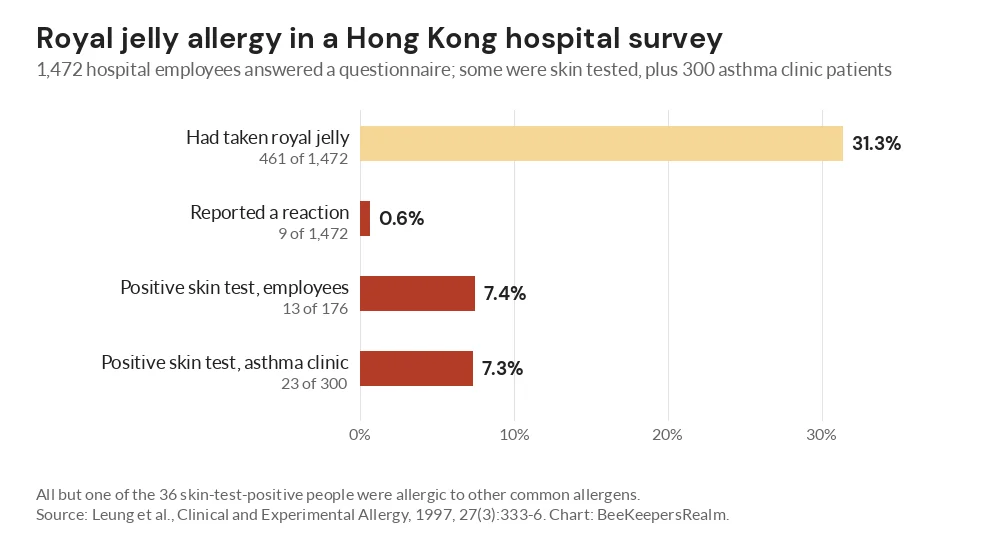
How common is sensitization? A 1997 survey of 1,472 hospital employees in Hong Kong found that 461 (31.3%) had taken royal jelly. Nine reported 14 reactions, including hives, eczema, runny nose and acute asthma. About 7% of those skin-tested reacted to pure royal jelly, and all but one of them were already allergic to other common allergens. Workers face risk too: Beijing allergists reported occupational asthma in a royal jelly factory manager in 2016. For more on reactions to hive products, see our guide to honey, pollen, propolis and royal jelly allergies.
The warfarin case
A 2006 case report from the South Carolina College of Pharmacy described an 87-year-old man on warfarin whose INR, a measure of clotting time, had stayed between 1.9 and 2.4 for three months. He then came to the emergency department with blood in his urine. His INR was 6.88 and rose to 7.29 in the hospital. He had started royal jelly a week earlier. One case does not prove cause, but the authors drew a broader lesson:
“Clinicians should be proactive and repeatedly provide education regarding the potential dangers of dietary supplements taken with conventional drugs.”
Who should avoid royal jelly
| Situation | Why | Source |
|---|---|---|
| Asthma, eczema, hay fever or other allergies | Higher risk of sensitization and severe reactions | Leung 1997; Cleveland Clinic |
| Allergy to bees, pollen or bee products | Reactions to royal jelly proteins, including MRJP3 | MSK; Cleveland Clinic |
| Taking warfarin or other blood thinners | Case report of a dangerous INR rise and bleeding | Lee and Fermo 2006; MSK |
| Taking blood pressure or diabetes medicines | May add to the drugs’ effects | Cleveland Clinic; RxList |
| Estrogen receptor-positive breast cancer or hormone therapy | Lab studies show estrogen-like activity | MSK; Cleveland Clinic |
| Pregnancy or breastfeeding | Not shown to be safe | RxList |
If any of these apply to you, talk to your doctor or pharmacist first. People with a history of anaphylaxis should carry the treatment their doctor prescribed; our page on epinephrine auto-injectors for beekeepers covers prescriptions and storage.
Milder side effects listed by Cleveland Clinic include upset stomach, cough and bloody stool. MSK also notes a reported case of hemorrhagic colitis linked to royal jelly. Stop taking it and get emergency care if you notice wheezing, throat tightness, hives or swelling.
Is Royal Jelly FDA Approved?
No. In the United States, royal jelly is sold as a dietary supplement or food, not as an FDA-approved drug. Under the Dietary Supplement Health and Education Act (DSHEA), the FDA “does not have the authority to approve dietary supplements before they are marketed,” according to the agency’s questions and answers on dietary supplements. Makers are responsible for safety and for truthful labels. A label may claim an effect on a body structure or function, but it must carry a disclaimer that the FDA has not evaluated the claim. Only a drug can legally claim to diagnose, treat, cure or prevent a disease.
Royal jelly products are not standardized, so their form and 10-HDA content can vary. A supplement that promises to cure high blood pressure, diabetes, infertility or cancer is making a claim the law reserves for approved drugs.
How much do studies use?
There is no established safe or effective dose. MD Anderson notes that research has used 150 to 4,000 mg a day. The royal jelly trials in the 2025 umbrella review used 150 to 1,500 mg a day, with an average of 820 mg. The 200-woman menopause trial used 1,000 mg a day for eight weeks. Those are research doses, not recommendations. Some studies used fresh jelly, some freeze-dried powder and some enzyme-treated products, so the numbers are not interchangeable.
Royal Jelly vs. Honey, Bee Pollen and Propolis
All four come from the hive, but they are different substances with different evidence and risks. Honey is made from nectar. Bee pollen is flower pollen that foragers pack into pellets. Propolis is made from plant resins that bees mix with beeswax and use to seal the hive. Royal jelly is the only one of the four that bees secrete from their own glands.
| Product | What it is | Main makeup | Strongest human evidence | Main safety concern |
|---|---|---|---|---|
| Royal jelly | Gland secretion of young nurse bees | 60% to 70% water, 9% to 18% protein, 7% to 18% sugars, 10-HDA | Menopause symptoms, moderate | Asthma, anaphylaxis, warfarin |
| Honey | Nectar that bees concentrate and store | About 82% sugar and 17% water | Cough in children over 1; burn dressings | Infant botulism under age 1 |
| Bee pollen | Flower pollen packed by foragers | Roughly 10% to 40% protein by dry weight, plus sugars and fats | No proven benefit | Allergic reactions |
| Propolis | Plant resins mixed with beeswax | Resins, wax and plant compounds; varies by region | Upper respiratory infections | Allergic reactions |
Sources: Oršolić and Jazvinšćak Jembrek (2024); MD Anderson Cancer Center for honey; BeeKeepersRealm’s honey, bee pollen and propolis evidence guides linked below.
For the evidence behind the other three, see our guides to the health benefits of honey, bee pollen benefits and what propolis research actually shows. Honey should never be given to babies under 1 year old; our guide on whether honey is safe for babies explains the botulism risk.
Frequently Asked Questions
What does royal jelly do for your body?
The best evidence suggests it may ease menopause symptoms and lower total cholesterol slightly, by about 11 mg/dL in pooled trials. It has not been shown to lower blood sugar, build muscle, boost immunity or slow aging.
Who should not take royal jelly?
People with asthma, eczema, hay fever or allergies to bees, pollen or bee products, and people taking warfarin. Pregnant or breastfeeding women, people with estrogen receptor-positive breast cancer and anyone on blood pressure, diabetes or hormone medicines should ask a doctor first.
What happens if you take royal jelly every day?
Trials have given daily doses from 150 mg to several grams for eight weeks to a year. They were too small to rule out rare reactions, and daily use does not remove the allergy risk.
What are the side effects of royal jelly?
The most serious are allergic: hives, wheezing, asthma attacks and anaphylaxis, with at least one reported death. Milder ones include upset stomach and cough. Warfarin-related bleeding and hemorrhagic colitis have been reported in single cases.
Does royal jelly increase estrogen?
Lab studies show some estrogen-like activity, so MSK advises people with estrogen receptor-positive breast cancer to avoid it. That does not prove it raises estrogen in people; small trials have reported changes in other hormones, such as DHEA-S and testosterone.
Which is better, bee pollen or royal jelly?
Neither has strong evidence. Royal jelly has somewhat better human data, mainly for menopause symptoms, while bee pollen has no proven benefit in people. Both can cause allergic reactions.
Can humans eat royal jelly?
Yes. It tastes sour and is stored refrigerated or frozen, then formulated in honey, lotions or capsules, according to O’Neil. Anyone who has reacted to bee products should avoid it.
The Bottom Line
Royal jelly is a remarkable bee food that, in large enough amounts, helps turn an ordinary larva into a queen. As a human supplement it is far less remarkable: the best evidence supports a modest effect on menopause symptoms, and the rest is thin, mixed or untested. The allergy risk is real, especially with asthma. Talk to your doctor before trying it, and treat any label that promises a cure as a red flag.
Image credits: featured photo and queen cell photos by Waugsberg, CC BY-SA 3.0; brood frame by Benlisquare, CC BY-SA 4.0; grafting in Hainan by Anna Frodesiak, CC0; capped queen cells by Michel Groux, CC BY-SA 4.0; propolis scraping by fishermansdaughter, CC BY 2.0. All via Wikimedia Commons, resized. Charts and diagram by BeeKeepersRealm.