Reviewed by Thomas B. · How we review
This practical guide turns precise brood timing and diet into steps any U.S. beekeeper can use at the hive. It explains the day-by-day sequence that shapes worker versus queen outcomes and shows how to time inspections and actions around real biology.
Quick facts: eggs hatch in about 3 days, young bees get royal jelly ~2.5 days, then a mixed diet of pollen and honey for ~2.5 days, are sealed for 12 days, and emerge at roughly 20–21 days after the egg was laid. Nurse bees visit each larva around 10,000 times during this development.
Understanding these numbers helps you plan swarm prevention, queen rearing, and treatment timing without harming brood. Stable broodnest temperature near 93°F keeps development predictable, so your calendar-driven tasks stay reliable even when outside temps swing widely.
Key Takeaways
- Know the 20–21 day timeline to align inspections and interventions.
- Recognize diet stages to distinguish future worker and queen paths.
- Use 93°F broodnest stability to predict development across conditions.
- Track brood patterns to improve colony health and honey yield.
- Apply these steps to practical hive checks and seasonal planning.
Table of Contents
- Why larval feeding knowledge matters for beekeepers today
- From egg to adult: the honey bee life cycle at a glance
- Larval feeding cycles in honeybees
- Invariant brood timings that guide management
- Temperature control in the hive and its impact on brood
- How to schedule inspections around larval and brood cycles
- How to raise queens using young larvae and nurse bees
- Feeding inputs for strong larvae: nectar, pollen, and water
- Timing Varroa control with brood cycles
- Conclusion
- FAQ
Why larval feeding knowledge matters for beekeepers today
Knowing how young brood are nourished lets you forecast when a colony will gain strength and produce honey. This ties direct observation to concrete hive choices.
Worker roles shift with age: cleaners under three days, feeders from three to seven days, royal jelly and wax producers from seven to fourteen days, early foragers at fourteen to twenty-one days, then full foragers after twenty-one days. That rhythm sets the colony’s pace.
Maintaining ~93°F at the broodnest keeps development steady. Each larva gets about 10,000 nurse visits, so spotting milky brood versus older forms tells you whether the workforce is meeting demand.
- Use stage counts to plan inspections and catch poor queen performance before gaps appear.
- Check frames to time splits, requeening, or adding supers for honey flows.
- Know the 24–48 hour window when a worker larva can still become a queen if given abundant royal jelly.
| Stage | Typical days | Role | Beekeeper action |
|---|---|---|---|
| Cleaners / early nurses | 0–3 | Cell prep | Inspect eggs, confirm queen laying |
| Feeding & growth | 3–14 | Milky brood to wax secretion | Match pollen/nectar supply to brood demand |
| Foragers forming | 14–21+ | Collect nectar and pollen | Super or harvest timing; swarm checks |
For more practical reading and reference, consult beekeeping resources and books to deepen your seasonal planning and management.
From egg to adult: the honey bee life cycle at a glance
A honey bee’s life unfolds as four clear stages you can read directly on the comb. Those stages—egg, larva, pupa, and adult—form a rhythm you learn to spot during inspections.
Eggs in hexagonal cells: a three‑day clock before hatching
The queen lays one egg per hexagonal cell across the broodnest. Each egg sits upright like a tiny grain of rice for about three days before hatching.
Open larva phase: intensive nursing in worker and drone cells
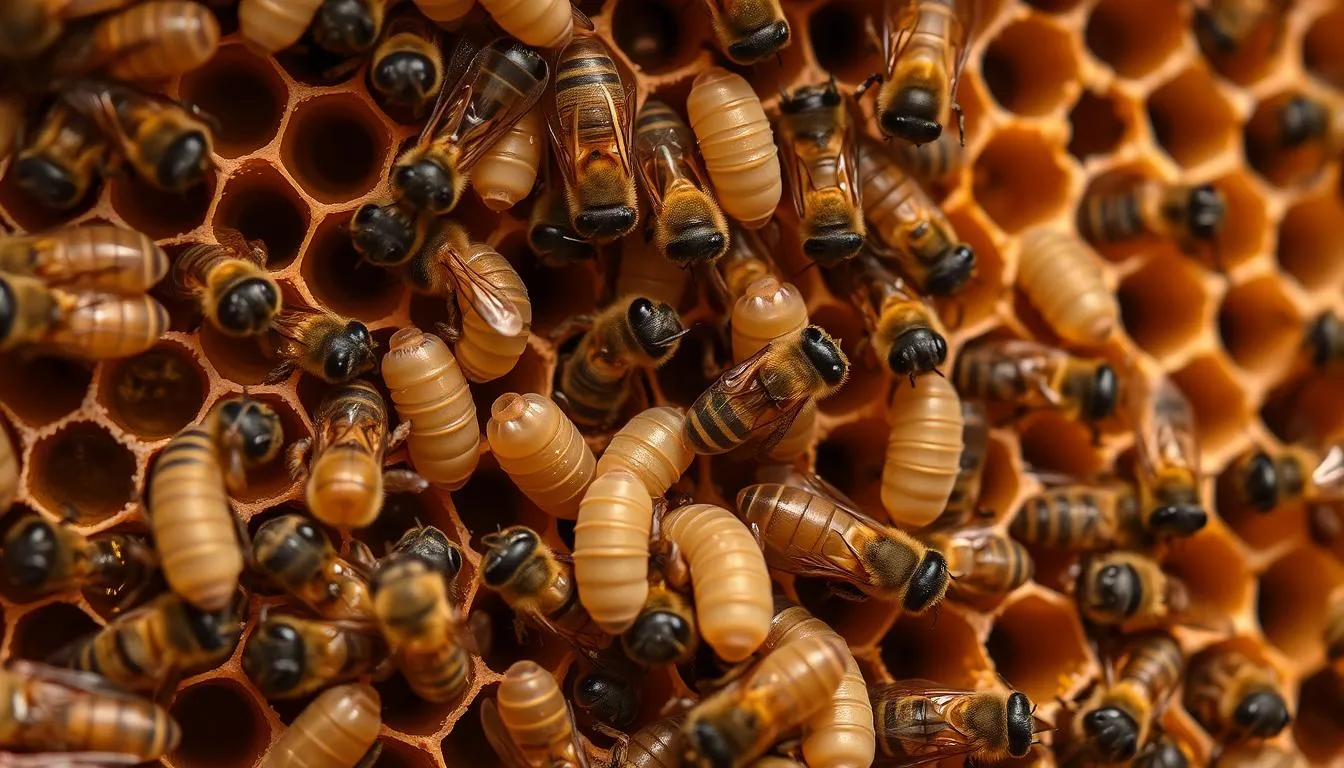
After hatching, the open larva receives nearly continuous care. Nurse bees start with royal jelly, then shift the diet to include pollen and honey in worker and drone cells.
Worker cells are smaller than drone cells; recognizing that size difference helps you find drone brood and predict when drones will appear.
Capped pupa to adult: cocoon, metamorphosis, and emergence
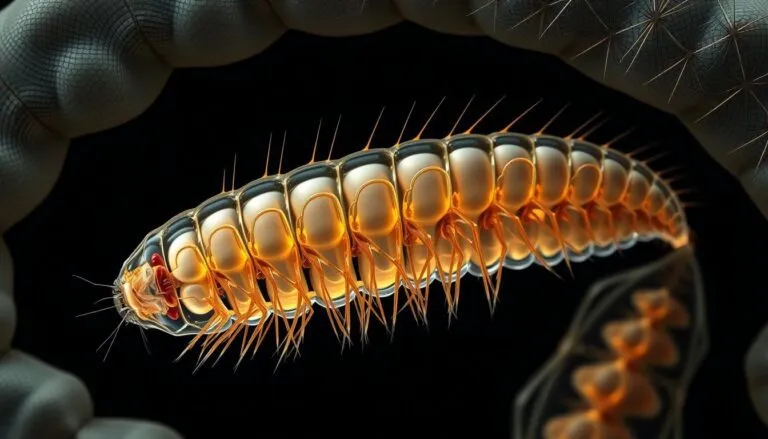
Once the larva fills its cell, workers cap it with wax. Inside, the larva spins a cocoon and transforms into a pupa, forming eyes, legs, and wings beneath the capping.
Typical timing for workers follows roughly 3 days as an egg, ~5 days open as a larva, and ~13 days capped before adult emergence. Reading these stages lets you back‑calculate when the queen last laid and when that cohort will boost adult numbers.
- See patterns: a solid field of eggs, young larvae, then cappings signals synchronized development.
- Act fast: matching what you see to the three‑day markers helps spot queen or nurse activity problems early.
- Learn more: consult honeybee lifecycle stages for detailed charts and timing.
Larval feeding cycles in honeybees
Daily nutrition patterns inside the comb set the pace for worker growth and colony output. This short window of diet change drives fast development and determines caste fate.
Day-by-day feeding for workers: royal jelly first, then pollen and honey
Newly hatched larva receives rich royal jelly for roughly 2.5 days. After that, nurses switch the diet to a mix of pollen and honey for about 2.5 more days before capping.
Result: that stepwise diet fuels rapid growth and the timing needed for synchronized capping and steady emergence.
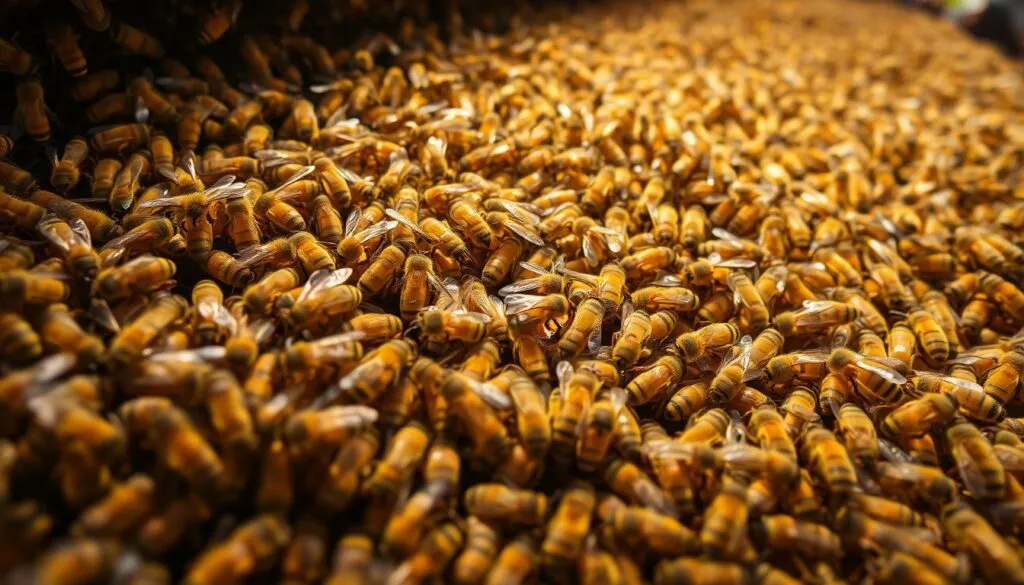
The royal jelly switch: how diet before three days determines queens vs. workers
Abundant royal jelly during the first 24–48 hours can hold a larva on a queen trajectory. Without that extra input, the usual switch to pollen and honey sets the worker path. For the fuller set of nutritional, genetic, and epigenetic factors behind this switch, see our guide to caste determination in larvae.
For practical queen rearing, choose larvae under two days old so diet still controls caste outcome.
Nurse bees by age: who feeds, when, and how often
Nurse roles are age-linked. Workers 3–7 days old feed older brood; 7–14 day-old workers make and supply royal jelly to young brood and the queen.
Each larva gets ~10,000 nurse visits during development. Observe “wet,” milky larvae in cells as a sign of strong provisioning.
- Keep plenty of nurse-age workers before making nucs or splits.
- Ensure ample pollen and honey so royal jelly production is not limited.
- Tilt frames briefly to confirm brood food is present before starting queen work.
Invariant brood timings that guide management
Concrete development marks let you plan hive work with confidence. These fixed day counts form a calendar you can use across apiaries.
Workers: a dependable 3:5:13 timeline
The typical worker pattern is clear: three days as eggs, about five days as open larva, then roughly 12–13 days sealed. Treat the 3:5:13 sequence as your baseline for inspections and splits.
Queens and drones: faster queens, slower drones
Queens complete development in 16 days, with queen cells usually capped on day nine after the egg. Drones require about 24 days from egg to emergence, so budget at least five weeks before mature drones appear for mating.
“When broodnest temperature is steady near 34.5°C, these timelines stay reliable across hives.”
Use these counts to backdate events: eggs mean the queen was present within three days; capped queen cells warn of swarming within days. Note that summer workers often live about six weeks, so plan forager peaks around major nectar flows.
- Practical tip: If all worker brood is capped today, expect a surge of adults in roughly two weeks.
- Record keeping: Note the day eggs or queen cells were seen so you can return on exact calendar targets.
Temperature control in the hive and its impact on brood
A narrow temperature band inside the hive keeps development running like clockwork. Bees hold the brood area between about 33–36°C, with the core near 34.5°C. That precision preserves timing from egg to adult and supports reliable performance across seasons.
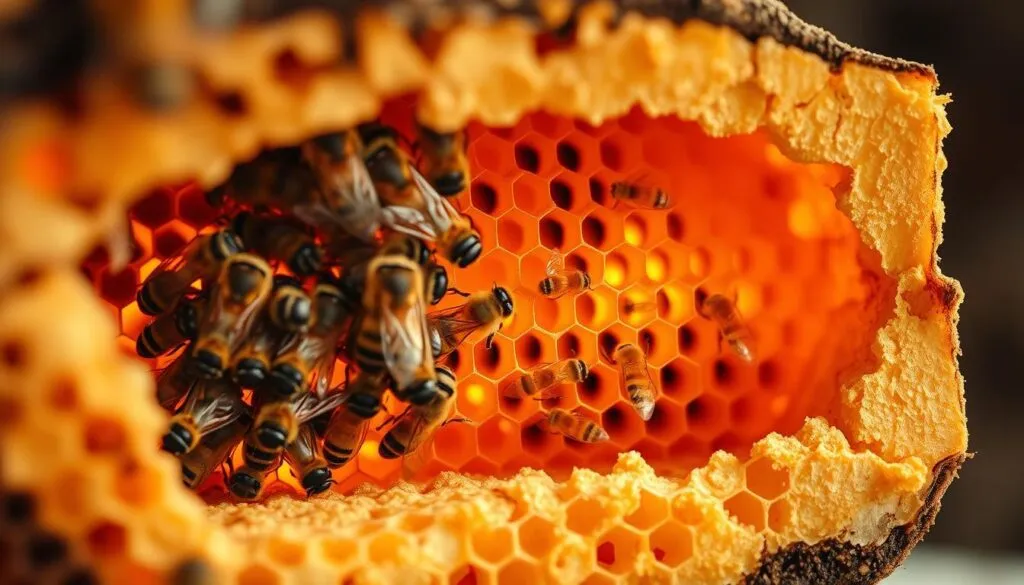
How workers thermoregulate
Worker bees heat comb by clustering and vibrating their flight muscles. They cool the nest by evaporating water and fanning at the entrance. These actions keep the center stable even when outside weather swings during summer or winter.
Why stable temperature matters for behavior
Small shifts of 1–2°C during pupation can alter neural growth. Studies show reduced dance accuracy and memory when bees develop at cooler temperatures. That means forager efficiency and colony communication depend on steady heat.
“Colonies can maintain near 93°F in winter clusters, protecting developing brood through extremes.”
| Function | Action | Beekeeper tip |
|---|---|---|
| Heating | Clustering, muscle vibration | Limit long openings during inspections |
| Cooling | Water evaporation, fanning | Keep water nearby and ensure ventilation |
| Insulation | Hive placement, wind protection | Use good insulation and shade in hot sites |
Watch for bearding and persistent fanning. These signs signal thermoregulatory stress and cue you to check water, ventilation, or sun exposure. Protecting temperature helps queens, drones, and workers reach adult roles on schedule.
How to schedule inspections around larval and brood cycles
A steady inspection rhythm gives beekeepers the best chance to find and remove charged queen cells early.
Weekly checks during peak swarm season let you catch started cells before they are capped. If you inspect every seven days, any cell begun after your visit will not be sealed by the next weekly check, giving you time to act.
Weekly pre-swarm cadence: catching charged queen cells before sealing
Recommend a weekly inspection cadence before and during peak spring swarm pressure. Focus on the brood area and comb near the edges of the box.
What to look for on frames: eggs, young larvae, and brood patterns
- Check each frame for standing eggs, very young larva, and uniform open brood.
- Shake bees gently off crowded frames to reveal hidden queen cells along sidebars and comb margins.
- Note dates when eggs appear, cells are started, and when capping occurs so you can predict action times.
Clipped queen nuance: timing leeway and thorough cell checks
Colonies with a clipped queen may allow up to a 10-day interval, but they can still swarm and return under the floor. Stay thorough: read every frame for a sealed cell if you suspect an early swarm.
“If no charged cells are present at inspection, new cells started afterward typically won’t be sealed before your next weekly visit.”
Practical tips: prepare tools, move fast to limit open time, and record calendar dates. This aligns inspections with biological timelines—workers about 21 days, queens roughly 16—so you act at the right moment.
How to raise queens using young larvae and nurse bees
Start queen rearing by picking the tiniest, freshest larvae and building nurse support around them. Good queens begin with early selection and steady care. Follow a clear plan and keep notes on dates for every step.
Selecting larvae under three days and ensuring abundant royal jelly
Choose larvae ideally under two days old; under 24–48 hours is best. That early window lets diet steer development toward a new queen.
Ensure plenty of nurse bees and ample honey and pollen so royal jelly flows freely. Warm, stable brood temps help cells develop properly.
Making nucs or donating a frame: practical steps and cell management
Make a small nuc with enough workers, food, and a drawn comb. Or, donate a frame with tiny larvae to a queenless colony to prompt cell construction.
- Remove excess cells to prevent multiple emergences.
- Pick well‑positioned, robust cells and avoid chilling them during moves.
- Handle frames gently and limit inspections near capped cells.
From cell to laying: realistic timelines to a mated queen
Expect queen cells to be capped on day 9 and emergence on day 16. Allow about 5–6 days for sexual maturity, then mating flights and 2–3 more days before laying begins.
Plan for drones to be mature and mating weather to be favorable. If mating delays occur, wait additional days before judging success and verify eggs before requeening.
| Step | Key days | Action | Beekeeper tip |
|---|---|---|---|
| Selection | 0–2 days old | Graft or place frame | Use youngest larvae for best queen quality |
| Capping & emergence | Day 9 – Day 16 | Protect cells from chill | Limit hive openings near capping |
| Mating & laying | Day 21–25 | Allow flights; monitor for eggs | Ensure drones available; avoid disturbance |
“Strong nurse coverage and rich nutrition during early development produce the best queens.”
Feeding inputs for strong larvae: nectar, pollen, and water
Strong brood growth starts with regular access to high‑quality pollen, steady nectar flows, and nearby water.
Role of pollen and nectar for brood and honey conversion
Pollen supplies the protein and lipids nurse bees need to make glandular secretions that feed young brood. Good pollen diversity yields richer brood food and healthier emerging adults.
Nectar provides the energy that workers convert into honey. That stored honey sustains the colony when nectar dips and supplies dilution for brood food when nurses prepare jelly.
| Input | Primary value | Beekeeper action |
|---|---|---|
| Pollen | Protein, lipids, gland development | Plant diverse forage; avoid removing all pollen frames |
| Nectar | Energy; converted to honey for stores | Super during flows; supplement during dearths |
| Water | Cooling, jelly dilution, evaporative control | Provide clean sources near apiary in heat |
Seasonal notes for U.S. beekeepers: spring flows, summer dearths, and water needs
Spring flows build momentum: abundant nectar and varied pollen let the colony scale larval provisioning quickly. Plan splits and add supers to match that growth.
Summer dearths can limit resources. If honey stores drop, supplement with syrup and pollen substitutes to keep nurse glands productive and larvae well fed.
- Keep comb organized so nurses find pollen stores next to brood.
- Avoid over‑splitting when workers of the right age are scarce.
- Monitor brood cells for wet, milky provisions; dry cells may mean lower nectar or pollen.
“Consistent resources and clean water near the hive help maintain brood quality through seasonal highs and lows.”
Timing Varroa control with brood cycles
Plan Varroa treatments around predictable brood timelines to reduce mite pressure with minimal colony stress. After queen removal or during requeening, a clear opportunity appears when sealed brood is absent. That gap is the best time to target phoretic mites on adult bees.
Using broodless windows after queen removal or requeening
When you remove the queen, all worker brood from the last eggs will emerge at roughly 21 days. Drone brood clears by about day 24. That creates a short broodless window to treat the hive.
Document dates of queen removal, cell capping, and expected emergence so you can pick the exact days for action.
Oxalic acid considerations when no sealed brood is present
Oxalic acid vapor or dribble works best with no sealed brood because mites ride adult bees then. Treat precisely during that broodless gap for maximum efficacy.
Be careful: adding a frame with eggs or young larvae will close the window and reduce treatment success. If you plan to donate brood, either wait until after treatment or remove that donor frame first.
| Action | Timing | Practical note |
|---|---|---|
| Queen removal | Day 0 | Start calendar for emergence dates |
| Worker brood emergence | ~21 days | Broodless window begins after this |
| Drone brood emergence | ~24 days | Ensures all sealed brood is out |
| Oxalic acid treatment | During broodless window | Follow label; avoid supers for honey |
“Use the interval while a new queen is emerging and mating flights are pending to control mites with less chemical input.”
- Plan sequence: treat before adding any brood frames.
- Ensure enough adult bees and water access so the colony stays healthy during the gap.
- Monitor mite drop after treatment to confirm results before the next brood wave.
Penn State Extension’s introduction to queen honey bee development explains why queen larvae stay on straight royal jelly for their entire larval life while workers and drones switch to a pollen-and-honey mix after a few days.
Conclusion
Let predictable development be the backbone of your seasonal hive plan.
Align inspections, splits, and treatments with the 3:5:13 worker pattern, 16‑day queen course, and ~24‑day drone span to turn guesswork into reliable timing. Recognize eggs, very young larvae, and capped brood so you can date events and predict when adults will surge or when a colony will be broodless.
Remember: rich royal jelly during the first ~three days steers caste fate, so pick larvae days old for queen rearing and emergency responses. Keep the brood area warm and ventilated near 34.5°C (about 93°F) to protect development and adult performance.
Take neat notes and mark a simple calendar keyed to eggs and cappings. Over years, this practice improves outcomes for the queen, workers, drones, hive health, and honey production.
FAQ
What is the typical timeline from egg to adult for a worker bee?
A worker starts as an egg for about three days, becomes an open young larva for roughly five days, then remains sealed as a pupa for ~13 days before emerging as an adult. These invariant timings help beekeepers plan inspections and interventions.
How does diet in the first three days influence whether a female becomes a queen or worker?
Females fed exclusive, abundant royal jelly during the initial three days develop into queens. Once switched to a standard mix of pollen and nectar-based provisions, the individual follows the worker developmental pathway.
Which bees perform nursing and how does their age affect care?
Nurse bees are typically young workers, about 3–12 days old. They produce brood food, including glandular secretions, and adjust feeding frequency and diet composition as larvae age from day one through the open-brood period.
What should be checked on frames during routine inspections to monitor brood health?
Look for a consistent brood pattern, presence of eggs (
How do temperature and thermoregulation affect brood development?
Workers maintain the brood nest near an optimal temperature. Stable heat prevents developmental delays and supports proper brain and behavior development. Large temperature swings increase mortality and produce weaker adults.
When is the best time to inspect a hive to avoid disrupting crucial stages?
Schedule weekly checks keyed to brood timing: avoid heavy disturbance during mass capping events and aim to inspect between egg-laying and before queen cells are sealed to catch potential swarm preparation early.
How can I raise a replacement queen using young larvae?
Select female larvae under three days old, place them in queen cups or graft into a queenless nuc with abundant nurse bees and food. Ensure plentiful royal jelly provision and allow 16 days from egg to emergence for a new queen.
What nutrition do developing brood need from the colony?
Young brood rely on nurse-provided secretions, then benefit from pollen for protein and nectar for carbohydrates. Water is essential for hive humidity and food dilution. Adequate stores during spring flows support strong development.
How should Varroa treatments be timed relative to brood cycles?
Treatments like oxalic acid are most effective during broodless windows when no sealed cells shield mites. You can create or exploit short broodless periods after queen removal or during natural gaps to maximize mite mortality.
What differences exist between worker, queen, and drone development lengths?
A worker completes development in about 21 days (3+5+13), a queen in roughly 16 days, and a drone around 24 days. These fixed intervals influence rearing strategies, varroa management, and seasonal planning for colony growth.
How do seasonal flows and dearths in the United States affect brood rearing?
Spring nectar and pollen flows fuel rapid brood expansion as colonies build population. Summer dearths or droughts reduce available forage, forcing reduced brood rearing and increased reliance on stored honey and supplemental feeding.
What should be considered when making nucs or donating frames for queen rearing?
Provide frames with young larvae, abundant nurse bees, and ample pollen/nectar stores. Ensure the receiving unit has no laying queen if using grafted larvae, and monitor for adequate cell construction and successful queen emergence.