A honey bee colony looks orderly from the outside, but it is not free of conflict. Workers can lay eggs, several queens can be reared at once, neighboring colonies try to steal each other’s honey, and in autumn the colony has more mouths than it can afford to feed. None of this is settled by negotiation. Each conflict is resolved by specific, predictable behaviors: workers destroy eggs laid by other workers, virgin queens kill their rivals, guard bees turn away bees that smell wrong, and workers push drones out of the hive when food runs short.
Knowing how the colony resolves these conflicts helps a beekeeper read what is happening on the frames and at the entrance, and avoid creating fights of their own, for example when combining two colonies.
Key Takeaways
- In a colony with a healthy queen, workers remove eggs laid by other workers. This is called worker policing.
- When several queens are reared, the first virgin to emerge usually destroys rival queen cells, and queens that meet fight until one remains.
- Guard bees check incoming bees by odor and become stricter when robbing pressure rises.
- In late summer and autumn, workers stop feeding drones and evict them.
- Beekeepers can prevent unnecessary fighting by combining colonies with newspaper, reducing entrances during a dearth, and never leaving honey or comb exposed.
Why a Colony Has Conflicts at All
Worker honey bees are female. They cannot mate, but their ovaries are not completely shut down. Because honey bee males (drones) develop from unfertilized eggs, a worker can in principle lay eggs that develop into her own sons. The queen’s pheromones normally hold this in check; as Penn State Extension puts it, queen mandibular pheromone “inhibits worker reproduction (laying workers) and prevents the rearing of new queens” (Penn State Extension).
Conflict therefore shows up in a few predictable places: who produces the colony’s males, which queen heads the colony, which bees are allowed through the entrance, and which members of the colony get fed when food is scarce.
Worker Policing: Removing Eggs Laid by Other Workers
Even in a colony with a laying queen, a small number of workers develop their ovaries and lay eggs. Those eggs rarely survive. Other workers find them and eat them, a behavior researchers call worker policing. Workers appear to tell queen-laid eggs from worker-laid eggs by a chemical cue on the egg itself, so the queen’s eggs are left alone while worker-laid eggs are removed.
Evolutionary biologists explain policing through relatedness. A queen mates with many drones, so most workers in a colony are half-sisters. On average, a worker is more closely related to the queen’s sons (her brothers) than to the sons of another worker (usually a half-nephew). Removing worker-laid eggs keeps the colony investing in the queen’s offspring.
When policing breaks down: laying workers
Policing only works while there is a queen. If a colony stays queenless for several weeks and has no young larvae left to raise a replacement, worker ovaries develop in large numbers and policing can no longer keep up. The result is a laying-worker colony: several eggs per cell, eggs stuck to cell walls rather than the base, and bullet-shaped drone cappings in worker-sized cells. See Signs of Laying Workers in a Queenless Hive for how to confirm it before you decide what to do.
Queen Against Queen: Rival Cells, Piping and Duels
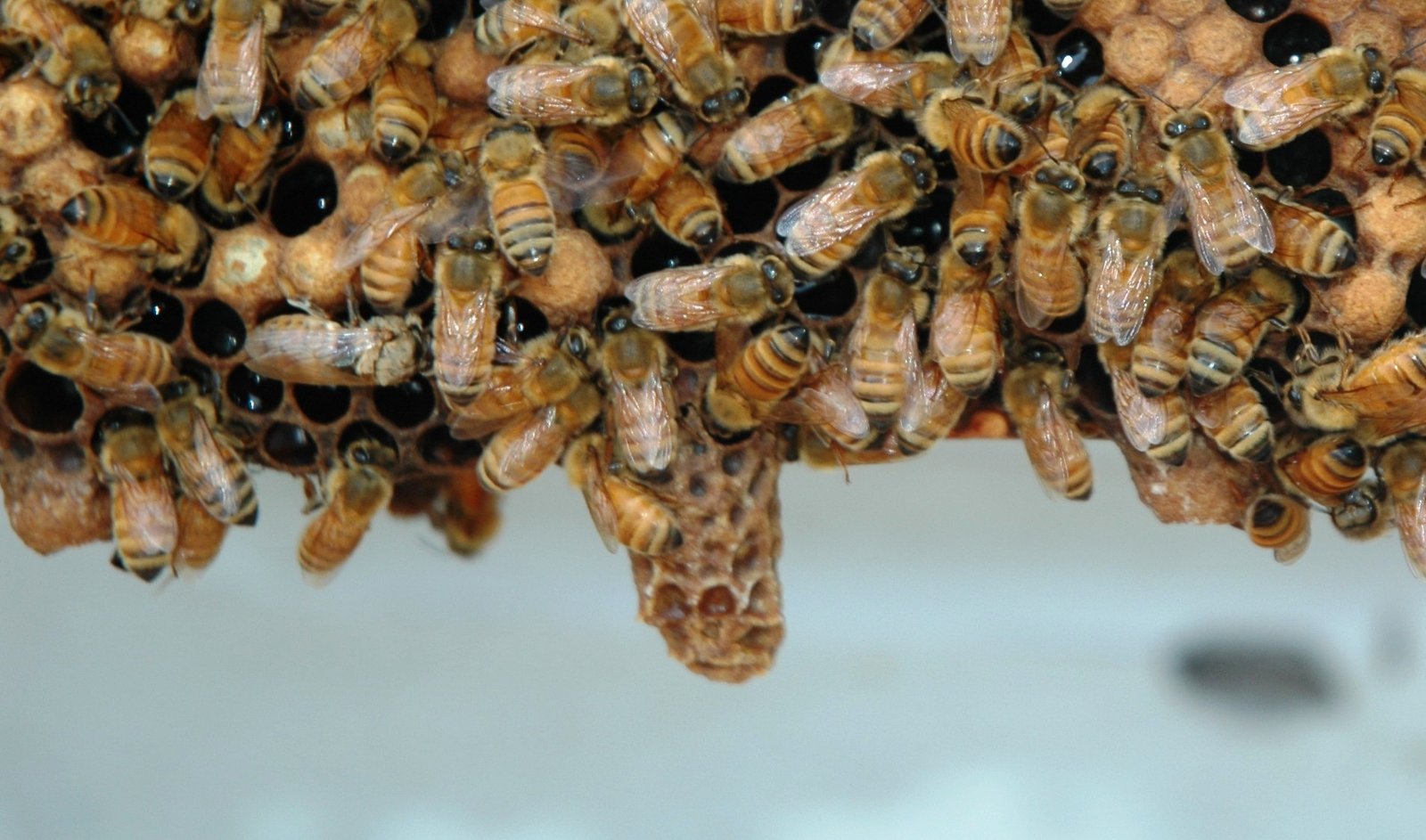
Colonies rear new queens when they prepare to swarm, when they replace a failing queen (supersedure), or when the queen is suddenly lost. In all three cases, the colony often starts more than one queen cell, and only one queen will normally end up heading the colony.
Penn State Extension describes the outcome directly: “the first queen to emerge will seek, sting, and kill her sister queens before they try to do the same,” and if several emerge, “they will fight until only one remains.” A newly emerged virgin queen typically chews into the side of remaining sealed queen cells, and workers then remove the dead occupant.
Virgin queens also make sounds. An emerged virgin produces a high “tooting” pipe, and queens still inside their cells may answer with a lower “quacking.” In colonies preparing to cast afterswarms, workers can hold mature queens inside their cells for a time, so more than one queen can leave with successive swarms instead of fighting inside the hive.
What this means during an inspection
- Cells opened from the side usually mean a virgin queen has already emerged and destroyed rivals. Cells opened neatly at the tip show where queens emerged.
- A colony with no eggs but freshly opened queen cells probably has a virgin queen who has not yet mated. Give her time before adding another queen; see Recognizing Virgin Queen Signs in the Beehive.
- If you requeen, remove any queen cells the colony has built. A virgin emerging from a missed cell can kill or displace the queen you paid for.
Guards at the Entrance: Drifting Bees and Robbers
The entrance is where conflicts between colonies are resolved. Researchers at the University of Sussex report that a colony entrance “will usually have five to ten guards patrolling and checking incomers with their antennae.” Guards learn their colony’s odor and reject incoming bees carrying odors that are not part of it (University of Sussex LASI).
Guards also adjust how strict they are. When robbing is more common, they become less permissive, “rejecting more non-nestmates but also rejecting more nestmates,” and they can change this threshold quickly when robbing suddenly increases.
Drifting versus robbing
Drifting is a forager returning to the wrong hive, which happens often when hives sit in a long straight row or look alike. Robbing is organized theft of stored honey from another colony. UF/IFAS Extension notes that robbing “occurs throughout daylight hours, usually during a nectar dearth,” and that weak colonies are more vulnerable because they have proportionately fewer guards (UF/IFAS Extension).
Signs of robbing include unusually heavy flight around the apiary, bees fighting at the entrance, and dead bees accumulating in front of the hive. The same UF/IFAS publication recommends using entrance reducers on all colonies during a dearth, not leaving wax, honey or comb exposed in the apiary, working colonies carefully but quickly during a dearth, and not working more than one colony at a time. For a fuller checklist, see Early Detection: How to Identify Robbing Behavior Early.
Drone Eviction in Autumn
Drones do not forage, and they depend on workers for food. When nectar flows end in late summer and autumn, workers stop feeding them, drag them toward the entrance and push them out. Evicted drones cannot survive outside the hive, and a normal queenright colony enters winter with few or no drones.
This is useful information for the beekeeper. Drones being pushed out onto the landing board in autumn is a normal seasonal event. A colony that keeps a large drone population late into autumn, after neighboring colonies have evicted theirs, may be queenless or headed by a drone-laying queen and deserves a closer look.
How Beekeepers Can Avoid Creating Conflict
Many fights in an apiary are caused by management. The most common example is combining two colonies. Mississippi State University Extension advises: “When adding adult bees to an existing colony, separate them with a sheet of newspaper to let colony odors mix and to keep fighting to a minimum.” It also recommends that hopelessly weak colonies be combined in early autumn so their equipment is not lost to small hive beetles or wax moths (Mississippi State University Extension).
- Decide which queen to keep and remove the other, so the combined colony has one queen.
- Lay a single sheet of newspaper over the top bars of the stronger colony and cut a few small slits in it.
- Set the box of the weaker colony on top and close the hive.
- Leave it alone for about a week while the bees chew through the paper and their odors mix, then check for eggs and remove the paper scraps.
Step-by-step variations are covered in How to Combine Two Weak Colonies: Step-by-Step.
| Conflict | How the colony resolves it | What the beekeeper sees | Helpful response |
|---|---|---|---|
| Worker reproduction | Worker policing removes worker-laid eggs | Normally nothing; laying workers only after long queenlessness | Keep colonies queenright; act quickly on queen loss |
| Several queens reared | First virgin destroys rival cells; queens fight | Queen cells opened from the side; piping sounds | Remove extra cells when requeening; give virgins time to mate |
| Bees from other colonies | Guards check odor and reject strangers | Fighting at the entrance; robbing frenzy in a dearth | Reduce entrances; keep honey and comb covered |
| Too many mouths in autumn | Workers evict drones | Drones dragged out onto the landing board | Treat as normal; check colonies that keep drones late |
| Two colonies united | Bees fight if odors differ | Dead bees at the join | Combine with newspaper and one queen |
Conclusion
Conflict resolution inside a honey bee colony is built into the bees’ behavior. Workers police each other’s eggs, queens eliminate rivals, guards defend the entrance by odor, and drones are expelled when food runs short. None of these behaviors needs help from the beekeeper when the colony is healthy and queenright. The beekeeper’s job is to recognize them, keep colonies strong enough to defend themselves, and avoid management that forces strange bees together without time to share an odor.
FAQ
What is worker policing in honey bees?
Worker policing is the removal of eggs laid by workers. In a colony with a laying queen, some workers lay eggs, but other workers find and eat them, while eggs laid by the queen are left alone. As a result, nearly all males in a queenright colony are the queen’s sons.
Do two queen bees fight to the death?
Usually, yes. When a colony rears several queens, the first virgin to emerge normally stings rivals in their cells, and queens that meet fight until only one remains. Short periods where a mother and daughter queen coexist during supersedure are sometimes seen, but they are the exception.
How do guard bees know which bees belong to their hive?
Guards learn their own colony’s odor and inspect incoming bees with their antennae. Bees carrying odors that are not part of that colony odor are usually rejected. During heavy robbing, guards become stricter and turn away more bees, including some of their own nestmates.
Why do bees kick drones out in the fall?
Drones do not forage and must be fed by workers. When nectar becomes scarce in late summer and autumn, workers stop feeding them and push them out of the hive to save stores for winter. A colony that keeps many drones late into autumn may be queenless and should be checked.
How do I combine two colonies without the bees fighting?
Remove one of the two queens, place a single sheet of newspaper with a few small slits between the boxes, and put the weaker colony on top. The bees chew through the paper over several days, which gives their odors time to mix. Check after about a week for eggs from the remaining queen.