Reviewed by Elena P. · How we review
Bee pollen has no proven health benefit in people. It does contain real nutrition: roughly 10% to 40% protein by dry weight, plus sugars, fats and plant compounds. Most of the benefits you read about, though, come from test-tube and animal studies. The few human trials are small, and most of them tested pollen extract tablets, not the granules sold in jars. The best-documented effects are risks. Bee pollen has caused anaphylaxis, and in one warfarin patient it pushed a clotting test far above the safe range. The FDA has also flagged at least 12 “bee pollen” diet pills that contained hidden drugs.
Educational information only, not medical advice. Talk to your doctor or pharmacist before taking bee pollen, especially if you have pollen allergies or asthma, take blood thinners, or are pregnant. You can look up tainted products in the FDA Health Fraud Product Database, checked November 4, 2026.
Key Takeaways
- No human trial shows that eating bee pollen granules treats or prevents any disease. The antioxidant, cholesterol, liver and wound claims rest on lab and animal work.
- Most trials described as bee pollen research tested manufactured pollen extracts such as Cernilton, or grass pollen allergy shots. In the one hot-flash trial that used real bee pollen, pollen mixed with honey did no better than honey alone: 70.9% vs 68.3% improved.
- People with hay fever, especially to ragweed and its relatives, are the group most at risk of anaphylaxis. In the cases below, symptoms began 10 minutes to 4 hours after a dose.
- One documented case links bee pollen to a dangerous rise in INR in a man on warfarin.
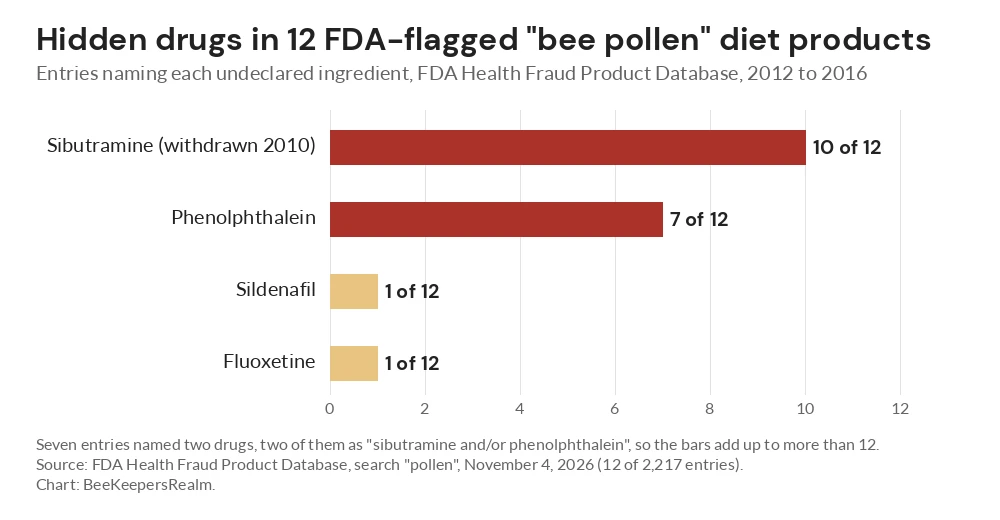
- Twelve FDA database entries for “bee pollen” weight-loss products found hidden drugs: sibutramine in 10, phenolphthalein in 7.
Table of Contents
- What Bee Pollen Granules Actually Are
- What Is in Bee Pollen, and Why Labels Vary
- Bee Pollen Benefits, Graded by the Evidence
- Most Bee Pollen Trials Did Not Test Bee Pollen
- Allergic Reactions and Anaphylaxis
- Warfarin, Pregnancy and Contamination
- FDA Warnings About Tainted Bee Pollen Diet Pills
- If You Still Want to Try Granules
- Frequently Asked Questions
- The Bottom Line
What Bee Pollen Granules Actually Are
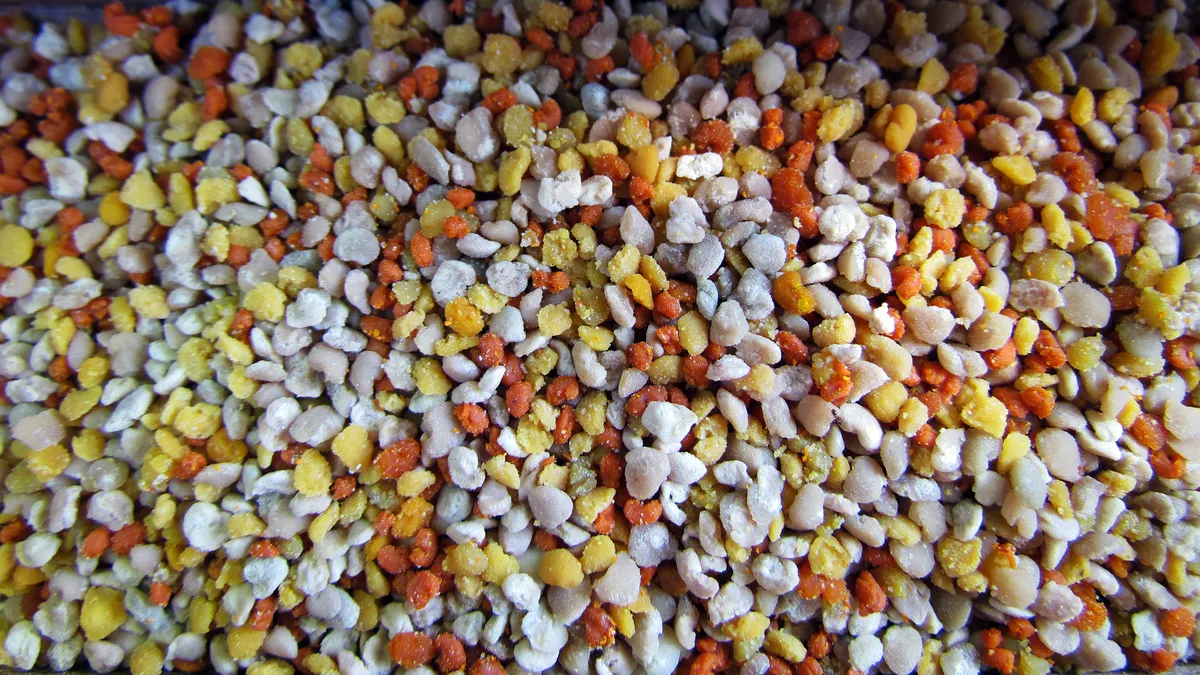
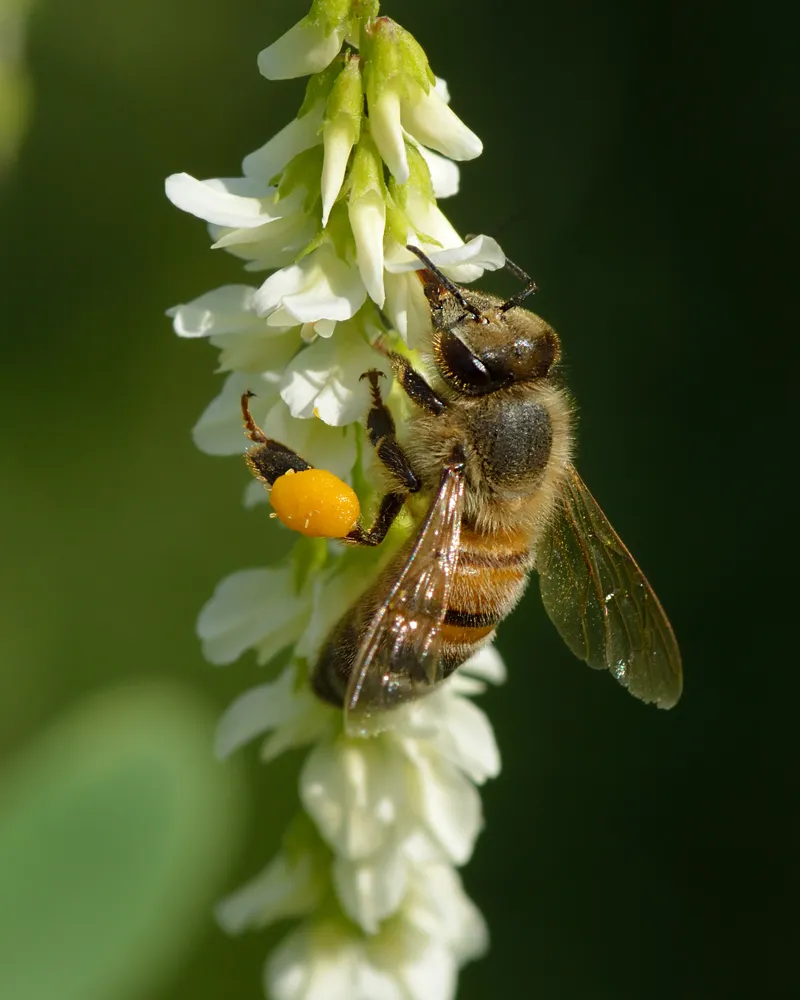
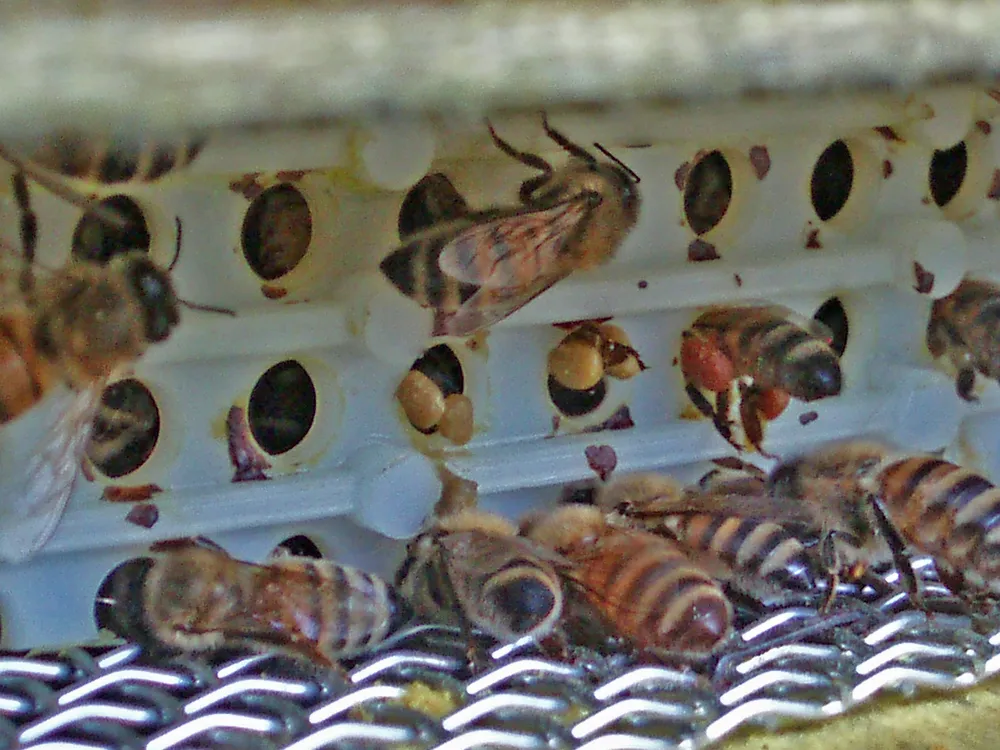
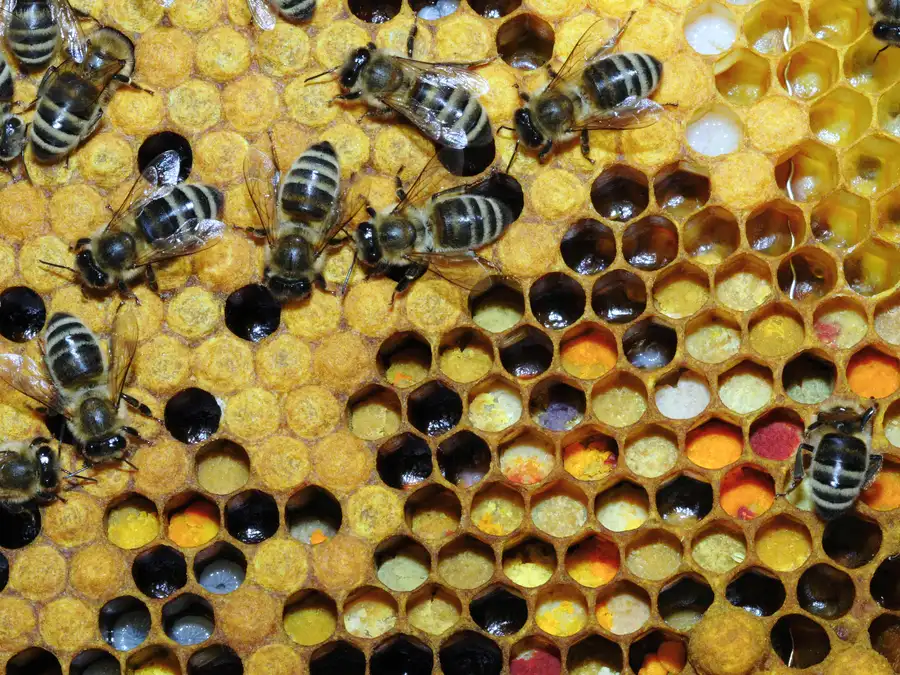
A foraging honey bee dampens flower pollen with nectar and saliva and packs it into the pollen baskets on her hind legs. Each load comes from one plant species or a few, which is why a spoonful of granules can be yellow, orange, gray and red. Beekeepers collect the pellets with a pollen trap, a grid at the hive entrance that knocks some loads into a drawer.
Granules are not the same thing as bee bread. Inside the hive, bees pack pollen into comb cells, where it ferments into the colony’s stored protein food. Our comparison of bee pollen and bee bread covers how they differ, and our guide to how bees ferment pollen into bee bread explains the process. Jarred bee pollen is trapped pellets, dried or frozen, and far more pollen than raw honey carries; see our page on pollen in unfiltered honey.
In this eight-minute video from May 2025, Georgia beekeeper Bob Binnie of Blue Ridge Honey Co. empties his traps. He first trapped pollen in Oregon in the 1980s.
Binnie and a helper empty the drawers of nine Sundance pollen traps after two days. They brush the granules into a container and freeze them right away, because fresh pollen is moist and can go sour or moldy. He estimates that traps like his old Oregon ones caught about half the incoming pollen. He also pulls the traps once the flow slows so colonies keep what they need. The drawers show how pollen color differs from hive to hive.
What Is in Bee Pollen, and Why Labels Vary
Bee pollen is a real food. A 2015 review by Komosinska-Vassev and colleagues counted about 250 substances in it, from amino acids and fats to vitamins, minerals and flavonoids. The amounts vary widely, because every batch comes from different plants, regions and seasons. A 2023 review in Antioxidants by El Ghouizi and colleagues gives these ranges:
| Component | Reported range | Published average |
|---|---|---|
| Carbohydrates | 13% to 55% of dry weight | 30.8% digestible carbohydrates |
| Protein | 10% to 40% of dry weight | 22.7% |
| Fat | 1% to 13% (one review reports up to 22%) | About 5.1% |
| Water, fresh granules | 20% to 30% | Not given |
| Water, dried granules | National limits from 4% (Brazil) to 10% (Bulgaria) | Not given |
Sources: El Ghouizi et al., Antioxidants 2023 (ranges); Komosinska-Vassev et al., Evidence-Based Complementary and Alternative Medicine 2015 (averages).
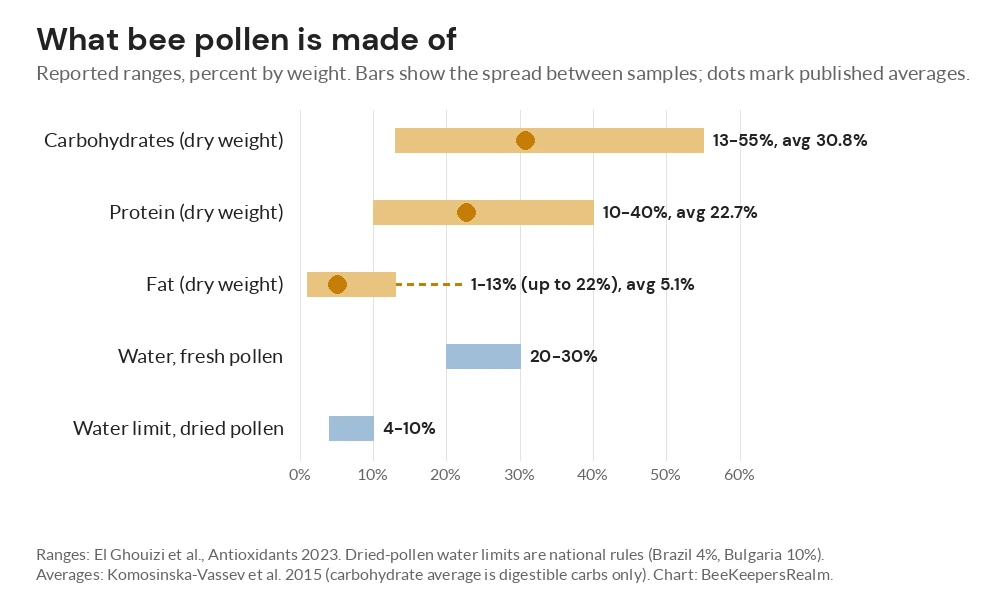
A 10% to 40% protein range means two jars can differ fourfold. And granules are eaten by the teaspoon, so they add little protein or vitamins next to an ordinary meal, whatever the “nature’s multivitamin” marketing says.
Bee Pollen Benefits, Graded by the Evidence
We graded each common claim by the best human evidence we found in primary sources.
| Claimed benefit | Best evidence found | Grade |
|---|---|---|
| Hot flashes during breast cancer treatment | Crossover trial, 46 women: 70.9% improved on pollen plus honey vs 68.3% on honey alone; difference not significant | Small human trial, no advantage over honey |
| Menopausal hot flashes | Femal trial, 64 women: 65% had fewer hot flashes vs 38% on placebo | Human RCT, but of a pollen extract tablet |
| Enlarged prostate (BPH) | Cernilton review, 444 men: modest symptom gains, no change in urine flow or prostate size. HPLE trial, 47 men: better peak flow at the high dose | Small RCTs, mostly extracts |
| Chronic prostatitis | Prostat/Poltit trial, 60 men, grass pollen extract | One small RCT of an extract |
| Hay fever and allergies | No trial of eating bee pollen; pollen allergy is the main risk factor for reactions | No support, documented harm |
| Antioxidant, cholesterol, liver, wound healing | Cell studies and animal feeding studies, such as mice fed a pollen extract for 16 weeks | Lab or animal only |
| Weight loss | No trial found; FDA found prescription drugs in bee pollen diet pills | No support, documented harm |
Sources: Münstedt et al. 2015; Winther et al. 2005; MacDonald et al. 2000; Algethami et al., Nutrients 2022; FDA Health Fraud Product Database.
Menopause and hot flashes
In the 2015 German trial by Münstedt and colleagues, 46 breast cancer patients on tamoxifen or aromatase inhibitors took a daily tablespoon of a pollen-honey mix or plain honey for 14 days, then switched. Honey was meant as the placebo, yet it worked as well as the pollen. Women with pollen or honey allergies were excluded. WebMD cites this trial as showing bee pollen “may reduce menopause symptoms” without mentioning that honey matched it. The Femal trial did better, but Femal is a pollen extract tablet, not granules.
Prostate symptoms
A 2000 systematic review of Cernilton, a rye-grass pollen extract, pooled four trials with 444 men. It found modest gains in self-rated symptoms and nighttime urination but no change in urine flow, residual volume or prostate size. A 2008 Japanese trial of an extract of honeybee-collected pollen in 47 men found better peak urine flow at 320 mg a day but not at 160 mg. That is closer to bee pollen, but still a measured extract.
Antioxidant, heart, liver and immune claims
Bee pollen extracts kill bacteria and neutralize free radicals in a dish, and they changed cholesterol markers in mice. None of that shows what a teaspoon does in a person. Cleveland Clinic’s Robert Saper, a preventive medicine specialist, says he knows of no persuasive studies for bee pollen on any condition. Our reviews of propolis research and the health benefits of honey use the same yardstick.
Most Bee Pollen Trials Did Not Test Bee Pollen
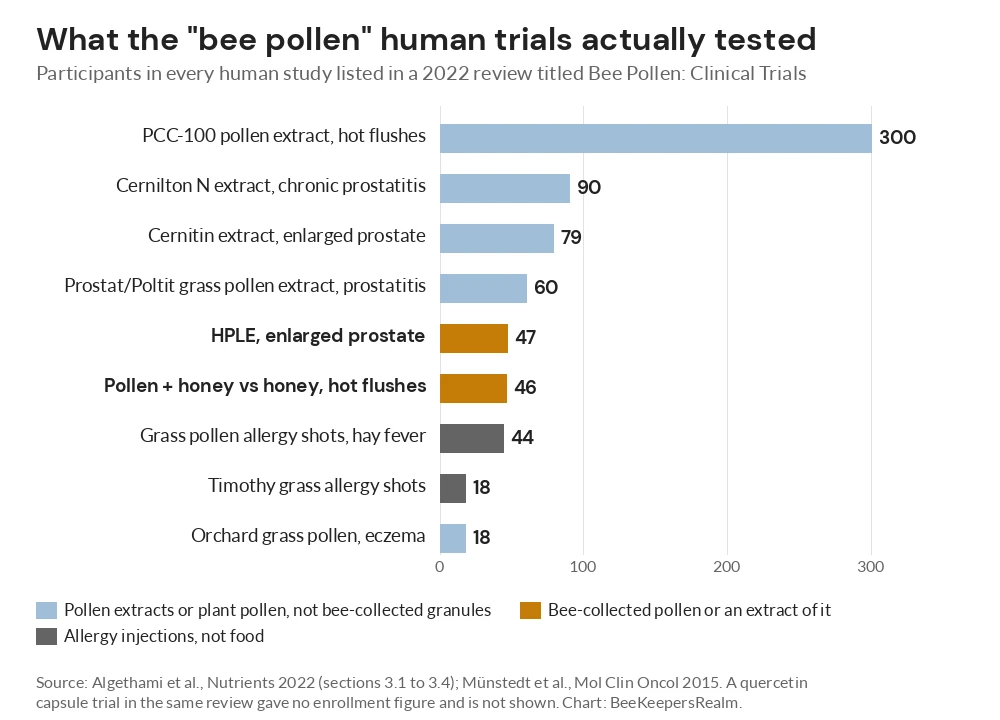
Search for bee pollen clinical trials and you will land on a 2022 review in Nutrients by Algethami and colleagues, titled “Bee Pollen: Clinical Trials and Patent Applications.” We went through every human study in its clinical-trials sections. Most did not use bee-collected pollen:
- Cernilton N and Cernitin are manufactured pollen extracts; the Cernilton analyzed in the 2000 review is made from rye-grass pollen. Prostat/Poltit is an extract of grass (Gramineae) pollen. The 2015 Komosinska-Vassev review notes that bees do not collect pollen from grass.
- PCC-100, listed for hot flashes in 300 women, is a pollen extract described as non-estrogenic.
- Grass pollen immunotherapy, listed under allergic diseases, means allergy injections. In one trial they were given monthly for two years. A second trial used Timothy grass injections, and an eczema study tested orchard grass pollen.
- A quercetin trial in the prostatitis section gave patients 500 mg capsules of a single flavonoid.
Only two of the listed trials used bee-collected pollen: the 47-man HPLE prostate study and the 46-woman Münstedt study. Neither shows that eating granules beats a placebo.
Allergic Reactions and Anaphylaxis
Allergic reaction is the best-documented effect of eating bee pollen. Papers from 2022 and 2026 each count 13 earlier published anaphylaxis cases, mostly in people with hay fever. A 2006 Greek study by Pitsios and colleagues skin-tested 145 people with allergies. Seventy-three percent reacted to at least one bee pollen extract.
| Report | Patient | What happened | Pollen link found |
|---|---|---|---|
| Cohen et al., 1979 | 3 patients | Acute whole-body allergic reactions after eating bee pollen | All allergic to short ragweed; products contained dandelion pollen |
| Jagdis and Sussman, CMAJ 2012 | Woman, 30, Canada | Eyelids, lips and throat swelled 10 minutes after her second dose of supplements that included bee pollen; treated with epinephrine | Summer hay fever |
| Choi et al., 2015 | Man, 40, Korea | Hives, facial swelling, trouble breathing and vomiting 1 hour after one tablespoon; oxygen saturation 91% | Pollen held ragweed, dandelion, chrysanthemum and Japanese hop |
| Asia Pacific Allergy, 2022 | Boy, 15, Australia | Anaphylaxis, with exercise a possible co-factor | Allergic rhinitis |
| Eickholt et al., 2026 | Woman, 26, U.S. | Lip and tongue swelling, breathing trouble and nausea 4 hours after a dose; later developed allergic asthma | Tested positive to ragweed, cocklebur and mugwort |
Sources: case reports as named; the 1979 and 2006 findings are summarized in Jagdis and Sussman, CMAJ 2012.
The plant family that keeps showing up is Compositae, the daisy family. It includes ragweed, goldenrod, dandelion, mugwort and sunflower. That matters in the United States. The 2026 report, by authors at the West Virginia School of Osteopathic Medicine, notes that ragweed, cocklebur and mugwort pollen are common across the country and peak from August to September in the East. If fall hay fever is your season, bee pollen is a poor experiment.
“patients with pollen allergy should be advised of the potential risk when consuming these products — it is not known who will have an allergic reaction upon ingesting bee pollen.”
A bee sting allergy is a different allergy: the Korean patient tested negative to honey bee venom but strongly positive to ragweed, chrysanthemum and dandelion. His team identified those plants by examining the granules under a microscope, the method behind melissopalynology. Our guide to allergies to honey, pollen, propolis and royal jelly covers the other hive products. Swelling of the lips, tongue or throat, or trouble breathing, after a dose is an emergency. Call 911 and use epinephrine if it has been prescribed; see our page on epinephrine auto-injectors.
Warfarin, Pregnancy and Contamination
Warfarin and other blood thinners
The Johns Hopkins Health Library says no food or medicine interactions are known for bee pollen. A published case suggests otherwise. Hurren and Lewis of Wayne State University reported a 71-year-old man whose warfarin had been stable for nine months (American Journal of Health-System Pharmacy, 2010). He started bee pollen granules for general health, one teaspoon twice a day. A month later his INR, a measure of how long blood takes to clot, was 7.1. His target range was 2.0 to 3.0. He reported no missed doses, vitamin K changes, new medicines or illness, and the authors rated the interaction “probable.” WebMD also warns that bee pollen may increase bleeding with blood thinners such as warfarin.
Pregnancy, breastfeeding and children
WebMD states that bee pollen is not safe for children or pregnant women, and Johns Hopkins says people with allergies or asthma should not use it. No trial has tested it in pregnancy or childhood. The Australian anaphylaxis case involved a 15-year-old. Honey has its own rule for babies; see our page on honey and infant botulism.
Mold toxins and heavy metals
A 2023 study in Food Control by Carrera and colleagues tested 80 commercial bee pollen samples from 28 countries for five mold toxins (mycotoxins), including aflatoxin B1. At least one turned up in every sample. Multifloral pollen carried more than single-flower pollen, and bee bread had the highest totals. Cleveland Clinic’s write-up calls this 28 samples; the abstract says 80 samples from 28 countries. The authors note that no legal mycotoxin limits exist for bee pollen. Johns Hopkins adds that pollen from contaminated areas can carry heavy metals.
FDA Warnings About Tainted Bee Pollen Diet Pills
Bee pollen’s weight-loss reputation has a documented dark side, and none of the top-ranking pages we could read mentioned it. We searched the FDA Health Fraud Product Database for “pollen” on November 4, 2026. It returned 12 entries, all weight-loss products flagged between 2012 and 2016. Each contained undeclared drugs. Five are also in the FDA’s Weight Loss Product Notifications list.
| FDA date | Product | Undeclared ingredient | Action |
|---|---|---|---|
| 11/16/2016 | ABX Weight Loss | Sibutramine | Public notification |
| 07/11/2016 | SBF Bee Pollen | Sibutramine | Public notification |
| 03/29/2016 | Propell Platinum | Sibutramine, phenolphthalein | Public notification |
| 12/18/2015 | Oasis, Prime and Evolve Bee Pollen (3 products) | Sibutramine, phenolphthalein | Public notifications |
| 02/09/2015 | AMPD Gold Bee Pollen | Sildenafil | Recall |
| 02/09/2015 | iNSANE Bee Pollen | Phenolphthalein, fluoxetine | Recall |
| 11/19/2014 | Forever Beautiful Bee Pollen | Sibutramine and/or phenolphthalein | Recall |
| 05/12/2014 | Asset Bee Pollen | Sibutramine | Public notification |
| 03/26/2014 | Bella Vi Insane Bee Pollen Capsules | Sibutramine and/or phenolphthalein | Recall |
| 10/24/2012 | Classic Zi Xiu Tang Bee Pollen | Sibutramine | Recall |
Source: FDA Health Fraud Product Database, filter “pollen”, 12 of 2,217 entries, November 4, 2026. Bee-branded diet products such as Bee Thin and Skinny Bee Diet are also in the database but did not match the “pollen” search.
Sibutramine is a controlled substance, once sold as a diet drug, that was removed from the market in October 2010 for safety reasons. The FDA says it can substantially raise blood pressure and pulse, a significant risk for people with heart disease or a history of stroke. Phenolphthalein is not an active ingredient in any approved U.S. drug, and the FDA cites studies suggesting a cancer risk. Sildenafil is the drug in Viagra, and fluoxetine is the antidepressant in Prozac.
“FDA is unable to test and identify all products marketed as dietary supplements that have potentially harmful hidden ingredients.”
A capsule or diet blend sold as bee pollen for weight loss is a red flag, whatever its label says. Plain granules from a beekeeper are a different product, though they still carry the allergy and contamination risks above.
If You Still Want to Try Granules
There is no established dose. WebMD says there is no standard dose because bee pollen is an unproven treatment, and Johns Hopkins says there is no best dosage and suggests starting small. For reference only, not as recommendations, these are the amounts in the reports above:
- Münstedt trial: a tablespoon of a pollen-honey mix daily for 14 days.
- Warfarin case: one teaspoon twice a day for a month before his INR jumped.
- Korean anaphylaxis case: one tablespoon, with symptoms within an hour.
Google’s AI Overview, citing a retailer, suggests half a teaspoon to a teaspoon a day. That is a seller’s serving size, not a tested dose. If your doctor agrees, buy from a source that can say where and when the pollen was collected and how it was dried or frozen.
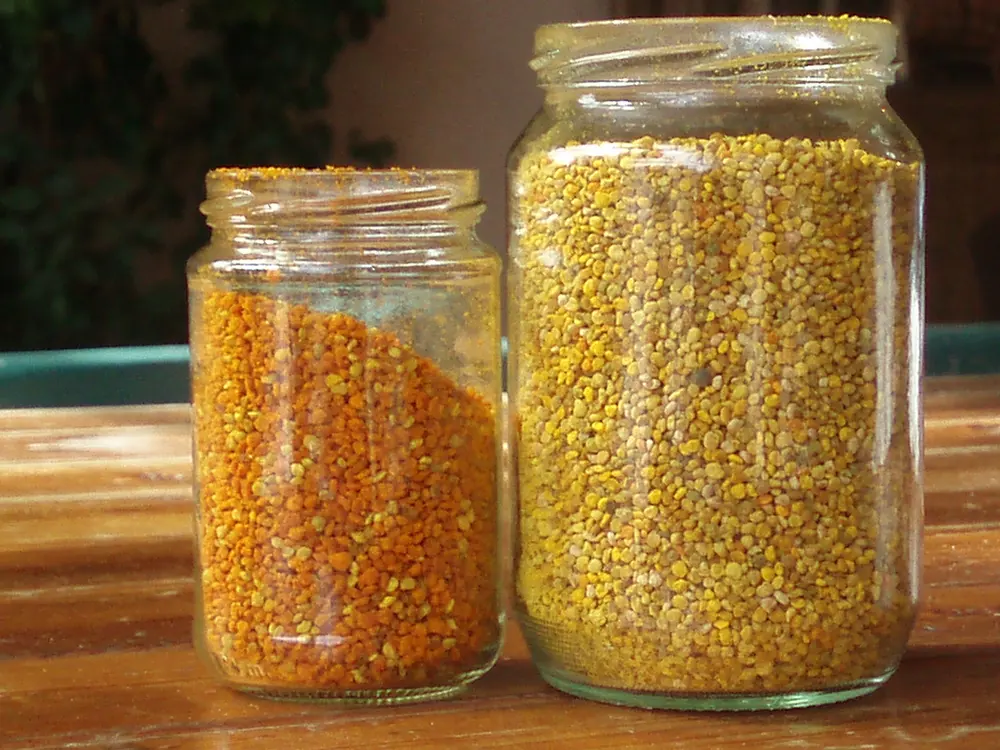
Storage matters because fresh pollen is 20% to 30% water, which the 2023 Antioxidants review says favors bacteria and fungi; freezing should start right after harvest. Keep frozen granules frozen and dried granules sealed, cool and dark, and discard any batch that smells sour or shows mold.
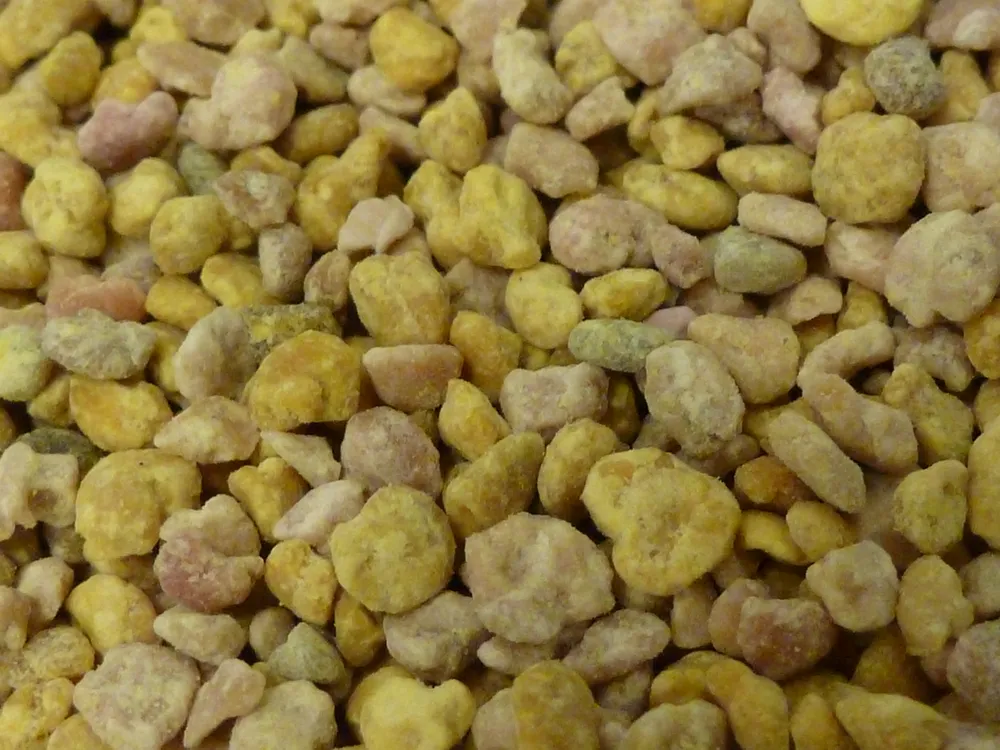
If you keep bees and want to trap your own, our pollen trap comparison covers top- and bottom-mount designs. Our step-by-step guide shows how to harvest, dry and store bee pollen without starving the colony or letting the drawer mold.
Frequently Asked Questions
What happens if you take bee pollen every day?
No long-term trial has tested daily use; the trials ran from two weeks to six months. In the warfarin case, a month of daily use pushed one man’s INR to 7.1. People with pollen allergies can react to any dose, including the first.
What does bee pollen do for females?
The only bee pollen trial in women found that a pollen-honey mix eased hot flashes no better than honey alone. A pollen extract tablet, Femal, beat placebo in a 64-woman trial, but that is a different product. No trial supports breast, fertility or skin claims.
What is healthier, bee pollen or honey?
Neither is a medicine. In a head-to-head trial, honey matched bee pollen for menopausal symptoms. Bee pollen carries a much higher allergy risk, and honey should never be given to babies under 1. Our page on the benefits of honey grades its evidence.
What are the negative side effects of bee pollen?
Allergic reactions, from hives to anaphylaxis, are the main one. Others are a probable warfarin interaction and contamination with mold toxins or heavy metals. Diet pills sold as bee pollen have contained hidden drugs.
How much bee pollen should a woman take daily?
There is no standard or tested daily dose for anyone. Johns Hopkins suggests starting small and says people with allergies or asthma should not use bee pollen. Anyone on a blood thinner should ask a doctor first.
Does bee pollen help with seasonal allergies?
No trial shows that eating bee pollen helps hay fever, and people with hay fever are the most likely to react to it. Our review of local honey for allergies covers the related honey claim.
Does bee pollen help you lose weight?
No study we found shows it does. The FDA has flagged at least 12 bee pollen diet products that worked, if at all, because they contained hidden sibutramine or other drugs.
Is bee pollen safe during pregnancy or for kids?
WebMD says it is not safe for children or pregnant women, and no study has tested it in either group. A 15-year-old in Australia had anaphylaxis after taking it.
The Bottom Line
Treat bee pollen as an expensive, variable food, not a supplement with proven benefits. If you have hay fever, asthma or a warfarin prescription, the risks outweigh anything the evidence offers. If you are curious anyway, talk to your doctor first and check the product against the FDA database before you buy.
Image credits: Featured photo by Cabajar, Wikimedia Commons, CC BY-SA 3.0, cropped and resized. Inline photos as captioned. Charts by BeeKeepersRealm from the sources named.