Reviewed by Michael R. · How we review
Spider mites are tiny arachnids, less than 1/20 inch long, that live in colonies on the undersides of leaves and suck out plant cells. They leave leaves speckled with pale dots (stippling), then bronzed or yellow, and many species spin fine webbing. Outbreaks build fastest in hot, dry, dusty weather, on drought-stressed plants and on houseplants in dry indoor air. To get rid of spider mites, hose or rinse them off, keep plants watered, spray insecticidal soap or horticultural oil onto the leaf undersides, and protect the predators that eat them. Broad-spectrum insecticides often make spider mites worse.
Below: identification, the white-paper test, our count of US iNaturalist records, and a table of which treatments help, which backfire and how each is rated for bee safety. This is educational information, not professional pest-control advice; always follow the product label.
Key Takeaways
- Spider mites are arachnids in the family Tetranychidae, not insects. The twospotted spider mite (Tetranychus urticae) is the species most gardeners and houseplant owners meet.
- Look for stippled leaves, fine webbing and moving dots on the leaf undersides. Tap a leaf over white paper: specks that walk are mites.
- Dry conditions favor them three ways, says Colorado State University: they feed more, their predators struggle, and drought-stressed plants become more nutritious to them.
- Water sprays, adequate watering, insecticidal soap and horticultural oil are the first-line controls. Repeat, because sprays miss eggs.
- Carbaryl, malathion, some pyrethroids and soil-applied imidacloprid can trigger outbreaks by killing natural enemies; UC IPM says broad-spectrum sprays “frequently cause mite outbreaks.”
- Spider mites do not harm bees, but many sprays used on them do. Insecticidal soap carries UC IPM’s lowest bee-precaution rating; abamectin, bifenthrin and malathion carry its highest.
Table of Contents
- What Spider Mites Are
- How to Identify Spider Mites and Their Eggs
- Signs of Spider Mite Damage
- Why Hot, Dry Weather Sets Off Outbreaks
- What US iNaturalist Records Show
- Spider Mites on Houseplants vs Outdoor Plants
- How to Get Rid of Spider Mites
- Why Some Sprays Make Spider Mites Worse
- Spider Mites, Varroa and Bee-Safe Spraying
- Frequently Asked Questions
What Spider Mites Are
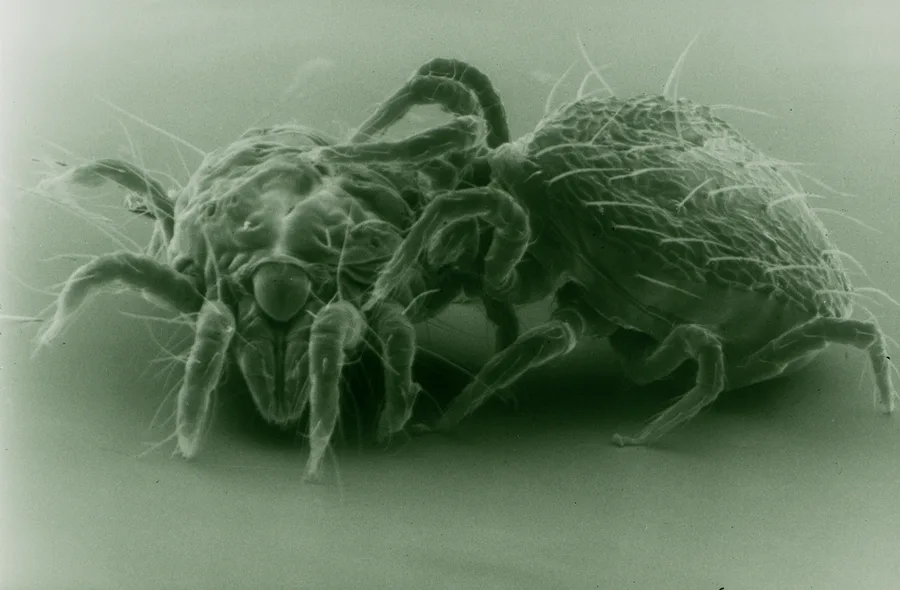
Spider mites belong to the family Tetranychidae, which holds about 1,200 species worldwide. Like ticks and spiders they are arachnids: adults have eight legs, no antennae and a single oval body region, as Ohio State University Extension describes them, while bees and other insects have six legs and three body parts. The “spider” in the name comes from the silk webbing most species spin over the leaves they feed on.
UC IPM’s Pest Notes on spider mites calls them the most common mite pests and “among the most ubiquitous of all pests in the garden and on the farm.” The common garden species are closely related members of the genus Tetranychus that, UC IPM says, cannot be reliably told apart in the field, and there is little need to, because their damage, biology and management are virtually the same. A few others are worth knowing by name:
- Twospotted spider mite (Tetranychus urticae): the main pest of vegetables, fruit, flowers and houseplants. Colorado State calls it the most important species on house plants. Cornell’s IPM program says it feeds on more than 900 plants worldwide.
- Spruce spider mite (Oligonychus ununguis): a “cool season” mite of spruce, pine, juniper and arborvitae that does its damage in spring and fall (Ohio State).
- Honeylocust spider mite (Platytetranychus multidigituli): Colorado State says honeylocusts on drier sites are almost always infested, one of the problems covered in our honey locust tree guide.
- Clover mite (Bryobia praetiosa): a spider mite of lawns that invades homes in large numbers in spring and fall. Penn State Extension says clover mites do not attack people and cannot reproduce indoors.
Spider mites are distant cousins of chiggers, which sit in the same mite order (Trombidiformes) but bite people. Spider mites feed only on plants.
How to Identify Spider Mites and Their Eggs
To the naked eye, spider mites look like tiny moving dots. A 10x hand lens shows the details:
- Size: adult females, the largest stage, are less than 1/20 inch long (UC IPM). Ohio State gives 1/50 inch (0.4 mm).
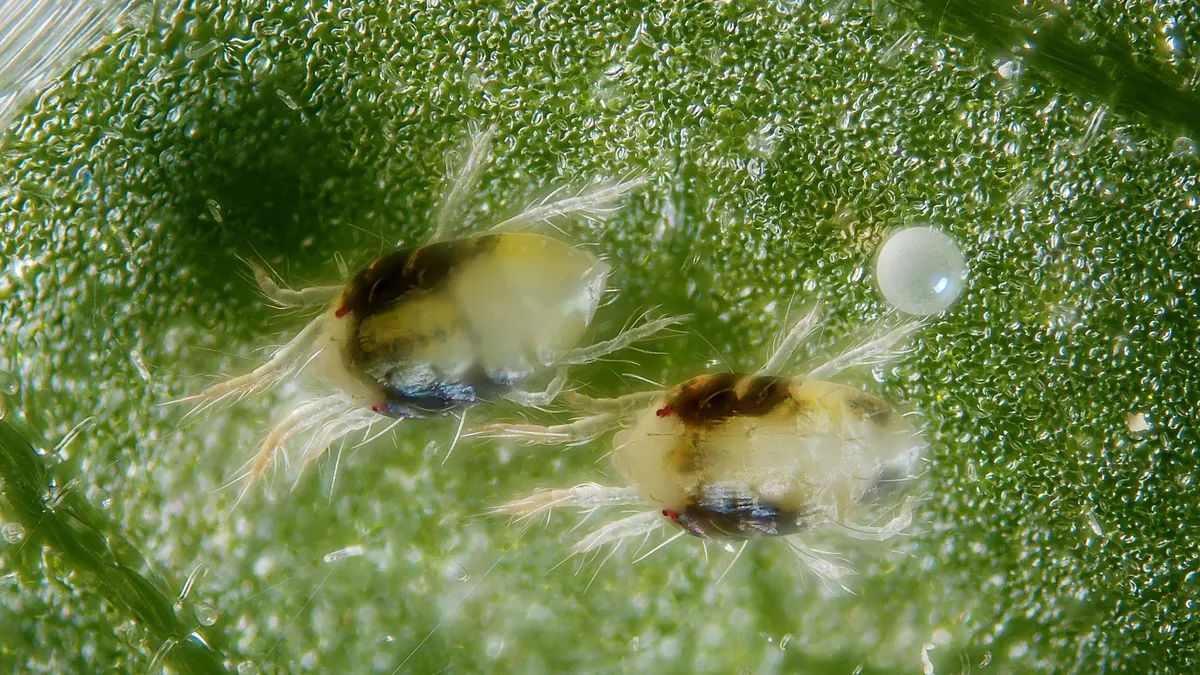
- Shape: an oval body with eight legs, two red eyespots near the head and many bristles.
- Color: in summer, Ohio State describes twospotted spider mites as white with two greenish spots; UC IPM describes a large, dark blotch on each side of the female’s body. Overwintering females turn reddish-orange (Ohio State), which Colorado State suggests is why spider mites are sometimes called “red spiders.”
- Young: newly hatched larvae have six legs; later stages have eight.
- Eggs: spherical and translucent, “like tiny droplets,” turning cream before they hatch (UC IPM). Colorado State adds that the empty egg shells stay on the leaf and help diagnose a problem after the mites are gone.
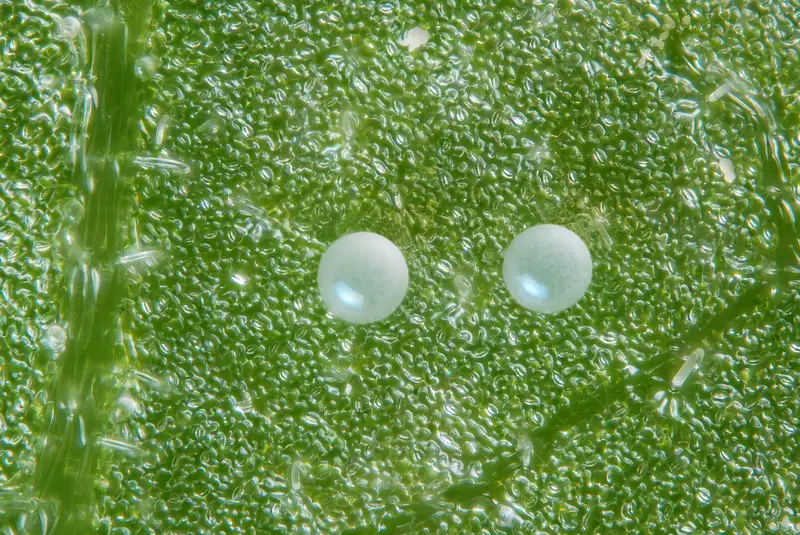
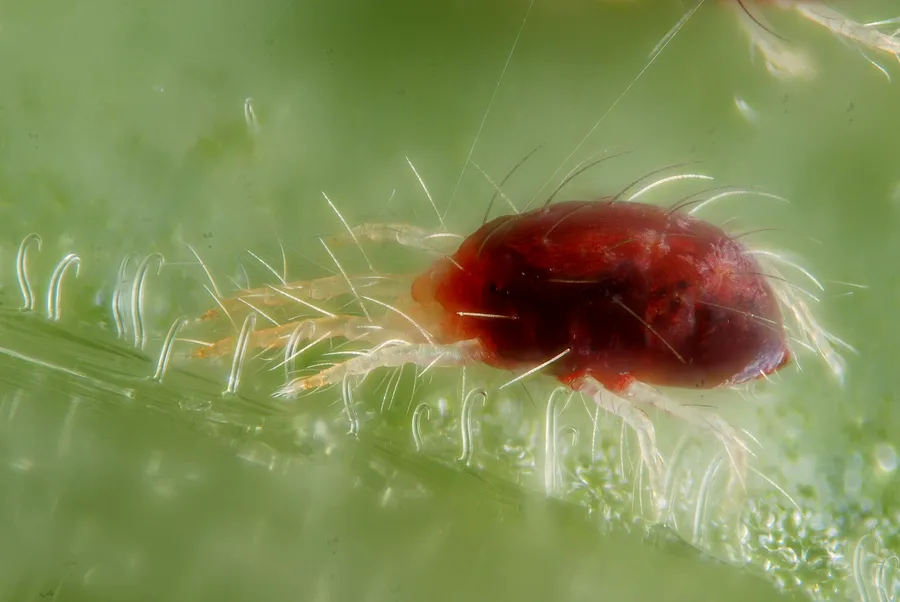
The white-paper test
Hold a sheet of white paper or cardboard under a suspect shoot and tap the foliage. Dislodged spider mites walk slowly across the paper. Ohio State adds a second step that most guides skip: smear a few with your finger. Most plant-feeding mites leave a green streak; if the streak is yellow or orange, you are probably crushing beneficial predatory mites. Ohio State’s rule of thumb is that controls are probably needed when 10 or more spider mites per sample are common.
Spider mites vs spiders, aphids and thrips
Webbing is the giveaway. UC IPM says webbing distinguishes spider mites from all other mites and from small insects such as aphids and thrips that also crowd leaf undersides. Spider mite silk is a fine, tangled sheet over leaves and stems, often dotted with mites and dust. A single strong web with an insect in it belongs to a spider, such as one of the orb weavers that patrol gardens (Colorado State notes the two are often confused). Predatory mites look similar to spider mites but have longer legs, run faster and are more teardrop-shaped (UC IPM).
Video: KQED’s Deep Look films the twospotted spider mite, “roughly the size of a grain of salt,” sucking strawberry leaves dry and leaving its “calling card: dry rusty leaves.” It then shows California growers releasing the predatory mite Phytoseiulus persimilis from drones; the blind predator tracks prey by vibration and by chemical signals from attacked plants. (Summarized from KQED’s published transcript.)
White, cottony clusters in leaf joints and along stems are not spider mites; they are usually mealybugs, covered in our mealybug guide.
Signs of Spider Mite Damage
Spider mites feed by piercing individual leaf cells and draining them, so damage shows up before most people see the mites. In the order it usually appears:
- Stippling: tiny yellow or white specks on the upper leaf surface, over the colony feeding below.
- Bronzing or yellowing: as the specks merge, the leaf looks dull, gray, bronze or yellow (Ohio State, Colorado State).
- Webbing: fine silk over leaves, between leaf and stem and, in heavy infestations, over twigs and fruit.
- Leaf drop and dieback: heavily infested leaves turn yellow or reddish and fall. Colorado State says spider mites frequently kill plants or seriously stress them.
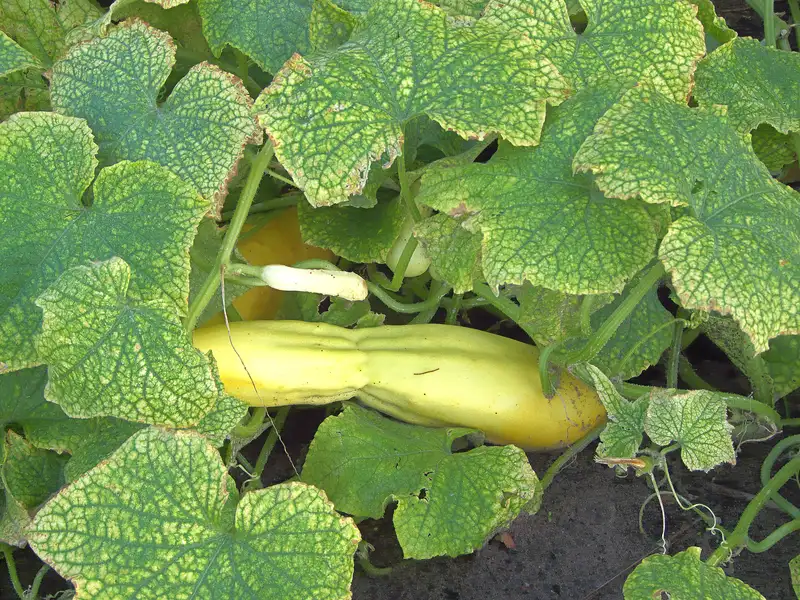
The stakes depend on the plant. UC IPM says losing leaves can significantly cut yields of squash, melons and watermelons and expose the fruit to sunburn, while on most ornamentals mites are mainly cosmetic, except on annuals, which they can kill. Most woody plants tolerate low to moderate numbers.
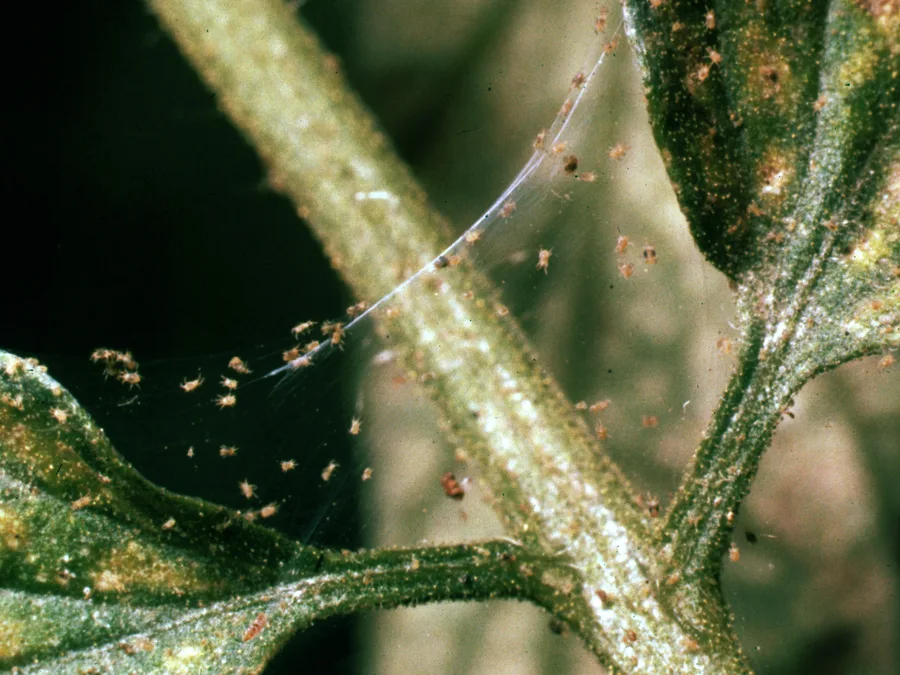
Silvery patches dotted with tiny black specks of excrement, and no webbing, usually point to thrips instead.
Why Hot, Dry Weather Sets Off Outbreaks
Every extension source we reviewed links outbreaks to heat, drought and dust. Colorado State University gives the clearest explanation of why.
“Dry conditions greatly favor all spider mites, an important reason why they are so important in the more arid areas of the country.”
The same fact sheet gives three reasons: spider mites feed more in dry air because low humidity lets them evaporate the excess water they excrete; most of their natural enemies need more humid conditions and are stressed by arid ones; and drought-stressed plants change their chemistry in ways that make them more nutritious to the mites. Dust adds to it. UC IPM says outbreaks usually start on plants beside dusty roads or at garden edges, and Colorado State notes that dust on leaves interferes with mite predators.
Heat speeds breeding. UC IPM says a generation can be completed in less than a week when temperature and food are favorable, and that spider mites commonly become numerous from June through September. Ohio State puts one twospotted generation at 5 to 20 days, depending on temperature, with each female laying over 100 eggs.
Cool, wet weather works the other way. Ohio State says twospotted spider mites often do not reach damaging numbers in cool, rainy periods, and UC IPM notes that high populations can crash in late summer as predators catch up, the weather cools or rain arrives. Outdoors, the mites also ride wind currents to new plants (UC IPM).
What US iNaturalist Records Show
To see when and how often Americans photograph spider mites, we pulled US records of the family Tetranychidae from the iNaturalist API on November 22, 2026. The first lesson is how hard these mites are to identify from a photo, which backs up UC IPM’s point that the common species cannot be told apart in the field.
| US iNaturalist records | Verifiable records | Research grade | Share confirmed |
|---|---|---|---|
| All spider mites (Tetranychidae) | 3,726 | 902 | 24.2% |
| Twospotted spider mite | 518 | 66 | 12.7% |
“Verifiable” records have a date, a location and a photo; “research grade” means at least two identifiers agreed on the species. Data: iNaturalist API, United States, all years, pulled November 22, 2026.
The research-grade set is also lopsided: 747 of the 902 confirmed records (82.8%) are boxwood mites (Eurytetranychus buxi), and a single observer contributed 647 of those, 706 of the 747 coming from New York. Twospotted spider mites make up 66 (7.3%) and clover mites 19 (2.1%). Charting research-grade records alone would show one person’s boxwood survey, not the country’s spider mites, so we charted the twospotted spider mite’s verifiable records instead. They come from 419 different observers, none with more than 10.
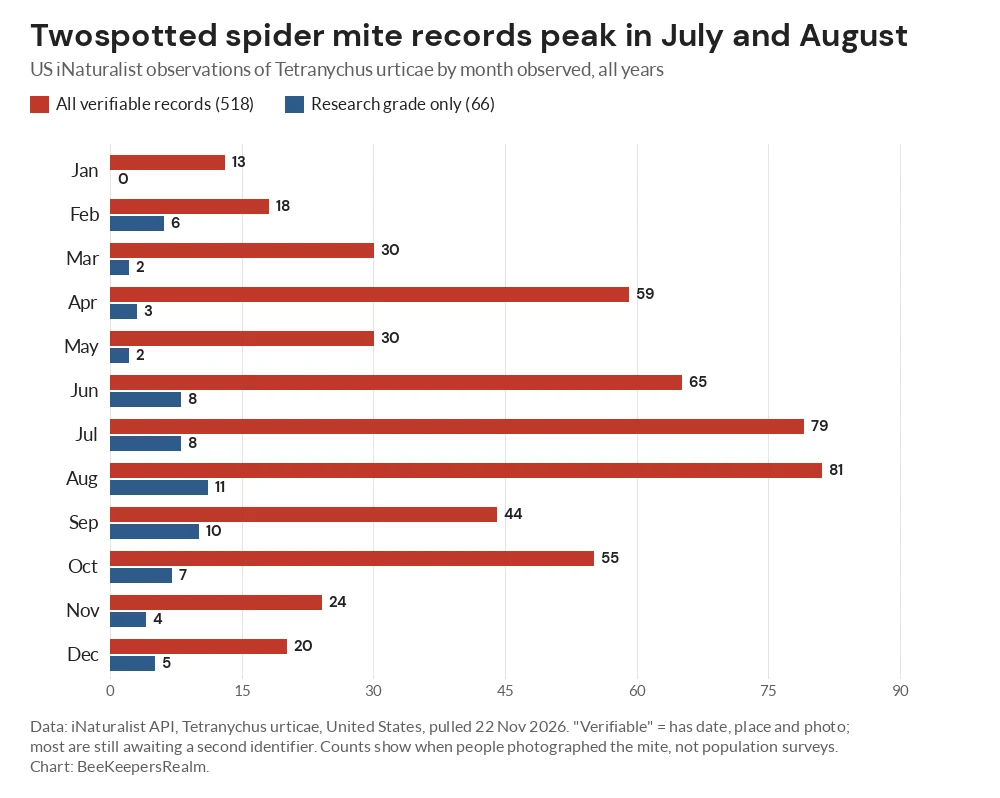
July (79) and August (81) are the busiest months, and June through August hold 225 of the 518 records (43.4%), matching UC IPM’s June-to-September outbreak window. Records never stop, though: November through February still hold 75 records (14.5%), a reminder that indoors the mite has no off-season. These counts show when people photographed the mite, not how many mites exist, and most of the identifications are still unconfirmed.
Spider Mites on Houseplants vs Outdoor Plants
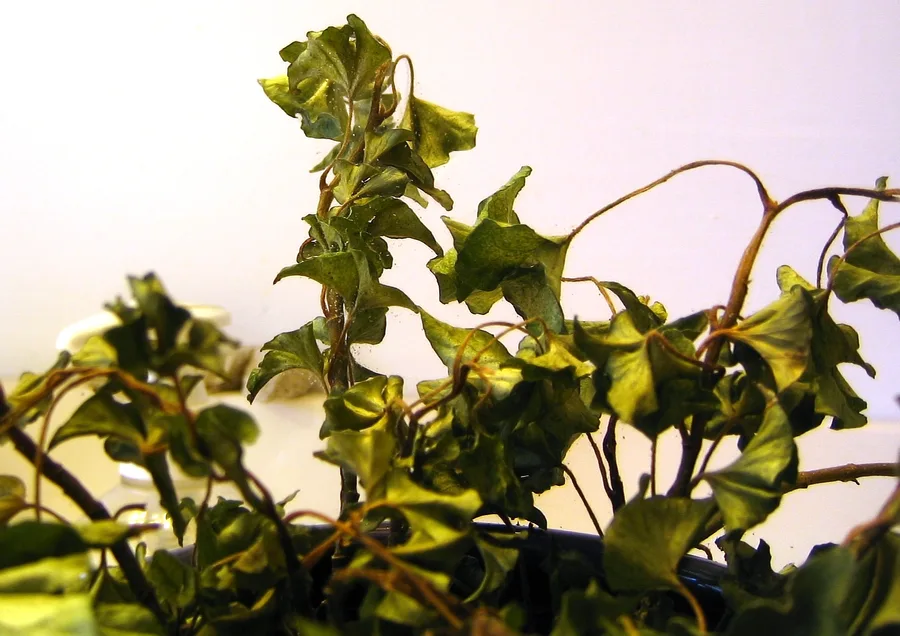
The species is often the same; the conditions are not. Indoors, there is no rain to knock mites off and few predators, and heated winter air is dry. Michelle Opela, the integrated pest management manager at houseplant grower Costa Farms, told the company’s blog that spider mites “especially like the warm, dry environment that winter delivers,” and horticulturist Justin Hancock calls palms “spider mite magnets.”
Houseplants
- Quarantine new plants. Ohio State says the twospotted spider mite often arrives on infested bedding and house plants, and that new houseplants should be kept apart until you are sure they are clean. Check leaf undersides before buying.
- Treat every susceptible plant at once. Colorado State’s houseplant routine: trim, bag and remove heavily infested leaves; hose small plants in the sink or shower; wipe larger leaves with a soft, damp cloth; repeat every one to two weeks while mites persist.
- Know when to quit. Iowa State says it is usually best to discard a heavily infested houseplant, and Colorado State notes that there are few effective chemical options indoors beyond soaps and horticultural oils.
Tiny specks that jump on wet potting soil are not spider mites; they are usually springtails, harmless soil feeders covered in our springtail guide.
Vegetables, flowers and trees
Outdoors, Colorado State lists beans, eggplant, raspberries, currants, pears and many flowers among the twospotted mite’s targets; UC IPM adds squash, melons, peas, beans and field-grown roses, and Cornell’s fact sheet covers strawberries and tomatoes. Our guides to marigolds and zinnias list spider mites among their main hot-weather pests. Ohio State adds winged euonymus and viburnums. Evergreens are a separate case: spruce spider mites are active in cool spring and fall weather, and Ohio State says that after three straight days above 86°F the females lay dormant eggs that wait out the summer, so on conifers this is a spring and fall problem.
How to Get Rid of Spider Mites
Extension sources agree on the order: confirm the mites, wash them off, fix the conditions, then spot-treat with the mildest product that works. Skip broad-spectrum insecticides.
1. Confirm live mites
Use the white-paper test and a hand lens. UC IPM warns that the mites are sometimes gone by the time damage is noticed, and plants often recover after they leave, so make sure live mites are present before treating.
2. Hose them off
UC IPM says regular, forceful spraying with water often reduces spider mite numbers enough in gardens and on small fruit trees, with good coverage of leaf undersides. Colorado State adds that it removes dust and breaks the webbing, which may delay egg laying until new silk is spun. For houseplants, Iowa State suggests the bathtub or shower.
3. Water, de-dust and go easy on fertilizer
Keep plants from drought stress, irrigate regularly and use mulch or ground covers to keep dust down (UC IPM). Entomologist Zach Schumm told Family Handyman that plants with high nitrogen content tend to be more attractive to spider mites, so avoid heavy nitrogen feeding during an outbreak.
4. Spray insecticidal soap or horticultural oil
Both kill only the mites they touch, so coverage of the leaf undersides decides whether they work. Colorado State rates horticultural oil at the 2 percent “summer oil” rate as perhaps the most effective miticide for home use, and calls insecticidal soap only marginally effective where webbing blocks it. UC IPM also accepts plant oils such as neem, canola or cottonseed. Clemson suggests repeating soap sprays every 4 to 7 days as the label directs. Do not spray water-stressed plants or when it is above 90°F (UC IPM), test on a few leaves first, and keep oils off open flowers, which Ohio State says can be damaged.
Skip the kitchen version. Iowa State says dish soap (it names Dawn and Palmolive) is really a detergent, not a replacement for insecticidal soap, its effect on pests is limited and highly variable, and it is much more likely to injure the plant.
5. Protect and add predators
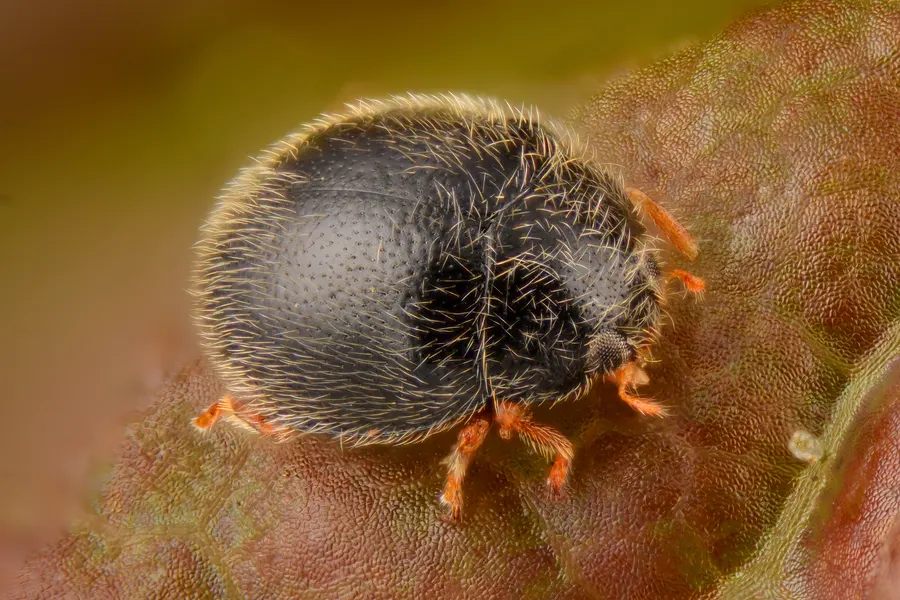
Spider mites have many natural enemies, which UC IPM says limit their numbers in many gardens, especially when undisturbed by pesticide sprays. They include predatory mites, sixspotted thrips, minute pirate bugs, bigeyed bugs, lacewing larvae and the small, dark “spider mite destroyer” lady beetles (Stethorus), relatives of the ladybugs gardeners already welcome.
Several predatory mites are sold for release. According to Cornell’s fact sheet on P. persimilis, that species has the highest consumption rate of the commercially available predators, needs warm (62 to 80°F), humid (50 to 70% relative humidity) conditions, develops from egg to adult in 9.1 days at 68°F against 16.6 days for the twospotted mite, and cannot overwinter in temperate climates. It should be released when spider mites are first detected and at least 4 weeks after any broad-spectrum insecticide. UC IPM’s guideline is one predator for every 10 spider mites, and it notes that the western predatory mite (Galendromus occidentalis) does better in hot, dry conditions.
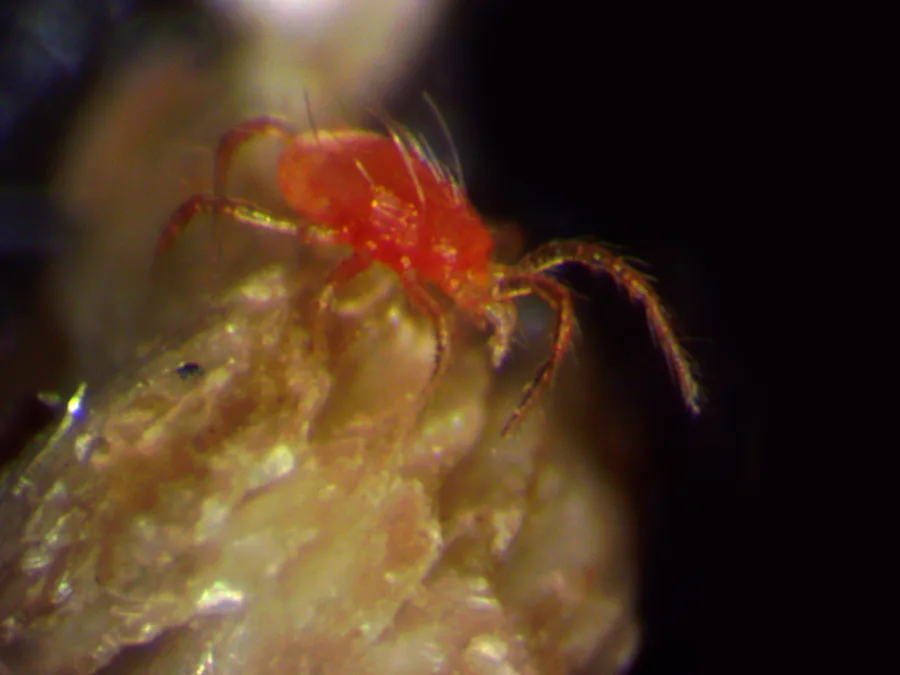
Manage expectations outdoors. Colorado State says released predators have worked on interior plants but effective outdoor use has not been demonstrated in Colorado, partly because predatory mites need fairly high humidity.
6. Use a miticide only as a last resort
Ordinary insecticides usually do not kill spider mites, so a product must say “miticide” on the label (Ohio State). Colorado State notes that most miticides do not affect eggs, so a repeat application about 10 to 14 days later is usually needed, and that resistant strains develop often. Ohio State’s advice: if a correctly applied miticide has not worked within five to seven days, switch to one with a different mode of action. Check its bee rating in the table below first.
Why Some Sprays Make Spider Mites Worse
The most common way gardeners create a spider mite problem is by spraying for something else.
“Broad-spectrum insecticide treatments for other pests frequently cause mite outbreaks, so avoid these pesticides when possible.”
UC IPM lists three mechanisms. The spray kills the predators that kept mites in check. Some insecticides stimulate mite reproduction: in the laboratory, spider mites exposed to carbaryl reproduced faster than untreated ones. And carbaryl, some organophosphates and some pyrethroids appear to raise nitrogen levels in leaves, which favors the mites. Applications in hot weather have the greatest effect, with dramatic outbreaks within a few days. Colorado State adds that malathion can aggravate spider mite problems despite being advertised frequently for mite control, and that soil applications of the systemic insecticide imidacloprid have contributed to outbreaks. So a product that says “kills mites” on the front is not automatically the right choice; the table below sorts the common options.
| Option | Effect on spider mites | Source | UC IPM bee precaution rating* |
|---|---|---|---|
| Forceful water spray | Reduces numbers; removes dust; conserves predators | UC IPM, Ohio State, Colorado State | Not a pesticide |
| Adequate watering, dust control | Prevents the drought stress that favors outbreaks | UC IPM, Colorado State | Not a pesticide |
| Predatory mites (P. persimilis and others) | Effective where warm and humid; proven on indoor plants, less reliable outdoors in dry climates | Cornell, Colorado State | Not a pesticide |
| Insecticidal soap (potassium salts of fatty acids) | Kills on contact; needs repeats; weak under webbing | UC IPM, Colorado State, Clemson | III |
| Horticultural oil (2% summer rate) | Perhaps the most effective home miticide | Colorado State, UC IPM | II |
| Neem oil | Acceptable selective option | UC IPM | II |
| Sulfur | For some vegetables, fruit trees and ornamentals; not above 90°F or within 30 days of an oil spray; can burn cucurbits | UC IPM | III |
| Bifenazate, hexythiazox, spiromesifen | Miticides, mostly sold in professional sizes; rotate modes of action | Ohio State, Colorado State | II |
| Abamectin | Miticide; Colorado State lists one product as for commercial use only | Colorado State, Ohio State | I |
| Carbaryl | Kills mite predators and can trigger outbreaks | UC IPM, Colorado State | I |
| Malathion | Can aggravate spider mite problems | Colorado State | I |
| Some pyrethroids (for example permethrin) | Kill mite predators and can favor outbreaks; bifenthrin is an exception with good miticide activity, but it is still broad-spectrum | UC IPM, Colorado State | I (permethrin, bifenthrin) |
| Imidacloprid (soil-applied) | Has contributed to spider mite outbreaks | Colorado State | I |
*From UC IPM’s Bee Precaution Pesticide Ratings, checked November 22, 2026. I: do not apply or allow to drift onto flowering plants, including weeds. II: same, except between sunset and midnight if the label allows. III: no bee precaution unless the label requires one. These ratings are not the label statements; the label is the law.
Spider Mites, Varroa and Bee-Safe Spraying
Beekeepers know one mite above all: Varroa destructor, the parasite whose life cycle we cover in our Varroa mite life cycle guide. Spider mites and Varroa are both mites (subclass Acari), but iNaturalist’s taxonomy places them on the two main branches of the mites: spider mites in the superorder Acariformes, Varroa in the Parasitiformes. The predatory mites sold against spider mites, family Phytoseiidae, sit on Varroa’s side, in the same order (Mesostigmata). None of the sources we reviewed reports spider mites harming bees; they are plant feeders. If you need to know whether your colonies carry Varroa, that takes a mite count, as our guide to testing for Varroa mites explains.
The bee risk is the spray. Spider mites peak in midsummer, when vegetables, flowering shrubs and the weeds beneath them are in bloom and full of foragers, and several products sold for mites carry UC IPM’s highest bee precaution.
“Some products used by gardeners may not contain a bee hazard warning even if the product is highly toxic to bees, because the location for use listed on the label may not be attractive to bees.”
That is why a product made for houseplants should stay indoors; the same fact sheet’s example is not to use an insecticide labeled for houseplants on a garden cucumber. For outdoor plants:
- Start with water, soap and oil. Clemson notes that most beneficial insects are not harmed by soap sprays, and insecticidal soap is rated III.
- Never spray open flowers. Ohio State advises against applying highly bee-toxic insecticides at any time during flowering, and to mow blooming lawn weeds such as clover and dandelion before treating.
- Time it. Oregon State’s pesticide label guide suggests morning or evening applications when bees are less active; UC IPM permits rating II products on flowering plants only between sunset and midnight, if the label allows.
- Read the Environmental Hazards section of the label for bee warnings before you buy.
- Watch cucurbits. Squash and melons are prime spider mite crops, and their flowers are worked from before sunrise by squash bees, whose males often spend the night inside closed squash flowers. Keep even evening sprays off the blossoms.
For product types that are gentler on pollinators, see our pollinator-safe pest control guide. Growers treating larger plantings can also check for registered hives nearby, as our DriftWatch and BeeCheck guide explains.
Frequently Asked Questions
What kills spider mites instantly?
A direct hit of insecticidal soap or horticultural oil kills the mites it touches, and a strong water spray removes many at once. Nothing reliably kills the eggs in one go, so plan on repeat treatments about a week apart rather than a single spray.
Why am I getting spider mites?
Usually hot, dry or dusty conditions, a drought-stressed plant, a new plant that brought them in, or a recent broad-spectrum insecticide that killed their predators. Indoors, dry heated air in winter helps them.
Does Dawn dish soap kill spider mites?
Not reliably. Iowa State Extension says dish soap is a detergent with a limited, highly variable effect on pests and is much more likely to damage plants than true insecticidal soap.
What plants are most prone to spider mites?
Beans, cucumbers, squash, melons, tomatoes, eggplant, strawberries, raspberries, roses, marigolds and other annual flowers, euonymus, viburnum, honeylocust and conifers (spruce spider mite). Indoors, palms, English ivy and calatheas are frequent targets.
Do spider mites bite humans?
No. They feed only on plants. WebMD’s veterinarian-reviewed guide says they do not bite people, and Penn State says clover mites, the spider mites that wander into homes in spring and fall, do not attack people. Itchy bites outdoors are more likely chiggers.
Do spider mites live in soil?
Outdoors, twospotted females overwinter in the soil, ground litter or bark (Ohio State, UC IPM). Costa Farms’ pest manager says they do not breed in houseplant potting soil, so treat the leaves, not the soil.
Can a plant recover from spider mites?
Often, yes. UC IPM says plants frequently recover after the mites leave, and most woody plants tolerate low to moderate numbers. Badly webbed annuals and houseplants are often better discarded.
Are spider mites harmful to bees?
No source we reviewed says so. The danger to bees comes from the sprays used on them, so start with water, soap or oil and never spray open flowers.
The Bottom Line
Spider mites are a weather pest as much as a bug problem: heat, drought and dust let them explode, and broad-spectrum sprays clear the way. Water, rinse, use soap or oil on the leaf undersides, and protect the predators. If you do reach for a miticide, check its bee rating and keep it off anything in bloom.
Image credits: featured photo of two twospotted spider mite females with an egg by Gilles San Martin, via Wikimedia Commons, CC BY-SA 2.0, cropped and resized. Other photos are credited in their captions, all via Wikimedia Commons; links to each file page and licence are in the captions. Chart: BeeKeepersRealm, from iNaturalist API data pulled November 22, 2026.