Reviewed by Daniel M. · How we review
Mealybugs are small, soft-bodied insects that suck plant sap and coat themselves in white wax, so a colony looks like bits of cotton tucked into leaf joints, stems and roots. They are close relatives of scale insects and are most common on houseplants, succulents, citrus and greenhouse plants. They weaken plants and drip sticky honeydew but are not a health risk to people. To get rid of mealybugs, isolate the plant, dab or wipe off every insect and egg sac, repeat for several weeks, and discard plants that are badly infested.
This is educational information drawn from university extension sources, not professional pest-control advice.
Key Takeaways
- Mealybugs are wingless, wax-covered females about 1/16 inch long; the winged males are rarely seen.
- Signs: cottony egg sacs, sticky honeydew, sooty mold and ants; white fluff at drainage holes can mean root mealybugs.
- Dab light infestations with 70% or weaker rubbing alcohol and repeat weekly; soaps, oils and neem need two or three applications.
- Keep systemic neonicotinoids off flowering plants: in a 2019 study, honeydew from mealybugs on treated citrus killed pollinating hover flies.
- Only 1 in 10 US iNaturalist mealybug records reaches research grade, while the mealybug destroyer beetle has nearly twice as many research-grade records.
Table of Contents
- What Mealybugs Are
- How to Identify Mealybugs
- White Fluff That Is Not Mealybugs
- Signs of Mealybugs and the Plants They Hit
- Mealybug Life Cycle
- What US iNaturalist Records Show
- How to Get Rid of Mealybugs
- The Mealybug Destroyer and Other Natural Enemies
- Mealybug Sprays, Honeydew and Bees
- The Pasture Mealybug in Southern Hayfields
- Frequently Asked Questions
What Mealybugs Are
Mealybugs are sap-sucking insects in the family Pseudococcidae, part of the scale insect superfamily Coccoidea. UC IPM’s Pest Notes: Mealybugs describes them as close relatives of soft scales without the scale cover. Unlike most scales, they keep their legs and can move all their lives, according to the University of Wisconsin-Madison. Like aphids, they excrete sugary honeydew.
How to Identify Mealybugs
- Adults: oval, segmented females, pinkish under white powdery wax, about 1/16 inch long (UW-Madison) or up to 4 mm (RHS).
- Crawlers: newly hatched nymphs are yellow to orange or pink and have no wax until they settle to feed (UC IPM).
| Mealybug | How to recognize it | Typical hosts |
|---|---|---|
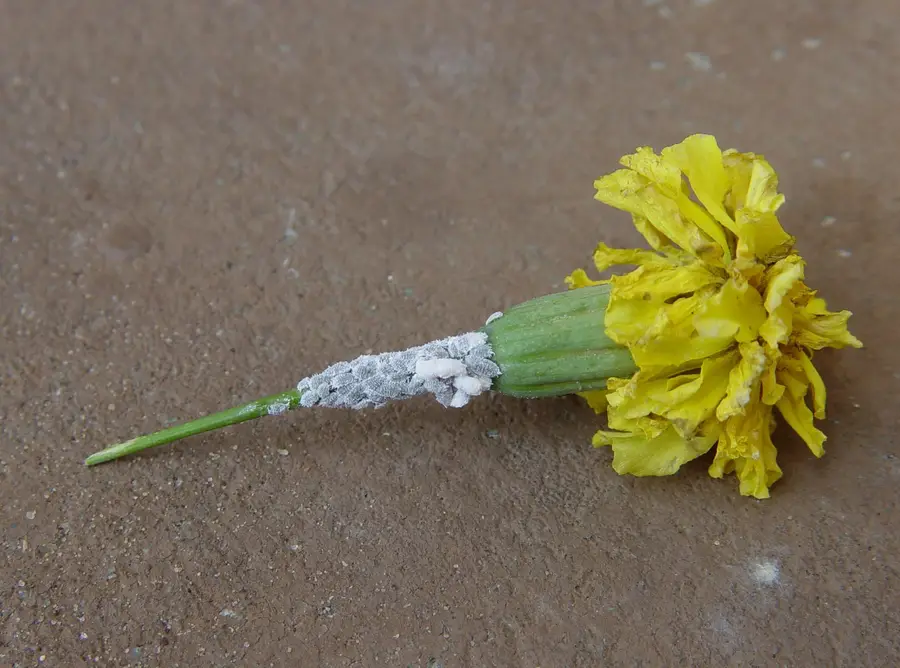
| Citrus mealybug (Planococcus citri) | Short, even wax filaments; a dark stripe may show down the back; cottony egg sacs | Citrus, landscape shrubs; the most common mealybug on indoor ornamentals |
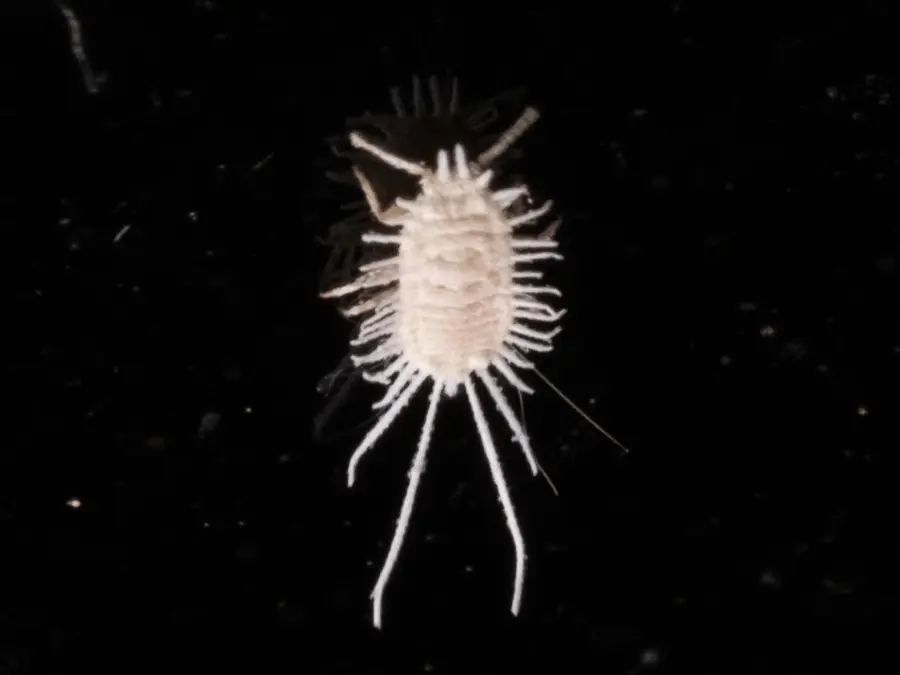
| Longtailed mealybug (Pseudococcus longispinus) | Two tail filaments longer than its body; live young, no egg sacs | Citrus, grapes, nursery stock and indoor ornamentals |
| Ground or root mealybugs (Rhizoecus) | No obvious filaments; live on roots in the soil | Potted plants, especially African violets and gardenias |
Descriptions and hosts from UC IPM Pest Notes: Mealybugs, Table 1, and UW-Madison Extension.
What the video covers: KQED’s Deep Look shows ants guarding vineyard mealybugs and a mealybug destroyer larva, disguised by its own wax, slipping past them to feed. (Summarized from KQED’s published script.)
White Fluff That Is Not Mealybugs
UC IPM notes that mealybugs are confused with other waxy, honeydew-making pests.
| Look-alike | How to tell it apart |
|---|---|
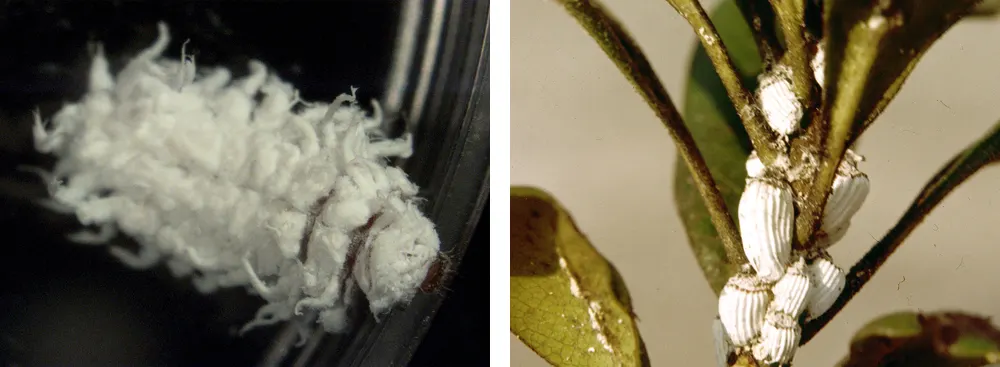
| Mealybug destroyer larva | Faster moving; when grown, up to 1/2 inch, more than twice the size of an adult female mealybug; distinct legs and mouthparts. Leave it alone. |
| Cottony cushion scale (Icerya purchasi) | Orangish-brown female attached to a long, fluted white egg sac; on woody plants such as citrus, nandina and pittosporum |
| Woolly aphids | Aphids coated in white or gray wax; look for the pair of tubes (cornicles) at the rear that only aphids have |
| Whiteflies | Tiny white adults that fly up when the plant is disturbed |
Sources: UC IPM Natural Enemies Gallery and UC IPM Pest Notes on cottony cushion scale, aphids and whiteflies.
Other houseplant pests leave different clues: fine webbing and pale, speckled leaves point to spider mites, and tiny specks that jump on wet potting soil are usually springtails.
Signs of Mealybugs and the Plants They Hit
The University of Maryland Extension says cottony white wax is usually the first sign. Other clues:
- Sticky, shiny leaves: honeydew, often with black sooty mold growing on it.
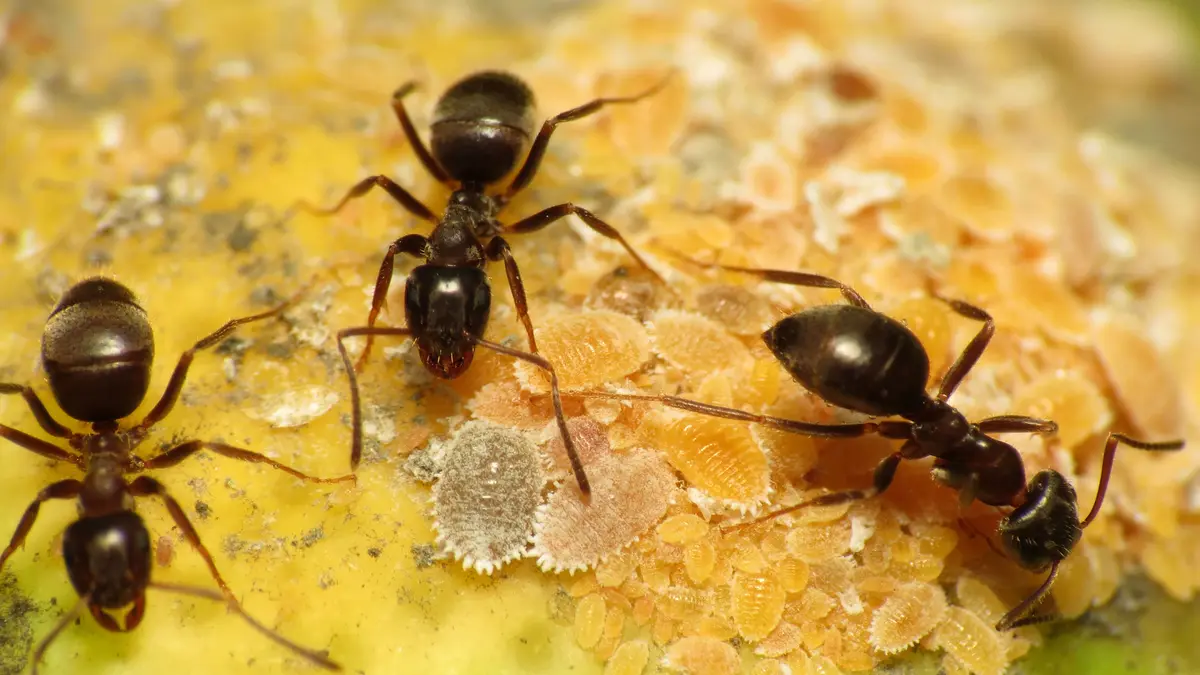
- Ants on the plant: they feed on honeydew and guard mealybugs from predators.
- Yellowing, stunting, wilting and leaf drop: UW-Madison adds that citrus mealybugs inject a toxin that deforms growth.
- Decline with no insects in sight: cottony masses at drainage holes can mean root mealybugs; slide the root ball out to check (UW-Madison).
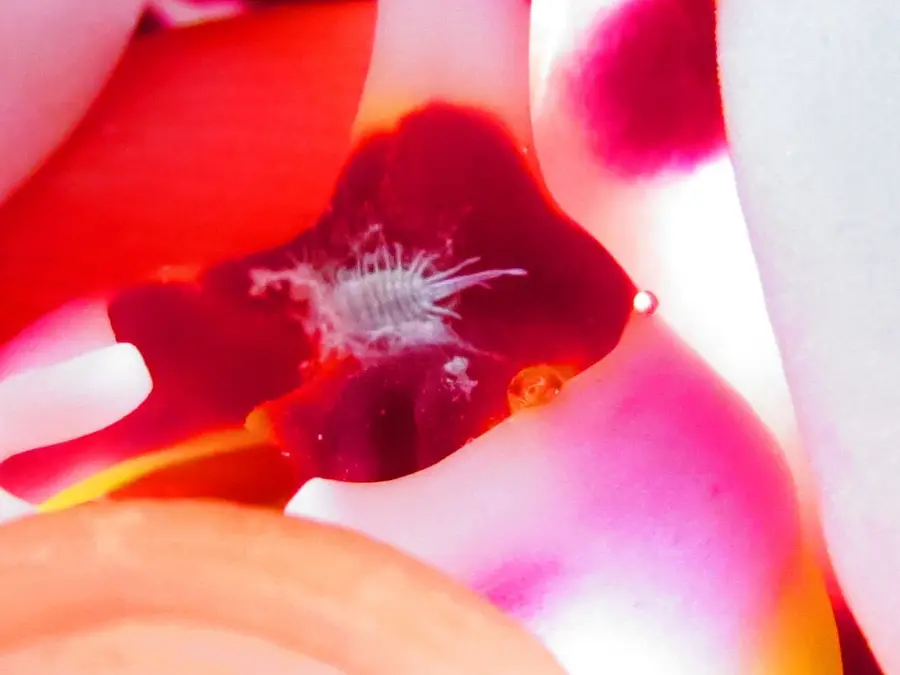
Frequent hosts include cactus and other succulents, jade, hoya, orchids, ferns, ficus, dracaena, coleus, poinsettia and African violets (UC IPM, RHS); outdoor upright sedums can host them too. Indoor plants suffer most: they have year-round warmth and none of the natural enemies that control mealybugs outdoors (UC IPM).
Mealybug Life Cycle
| Trait | Figure | Source |
|---|---|---|
| Eggs per female (most species) | 100 to 200 or more, in a cottony sac over 10 to 20 days | UC IPM |
| Eggs per female (citrus mealybug) | Up to 600 | UW-Madison |
| Longtailed mealybug | Live young, no egg sac | UC IPM, UW-Madison |
| Generations | 2 to 6 a year; all stages year-round indoors | UC IPM |
The female dies after laying her eggs or live young (UW-Madison).
What US iNaturalist Records Show
We pulled US mealybug (Pseudococcidae) records from the iNaturalist API on November 22, 2026. Of 6,841 verifiable observations, only 701 (10.2%) reached research grade, meaning at least two people agreed on the ID. The longtailed mealybug leads with 311 (44.4%) and the citrus mealybug has just 32: the counts show what is easy to identify, not what is most common.
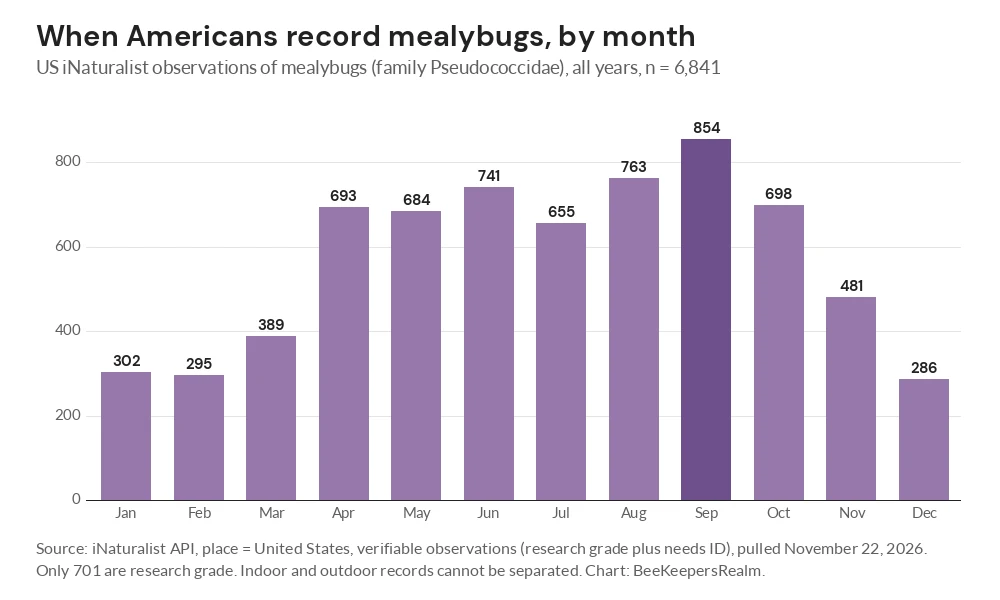
Records peak in September (854) and bottom out in December (286), which mainly tracks when people photograph insects outdoors.
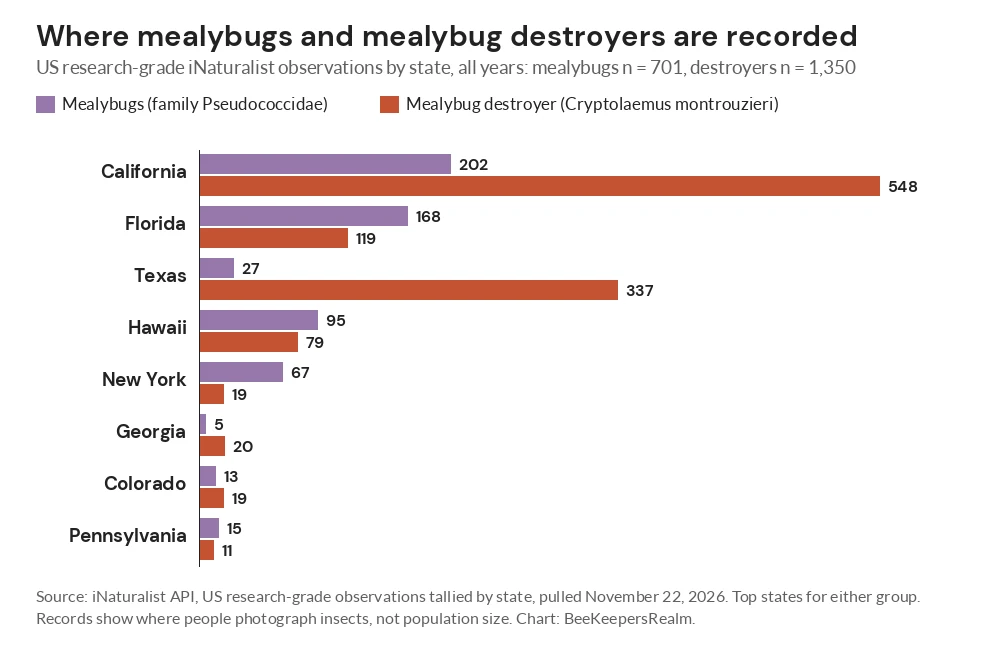
California, Florida and Hawaii hold 66.3% of research-grade mealybug records. The mealybug destroyer has 1,350 research-grade records, led by California (548) and Texas (337), though the data cannot show how many came from purchased releases.
How to Get Rid of Mealybugs
1. Isolate and inspect
“Mealybugs can easily crawl from one plant to another, especially when leaves or branches overlap, so one contaminated plant could spread mealybugs to all your houseplants.”
Move the plant away from others and check its neighbors. Washington State University says to keep it isolated until it has been clean for at least a full month.
2. Dab with rubbing alcohol
UC IPM says 70% or weaker isopropyl alcohol can be dabbed on mealybugs with a cotton swab, after testing a small part of the plant 1 to 2 days ahead for leaf burn. For larger infestations it gives a 10 to 25% spray, repeated weekly until the mealybugs are gone.
3. Wash and prune
A strong spray of water knocks mealybugs off sturdy plants. Bag pruned shoots at once: UW-Madison warns that mealybugs survive on cut parts while they stay moist.
4. Use soap, oil or neem, and repeat
“The mealybugs’ waxy coating repels most contact insecticides, and their habit of aggregating in hidden locations makes them hard to reach.”
Soap, horticultural oil and neem work best on young, lightly waxed nymphs, so UW-Madison advises two to three treatments 10 to 14 days apart. WSU suggests spraying houseplants outdoors in the shade, and does not recommend chemical controls on herbs grown indoors for eating.
5. Treat root mealybugs or replace the plant
Ground mealybugs are even harder to control (UC IPM), and discarding the plant is often the most practical fix (UW-Madison). Keep pots apart: UF/IFAS notes that nymphs can crawl between pots through drainage holes.
6. Know when to throw it out
For severe infestations, UC IPM suggests discarding houseplants rather than spraying them repeatedly, including old “grandmother” plants that reinfest new ones.
The Mealybug Destroyer and Other Natural Enemies
The mealybug destroyer (Cryptolaemus montrouzieri) is a small, dark brown lady beetle from Australia with a tan to orange head and tail end; our ladybug guide covers its relatives. It was brought to California in 1891 to fight the citrus mealybug (Cornell University), and each larva can eat more than 250 nymphs or over 1,000 eggs (UC IPM).
It has limits: it needs cottony egg masses to lay its eggs, which the longtailed mealybug lacks (Cornell), and temperatures below 68°F and short days greatly slow its breeding (UC IPM).
Lacewings, spiders, minute pirate bugs and parasitic wasps also attack mealybugs outdoors, and UC IPM advises keeping ants off infested plants because ants protect them. Our sugar ants guide covers baiting.
Mealybug Sprays, Honeydew and Bees
Bees feed on honeydew, and a 2019 PNAS study lists mealybugs among its producers. Bees can turn honeydew into honey (see how bees make honey), but the US examples we found come from other sap-feeders such as the spotted lanternfly.
That honeydew can carry insecticide. UC IPM says to avoid systemic imidacloprid or dinotefuran when possible, especially on flowering plants, because of potential harm to natural enemies and pollinators.
“Neonicotinoids reach and kill beneficial insects when they feed on the most abundant carbohydrate source for insects in agroecosystems, honeydew.”
In that study, honeydew from citrus mealybugs on foliar-treated young citrus trees killed all of the pollinating hover flies with thiamethoxam (corrected mortality 100%) and 48.4% with imidacloprid. Here is how UC IPM’s Bee Precaution Pesticide Ratings rate common mealybug products:
| Active ingredient | UC IPM rating | What the rating means |
|---|---|---|
| Insecticidal soap | III | No bee precaution, except when required by the label or regulations |
| Narrow-range oil; neem (azadirachtin) | II | Do not apply or let drift onto flowering plants, including weeds, except between sunset and midnight if the label allows; keep it out of water bees can reach |
| Imidacloprid; dinotefuran | I | Do not apply or let drift onto flowering plants or contaminate water bees can reach |
Ratings checked November 22, 2026. The label is the law; follow it where it is stricter.
For a houseplant, alcohol, washing and soap are enough. Our pollinator-safe pest control guide compares product types.
The Pasture Mealybug in Southern Hayfields
A newer mealybug kills grass, not houseplants. Texas A&M AgriLife Extension reports that in September 2025, USDA-APHIS confirmed the pasture mealybug (Heliococcus summervillei) behind dying patches of pasture and hay grass, now reported in Texas, Louisiana, Florida and Georgia. On iNaturalist, 51 of the 53 verifiable US records of the genus are from 2026.
Frequently Asked Questions
What kills mealybugs instantly?
Rubbing alcohol dabbed on with a cotton swab kills or removes the mealybugs it touches. UC IPM advises 70% or weaker and a leaf test first. Hidden insects and eggs survive, so expect several weeks of repeats.
Does Dawn dish soap kill mealybugs?
Colorado State University Extension advises against it: dish soaps contain detergents that can injure plants. Use a labeled insecticidal soap.
Are mealybugs harmful to humans or pets?
No. They feed only on plants and do not bite or sting; WebMD says they pose no health risk to humans.
What causes mealybugs on houseplants?
Usually a new plant, cutting or pot that already carried them. UC IPM notes that adult females cannot fly, so mealybugs rarely arrive on their own.
Can mealybugs live in the soil?
Yes. Root mealybugs live on roots and show up as white, cottony patches on the root ball or around drainage holes.
The Bottom Line
Mealybugs are a patience problem: isolate, dab, wash, repeat for weeks, and let go of plants that keep reinfesting. Keep systemic sprays off anything in flower.
Image credits: Featured image: mealybugs, possibly citrus mealybugs, tended by ants on a lemon tree in Alicante, Spain. Photo: Katja Schulz, Wikimedia Commons, CC BY 2.0, cropped and resized. Citrus mealybugs: Chazz Hesselein, Alabama Cooperative Extension System, Bugwood.org, CC BY 3.0 US. Longtailed mealybug: Alex Abair, CC BY 4.0. Mealybug on an orchid: Gianni Del Bufalo, CC BY 2.0. Mealybug destroyer larva: S.E. Thorpe, public domain. Cottony cushion scale: Clemson University – USDA Cooperative Extension Slide Series, Bugwood.org, CC BY 3.0. All photos via Wikimedia Commons, resized; links to each file page and licence are in the captions. Charts: BeeKeepersRealm, from iNaturalist API data pulled November 22, 2026.