Reviewed by Thomas B. · How we review
How is honey made? Honey bees make it by turning flower nectar into a thick, sealed food store: foragers carry nectar home in a special crop, house bees pass it mouth to mouth and add enzymes, and the colony then evaporates the water down to roughly 17 to 18% and caps each cell with wax. No single bee does the whole job, and none of it is vomit. This guide follows one load of nectar through every stage, names the bee doing each job and says where each number comes from.
The steps below are the overview. For the curing chemistry inside the hive, see how honey cures, from enzymes to capping. For the myth, see is honey really bee vomit.
Key Takeaways
- Nectar is mostly water. Flower nectar runs about 20 to 60% sugar by weight, while honey is more than 80% sugar. USDA Grades A and B allow no more than 18.6% water.
- Two changes turn nectar into honey. The enzyme invertase splits sucrose into glucose and fructose, and water is evaporated, first on the bee’s tongue and then from open comb cells.
- Foragers handle stage one outside the hive. House bees, roughly 12 to 21 days old, handle the rest.
- Drying starts before the forager lands: in one 2022 study, crop contents were already about twice as sugary as the nectar still in the flower.
- Bees seal a cell while the last water is still leaving, so a wax cap is a strong sign of ripeness but not a moisture reading.
- Honey is not vomit. Nectar rides in a storage organ, the crop, and is not digested.
- About 12 bees spend their whole lives making one teaspoon, and a summer worker lives roughly 2 to 6 weeks.
Table of Contents
- How Is Honey Made? The Pipeline at a Glance
- A Six-Minute Video Version
- Stage 1: The Forager Drinks Nectar Into Her Crop
- Stage 2: The Forager Hands the Load to a House Bee
- Stage 3: House Bees Dry the Nectar Drop by Drop
- Stage 4: Drops Go Into Cells and Wings Move the Air
- Stage 5: Bees Seal the Cell With Wax
- Nectar vs Honey: What Actually Changes
- Why Honey Is Not Bee Vomit
- Honeydew Honey: When the Source Is Not a Flower
- How Much Work Goes Into a Spoonful
- Who Makes the Honey: Worker Lifespans and Jobs
- What Bees Do With Honey, and What Beekeepers Take
- Frequently Asked Questions
- The Bottom Line
How Is Honey Made? The Pipeline at a Glance
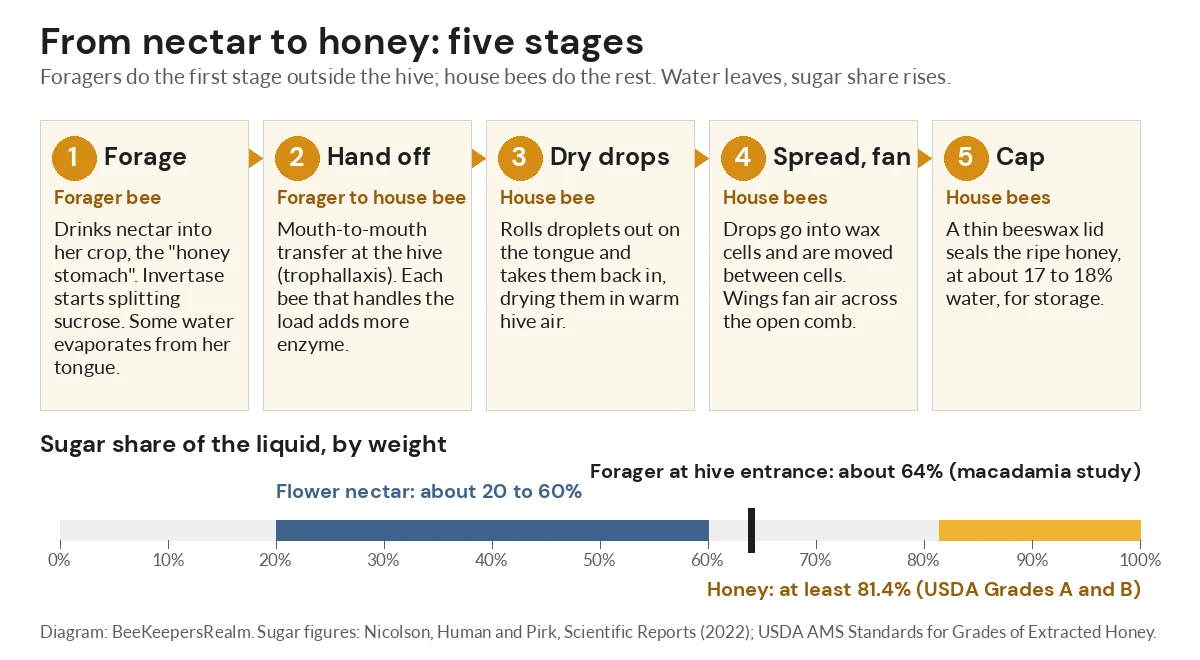
The diagram shows the five stages and how the sugar share of the liquid rises along the way. The table adds who does each job and where.
| Stage | Who | Where | What changes |
|---|---|---|---|
| 1. Forage | Forager | Flowers and the flight home | Nectar enters the crop, enzyme begins to act, some water leaves from the tongue |
| 2. Hand off | Forager and a house bee | At or near the hive entrance | The load changes bees and picks up more enzyme |
| 3. Dry drops | House bee | Inside the hive | Droplets are rolled out on the tongue and dried in warm hive air |
| 4. Spread and fan | House bees | Open comb cells | Drops are placed, moved between cells and fanned; ripening takes about 1 to 11 days |
| 5. Cap | House bees | Cell surface | A thin wax lid seals honey at about 17 to 18% water |
A Six-Minute Video Version
SciShow Kids made a 6-minute episode for early-elementary classrooms. Its official chapters run from spring plant foods to how bees make honey, the honey stomach, pollination, turning nectar into honey, and fanning and sealing the honey. It suits teachers and parents; the sections below go further than a children’s video can.
Stage 1: The Forager Drinks Nectar Into Her Crop
A forager unfolds her proboscis, a hollow, straw-like tongue, and sucks nectar from the flower. It goes into her crop, also called the honey stomach, a storage organ that sits apart from her digestive stomach (see honeybee anatomy). Nectar is mostly water with sugar. In their 2022 Scientific Reports paper, Susan Nicolson, Hannelie Human and Christian Pirk put the sugar share of nectar at 20 to 60% by weight; Britannica says the water can reach 80%.
The crop is small. The same paper notes that a honey bee can carry 60 to 70 microliters in her crop, while the loads it measured on macadamia flowers averaged 17 to 19 microliters. How many flowers fill a load depends on how much nectar each holds. Cooper Schouten of Southern Cross University says a bee usually visits 50 to 100 flowers per trip, and Michigan State University’s Zachary Huang assumes about 2 microliters of nectar per flower in his 2018 bee-nutrition handout.
Distance depends on the flowers around her. Most trips stay within one to two miles (see how far bees travel to forage). BBC Science Focus puts the outer limit near 5 km, a little over 3 miles, and notes that at that range most of the nectar payload is used up on the flight home.
The chemistry starts in the crop. Nectar meets enzymes from the workers’ hypopharyngeal glands, as Michael Eyer and colleagues describe them in their 2016 PLoS ONE study, and invertase splits the sucrose into two simple sugars, glucose and fructose. Chicago Botanic Garden adds that the bee mixes saliva into the nectar as she drinks.
Drying begins before she lands
Conventional wisdom held that nectar does not change concentration between flower and hive. Nicolson’s team measured it on macadamia trees in South Africa and found otherwise. Nectar in the crops of foragers still on the flowers had roughly twice the sugar concentration of the fresh nectar, and up to 75% of the original water had gone. Bees captured at the hive entrance carried nectar averaging 64% sugar. The only route out, the authors reason, is evaporation from the mouthparts. They studied one crop in one region and suggest the habit may be widespread, so treat it as a strong early result, not a rule for every flower.
Stage 2: The Forager Hands the Load to a House Bee
Guard bees check each arriving forager, Chicago Botanic Garden explains, by the colony’s scent and by the smell of the nectar she carries. She then offers a drop from her honey stomach to a hive bee. If that bee likes the taste, more is transferred, and once she has unloaded to several bees she is free to fly out again. NC State News describes the receiver as a “processor” bee that takes the nectar to the comb. The mouth-to-mouth transfer is called trophallaxis.
The receivers are not newborns. Cooper Schouten gives 12 to 17 days old for these house bees, and our guide to worker bee roles by age places receiving and storing food among the middle-aged jobs, about days 12 to 21. Each handoff adds enzyme: NC State notes that processor bees add invertase every time they regurgitate nectar, and it takes many loads to fill one cell.
Stage 3: House Bees Dry the Nectar Drop by Drop
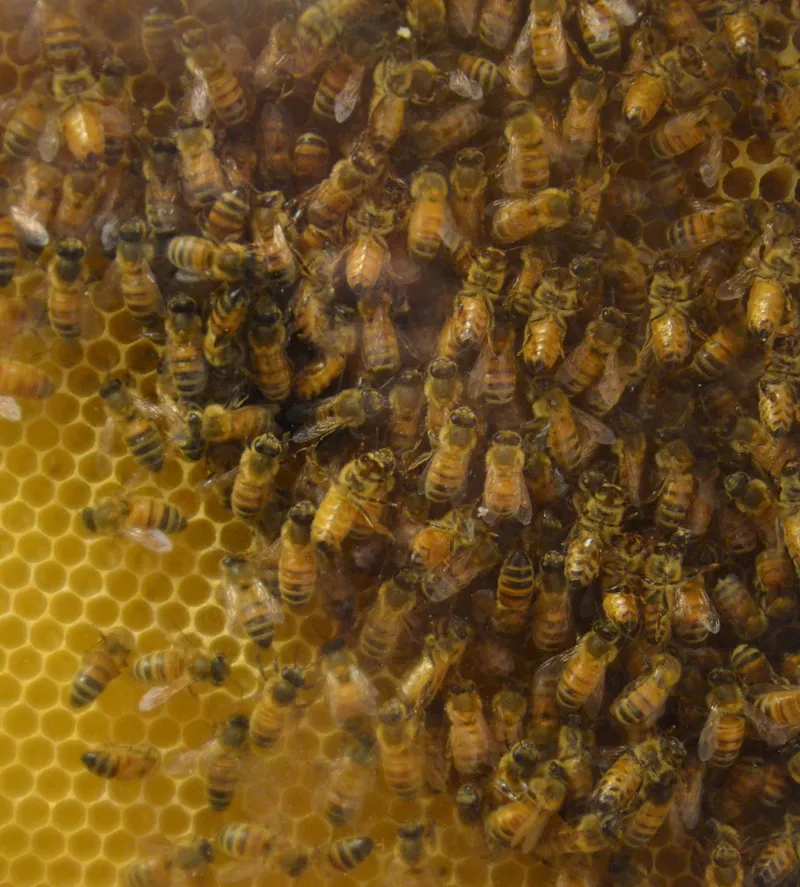
Before nectar reaches a cell, the receiver works it. Nicolson’s paper describes bees evaporating nectar by “repeated regurgitation and re-ingestion of nectar droplets,” a behavior called tongue lashing that goes on for extended periods. Chicago Botanic Garden describes the same move: the bee holds a droplet between her proboscis and mandibles, lets dry hive air concentrate it, rolls it to expose all sides, and adds more nectar until the drop is large enough to deliver to a cell. Small droplets dry quickly because they have a high surface area for their volume.
Drying is the colony’s biggest cost in making honey. Nicolson’s team cites a modelling study showing that evaporating the water uses at least 25%, and often more than 50%, of the energy in the nectar brought into the nest. Nicolson’s team argues this is why drying nectar early, before the bee even reaches the hive, can pay off for the colony.
Stage 4: Drops Go Into Cells and Wings Move the Air
The partly dried nectar goes into wax cells in thin layers, and it does not stay put. Eyer’s team scanned combs with CT in a Swiss experiment (colonies were fed sugar solutions to stand in for nectar) and found that bees often relocate a cell’s contents before final storage. The content removed was less concentrated than the content deposited, so moving nectar is part of ripening.
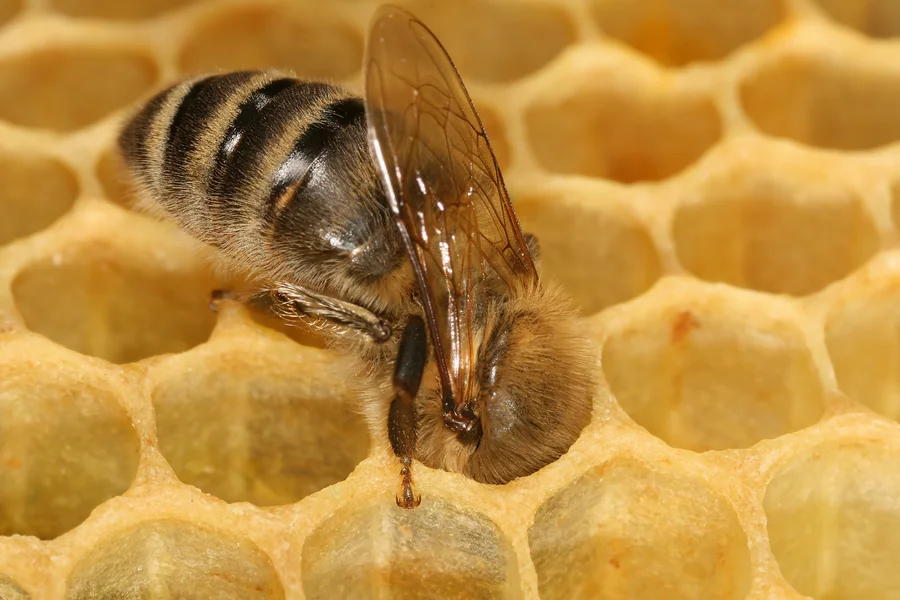
Bees fan their wings over the comb to move air across it, as NC State and Britannica both describe, and passive evaporation does the rest. How long it takes depends on colony size, available comb, air movement and humidity inside the hive, climate and the nectar’s botanical source. Eyer’s team notes ripening can last from 1 to 11 days. For the hive-air side of this, see how bees regulate humidity inside the hive.
Stage 5: Bees Seal the Cell With Wax
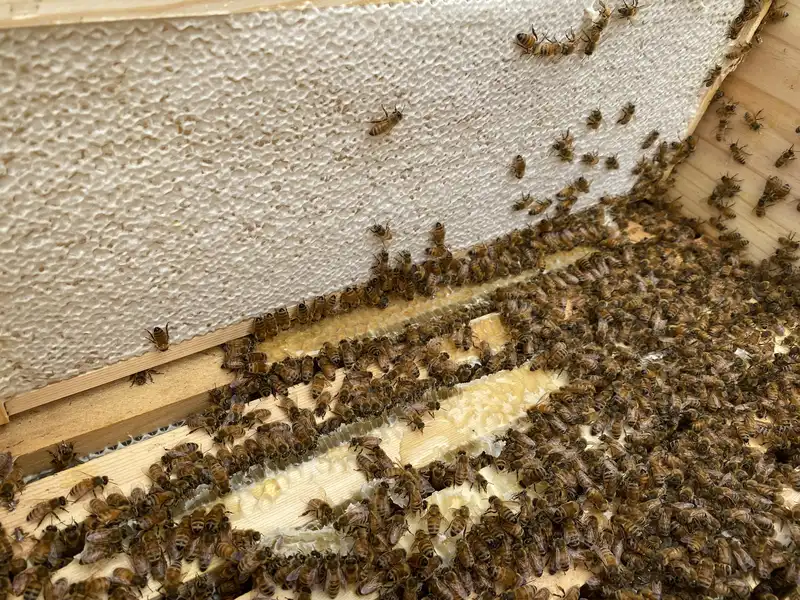
When the honey is ripe, bees cover the cell with a thin lid of beeswax, which workers produce themselves (see how worker bees make beeswax). The lid matters because concentrated honey is hygroscopic: it pulls water out of humid air, and honey that takes up water can ferment. NC State makes the same point with a kitchen tip: if the cap is not airtight, honey absorbs moisture, which is why you screw the lid back on your jar.
“The last stage of ripening occurred when cell capping had already started, indicating a race against water absorption.”
So capped does not guarantee dry. Beekeepers treat capping as a strong sign of ripeness, then confirm with a refractometer; see ripe honey moisture content and how honey matures in the comb. The USDA grade standards for extracted honey set the line: Grades A and B need at least 81.4% soluble solids, or no more than 18.6% water, and Grade C allows 20%.
Nectar vs Honey: What Actually Changes
The international Codex Alimentarius standard for honey, adopted by the FAO and WHO, defines the product by what the bees do to it:
“Honey is the natural sweet substance produced by honey bees from the nectar of plants or from secretions of living parts of plants or excretions of plant sucking insects on the living parts of plants, which the bees collect, transform by combining with specific substances of their own, deposit, dehydrate, store and leave in the honey comb to ripen and mature.”
The table sets the two liquids side by side.
| Flower nectar | Finished honey | |
|---|---|---|
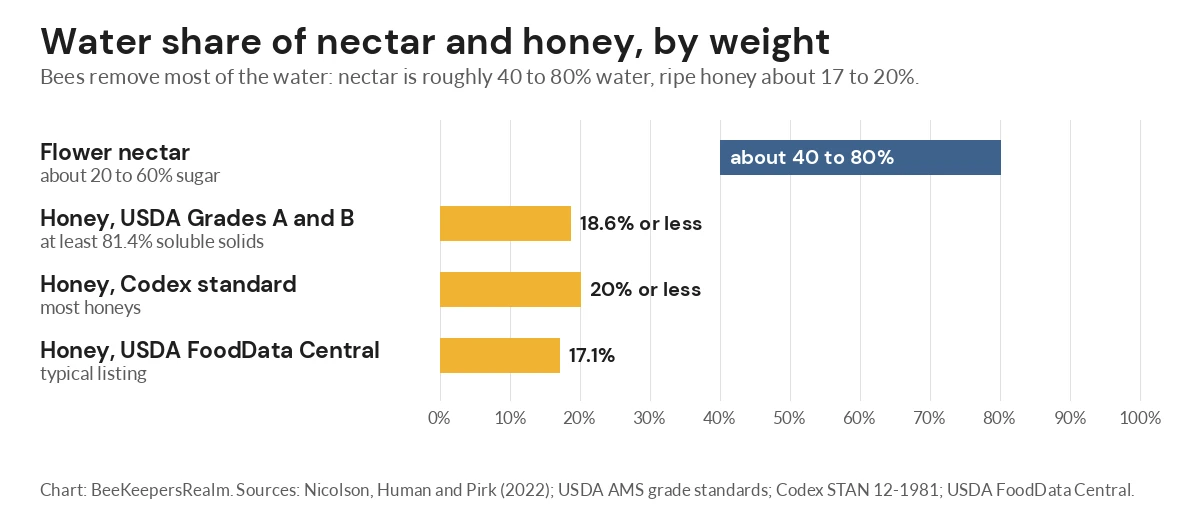
| Sugar share, by weight | About 20 to 60% | More than 80%; USDA Grades A and B need at least 81.4% |
| Water | The rest, roughly 40 to 80% | 18.6% or less for USDA Grades A and B; Codex allows up to 20% for most honeys; USDA FoodData Central lists 17.1 g per 100 g |
| Main sugars | Varies by plant; many nectars are rich in sucrose | About 40.9 g fructose, 35.8 g glucose and 0.9 g sucrose per 100 g (USDA FoodData Central) |
| Added by bees | Nothing; the enzymes come from the bees | Invertase, and glucose oxidase, which Chicago Botanic Garden links to honey’s preservation |
| Storage | Ferments if kept unprocessed, says Flow Hive | Stable when sealed dry; ferments if it takes up water |
The sucrose row shows the enzyme at work: in nectars where sucrose dominates, almost none is left in the honey. Some plants, such as the macadamia in the 2022 study, produce nectar that already contains only glucose and fructose.
Why Honey Is Not Bee Vomit
Honey is not vomit, because the nectar is never digested. A bee does regurgitate it, so that part of the claim is true, but vomiting expels food from the digestive tract and this load never entered it. NC State News science writer Matt Shipman, after talking with entomologist David Tarpy, put it directly:
“The crop is used solely for storage, and the bee does not digest the nectar at all.”
One nuance is worth knowing. Nicolson’s paper notes that workers leave the hive with a small amount of concentrated nectar in the crop to use as flight fuel, so a forager does feed herself; the load she carries home for the colony is what stays undigested. For a longer treatment, see is honey really bee vomit.
Honeydew Honey: When the Source Is Not a Flower
Bees can also make honey without nectar. Eyer’s team notes that honey bees obtain carbohydrates from nectar and from honeydew. Honeydew is a sticky secretion, in the words of Ohio State’s BYGL bulletin, “from piercing, sucking insects like aphids or scale.” The Codex standard separates the two products: blossom honey comes from nectars of plants, and honeydew honey comes mainly from excretions of plant-sucking insects (Hemiptera) on living parts of plants, or secretions of the plants themselves. The sugar rule differs too: Codex requires at least 60 g of fructose plus glucose per 100 g for most honeys and at least 45 g for honeydew honey.
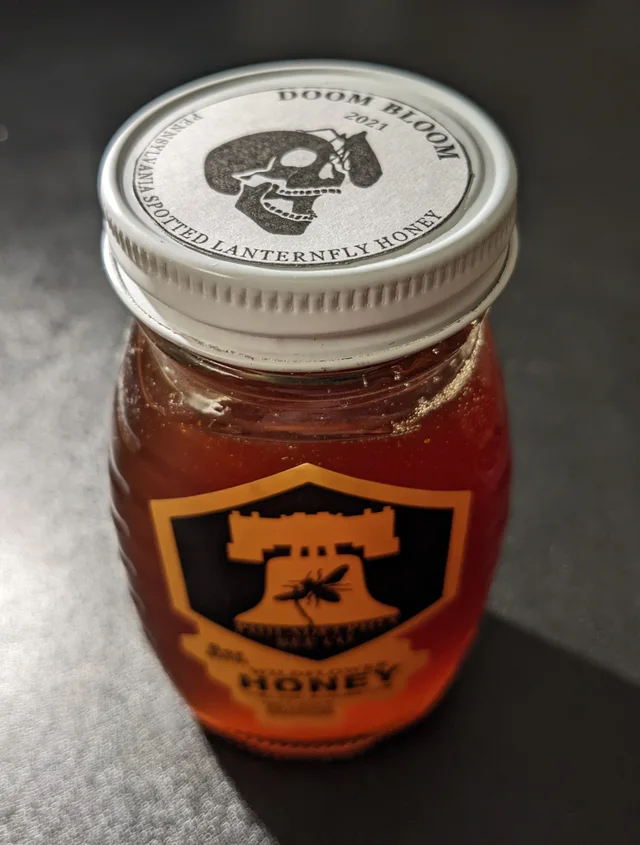
The Codex definition covers both products: in each case the bees combine the raw material with substances of their own, dehydrate it, store it and leave it in the comb to ripen. Most readers will never see honeydew honey in a US store. The jar below, labeled Pennsylvania spotted lanternfly honey, is a rare American example, according to its Wikimedia Commons description.
How Much Work Goes Into a Spoonful
Honey-making figures get repeated until they sound like facts, and the sources do not always agree. This table keeps each number tied to the person or body who published it.
| Figure | Who says it | Caveat |
|---|---|---|
| 12 bees’ whole lives make 1 teaspoon | BBC Science Focus | A rounded average; the same idea is often stated as 1/12 teaspoon per bee |
| About 2 million flowers and 50,000 miles per pound | Zachary Huang, Michigan State University (2018 handout) | He calls it a “factoid” and works a rough version with assumed values, 25 mg per trip and 2 microliters per flower, that lands near 2.6 million flowers |
| Crop capacity of 60 to 70 microliters; measured loads of 17 to 19 | Nicolson, Human and Pirk (2022) | Measured on macadamia in South Africa, where nectar is pre-dried |
| Ripening takes 1 to 11 days | Eyer, Neumann and Dietemann (2016) | Varies with colony size, comb space, humidity, climate and nectar source |
| About 55 pounds of surplus honey per hive per year | National Honey Board | An average for managed hives, not a promise for any one hive |
| At least 90 pounds of honey to get through winter | Illinois Extension (Douglas Gucker, 2021) | Guidance from a cold-winter state; other climates differ, see our winter honey guide |
The flower counts are the shakiest, because nectar per flower swings so widely. Treat “millions of flowers per pound” as an order of magnitude, and treat any single number per trip as an average for one kind of bloom.
Who Makes the Honey: Worker Lifespans and Jobs
The bee that drinks nectar from a flower is almost never the bee that caps the cell. In a 2020 study in Royal Society Open Science, Alberto Prado and colleagues note that honey bee workers usually live only 2 to 6 weeks in summer and about 20 weeks in winter, and that bees spend the first weeks of adult life on tasks inside the hive before switching to foraging. Queens, by contrast, can live up to 5 years.
Put the two facts together and a summer worker has a short window for each job: a stretch inside the hive that includes receiving and drying nectar, then the foraging weeks. The honey in one jar is the work of many bees of different ages, and the winter bees that eat stored honey, living about 20 weeks, are a later generation again. For how long bees live in each season, see honeybee lifespan.
What Bees Do With Honey, and What Beekeepers Take
Bees eat it. The National Honey Board says honey provides the energy for the bees’ flight muscles and the heat for the hive in winter. A colony that finds plenty of nectar makes more than it needs, and the National Honey Board notes that beekeepers harvest the excess.
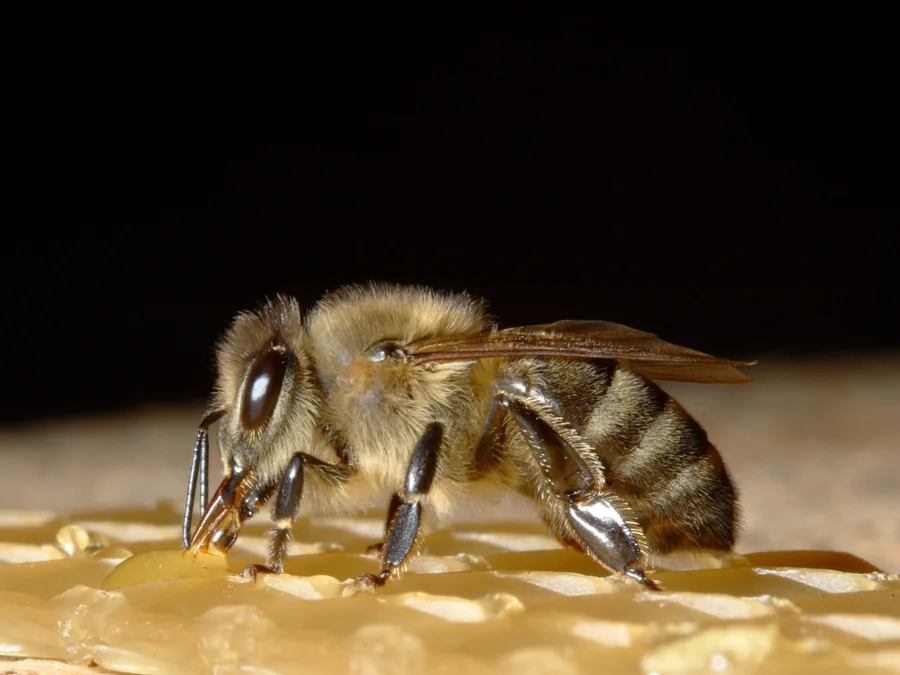
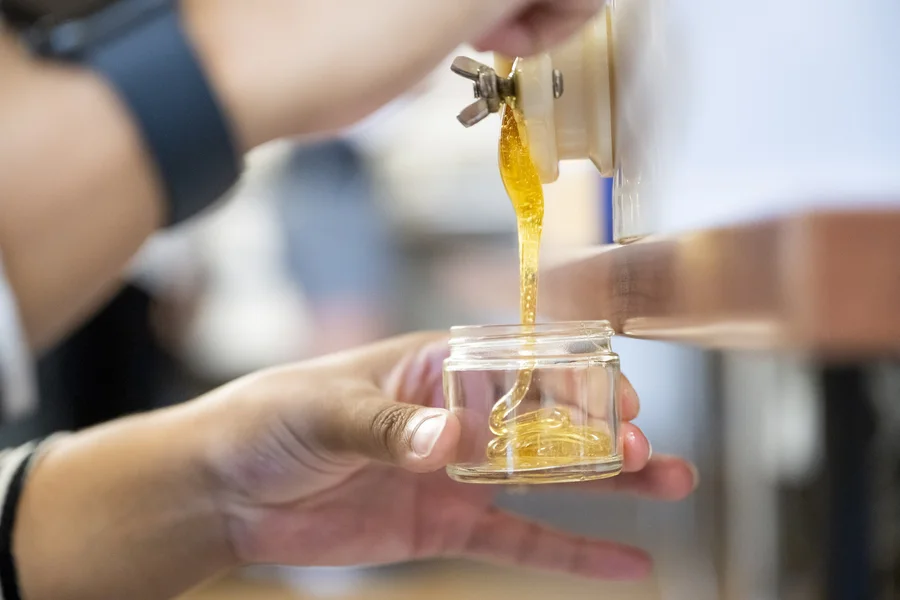
Harvest follows a set pattern. Beekeepers scrape the wax caps off the frames and spin them in an extractor, a centrifuge that throws the honey out of the comb, then strain it; the National Honey Board describes these steps. See honey harvesting methods compared.
What stays in the hive matters as much as what leaves. Illinois Extension recommends at least 90 pounds of honey in a hive going into a cold winter, so over-harvesting can leave a colony short; see how much honey bees need for winter and risks of over-harvesting honey.
Honey bees are an exception among bees. Britannica notes that only a handful of the more than 20,000 bee species make honey, with the domesticated honey bee, Apis mellifera, the main commercial source.
Frequently Asked Questions
Where does honey come out of the bee?
It comes out of her mouth, not her back end. A forager regurgitates nectar from the crop to a receiver bee, who later places drops in wax cells, according to NC State. Honey is not excrement. Honeydew, the sap feeder’s waste that bees sometimes collect, is a different material.
Do bees eat honey or do they just make honey?
They eat it. Honey fuels flight and keeps the colony warm in winter, and the surplus is what beekeepers take.
How long does it take a bee to make honey?
No single bee makes it. One forager trip delivers a load, and ripening in the hive can take 1 to 11 days, depending on the colony, comb space, air movement, climate and nectar source.
What do bees do with honey if we don’t take it?
They store it as food for bad weather and winter. Illinois Extension recommends at least 90 pounds in a hive going into a cold winter.
Is honey made from bee vomit?
No. The nectar is carried in the crop, a storage organ, and is not digested; see the explanation above.
How do bees make honey, in kid-friendly words?
Bees drink a sweet flower juice called nectar and carry it home in a special honey stomach. Back at the hive they pass it from bee to bee, flap their wings to dry it out, and seal it in wax cells. The thick, sweet result is honey.
Do bees make honey from pollen?
No. Honey comes from nectar. Pollen is the bees’ protein source, which they pack into cells and ferment into bee bread.
How many bees does it take to make a teaspoon of honey?
About 12, each working for her whole life, according to BBC Science Focus.
The Bottom Line
Honey is the colony’s work, not one bee’s: gather, share, dry, store and seal. If you keep bees, remember that a wax cap is a strong clue to ripeness but not proof, and check moisture before you extract; see ripe honey moisture content.
Image credits: Featured photo: John Severns, public domain, via Wikimedia Commons, cropped. Other photos are credited in their captions.