Reviewed by Sofia T. · How we review
A boxelder bug is a harmless, half-inch black true bug with red lines behind its head and along its wings that feeds mainly on the seeds of female boxelder trees. The US has two species, the eastern boxelder bug (Boisea trivittata) and the western boxelder bug (Boisea rubrolineata), both in the scentless plant bug family, Rhopalidae. In fall they cluster on sunny south and west walls and slip into gaps to spend the winter. They do not breed indoors, damage houses or spread disease, and bites are rare. Seal gaps before late summer and vacuum the ones that get in.
Below: identification, look-alikes, extension advice and our count of 46,667 US iNaturalist observations.
Key Takeaways
- Boxelder bugs are a nuisance, not a danger: they do not reproduce indoors, eat food or clothing, or damage the house, according to Penn State and University of Illinois Extension.
- Look for three red lines behind the head, red wing edges and a red abdomen under the wings. Nymphs are wingless and bright red.
- In our iNaturalist count, September to November hold 39.9% of US observations and October alone 19.0%, with a smaller peak in April.
- Seal gaps before late summer and vacuum the bugs inside. Indoor insecticides are not recommended.
- Never spray boxelder trees while they flower; the University of Kentucky warns it can harm pollinators.
Table of Contents
- What Boxelder Bugs Are and How to Recognize Them
- How to Get Rid of Boxelder Bugs
- Why Boxelder Bugs Come Inside, and When
- Are Boxelder Bugs Harmful? Do They Bite?
- Boxelder Bug Look-Alikes, Including the Kissing Bug
- What Boxelder Bugs Eat, and Whether to Remove the Tree
- Boxelder Bugs, Bees and Flowering Trees
- Frequently Asked Questions
What Boxelder Bugs Are and How to Recognize Them
Boxelder bugs are true bugs (order Hemiptera), like cicadas and stink bugs: they suck sap through a beak instead of chewing. Our page on why a bee is an insect but not a bug explains the difference. Despite the family name, a crushed boxelder bug smells unpleasant. In some areas they are called maple bugs.
The USDA Forest Service’s Forest Insect & Disease Leaflet 95 places the eastern species across the eastern US and west through the Great Plains, wherever boxelder maples grow. The western species lives from British Columbia to California and east to Utah and Texas.
Adults
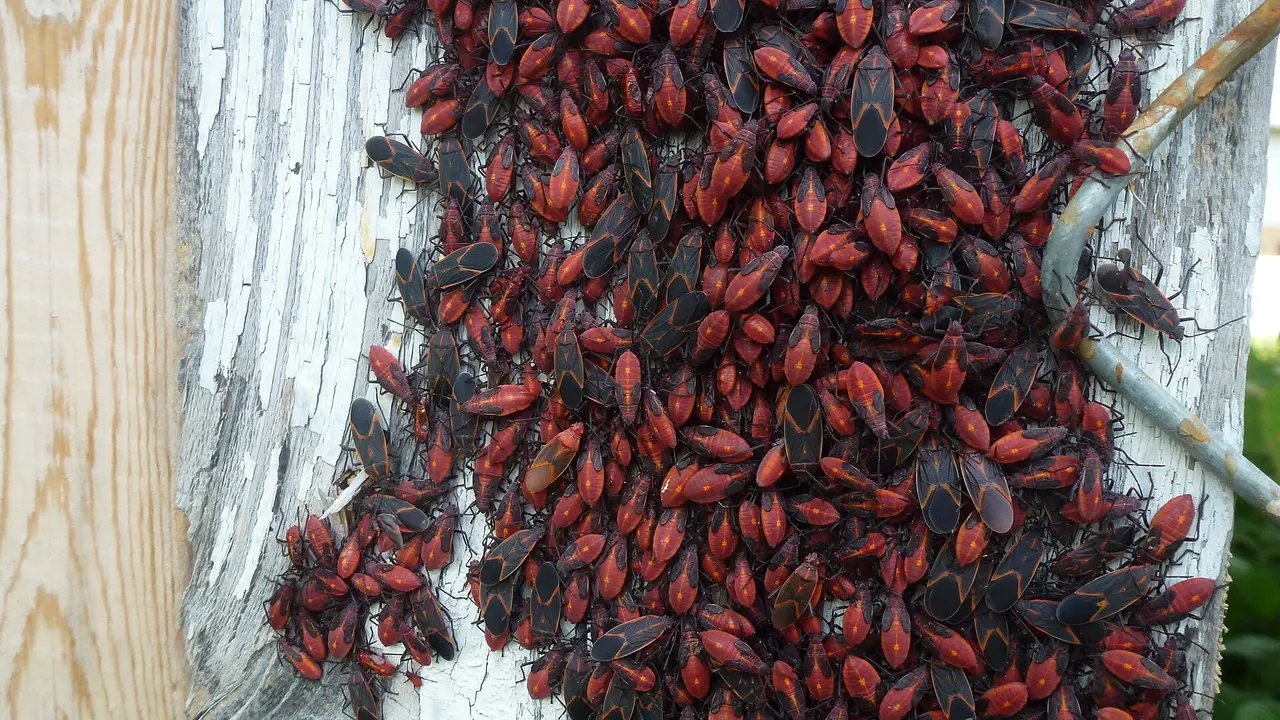
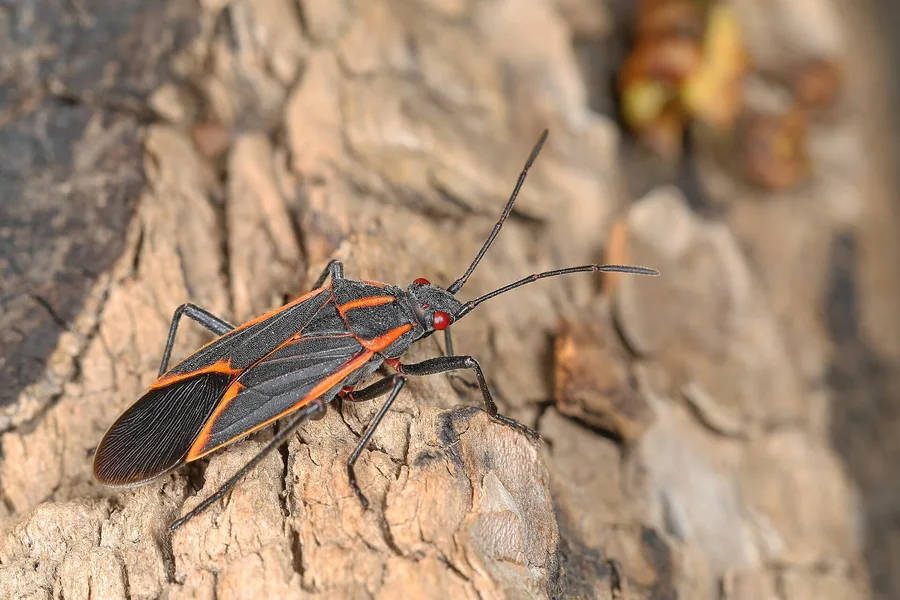
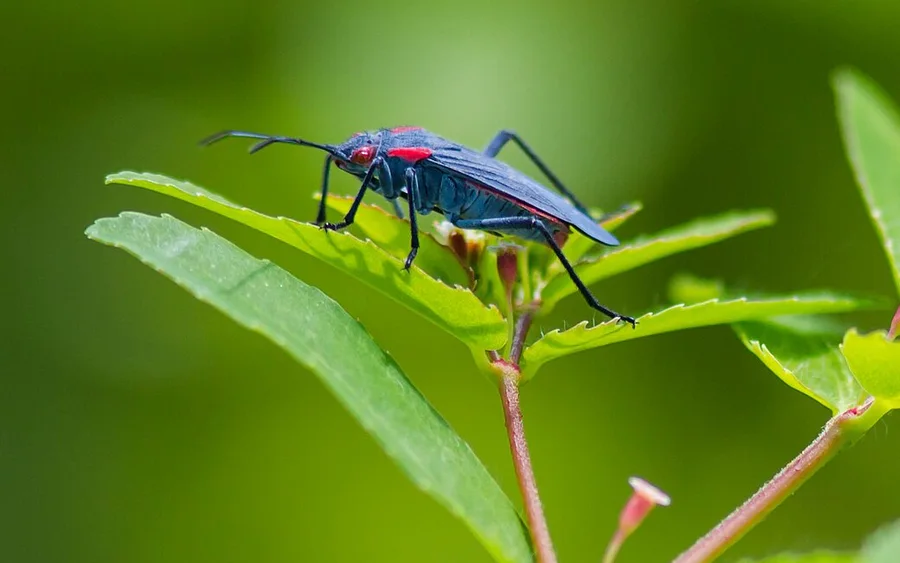
Colorado State University Extension describes a 1/2-inch black bug with three red lines on the thorax just behind the head, a red line along each side and a diagonal red line on each wing. The body is somewhat flattened, the eyes are red, and under the wings the abdomen is bright red.
Eggs and red nymphs
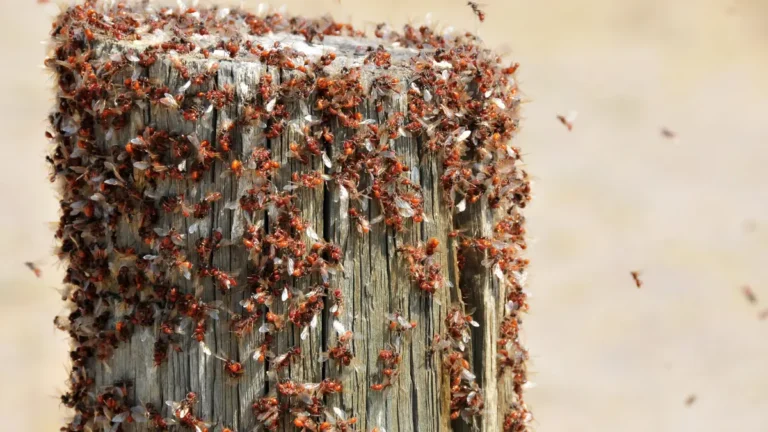
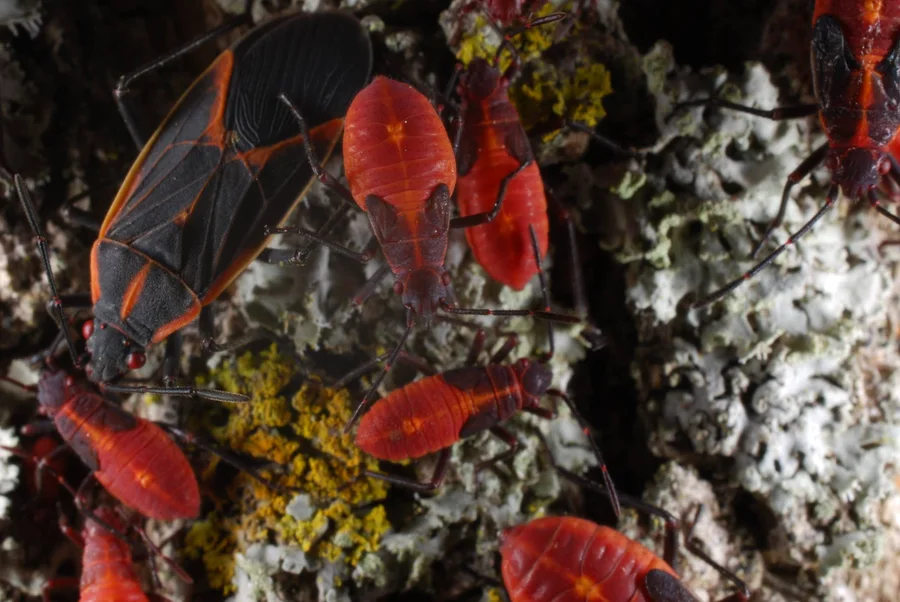
In spring, females lay small eggs on leaves, bark and stones. Penn State says they start straw yellow and turn red, and hatch in 10 to 14 days. A new nymph is about 1.3 mm long and wingless, with a bright red abdomen and black legs and antennae. It molts five times, turning darker red, and older nymphs carry obvious black wing pads, so fall clusters often mix red nymphs with black adults. Most areas get two generations a year, and only adults survive the winter.
Eastern vs. western boxelder bug
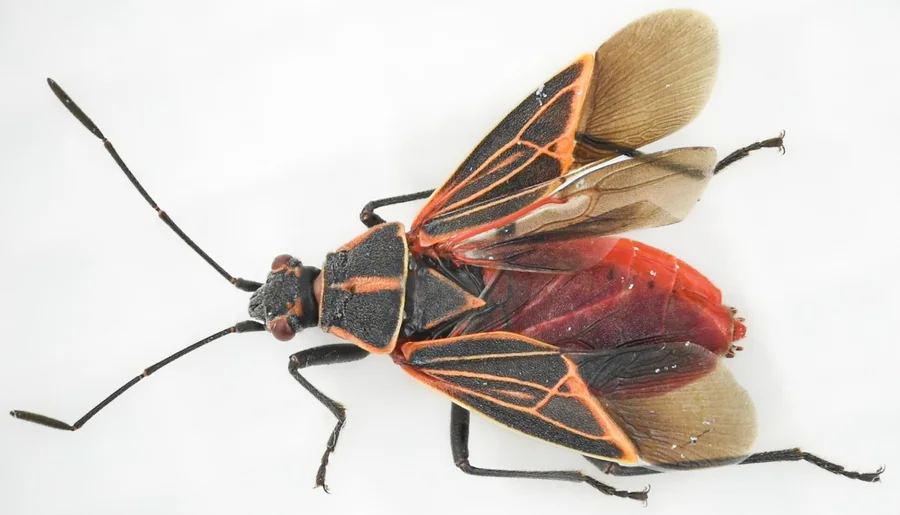
The two look nearly identical; the Forest Service says the western bug’s orange-red bands are slightly narrower and paler, so where you live is the better clue. University of California IPM notes the western species also feeds on almonds, apples, grapes and other fruit.
How to Get Rid of Boxelder Bugs
Video: Utah State University Extension entomologist Diane Alston covers what boxelder bugs eat, vacuuming them up, the vacuum bag and a soapy water spray, per the video’s official chapter list.
Seal them out before late summer
“Mechanical exclusion is the best method to keep boxelder bugs from entering homes and buildings.”
Caulk gaps around windows, doors, siding and utility pipes, behind chimneys and under fascia, and repair torn screens (Penn State). The National Pesticide Information Center (NPIC) adds ceiling lights, soffit and dryer vents and outdoor faucets. Colorado State says to seal before late summer, and University of New Hampshire Extension says “well before September 10th.”
Wash or soap the clusters outside
Utah State calls hosing down clusters “very effective,” since nymphs drown easily. The Forest Service recipe is five tablespoons of liquid detergent, or 1/2 cup of dry laundry detergent, per gallon of water, sprayed directly on the bugs. It kills only the bugs it hits, so repeat as new clusters arrive, and keep it off foliage, which it can damage.
Vacuum the ones indoors
Penn State, Iowa State, Utah State and the Forest Service all recommend vacuuming. Empty the bag promptly or, as NPIC suggests, freeze it overnight. Don’t smash them: University of Illinois Extension warns of red or purple stains.
Why indoor sprays don’t help
Penn State advises against insecticide indoors once bugs are in wall voids or attics: dusting the voids can kill thousands, but carpet beetles may feed on the dead bugs and move on to woolens and stored dry goods, and foggers don’t stop more bugs from emerging. Iowa State says household aerosols generally do not kill boxelder bugs, and the Forest Service notes resistance to many commercially available insecticides.
Outside, NPIC suggests moving woodpiles, leaf and rock piles away from the house, and the Forest Service says raking up fallen boxelder seeds removes food for adults in spring.
Why Boxelder Bugs Come Inside, and When
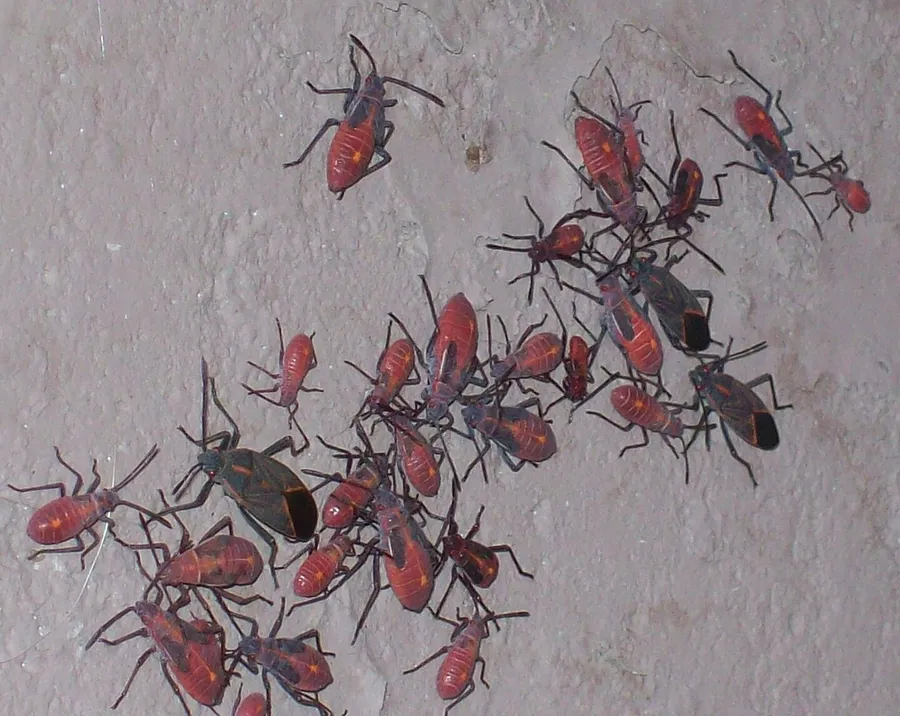
As autumn cools, boxelder bugs stop feeding and gather on the warmest surfaces, usually the south and west sides of trees, rocks and buildings. University of Illinois Extension says houses with large southern or western exposures attract the most. From there they work into cracks, wall voids and attics. NPIC says they can fly up to two miles, so a house with no boxelder tree nearby can still get them.
In the walls they stay inactive while it is cold, but Iowa State explains that bugs warmed by the sun or furnace wander into rooms on winter days. Penn State says they leave in late April to early May, as boxelder buds open.
What 46,667 sightings show
We pulled every research-grade US observation of the eastern boxelder bug from the iNaturalist API on November 17, 2026, and grouped them by month observed. Research-grade records have a date, location and photo, and the community agrees on the species.
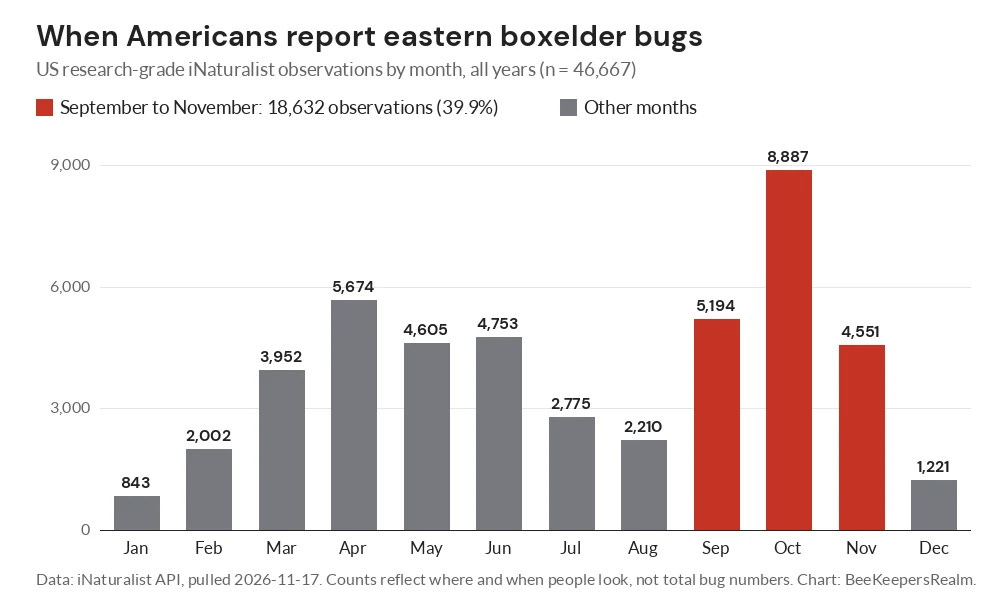
October is the peak with 8,887 observations (19.0%); September through November hold 18,632 (39.9%). December to February add only 4,066 (8.7%), which fits bugs resting in walls. A spring rise peaks in April at 5,674 (12.2%), matching the emergence Penn State describes. The western boxelder bug differs: of its 12,760 US observations, April leads (2,046) and October trails (1,114).
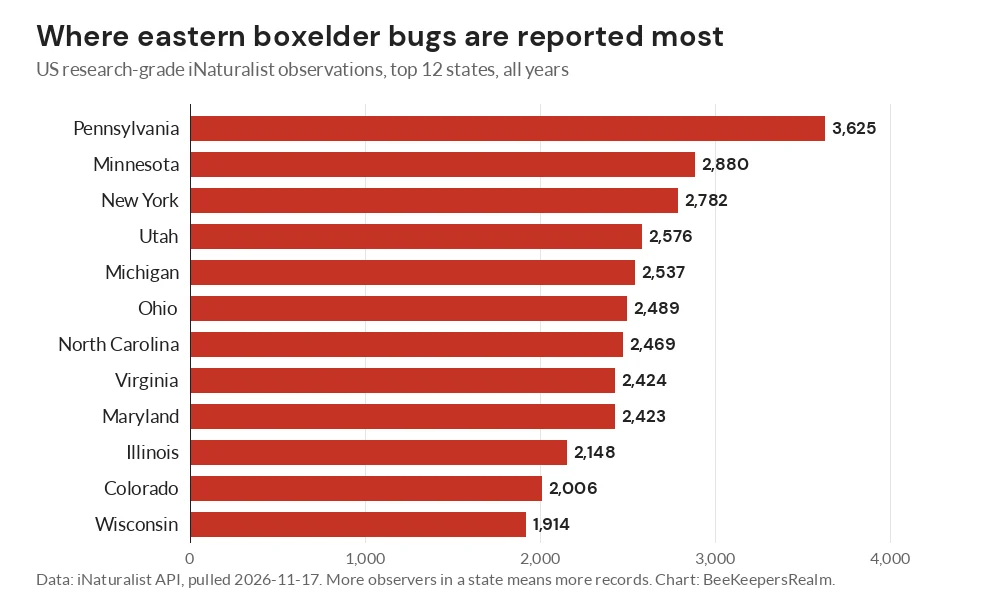
Pennsylvania leads the states with 3,625 observations, ahead of Minnesota (2,880) and New York (2,782). This maps where boxelder bugs and active iNaturalist users overlap, not a population census. To add your own sightings, see our guide to citizen science programs you can join.
Are Boxelder Bugs Harmful? Do They Bite?
Not to people or pets. The University of Kentucky says they have not been reported to harm humans, pets or livestock, and there is no evidence they transmit disease. They do not sting. NPIC calls them “generally not known to bite,” with rare reports of a defensive bite.
The real problems are cosmetic: droppings can spot curtains and light fabrics, crushed bugs stain and smell, and in heavily infested areas Penn State says thousands may get inside. Penn State reports no direct damage to the structure, contents or occupants, and no reproduction indoors. Iowa State adds that they cannot feed indoors, because their beak only takes sap from certain plants. Outdoors, feeding can distort or yellow new boxelder leaves, and the Forest Service says the western species can damage fruit trees, pistachios and almonds.
Boxelder Bug Look-Alikes, Including the Kissing Bug
Several red-and-black bugs get called boxelder bugs. Most are harmless, but the kissing bug matters for health.
| Bug | Key marks | Harmful? | Source |
|---|---|---|---|
| Eastern boxelder bug (Boisea trivittata) | About 1/2 inch; black with three red lines behind the head and red wing edges; nymphs bright red | No; rare defensive bite, stains and odor | Colorado State, NPIC, Univ. of Kentucky |
| Western boxelder bug (Boisea rubrolineata) | Same shape; red bands slightly narrower and paler; western states | Not to people; can feed on fruit and nut crops | USDA Forest Service, UC IPM |
| Red-shouldered bug (Jadera haematoloma) | Very dark gray; only two red lines on the thorax, no red on the wings; under goldenrain and chinaberry trees | No known risk to people; also moves into homes in fall | NC State, Texas A&M |
| Large milkweed bug (Oncopeltus fasciatus) | Mostly orange-red with broad black bands or patches; on milkweed pods | Harmless; may lower milkweed seed germination | Univ. of Kentucky, Iowa State |
| Small milkweed bug (Lygaeus kalmii) | Up to 1/2 inch; black with a large red X on the back and white wing margins | No known risk to people | Univ. of Wisconsin |
| Kissing bug (Triatoma species) | Cone-shaped head, thin antennae and legs; black or very dark brown with red, orange or yellow stripes around the body edge | Yes: feeds on blood and can carry the parasite that causes Chagas disease | Texas A&M, CDC |
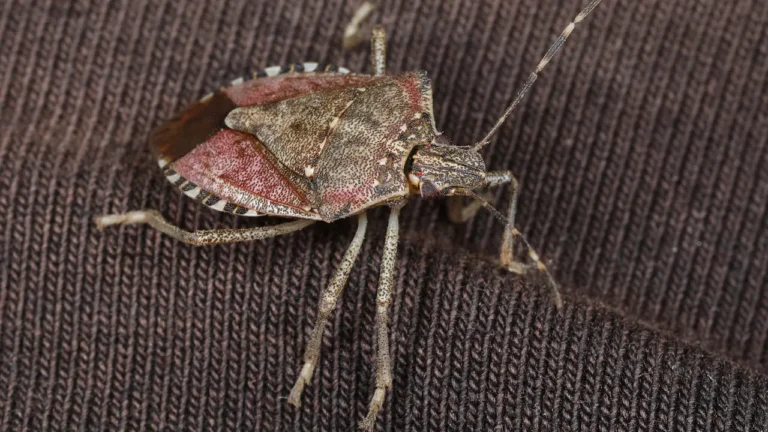
| Brown marmorated stink bug (Halyomorpha halys) | About 17 mm; brown and shield-shaped; lighter bands on the antennae | No bite; crushed bugs smell and can irritate skin | Penn State |
| Spotted lanternfly, last-stage nymph | About 1/2 inch; red with white dots and black stripes; jumps | Cannot bite or sting; a serious grape pest | Penn State |
The red-shouldered bug is the closest match; NC State notes it is in the same family, with similar looks and habits. Count the red lines behind the head: two on the red-shouldered bug, three on the boxelder bug.
The kissing bug is the only dangerous one. The Texas A&M Kissing Bug program reports them in 29 states, with the most records in Texas, New Mexico and Arizona. If a red-and-black bug has a long, cone-shaped head, Texas A&M advises not touching it bare-handed; use a glove or small plastic bag. The CDC says Chagas disease usually spreads through contact with these bugs, typically when their feces get into a bite or an eye. Texas A&M advises talking with a doctor if you are worried about a bite. This is educational information, not medical advice.
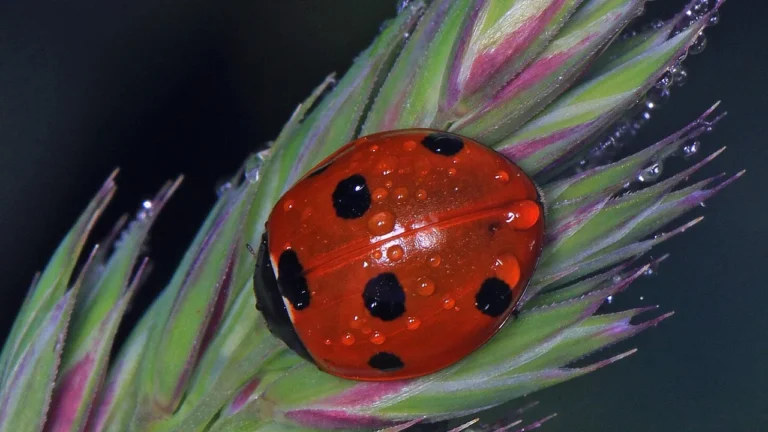
For the others, see our stink bug guide and spotted lanternfly page. Milkweed bugs live on the plants in our milkweed growing guide; Iowa State says they feed on seed pods without disturbing monarch caterpillars. The other insect that piles onto sunny walls each fall, the multicolored Asian lady beetle, is covered in our ladybug guide.
What Boxelder Bugs Eat, and Whether to Remove the Tree
Boxelder (Acer negundo) is a maple with separate male and female trees, and only females make the drooping seed clusters the bugs feed on. Colorado State says they seldom reach nuisance numbers without a female boxelder in the neighborhood. They also feed on other maples and ash, and the University of Kentucky lists silver and sycamore maples, apple, pear and plum.
Extension sources disagree on cutting the tree. Colorado State calls removing female boxelders the most permanent solution, though not always practical. Utah State calls it “a rather drastic measure” that is not generally recommended, since the tree’s value usually outweighs the benefit. The Forest Service suggests seedless cultivars such as ‘Baron’ for new plantings, and NPIC suggests male trees or raking up fallen seedpods. Since the bugs fly up to two miles, a neighbor’s tree can still supply them.
Boxelder Bugs, Bees and Flowering Trees
Boxelder bugs don’t threaten bees, but sprays can. The University of Kentucky says it is typically enough not to treat outdoors at all, because the bugs retreat as the weather cools.
“Chemical insecticides should not be applied directly to boxelder trees during flowering seasons as this could cause harm to beneficial insects, such as pollinators.”
The Forest Service leaflet likewise says not to apply pesticides when honey bees or other pollinators are visiting plants. Aim soapy water at the bug clusters, not at flowers. If you do buy a product, our guide to pollinator-safe pest control explains how to read the label for bee risk.
Frequently Asked Questions
Are boxelder bugs good or bad?
Neither. They are native insects that feed mostly on boxelder seeds and are a problem only when many winter in a house.
What attracts boxelder bugs to my house?
Warmth. In fall they gather on sunny south- and west-facing walls, then crawl into gaps. A female boxelder tree nearby makes large numbers more likely.
What smell do boxelder bugs hate?
None of the extension and federal fact sheets we used recommend a scent repellent. They rely on sealing gaps, washing or soaping clusters outside and vacuuming.
What instantly kills boxelder bugs?
Soapy water (five tablespoons of liquid detergent per gallon) kills the bugs it hits, and the Forest Service says hot water works too. Repeat as new bugs arrive.
Why shouldn’t you squish a boxelder bug?
It releases an unpleasant odor and leaves a red or purple stain. Vacuum them instead.
Should I get rid of box elder bugs?
Only if they bother you. They will not breed inside; if many get in each year, seal gaps before next fall.
Do boxelder bugs have any purpose?
They are part of the native insect life on boxelder and maple trees. Utah State notes birds largely avoid them, probably because of their odor.
The Bottom Line
A boxelder bug in the house is a seasonal nuisance, not a danger. Seal gaps before late summer, vacuum the stragglers and leave flowering trees unsprayed. If a red-and-black bug has a cone-shaped head, don’t touch it bare-handed. More common home and yard insects are in our garden and household insects section.
Image credits: featured photo by Kelisi (Wikimedia Commons, CC BY-SA 4.0, cropped); boxelder bug photos by Judy Gallagher (CC BY 2.0), Jesse Keith Huffman (CC BY-SA 4.0), Don Loarie (CC BY 4.0) and RedRue (CC BY 3.0); red-shouldered bug photo by Melissa McMasters (CC BY 2.0). All via Wikimedia Commons, resized or cropped. Charts by BeeKeepersRealm from iNaturalist data.