Reviewed by Elena P. · How we review
Milkweed (genus Asclepias) is a group of perennial wildflowers named for the milky latex that leaks from a cut stem. It is the plant monarch caterpillars depend on, and its flowers also feed bees and wasps. Choose a species native to your region, give it full sun, and keep the sap away from eyes, because most milkweeds contain toxic cardiac glycosides.
Educational information only, not veterinary or medical advice. The safety section reports what Poison Control, extension services and published case reports say; call a doctor, a vet or Poison Control about any real exposure.
Key Takeaways
- The US Fish and Wildlife Service says monarchs lay eggs on just one type of plant, milkweed. Plant species native to your region.
- In US iNaturalist photos annotated as flowering, common milkweed peaks in June (50.3%) and July (42.0%), butterfly weed in June (36.2%) and swamp milkweed in July (52.6%).
- Tropical milkweed (A. curassavica) is not native to the US. The Monarch Joint Venture advises cutting it back in fall in the southern US and California and replacing it with natives.
- Honey bees often get trapped by milkweed pollinia. UC Davis researchers estimated dead bees on 5% to 15% of showy milkweed flower clusters at their northern California sites.
- Most native milkweed seed needs cold, moist stratification: 4 to 6 weeks in a refrigerator by Xerces Society directions, or sow in fall and let winter do it.
- The eastern monarch population covered 2.93 hectares in winter 2025-26, up 64% but below the roughly 6 hectares researchers say a stable population needs.
- All parts of milkweed are toxic if eaten, and sap in an eye can injure the cornea. Wear gloves and ask a vet or doctor when in doubt.
Table of Contents
- What Is Milkweed?
- Milkweed Types and Where Each Grows
- Tropical Milkweed: Why Conservation Groups Say Cut It Back
- Milkweed and Monarchs: Status in 2026
- Milkweed and Bees: Pollinia, Traps and Pollinators
- Milkweed Honey
- How to Grow Milkweed: Seeds, Planting and Care
- When Does Milkweed Bloom?
- Milkweed Pods and Seeds: When to Collect Them
- Is Milkweed Poisonous? People, Pets and Livestock
- Frequently Asked Questions
- The Bottom Line
What Is Milkweed?
Milkweed is the common name for plants in the genus Asclepias, herbaceous perennials in the dogbane family. The US Forest Service counts about 115 species in the Americas, most of them tropical or arid-land species. The name comes from the latex, a milky fluid containing cardiac glycosides called cardenolides that oozes wherever the plant is cut.
The Xerces Society’s milkweed conservation guide says cardenolides are present in all plant parts, and that butterfly weed, swamp milkweed and whorled milkweed are relatively low in them while tropical milkweed is relatively high. UConn Extension notes that butterfly weed does not produce the milky sap at all. Despite the word “weed,” the US Fish and Wildlife Service says none of the milkweeds native to the United States are considered noxious weeds, though some spread quickly.
Milkweed Types and Where Each Grows
No single milkweed fits every yard. Heights and bloom months below are the ranges the Lady Bird Johnson Wildflower Center (University of Texas at Austin) gives for each plant; real bloom varies by region.
| Species | Common name | Region / habitat | Height | Bloom time | Notes | Source |
|---|---|---|---|---|---|---|
| Asclepias syriaca | Common milkweed | Eastern and north-central US; old fields, roadsides | 3 to 5 ft, up to 8 ft | June to August | Spreads by rhizomes; hard to transplant | Wildflower Center; UConn Extension |
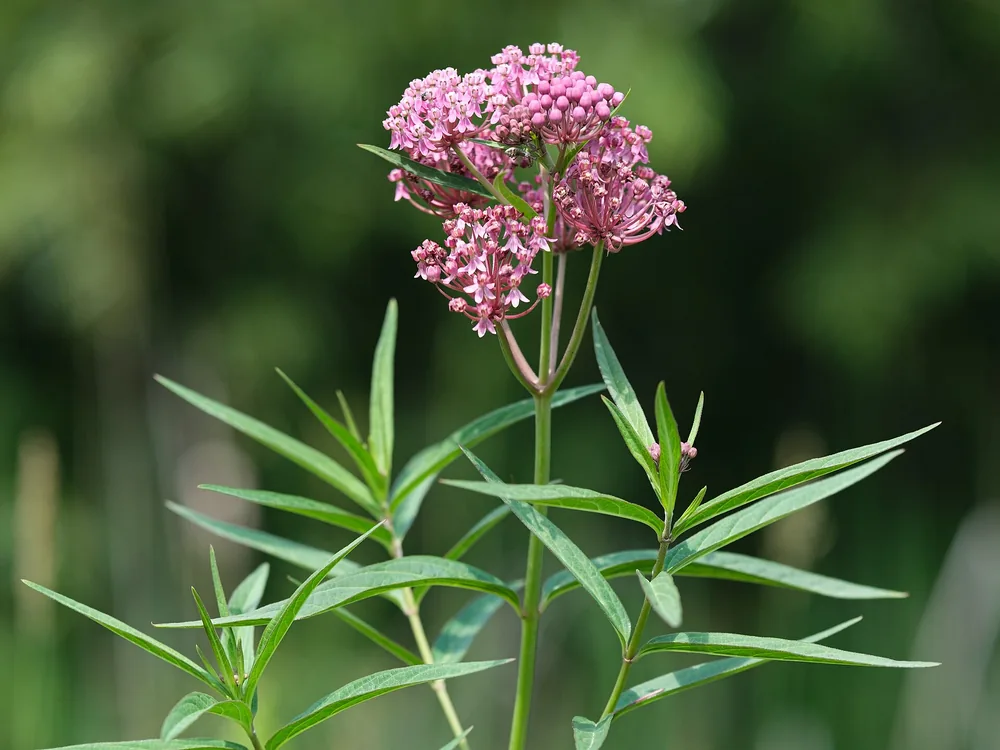
| Asclepias incarnata | Swamp milkweed | Eastern and central US; wet meadows, pond and marsh edges | Up to about 5 ft | June to October | Pink flowers; a wet-site native | Wildflower Center |
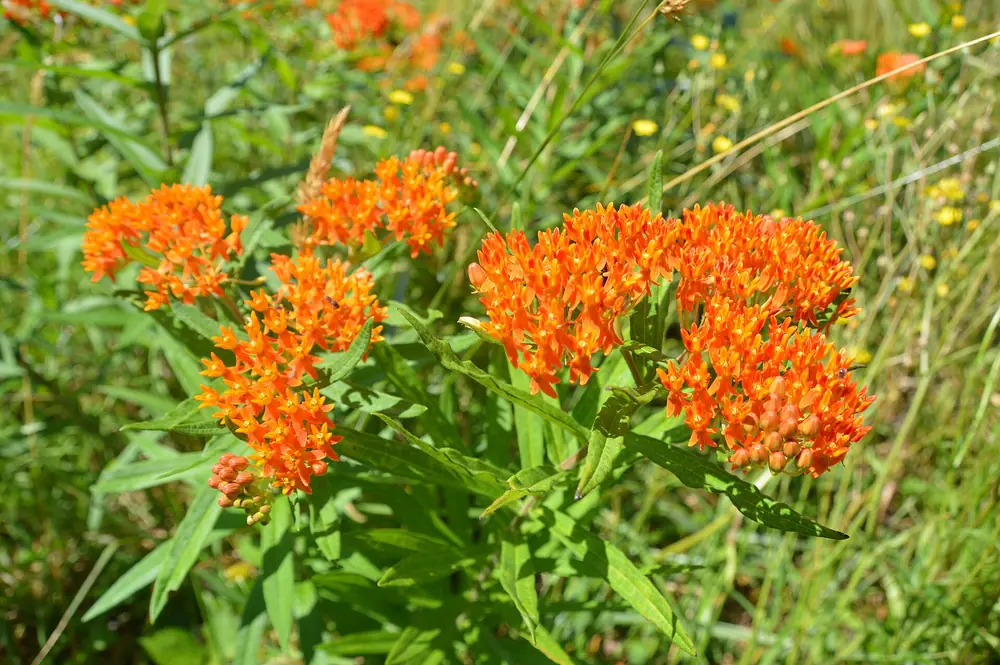
| Asclepias tuberosa | Butterfly weed | Eastern and central US, south to Florida and west to Texas and Colorado; prairies, open woods, hillsides | 1 to 2 ft | May to September | Orange flowers; taproot; clear sap; low cardenolides | Wildflower Center; UConn; Xerces |
| Asclepias verticillata | Whorled milkweed | Massachusetts to Montana, south to Florida and east Texas; dry, sandy, open woods | Up to about 3 ft | May to September | Thin whorled leaves; one of the more poisonous milkweeds to livestock | Wildflower Center |
| Asclepias speciosa | Showy milkweed | Western half of North America, south to Texas and California; prairies, roadsides, old fields, meadows | 1.5 to 3 ft, up to 6 ft | May to September | Broad leaves; pink-purple flowers | Wildflower Center |
| Asclepias asperula | Antelope horns | Central Kansas to Texas and Mexico, west to southern Idaho and southeast California; meadows, roadsides | 1 to 2 ft | Mostly spring, some bloom summer to fall | Green flowers; goes dormant in winter | Wildflower Center |
| Asclepias fascicularis | Narrowleaf or Mexican whorled milkweed | Western US, northeast Washington and Idaho south to Baja California and northern Arizona; dry to moist places below 7,000 ft | Up to about 3 ft | June to September | Narrow leaves; honey bees are often trapped on it | Wildflower Center; UC ANR |
| Asclepias curassavica | Tropical milkweed | Native from South America to Mexico, not native to the US; sold at nurseries nationwide | About 3 ft | Summer to fall; year-round in frost-free areas | Caution: cut back in fall and replace with natives | Monarch Joint Venture; NC State |
Which Milkweed Should You Plant?
Start with a species native where you live. In the East and Midwest, common milkweed suits wide-open sites, swamp milkweed damp ground, and butterfly weed dry, sunny spots, which makes it a fit for our drought-resistant flowers for bees list. In the West, showy and narrowleaf milkweed are the usual natives, and antelope horns suits Texas and the southern Plains. For companions, see the best US native plants for pollinators, and ask a county extension office what is native in your county.
Tropical Milkweed: Why Conservation Groups Say Cut It Back
Tropical milkweed (Asclepias curassavica) is native from South America to Mexico but widely sold in US nurseries. In mild climates it grows year-round, while native milkweeds go dormant in winter. The Monarch Joint Venture (MJV) says that persistence can interfere with migration, because monarchs that find green plants on the way south may become reproductive instead of continuing to Mexico or coastal California.
The bigger concern is disease. Tropical milkweed that never dies back can carry more spores of Ophryocystis elektroscirrha (OE), a parasite that causes malformed wings and shorter lives. MJV cites Project Monarch Health data showing 49% of winter-breeding monarchs infected, versus 9% of migratory monarchs sampled in Mexico and 15% of those sampled in the northern US and Canada.
“Only plant milkweed native to your region.”
For plants already in the ground, MJV recommends pruning stalks before fall migration, re-cutting every few weeks through February, and replacing them with natives when possible. It says this does not apply in South Florida, south of Orlando, where a non-migratory population lives.
Milkweed and Monarchs: Status in 2026
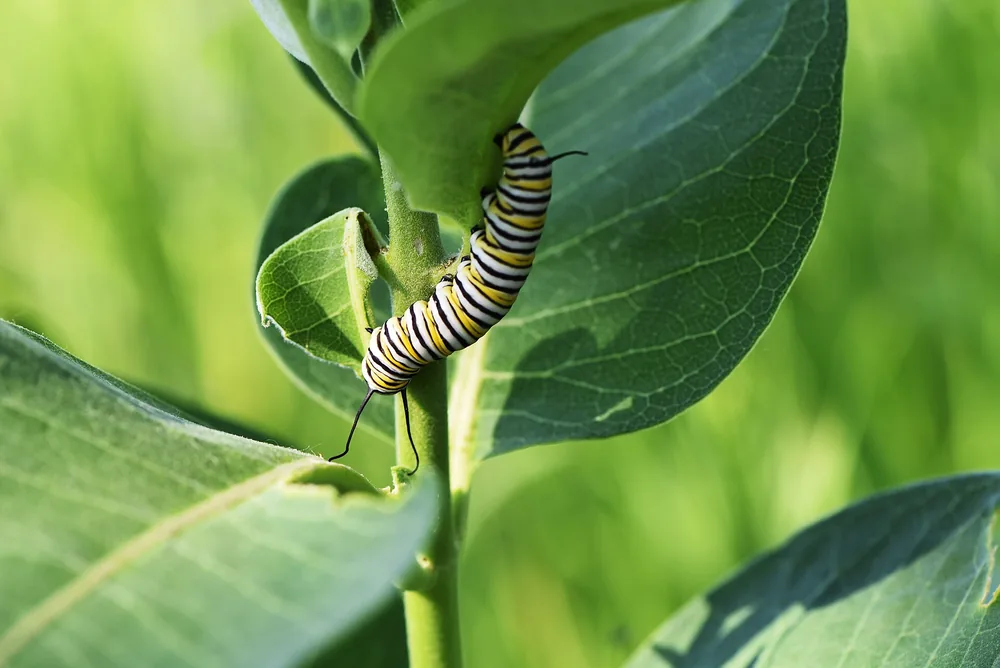
The National Park Service explains that milkweed’s latex holds cardiac glycosides poisonous to most animals, but monarchs are resistant, which gives the caterpillars a strong chemical defense against predators. The Fish and Wildlife Service adds that caterpillars eat only milkweed, so eggs laid on any other plant produce caterpillars that starve. These population numbers are the latest published and change every year:
- Eastern monarchs: the 2025-26 overwintering count in Mexico covered 2.93 hectares, about 64% more than the 1.79 hectares of the winter before (survey by Mexico’s national protected-areas commission and WWF, released March 2026). MJV notes research suggesting at least 6 hectares are needed for a stable population.
- Western monarchs: the Xerces Society’s 29th annual Western Monarch Count, announced January 29, 2026, recorded about 12,260 monarchs at 249 California sites, the third-lowest tally since counting began in 1997.
- Legal status: the Fish and Wildlife Service proposed listing the monarch as threatened in December 2024. There is no final rule. A proposed settlement filed September 30, 2026 would, if the court approves it, require a final decision by June 6, 2030, according to MJV.
“Protections would not apply until the effective date of a final rule.”
Adult monarchs also need nectar on the migration route, so pair milkweed with late bloomers from our fall-blooming flowers for bees guide. Programs in our citizen science for pollinators guide let you report monarchs, and interactions between bees and butterflies shows how the two share flowers.
Milkweed and Bees: Pollinia, Traps and Pollinators
How the Pollinia Mechanism Works
Milkweed packs its pollen into pairs of small waxy sacs called pollinia, tucked inside five vertical grooves (stigmatic slits). The Xerces Society says each pollinium holds several hundred pollen grains, orchids are the only other plants with pollinia, and nectar is the only reward milkweed offers.
An article by Extension Master Gardener Mary Free, published by Master Gardeners of Northern Virginia, describes the sequence. A visiting insect’s leg slips into a slit, a clip called the corpusculum clasps the leg, and the paired pollinia come out attached to it by two translator arms, like saddlebags. The pollen is delivered only if a pollinium slips into a slit on another flower, and the translator arm must break for the insect to fly on. Xerces adds that carrying pollinia is temporary: one study put the turnover time on bumble bees at half a day to two days. Our guide to pollination syndromes covers other flower designs.
Why Honey Bees Get Trapped
Sometimes a leg stays in the slit. Xerces notes that insects occasionally lose claws or tarsal segments struggling free, and others are fatally trapped. In a 2026 study in the journal Ecology, UC Davis researchers Ian Jett and Louie Yang report that honey bees were the most frequently trapped insects at their northern California sites, with dead bees commonly present on 5% to 15% of showy milkweed flower clusters. A dead bee on a cluster cut visits by 37% compared with clusters without one, more for honey bees than for other visitors. Ants were 51% more abundant near dead bees and cut visits by 30%, but honey bees avoiding dead bees directly explained 91% of the total effect.
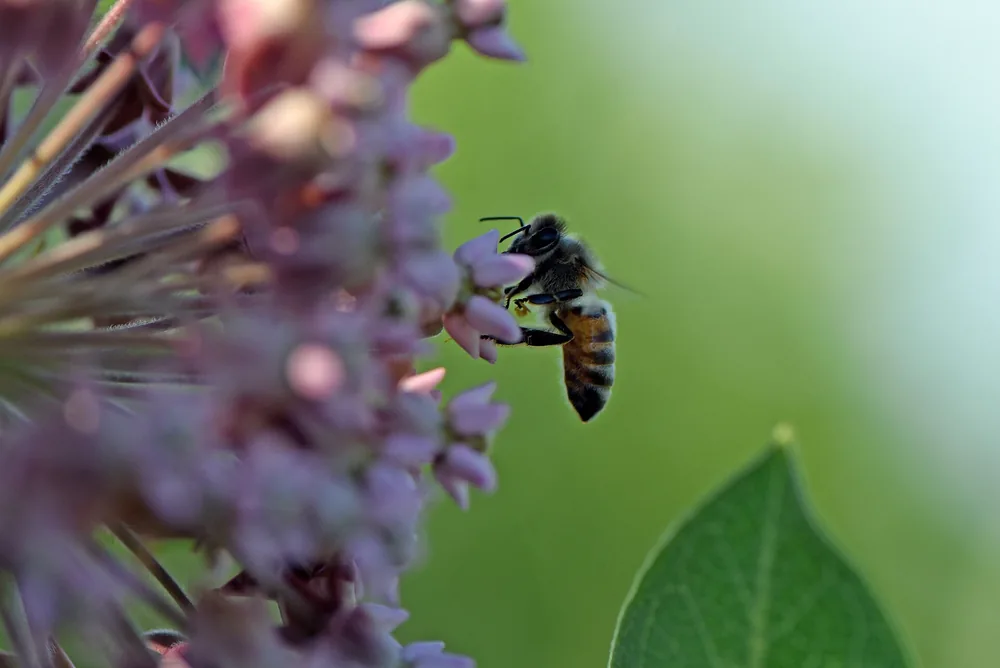
“In our study, we found that the honey bees that are often trapped on milkweed flowers actually deter floral visitation.”
The losses Xerces documents are mechanical: bees trapped in flowers or weighed down by chains of pollinia. For plants whose nectar or pollen actually harms bees, see our guide to plants toxic to bees.
Which Bees and Wasps Pollinate Milkweed
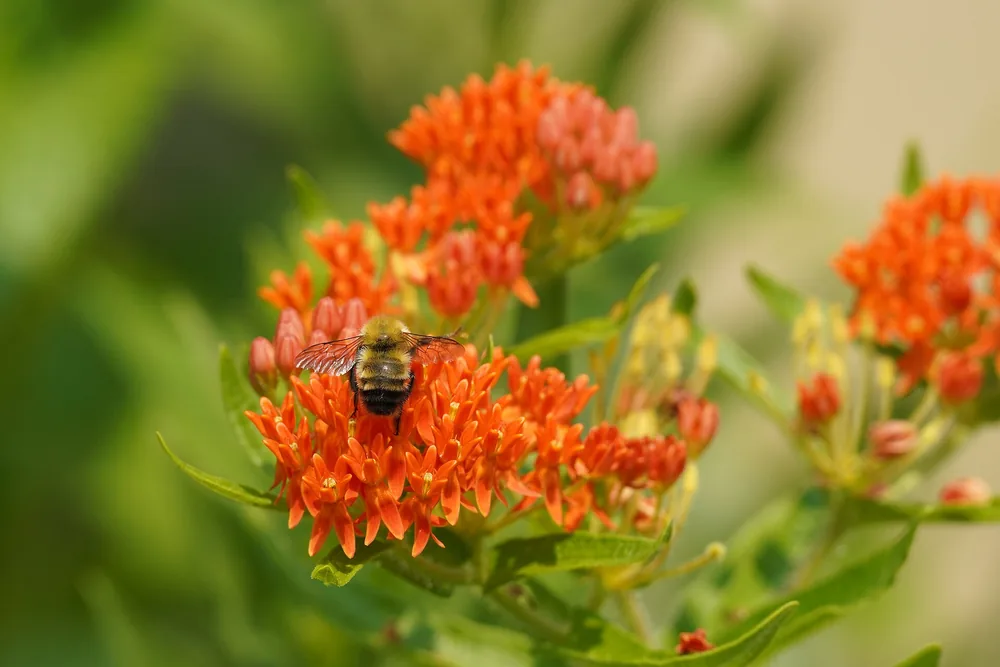
Xerces says bees, wasps, butterflies, moths, flies, beetles and true bugs all visit, but large bees, wasps and butterflies are the most important pollinators. Bumble bees visit often, and the guide lists rusty patched, western, American and yellow-banded bumble bees among those attracted, all four with documented range reductions. Eastern carpenter bees, digger bees, sweat bees and plasterer bees also visit. The Northern Virginia article adds that honey bees, brown-belted bumble bees and digger wasps were among the most effective pollinators in the studies it reviews. See our guides to bumblebees, the rusty patched bumble bee and whether wasps are pollinators.
Milkweed Honey
The Xerces Society guide cites beekeeping authorities from 1902 to 1954 praising milkweed as a honey plant. It reports that a large honey bee colony can potentially gather 13 to 17 pounds of nectar from common milkweed in one day (Lovell 1926; Root 1954), and that beekeepers in northern Michigan averaged 50 pounds of honey per colony when bees foraged on it (Pellett 1976). The International Bee Research Association rates North American milkweeds class 1 or 2 for honey, a theoretical yield of up to 45 pounds per contiguous acre.
Treat those as historical, regional estimates, not a promise for a backyard patch. Milkweed fades by late summer, when goldenrod honey forage takes over, and our list of forage plants for maximum honey yields helps extend the nectar season.
How to Grow Milkweed: Seeds, Planting and Care
Sun, Soil and Spacing
UConn Extension says milkweed needs full sun and plenty of room, tolerates slightly acidic soil (pH 4.8 to 6.8) in zones 3 to 8, and belongs at the back of a bed. It advises spacing plants 1 to 2 feet apart and choosing the site carefully, because milkweed is difficult to transplant. Butterfly weed prefers dry, gravelly soil and is very drought tolerant. Wide drifts also suit meadows; see planting wildflower strips.
Cold Stratification: How and When to Plant Milkweed Seeds
Milkweed seed needs cold, moist conditions before it germinates. Xerces says to mix seed with an equal or greater volume of dampened sand, perlite or vermiculite, seal it in a bag, refrigerate for 4 to 6 weeks (chilled, not frozen), sow right away, and keep the soil moist. Illinois Extension describes a damp paper towel in the fridge for four to six weeks. UConn gives 3 weeks to 3 months, and a North Carolina Ask Extension answer says 30 days minimum.
| Method | When | Cold treatment | Notes |
|---|---|---|---|
| Sow outdoors in fall | Late fall | None needed; winter stratifies the seed | Xerces and UConn both describe fall sowing |
| Sow in spring | After the last frost | Refrigerate 4 to 6 weeks first (Xerces, Illinois Extension) | Start indoors 4 to 6 weeks before transplanting (UConn) |
| Move seedlings outside | When seedlings have 4 true leaves | Already done | Space plants 1 to 2 feet apart (UConn) |
Be patient: Xerces says showy milkweed can flower in its first year in California, while common, swamp and butterfly weed may need more than one year.
Aphids and Stems
Bright yellow clusters on stems are usually oleander aphids (Aphis nerii). University of Florida research found dense infestations on tropical milkweed cut monarch egg laying and caterpillar growth by about 50%. Illinois Extension says a strong stream of water is often enough but can wash off monarch eggs and small caterpillars, natural enemies such as lady beetles and lacewings will help, and insecticides will also kill caterpillars. After flowering, the Maryland Department of Natural Resources lists swamp milkweed among plants whose pithy stalks shelter stem-nesting bees and advises leaving them standing over winter; the Tufts Pollinator Initiative suggests at least two years. Tropical milkweed follows the MJV cutback rule above.
When Does Milkweed Bloom?
To see when milkweed is in flower across the country, we pulled US research-grade iNaturalist observations for three species on November 16, 2026: 140,086 for common milkweed, 62,812 for butterfly weed and 40,127 for swamp milkweed. The chart uses the photos carrying the “Flowering” annotation (7,224, 11,634 and 4,593).
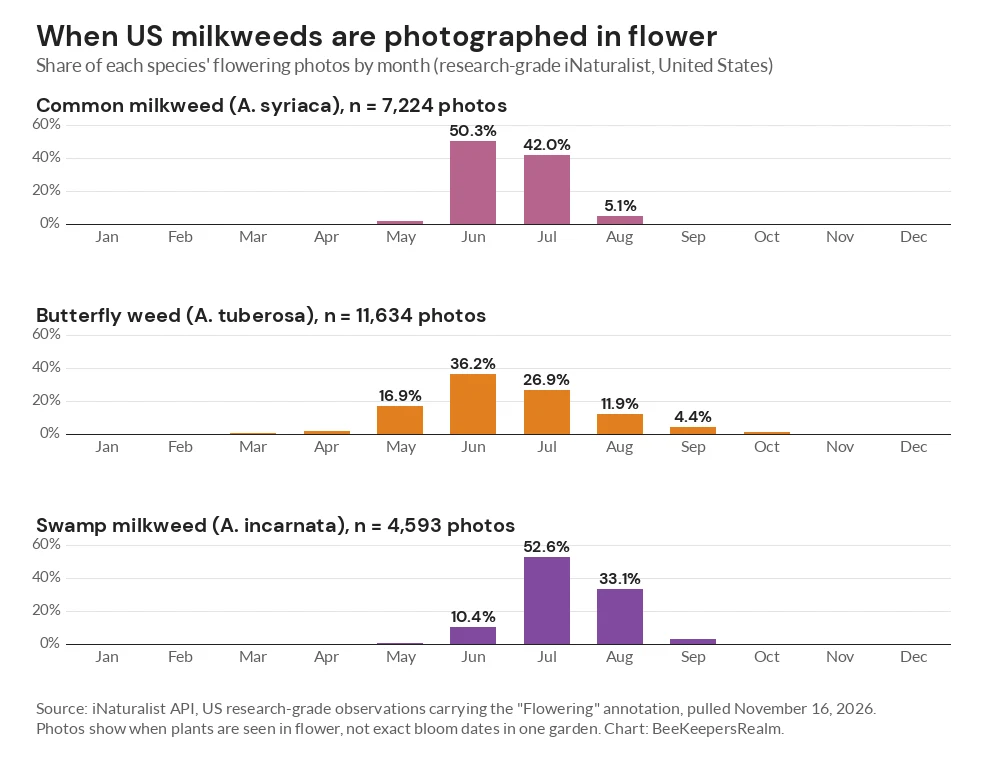
Common milkweed is a June and July plant (50.3% and 42.0%) and mostly finished by August (5.1%). Butterfly weed spreads wider: 16.9% in May, 36.2% in June, 26.9% in July and 11.9% in August. Swamp milkweed runs later, with 52.6% in July and 33.1% in August. Planting all three gives bloom from May into August in much of the East and Midwest.
Milkweed Pods and Seeds: When to Collect Them
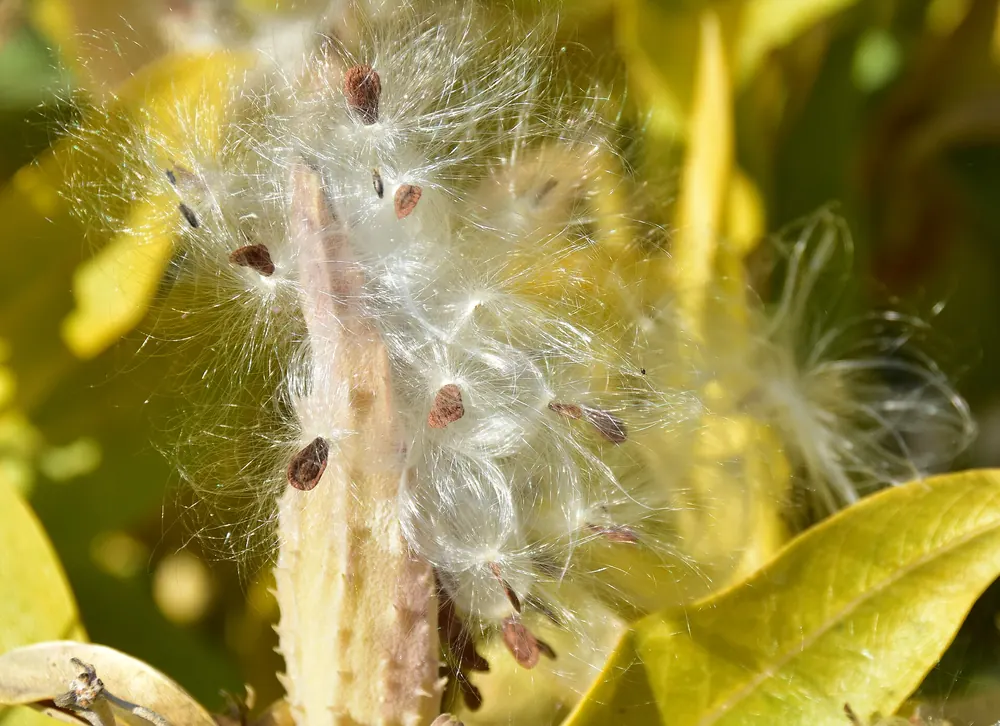
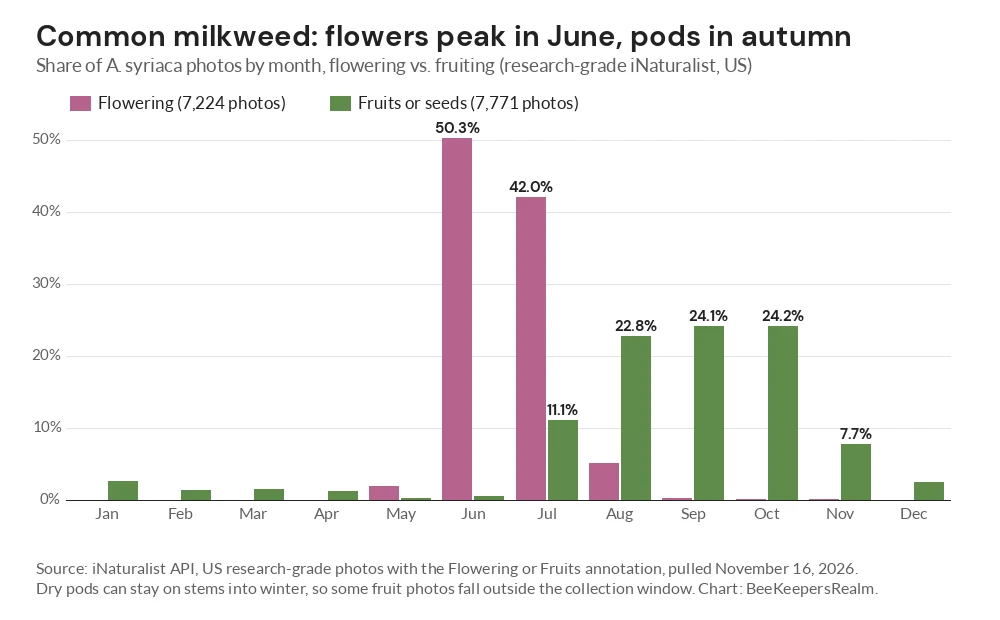
After pollination, each cluster forms one or two teardrop-shaped pods that turn brown or maroon as they ripen. Illinois Extension says to pick pods when they are dry and just starting to split, because seeds that have not matured cannot germinate. UConn’s test is brown, dry pods that are open or open when pinched at the seam. In iNaturalist photos annotated as fruits or seeds, common milkweed peaks from August through October: 22.8% in August, 24.1% in September and 24.2% in October.
Handling the Silk
Illinois Extension suggests holding one end of a dry pod and stripping the seeds away from the white floss, or shaking the seeds in a paper bag with a coin and a hole cut in the bottom so the seeds fall out. Store seeds in a labeled paper envelope in a cool, dry place. UConn recommends collecting from plants in different areas for genetic variety, and Illinois Extension reminds collectors to get landowner permission.
Is Milkweed Poisonous? People, Pets and Livestock
People: Poison Control says all parts of milkweed contain toxic cardiac glycosides, highest in the latex, then stems, leaves and roots, and the plant is most toxic just before maturity. Symptoms include nausea, vomiting, diarrhea, weakness and heart-rhythm changes, and the sap can irritate skin and eyes. It advises wearing gloves and not preparing food or tea from plants unless you are an expert.
Livestock and pets: UConn Extension says animals usually avoid milkweed unless good forage is scarce, but sheep are most at risk, and cattle, goats, horses, poultry and pets can also be affected. Dried plants in hay stay toxic, and whorled-leaf types also carry a neurotoxin, the more lethal of the plant’s two toxins. A Purdue University toxic-plant profile of common milkweed gives a toxic dose of as little as 2% of body weight, about 20 pounds for a 1,000-pound cow, with frost reducing toxicity.
Eyes: A toxicology feature in ACEP Now, the American College of Emergency Physicians’ news magazine, says corneal injury has been documented from direct contact between milkweed sap and the eye, and that any exposure should be flushed right away with plenty of water. It describes a 13-year-old boy who recovered fully in 18 days with antibiotic and steroid drops. Clear sap is no guarantee of safety: a 2017 case report in The Open Ophthalmology Journal describes corneal toxicity after exposure to butterfly weed.
Ask a vet or doctor: if sap gets in an eye, rinse with water and see a doctor. If a person swallows milkweed, call Poison Control at 1-800-222-1222. If a pet or farm animal has eaten it, call your veterinarian or the ASPCA Animal Poison Control Center at (888) 426-4435. These are general safety notes, not a diagnosis. None of this is a reason to skip planting: the Fish and Wildlife Service points out that animals rarely eat milkweed because it tastes bad. Keep it out of pastures and hay fields, and wear gloves.
Frequently Asked Questions
Is milkweed poisonous?
Yes, most species are. Poison Control says all parts contain toxic cardiac glycosides, and the sap can irritate skin and eyes. Sheep are most at risk among livestock, per UConn Extension.
Should you plant milkweed in your yard?
Yes, if it is a species native to your region. It is the host plant for monarch caterpillars and a nectar source for bees, wasps and butterflies. Skip it in pastures and choose natives over tropical milkweed.
Is there a downside to milkweed?
Common milkweed spreads by rhizomes, aphids can build up, the sap is toxic, and honey bees can get trapped by the pollinia. Tropical milkweed also carries the OE and winter-breeding concerns described above.
What is milkweed good for?
Monarch caterpillars need it, its flowers feed many pollinators, and beekeeping sources have long rated it a strong nectar plant. The silk has also been used as stuffing and insulation, according to Wikipedia.
When should I plant milkweed seeds?
Sow in late fall and let winter stratify the seed, or chill seed in a refrigerator for 4 to 6 weeks and sow in spring after the last frost. See the planting table above.
Do bees like milkweed?
Yes. Honey bees, bumble bees, carpenter bees, digger wasps and many solitary bees visit for nectar. The risk is that some insects, honey bees especially, can get a leg caught and die.
Why is milkweed illegal?
The Fish and Wildlife Service says none of the milkweeds native to the US are considered noxious weeds. If a local ordinance worries you, ask your county extension office about weed rules.
Which milkweed is best for monarchs?
The one native to your region: common milkweed in the East and Midwest, butterfly weed on dry sites, showy or narrowleaf milkweed in the West, and antelope horns in the southern Plains.
The Bottom Line
Pick a native milkweed that matches your site, chill the seed or sow it in fall, leave the stems for winter nesting bees, and keep the sap away from eyes, livestock and hay. Pair it with companions such as those in our bee balm growing guide so pollinators have nectar from spring to frost.
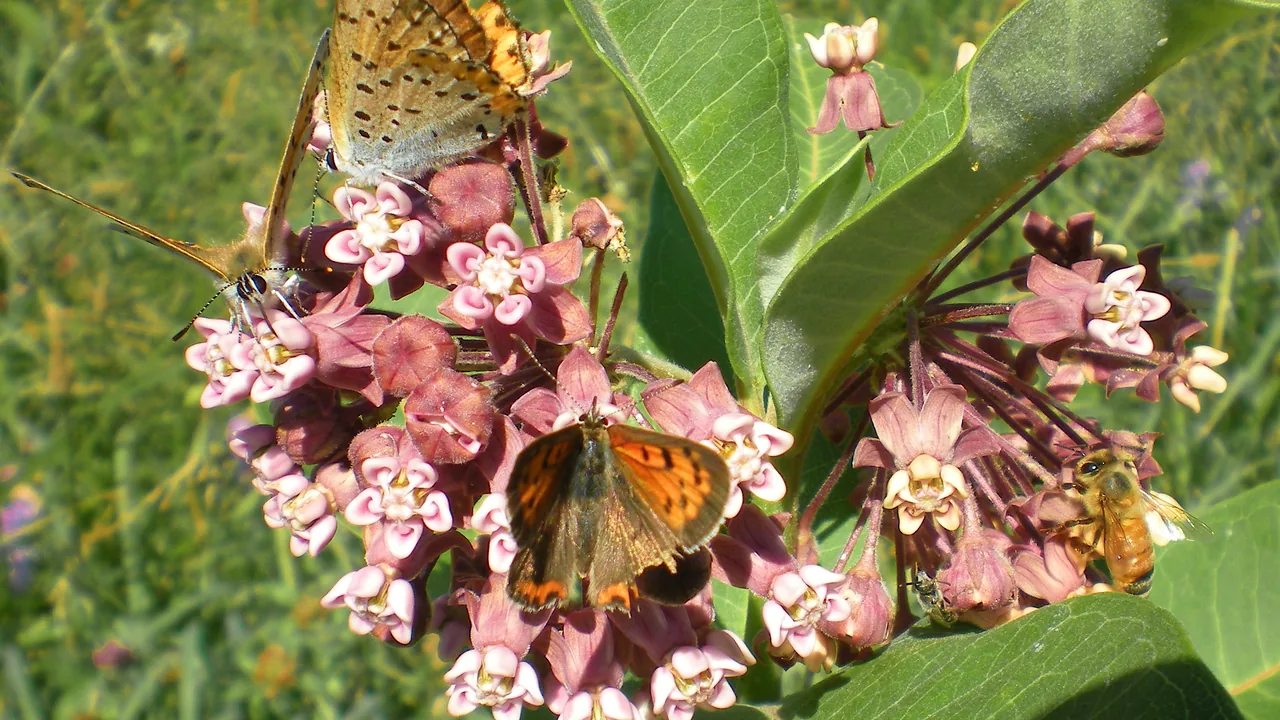
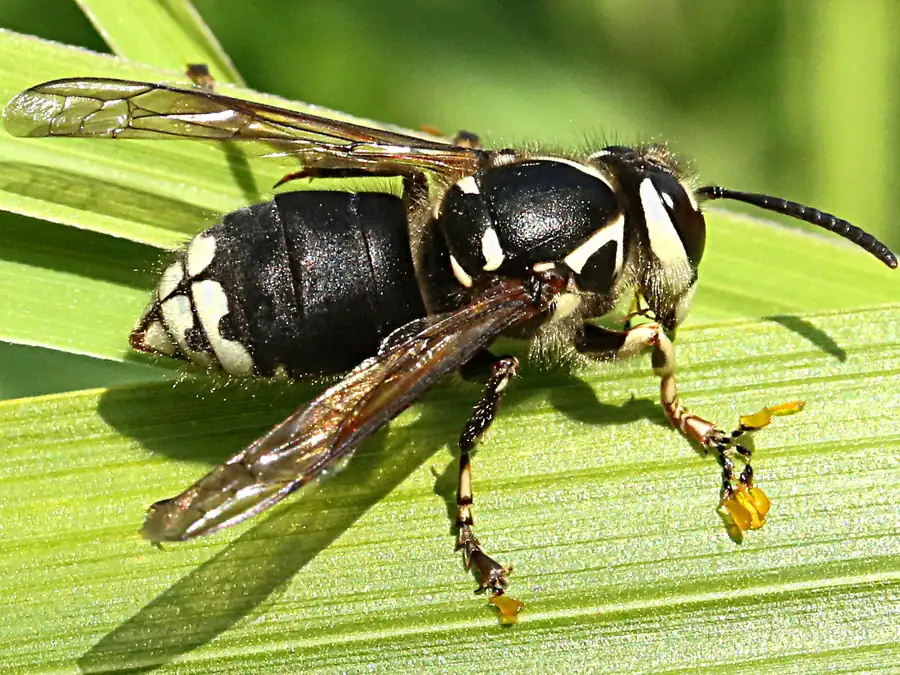
Image credits: Featured photo: butterflies on common milkweed in Concord, Massachusetts, Cbaile19, CC0, via Wikimedia Commons. The hornet photo by peterwchen is licensed CC BY 4.0. Charts use US research-grade iNaturalist observations. Other credits are in the captions.
Sources: Xerces Society, Milkweeds: A Conservation Practitioner’s Guide; Monarch Joint Venture, Endangered Species Act status and its 2025-26 eastern population report; Xerces Western Monarch Count release; UConn Extension; Illinois Extension; Lady Bird Johnson Wildflower Center; Poison Control.